Production lines · Ready & prepared meals
Ready Meal Production Plant: Chilled, Frozen or Shelf-Stable Meals
Plan a ready or prepared meal plant: chilled, frozen or retort route, cooking, cooling, assembly, sealing, inspection and what to send for a quote.
- Prepared by
- HNFODA Applications Engineering
- Topic
- Production lines · Ready & prepared meals
- Published
- Reading time
- 6 min read · 3 sources
On this page
- 01Choose the route first
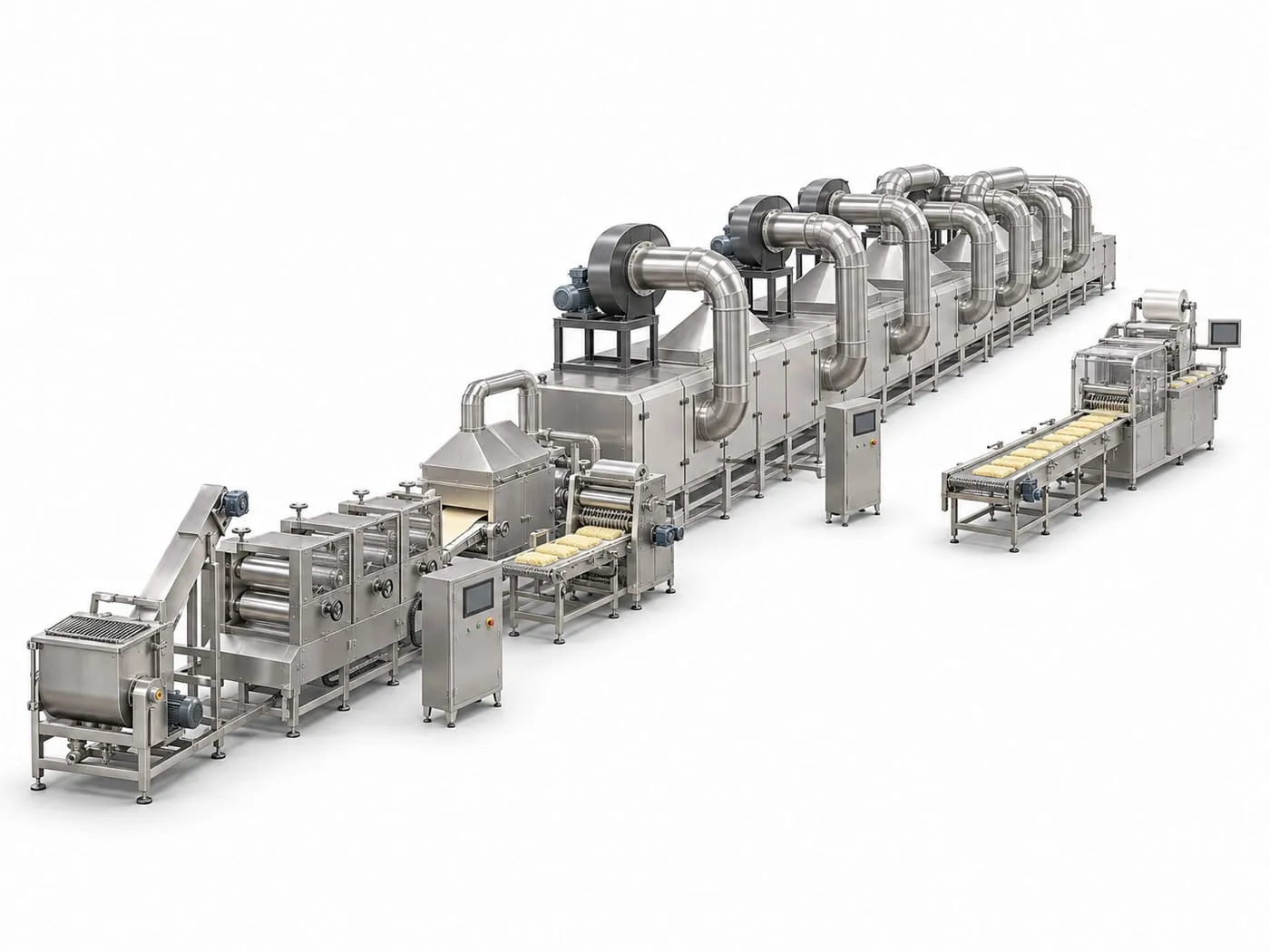
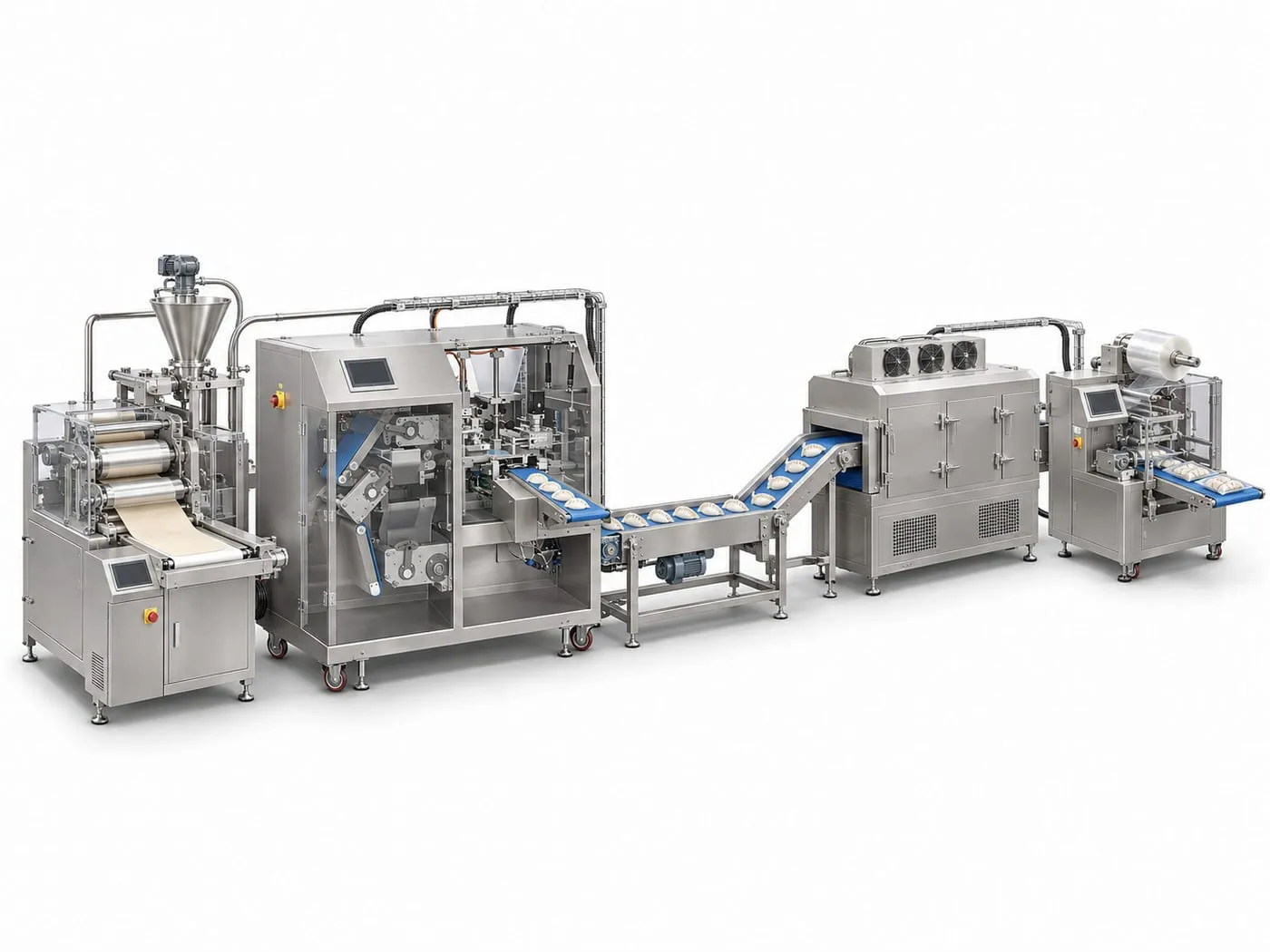
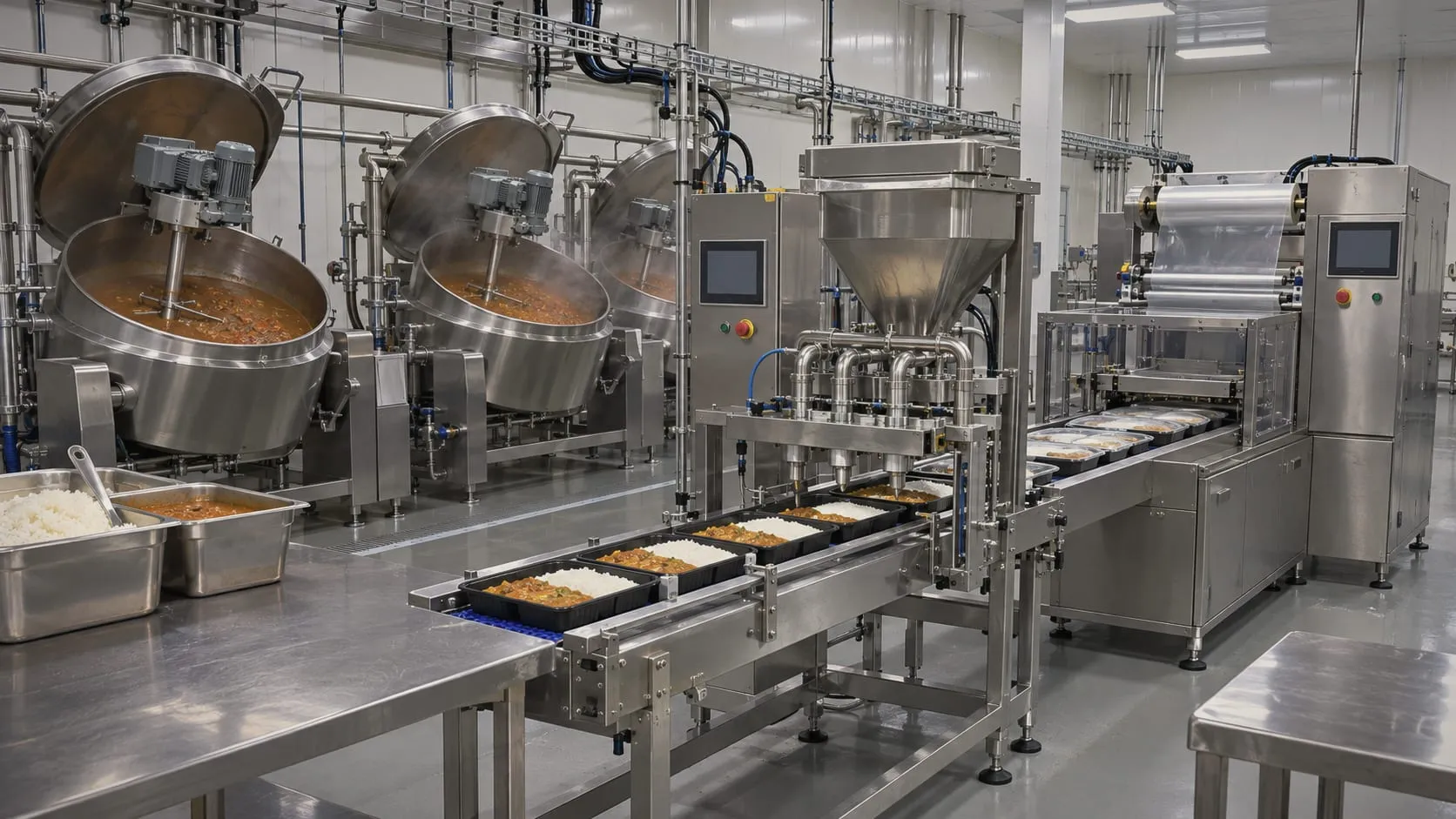
- 02What a ready meal plant consists of
- 03Process route and key machines
- 04How to size the plant
- 05Hygiene, zoning and validation
- 06Utilities and building
- 07A worked sizing example
- 08Which business model fits
- 09Supply levels
- 10What drives the cost
- 11Common mistakes
- 12What to send us for a quotation
Short answer: A ready meal production plant prepares ingredients, cooks components such as rice, noodles, sauces and proteins, cools them quickly, portions them into trays or pouches, seals the pack, and then chills, freezes or sterilises it. The shelf-life route (chilled, frozen or retort) is the first decision, because it changes almost every machine and the building; output is usually limited by cooling, freezing or retort capacity, not by cooking.
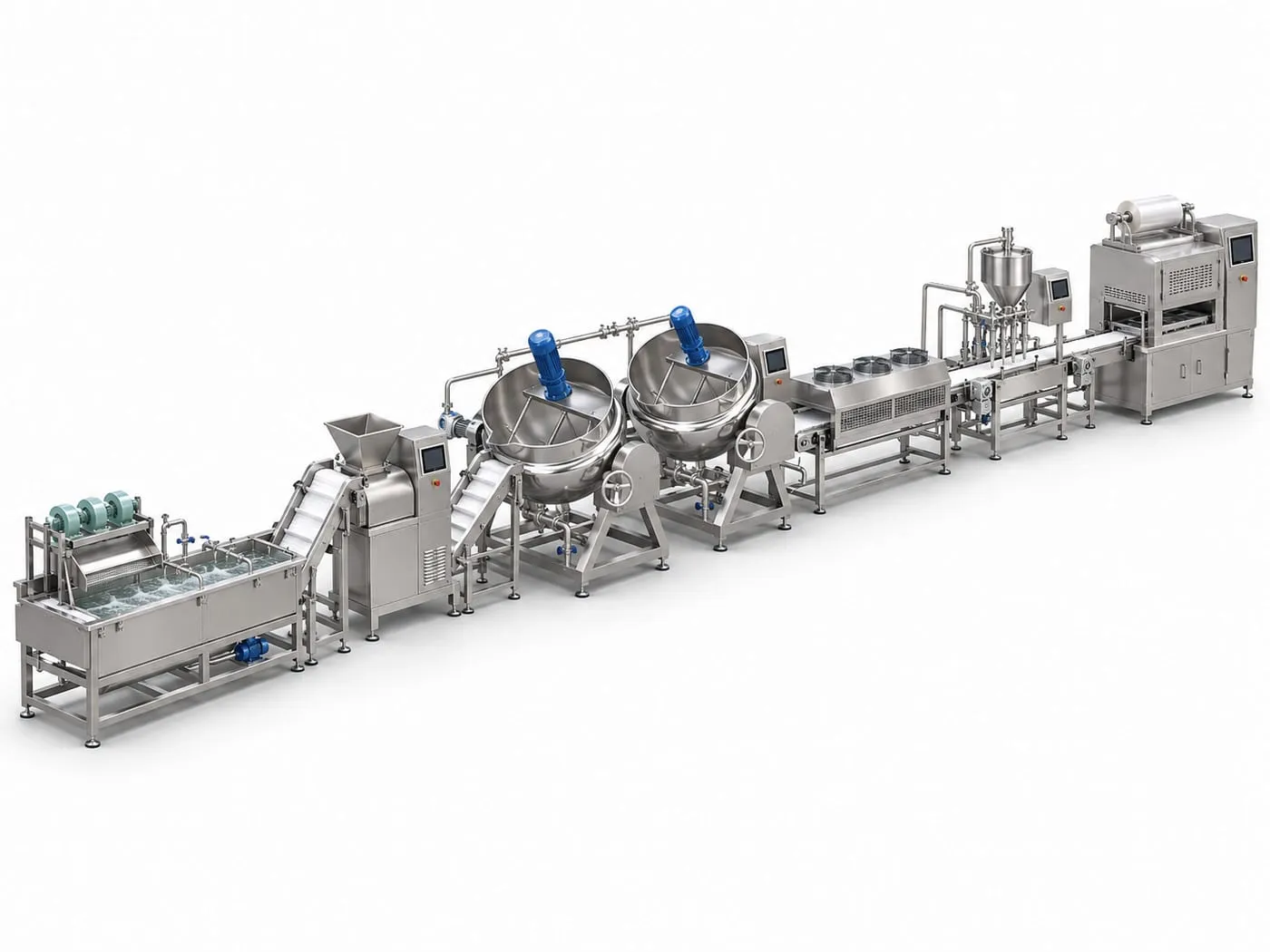
This page looks at the plant as a business. For the line, see the prepared meal production line.
Choose the route first
| Route | Shelf life and storage | Key end-of-line equipment | Watch out for |
|---|---|---|---|
| Chilled | Short; kept chilled through distribution | Rapid cooling, tray sealing, chilled store | Fast, reliable cold chain; tight hygiene in assembly |
| Frozen | Long; frozen distribution | Freezer, freezer-grade packs, frozen store | Freezing capacity and power; texture after reheating |
| Shelf-stable (retort) | Long at ambient temperature | Retortable pouches or trays, food retort | Heat process validation; texture of delicate ingredients |
Many companies start with one route and add another later. If that is the plan, leave space in the building for a freezer or retort room.
What a ready meal plant consists of
- Receiving and raw storage: chilled, frozen and dry stores for ingredients and packaging.
- Preparation (raw side): washing, peeling and cutting vegetables; portioning and marinating meat.
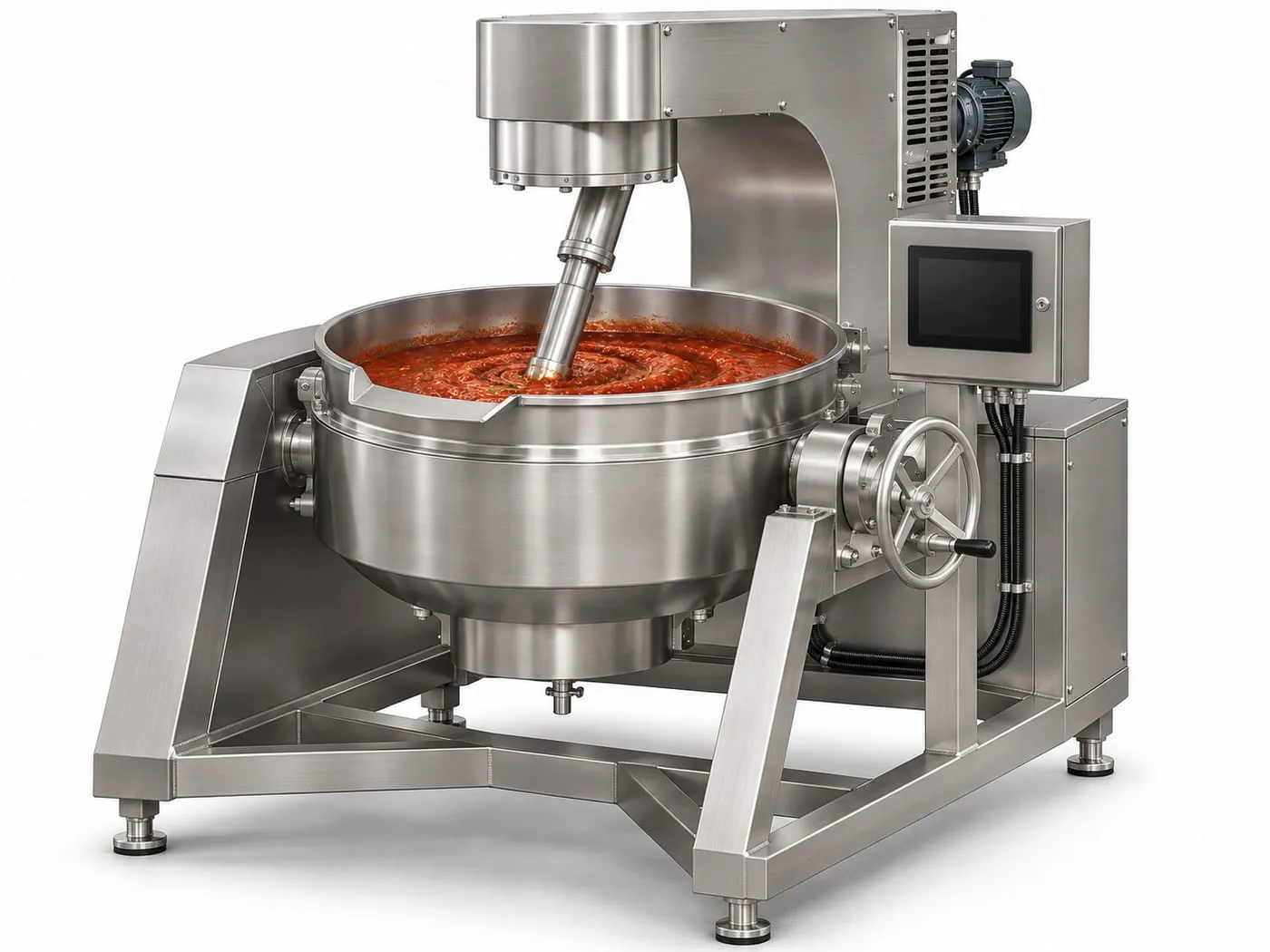
- Cooking: kettles for sauces and curries, steamers, rice cookers, fryers or ovens for proteins.
- Cooling: getting cooked components down to chilled temperature quickly.
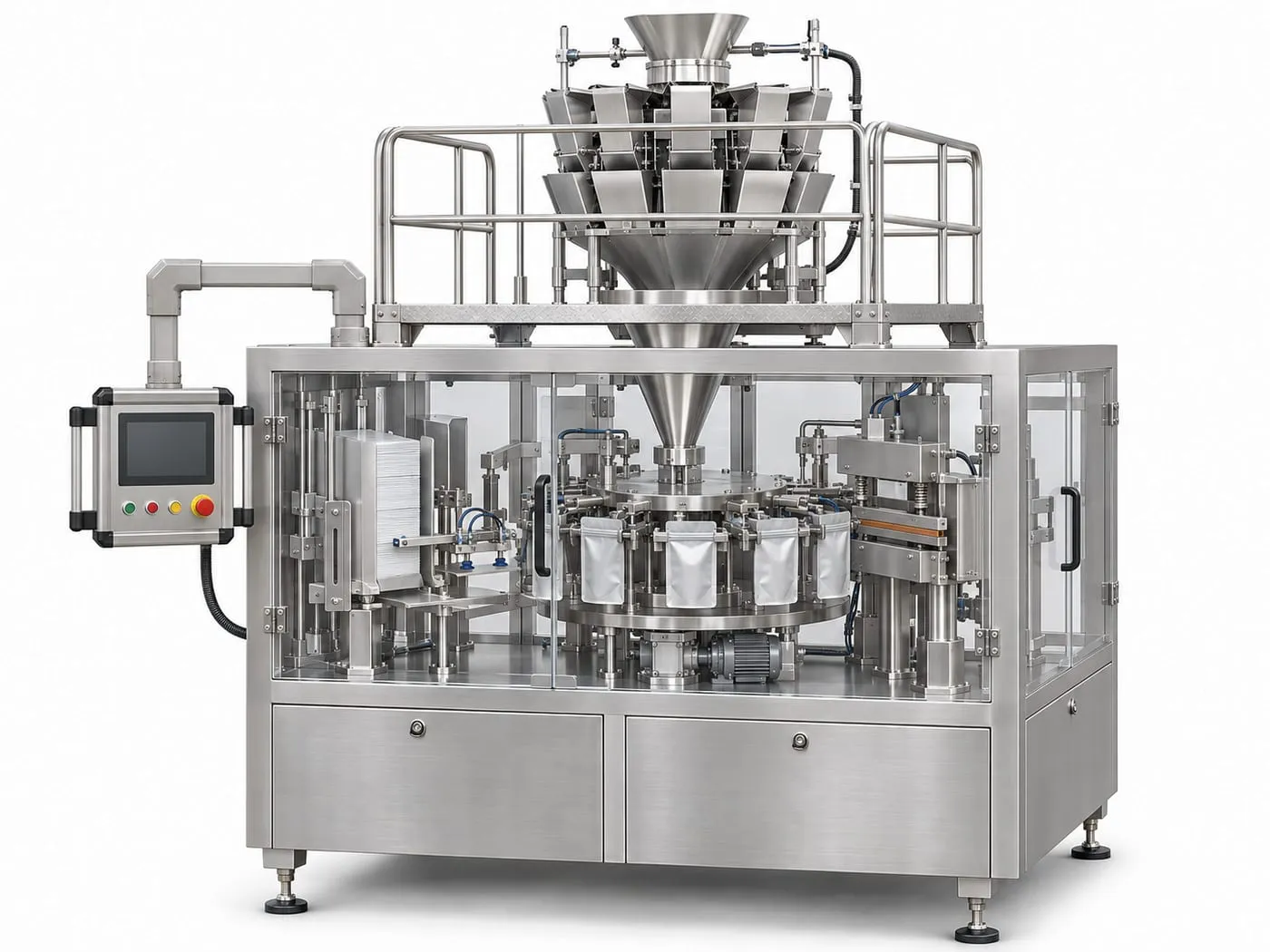
- Assembly (high-care side): portioning components into trays or pouches by hand, by depositor or by weigher.
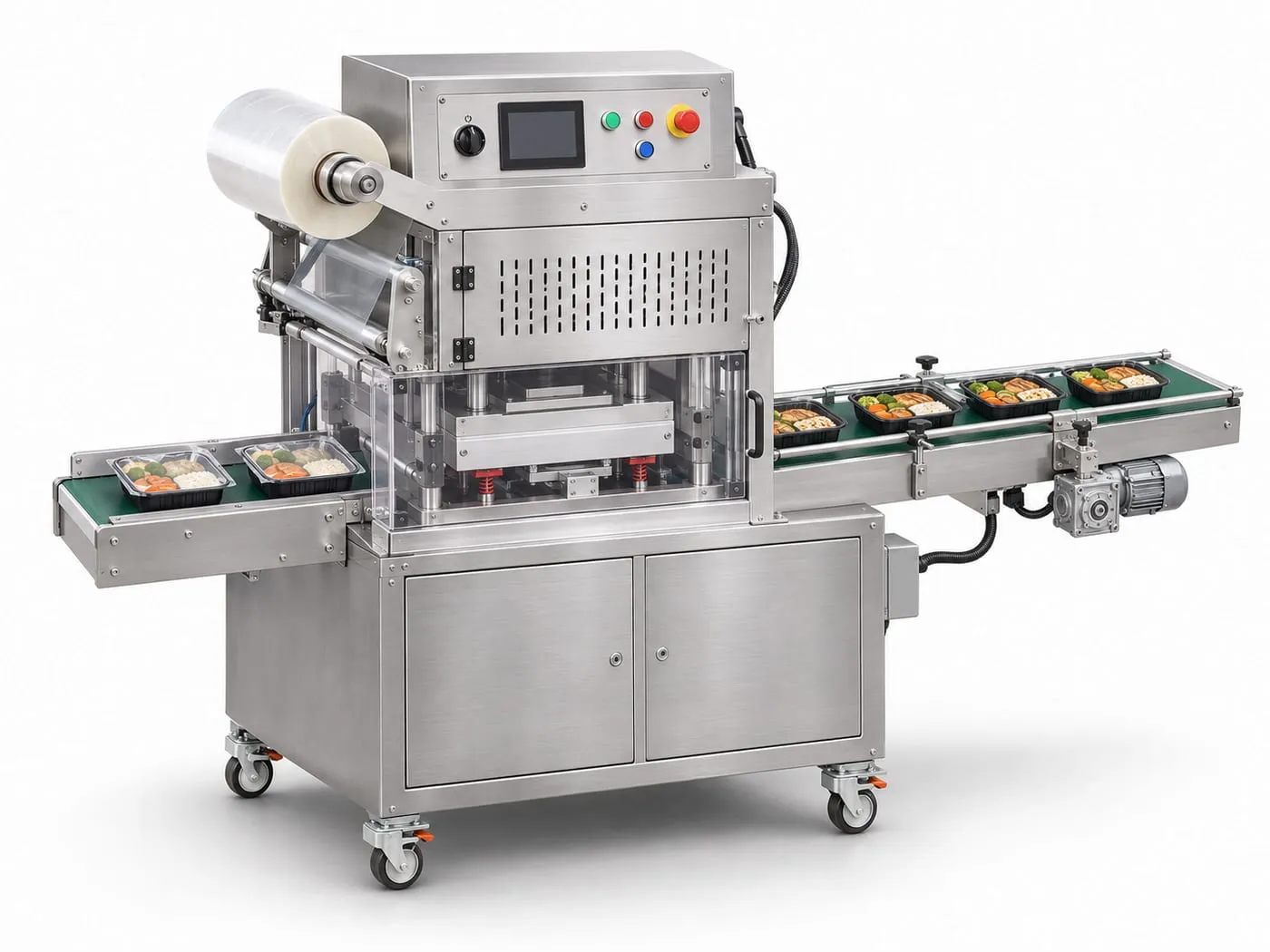
- Sealing and labelling: tray sealing, often with modified atmosphere; pouch sealing for retort.
- Shelf-life step: chilling, freezing or retort sterilisation.
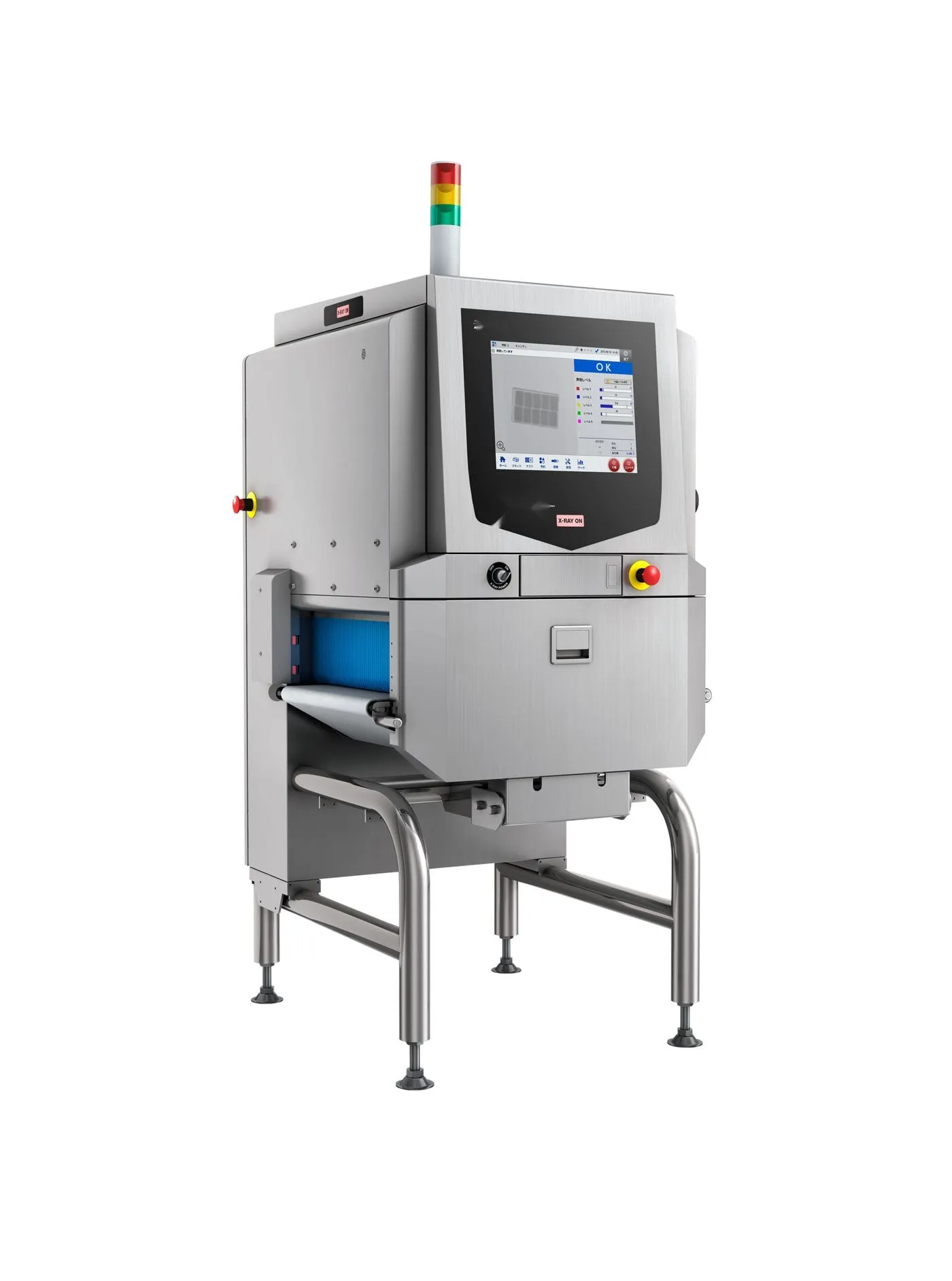
- Inspection, packing and storage: metal detection or X-ray, checkweighing, sleeving and casing.
Process route and key machines
| Station | Purpose | Key machine |
|---|---|---|
| Vegetable preparation | Wash and cut vegetables | Fruit and vegetable washer, vegetable cutting machine |
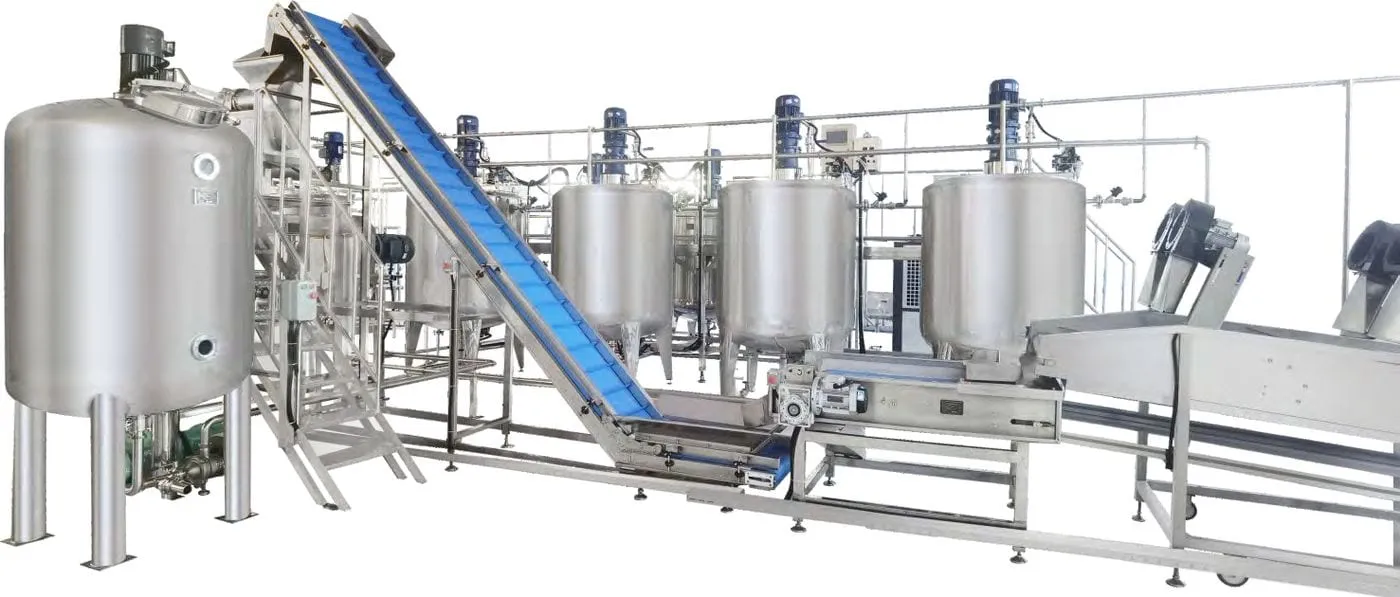
| Sauce and stew cooking | Cook sauces, curries and soups in batches | Jacketed cooking kettle, sauce processing line |
| Steam supply | Steam for kettles, steamers and retorts | Food steam generator |
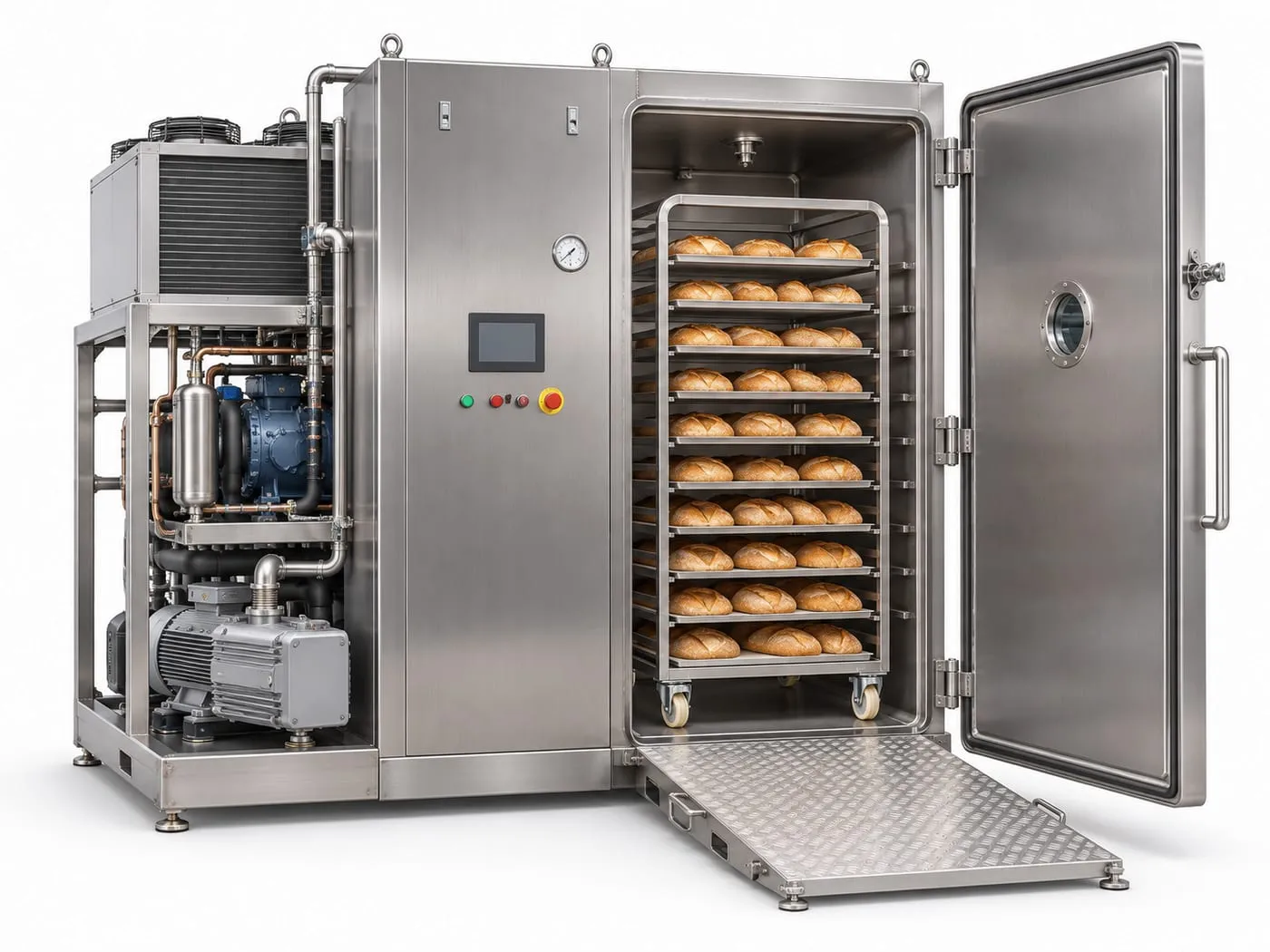
| Rapid cooling | Cool cooked rice, noodles and components quickly | Food vacuum cooler |
| Assembly line | Portion components into trays | Prepared meal production line |
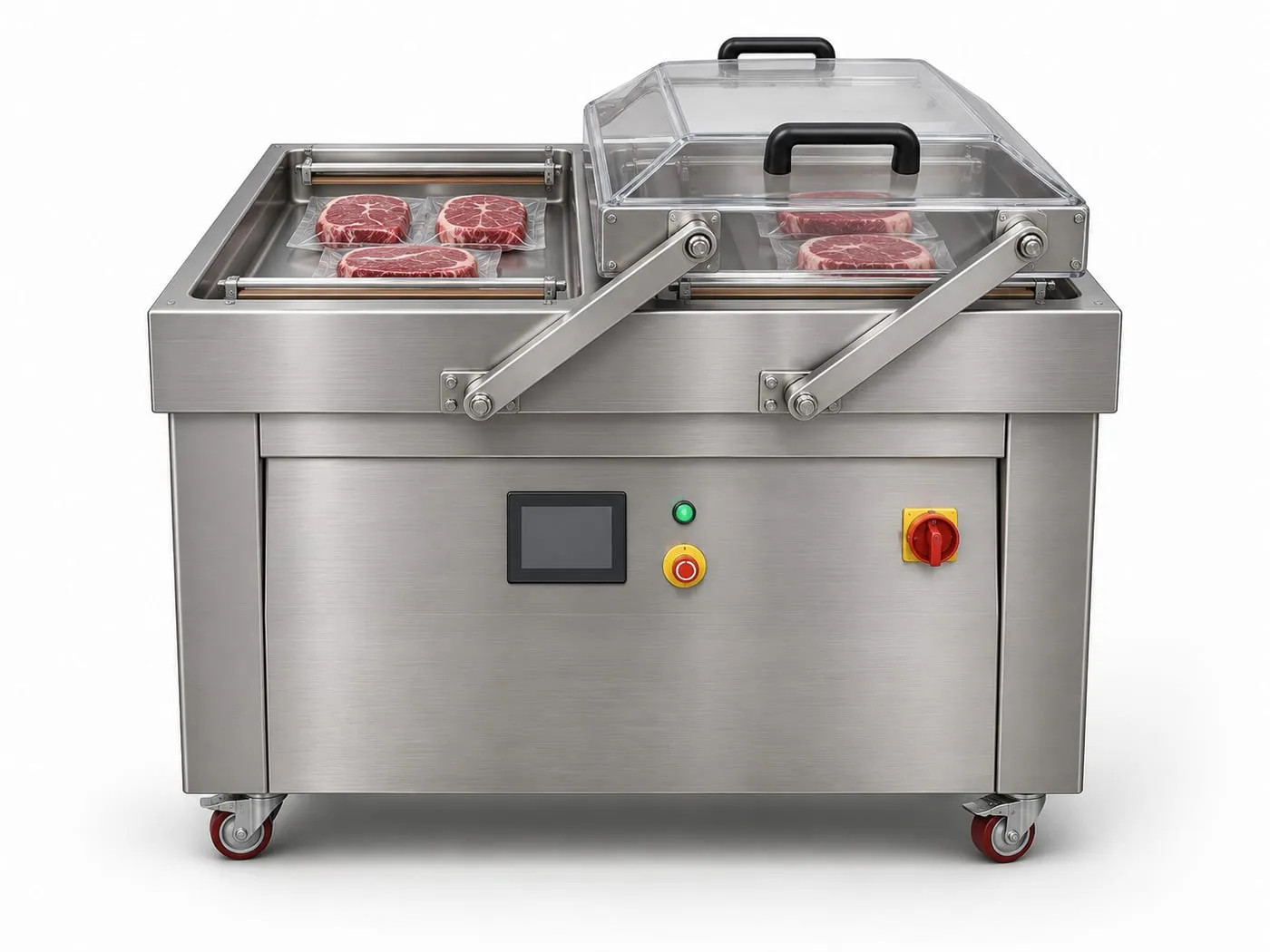
| Sealing | Seal trays, with or without modified atmosphere | Tray sealer |
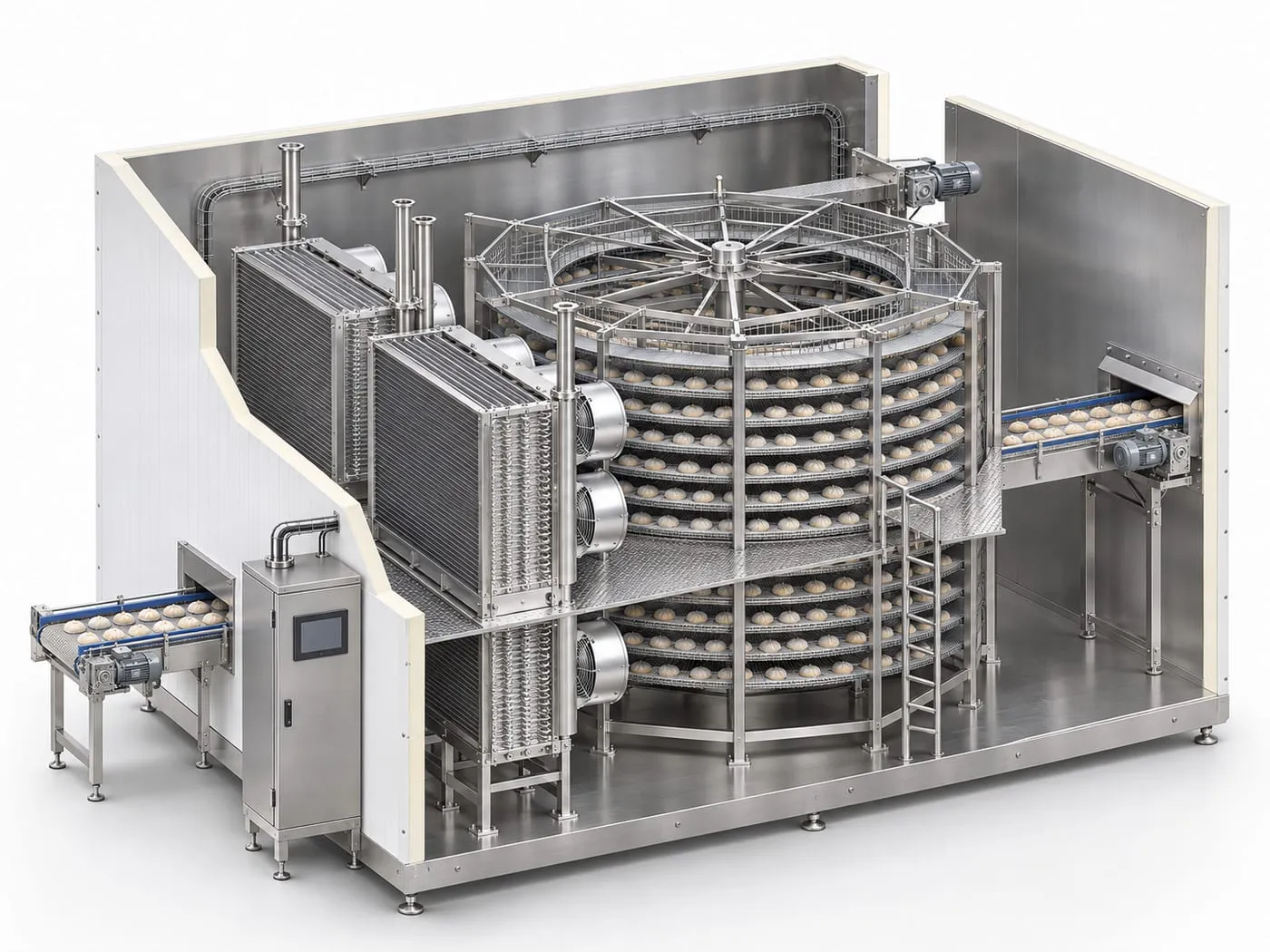
| Freezing (frozen route) | Freeze sealed meals | Food freezer |
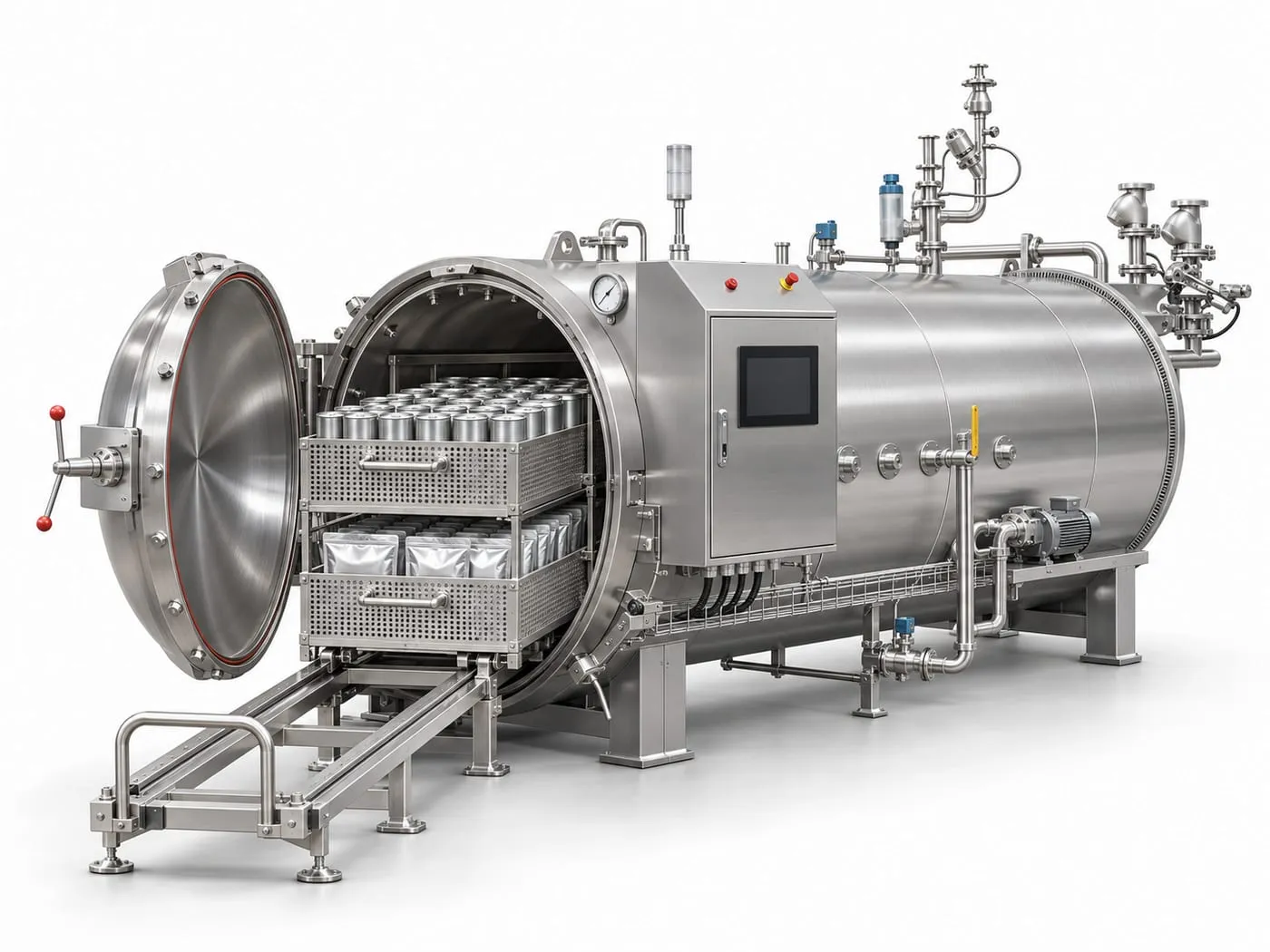
| Sterilising (retort route) | Heat-treat sealed pouches or trays | Food retort |
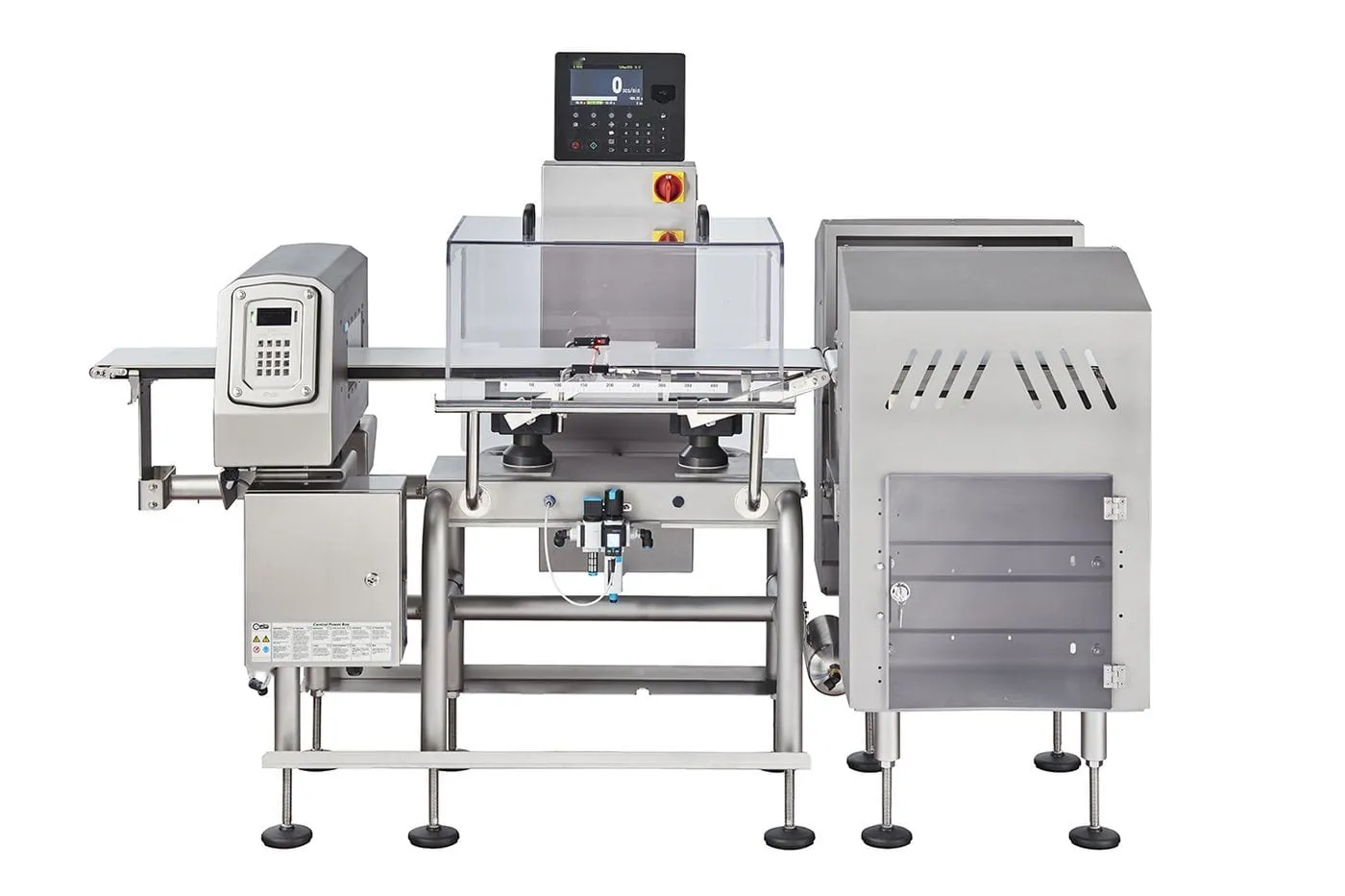
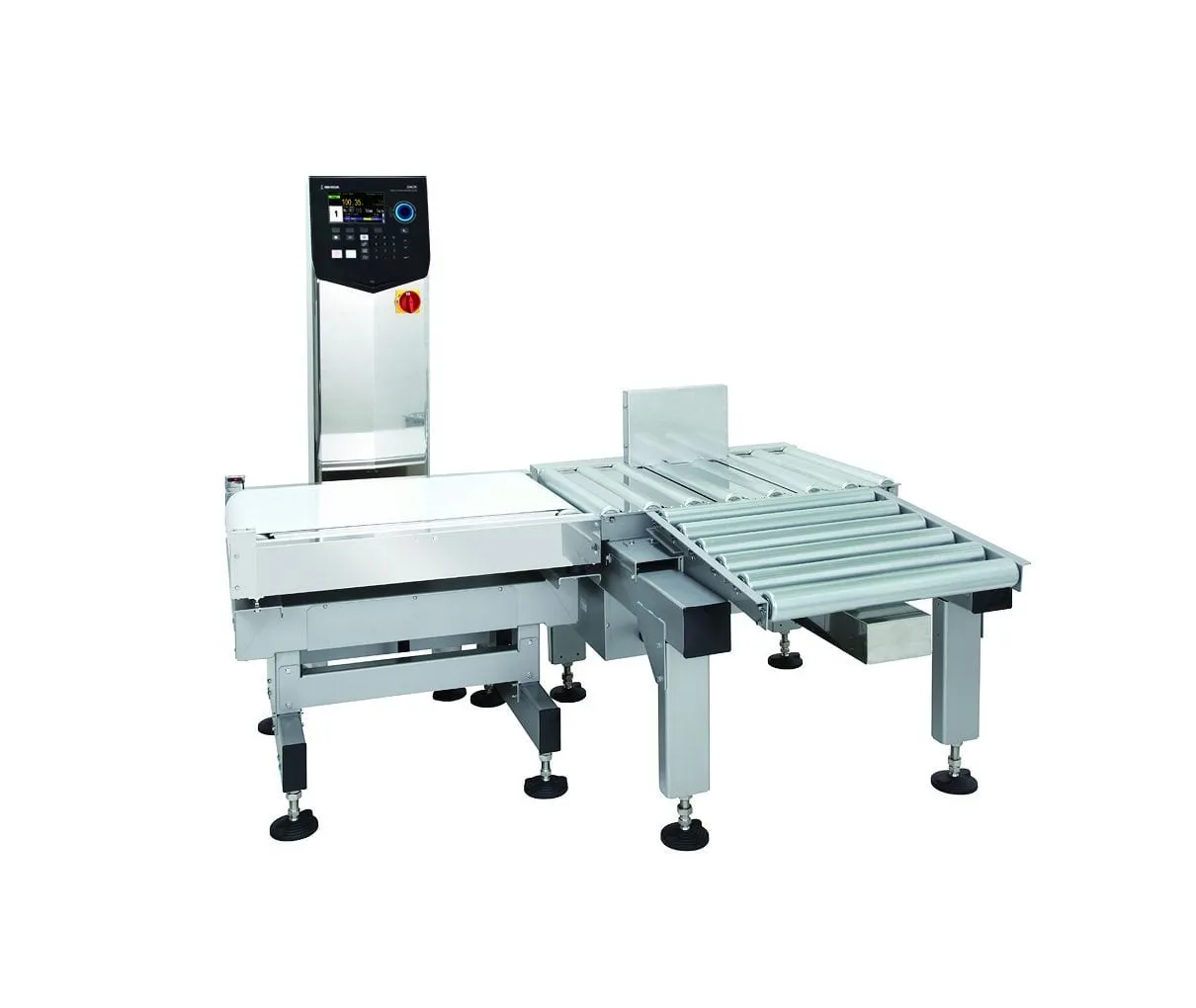
| Inspection | Foreign bodies and weight | Food X-ray inspection machine, in-line checkweigher |
How to size the plant
Ready meal plants are usually planned in meals or trays per hour at a given meal weight and number of components.
- Define the menu: number of recipes, components per meal, meal weight, pack type.
- Daily volume: meals per day and shifts, with the share of each recipe.
- Cooking: kettle volumes and cycle times for sauces; rice and noodle cooking capacity.
- Cooling: kg per batch and cooling time. If a kettle cooks faster than the cooler can cool, the cooler sets the pace.
- Assembly: number of portioning stations or depositors, and staff per line.
- End of line: freezer or retort capacity at your meal weight; for chilled meals, the chiller and chilled store.
Changeovers often cost more output than any machine limit, because ready meal runs are short. Grouping recipes and planning cleaning windows has a big effect on real capacity.
Hygiene, zoning and validation
The plant needs a clear split between raw preparation and cooked, high-care assembly, with separate staff, clothing, tools and air handling where possible. The Codex General Principles of Food Hygiene and hygienic design guidance such as EHEDG are common references for layout and equipment.
Cooling after cooking, sealing integrity and the shelf-life step are food safety controls that the producer must validate and monitor. In the United States, the FDA preventive controls rule requires a written food safety plan covering these hazards; other markets have their own rules. Meat-containing meals may fall under separate meat inspection rules in some countries.
Utilities and building
- Steam for cooking and retorts; refrigeration for chillers, freezers and cold stores.
- Water, drainage and grease separation for cooking and cleaning.
- Air handling for the high-care area: filtered air, positive pressure, temperature control.
- Space for packaging materials and cartons, which take more room than many planners expect.
A worked sizing example
These numbers illustrate the method only; your menu, meal weight and hours replace them.
A company plans 8,000 frozen meals a day of 350 g each: rice, a sauce-based main and one vegetable. That is 2,800 kg of meals a day. Over 14 effective hours, assembly must produce around 570 meals an hour, or about 10 a minute. If rice makes up 150 g per meal, the plant cooks and cools 1,200 kg of rice a day; the sauce component, at 150 g, needs about 1,200 kg of sauce, which in this example might be several kettle batches a day. Each cooked batch must then be cooled within your validated time, so cooler capacity is set by batch size, not only by daily total. The freezer is sized for about 200 kg/h of sealed meals at the freezing time of a 350 g tray, and the frozen store for your stock days.
Which business model fits
- Retail suppliers need consistent portioning, attractive packs, and audits by the retailer; they usually run fewer recipes in longer runs.
- Airline, school and institutional caterers run many recipes, often chilled, with short lead times.
- Export-oriented producers often choose frozen or retort routes for long shelf life and long-distance distribution.
Supply levels
- Single machine: a kettle, vacuum cooler, tray sealer or retort for an existing kitchen.
- Section: cooking and cooling, or assembly through sealing.
- Complete line: from preparation to packed meals with layout and controls.
- Turnkey project: complete line with installation, commissioning, training and acceptance runs. See turnkey projects.
What drives the cost
- Shelf-life route (retort and freezing add major equipment and utilities)
- Number of recipes and components, and how much assembly is automated
- Cooling capacity and type
- Pack type: trays with modified atmosphere, retort pouches, bowls
- Inspection level (metal detection or X-ray)
- High-care building work and air handling
Common mistakes
- Choosing equipment before deciding chilled, frozen or retort.
- Sizing cooking capacity without matching cooling capacity.
- One open hall for raw preparation and cooked assembly.
- Underestimating changeover and cleaning time with many recipes.
- Assuming the equipment supplier validates shelf life.
What to send us for a quotation
- Menu: recipes, components per meal, meal weight, reference products
- Shelf-life route: chilled, frozen or retort, and target shelf life
- Daily output in meals, shifts and the recipe mix
- Pack type and size: tray, pouch, bowl; sealing method
- Inspection requirements of your customers (metal detection, X-ray)
- Building plan, steam, refrigeration and power available
- Which sections you want from us and which you already have
Frequently asked questions
- Chilled, frozen or retort: which is best?
- Chilled meals taste closest to fresh but have short shelf life and need a fast, reliable cold chain. Frozen meals keep for months but need freezing capacity and frozen distribution. Retort meals are shelf-stable at ambient temperature but the heat process changes texture and needs careful validation. Your distribution network and target retailer usually decide.
- Why is cooling such a big topic in ready meal plants?
- Cooked food passing slowly through warm temperatures gives surviving bacteria time to grow. Regulators set cooling time and temperature requirements for cooked products, so cooling equipment such as vacuum coolers, blast chillers or freezers must be sized for the batch sizes you cook.
- Can one plant make many recipes?
- Yes, and most do. The cost is changeover and cleaning time, especially when allergens change. Plan recipe sequences, cleaning time and separate utensils as part of the design.
- Who validates shelf life?
- The food company does, usually with a laboratory or process authority. We supply cooking, cooling, sealing and sterilising equipment that holds the settings you validate, and we provide the equipment data your validation needs.
Sources
- [1]FSMA Final Rule for Preventive Controls for Human Food — U.S. Food and Drug Administration
- [2]Codex Alimentarius: codes of practice (incl. General Principles of Food Hygiene, CXC 1-1969) — FAO/WHO Codex Alimentarius Commission
- [3]EHEDG guideline catalogue (hygienic design) — European Hygienic Engineering & Design Group
HNFODA Applications Engineering
Line design, product trials and commissioning
Engineers who size, build and commission HNFODA food processing lines, writing from the questions buyers ask before a quotation. About HNFODA