Instant Noodle & Frozen Food
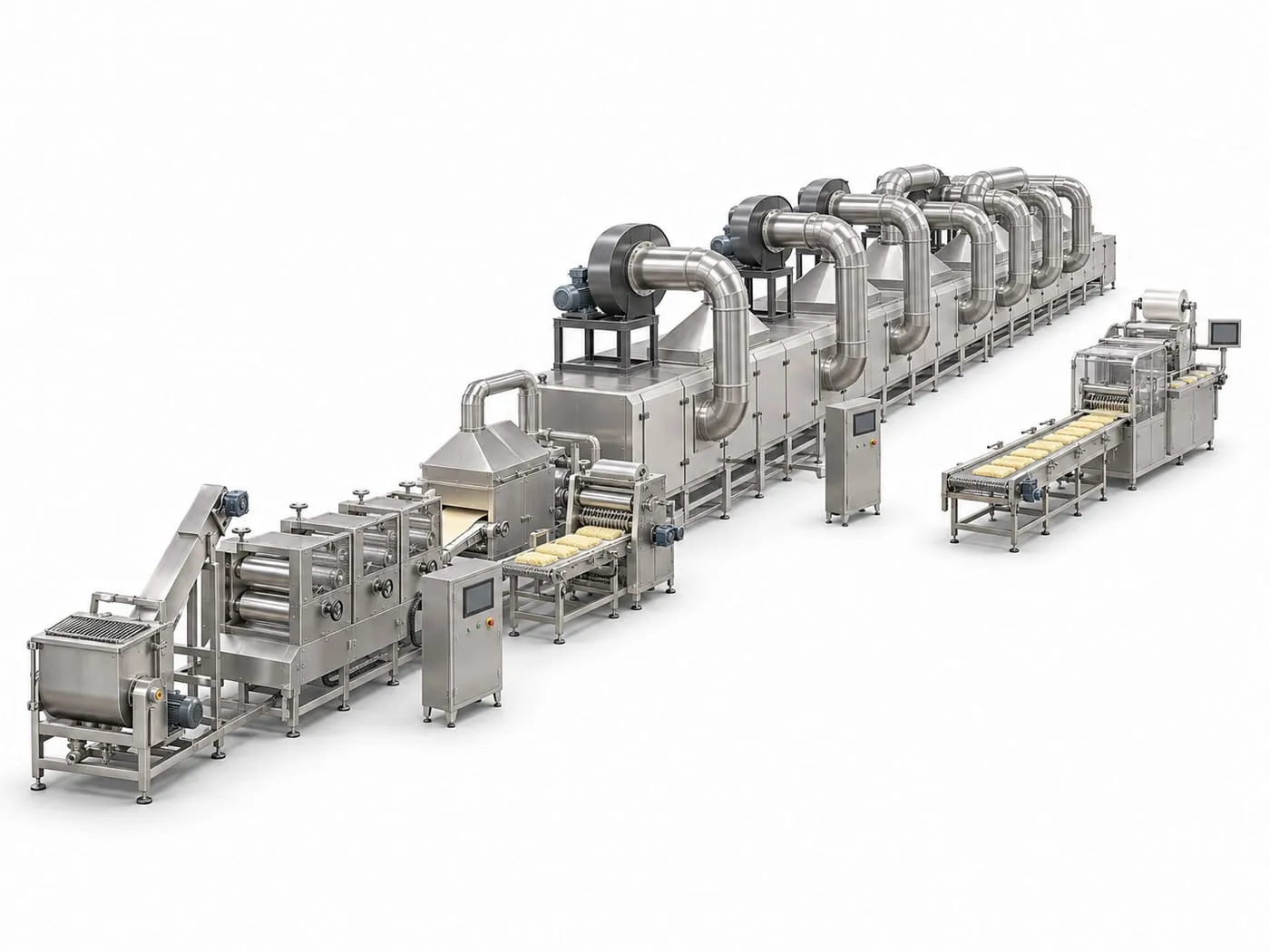
Instant Noodle Production Line
New and expanding noodle brands that need one supplier for the whole line, from dough mixing to packing.
Sized to finished noodle blocks per hour at a set block weight

04 · Instant Noodle & Frozen Food — Equipment
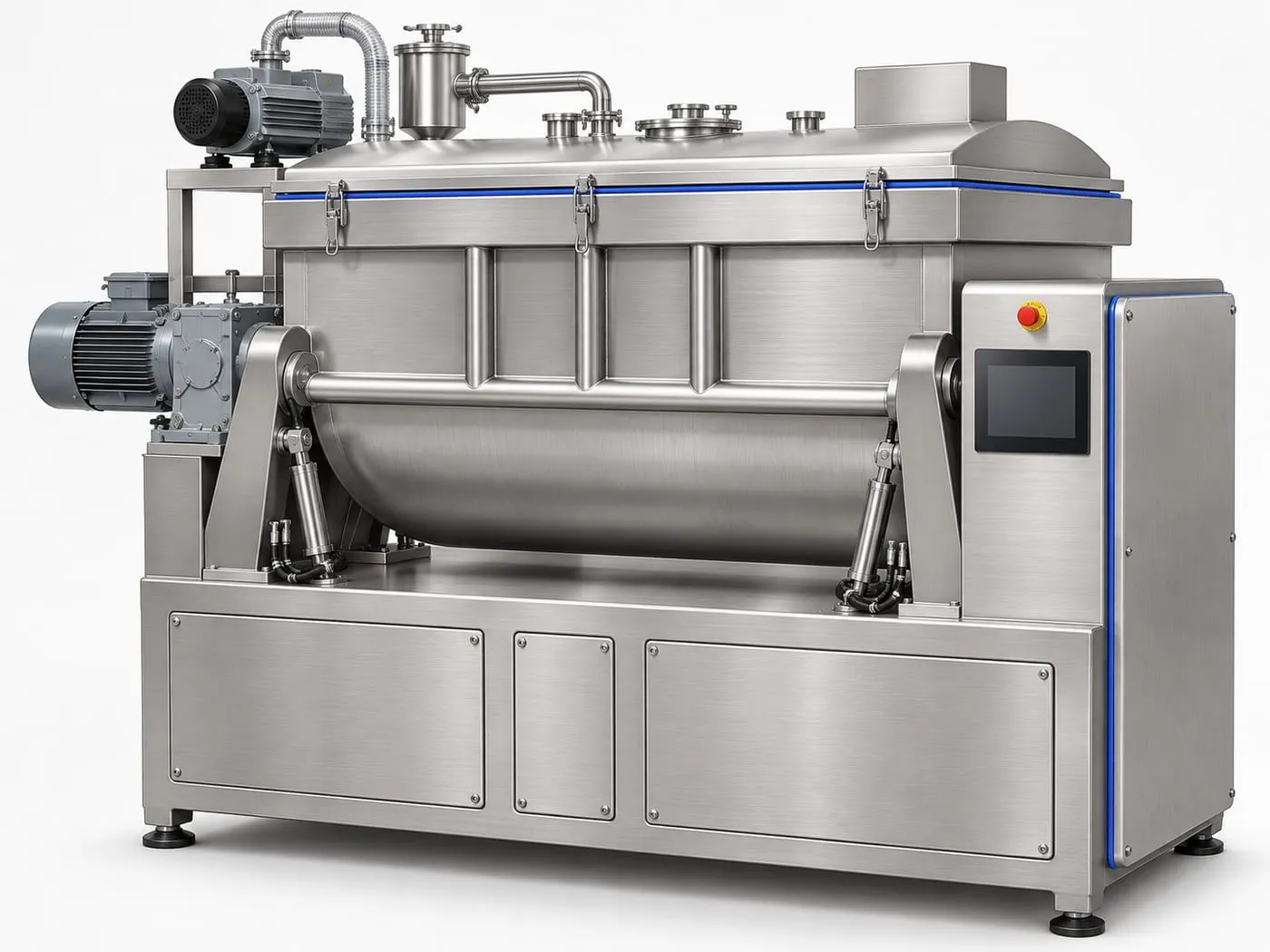
Mixes flour and water under vacuum so the dough hydrates evenly and quickly, ready for sheeting, extrusion or wrapper forming.
Short answer: A vacuum dough mixer blends flour, water and salt or alkali solution in a closed tank under vacuum, so water spreads evenly through the flour and the dough develops a stronger, smoother structure. The recipe water ratio and the effective batch size you need per hour decide the mixer size and shaft layout.
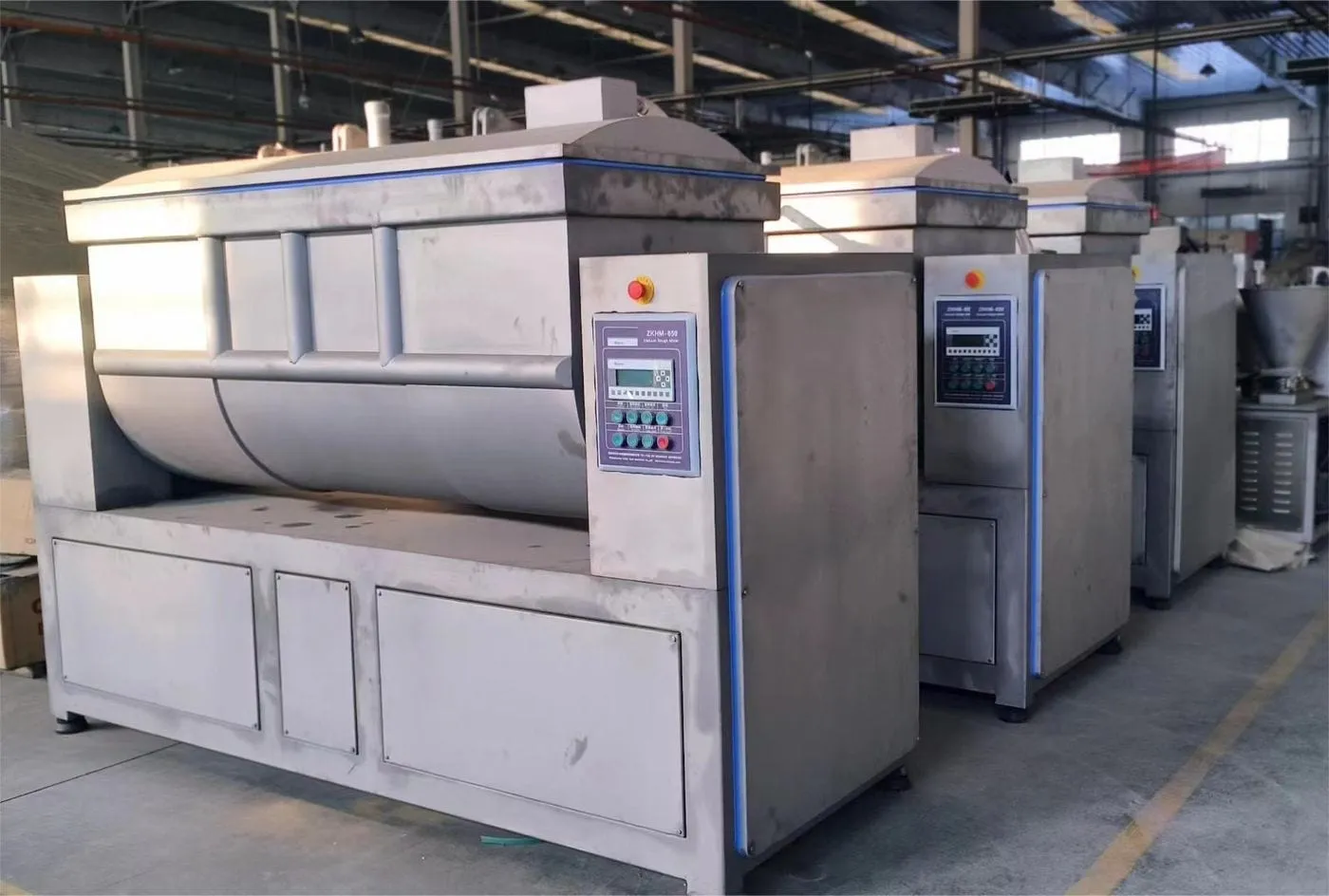
The mixer has a horizontal tank, one or two mixing shafts with paddles or arms, a vacuum pump, a sealed lid and a tilting or bottom discharge.
Removing air helps the flour absorb more water in less time, which is why vacuum mixing is common for noodle, dumpling wrapper and pasta dough.
| Form | Suits | Watch out for |
|---|---|---|
| Horizontal batch | Noodle and wrapper dough, most plants | Batch cycle time sets the line pace |
| Twin-shaft | Larger batches, stiffer doughs | Higher power demand, more parts to clean |
| With automatic dosing | Steady quality, multiple shifts | Needs reliable flour supply and controls set-up |
When one mixer feeds a continuous line, a dough hopper or a second mixer working alternately keeps dough flowing while the other batch mixes.
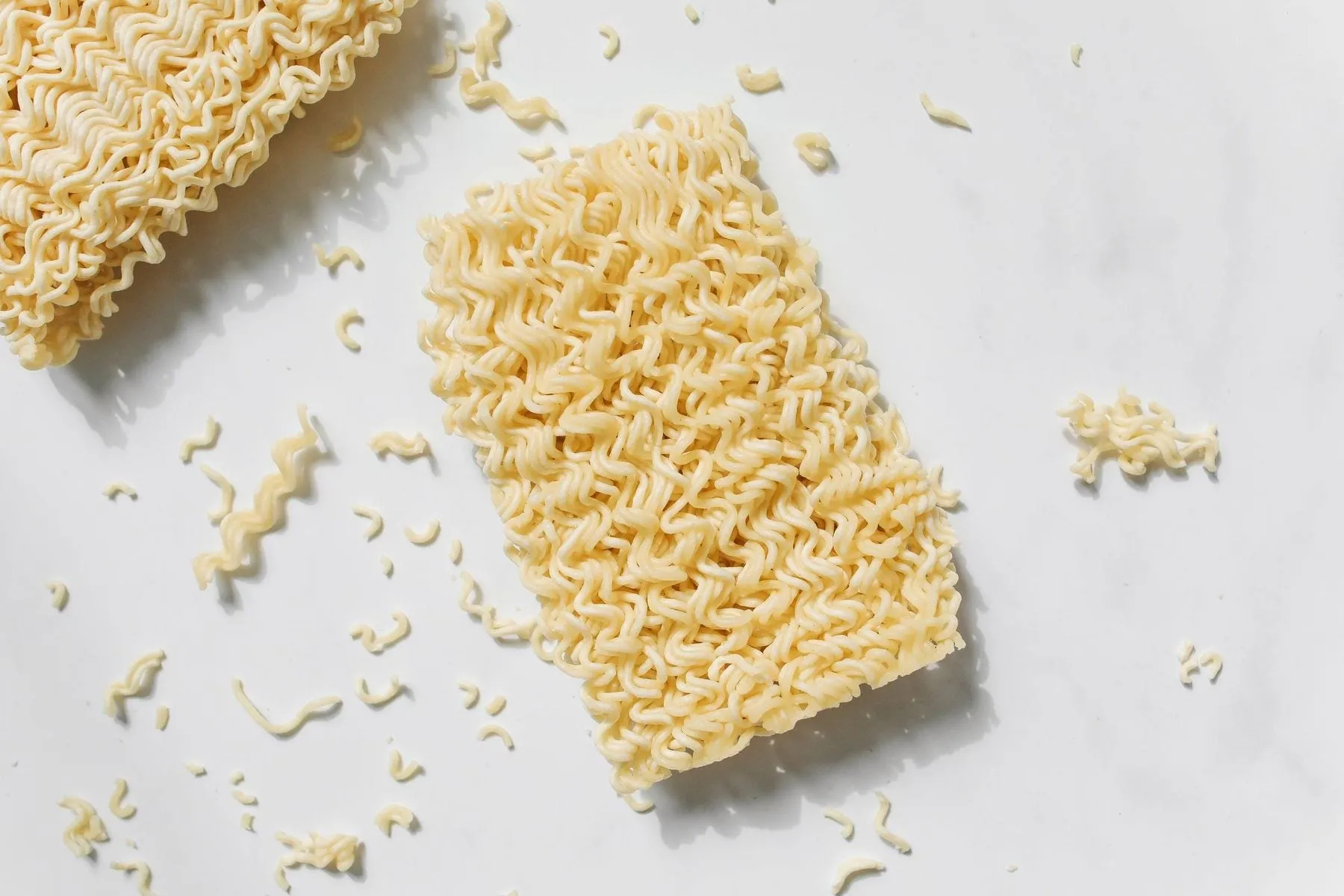
The mixer is the first station of the instant noodle production line and non-fried instant noodle line. It also prepares wrapper dough for the frozen dumpling production line and dough for the steamed bun production line and macaroni and short-cut pasta line.
Horizontal batch mixer
one shaft mixes a set batch under vacuum, the standard choice for noodle and wrapper dough.
Twin-shaft mixer
two shafts give more intensive, faster mixing for larger batches or stiffer doughs.
With automatic dosing
flour, water and brine are weighed and added automatically to reduce operator variation.
Our engineers check these points with you, so the quotation fits your site rather than a catalogue default.
Removing air lets water penetrate the flour faster and more evenly, so the dough can take more water and forms a stronger gluten network. Noodles and wrappers often come out smoother and more elastic.
Start from the output of the line after the mixer, the recipe water ratio and the mixing time per batch. From these we calculate the effective batch weight and the number of batches per hour. Nominal tank volume alone is not a reliable guide.
The mixers are designed for cleaning, with an opening tank and accessible shaft. Food-contact parts in stainless steel are standard on most models; confirm the material and seals per quote.
Tell us your raw material, finished product and target output. Our engineers reply with a matched configuration and quotation.
What to send with your inquiry
Email sales@hnfoda.com
Compare fried and non-fried (hot-air dried) instant noodle lines: product, oil handling, energy, shelf life, equipment and what to prepare before you buy.
Why instant noodle line quotes differ so much: capacity, fried or non-fried drying, automation, packing and site costs, plus what to prepare for a quote.
Instant Noodle & Frozen Food
New and expanding noodle brands that need one supplier for the whole line, from dough mixing to packing.
Sized to finished noodle blocks per hour at a set block weight
Instant Noodle & Frozen Food
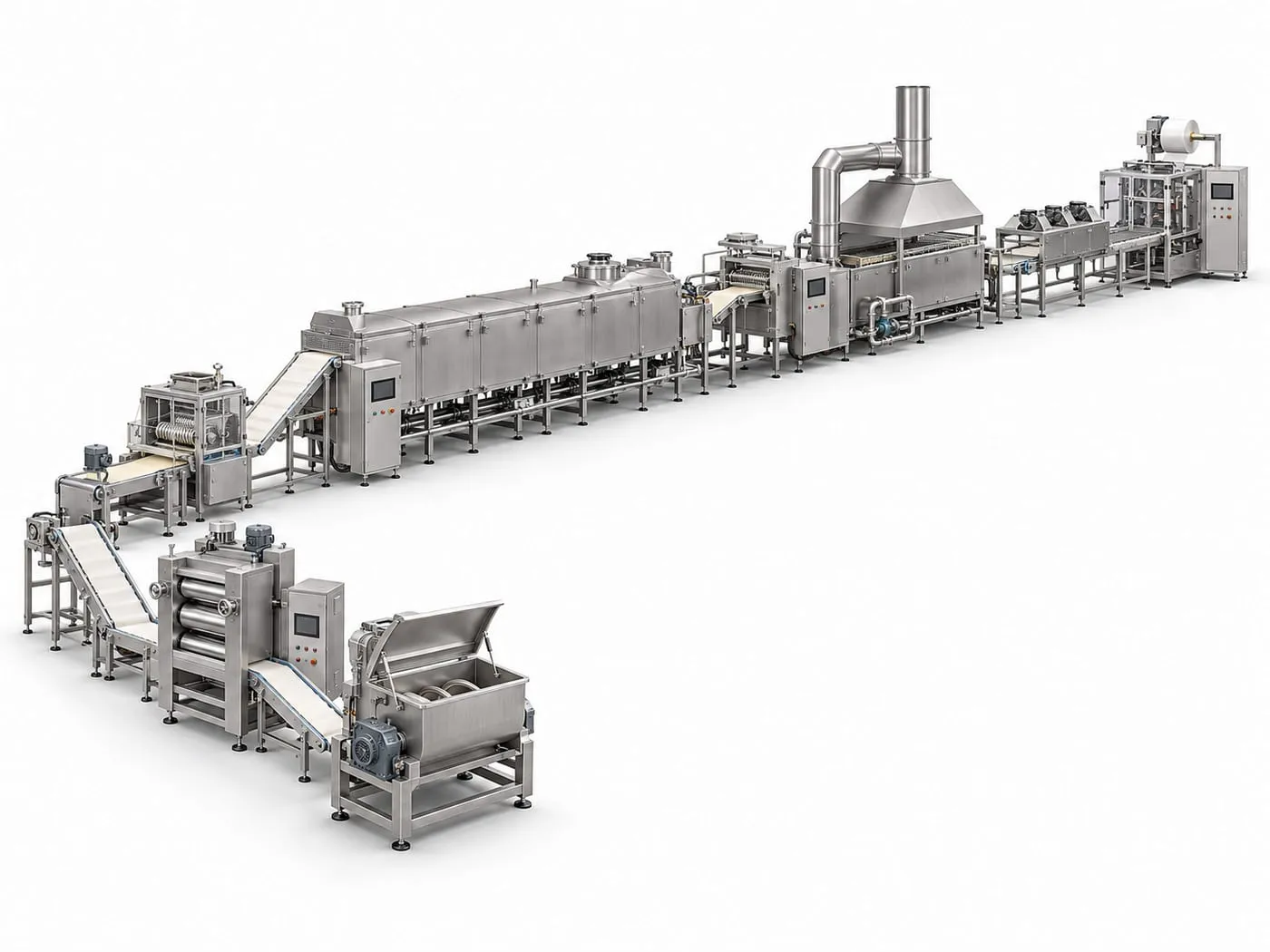
Noodle makers adding an air-dried, lower-fat product or building a dedicated non-fried plant.
Sized to dried noodle blocks per hour at a set block weight
Instant Noodle & Frozen Food
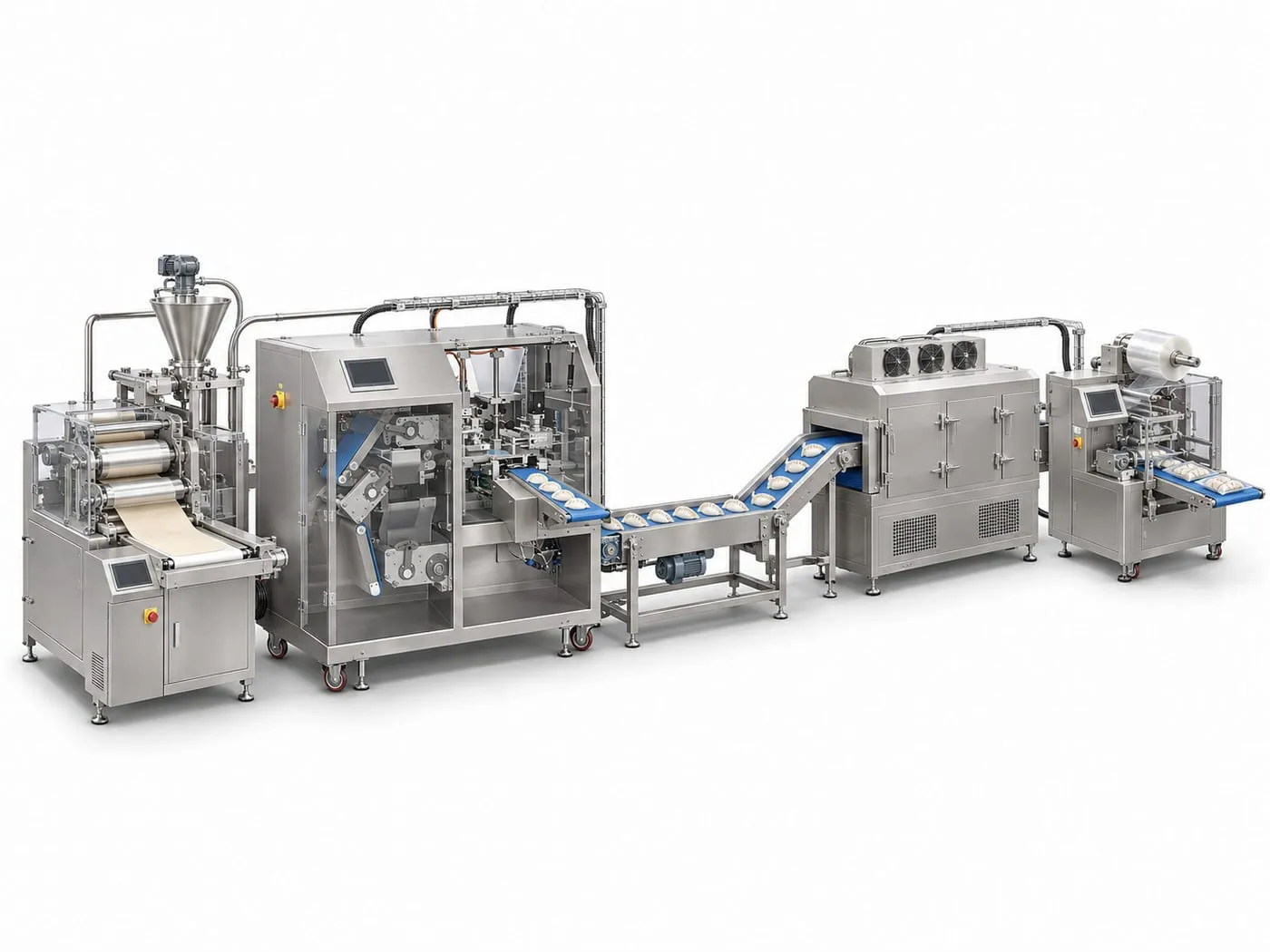
Frozen food factories and new brands moving from hand-made or semi-automatic dumplings to steady machine output.
Sized to finished frozen dumplings per hour at a set piece weight
Instant Noodle & Frozen Food
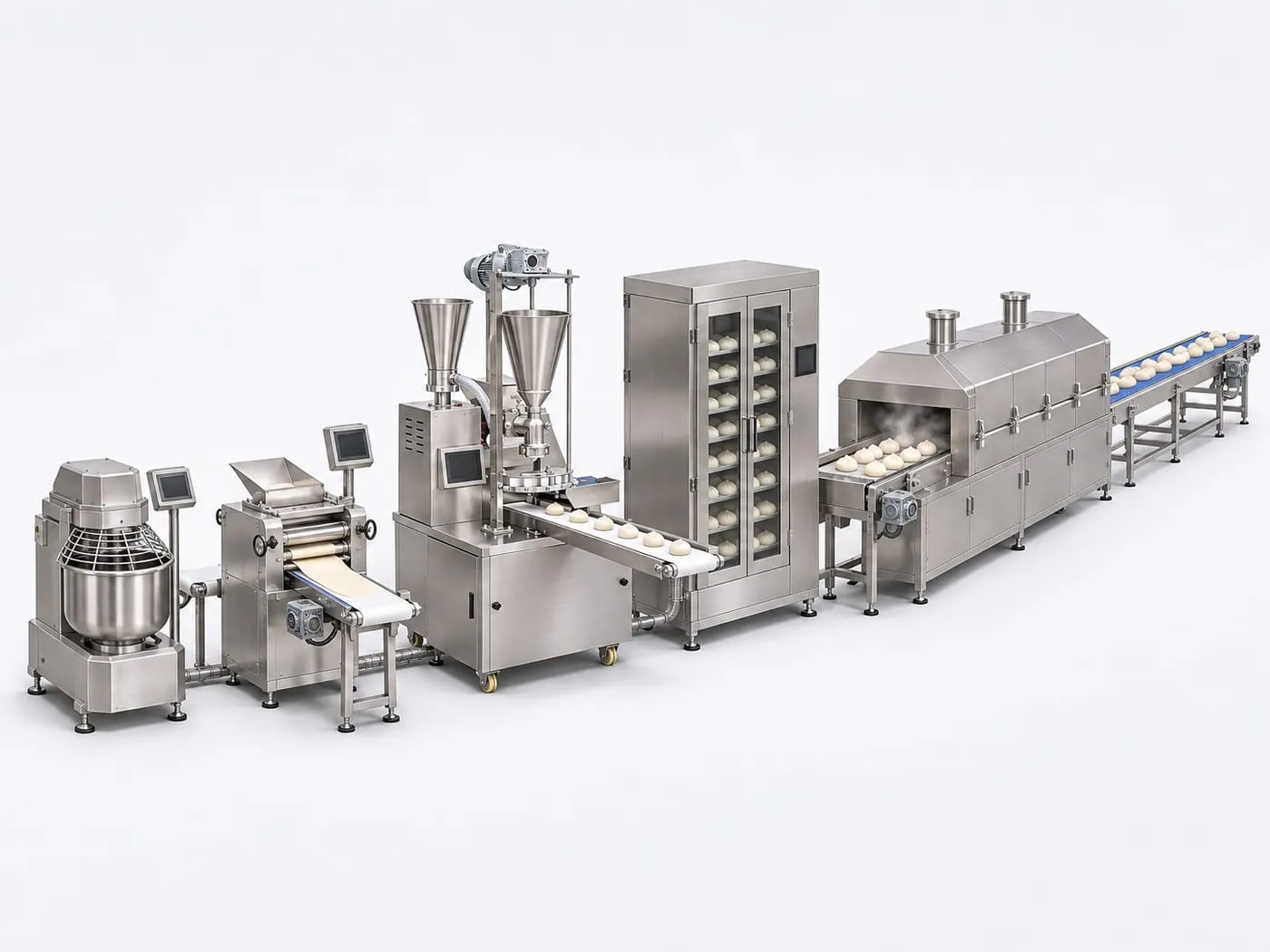
Central kitchens, frozen food plants and bakeries scaling up plain or filled steamed buns.
Sized to finished buns per hour at a set piece weight