Production lines · Biscuits & snacks
Biscuit and Snack Factory: Planning Baked, Extruded and Fried Snack Lines
Plan a biscuit and snack factory: mixing, forming, baking, extrusion, frying, seasoning and packing, with sizing, utilities and a quote checklist.
- Prepared by
- HNFODA Applications Engineering
- Topic
- Production lines · Biscuits & snacks
- Published
- Reading time
- 6 min read · 3 sources
On this page
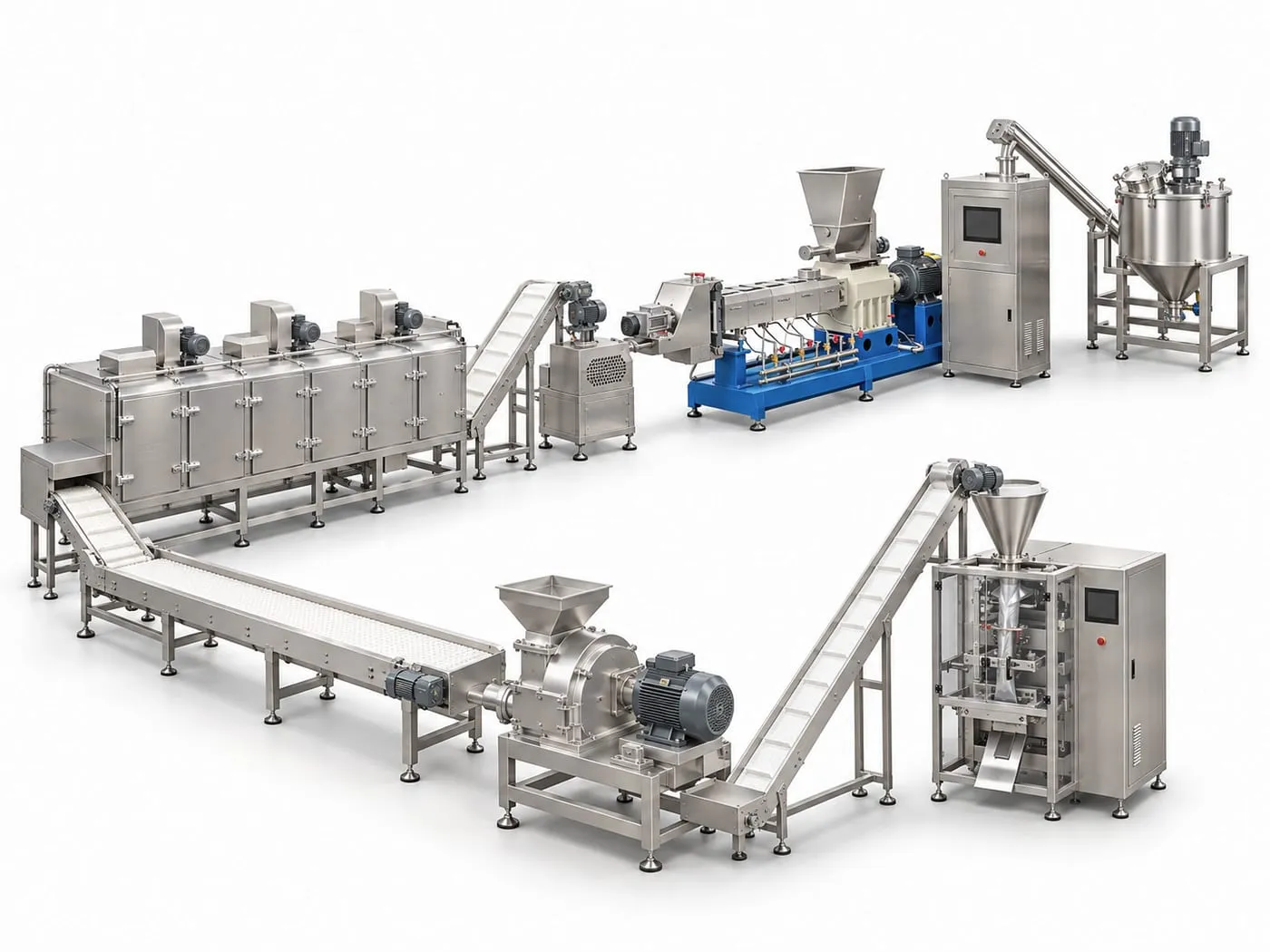
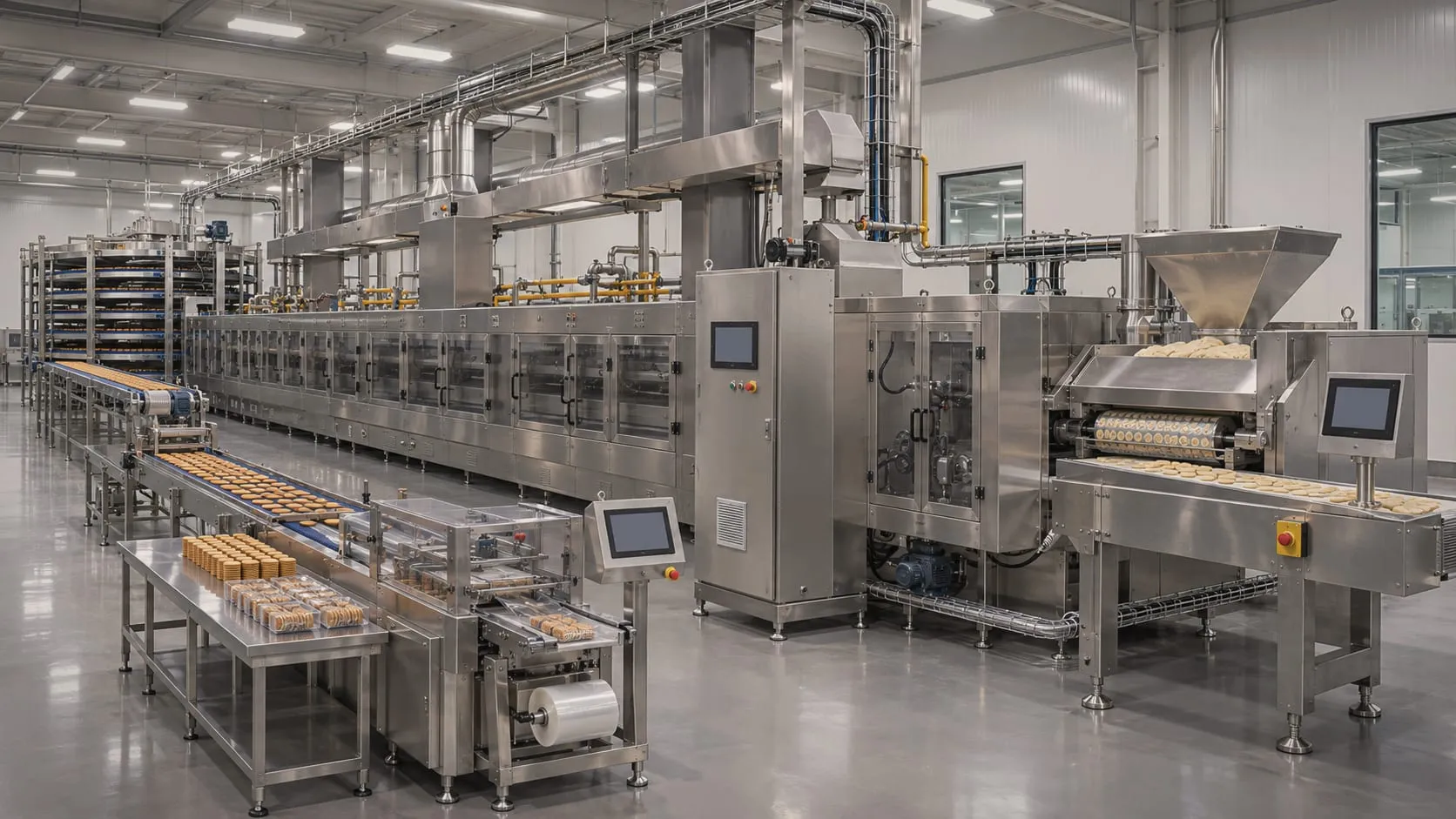
Short answer: A biscuit and snack factory usually runs two kinds of lines under one roof: a biscuit line (mixing, forming, baking in a tunnel oven, cooling) and a snack line (mixing, extrusion, drying or frying, seasoning). Both feed a shared packing hall. The oven sets biscuit output and the extruder with its dryer or fryer sets snack output, so the plant is sized on finished product per hour, with heat, exhaust and dust handled from the start.
This page covers the plant as a business project. For single lines, see the biscuit production line and the extruded snack production line.
What a biscuit and snack plant consists of
- Raw material stores: flour (bags or silos), sugar, fats, starches, flavours, seasonings and packaging.
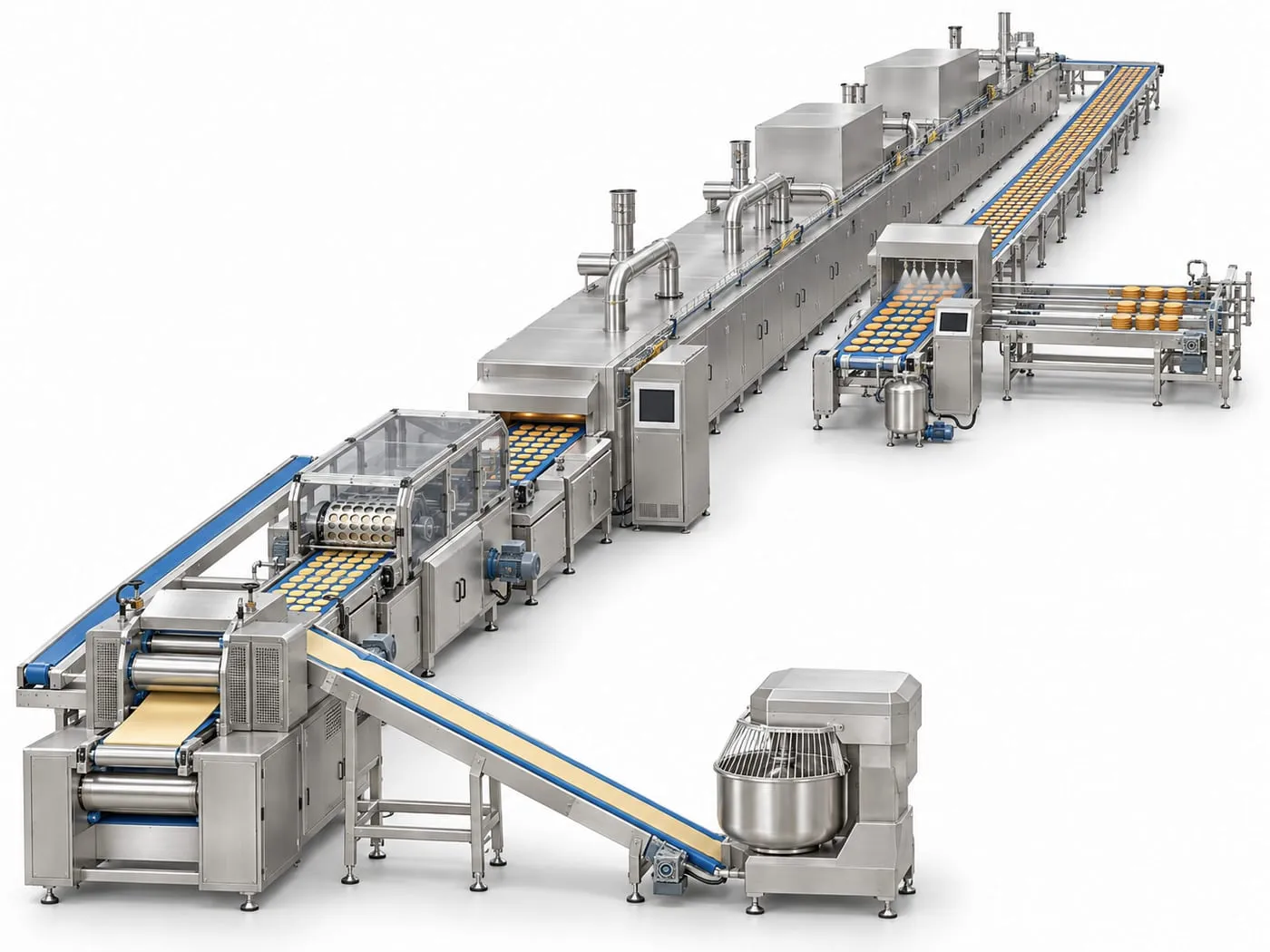
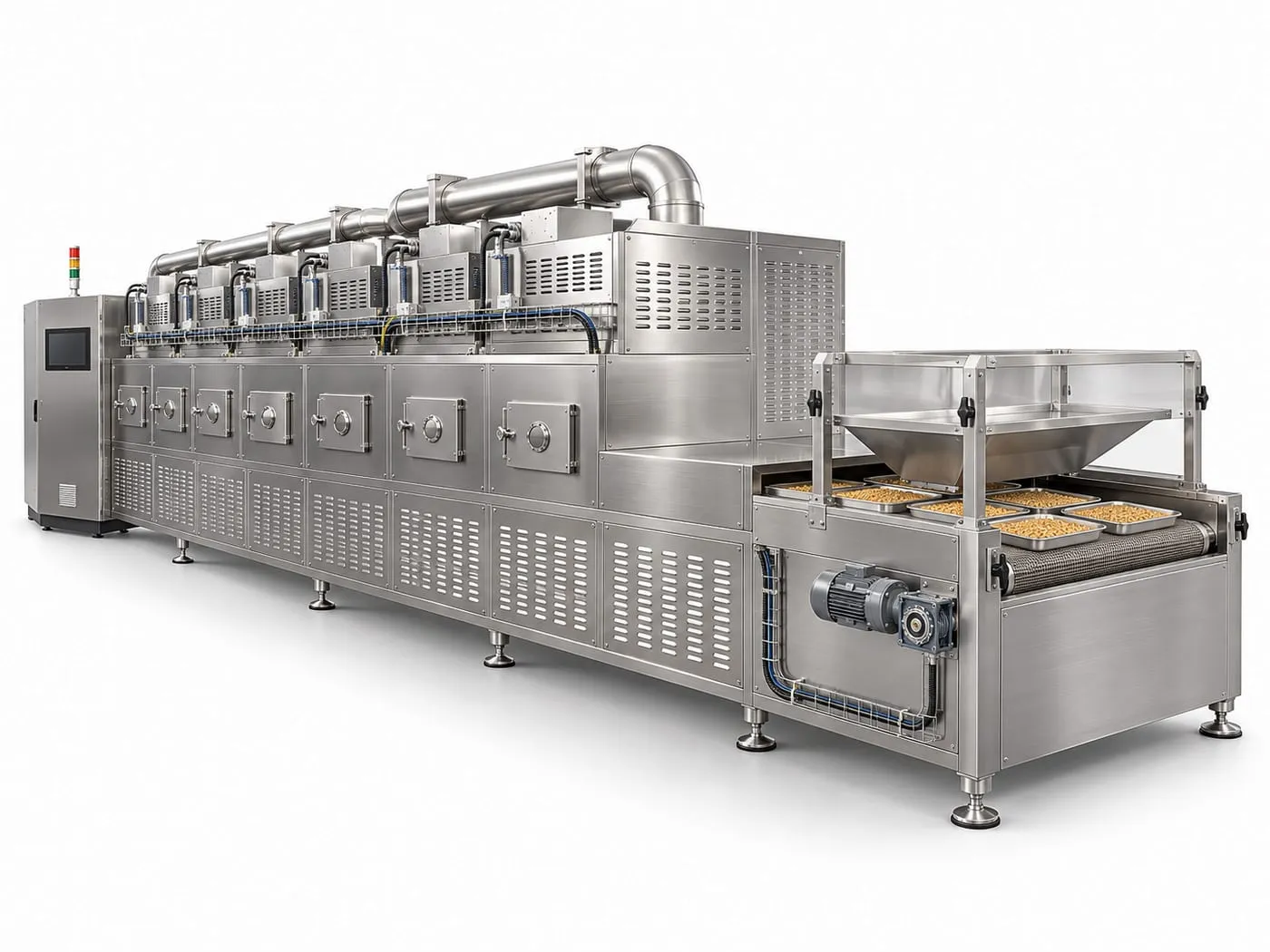
- Biscuit line: dough mixing, forming (rotary moulding, sheeting and cutting, wire-cut or depositing), baking, oil spraying or cream sandwiching if needed, and cooling.
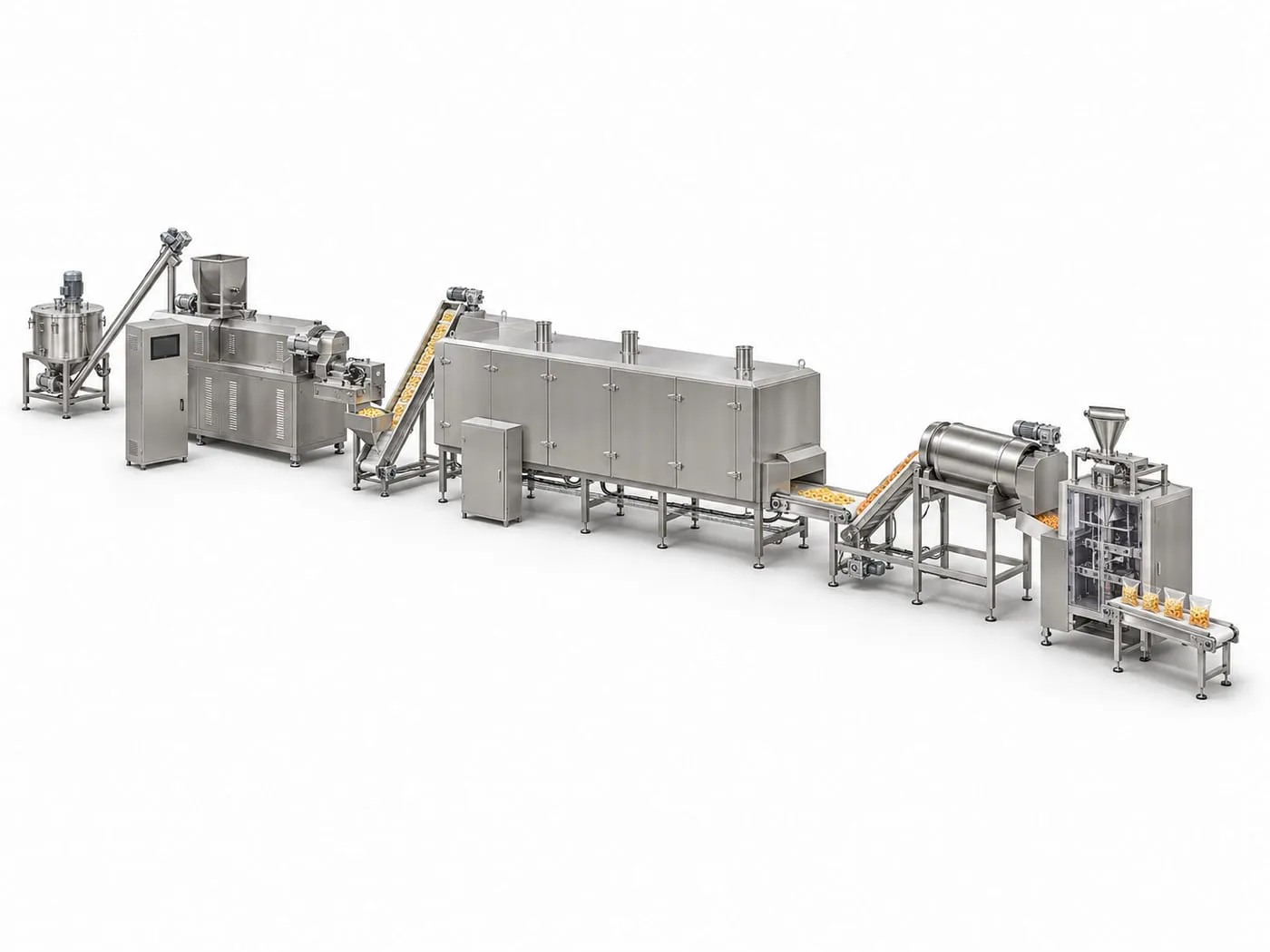
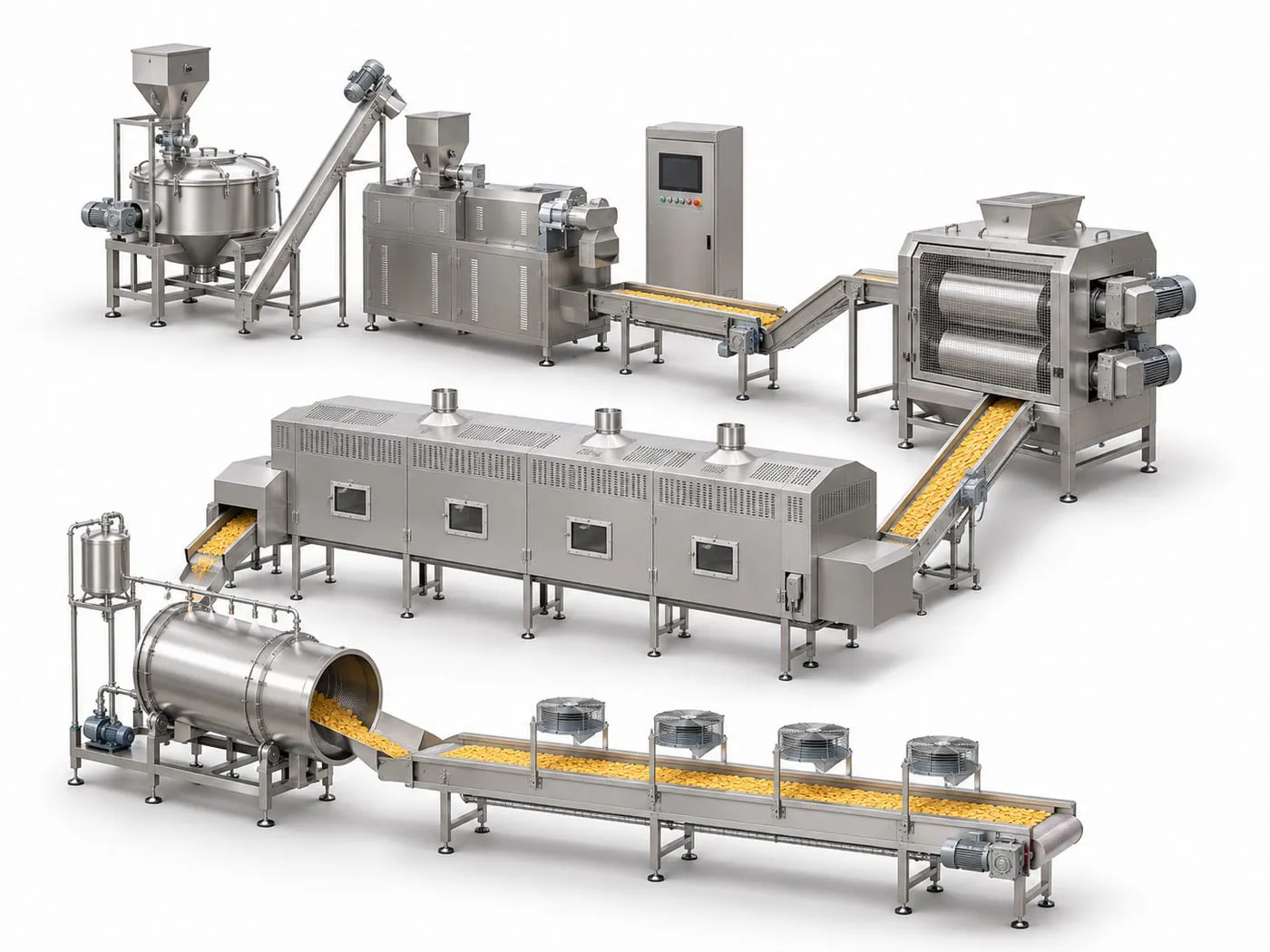
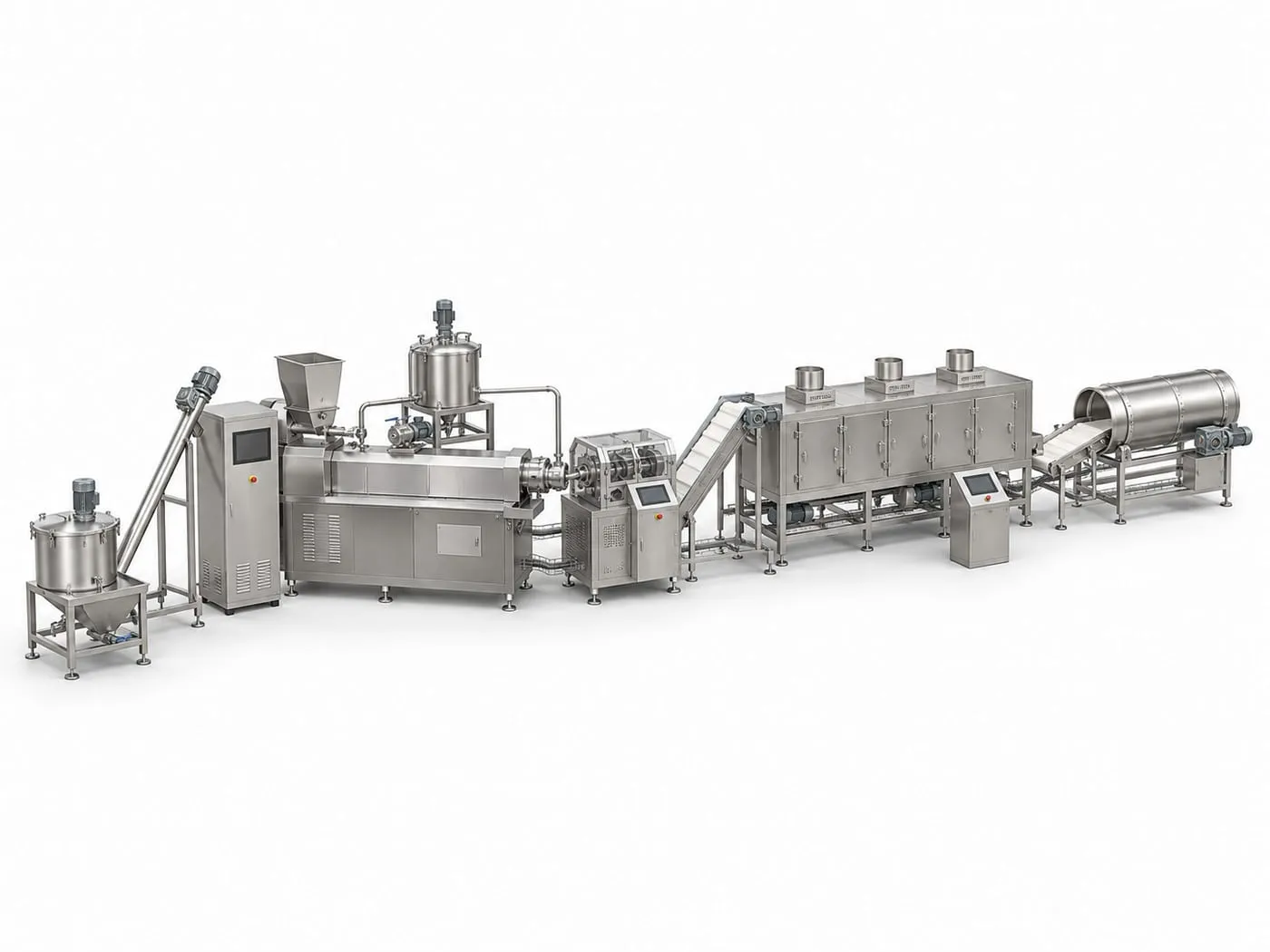
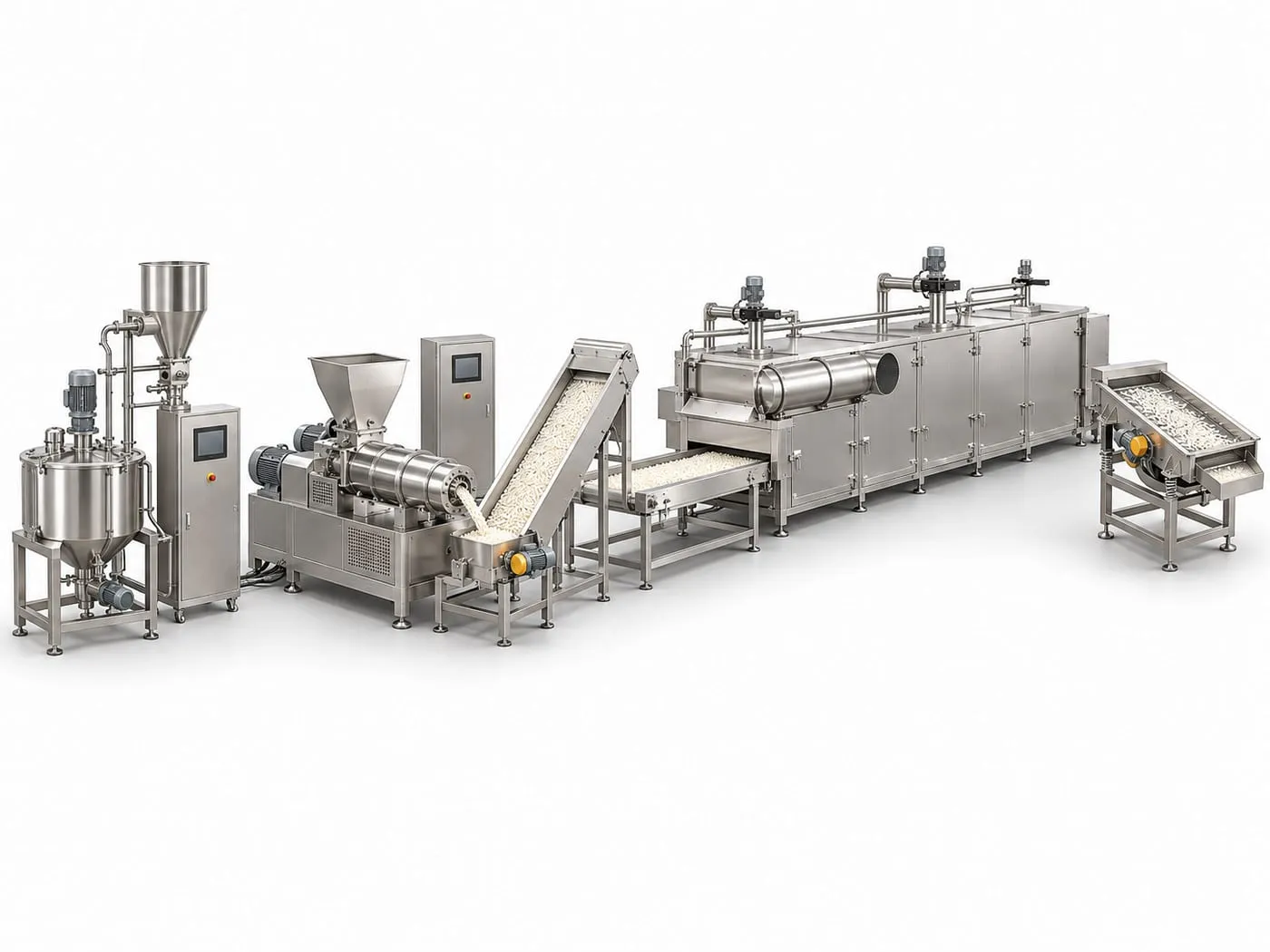
- Snack line: dry mixing and conditioning, extrusion, drying or frying, seasoning in a drum.
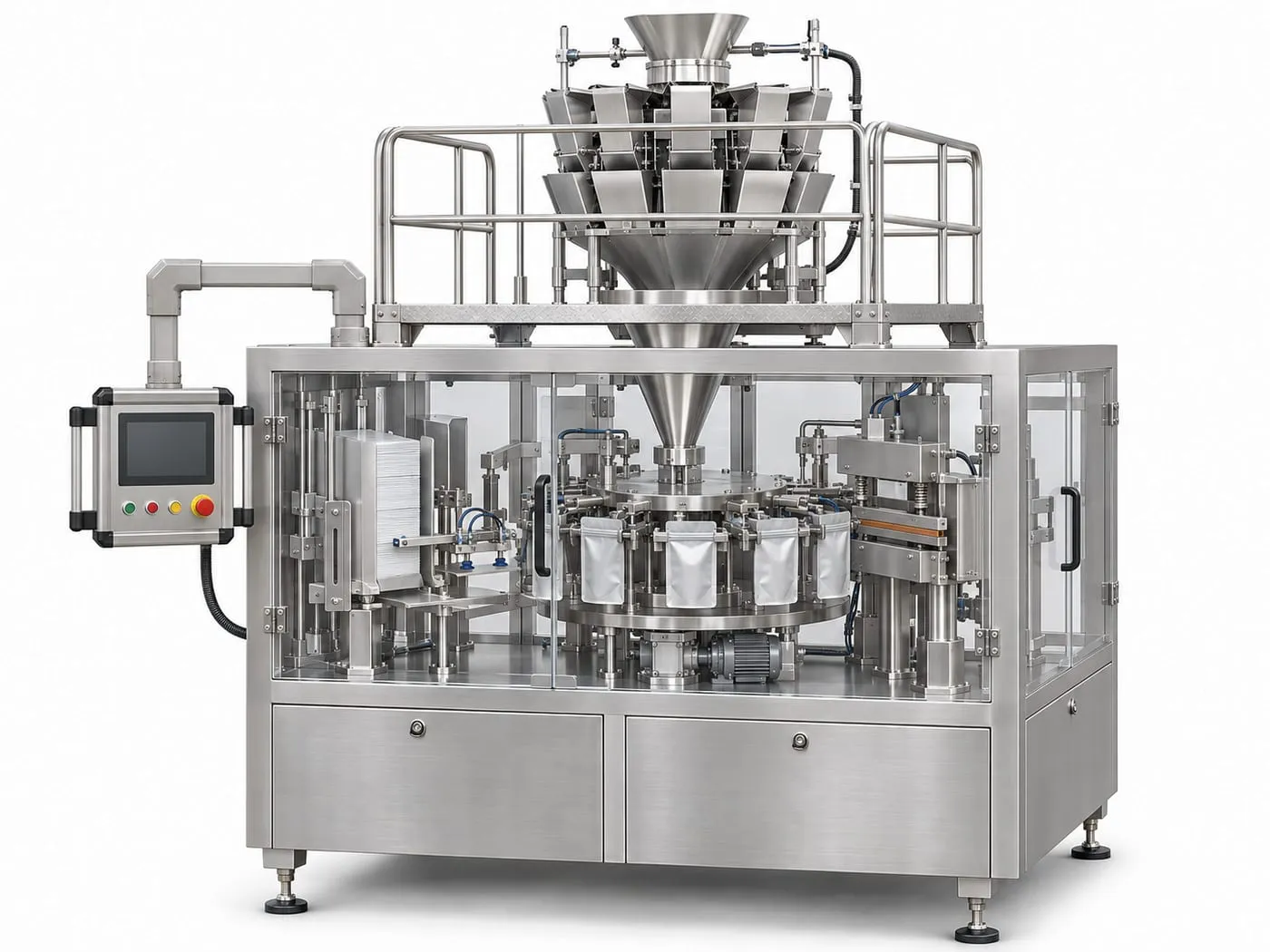
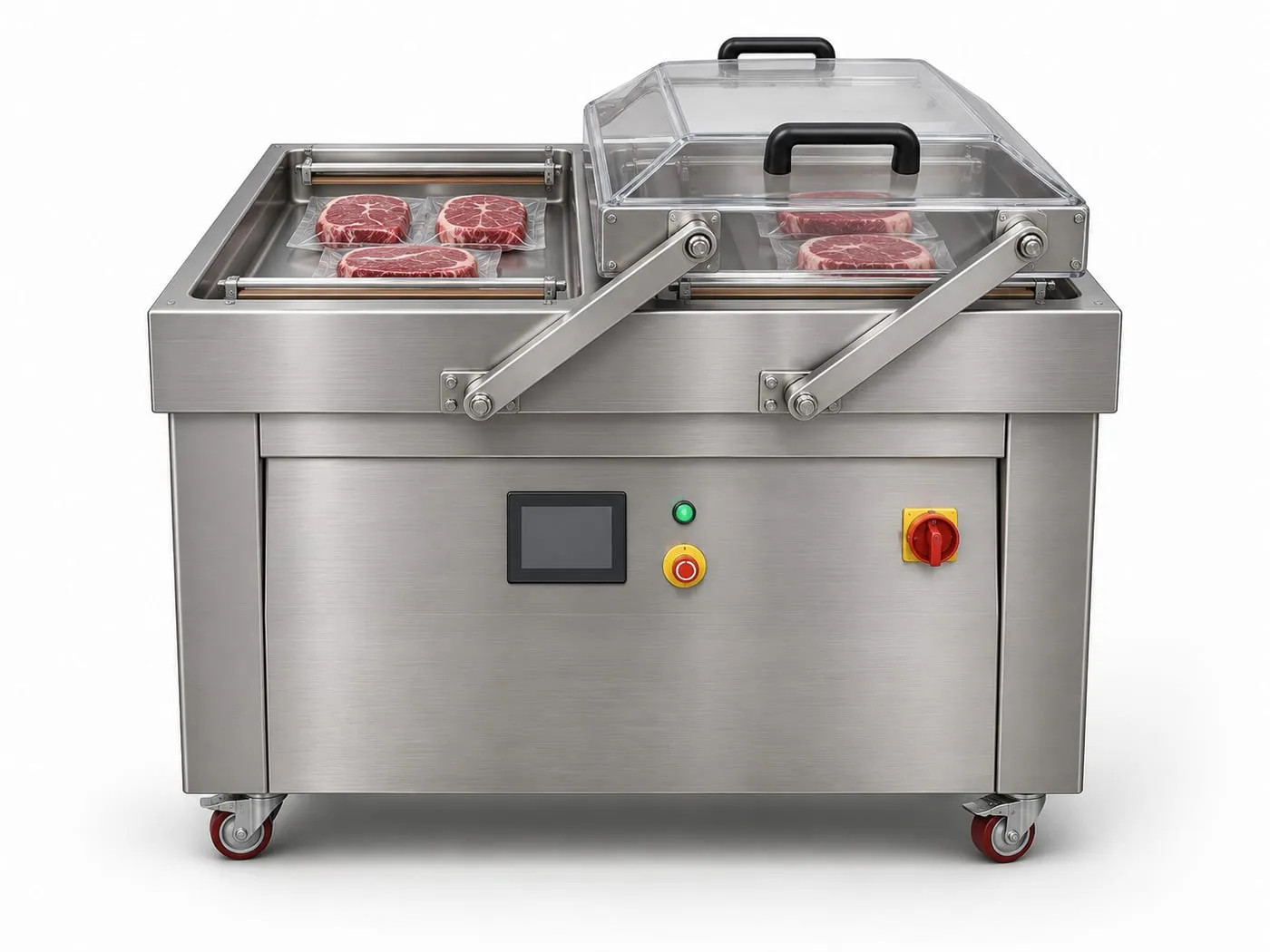
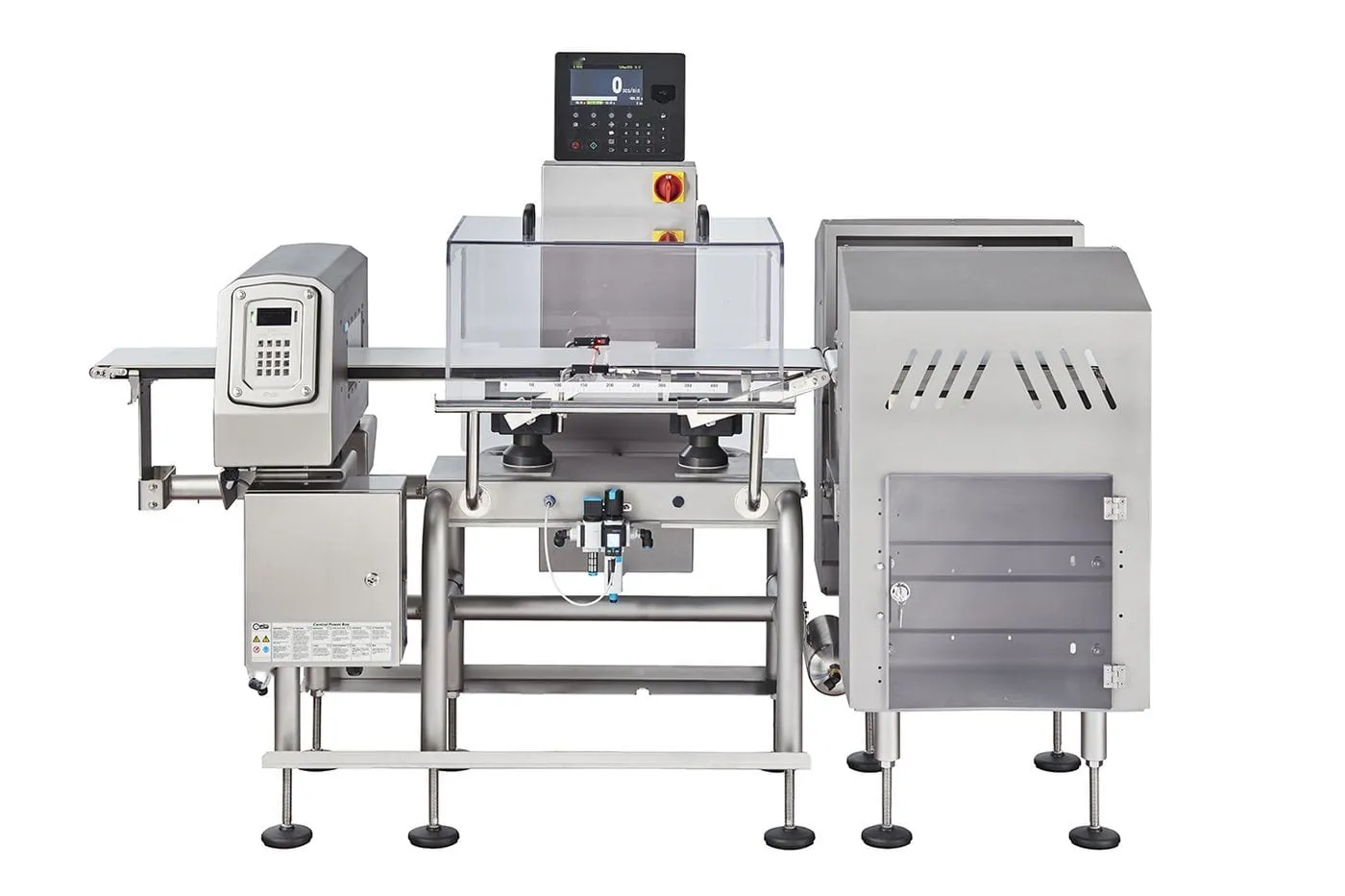
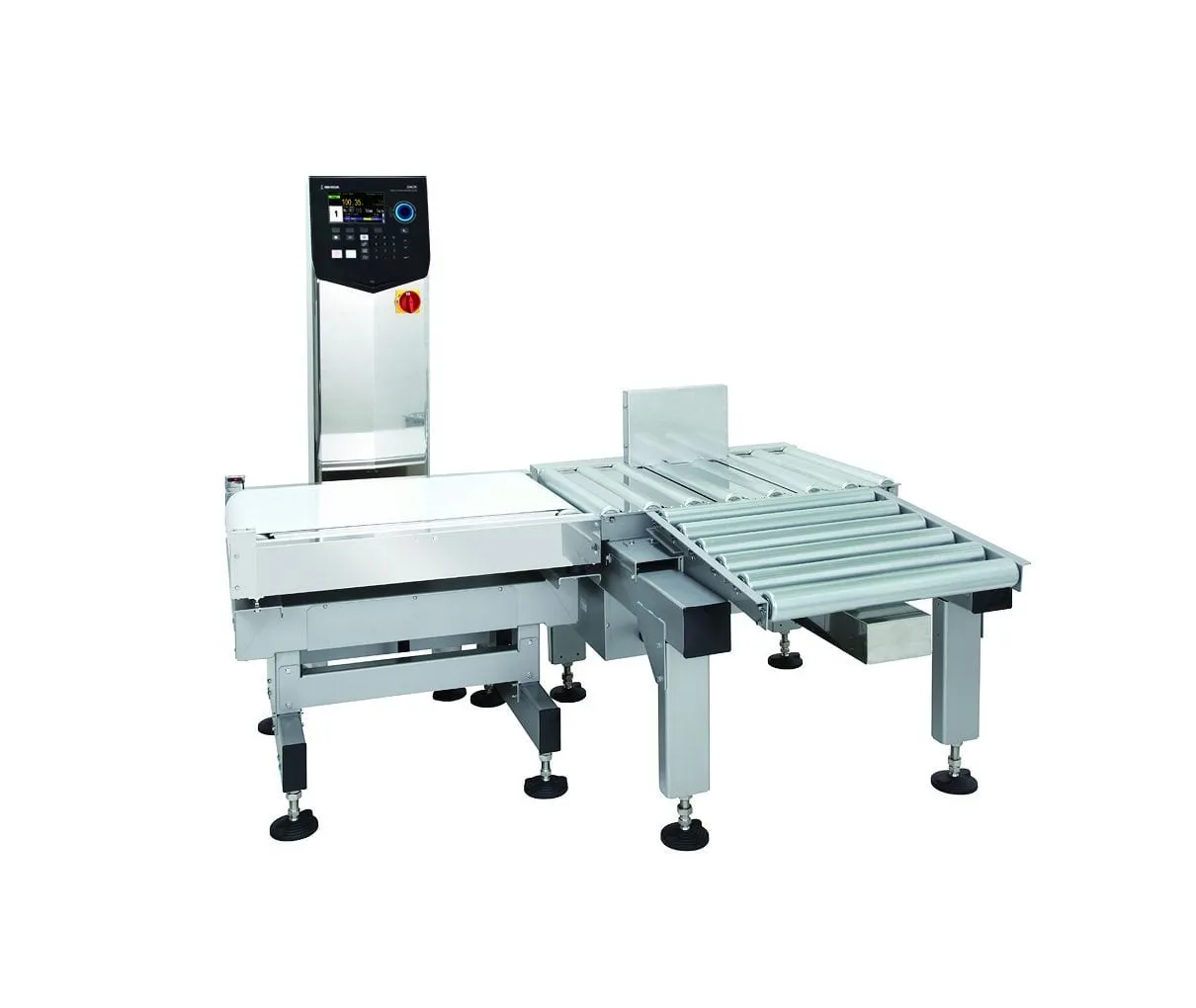
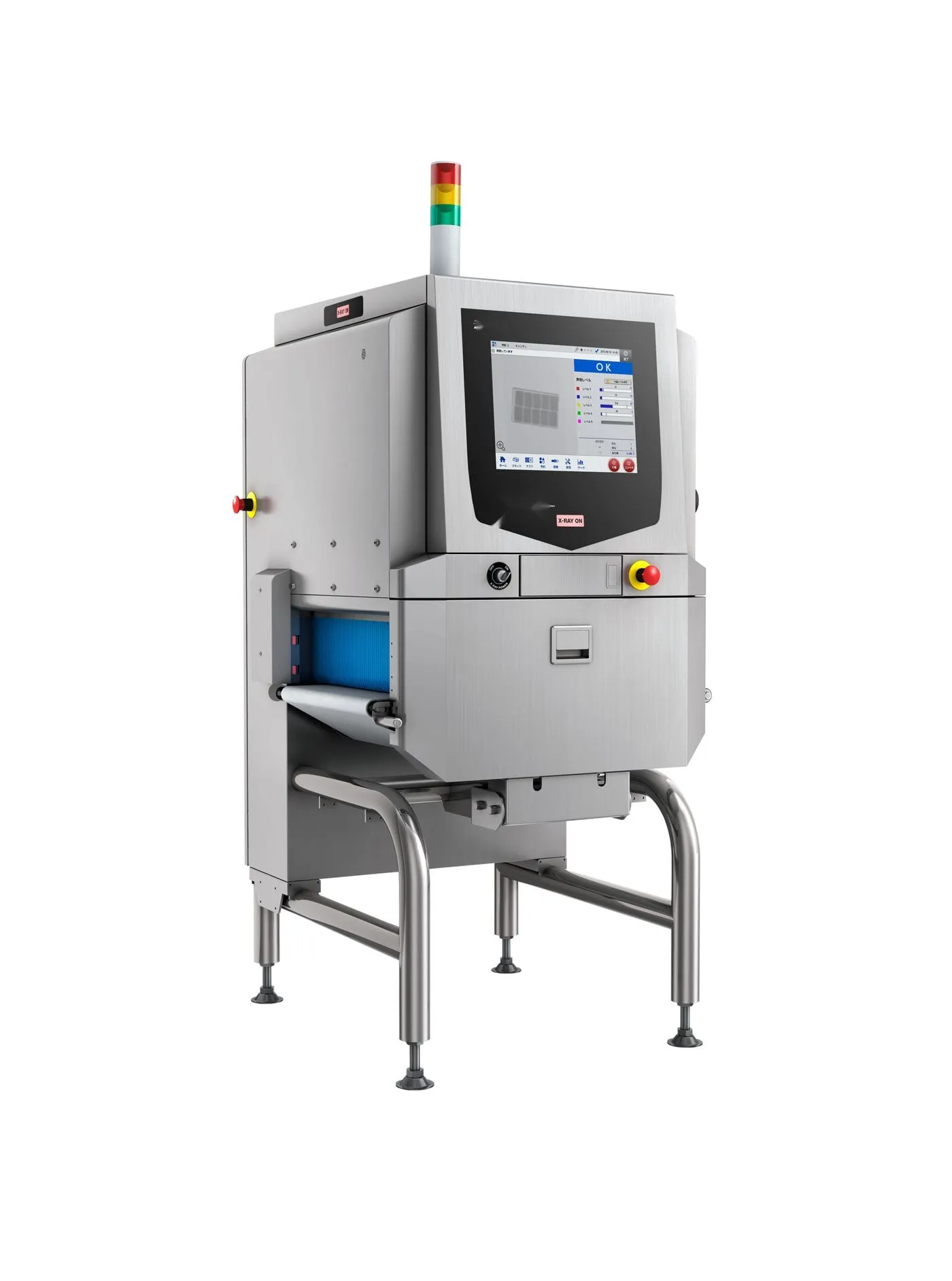
- Packing hall: weighing, bagging or flow-wrapping, metal detection, checkweighing and cartoning.
- Utilities: heat for ovens, dryers and fryers; compressed air; exhaust and dust collection.
Process route and key machines
| Station | Purpose | Key machine |
|---|---|---|
| Biscuit mixing and forming | Prepare dough and shape biscuits | Biscuit production line |
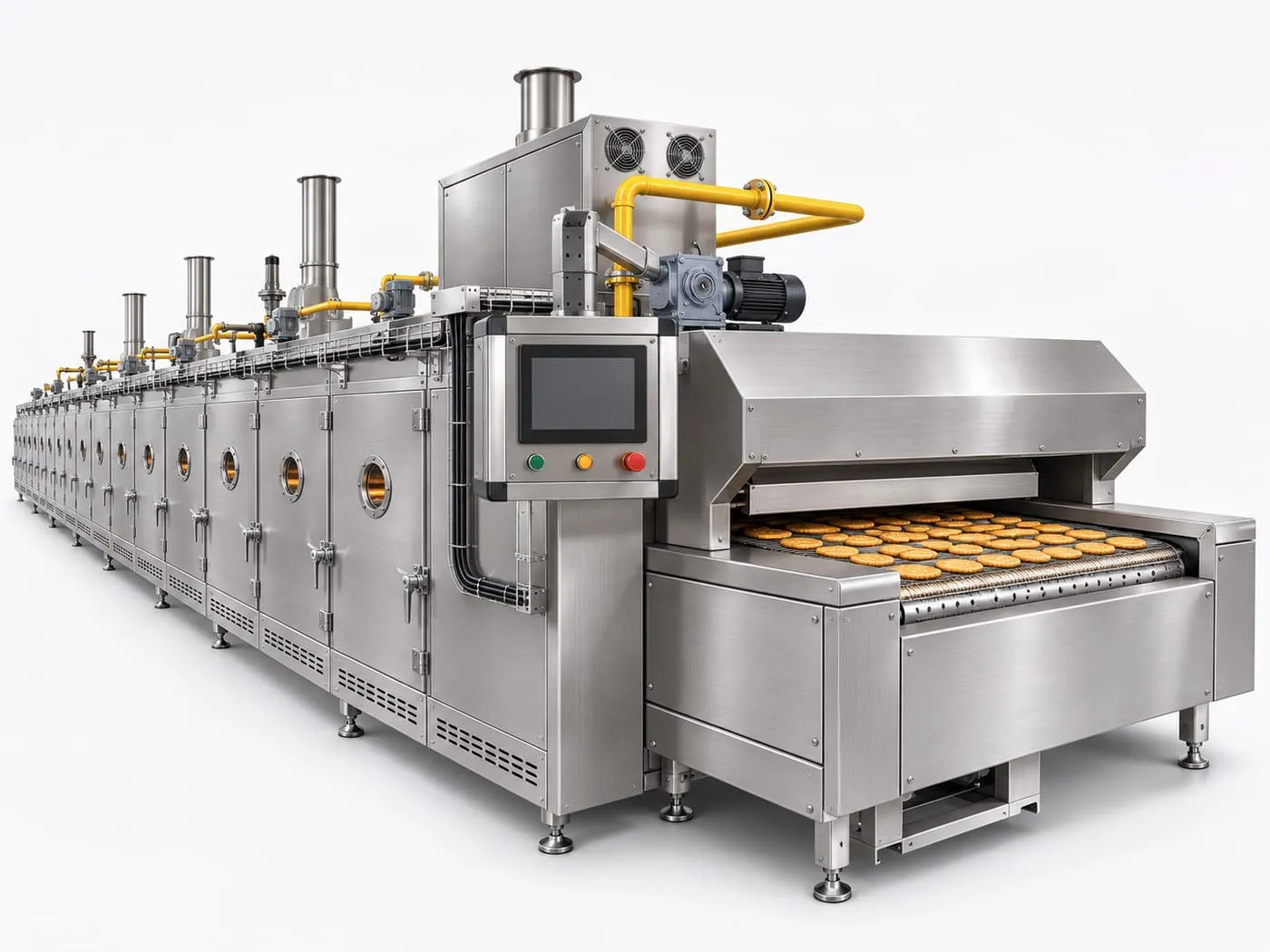
| Baking | Bake biscuits to colour and moisture | Tunnel oven |
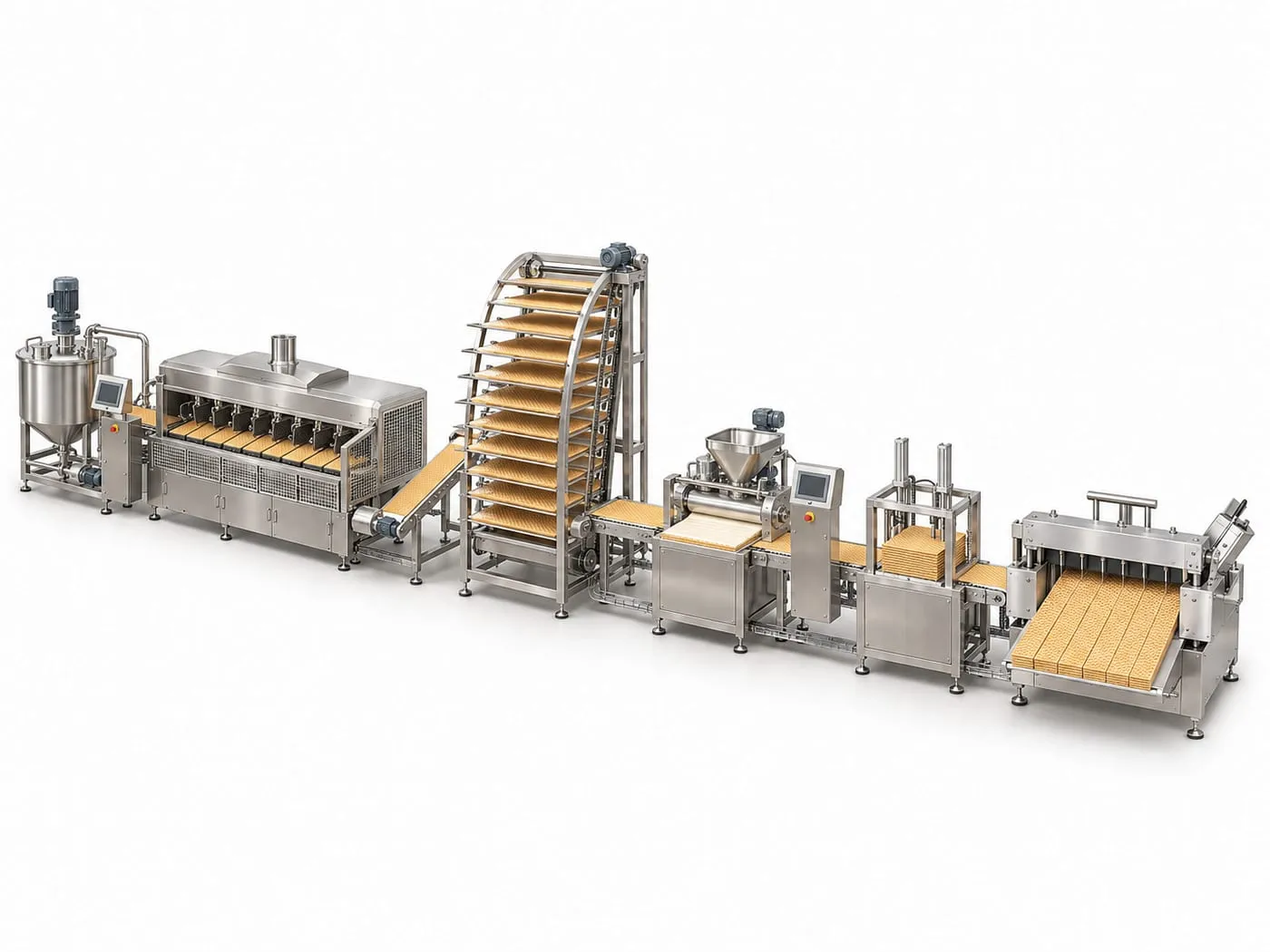
| Wafer production (optional) | Bake wafer sheets, spread cream, cut | Wafer production line |
| Extrusion | Cook and expand cereal mixes into shapes | Extruded snack production line |
| Filled snacks (optional) | Extruded tubes or pillows with cream filling | Core-filled snack line |
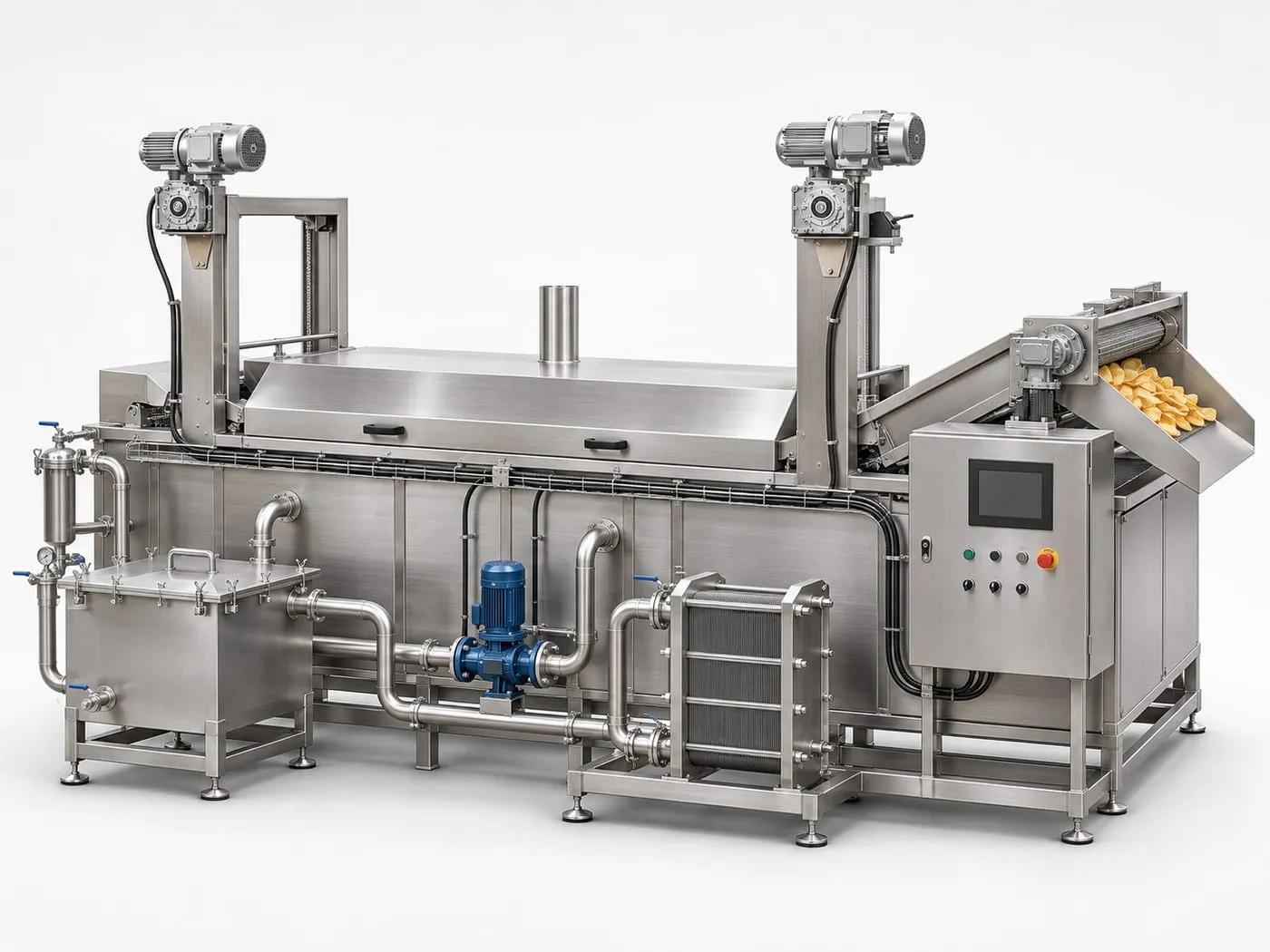
| Frying | Fry pellets, chips or coated snacks | Continuous fryer |
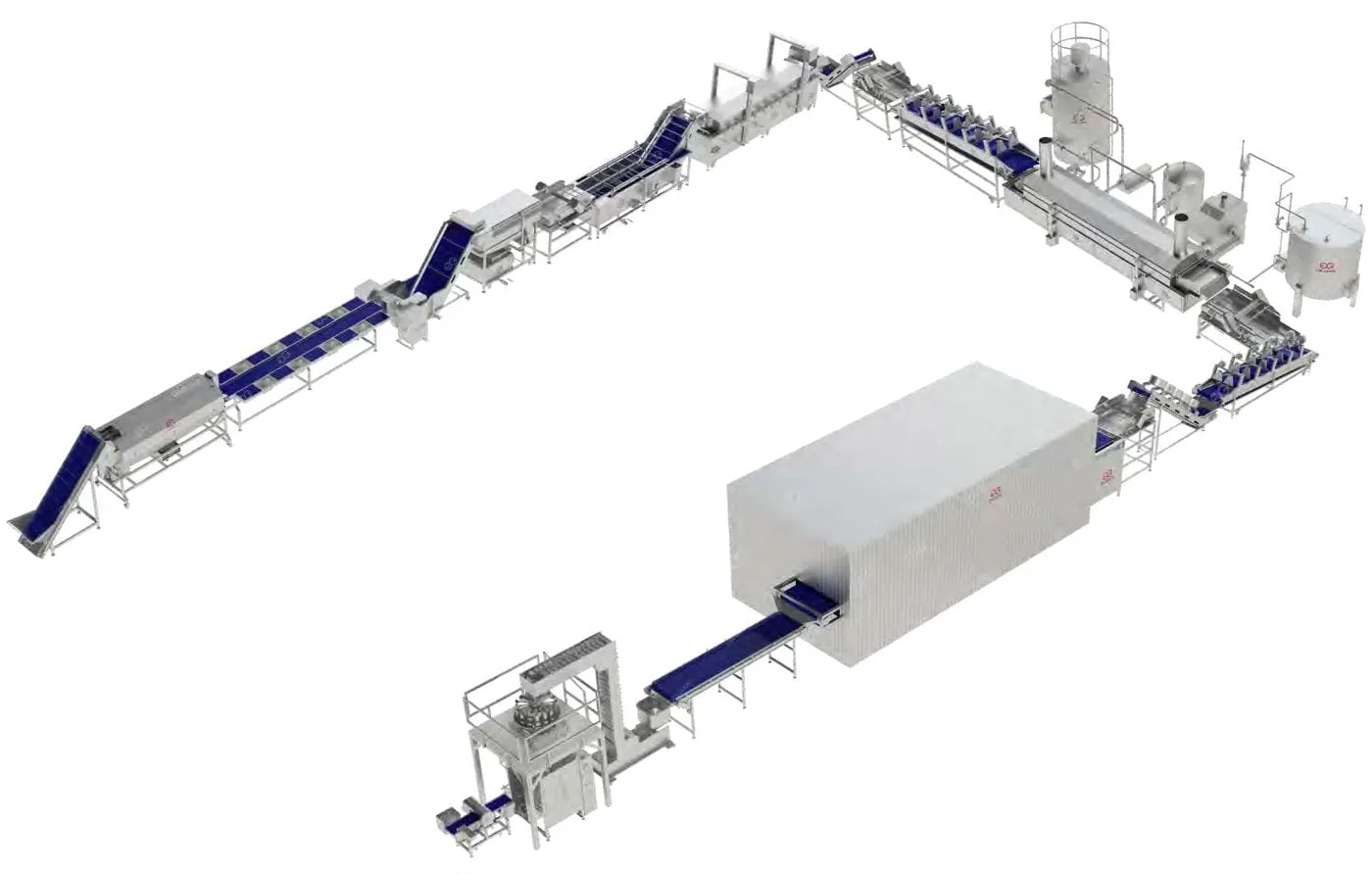
| Potato chips (optional) | Slice, fry and season fresh potatoes | Potato chips and French fries line |
| Seasoning | Coat snacks with oil and flavour powder | Rotary coating drum |
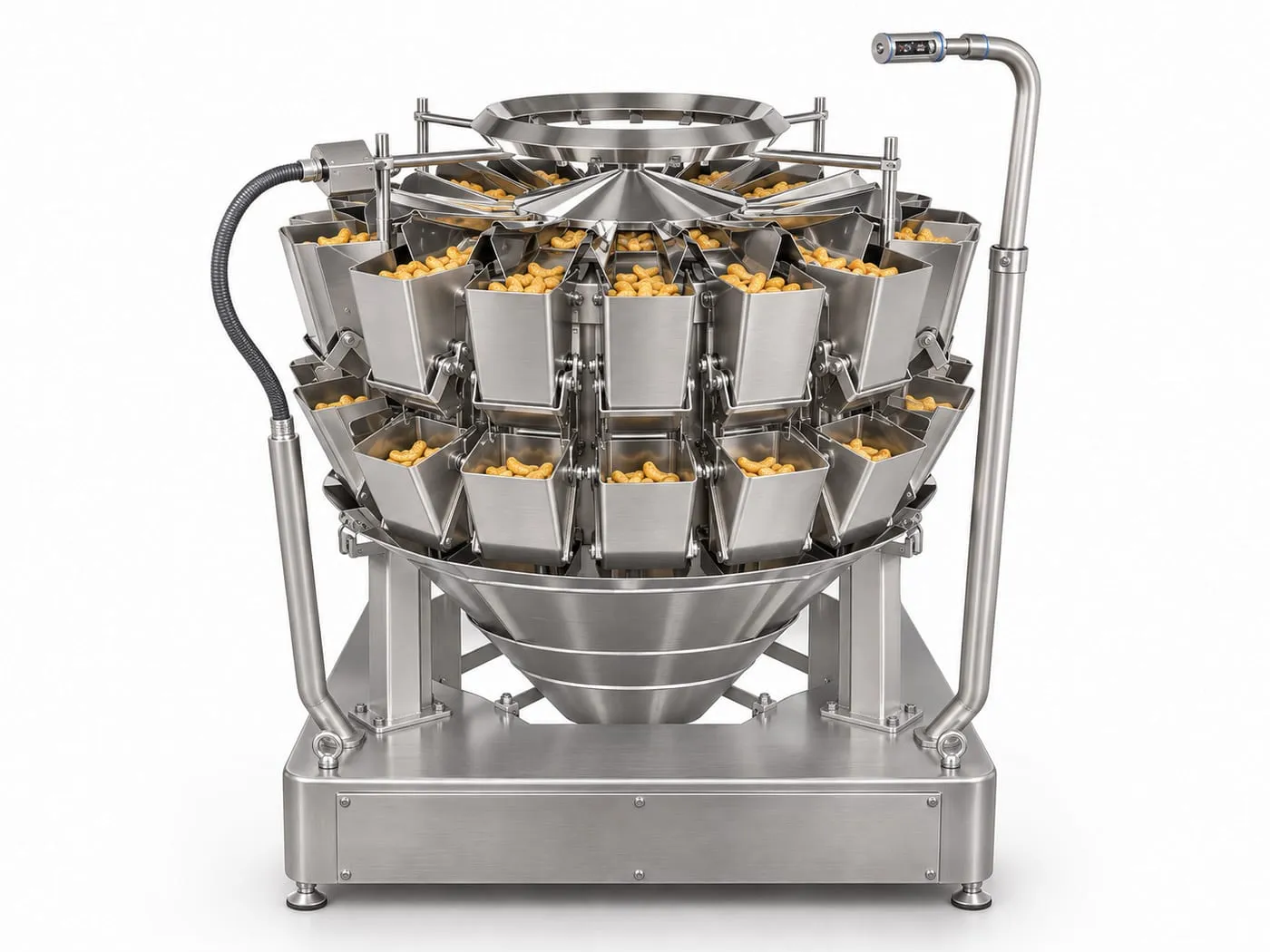
| Weighing and packing | Bags at set weight, often with nitrogen | Multihead weigher, VFFS packaging machine |
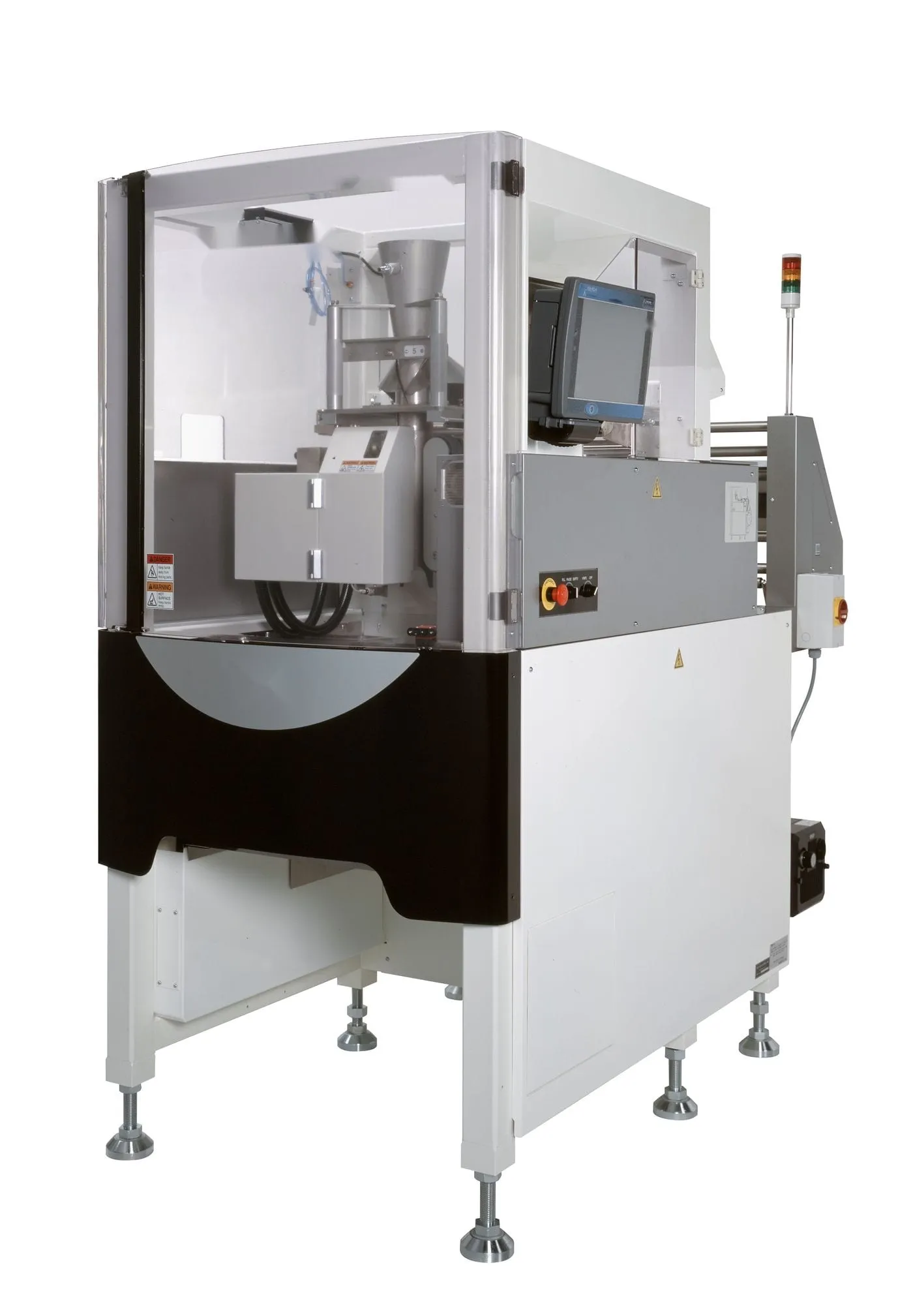
| Inspection | Metal and weight control | Food metal detector, in-line checkweigher |
How to size the plant
Biscuits: the oven is the limit. Its belt width and length, and the baking time of your product, set how many kilograms per hour come out. Mixing and forming are sized to feed the oven; cooling conveyors and packing are sized to take everything it produces. A biscuit line runs best when it runs long, steady campaigns.
Extruded snacks: the extruder’s rated output is a starting point, but the dryer or fryer must match it. Seasoning drums and packing then need to keep up with the lightest, bulkiest product, because snacks take up a lot of volume per kilogram and packing machines can be limited by bag count rather than weight.
In both cases:
- Define products, net weights and pack formats.
- Convert sales targets to kg/h of finished product.
- Size the oven or extruder plus dryer or fryer for that rate.
- Size packing for the highest bag count per minute in your range.
- Allow for changeovers, warm-up and cleaning.
Acrylamide, hygiene and dust
Acrylamide can form in baked and fried starchy foods. In the European Union, Regulation (EU) 2017/2158 lists biscuits, crackers, potato crisps and similar products among the foods whose producers must apply mitigation measures and check results against benchmark levels. The US FDA has published guidance on ways to reduce acrylamide but sets no maximum level. In practice this affects recipes, raw material choice and the control of baking and frying temperature and time, so you should check the rules of your target markets early.
Other points to plan:
- Dust from flour, sugar and seasoning powders: collection systems and housekeeping, and explosion risk assessment where required.
- Heat and fumes from ovens and fryers: exhaust hoods and ducts, and keeping heat away from the packing hall.
- Allergens such as wheat, milk, nuts and sesame: sequencing and cleaning between products.
- Hygienic design of equipment and floors; EHEDG guidance is a common reference.
Utilities and building
- Heat: gas, electricity or thermal oil for ovens, dryers and fryers.
- Building length: tunnel ovens and their cooling conveyors are long; a hall that is too short limits future oven size.
- Exhaust and roof penetrations for ovens and fryers.
- Bulk flour handling at larger scale.
- Packaging store: snack films and cartons take much space.
A worked sizing example
The figures below are an illustration of the method only; replace them with your own sales plan and trial results.
Suppose a new snack brand plans to sell 20,000 bags a day of a 60 g extruded corn snack, packed on two 8-hour shifts with about 14 effective hours. Finished output is 20,000 × 0.06 kg = 1,200 kg a day, or roughly 86 kg/h. Seasoning adds weight, so the extruder output before seasoning is somewhat lower; your recipe tells you how much. The packing end must handle 20,000 ÷ 14 ≈ 1,430 bags an hour, about 24 a minute, plus margin for changeovers. In this example a modest extruder is enough, but the bagger and weigher need to be chosen for bag count, and the building should leave room for a second product on the same packing end.
For a biscuit line the same logic starts at the oven: daily packets × net weight ÷ effective hours gives the kg/h the oven must bake, which the oven supplier converts into belt width and length for your baking time.
Which business model fits
- Own-brand producers usually start with one line and a flexible packing hall, then add a second line once a product sells.
- Contract manufacturers for retail or private label need fast changeovers, several forming methods and good allergen control, because they run many short orders.
- Investors entering a new market often begin with extruded snacks, which need less space and capital than a full biscuit line, and add biscuits later.
Supply levels
- Single machine: an oven, extruder, fryer or packing machine for an existing plant.
- Section: for example, the snack line from mixer to seasoning, or the packing hall.
- Complete line: from mixing to packed product, with layout and controls.
- Turnkey project: complete lines with installation, commissioning and training. See turnkey projects.
What drives the cost
- Oven width and length; extruder size and dryer or fryer type
- Number of forming methods and product types
- Fried products (oil systems, filtration, fire protection)
- Packing automation, nitrogen flushing, cartoning
- Bulk raw material handling
- Building, exhaust and dust collection
Common mistakes
- Buying an oven for today’s biscuit only, with no room for other products or a wider belt later.
- Matching an extruder to a dryer or fryer that cannot take its full output.
- Packing machines sized by kg/h for a light, bulky snack that is actually limited by bags per minute.
- Ovens and fryers placed next to the packing hall without heat and fume separation.
- Leaving acrylamide and allergen planning until after the recipes are fixed.
What to send us for a quotation
- Products: biscuit types, snack shapes, sample photos or reference products
- Recipes or main ingredients, and target texture
- Target output in kg/h of finished product, shifts per day
- Baked, dried or fried snacks; seasonings and coatings
- Pack formats, net weights, nitrogen flushing, cartoning
- Heat source available (gas, electricity, thermal oil) and power
- Building plan, hall length and height
- Target markets and their food rules
Frequently asked questions
- Can biscuits and snacks share one factory?
- Yes. They can share raw material stores, utilities and often the packing hall. The process lines themselves are different, and hot equipment such as ovens and fryers should be placed so their heat and fumes do not reach packing.
- Which biscuit forming method do I need?
- Rotary moulding suits short-dough biscuits and cookies with a pattern; sheeting and cutting suits hard-dough biscuits and crackers; wire-cut and depositing suit soft doughs and cookies with inclusions. Your product range decides, and some lines combine more than one method.
- Fried or baked snacks?
- Extruded snacks are often dried or baked and then seasoned with oil and powder; pellets and potato chips are fried. Frying adds oil handling, fume extraction and fire protection but gives a different texture and flavour.
- What capacity should I plan?
- Start from sales: packs per day at your net weight gives finished output. State it per hour of finished product, then check the oven or extruder at that rate. Leave room in the building for a second line or a wider oven if you expect growth.
Sources
- [1]Commission Regulation (EU) 2017/2158 on mitigation measures and benchmark levels for acrylamide in food — legislation.gov.uk (published text of the EU regulation)
- [2]Guidance for Industry: Acrylamide in Foods — U.S. Food and Drug Administration
- [3]EHEDG guideline catalogue (hygienic design) — European Hygienic Engineering & Design Group
HNFODA Applications Engineering
Line design, product trials and commissioning
Engineers who size, build and commission HNFODA food processing lines, writing from the questions buyers ask before a quotation. About HNFODA