Bakery & Snack Food
Biscuit Production Line
Biscuit factories, private-label bakeries and investors entering packaged biscuits.
Sized to baked biscuits per hour (kg/h of finished product) for a given size and weight

05 · Bakery & Snack Food — Production line
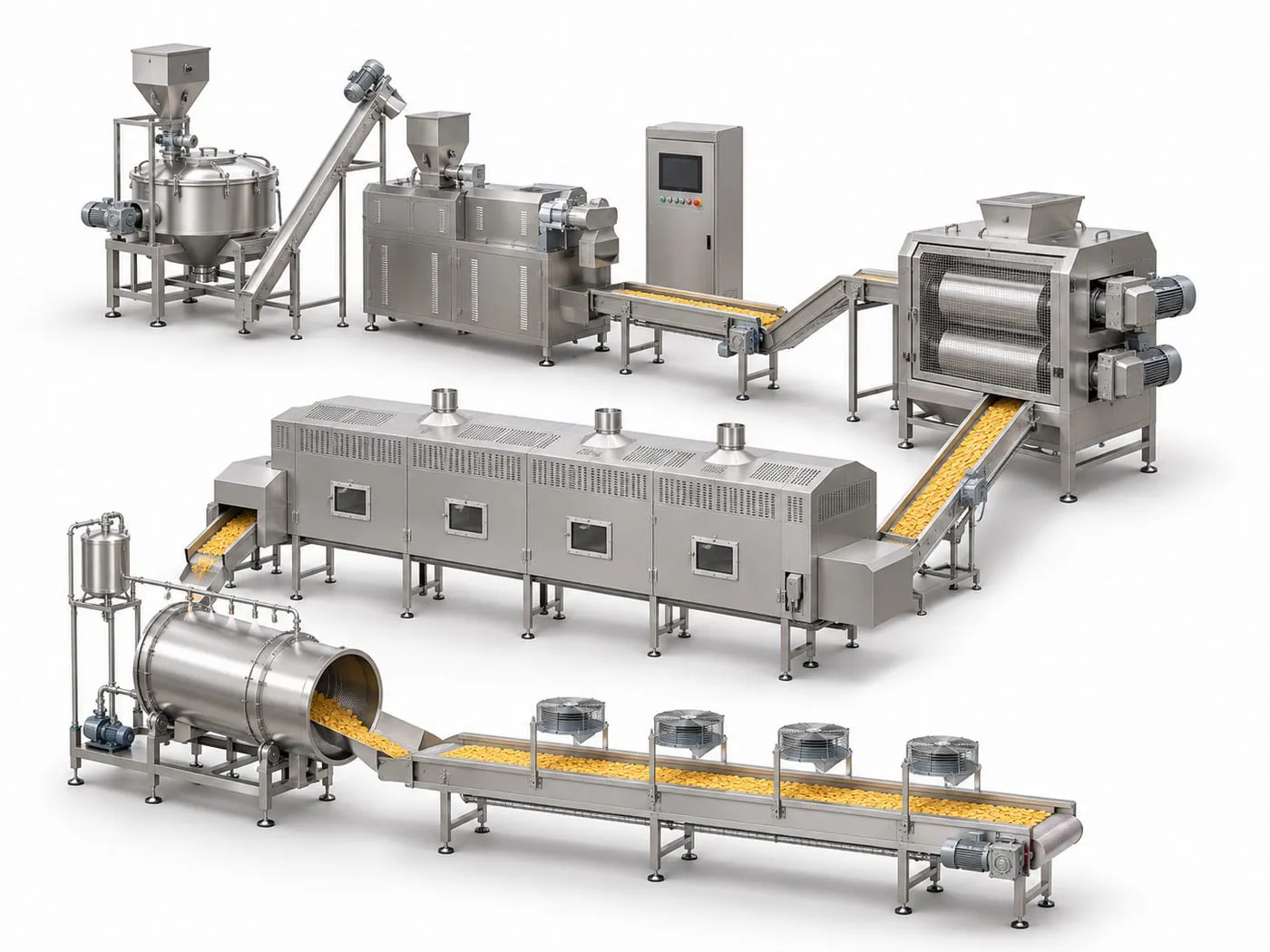
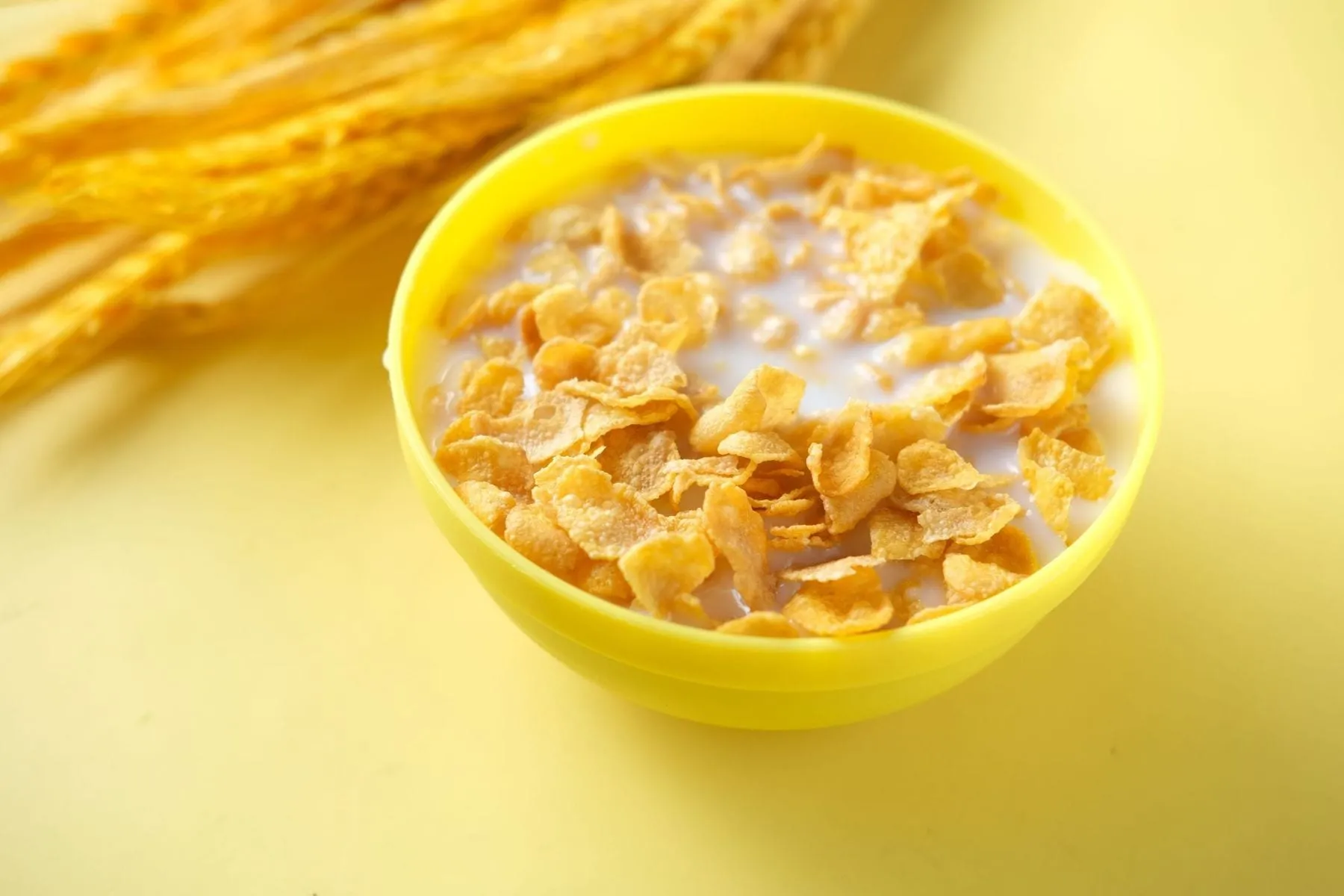
Cooks grain, rolls it into flakes, toasts them and applies an optional sugar or flavour coating before drying and packing.
Short answer: A corn flakes and breakfast cereal line cooks the grain, forms it into pellets or grits, rolls them into thin flakes and toasts them crisp, with an optional sugar or flavour coating and final drying. The grain base, flake thickness and how long the flake must stay crisp in milk decide the process route.
| Form | Suits | Watch out for |
|---|---|---|
| Traditional cook-and-flake | Classic corn flakes, single base | Batch cooking, longer tempering, more floor space |
| Extruded pellet flaking | Multigrain and flavoured cereals | Extruder settings must be tuned per recipe |
| Sugar coating | Frosted and flavoured products | Coating uniformity, stickiness, extra drying |
Coating can be added to either cooking route, and is often installed later as the product range grows. Tempering time between cooking and flaking matters on both routes: if moisture is uneven, flakes break or come out with uneven thickness.
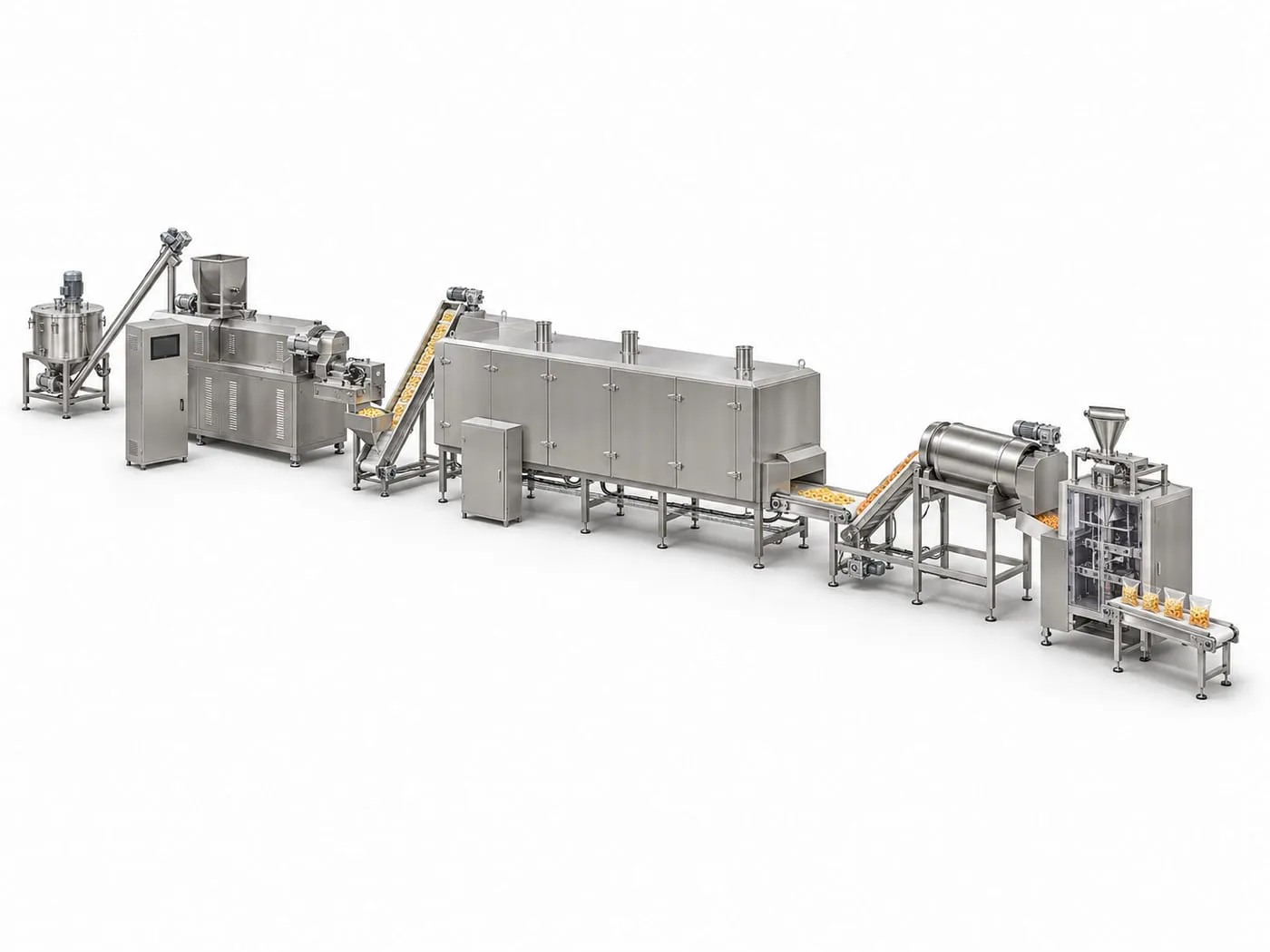
Raw grain can be prepared on a grain milling line. Coating uses a rotary coating drum. The same cooking extruder principle is used on the extruded snack production line. Packing typically uses a multihead weigher, VFFS packaging machine and food metal detector.
Traditional cook-and-flake
corn grits are cooked in batches, dried, tempered and rolled, giving the classic flake.
Extruded pellet flaking
a cooking extruder forms small pellets that are then flaked, a continuous route that handles more recipes.
Sugar coating
toasted flakes are sprayed with syrup or flavour and dried again for frosted or flavoured cereals.
Our engineers check these points with you, so the quotation fits your site rather than a catalogue default.
Traditional batch cooking gives the classic texture from corn grits. Extrusion is continuous, takes less space and handles multigrain and flavoured recipes more easily. Many new plants choose extrusion for flexibility.
Flake thickness, how well the starch is cooked, toasting conditions and the coating all matter. We discuss your target bowl life and check samples during commissioning.
An extruder-based line can often make puffed shapes and rings as well, by changing dies and skipping the flaking step. This should be planned at the start.
Tell us your raw material, finished product and target output. Our engineers reply with a matched configuration and quotation.
What to send with your inquiry
Email sales@hnfoda.com
Bakery & Snack Food
Biscuit factories, private-label bakeries and investors entering packaged biscuits.
Sized to baked biscuits per hour (kg/h of finished product) for a given size and weight
Bakery & Snack Food
Snack brands and contract manufacturers making corn puffs, cereal shapes and snack pellets.
Sized to extruder throughput (kg/h of dry mix) with finished output stated separately
Bakery & Snack Food
Potato snack brands, frozen fries producers and agricultural investors near potato growing areas.
Sized to fresh potato input (kg/h) with finished output stated separately
Bakery & Snack Food
Confectionery and biscuit plants making cream wafers, wafer bars and coated wafer products.
Sized to baked wafer sheets per hour at a set sheet size