Production lines · Instant noodles
Instant Noodle Factory Setup: Planning a Fried or Non-Fried Noodle Plant
Set up an instant noodle factory: mixing, sheeting, steaming, frying or air drying, cooling and packing, with sizing, utilities and a quote checklist.
- Prepared by
- HNFODA Applications Engineering
- Topic
- Production lines · Instant noodles
- Published
- Reading time
- 6 min read · 2 sources
On this page
- 01What an instant noodle plant consists of
- 02Process route and key machines
- 03How to size the plant
- 04Fried versus non-fried: what changes
- 05Product standard
- 06Utilities and building
- 07A worked sizing example
- 08Which business model fits
- 09Supply levels
- 10What drives the cost
- 11Common mistakes
- 12What to send us for a quotation
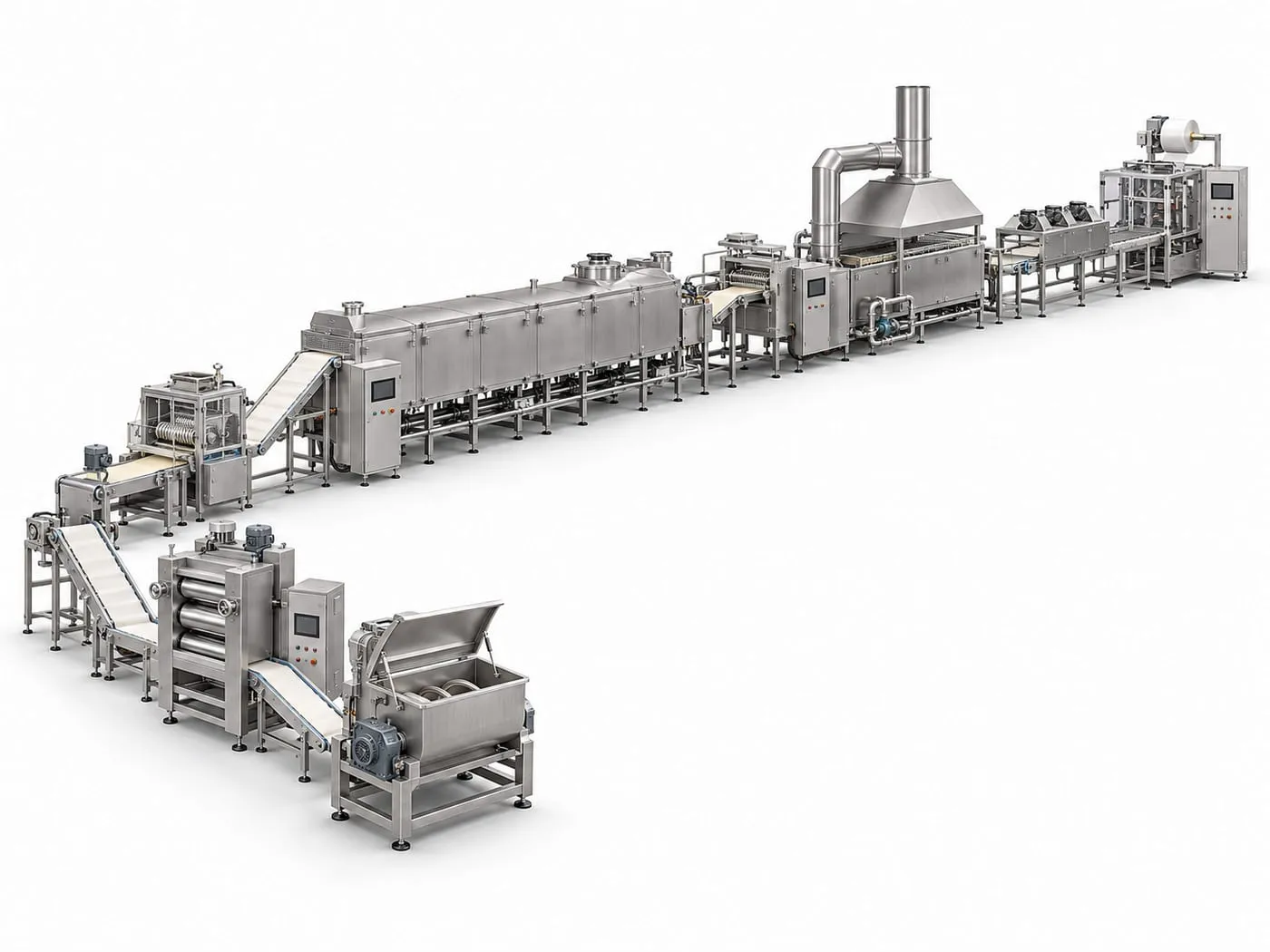
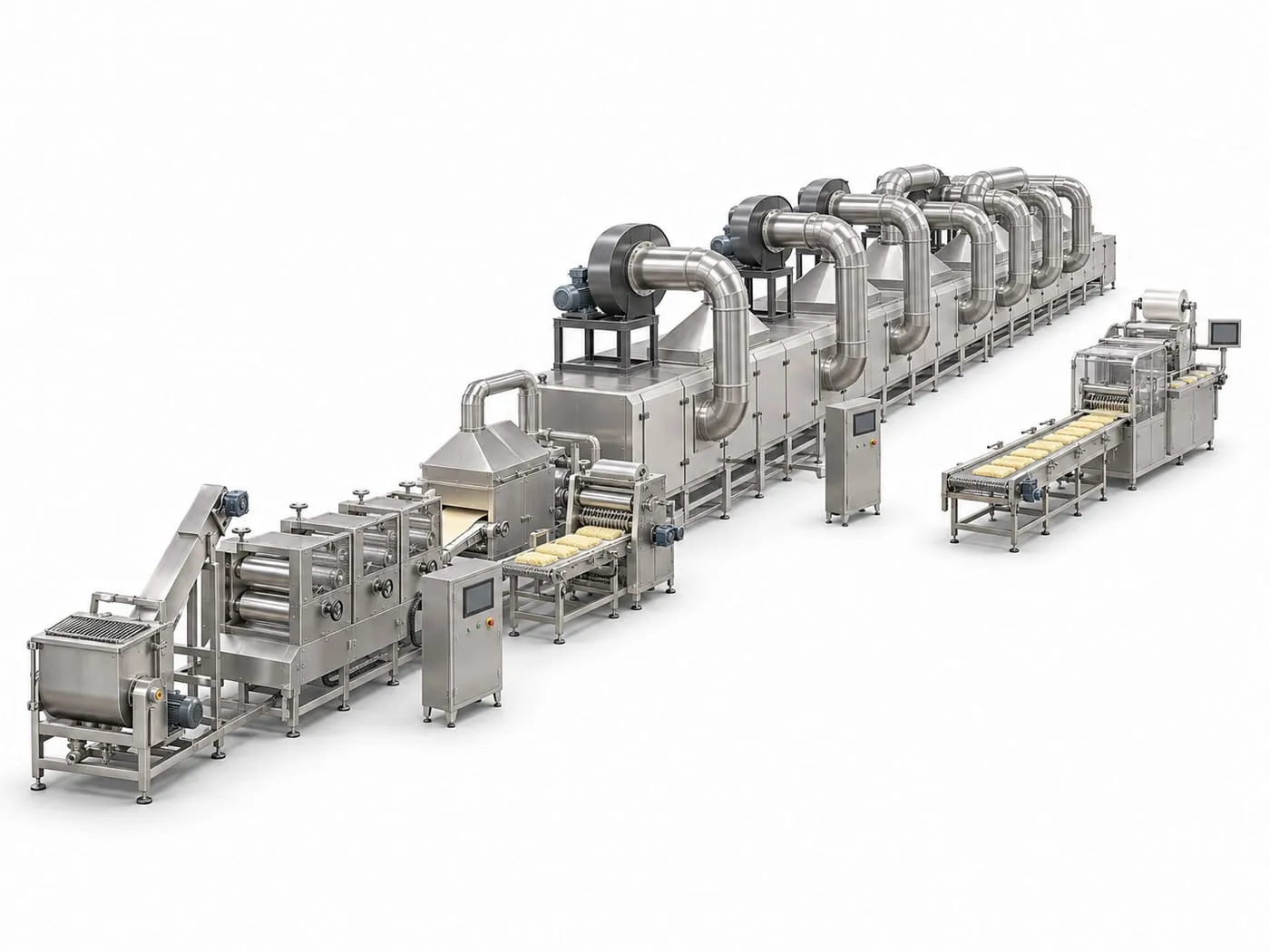
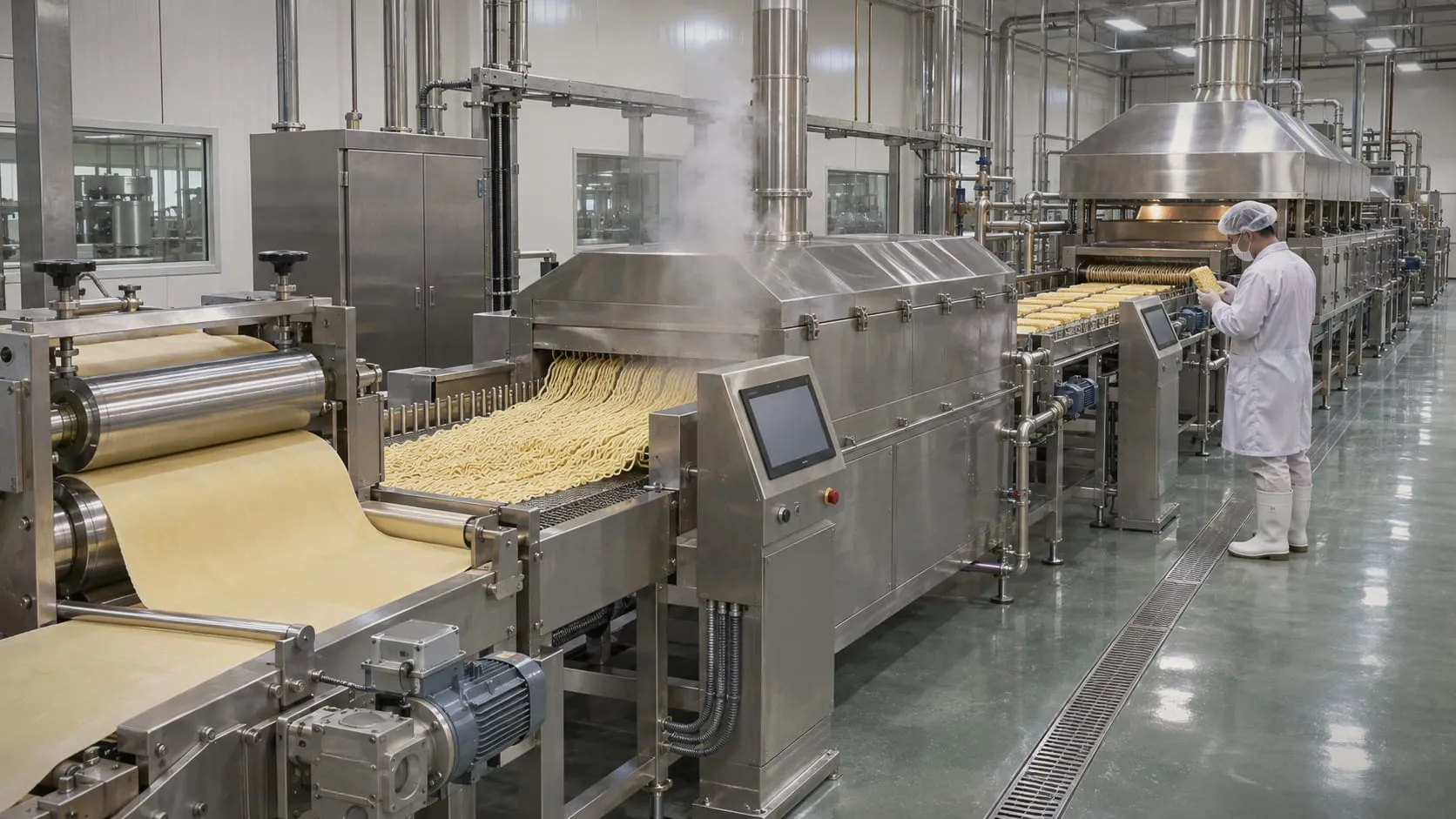
Short answer: An instant noodle factory is built around one continuous line: flour and water are mixed, sheeted and slit into waves, steamed to cook the starch, cut into blocks, dehydrated by frying or hot-air drying, cooled and packed with seasoning. The fryer or dryer sets the line speed, so plant size is decided by the dehydration section, and the choice between fried and non-fried noodles changes the utilities, ventilation and building.
This page is for investors and food companies setting up a noodle plant. For the line itself, see the instant noodle production line and the non-fried instant noodle line.
What an instant noodle plant consists of
- Raw material store: flour, starch, salt and alkaline salts, palm oil (for fried noodles), seasonings and packaging.
- Dough preparation: brine or kansui solution preparation and dosing, mixing, resting.
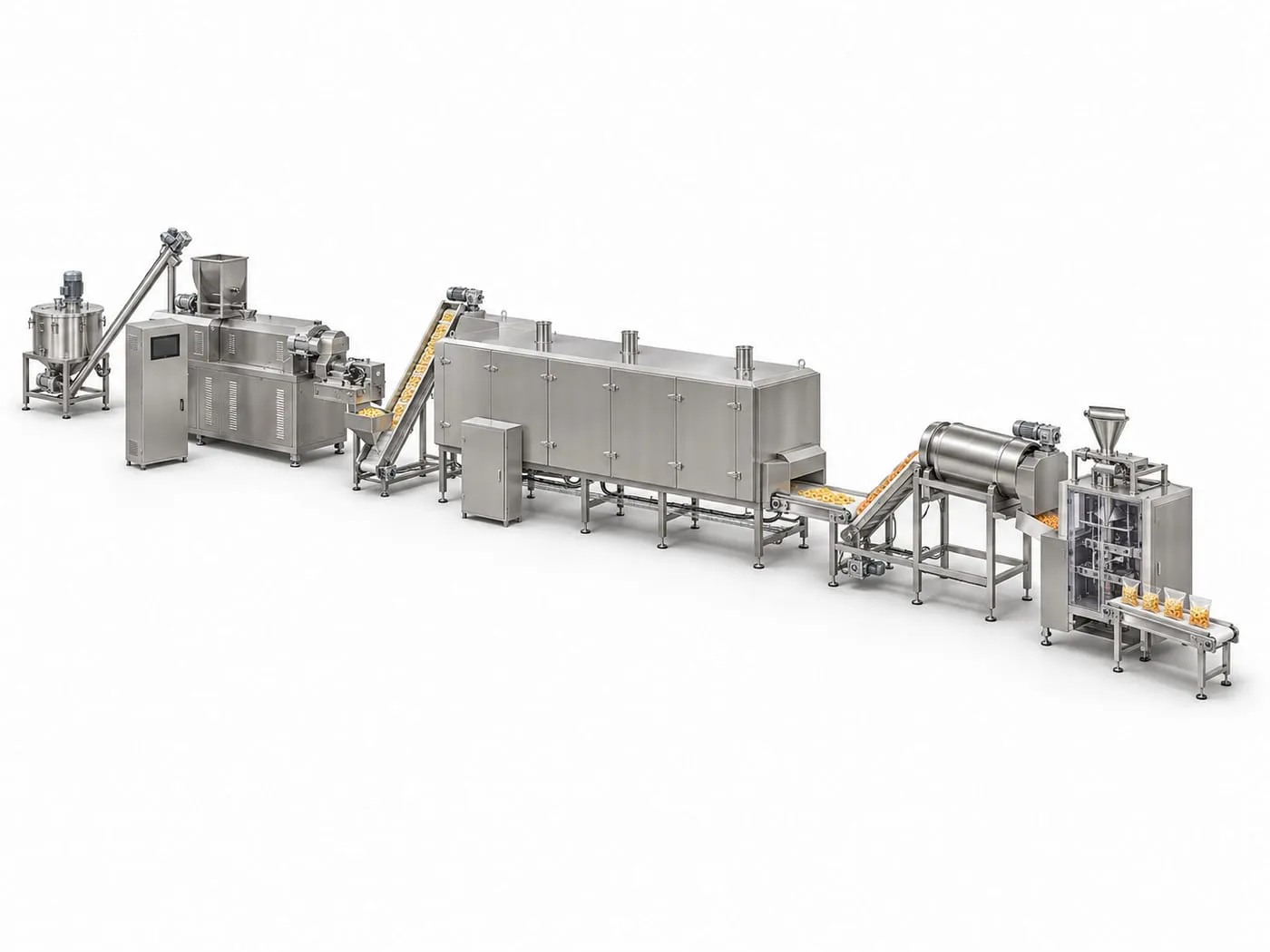
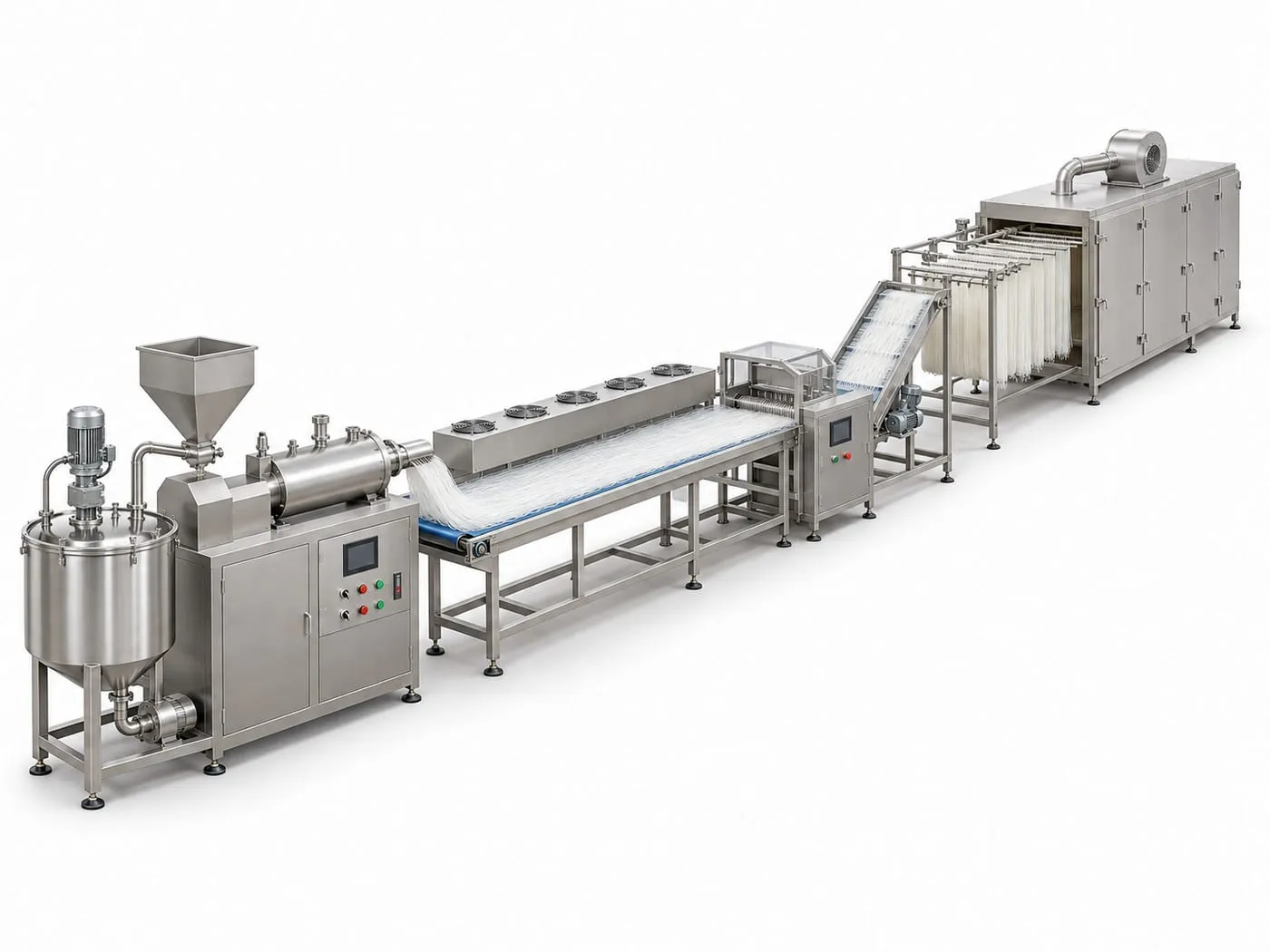
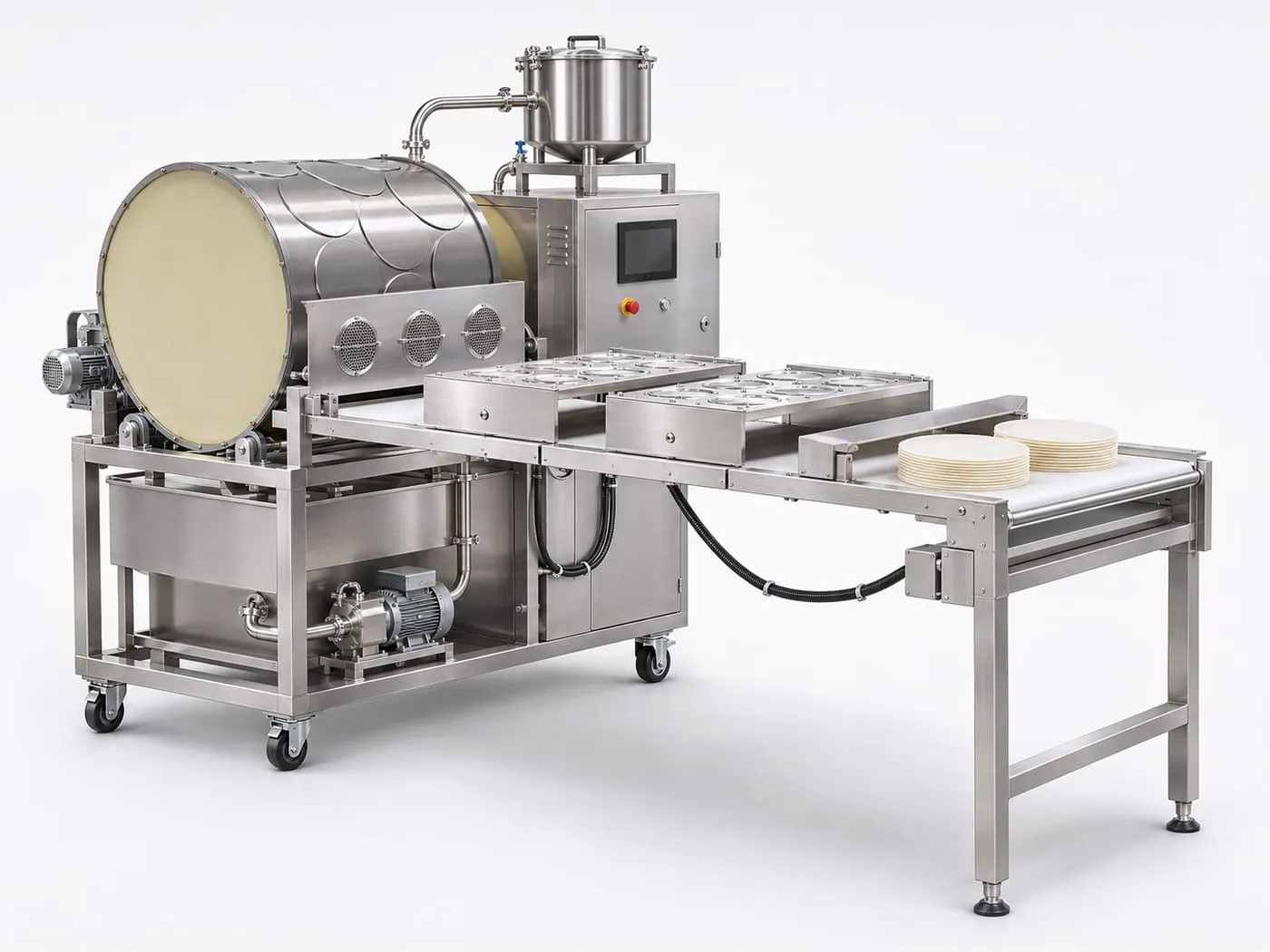
- The noodle line: compound sheeting, continuous rolling, slitting and waving, steaming, cutting and folding, dehydration, cooling.
- Seasoning: sachet production or purchase, and dosing (sachets into bags, or powder into cups).
- Packing and inspection: wrapping, metal detection, checkweighing, cartoning.
- Utilities: steam, heat for frying or drying (gas, thermal oil or steam), compressed air, fume extraction.
Process route and key machines
| Station | Purpose | Key machine |
|---|---|---|
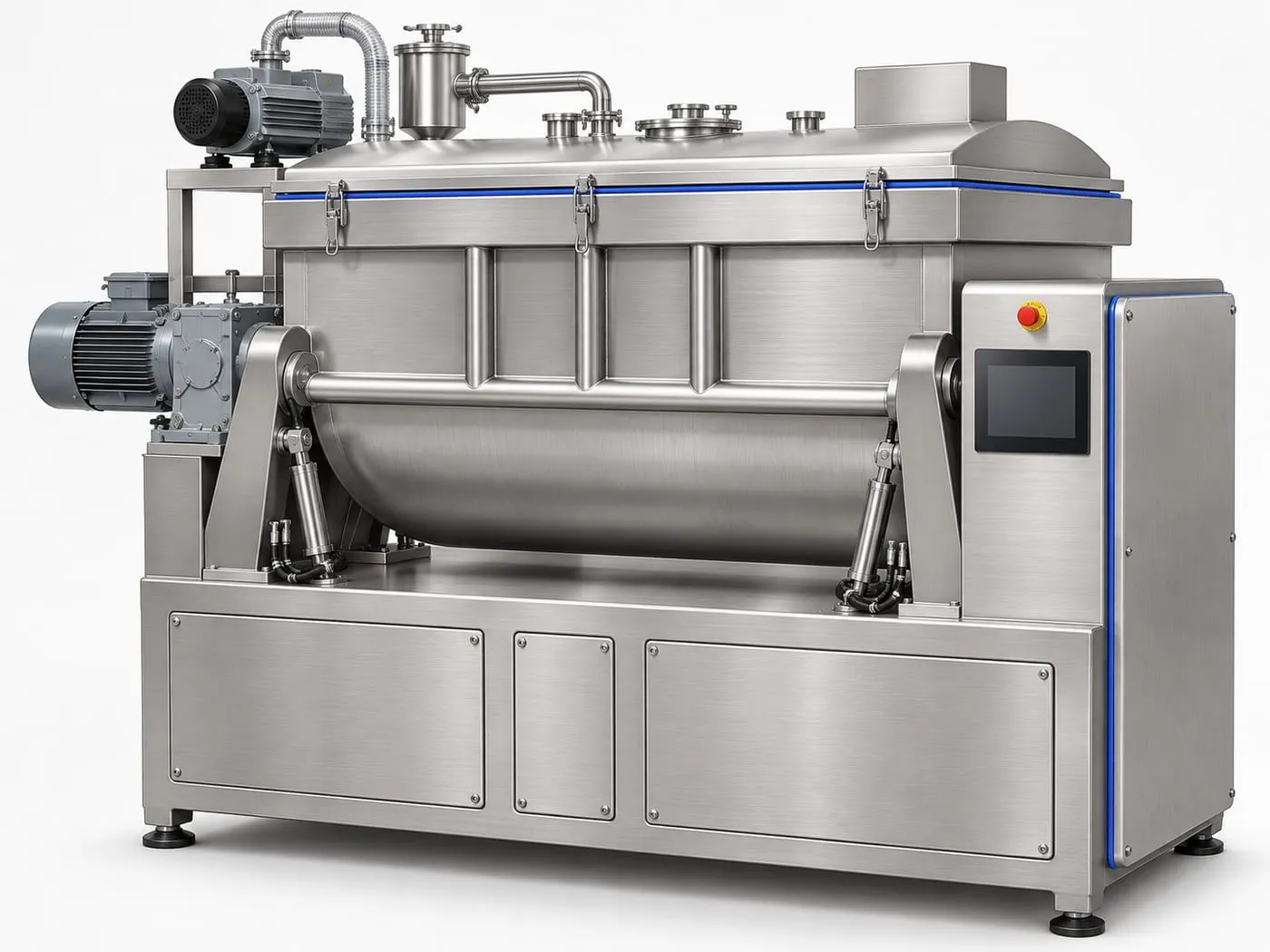
| Mixing | Even water distribution; dough with the right moisture for sheeting | Vacuum dough mixer |
| Sheeting, rolling, slitting | Form a continuous sheet and cut wavy strands | Part of the instant noodle production line |
| Steaming | Gelatinise starch so noodles rehydrate quickly | Steam box with a food steam generator |
| Cutting and folding | Portion the strand into blocks | Part of the noodle line |
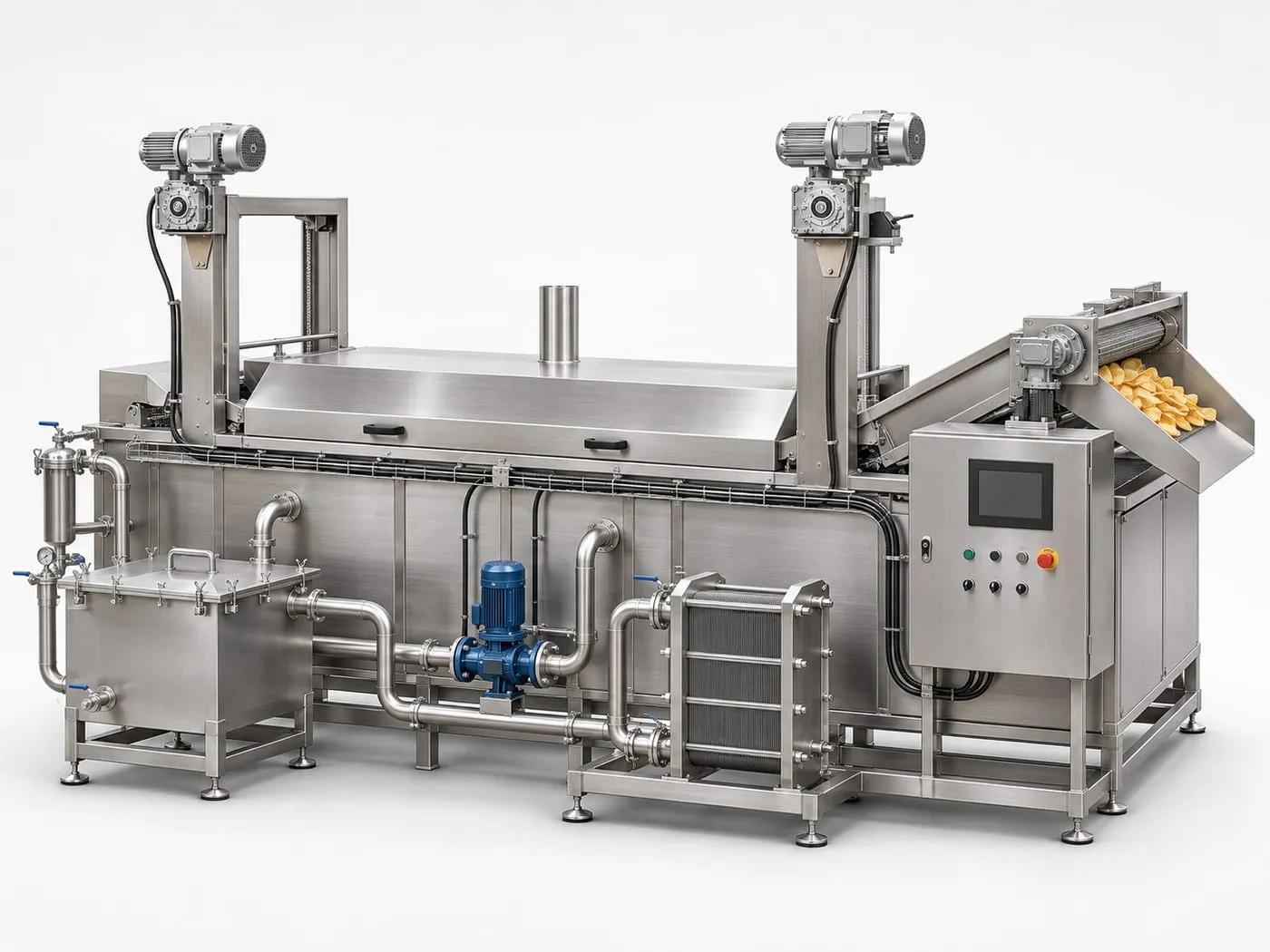
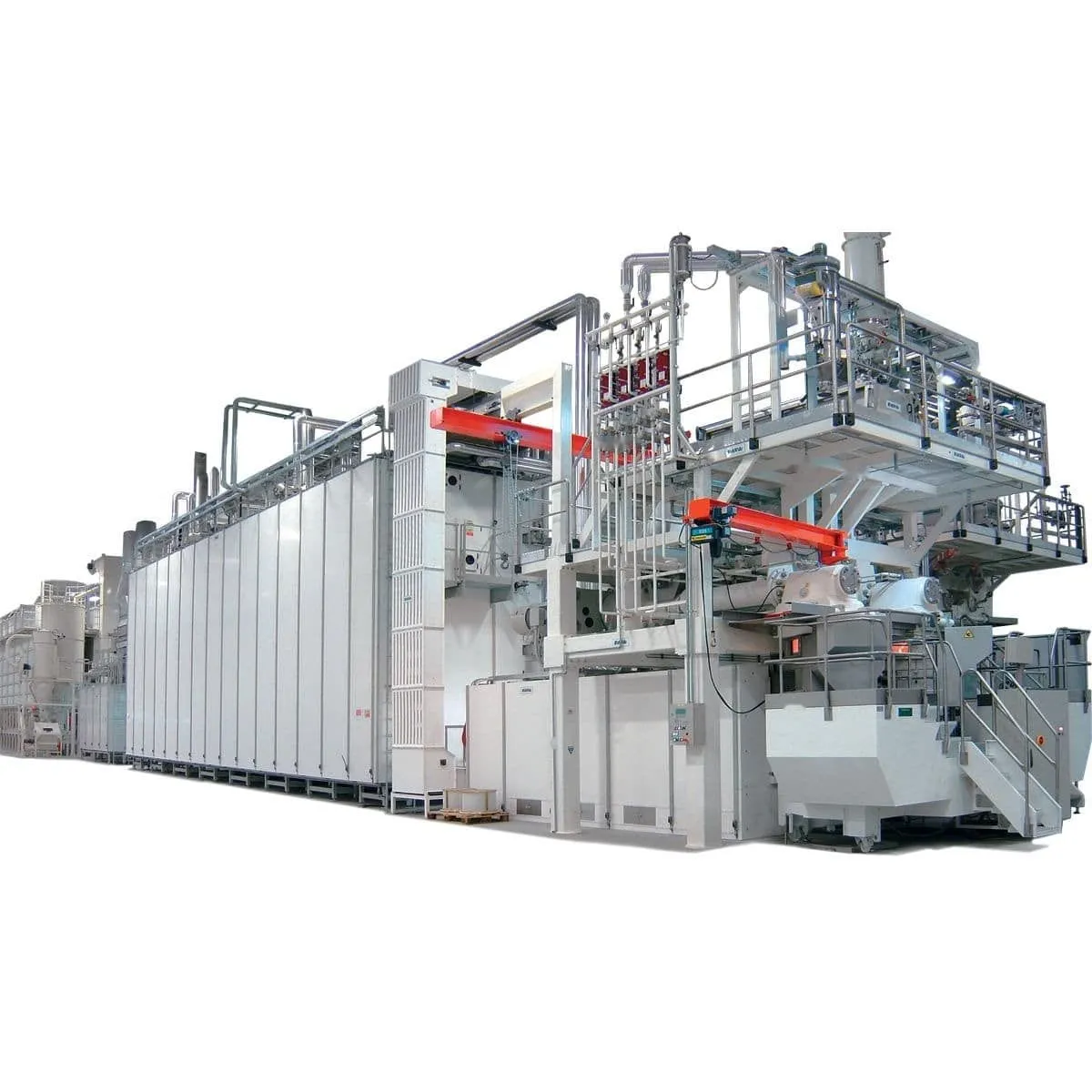
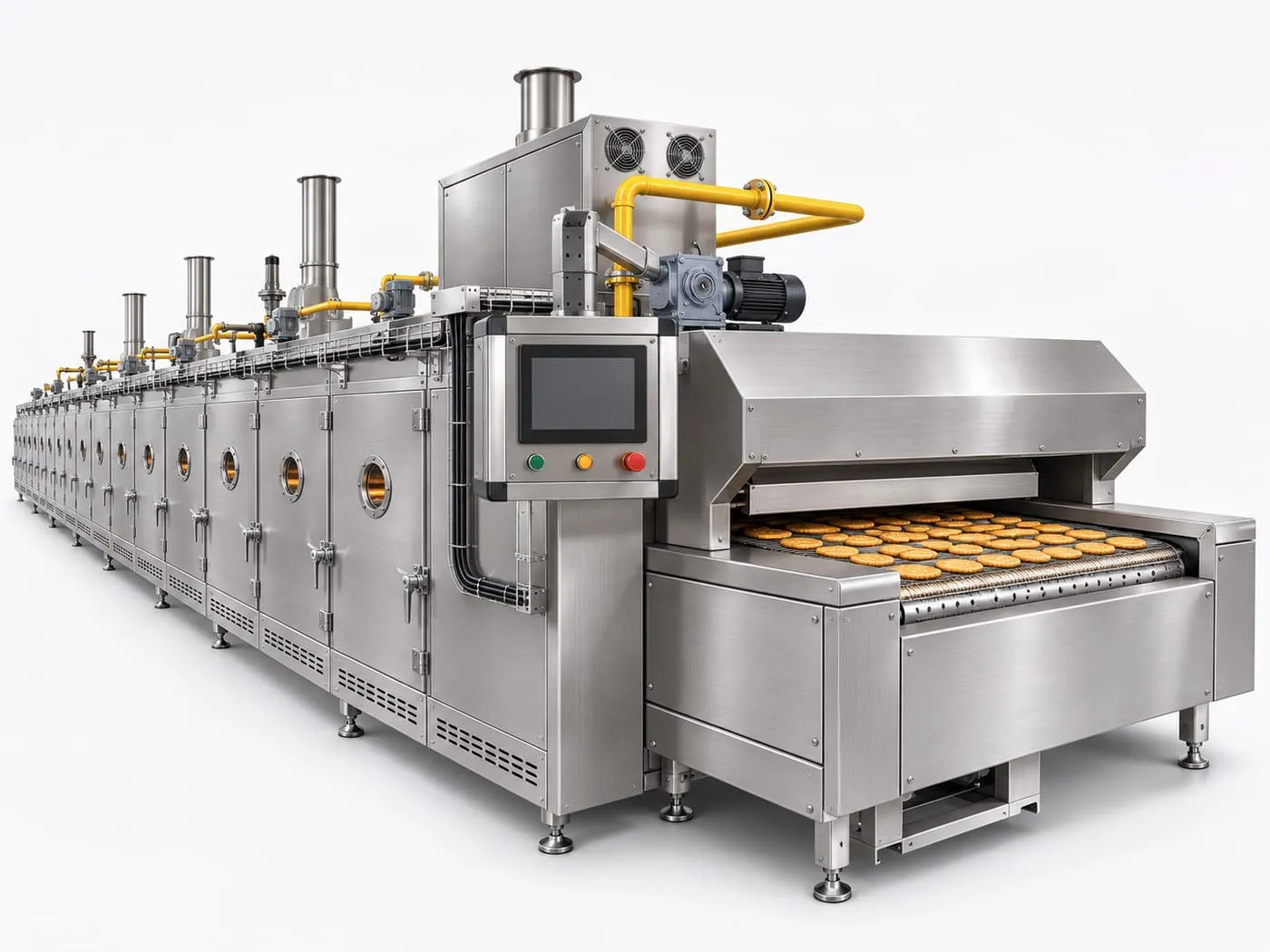
| Frying (fried noodles) | Remove water fast and fix the porous structure | Continuous fryer |
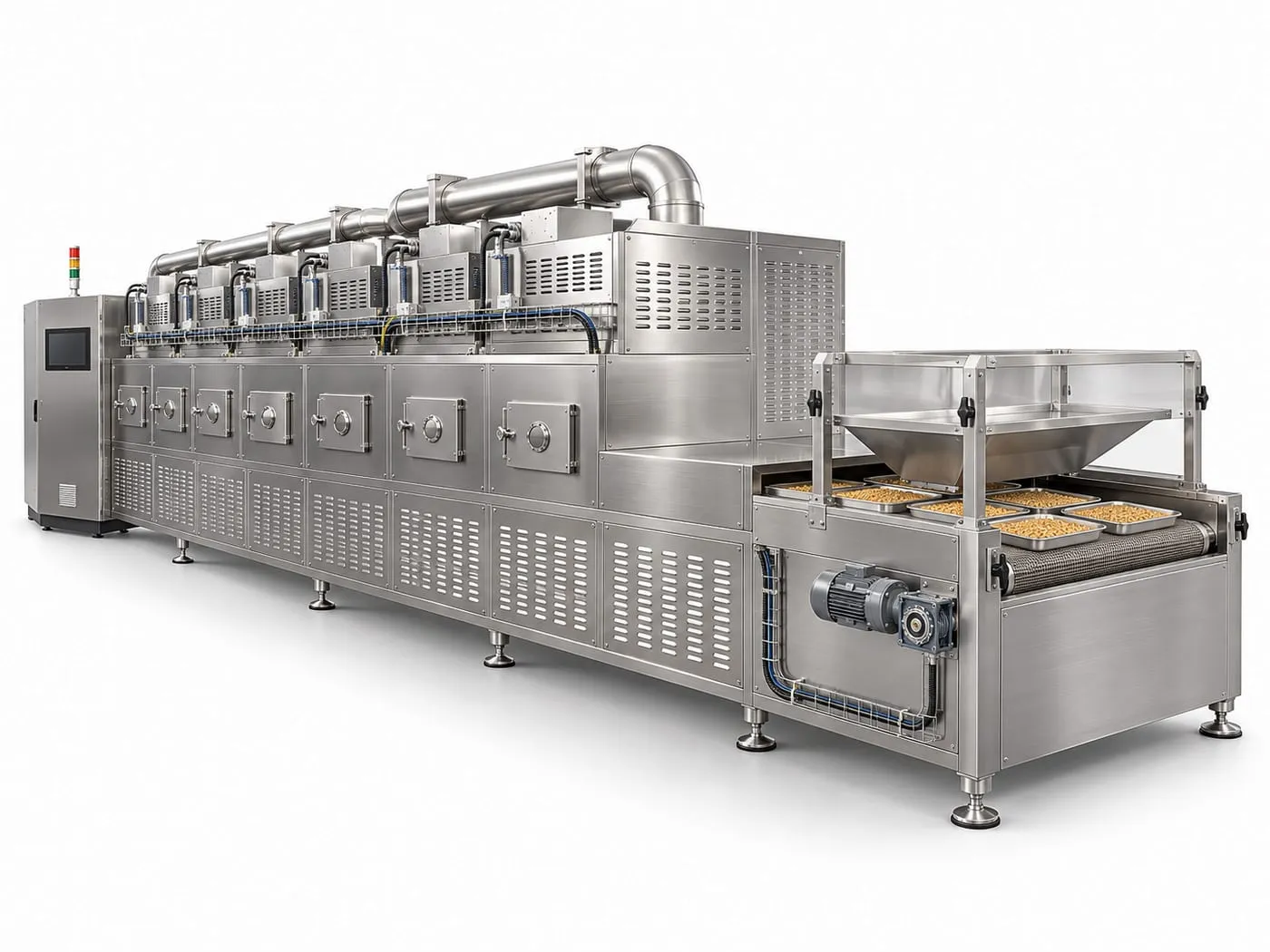
| Hot-air drying (non-fried) | Dehydrate without oil | Non-fried instant noodle line |
| Cooling | Bring blocks to packing temperature | Cooling conveyor |
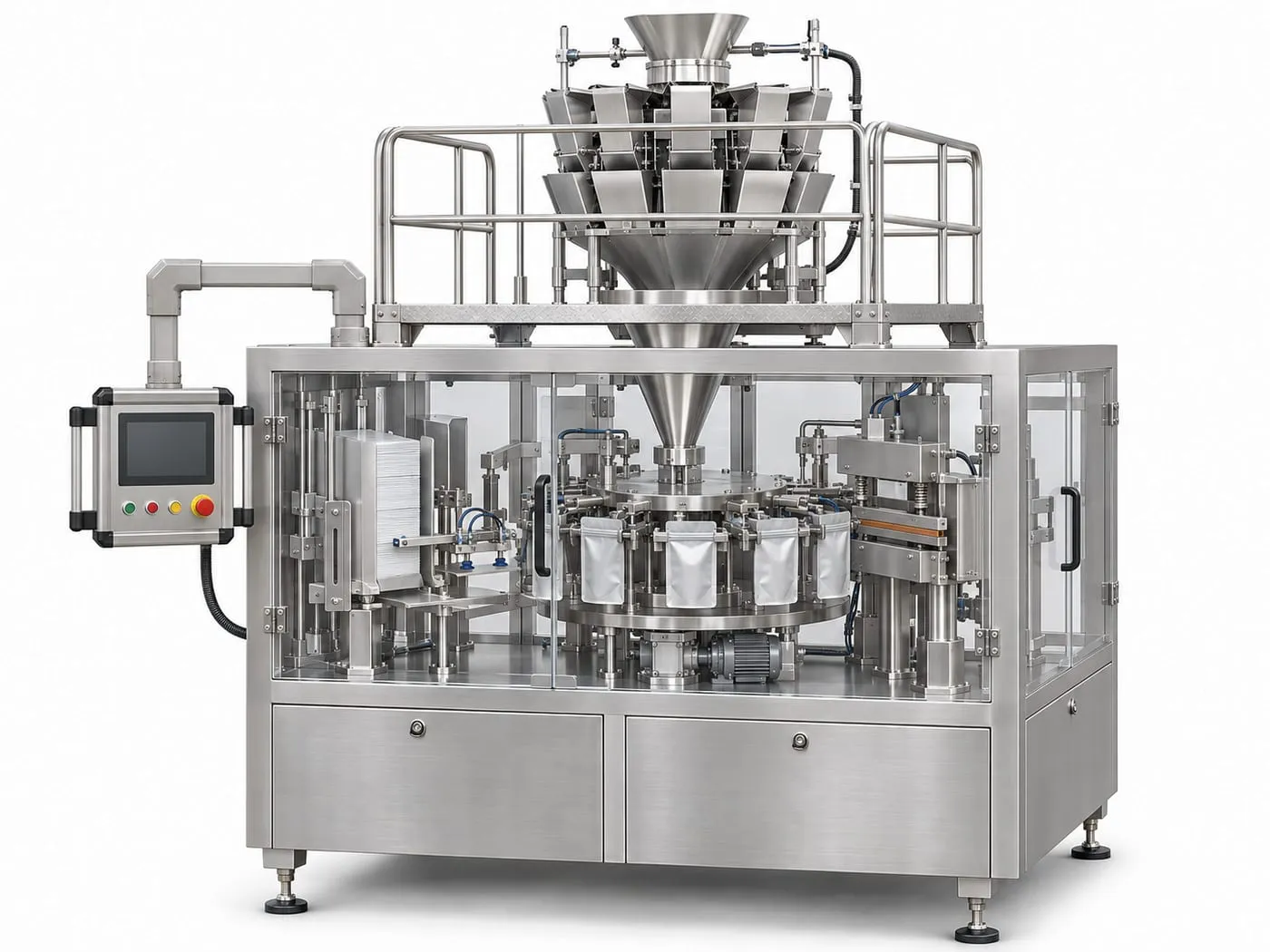
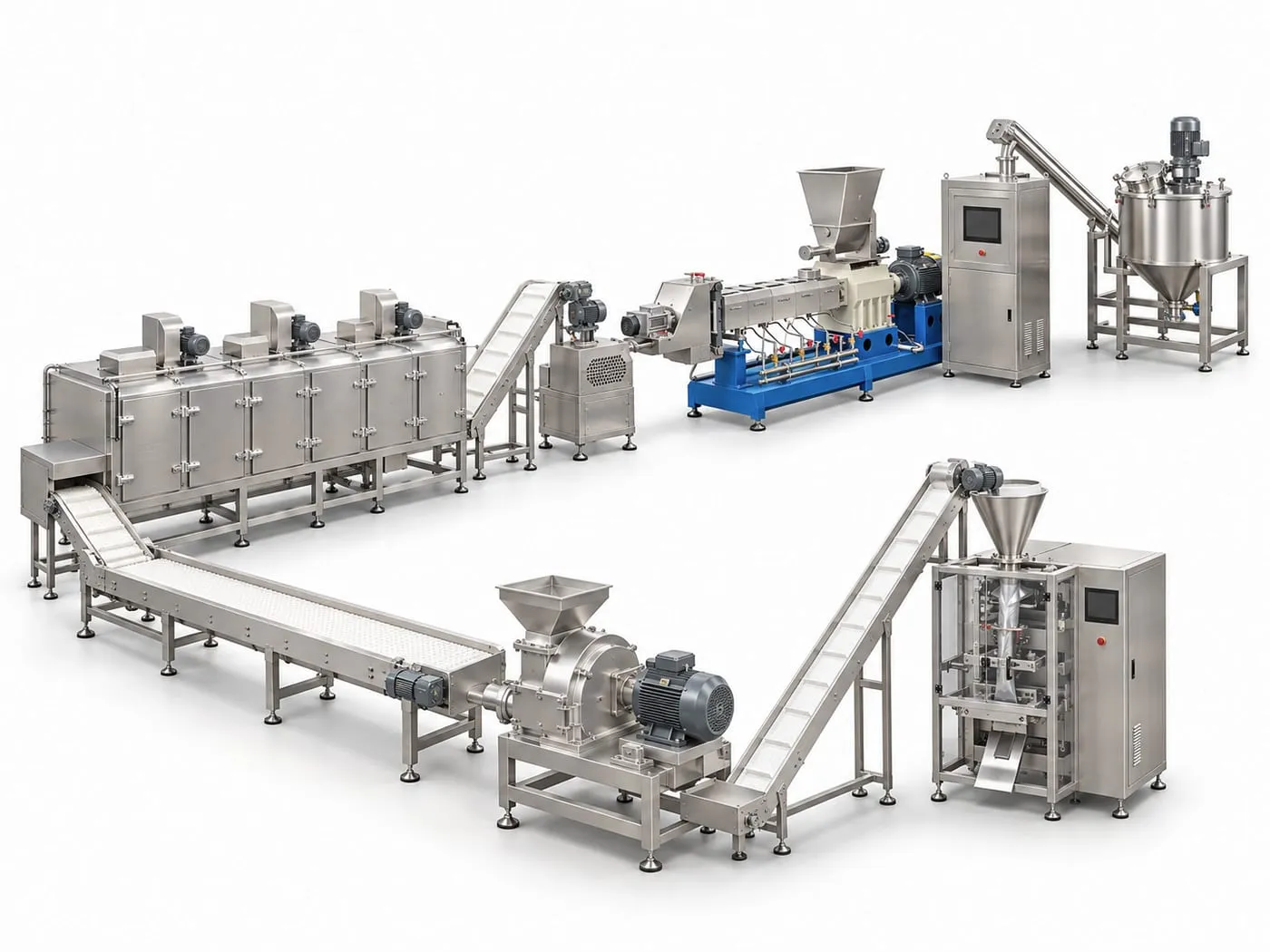
| Packing | Wrap blocks with seasoning sachets | VFFS packaging machine |
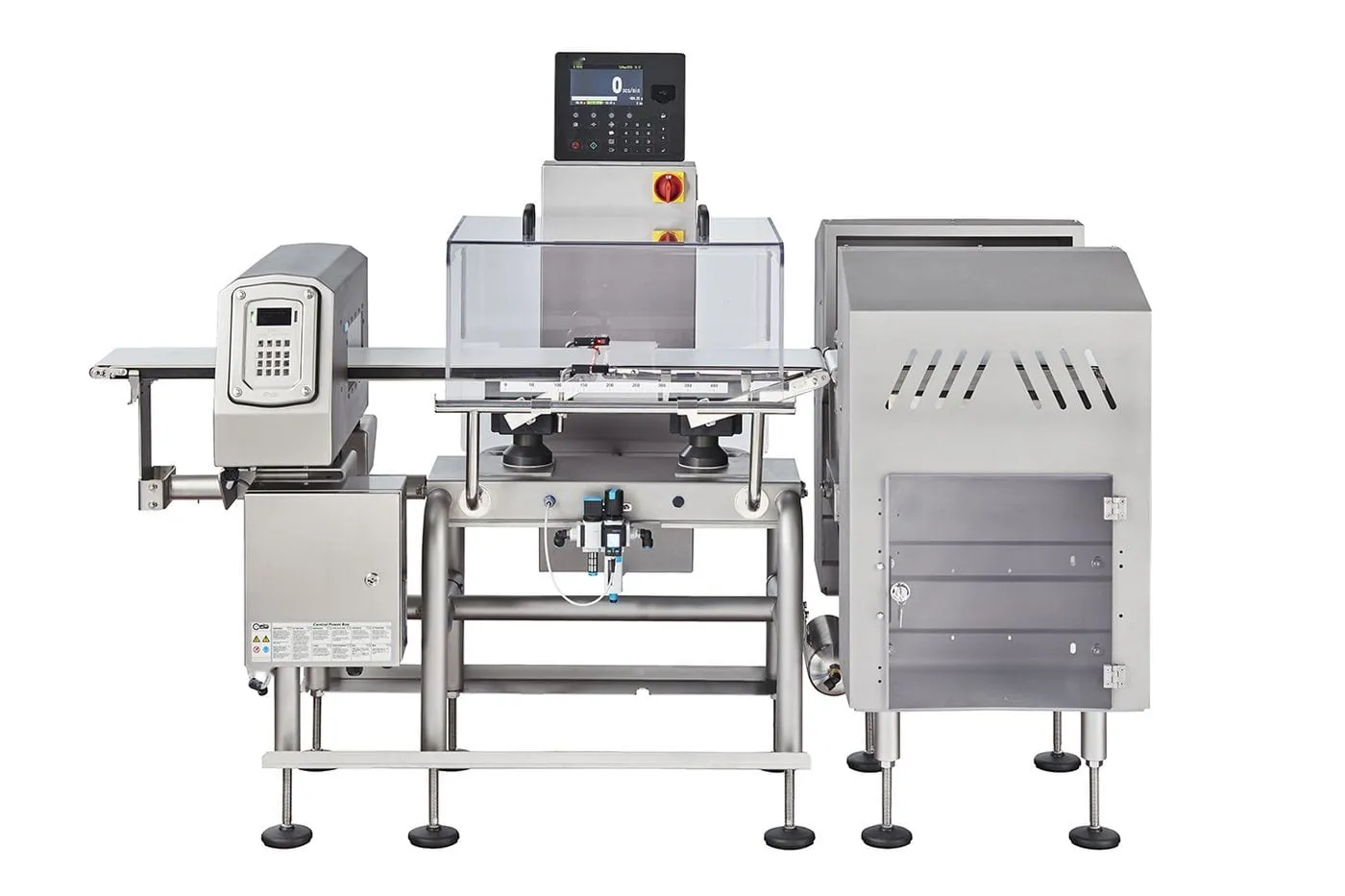
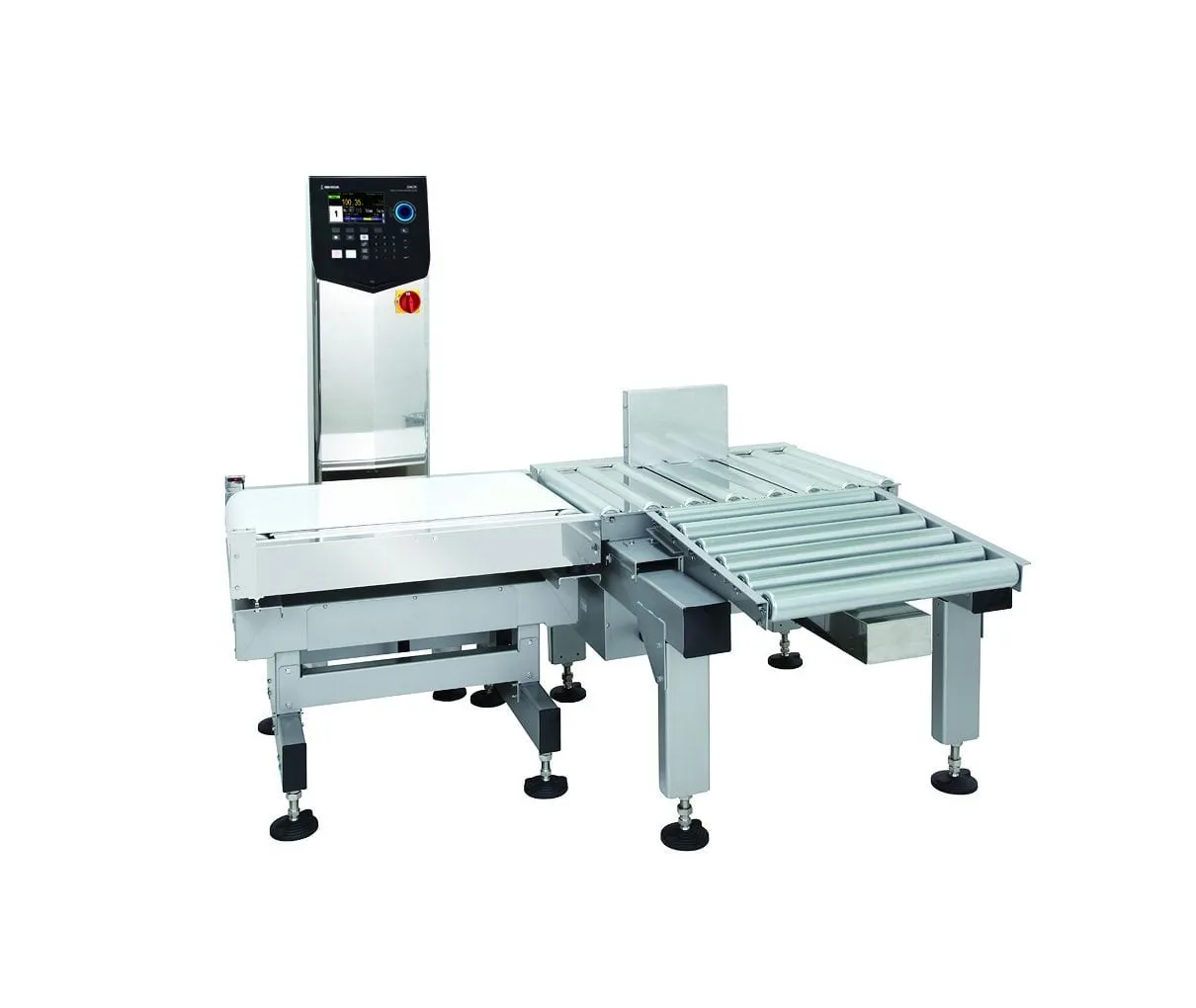
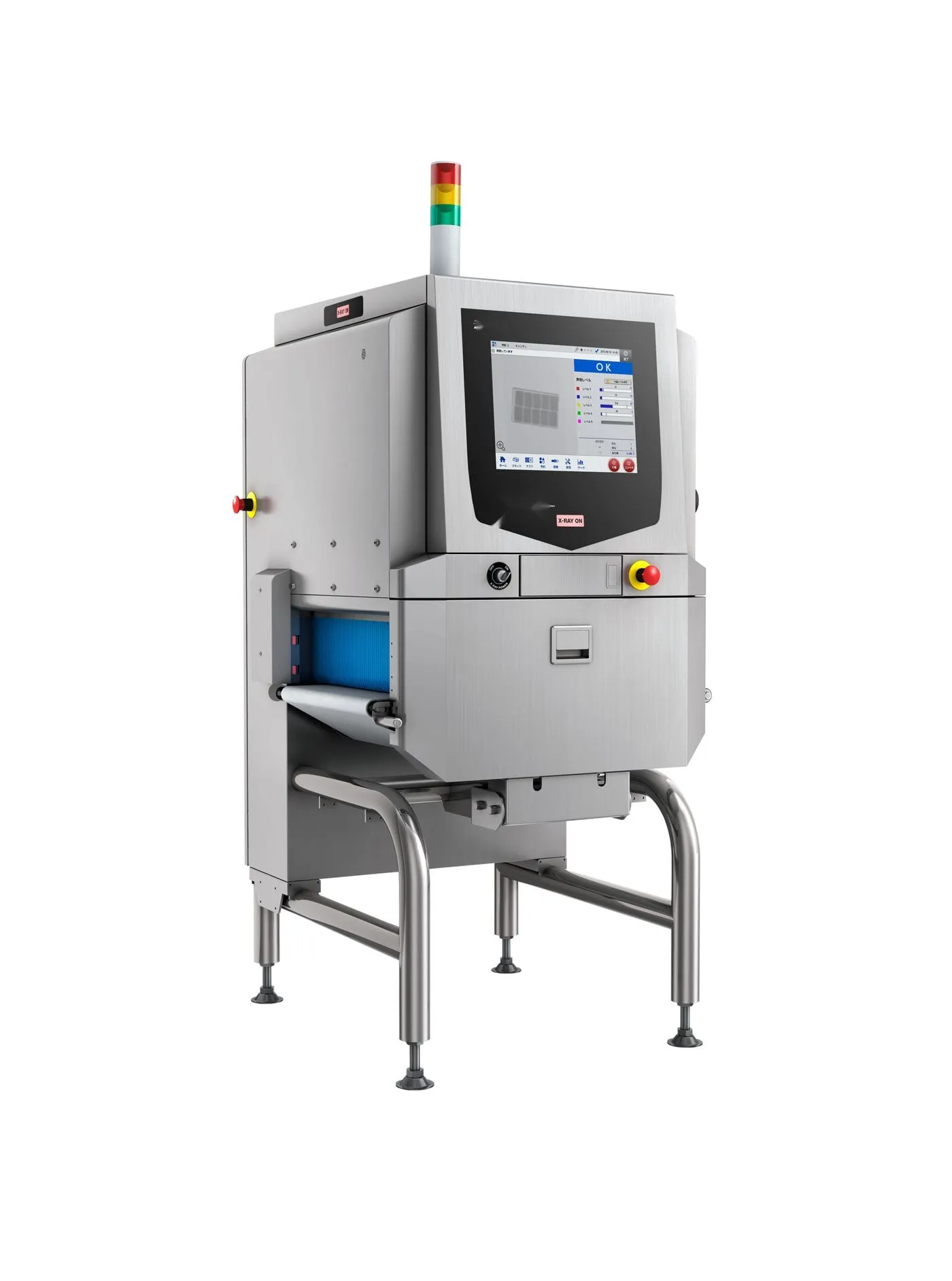
| Inspection | Metal and weight control | Food metal detector, in-line checkweigher |
The review by Shrestha and colleagues explains why each step matters: moisture in the dough must be right for starch to gelatinise during steaming, and frying or drying then removes that moisture to give shelf life. Frying also leaves a porous structure that lets the noodles rehydrate in a few minutes.
How to size the plant
Because the dough sheet runs continuously from the rollers to the cutter, the line cannot run faster than its slowest continuous section, which is normally the fryer or the dryer.
- Define the product: block weight, shape (square, round for cups), fried or non-fried, and target moisture and fat content.
- Set the daily volume in blocks or packs, and the number of shifts.
- Size the dehydration section for that volume at your block weight. The residence time in the fryer or dryer, and the belt width, decide this.
- Match steaming and sheeting to the same speed.
- Size packing for the peak block rate, including seasoning sachet feeding and any multipacks.
A line rated for one block weight produces a different number of blocks at another, so always state output with the block weight.
Fried versus non-fried: what changes
| Item | Fried noodles | Non-fried noodles |
|---|---|---|
| Dehydration | Continuous fryer, oil heating and filtration | Long hot-air dryer |
| Utilities | Heat for oil (gas, thermal oil), fume extraction | Large hot-air or steam heating load |
| Building | Fire safety, oil storage, exhaust ducts | Longer hall for the dryer |
| Running issues | Oil uptake, oil quality, spent oil | Drying time, even moisture across the block |
| Product | Classic texture, fast cooking | Lower fat, slightly longer cooking |
The review also notes that frying oil degrades with high temperature, long frying time and moisture, so oil management is a daily operating task rather than a design detail.
Product standard
The Codex Standard for Instant Noodles (CXS 249-2006) covers fried and non-fried instant noodles and is a common reference for composition and quality factors. Check your target country’s own rules as well, especially for labelling and additives.
Utilities and building
- Steam for steaming boxes, and often for heating the dryer or fryer.
- Heat for the fryer: thermal oil, gas burners or steam, plus emergency shutdown and fire protection.
- Exhaust above the steamer, fryer and cooler; condensation control.
- Flour handling: dust control and, at larger scale, bulk flour silos.
- A separate packing hall with controlled temperature for packaging materials.
A worked sizing example
These figures show the method only; your block weight, recipe and hours replace them.
A new brand plans to sell 100,000 bags a day of 70 g fried noodle blocks, on three shifts with about 21 effective hours. That is about 4,760 blocks an hour, or roughly 80 blocks a minute. In weight, it is 100,000 × 0.07 kg = 7 tonnes of finished blocks a day, around 330 kg/h. The fryer must handle 80 blocks a minute at the frying time your recipe needs, and the steamer, cutter and sheeting rollers then run at the same speed. Flour consumption is close to the finished block weight minus the oil and seasoning content, so the flour store and mixer are sized from the recipe. At the packing end, 80 blocks a minute may be split over two or more packing machines, each with sachet feeding, which also gives redundancy when one machine stops.
Which business model fits
- National brands in high-consumption markets run long, fast lines with automatic sachet feeding and cartoning.
- Regional or private-label producers often start with a single narrower line and manual sachet feeding, then automate packing as volume grows.
- Health-positioned brands choose non-fried noodles, accepting a longer dryer and a higher energy bill in return for lower fat.
Supply levels
- Single machine: for example, a new fryer or packing machine for an existing line.
- Section: dough preparation, the noodle line from sheeter to cooler, or the packing end.
- Complete line: from mixer to packing with layout and controls.
- Turnkey project: complete line with installation, commissioning and training. See turnkey projects.
What drives the cost
- Line width and speed (output)
- Fried or non-fried dehydration
- Bag only, or cups and bowls too
- Seasoning sachet production in-house or purchased
- Packing automation: manual sachet feeding versus automatic, cartoning
- Building, steam boiler and heating system
Common mistakes
- Comparing quotes that state output at different block weights or hours.
- Choosing a fryer without planning oil storage, filtration and spent-oil disposal.
- Under-sizing exhaust, leading to condensation and dripping above the line.
- Forgetting seasoning: sachet supply and dosing often limit packing speed.
- Building a hall that is too short for a later switch to non-fried noodles.
What to send us for a quotation
- Product type: fried or non-fried; bag, cup or bowl; block weight and shape
- Target output in blocks or packs per shift, shifts per day
- Flour specification and recipe, if available
- Seasoning: sachets bought in or produced on site
- Packaging format, multipacks and cartoning
- Heat source available: steam, gas, thermal oil, electricity
- Building plan, length available for the line, ceiling height
- Market and product standards you must meet
Frequently asked questions
- Fried or non-fried instant noodles?
- Fried noodles dehydrate quickly in hot oil, cook fast in the bowl and have the familiar texture; they need a fryer, oil handling and fume extraction. Non-fried noodles are dried with hot air, contain less fat and suit health-positioned brands, but drying takes longer and the dryer is larger. Your market decides.
- Can I make cup noodles and bag noodles on one line?
- The noodle-making part is largely the same; the block shape and the packing end differ. Cup lines need cup forming or cup feeding, seasoning dosing into the cup and lidding, so plan the packing hall for both if you intend to make both.
- How is the capacity of an instant noodle line stated?
- Usually as blocks or packs per shift (or per 8 hours) at a given block weight. Make sure quotations use the same block weight and the same number of operating hours before you compare them.
- What happens to the frying oil?
- Oil is taken up by the noodles and must be topped up continuously, and it degrades with time and temperature. Fryers need filtration and oil quality checks, and the plant needs a plan for spent oil.
Sources
- [1]Interactions of Bio-macromolecules During Processing of Instant Asian Noodles: A Review (J. Food Sci. Technol. Nepal, 2016) — Shrestha, Rai and Anal, via Nepal Journals Online
- [2]Codex Alimentarius: list of standards (incl. CXS 249-2006 Standard for Instant Noodles) — FAO/WHO Codex Alimentarius Commission
HNFODA Applications Engineering
Line design, product trials and commissioning
Engineers who size, build and commission HNFODA food processing lines, writing from the questions buyers ask before a quotation. About HNFODA