Packaging & Inspection
Vertical Form Fill Seal Machine
Snack, nut, frozen food, grain and powder producers moving from manual bagging to automatic packing.
Rated in finished bags per minute, set by bag length, fill weight and film


09 · Packaging & Inspection — Equipment
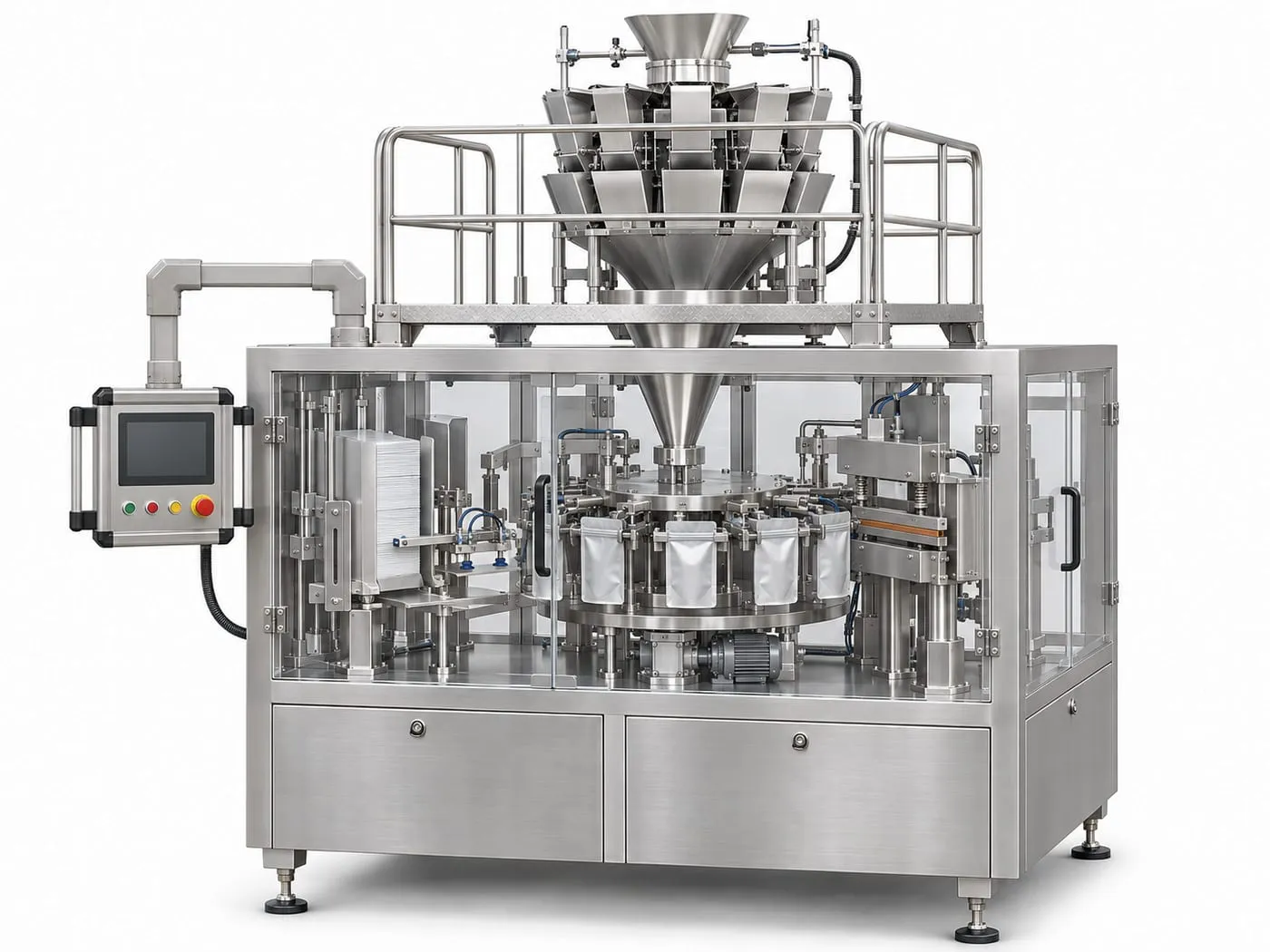
An automatic bagger for ready-made pouches: it picks each pouch, opens it, fills a measured dose and seals it, including zipper and stand-up styles.
Short answer: A premade pouch packaging machine takes ready-made pouches from a magazine, opens them, fills a weighed or dosed amount and seals the top, so you can pack into printed stand-up and zipper pouches without manual handling. What decides the configuration is the pouch style and size range, the state of the product and how the dose is measured.
Pouches are stacked in a magazine. A pick-up arm transfers each pouch to a pair of grippers, which carry it through a series of stations: optional date coding, zipper opening, mouth opening by suction and air, filling, product settling or vibration, optional vacuum or gas, heat sealing, cooling seal and discharge. Sensors check that a pouch is present and has opened before product is released, so an empty or unopened pouch does not get filled.
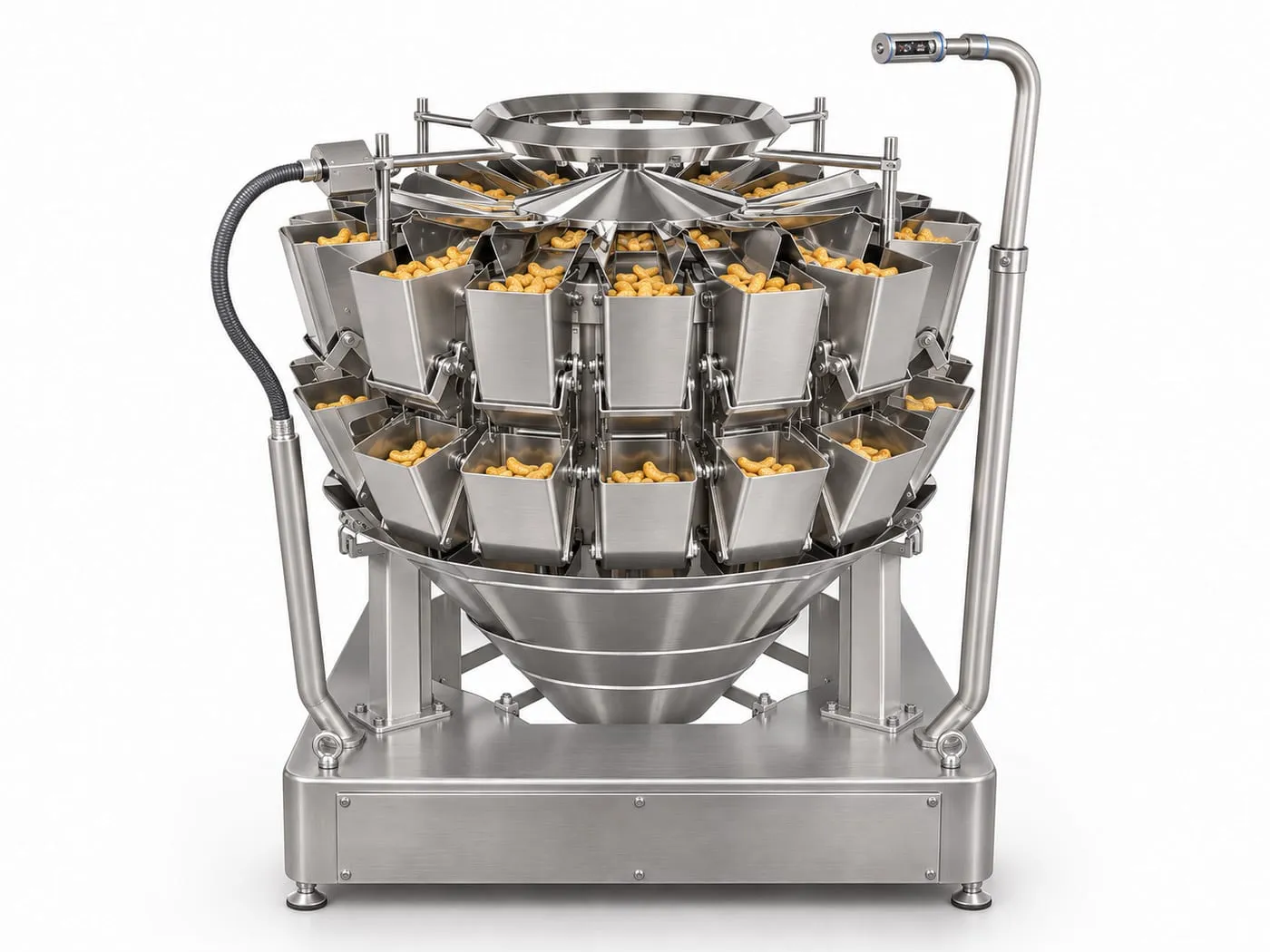
The filling device is chosen separately: a multihead weigher for snacks and nuts, an auger for powders, a piston or pump for liquids and pastes.
| Form | Suits | Watch out for |
|---|---|---|
| Rotary | Stand-up and zipper pouches, medium speeds | Limited space around stations for cleaning |
| Linear (in-line) | Wider pouch ranges, dual lane output | Larger footprint |
| Vacuum pouch | Meat, pickled products, low-oxygen packs | Slower cycle; needs vacuum pump maintenance |
Pouch quality is part of the system: inconsistent pouch dimensions or stiff mouths cause missed opens and stoppages.
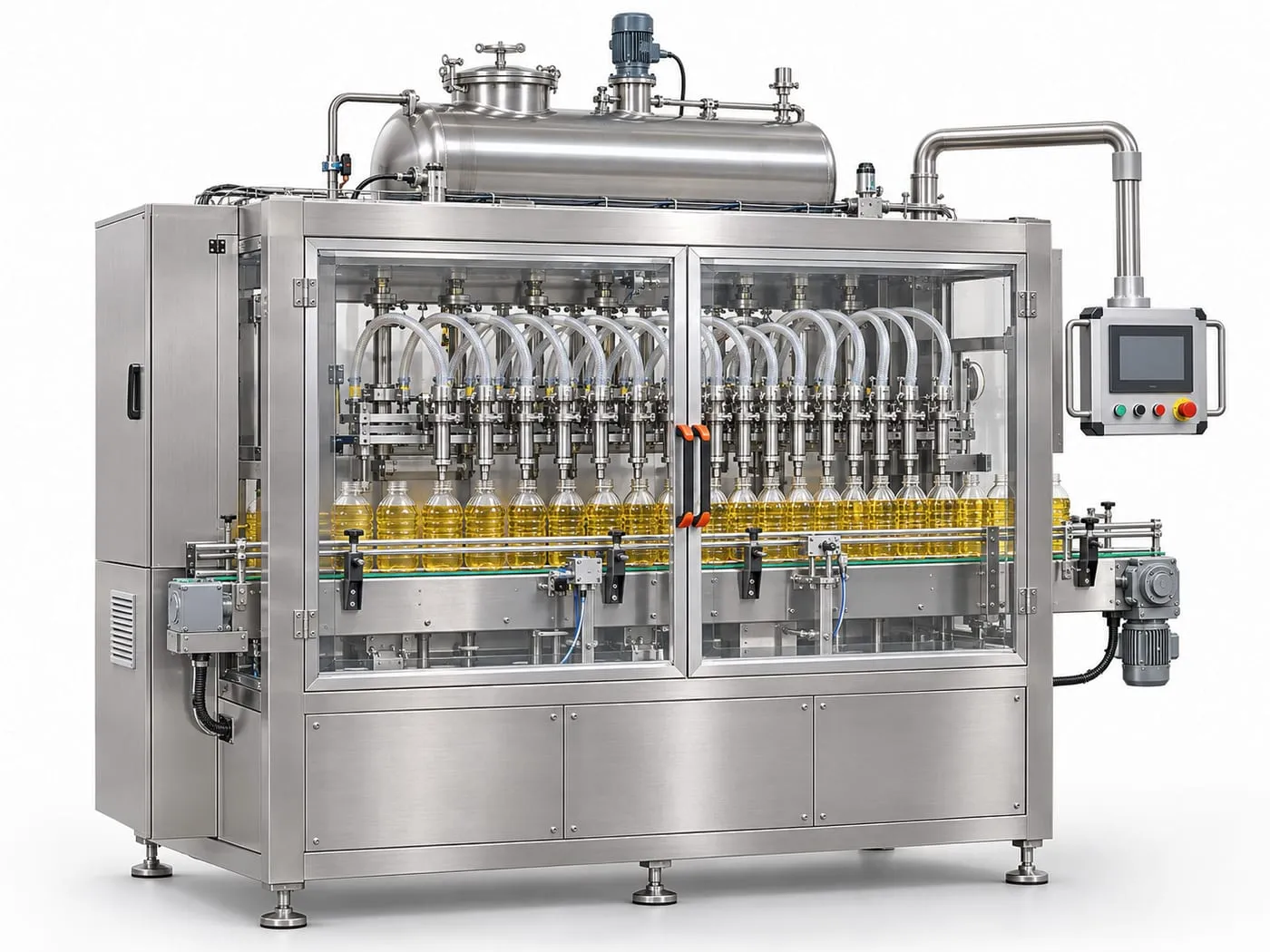
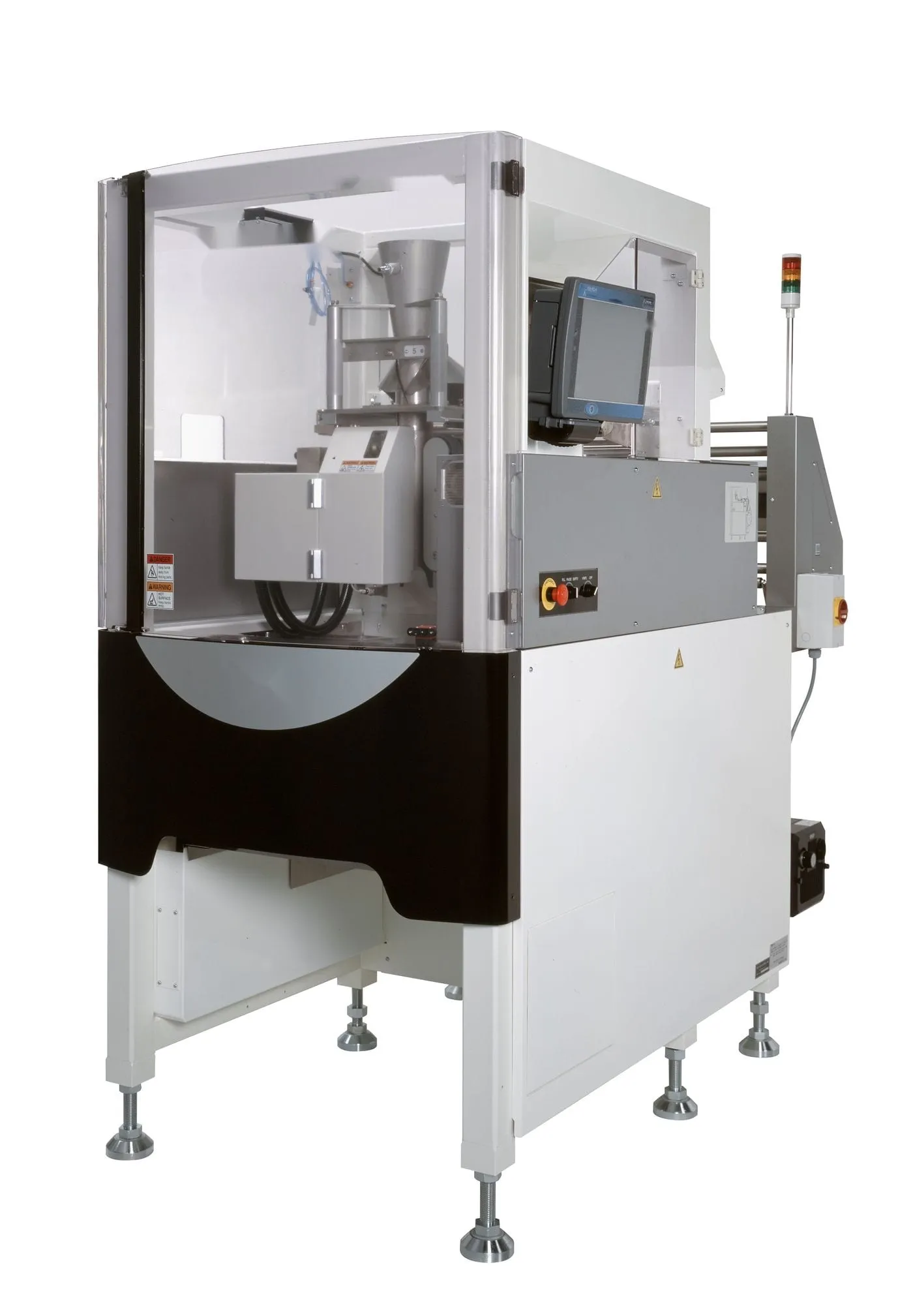
The packer is fed by a multihead weigher for granules or by a liquid filling machine dosing head for sauces. Filled pouches then pass an in-line checkweigher and, for products with higher contamination risk, a food X-ray inspection system. Typical upstream equipment includes the spice grinding machine and the nut seasoning line.
Rotary
stations arranged in a circle; compact and common for stand-up and zipper pouches at medium speeds.
Linear (in-line)
stations in a straight line; easier access and can be built with two lanes for higher output.
Vacuum pouch
adds a vacuum chamber after filling for meat, pickles or products that need low residual air.
Our engineers check these points with you, so the quotation fits your site rather than a catalogue default.
Generally yes, because each pouch has to be picked and opened. In return you get printed stand-up and zipper pouches with retail presentation. Speed depends on pouch size, product flow and seal time; we confirm it with your pouches.
Yes, with a suitable pump or piston filler on the filling station. Products that splash or string need attention, because any product on the seal area weakens the seal. Spout-type or anti-drip nozzles help.
Your real pouches in each size you plan to use, a product sample and your target fill weight. Pouch quality, especially how easily the mouth opens, affects reliability as much as the machine does.
Tell us your raw material, finished product and target output. Our engineers reply with a matched configuration and quotation.
What to send with your inquiry
Email sales@hnfoda.com
How an automatic samosa and spring roll line works: wrapper sheets, filling and forming, frying or freezing, how to size it, and what to send for a quote.
Packaging & Inspection
Snack, nut, frozen food, grain and powder producers moving from manual bagging to automatic packing.
Rated in finished bags per minute, set by bag length, fill weight and film
Packaging & Inspection
Snack, nut, confectionery, frozen and fresh food packers who need fast, accurate portions.
Rated in weighments per minute, matched to the packing machine
Packaging & Inspection
Beverage, edible oil, sauce and condiment producers filling bottles, jars or cans.
Rated in filled containers per hour, set by fill volume and container
Packaging & Inspection
Ready meal, fresh-cut, meat and central kitchen operations packing in trays.
Rated in sealed trays per minute, set by tray size and sealing cycle