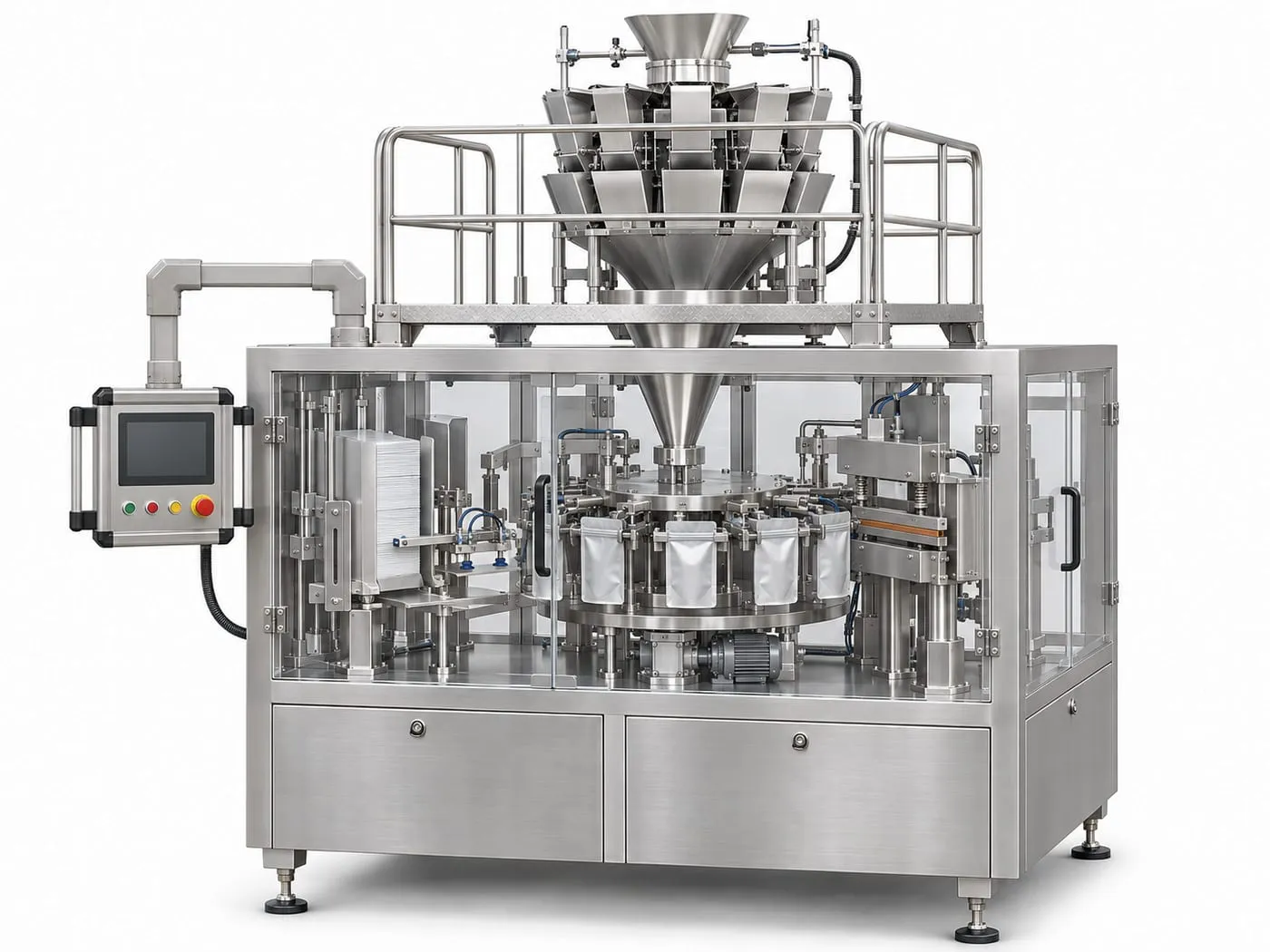
Guides
Samosa and Spring Roll Making Machines: Wrapper, Forming, Frying and Freezing Line Explained
How an automatic samosa and spring roll line works: wrapper sheets, filling and forming, frying or freezing, how to size it, and what to send for a quote.
- Prepared by
- HNFODA Applications Engineering
- Topic
- Guides
- Published
- Reading time
- 6 min read · 2 sources
On this page
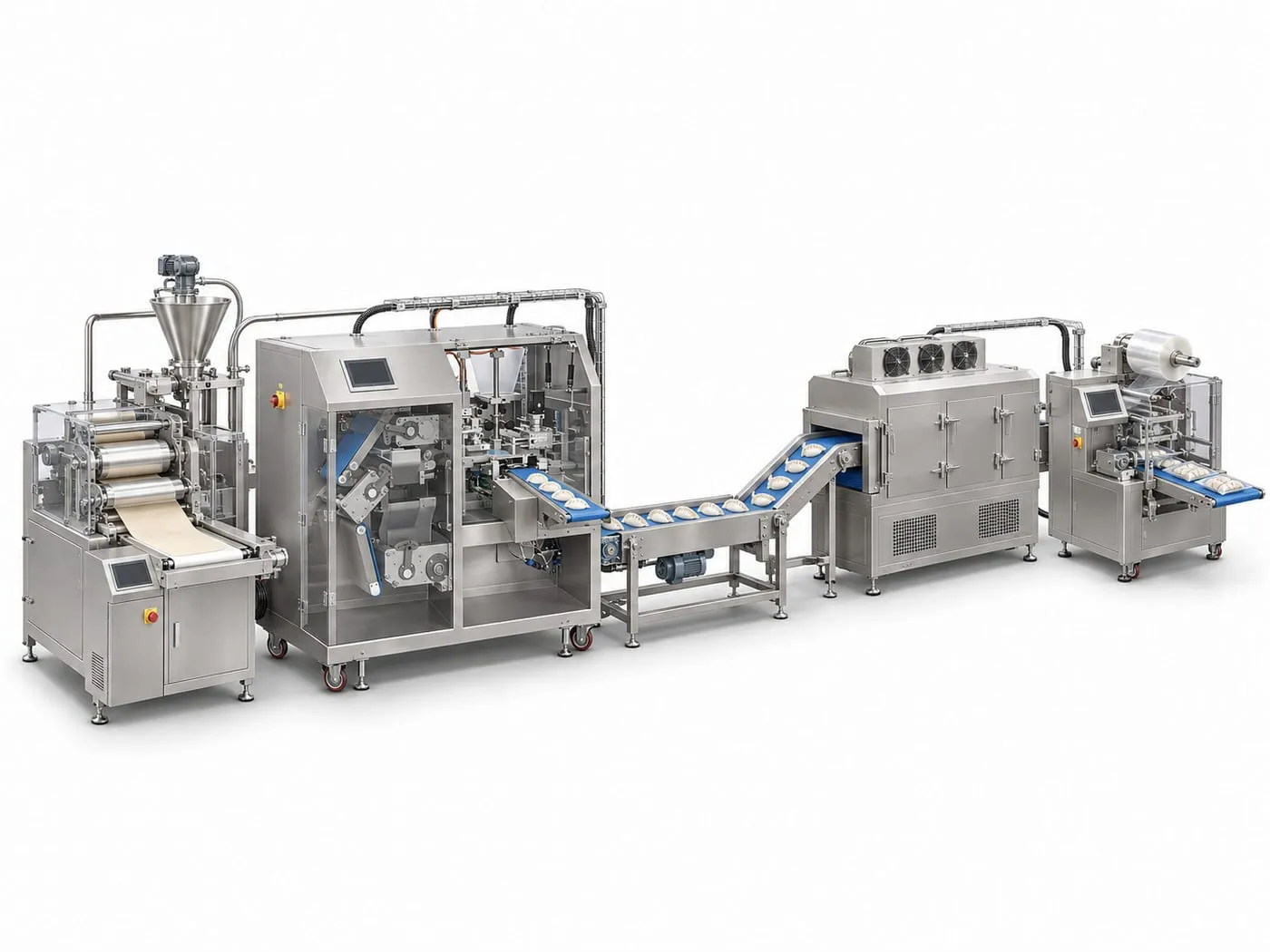
Short answer: an automatic samosa and spring roll line places a measured portion of filling on a pastry sheet, folds or rolls it into a sealed piece, then passes it to a fryer, oven or freezer. The decisions that matter are where the sheets come from, how wet and chunky the filling is, the piece weight, and whether you sell the product raw, fried or frozen. Size the line on finished pieces per hour, not on the speed printed on a forming machine.
Where the demand comes from
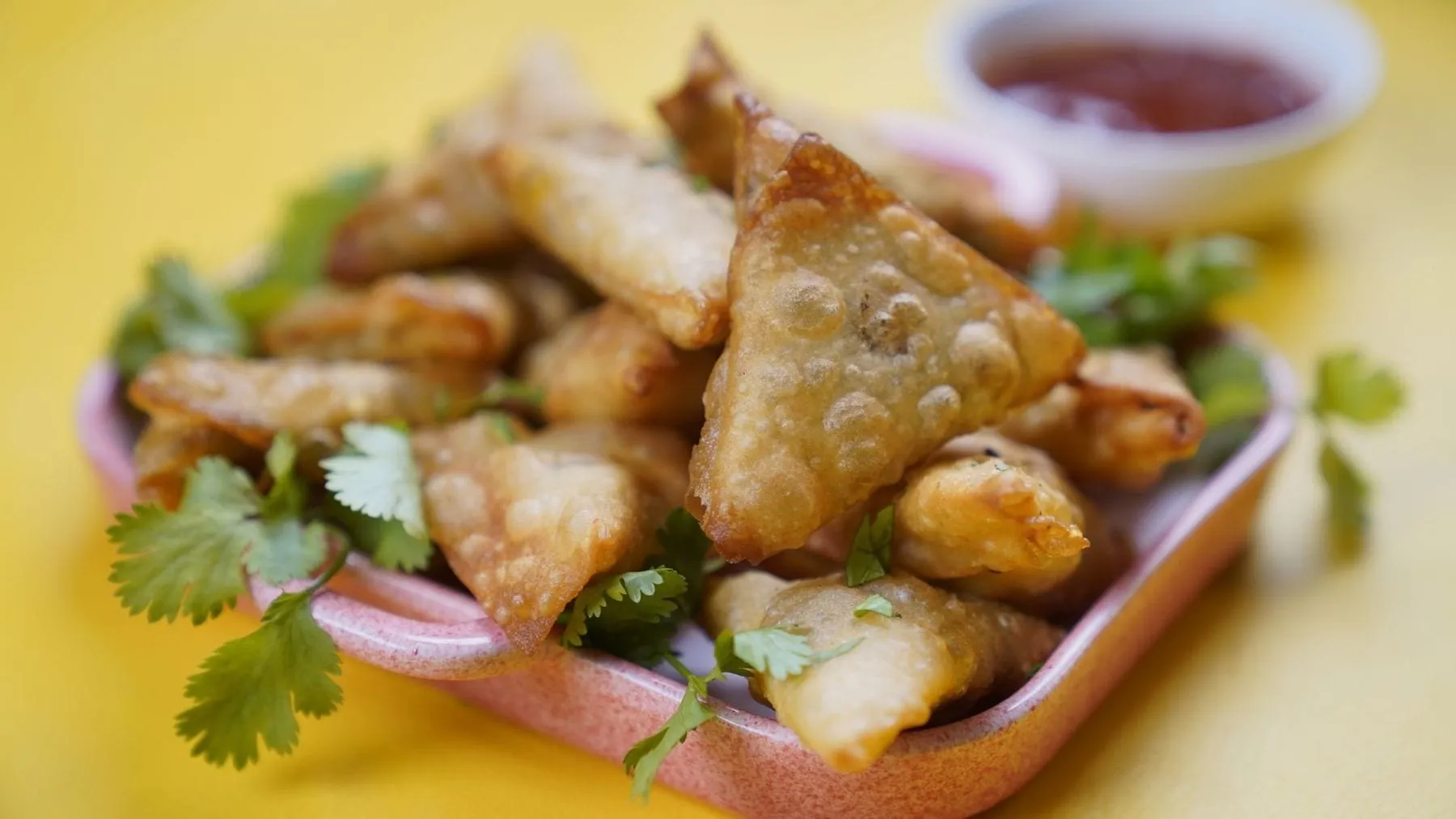
Samosas are sold everywhere food is bought on the move: street stalls, tea shops, canteens, caterers and shops. Spring rolls are sold in the same places and, increasingly, in the frozen aisle. In India, Pakistan, Ghana and Kenya, a bakery or snack maker that hand-folds samosas hits a ceiling quickly. Volume depends on how many skilled folders you can hire and keep, and piece weight varies from one person to the next. A forming machine fixes both problems: the weight of filling per piece is dosed, and the shape is the same every time.
That is also the reason to be careful about what you buy. A table-top machine for a restaurant kitchen and a line that feeds a frozen-food distributor are different projects. Decide which one you are building before you compare offers.
The four stages of a line
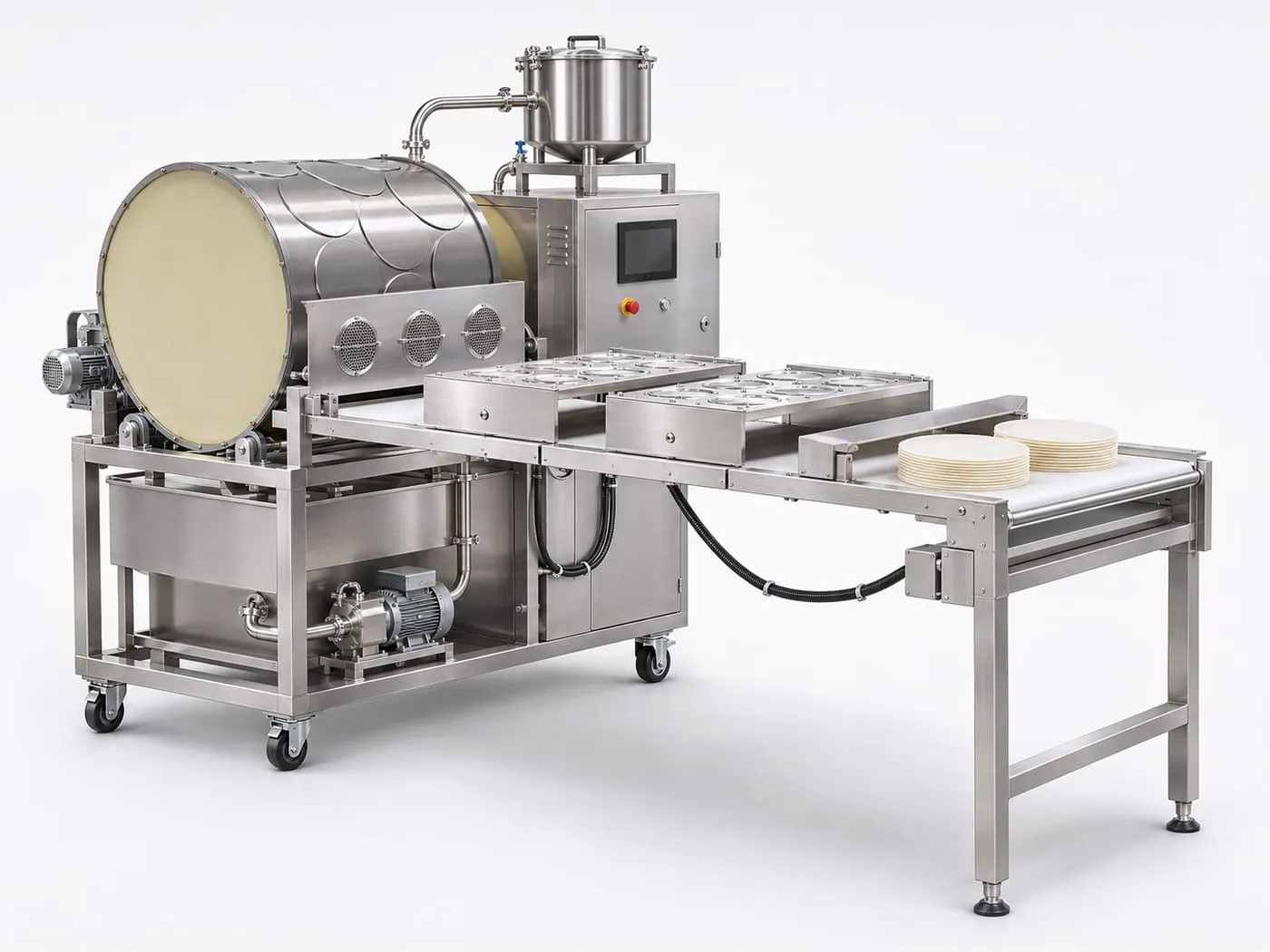
- Pastry sheets. Spring roll wrappers are normally made from a thin batter cooked into a film on a heated drum or belt, then cut and stacked. Samosa pastry is often a firmer dough sheeted and cut, though some producers use the same wrapper film. You can buy sheets from a supplier or make them with a spring roll wrapper machine.
- Filling and forming. A samosa and spring roll machine doses the filling, folds the sheet into a triangle or rolls it into a cylinder and seals the edge with water, batter or paste.
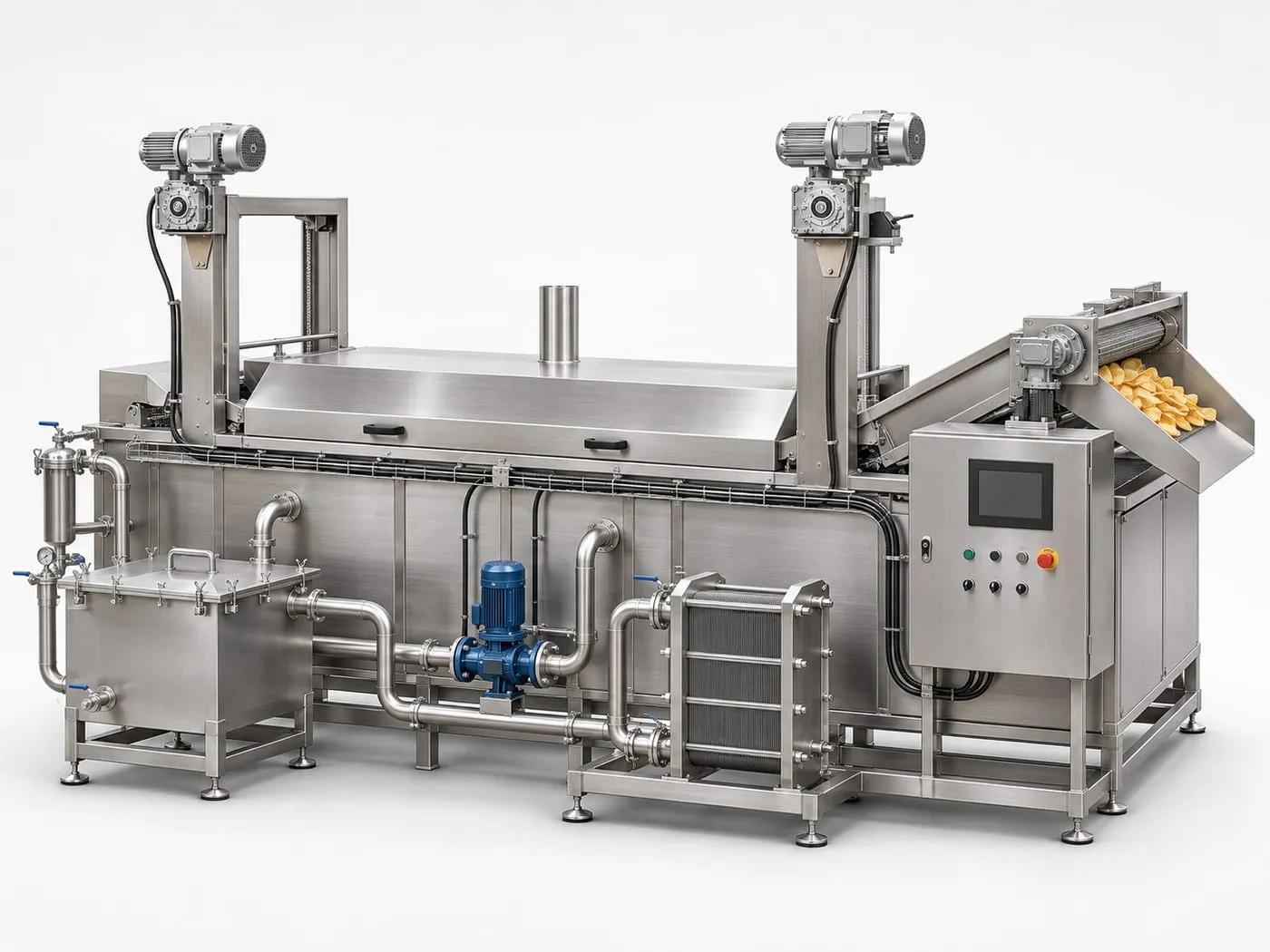
- Frying or baking. Pieces are fried in a continuous fryer with oil circulation and filtering, or sold uncooked.
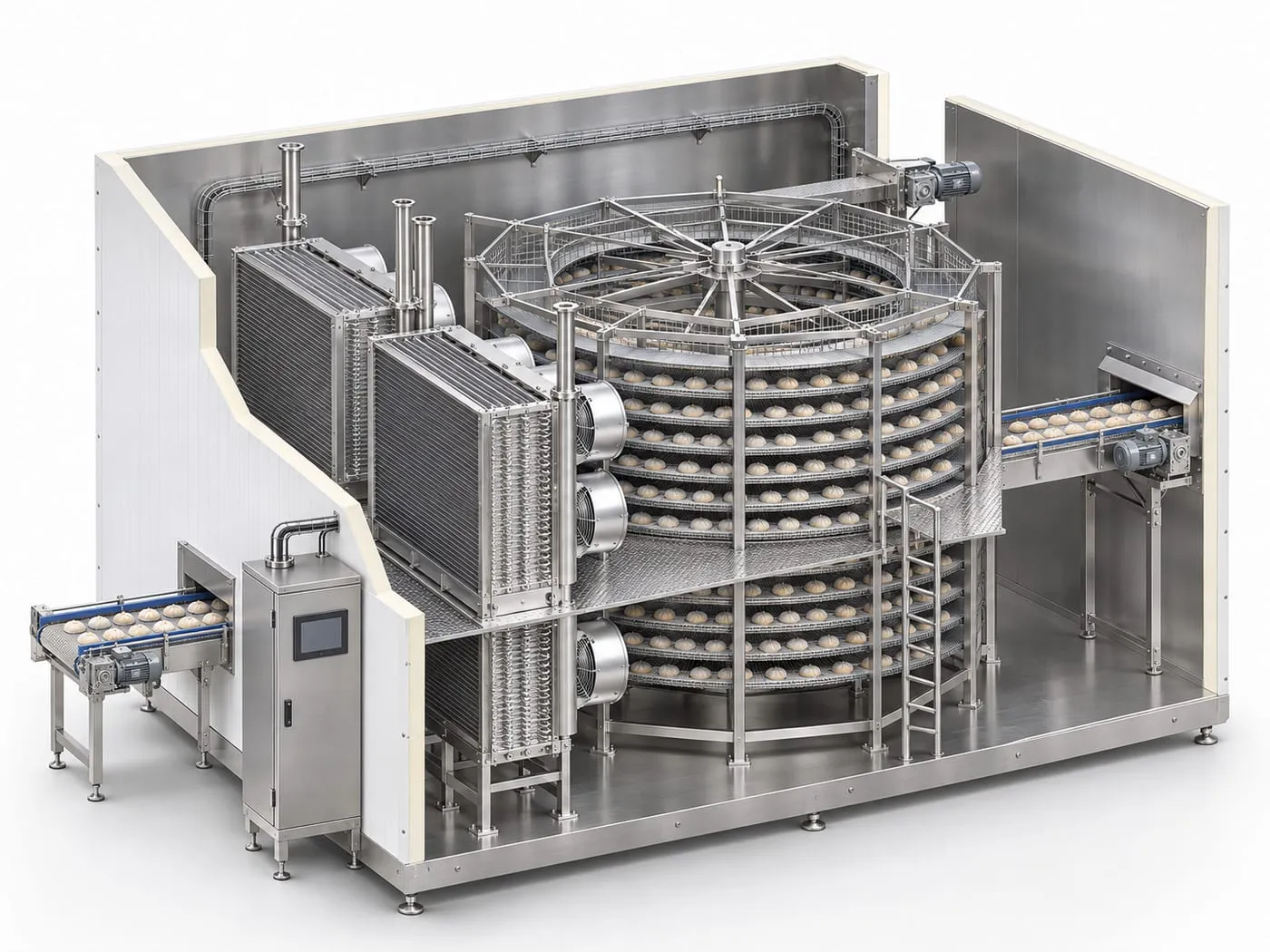
- Freezing and packing. A food freezer brings pieces down for storage and distribution; a premade pouch packing machine or other packing step closes the line.
You do not have to buy everything at once. The common sequence is forming machine first with bought-in sheets, a fryer next, a freezer and packing when you sell beyond your local area.
Which configuration fits
| Route | Suits | What it needs | Watch out for |
|---|---|---|---|
| Forming machine, bought-in sheets | New producers, caterers, bakeries | Sheet supplier, filling kitchen | Sheet supply must match machine speed |
| Forming machine + wrapper machine | Plants that want their own sheets | Batter mixing, heating source, floor space | Batter viscosity and sheet release |
| Forming + fryer | Ready-to-eat sales, canteens, retail | Oil management, extraction hood | Oil quality and uptake |
| Forming + freezer + packing | Frozen distribution to shops and export | Cold storage, cold chain | Piece shape after freezing |
Filling and sheet: the two things that cause stoppages
Most complaints about samosa and spring roll machines come from the product, not the machine.
- Filling moisture. A wet filling softens the sheet from inside, the seam opens and the piece bursts in hot oil. Cook the filling, drain it and cool it before dosing.
- Particle size. Large lumps of potato, meat or vegetable stop the doser from delivering a steady weight and tear thin sheets. Cut or mash to a size the doser can handle.
- Sheet thickness and stack handling. Sheets that dry at the edges crack when folded; sheets that are too moist stick together. Keep stacks covered and use them in order.
- Seal. Water, batter or a starch paste can seal the edge. The right choice depends on your sheet and your frying temperature, and is set during commissioning with your own materials.
Send us your actual sheet and a sample of the filling. We will not promise a speed or a reject rate before testing.
Frying, oil and the product people taste
Frying is where a good forming machine can still produce a poor product. Pieces take up oil while they fry, and the amount depends strongly on the water in the raw material and the sheet. A thin, dry sheet around a lumpy, wet filling is a bad combination. Fryer temperature, time, oil turnover and filtering all change taste and shelf life, so ask any supplier how the fryer handles oil circulation and cleaning. A continuous fryer with a mesh belt or paddles moves pieces through the oil at a controlled time and temperature, which is more consistent than frying in batches by hand. If your market is oil-price sensitive, discuss oil volume and filtering with us at the start, because running cost matters as much as purchase cost.
Freezing, cold chain and food safety
Selling frozen product opens shops, supermarkets and distributors. It also means you must hold the cold chain. The US Department of Agriculture notes that food kept constantly at 0 °F (about -18 °C) stays safe, while long storage affects quality rather than safety. That tells you the target: a freezer that brings pieces down quickly, and cold storage and transport that hold that temperature. Plan freezing capacity on pieces per hour, not on the size of the room.
Hygiene deserves the same attention. The World Health Organization’s five keys to safer food (keep clean, separate raw and cooked, cook thoroughly, keep food at safe temperatures, use safe water and raw materials) are a practical frame for staff training. Food-contact parts in stainless steel are standard on most models of this type; confirm material and cleaning design in your quotation, and check your national authority for licensing and labelling rules.
Common mistakes
- Buying a very fast forming machine and feeding it with hand-made sheets.
- Ignoring the filling kitchen: cooking, draining and cooling capacity must keep up with the machine.
- Choosing the fryer last, when it decides the layout and extraction.
- Pricing frozen product without checking the cold chain you can actually keep.
- Comparing machines by speed on a nameplate rather than finished pieces per hour at your piece weight.
What to prepare for a quotation
- The products you want: samosa, spring roll or both, with photos of the shape and the piece weight.
- Your sheet: ready-made (send a sample) or to be made on the line, with the recipe.
- The filling: recipe, texture, particle size, moisture, and how you prepare and cool it.
- Target output in finished pieces per hour or per day, and shifts per day.
- The route after forming: sell raw, fry, bake or freeze, and the packaging.
- Site details: power supply, gas or electric heating, water, floor area, ambient temperature.
- Whether you also want pastry sheets made on site, and whether a later second line is likely.
If you are planning a wider frozen snack factory, see our frozen dumpling plant guide for how forming, freezing and cold storage fit together, our turnkey projects page for how supply and installation are organised, and the instant noodle and frozen food category for the related machines. Contact us with your piece weight, filling and hourly target and we will propose a configuration.
Frequently asked questions
- Can one machine make both samosas and spring rolls?
- Usually yes, by changing the forming tooling: a fold into a triangle for samosas, a roll and tuck for spring rolls. The sheet, the filling and the sealing method differ, so tell us which shapes you sell and in what ratio before we configure the machine.
- Do I need my own wrapper machine?
- Not if you buy ready-made sheets, which is a sensible way to start. A wrapper machine makes sense when you want control over sheet size, thickness and cost, or when your market does not supply sheets of the quality you need. It is a separate step with its own batter and heating needs.
- What fillings work in an automatic machine?
- Cooked, cooled fillings with small even pieces, for example spiced potato and peas, minced meat, vegetables or cheese. Very wet or hot fillings soften the sheet and leak. We test a sample of your filling before quoting.
- Should I fry the product or sell it frozen?
- Both routes exist. Frozen, uncooked pieces let customers fry at home or in a kitchen and travel well; ready-fried frozen pieces save the buyer time but need a fryer and more oil management on your side. The choice sets the fryer, freezer and packing you need.
- How do I size the line?
- Start from your target sales in kilograms or pieces per day, convert to pieces per hour at your piece weight, and divide by the hours you will run. Give us the piece weight and the number of shifts and we will propose a forming rate with room to add a second line.
Sources
- [1]Freezing and Food Safety — USDA Food Safety and Inspection Service
- [2]Five keys to safer food manual — World Health Organization
HNFODA Applications Engineering
Line design, product trials and commissioning
Engineers who size, build and commission HNFODA food processing lines, writing from the questions buyers ask before a quotation. About HNFODA