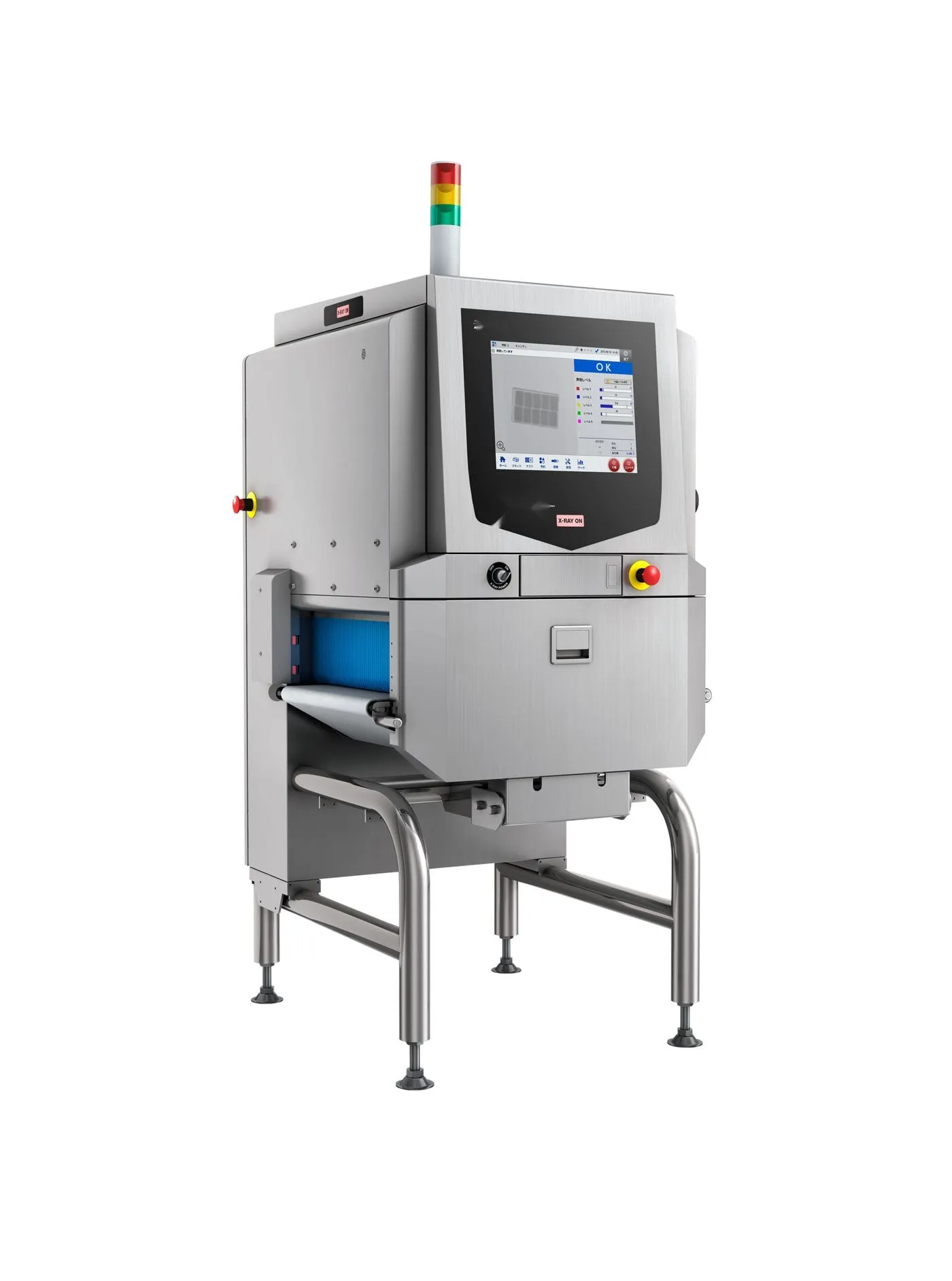
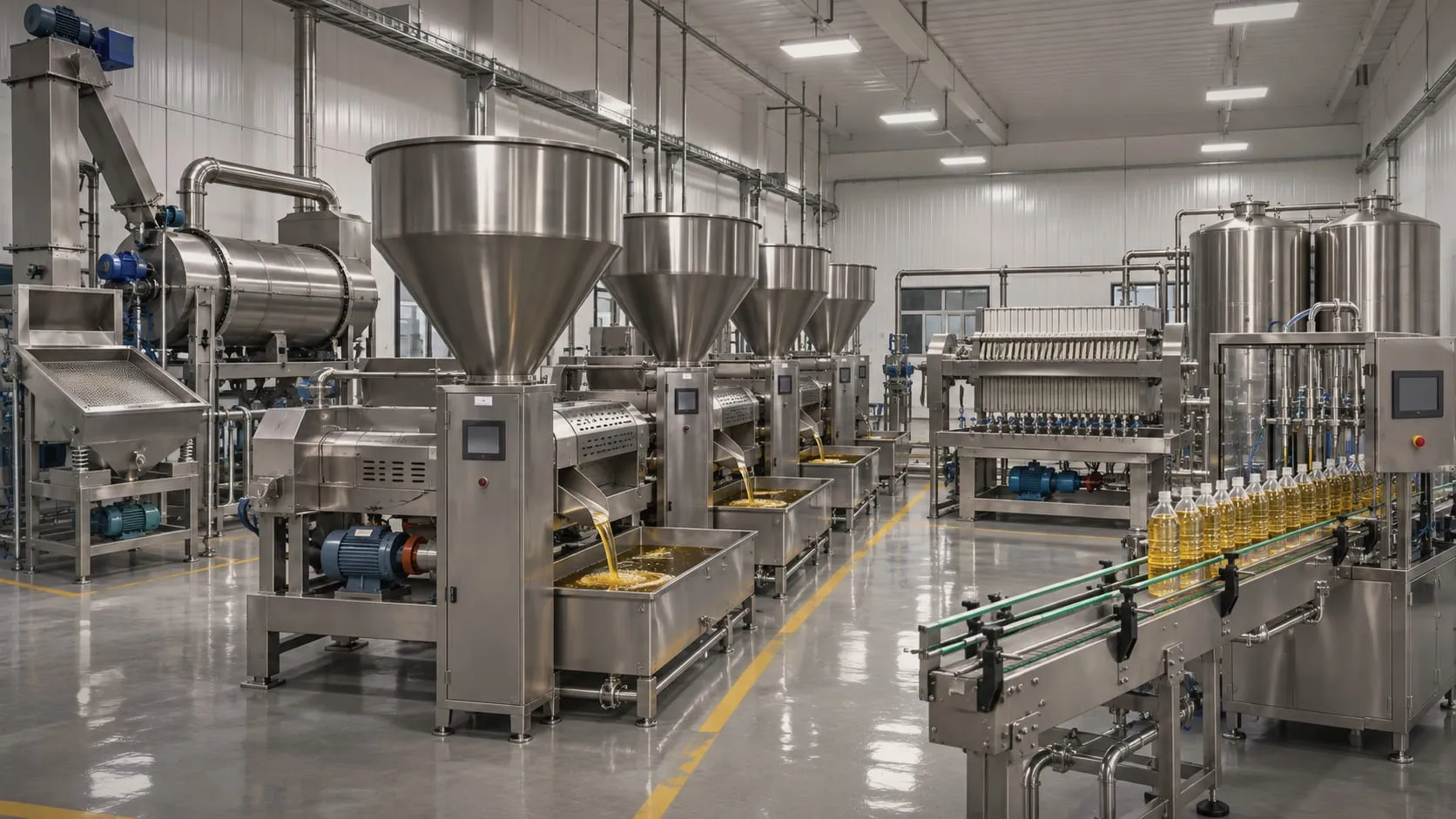
Production lines · Mechanical pressing edible oil
Edible Oil Pressing Plant: Planning a Mechanical Oil Mill
Plan a mechanical edible oil pressing plant: seed cleaning, conditioning, screw pressing, filtration, refining and filling, sized on seed input.
- Prepared by
- HNFODA Applications Engineering
- Topic
- Production lines · Mechanical pressing edible oil
- Published
- Reading time
- 6 min read · 2 sources
On this page
- 01What an oil pressing plant consists of
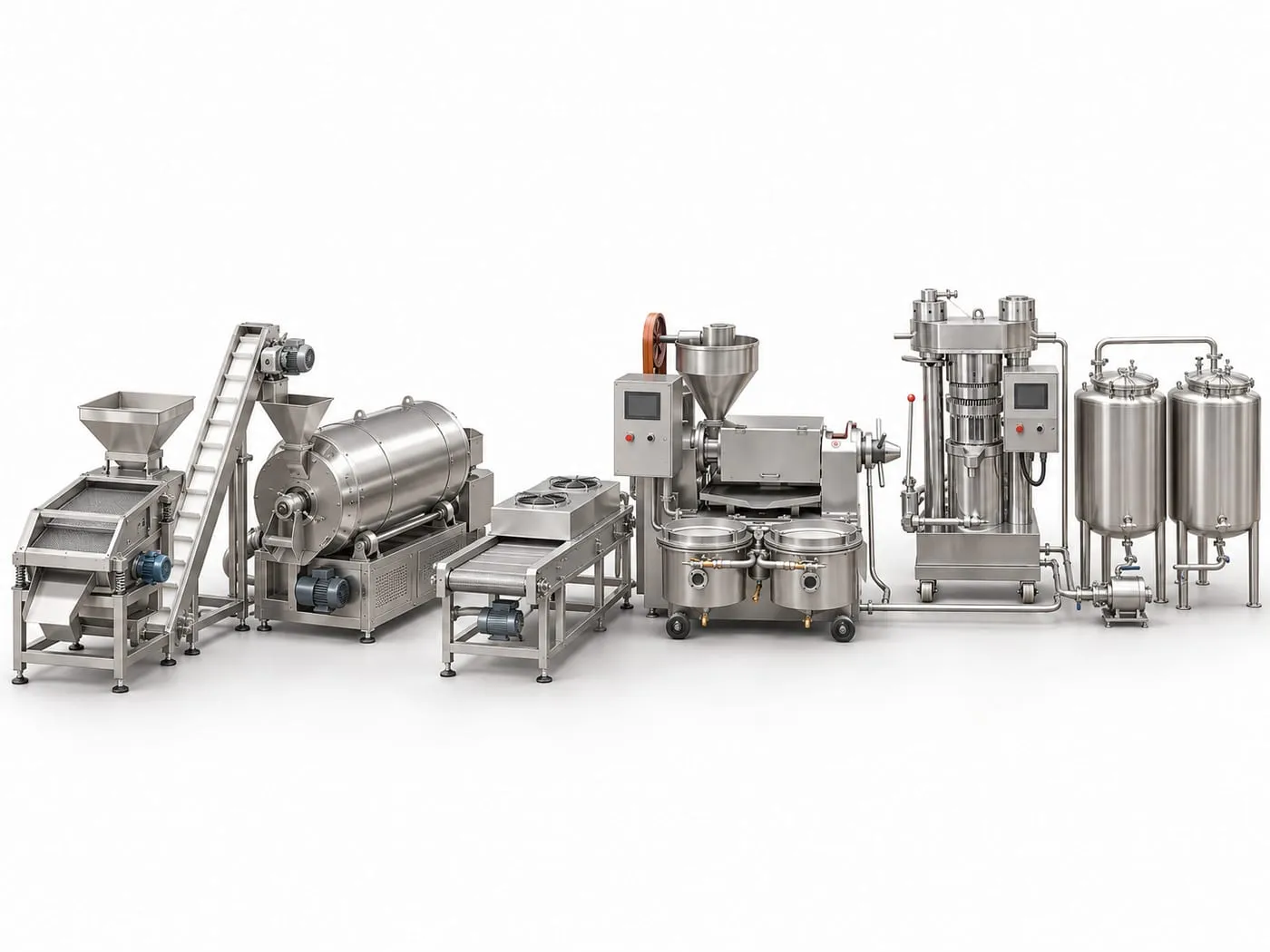
- 02Process route and key machines
- 03How the press works, and why preparation matters
- 04How to size the plant
- 05Where do you hand over the product?
- 06Utilities and building
- 07A worked sizing example
- 08Which business model fits
- 09Supply levels
- 10What drives the cost
- 11Common mistakes
- 12What to send us for a quotation
Short answer: An edible oil pressing plant (oil mill) cleans the oilseed, prepares it by cracking, dehulling or conditioning with heat, presses the oil out mechanically in screw or hydraulic presses, and filters the crude oil. Refining and bottling are optional sections. The plant is sized on seed input per day, the presses and seed preparation set the output, and the most important early decision is whether you sell filtered crude oil, refined oil or bottled oil.
This page treats the oil mill as a business project. For individual machines, see the screw oil press and the other pages linked below.
What an oil pressing plant consists of
- Seed intake and storage: silos or bag stores, with moisture and quality checks.
- Cleaning: removal of dust, stones, metal, stalks and other seeds.
- Preparation: cracking, dehulling where it pays off, and conditioning (heating and adjusting moisture) for hot pressing; roasting for flavour oils such as sesame or groundnut.
- Pressing: one or more screw presses, or hydraulic presses for small batches.
- Crude oil clarification: settling and filtration to remove fine solids.
- Refining (optional): degumming, neutralising, bleaching, deodorising, depending on the oil and market.
- Filling and storage: bulk tanks, drums or bottles.
The press cake leaves at step 4 and needs its own conveying, cooling and storage. Many mills sell it as animal feed, so its quality matters to the business case.
Process route and key machines
| Station | Purpose | Key machine |
|---|---|---|
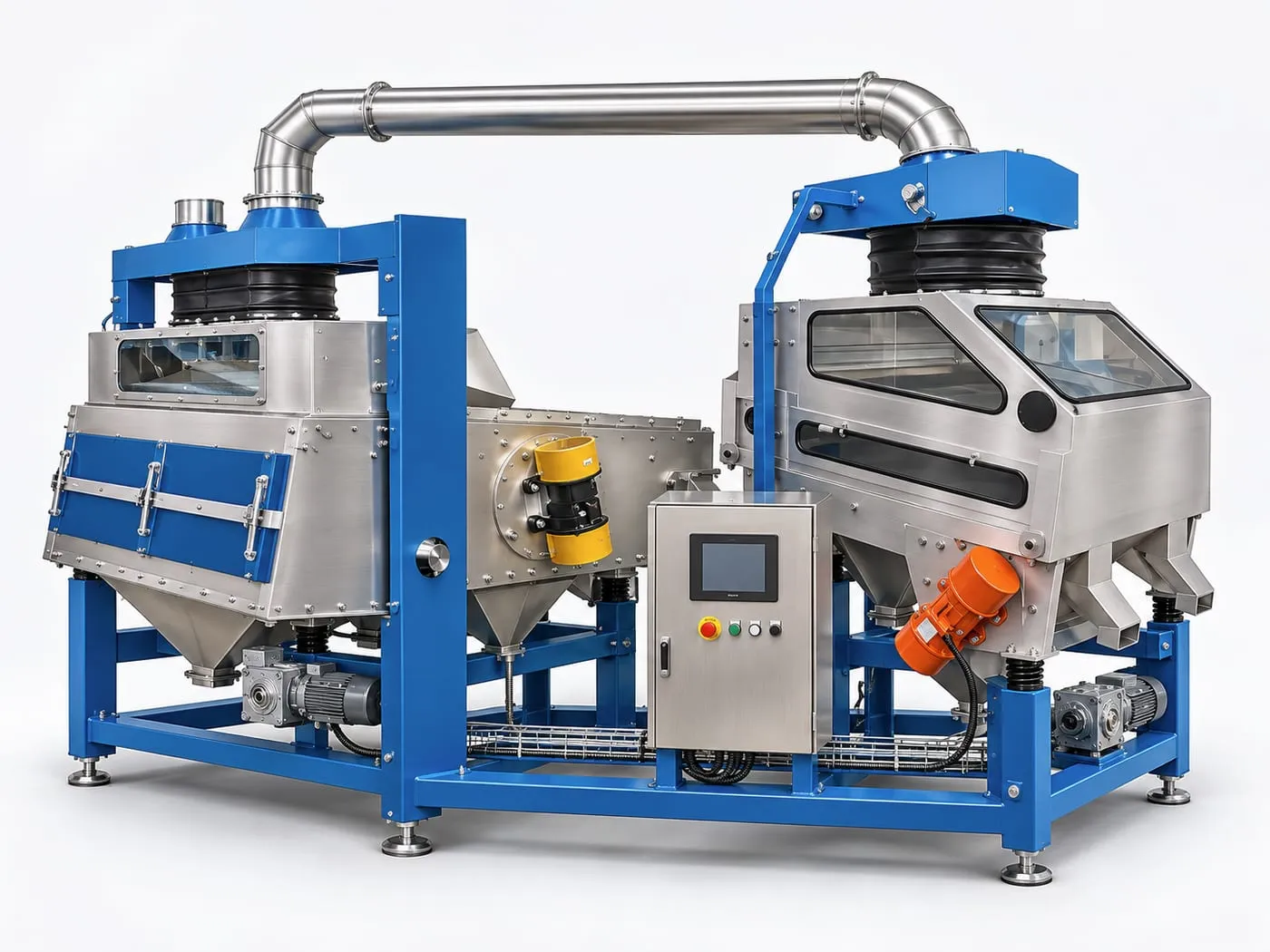
| Cleaning | Remove stones, dust, metal and foreign seeds that damage presses and spoil oil | Oilseed cleaning equipment |
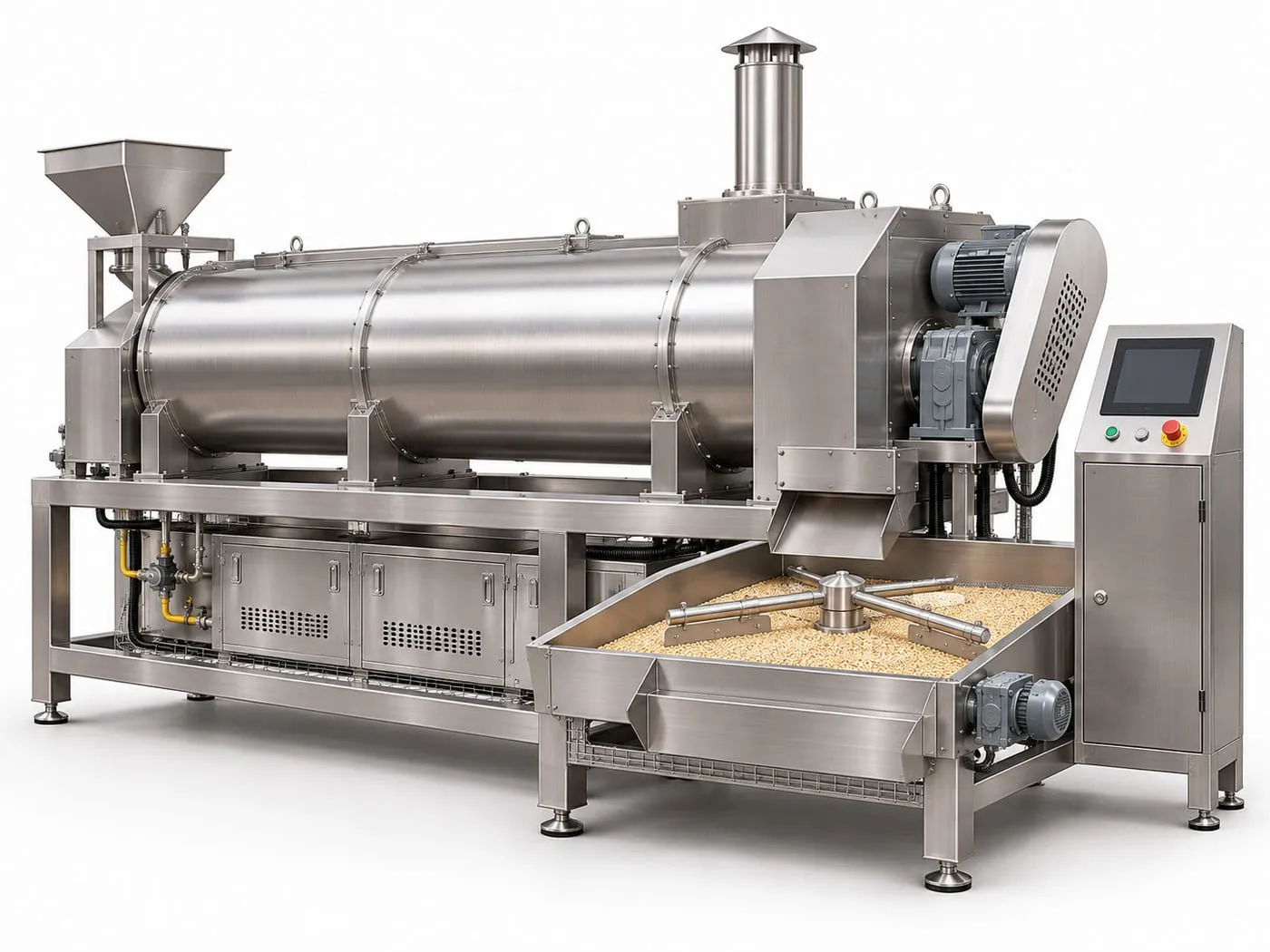
| Roasting or conditioning | Heat and adjust seed moisture for hot pressing; develop flavour | Oilseed roaster |
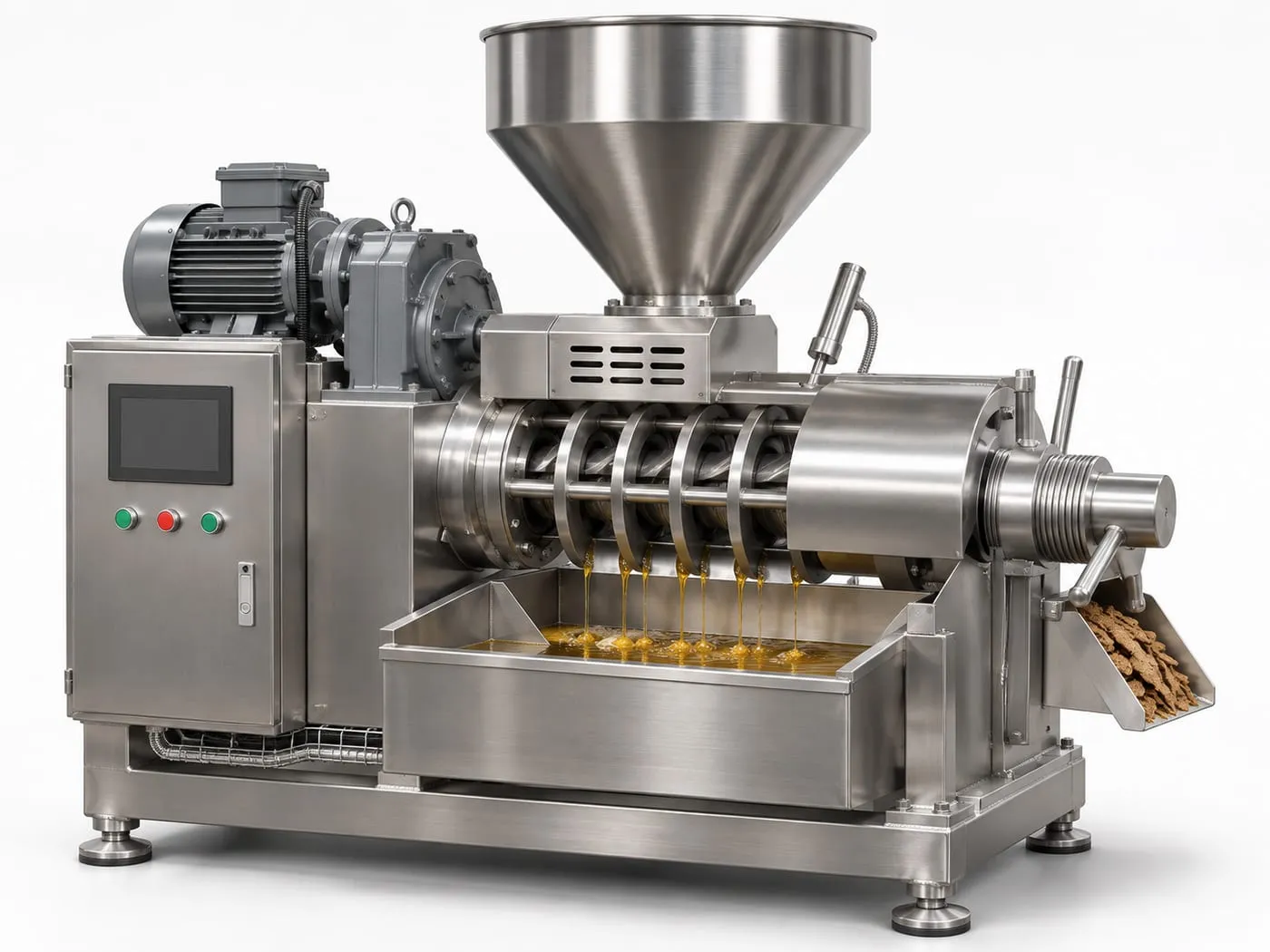
| Continuous pressing | Press oil from prepared seed | Screw oil press |
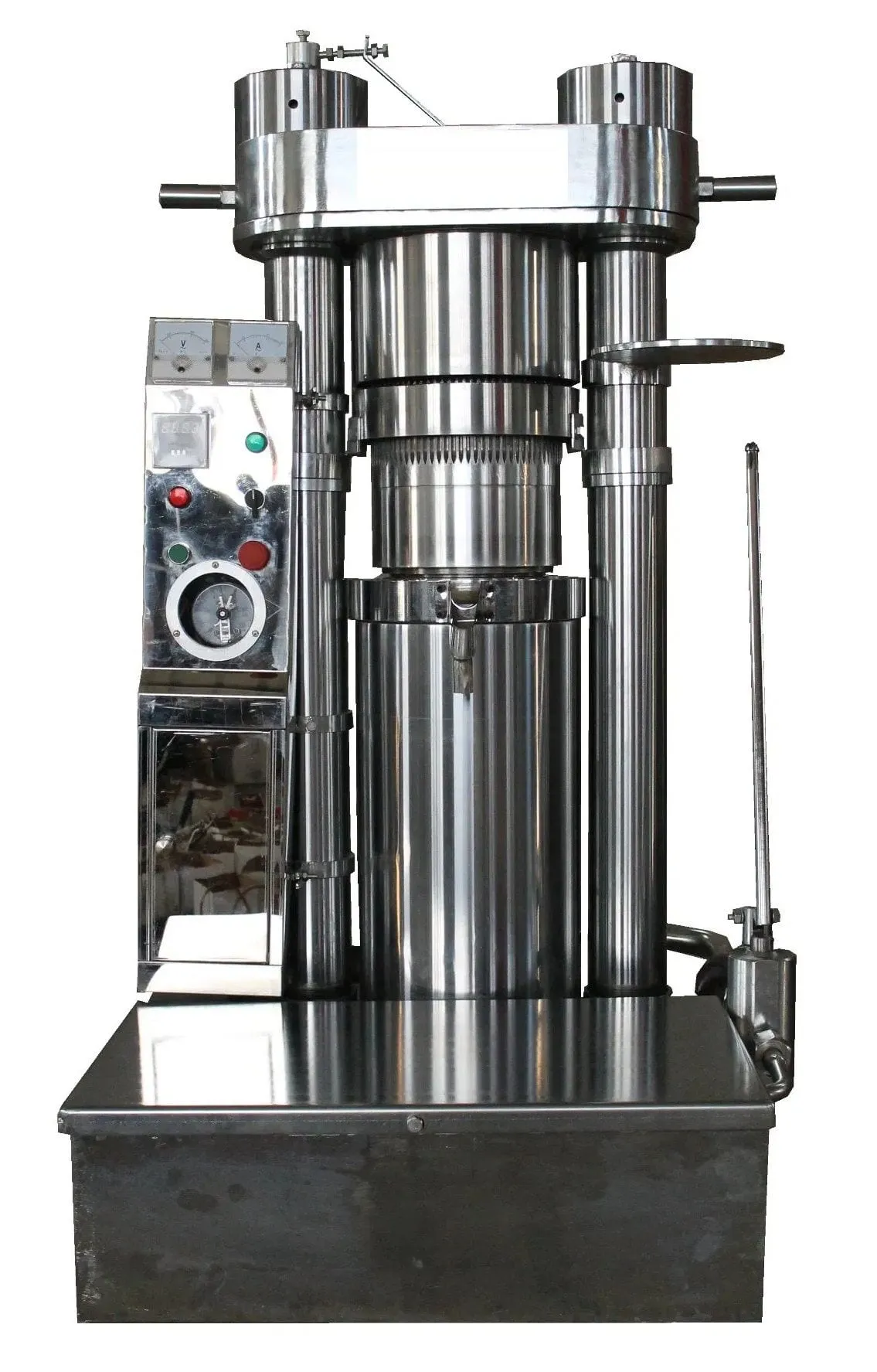
| Batch pressing (small volume) | Press sesame paste, nuts or high-value seed | Hydraulic oil press |
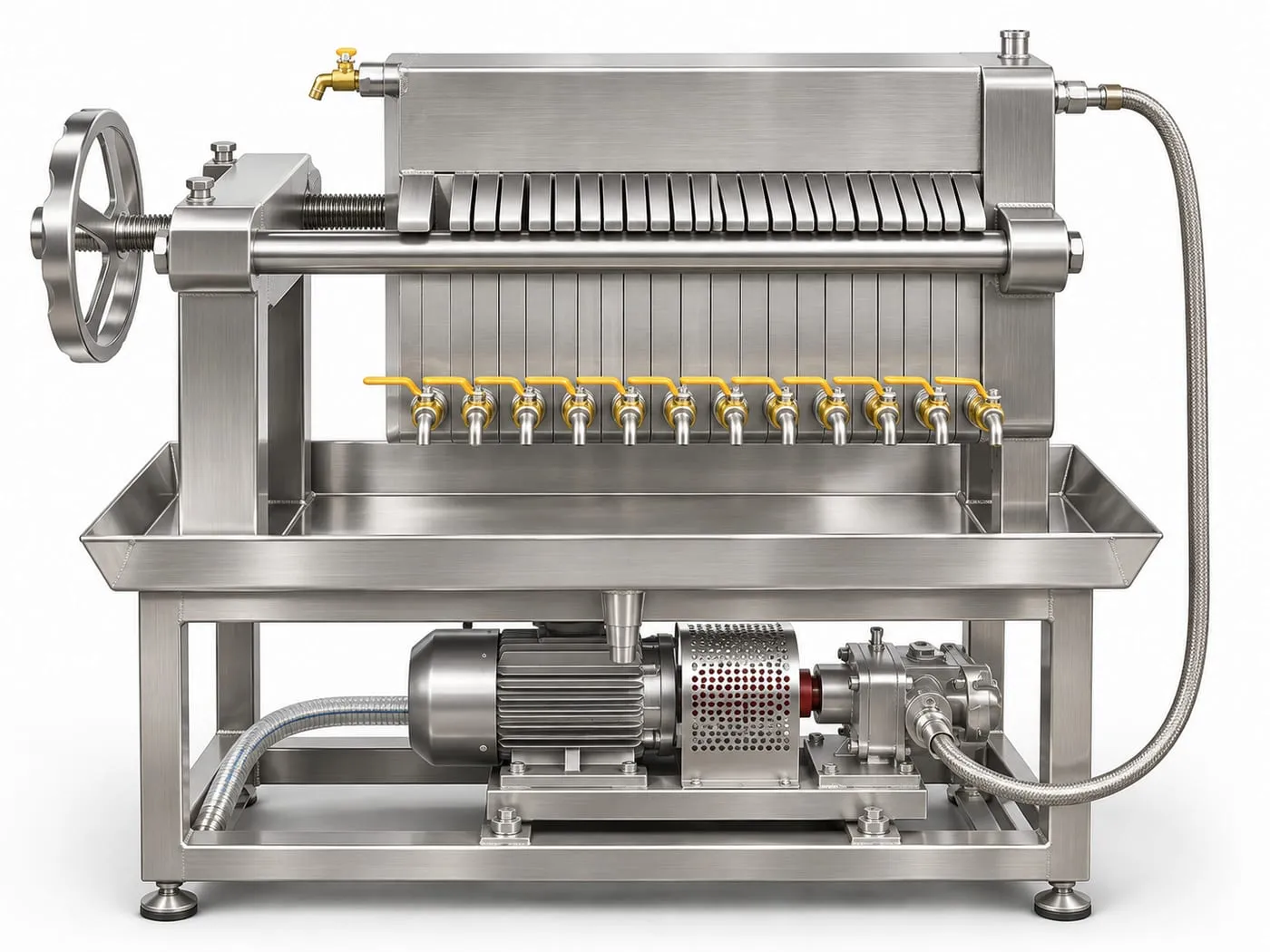
| Filtration | Remove fine solids from crude oil | Edible oil filter |
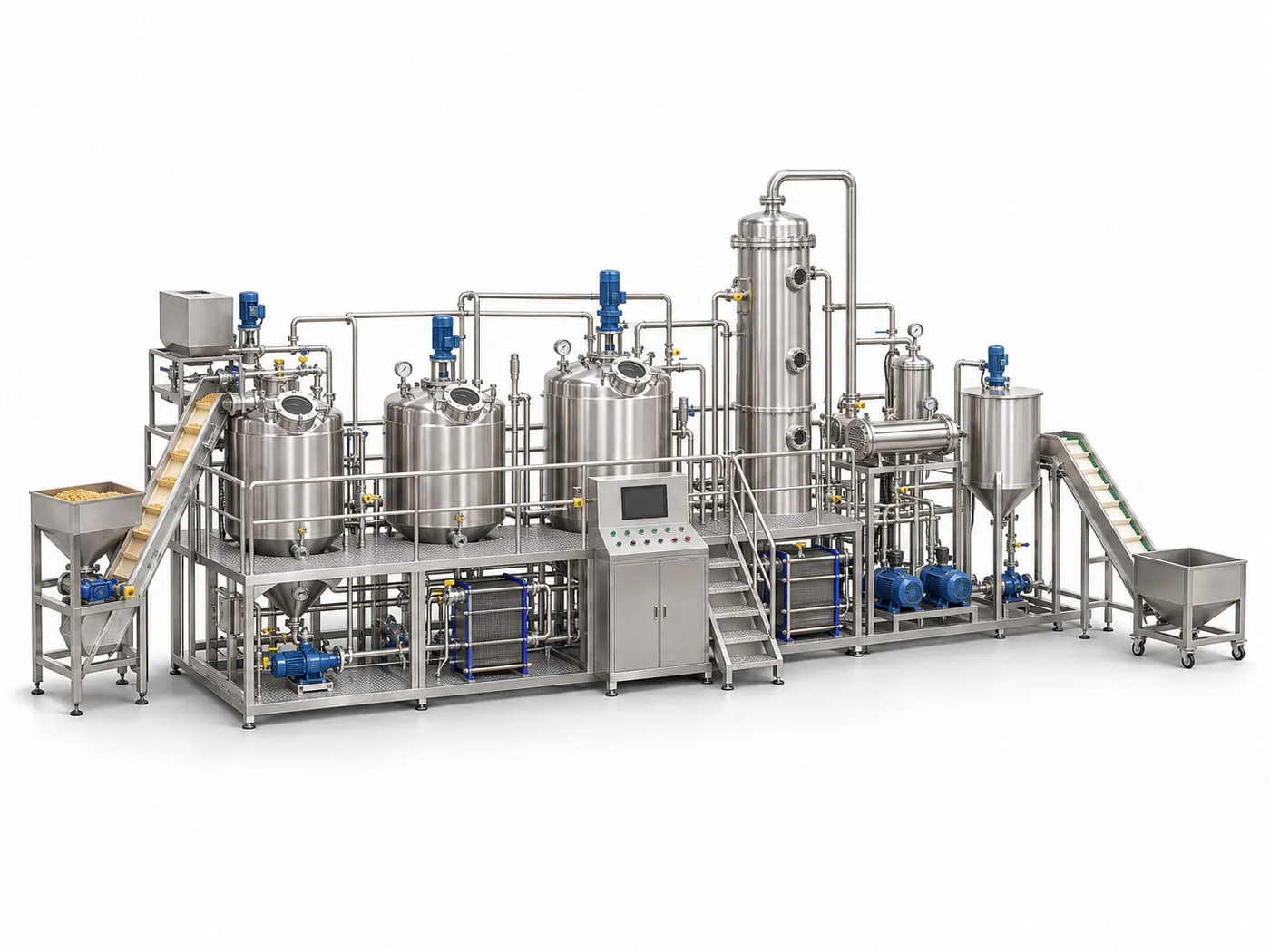
| Refining (optional) | Produce refined oil to market specification | Edible oil refining line |
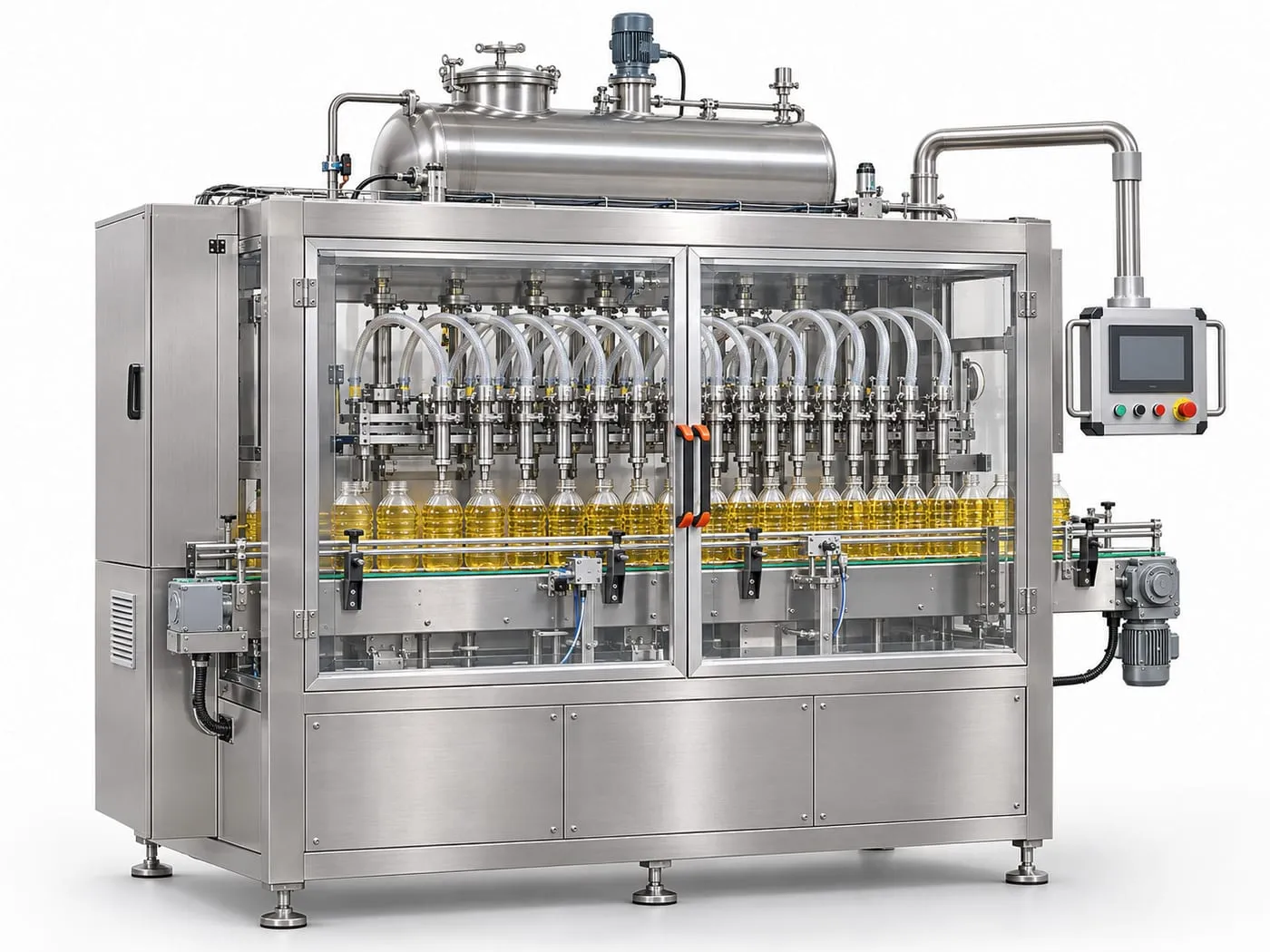
| Filling | Bottles or jerrycans | Liquid filling machine |
For sesame oil and similar flavour oils, a dedicated route with roasting and specific pressing or extraction methods applies; see the sesame oil production line.
How the press works, and why preparation matters
The AOCS Lipid Library describes the expeller, or screw press, as the standard machine for mechanical oil separation: a rotating worm shaft pushes the seed through a perforated barrel, pressure rises, and oil drains out through the barrel while cake exits at the end. The same source stresses that the press only performs well with suitable seed preparation.
In practice this means cleaning, cracking and conditioning are not extras. Poorly cleaned seed wears the press and raises solids in the oil. Seed at the wrong moisture or temperature presses badly, either leaving oil in the cake or producing a dark, cloudy oil. When a mill under-performs, the cause is often upstream of the press.
How to size the plant
- Start from seed input per day (tonnes per 24 hours is common in the industry). Decide how many hours per day the mill runs; many small mills run continuously because presses take time to reach stable operation.
- Estimate oil output from the seed’s oil content and expected recovery, confirmed with a press trial on your seed.
- Size cleaning and preparation to feed the presses steadily with a buffer bin before the press.
- Size filtration for crude oil flow plus solids, and tanks for settling and storage.
- Plan cake handling: cake weight is much larger than oil weight for most seeds.
- Size refining and filling separately; they can run on different shifts from pressing.
If your seed supply is seasonal, storage capacity and seed drying may be a bigger investment than the presses.
Where do you hand over the product?
This is the question that changes the plant most:
| Delivery point | What you need | Typical buyer |
|---|---|---|
| Filtered crude oil in bulk | Cleaning, preparation, presses, filters, tanks | Refineries, traders, local markets |
| Refined oil in bulk | Plus a refining line and its utilities | Packers, food manufacturers |
| Bottled oil | Plus filling, capping, labelling and a packing store | Retail and wholesale |
Food standards also differ. The Codex Standard for Named Vegetable Oils (CXS 210-1999) defines categories such as virgin and cold-pressed oils and sets composition and quality factors; your target country’s own rules apply on top of it.
Utilities and building
- Power for presses, which are among the larger electrical loads in the plant.
- Heat for conditioning and roasting, and for refining if included (steam or thermal oil).
- Cooling water and vacuum if you refine.
- Dust control at cleaning and cake handling; fire safety around hot seed and oily cake.
- Oil-tight floors and drainage, with a plan for oily waste and spent filter material.
A worked sizing example
This example shows the method only; the oil content and recovery figures are assumptions to be replaced with your own seed analysis and press trial.
A mill plans to press 20 tonnes of groundnut kernels a day. If the kernels contain about 45 % oil and the presses recover about 85 % of it, oil output is 20 × 0.45 × 0.85 ≈ 7.7 tonnes of crude oil a day, before losses in filtration. The remaining 12 tonnes or so leave the presses as cake, which needs conveying, cooling, bagging and a buyer. Cleaning and conditioning must deliver 20 tonnes of prepared seed a day at a steady rate, and filters and settling tanks must handle the crude oil flow plus the fine solids it carries. If the business plan is to sell bottled oil, the filling line can run on day shifts only, drawing from storage tanks filled by the presses around the clock.
Which business model fits
- Toll pressing or local mills buy or process seed from farmers and sell filtered oil and cake locally; low capital, simple plant.
- Flavour oil producers (sesame, groundnut, walnut) focus on roasting, pressing and bottling for a premium price.
- Integrated producers add refining and bottling to reach supermarkets and food manufacturers, with higher investment and more utilities.
Supply levels
- Single machine: a press or filter added to an existing mill.
- Section: for example, cleaning and preparation, or pressing and filtration.
- Complete line: from seed intake to filtered or refined oil, with layout and controls.
- Turnkey project: complete line with installation, commissioning and training; see turnkey projects.
What drives the cost
- Seed input capacity and number of presses
- Cold or hot pressing (conditioning and roasting equipment)
- Dehulling, which adds machines but can improve oil and cake quality for some seeds
- Refining, the biggest step up in cost and complexity
- Bottling format and automation
- Seed storage, tanks and building work
Common mistakes
- Planning the mill on oil output without a press trial on local seed.
- Skipping cleaning or conditioning to save money, then losing oil and press parts.
- Forgetting cake storage and sales.
- Building a refinery before there is a market for refined oil.
- Ignoring oily waste, odour and fire risk in the building design.
What to send us for a quotation
- Seed types, typical oil content and moisture, with samples for a press trial if possible
- Seed input per day and operating hours
- Pressing type you want (cold, hot, pre-press) and target oil quality
- Delivery point: crude filtered oil, refined oil or bottled oil; bottle sizes
- Plans for the cake (feed sale, further extraction)
- Building plan and utilities: power, steam or fuel, cooling water
- Equipment you already have and want to keep
Frequently asked questions
- Cold pressing or hot pressing?
- Cold pressing keeps more natural flavour and suits premium oils such as virgin sunflower, flaxseed or walnut, but leaves more oil in the cake. Hot pressing conditions the seed with heat before the press, which raises oil recovery and suits seeds like soybean, rapeseed and sesame. The choice depends on your market and seed.
- Do I need a refinery?
- Only if your market wants refined oil. Filtered pressed oil is sold as it is in many markets, especially for groundnut, sesame and other flavour oils. A refinery adds investment, chemicals or adsorbents, utilities and waste handling, so many small mills sell filtered oil first and add refining later.
- How much oil will I get from my seed?
- It depends on the seed's oil content and moisture, how well it is cleaned and conditioned, and the press. Mechanical pressing always leaves some oil in the cake. We recommend a press trial with your own seed before you build your business case.
- Screw press or hydraulic press?
- Screw presses run continuously and suit most oilseeds at commercial scale. Hydraulic presses are batch machines used for small volumes and high-value materials such as sesame paste, cocoa or some nuts.
- Can one mill press several seeds?
- Yes, many mills do. Press settings, conditioning and sometimes press parts change between seeds, and cleaning between seeds matters if one of them is an allergen such as groundnut or sesame.
Sources
- [1]Expanding and Expelling — American Oil Chemists' Society (AOCS) Lipid Library
- [2]Codex Alimentarius: list of standards (incl. CXS 210-1999 Standard for Named Vegetable Oils) — FAO/WHO Codex Alimentarius Commission
HNFODA Applications Engineering
Line design, product trials and commissioning
Engineers who size, build and commission HNFODA food processing lines, writing from the questions buyers ask before a quotation. About HNFODA