Packaging & Inspection
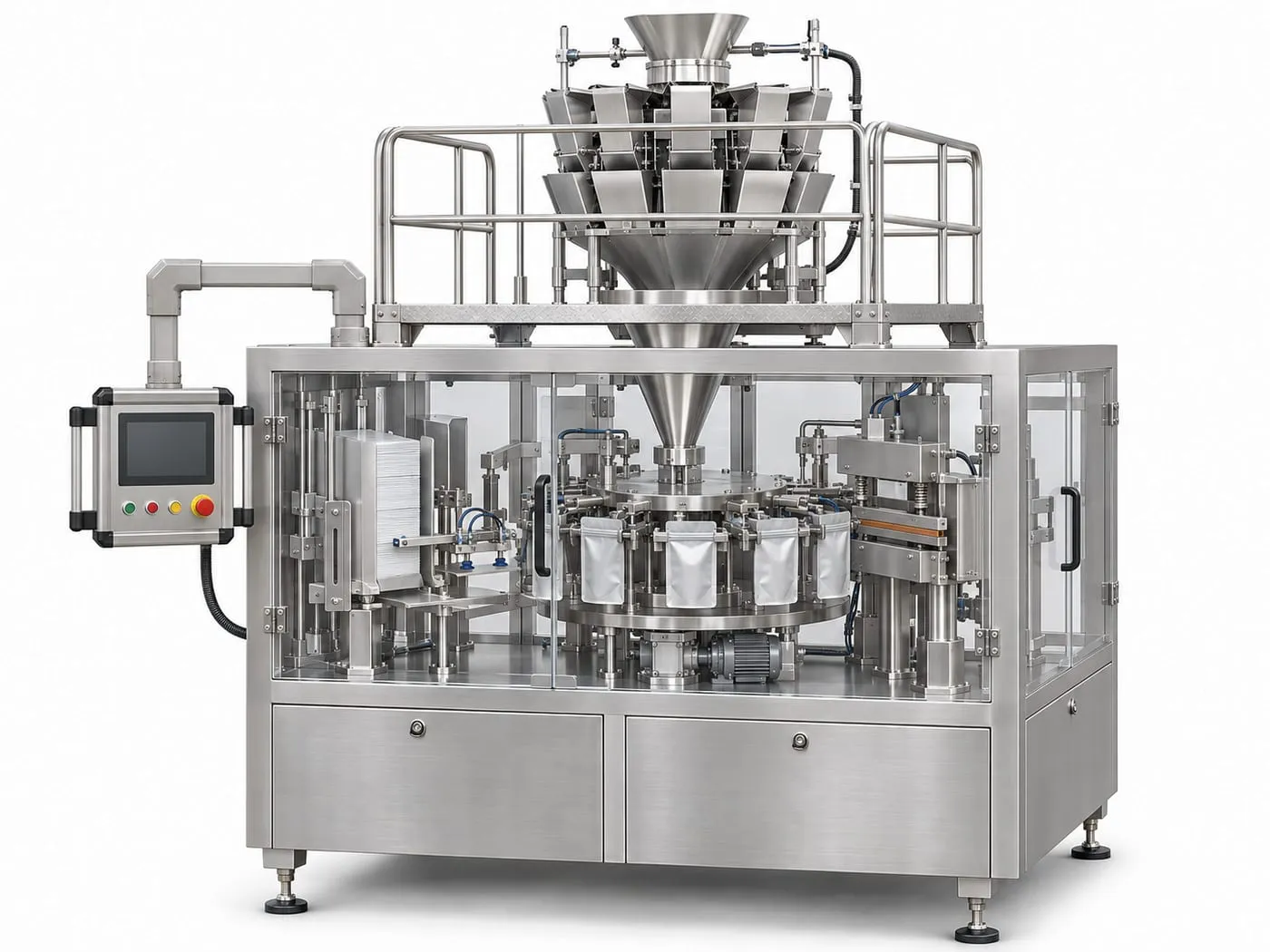
Vertical Form Fill Seal Machine
Snack, nut, frozen food, grain and powder producers moving from manual bagging to automatic packing.
Rated in finished bags per minute, set by bag length, fill weight and film


09 · Packaging & Inspection — Equipment
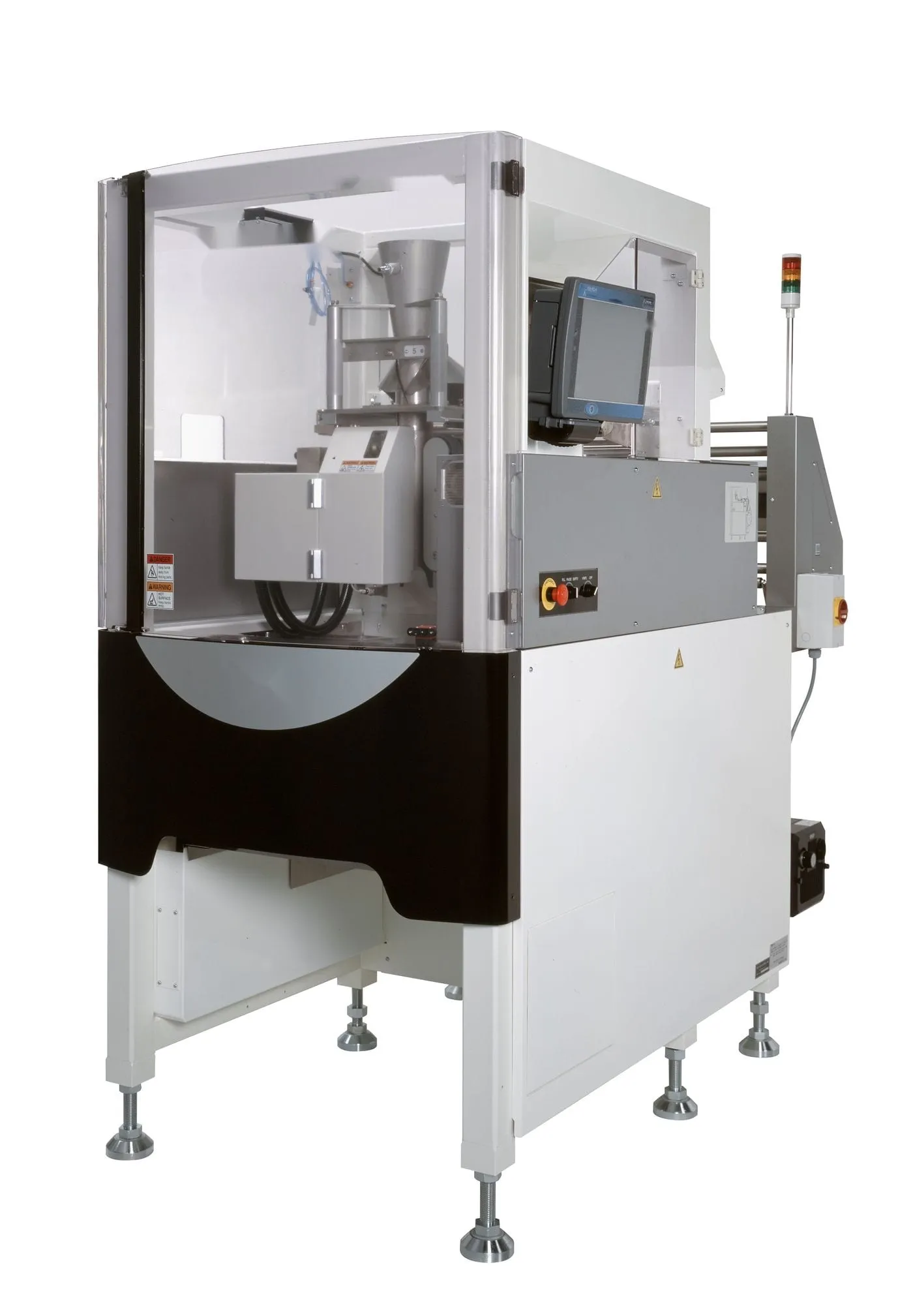
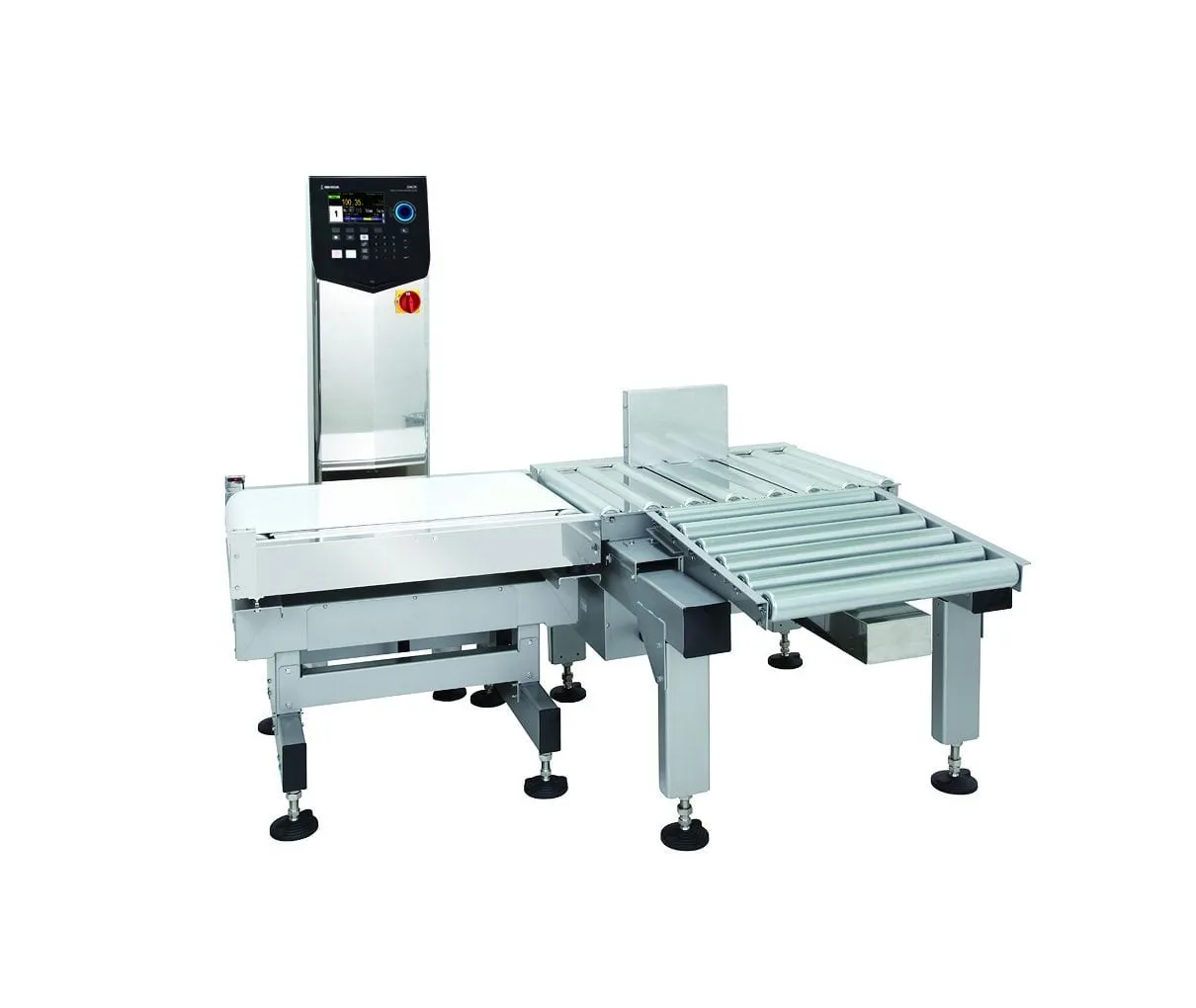
A dynamic checkweigher that weighs each pack on a moving belt, rejects packs outside limits and records the results for quality control.
Short answer: An in-line checkweigher weighs every pack as it moves along the line and rejects any pack outside the weight limits you set. The configuration depends on the pack weight range, the accuracy required at your line speed and how packs arrive from the packing machine.
Packs arrive from the packer onto an infeed belt that sets the spacing between them. Each pack then passes across a weighing belt mounted on a load cell. The controller filters out vibration and belt movement, calculates the pack weight and compares it with the limits for the active recipe. Good packs continue on the outfeed belt. Packs that are underweight or overweight are removed by an air blast, pusher, flap or drop-down belt, usually into a lockable reject bin. Results are counted and can be stored or sent to a plant system.
The weigher is set up per product with its target weight, limits and pack length. A zero check between packs compensates for crumbs or dust on the belt, and a regular test with reference weights confirms the reading. Statistics such as average weight and standard deviation help you see whether the filler upstream is drifting before packs start failing.
| Form | Suits | Watch out for |
|---|---|---|
| Single lane | Bags, pouches, trays, cartons | Packs must be evenly spaced |
| Multi-lane | Small sachets, stick packs, multi-lane packers | More complex setup and rejection |
| Combined with metal detector | Short lines, one-stop end-of-line inspection | Both units share downtime for service |
Line layout matters: vibration from nearby machines and air drafts affect weighing, so the checkweigher needs a stable floor position.
The checkweigher typically follows a VFFS packaging machine, premade pouch packing machine, tray sealer or liquid filling machine. It is often paired with a food metal detector and can send weight trends back to a multihead weigher upstream.
Single lane
one weighing belt for one stream of packs; the standard choice behind a bagger, pouch packer or tray sealer.
Multi-lane
several narrow weighing lanes side by side for multi-lane packing lines such as stick packs or small sachets.
Combined with metal detector
checkweigher and metal detector on one frame with shared rejects, saving line length.
Our engineers check these points with you, so the quotation fits your site rather than a catalogue default.
Accuracy depends on pack weight, belt speed, pack length, vibration around the machine and how stable the pack is on the belt. Faster lines and heavier packs make it harder. We confirm accuracy for your packs and speed instead of quoting a general figure.
A combined unit saves floor space and uses one reject area and one control screen. Separate units are easier to move or replace individually. On short lines the combined unit is often the practical choice.
Many fillers and weighers accept a feedback signal so that average weights can be adjusted. This depends on the filler model and communication protocol, so tell us which machine it would connect to.
Tell us your raw material, finished product and target output. Our engineers reply with a matched configuration and quotation.
What to send with your inquiry
Email sales@hnfoda.com
Packaging & Inspection
Snack, nut, frozen food, grain and powder producers moving from manual bagging to automatic packing.
Rated in finished bags per minute, set by bag length, fill weight and film
Packaging & Inspection
Brands and co-packers selling snacks, nuts, spices, sauces or pet food in stand-up and zipper pouches.
Rated in filled pouches per minute, set by pouch size, product and dosing
Packaging & Inspection
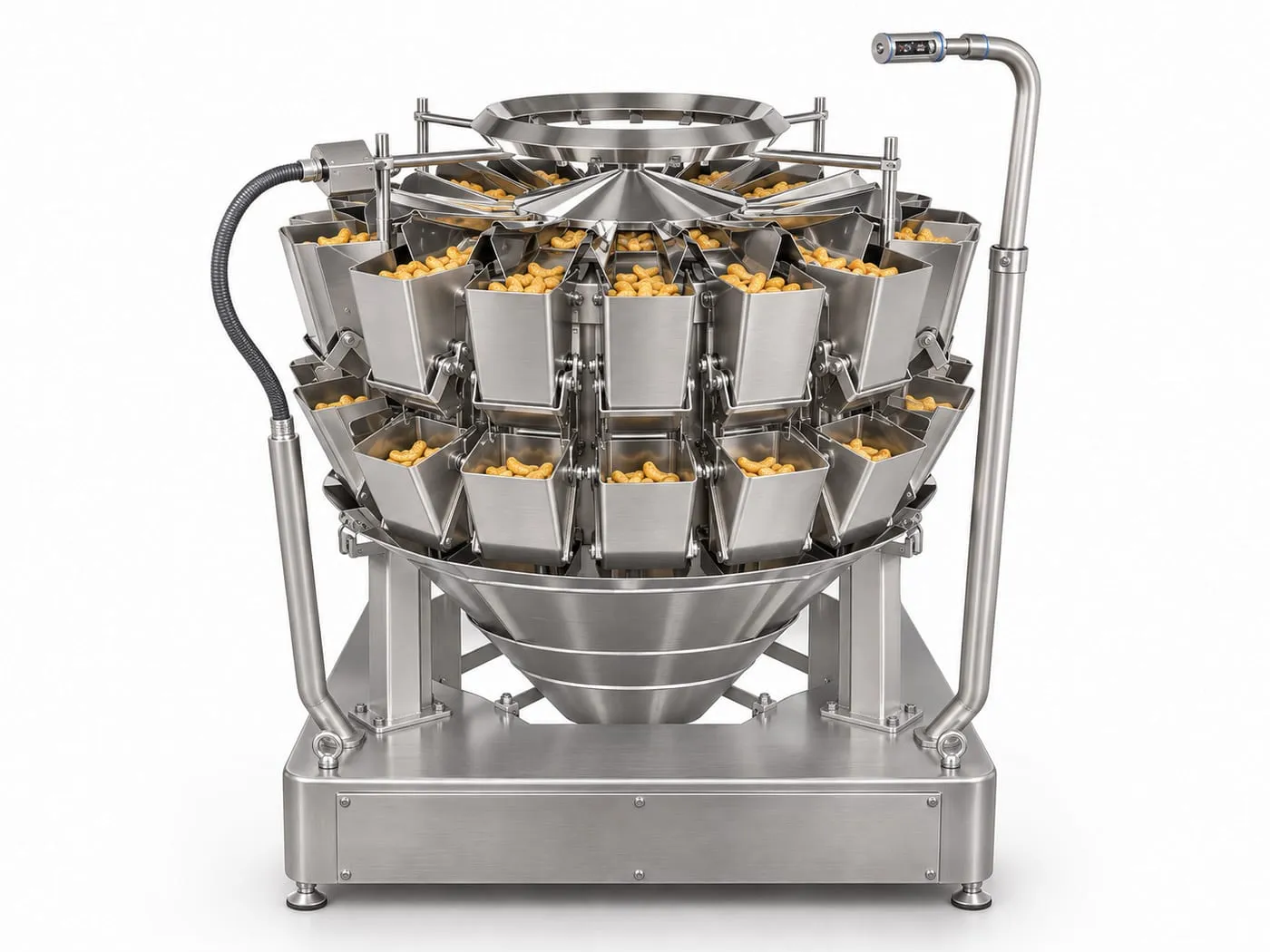
Snack, nut, confectionery, frozen and fresh food packers who need fast, accurate portions.
Rated in weighments per minute, matched to the packing machine
Packaging & Inspection
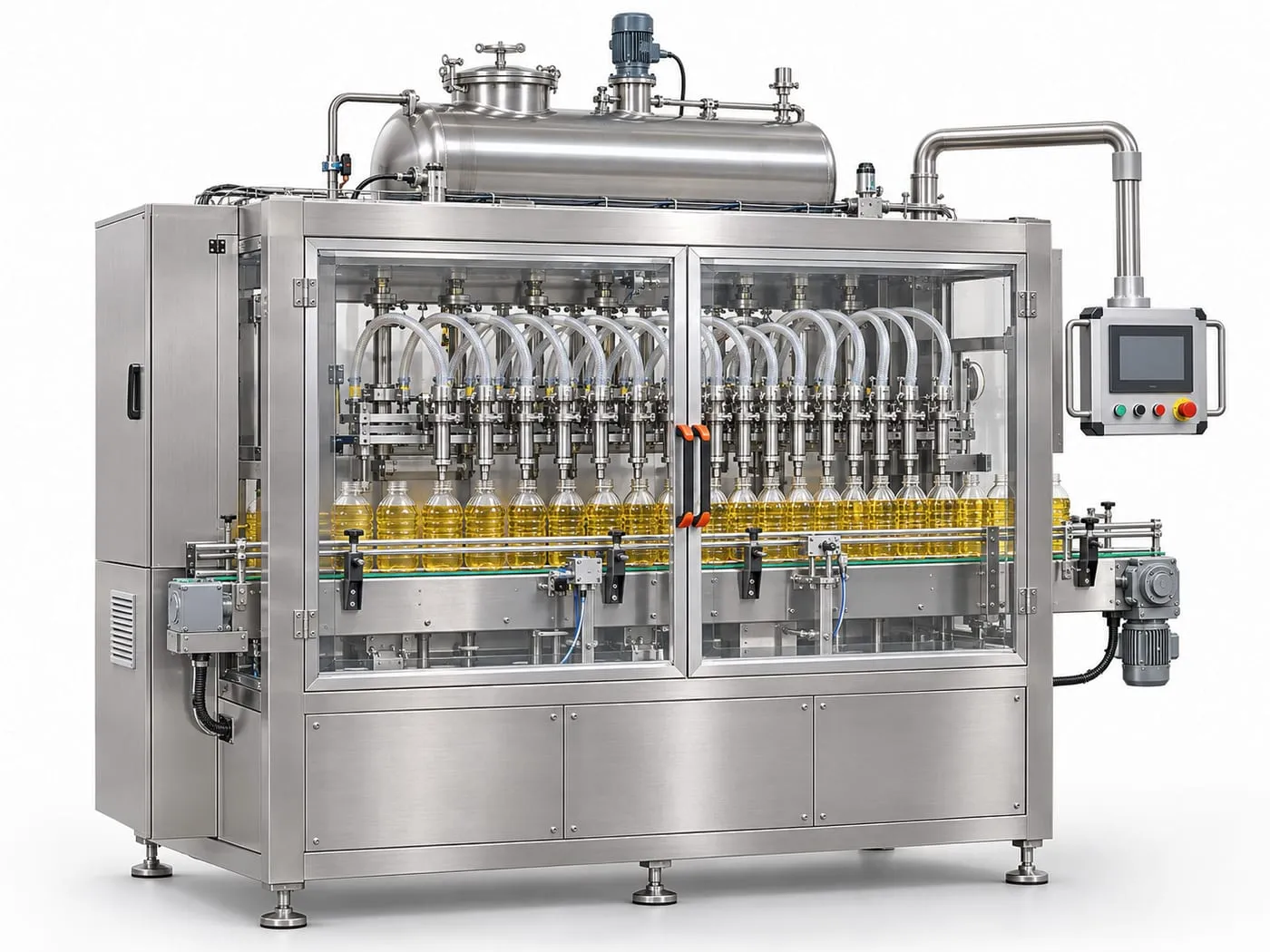
Beverage, edible oil, sauce and condiment producers filling bottles, jars or cans.
Rated in filled containers per hour, set by fill volume and container