Grain & Flour Milling
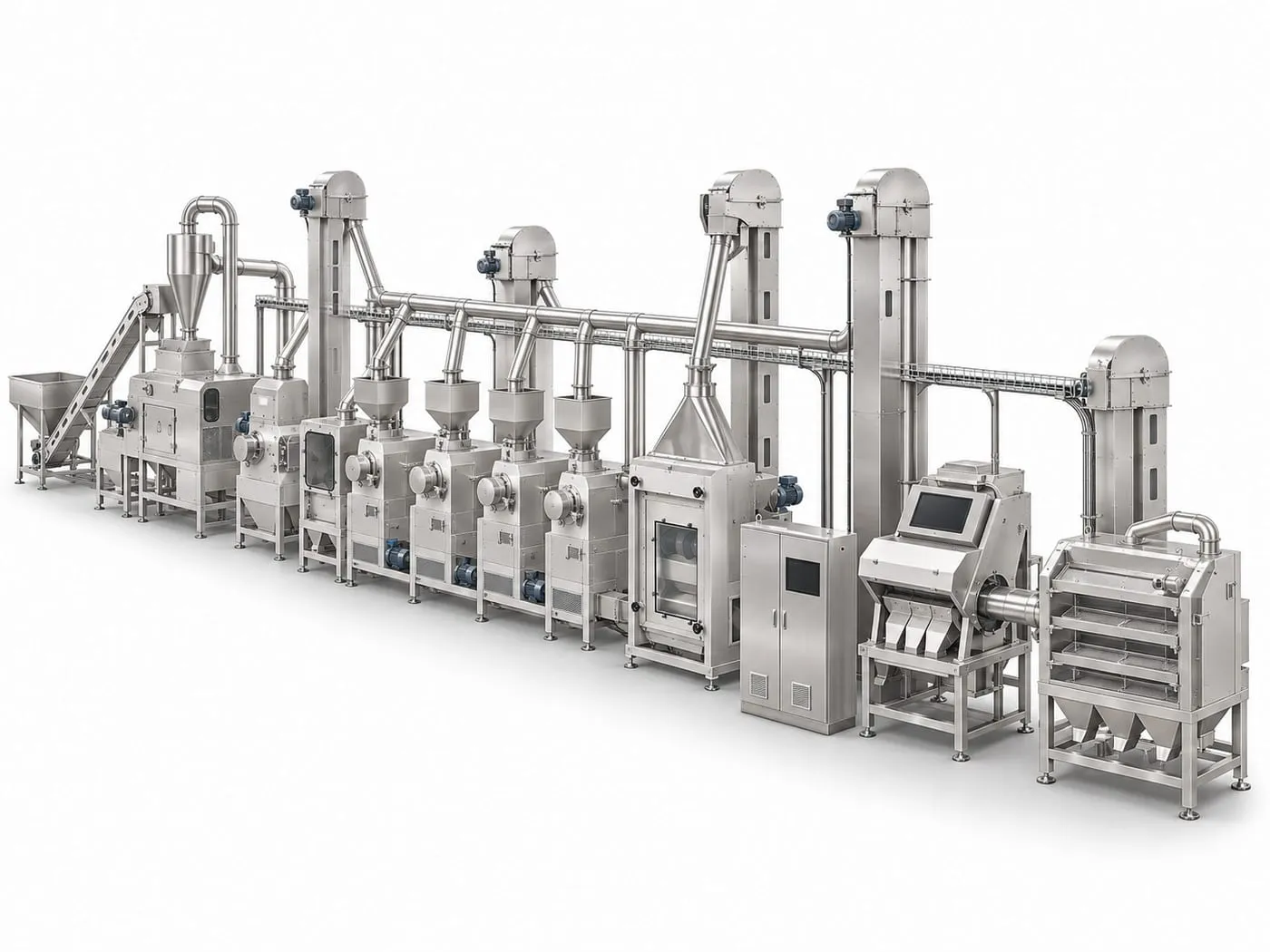
Grain Milling Line
Investors and existing mills setting up or upgrading wheat flour or maize meal production.
Sized on cleaned grain intake per day (t/24 h)

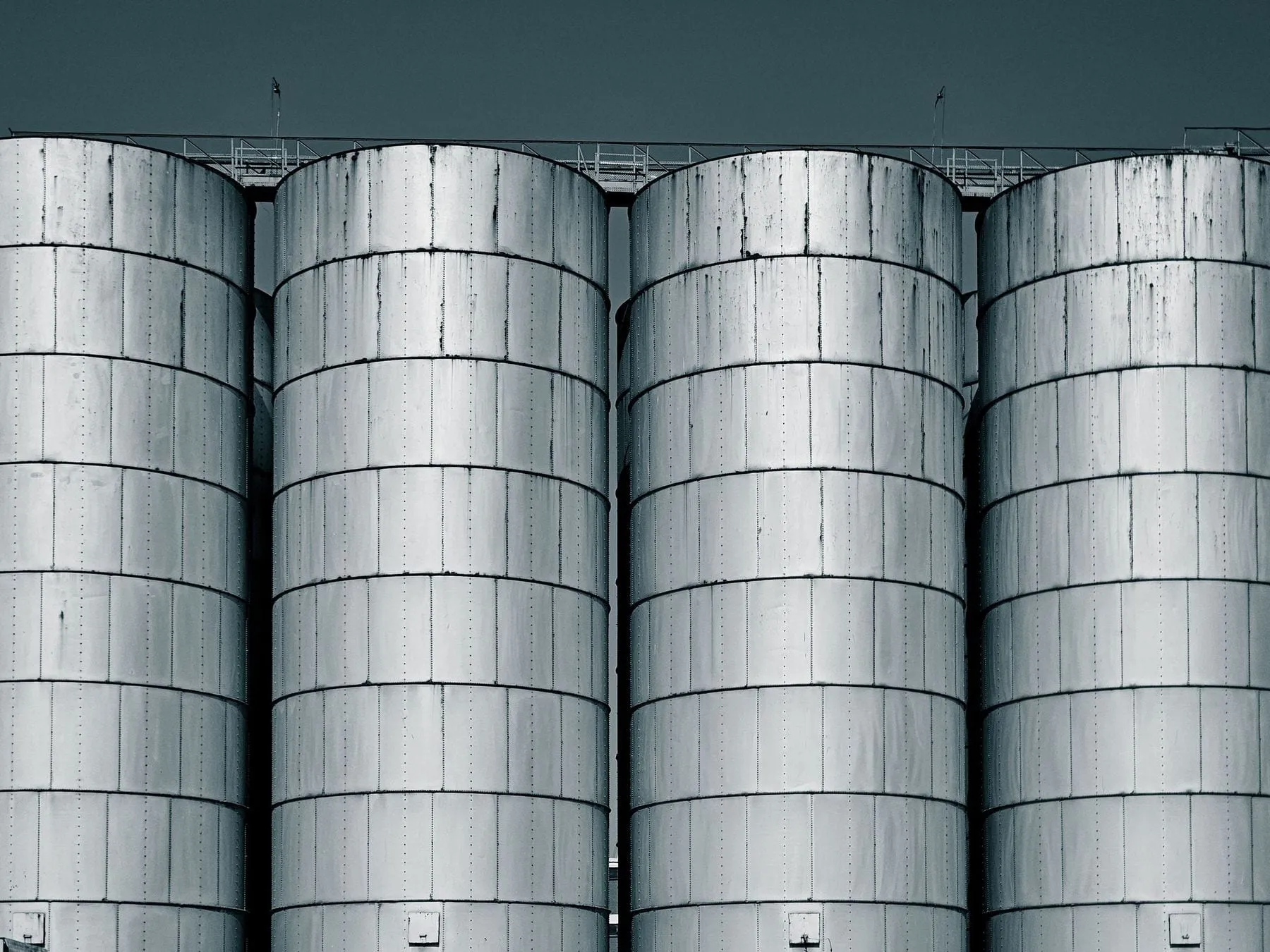
Equipment group 08
Sorting, milling and grinding equipment for wheat, maize, rice and dried spices, from small combined units to multi-stage milling lines.
Complete lines combine several machines with conveyors and controls. Station count and sizes follow your product and target output.
Grain & Flour Milling
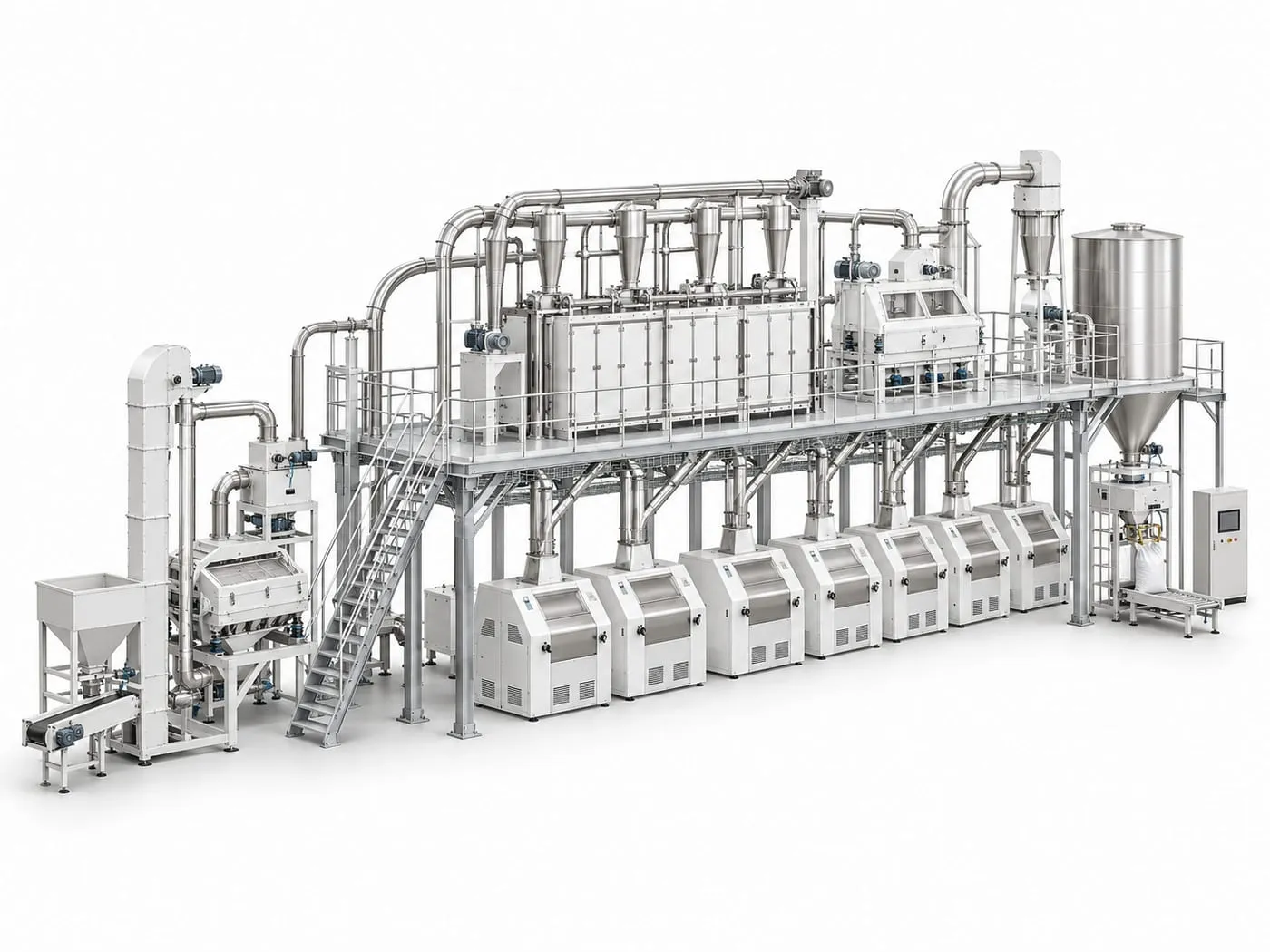
Investors and existing mills setting up or upgrading wheat flour or maize meal production.
Sized on cleaned grain intake per day (t/24 h)
Grain & Flour Milling
Rice traders, cooperatives and processors building or upgrading a commercial rice mill.
Sized on paddy intake (t/day or t/h)
Machines you can buy on their own or add to an existing line. Each page lists the forms available and what we check before quoting.
Grain & Flour Milling
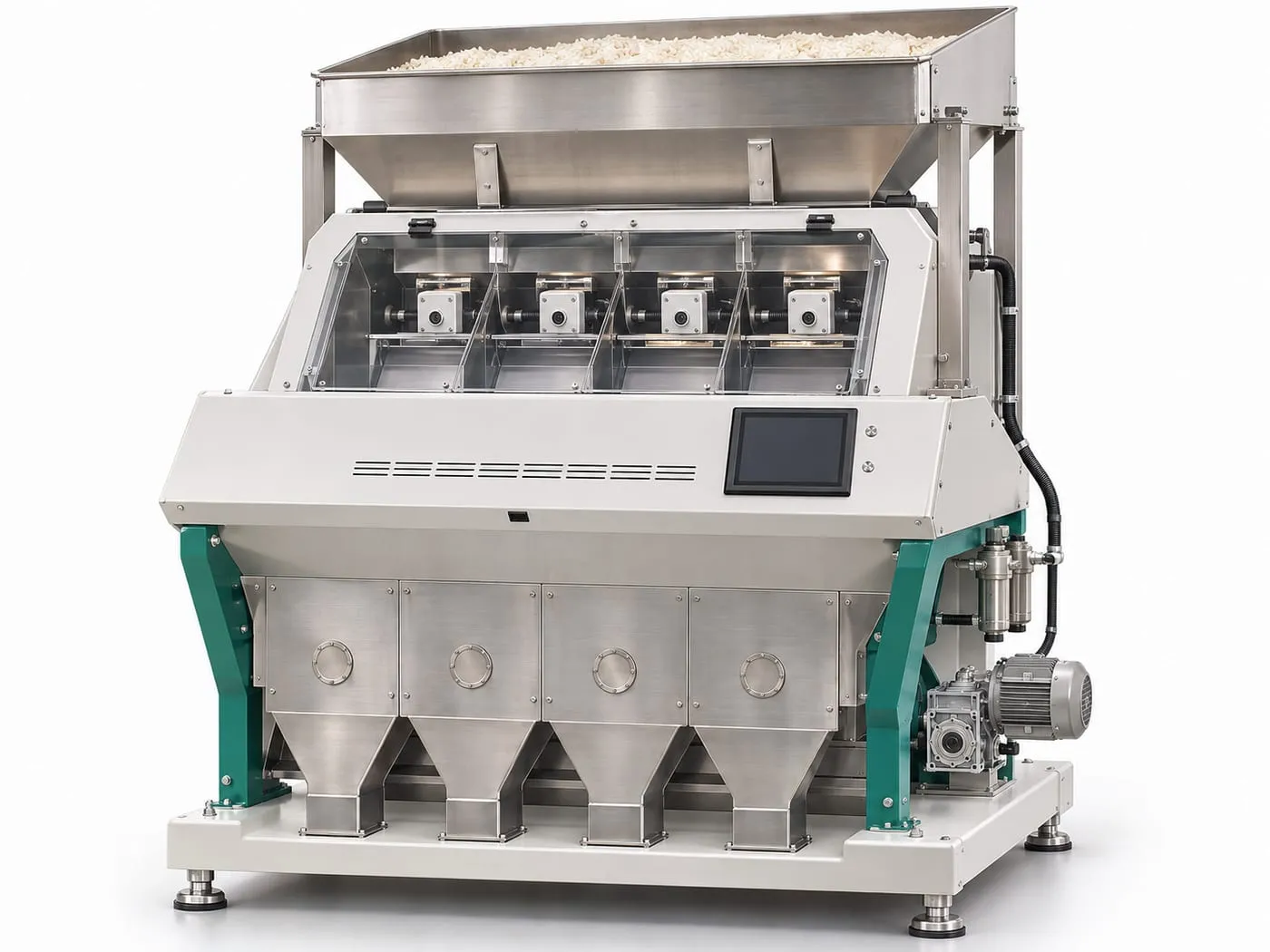
Rice mills, bean and seed processors, and grain exporters who need to meet a visual quality grade.
Rated on feed input (t/h), varies with grain and defect rate
Grain & Flour Milling
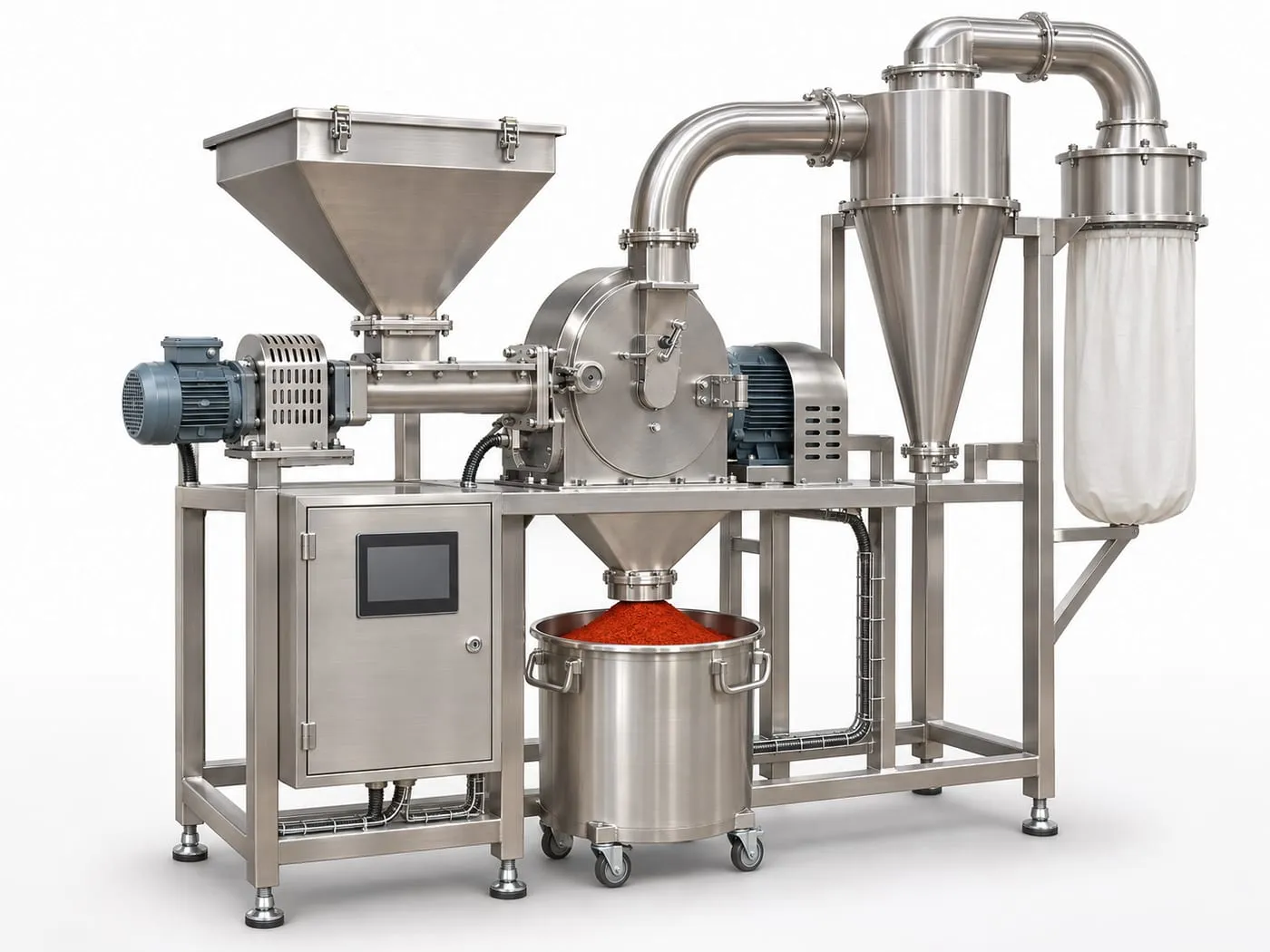
Spice processors, seasoning makers and packers who grind their own powders.
Rated on dried raw spice input (kg/h), depends on material and fineness
Short answer: Choose by grain, finished product and the quality your buyers check. Wheat flour, maize meal, milled rice and ground spices need different milling principles, and the grade you sell — yield, whiteness, fineness, cleanliness — decides how many stages and which sorting steps the plant needs.
| Machine or line | What it does | Choose it when |
|---|---|---|
| Grain Milling Line | Cleans, tempers, grinds, sifts and bags wheat or maize | You produce flour or maize meal for sale |
| Rice Milling Line | Cleans, husks, whitens, polishes and grades paddy | You mill paddy into graded white rice |
| Grain Optical Sorter | Rejects discoloured grains and foreign material by camera | Your buyers grade on visual defects |
| Spice Grinding Machine | Grinds dried spices and seasonings to powder | You grind and pack your own spice powders |
Sorting and grinding machines can also work on their own. A trader who buys milled rice or beans may only need an optical sorter and packing to upgrade lots for export, and a spice packer may only need a grinder, a sifter and a filler. In those cases, start from the defects or fineness your buyers specify, send samples of the material you actually receive, and size the machine on the input you will feed it each hour.
For a complete milling or sorting plant, see our turnkey projects page.
A compact unit suits local markets, small daily volumes and buyers who accept a simpler product. A multi-stage line suits mills that sell to supermarkets, food factories or export buyers who check yield, whiteness, ash or particle size. If you expect to grow, ask for a layout where cleaning, storage and packing are sized for the larger plant and milling stages can be added.
Milling lines are usually rated on raw grain input per day or per hour. Your finished flour, meal or milled rice is less than that, because hulls, bran, germ and screenings are removed, and how much depends on the grain and on how far you mill it. Always confirm the basis before comparing offers.
It can sit before milling to remove discoloured, mouldy or foreign grains, after milling to remove defects from the finished rice or beans, or in both places. The right position depends on which defects your buyers reject and on the quality of the grain you buy. Send samples of typical and poor lots and we can suggest the position and the number of sorting passes.
Share your raw material, finished product, target output and site — our engineers reply with a matching line configuration.
Request a quote →What to send with your inquiry