Grain & Flour Milling
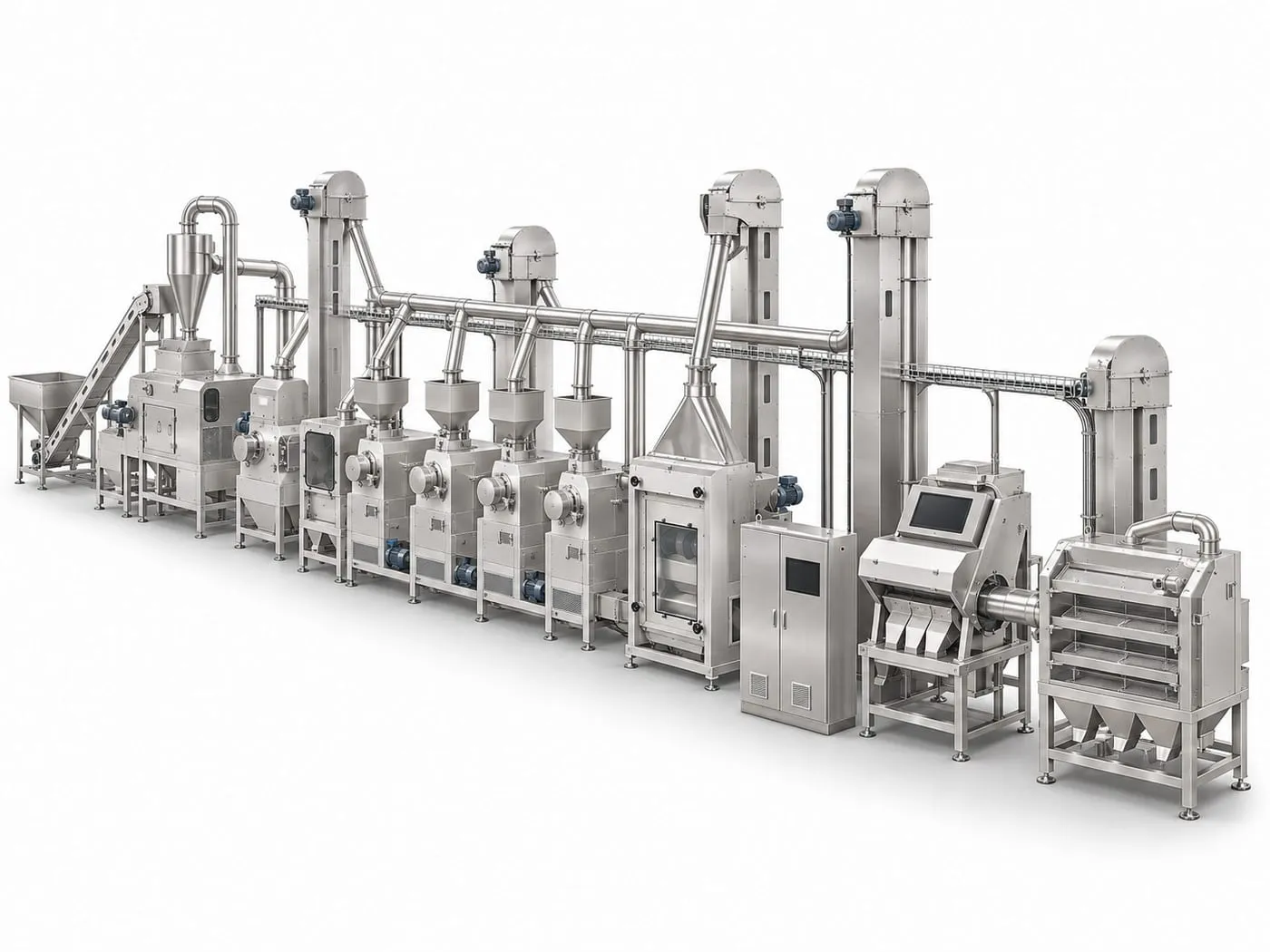
Rice Milling Line
Rice traders, cooperatives and processors building or upgrading a commercial rice mill.
Sized on paddy intake (t/day or t/h)

08 · Grain & Flour Milling — Production line
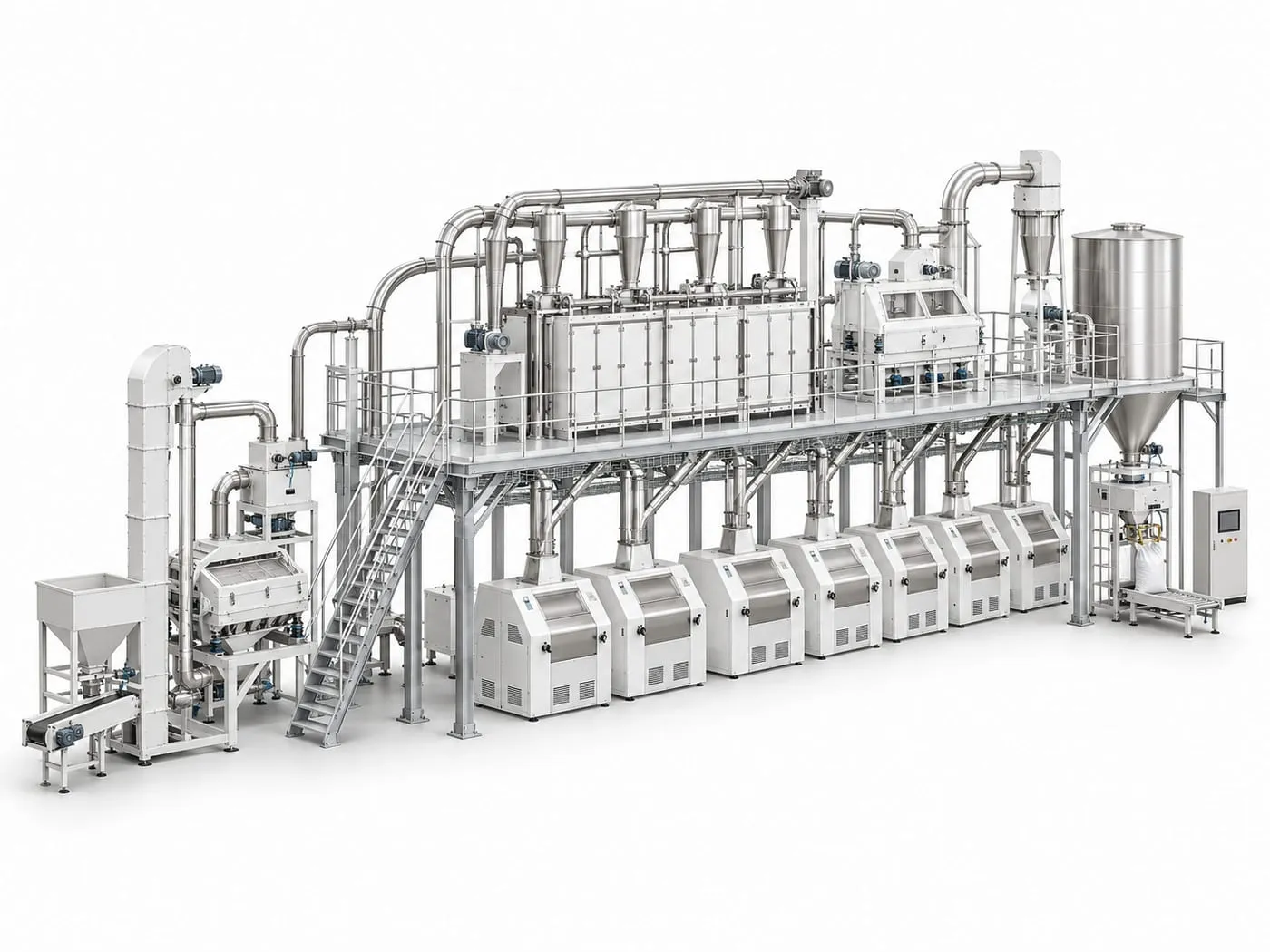
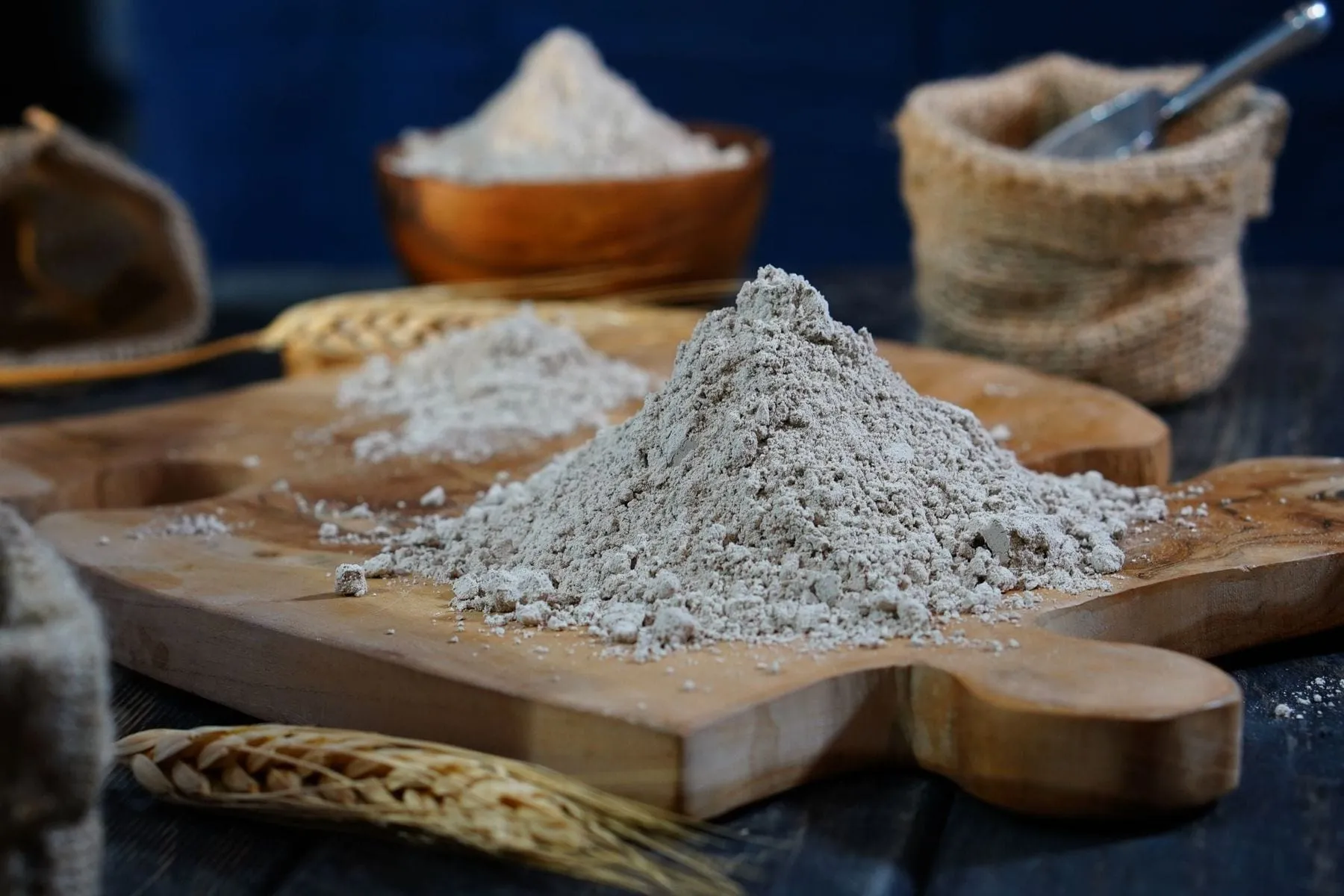
A complete flour or maize milling line that links grain cleaning, tempering, grinding, sifting and bagging, engineered around your grain and target product.
Short answer: A grain milling line takes raw wheat or maize through cleaning, conditioning, grinding, sifting and packing so that you end up with flour, meal or grits of a consistent particle size. What decides the configuration is the grain itself — its moisture and grade — together with the product you sell and the extraction or yield you need to reach.
| Form | Suits | Watch out for |
|---|---|---|
| Wheat roller milling | Bakery, noodle and household flour | Extraction target and flour grade drive the number of passages |
| Maize degerming and milling | Maize meal, grits, flour for snacks or brewing | Germ separation quality depends on kernel moisture and hardness |
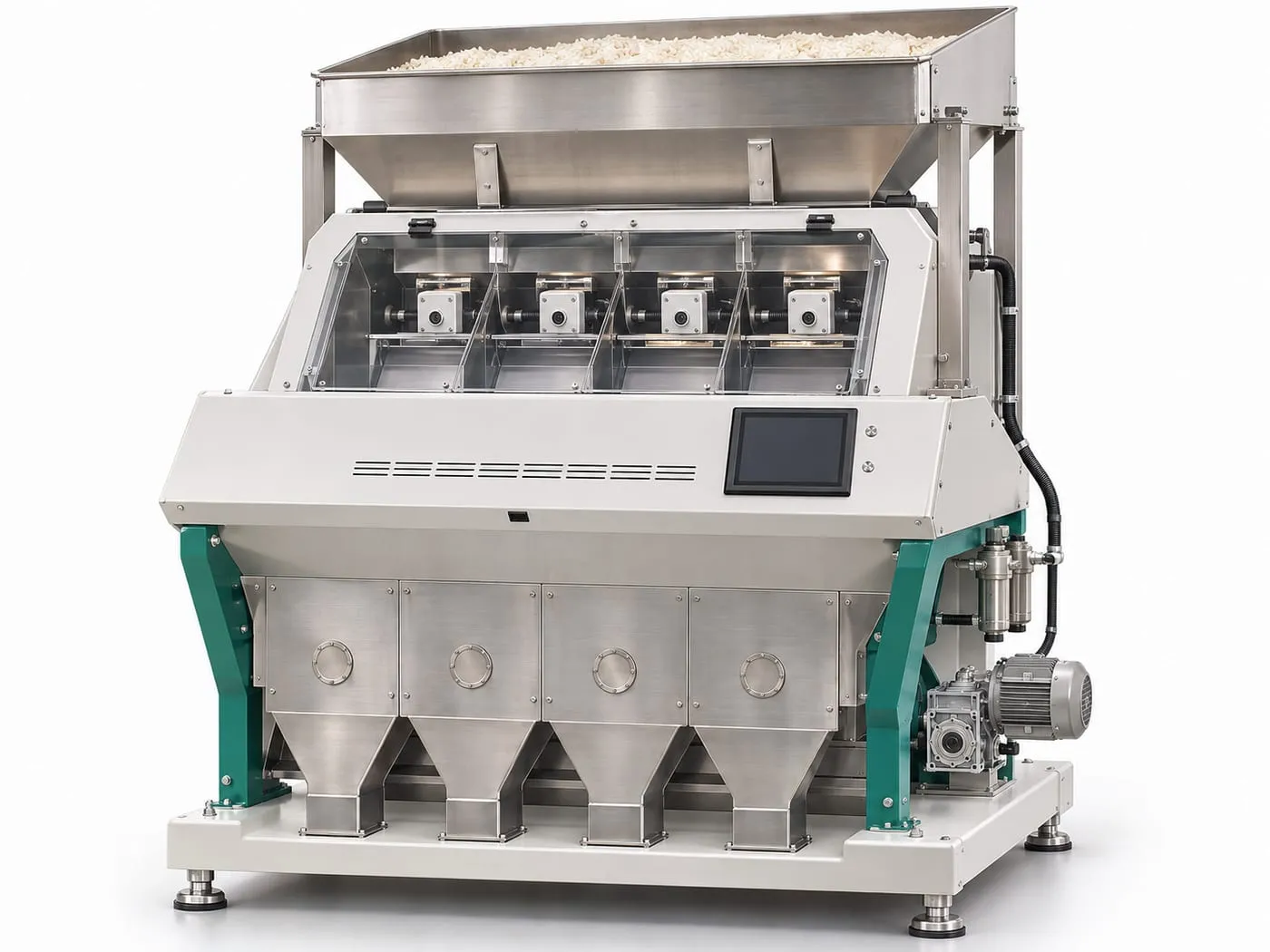
Upstream, grain arrives from storage silos or intake pits; a grain optical sorter can be added after cleaning to remove discoloured or damaged kernels. Downstream, bagged flour can be checked on an in-line checkweigher, and retail packs are often filled on a VFFS packaging machine. Hygienic conveyors link bagging to palletising.
Wheat roller milling
break and reduction roller mills with plansifters, for bread, noodle or general-purpose flour at a defined extraction rate.
Maize degerming and milling
removes bran and germ before grinding, for low-fat grits, meal and flour with better shelf life.
Our engineers check these points with you, so the quotation fits your site rather than a catalogue default.
Daily capacity, the number of grinding and sifting passages needed for your flour quality, how much cleaning the incoming grain needs, the level of automation, and whether storage silos, bulk loading and a building steel structure are included. We quote after confirming those points.
The two processes differ: maize needs degerming and usually a different grinding and sifting arrangement. Shared sections such as cleaning and bagging are possible, but most buyers run separate milling sections. Tell us your product mix and we will propose a layout.
Grain samples or analysis (moisture, impurities, grade), the flour or meal specifications you sell to, your target daily output, building dimensions or a site plan, and available power. Photos of any existing equipment help if this is an upgrade.
Tell us your raw material, finished product and target output. Our engineers reply with a matched configuration and quotation.
What to send with your inquiry
Email sales@hnfoda.com
Grain & Flour Milling
Rice traders, cooperatives and processors building or upgrading a commercial rice mill.
Sized on paddy intake (t/day or t/h)
Grain & Flour Milling
Rice mills, bean and seed processors, and grain exporters who need to meet a visual quality grade.
Rated on feed input (t/h), varies with grain and defect rate
Grain & Flour Milling
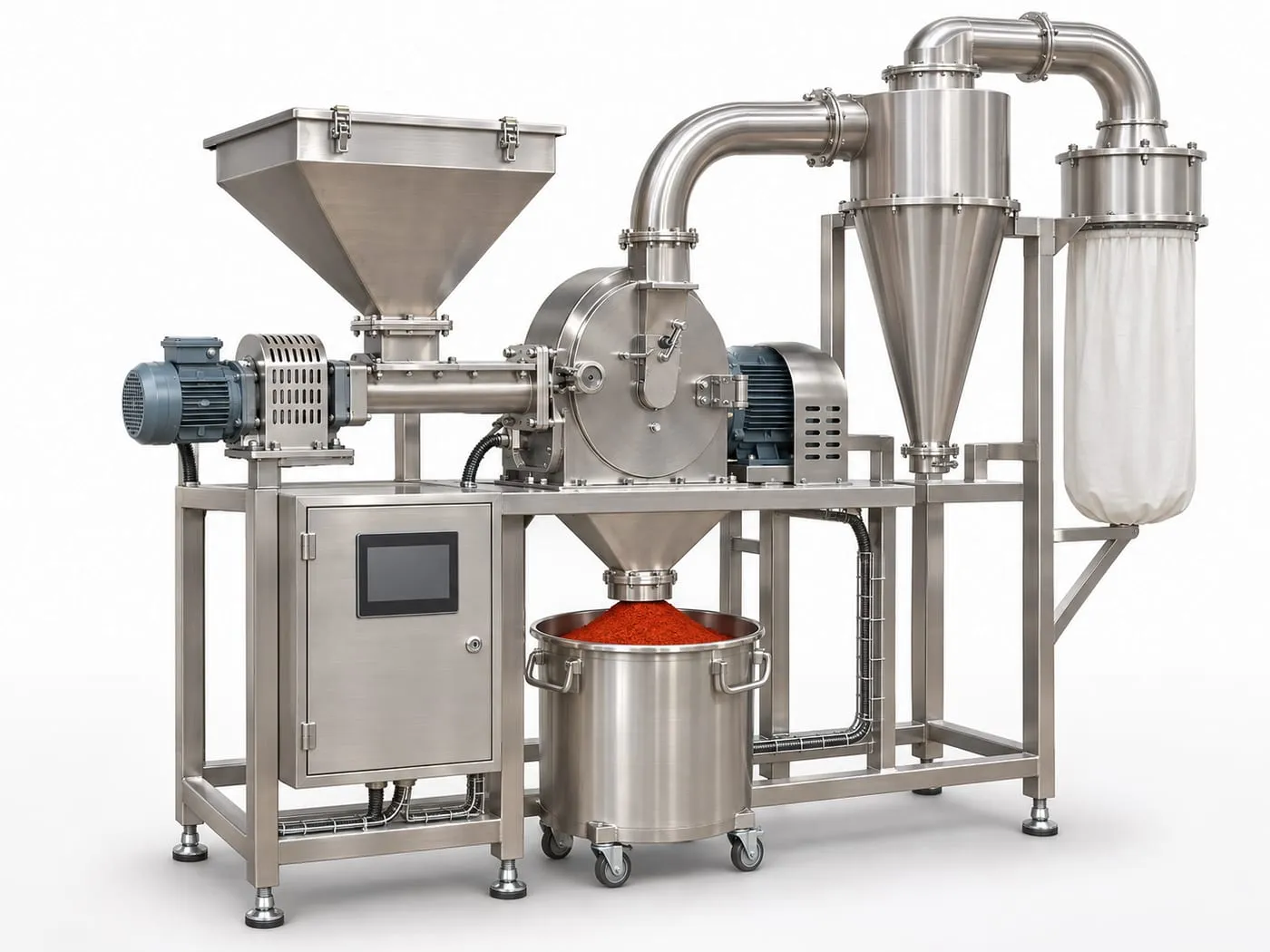
Spice processors, seasoning makers and packers who grind their own powders.
Rated on dried raw spice input (kg/h), depends on material and fineness
Meat & Seafood Processing
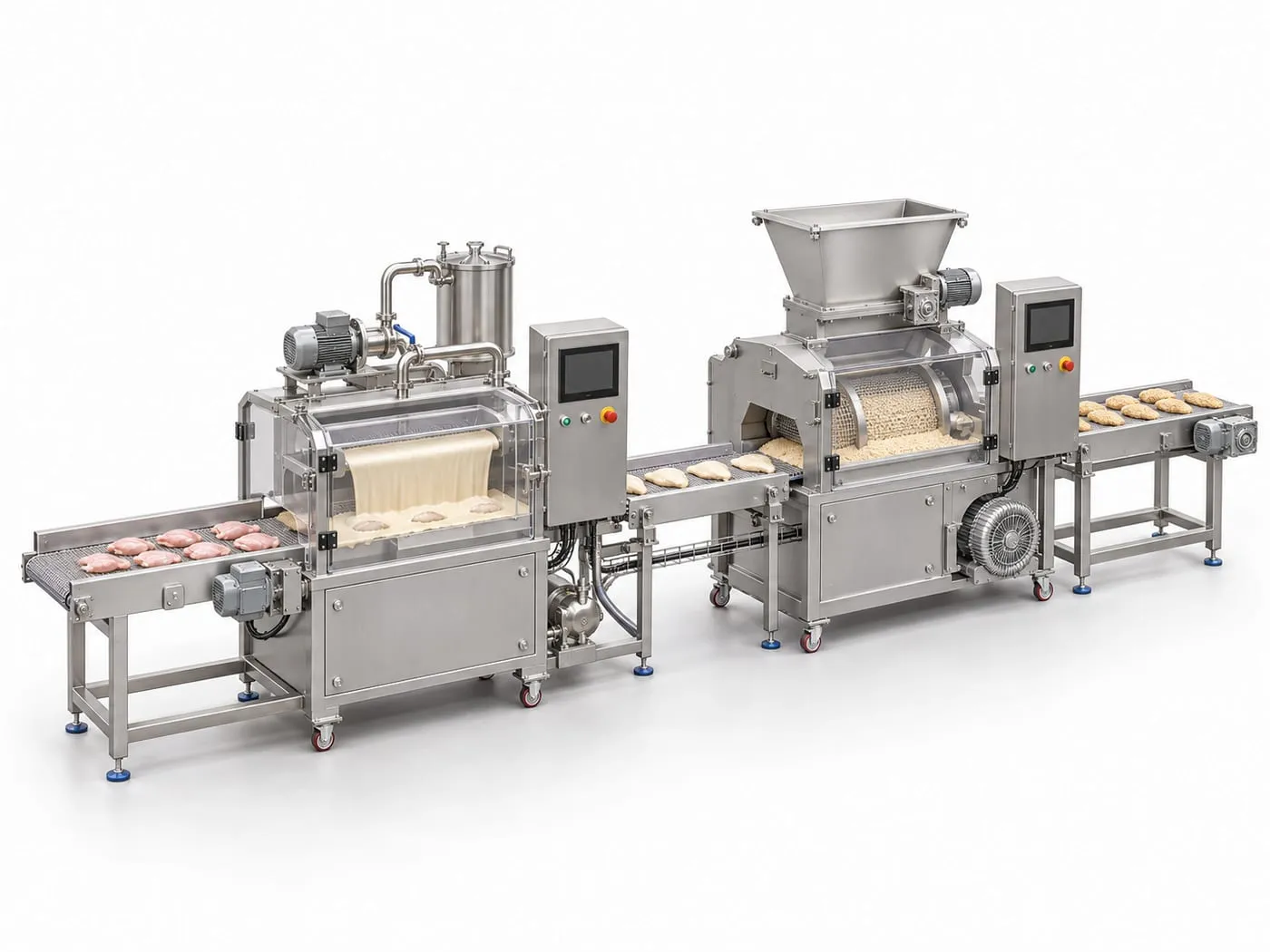
Factories making breaded chicken, fish fingers, coated vegetables or nuggets for frozen and food-service markets.
Sized to belt width and coated product output (kg/h of finished product)