Meat & Seafood Processing
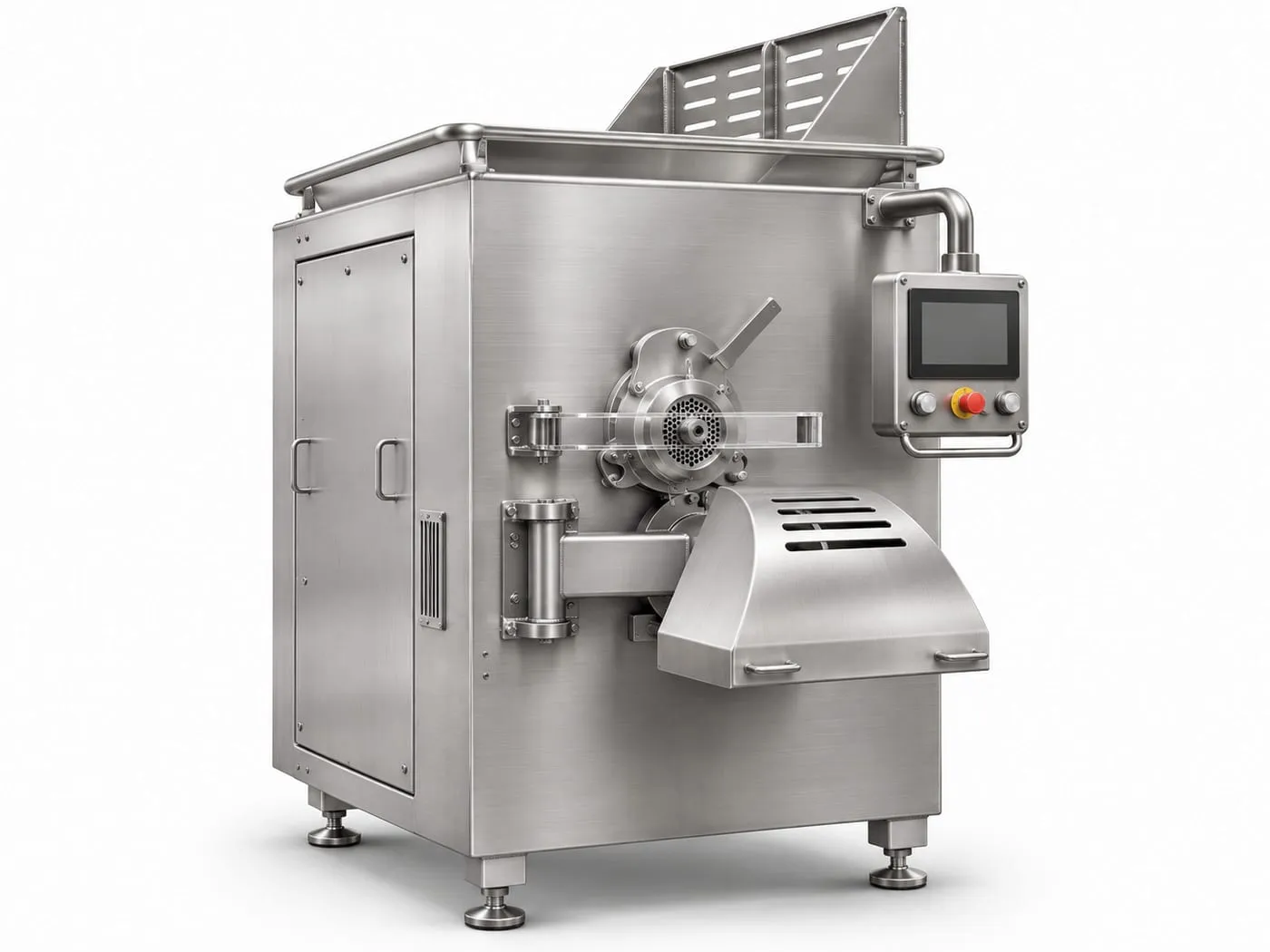
Industrial Meat Grinder
Meat plants and food factories making sausages, patties, dumpling fillings or minced products.
Sized to raw meat input (kg/h) at a stated feed temperature and plate size

06 · Meat & Seafood Processing — Production line
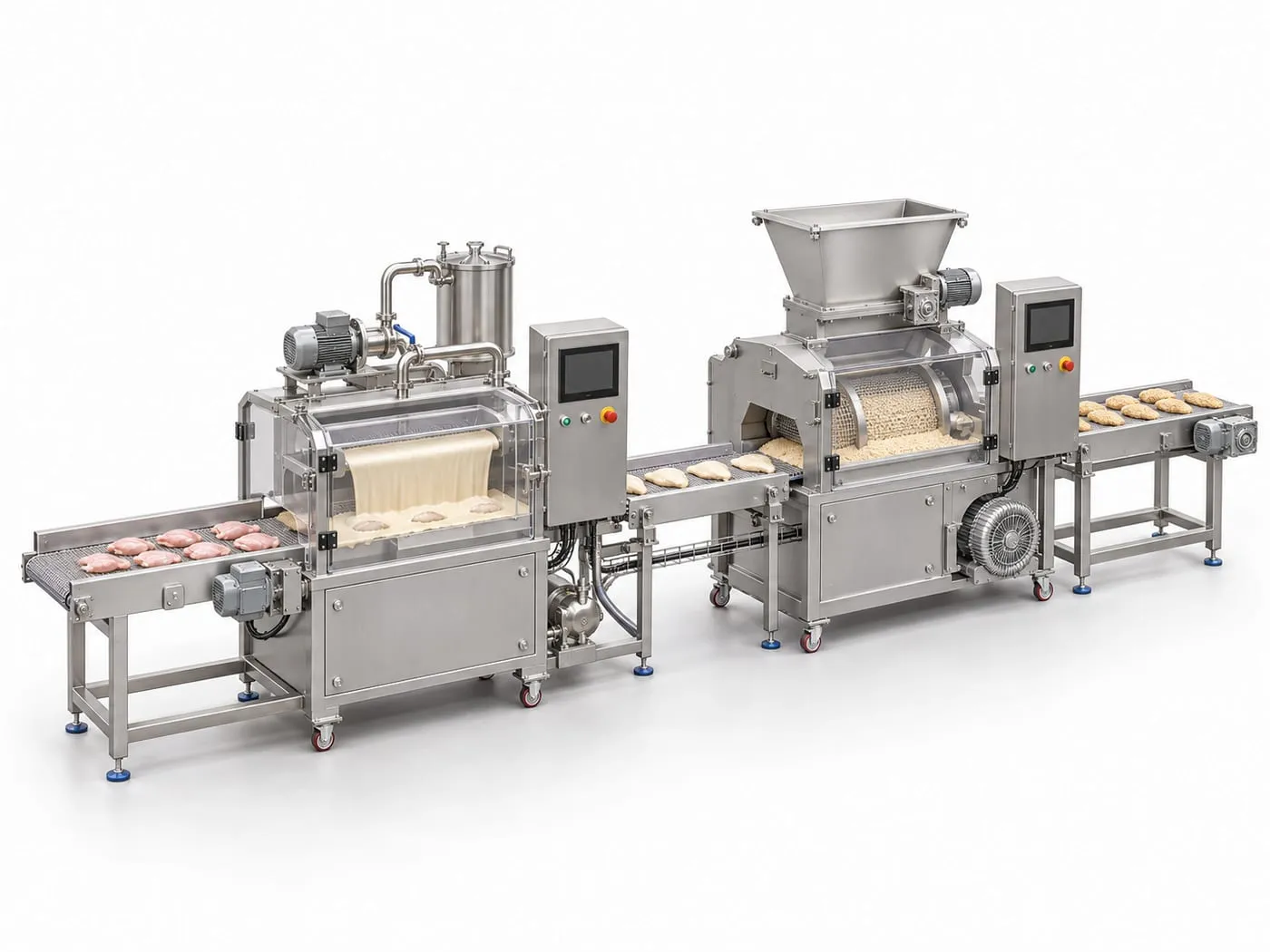
A linked set of pre-dust, batter and crumb applicators that coats formed or whole pieces evenly before frying, cooking or freezing.
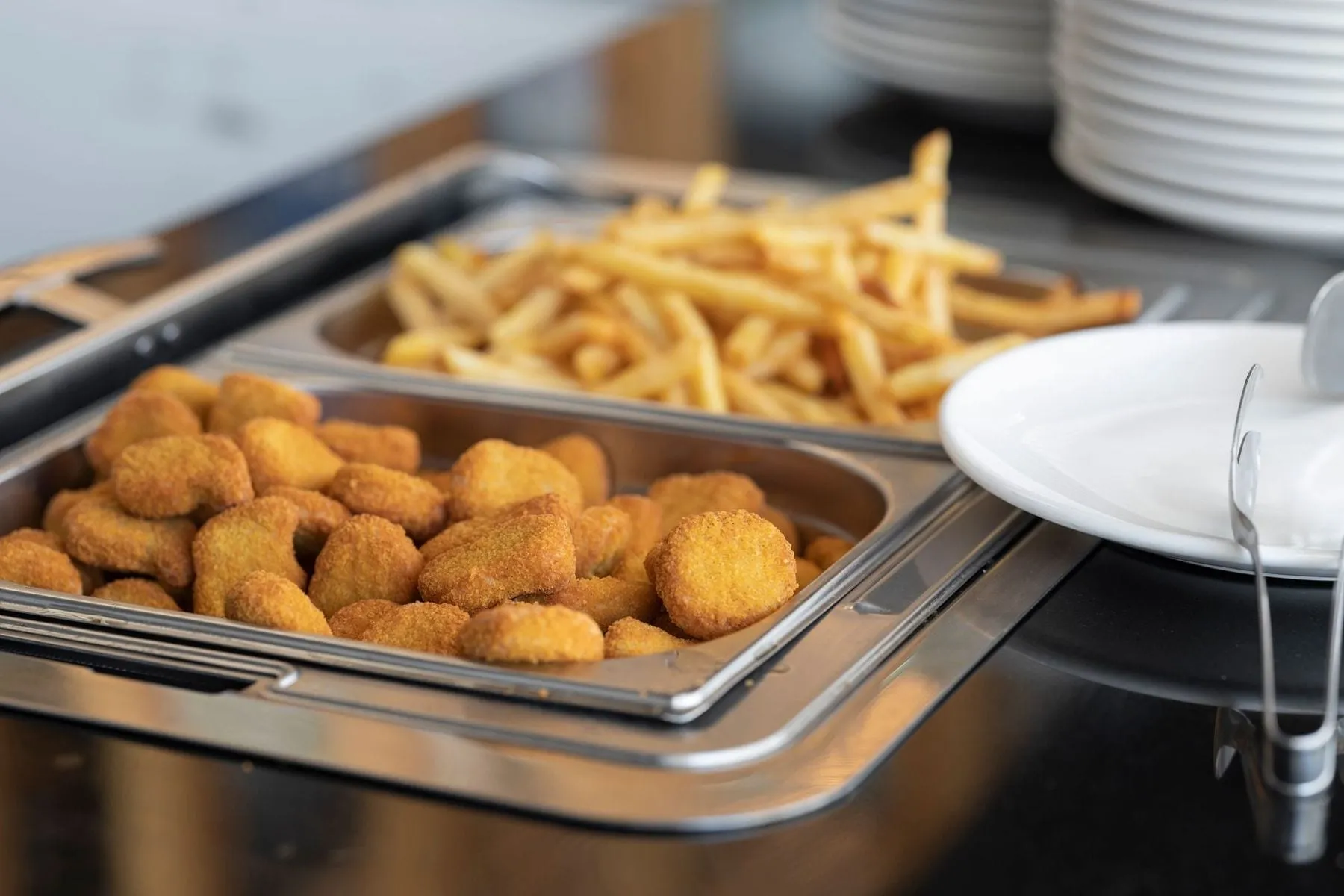
Short answer: A coating and breading line applies flour, batter and crumbs to pieces such as nuggets, fillets or patties as they move along a belt, before they are fried, cooked or frozen. Its configuration depends mainly on the coating you want (dry dust only, or batter plus crumb), the batter viscosity and how the excess is recovered.
A typical full line has these stations:
Batter is usually prepared in a separate mixer and kept at a steady temperature, because viscosity changes with temperature and decides how much coating sticks.
| Form | Suits | Watch out for |
|---|---|---|
| Dry flour line | Dusted or lightly seasoned pieces | Less crunch than a crumbed product |
| Batter and crumb combination | Nuggets, fish fingers, schnitzels | More stations to clean; crumb breakdown over time |
Many plants start with the full combination because the dry station can be bypassed for products that only need dusting.
The line usually sits between a food forming machine or a vacuum tumbler and a continuous fryer. After frying, coated products typically go to a food freezer and then to weighing and packing.
Dry flour coating line
pre-dust or seasoned flour only, for light coatings, dusted pieces or as the first step before frying.
Batter and breadcrumb combination
pre-dust, liquid batter and crumb applicators in series, for crisp coated products such as nuggets, schnitzels and fish fingers.
Our engineers check these points with you, so the quotation fits your site rather than a catalogue default.
Surface moisture and temperature of the product, the pre-dust, batter viscosity and the air knife or blower settings that remove excess. Pick-up is fine-tuned during commissioning with your own coating materials.
Yes, but coarse crumbs break down when they are recirculated too hard, so the crumb applicator and return system need to be chosen for that crumb. Tell us the crumb type at the enquiry stage.
Most coatings contain wheat and some contain egg, milk or other allergens. Plan dedicated runs or full cleaning between coatings, and choose applicators that open up easily so hoppers and recirculation paths can be emptied completely.
Tell us your raw material, finished product and target output. Our engineers reply with a matched configuration and quotation.
What to send with your inquiry
Email sales@hnfoda.com
Meat & Seafood Processing
Meat plants and food factories making sausages, patties, dumpling fillings or minced products.
Sized to raw meat input (kg/h) at a stated feed temperature and plate size
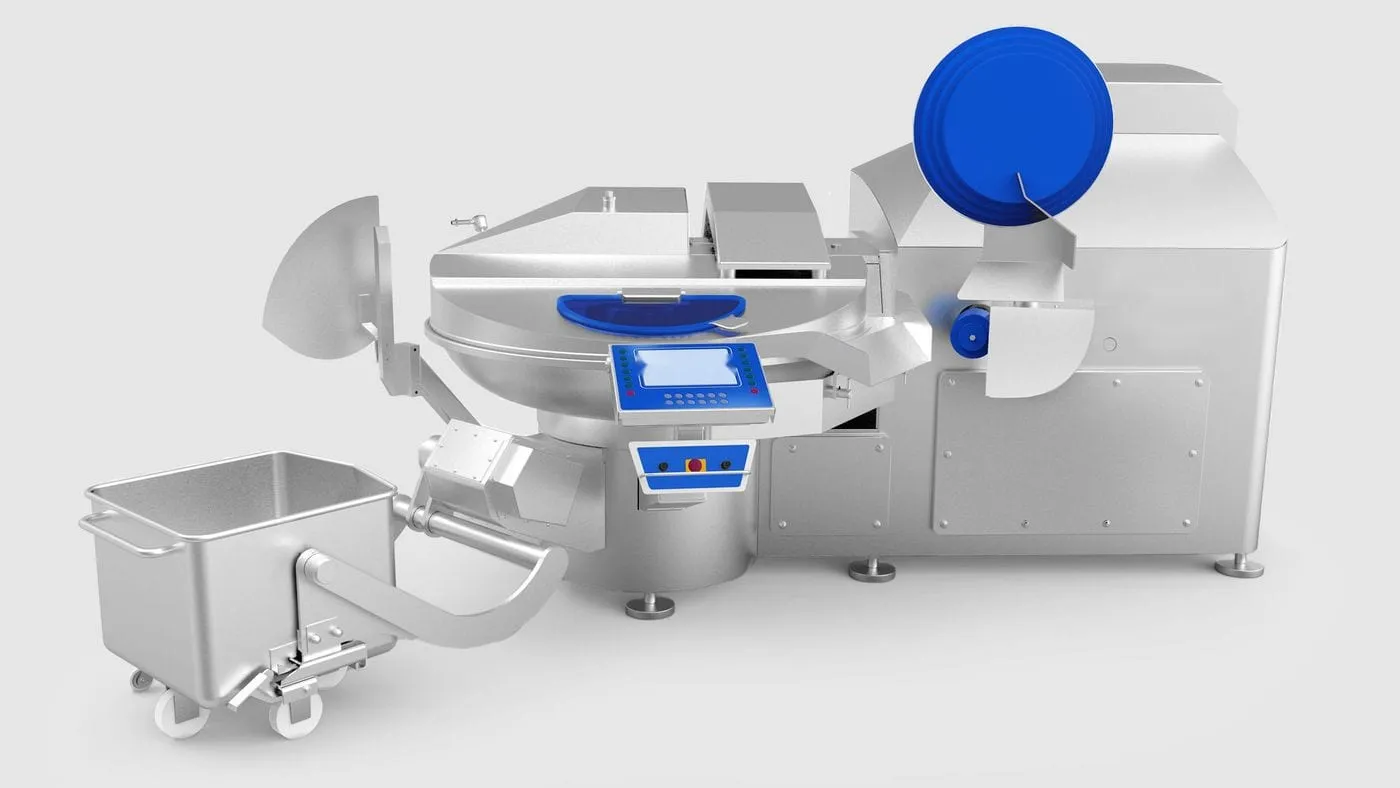
Meat & Seafood Processing
Sausage, meatball, fish ball and dumpling-filling producers who need fine or emulsified textures.
Sized to bowl volume and batch weight (kg per batch)
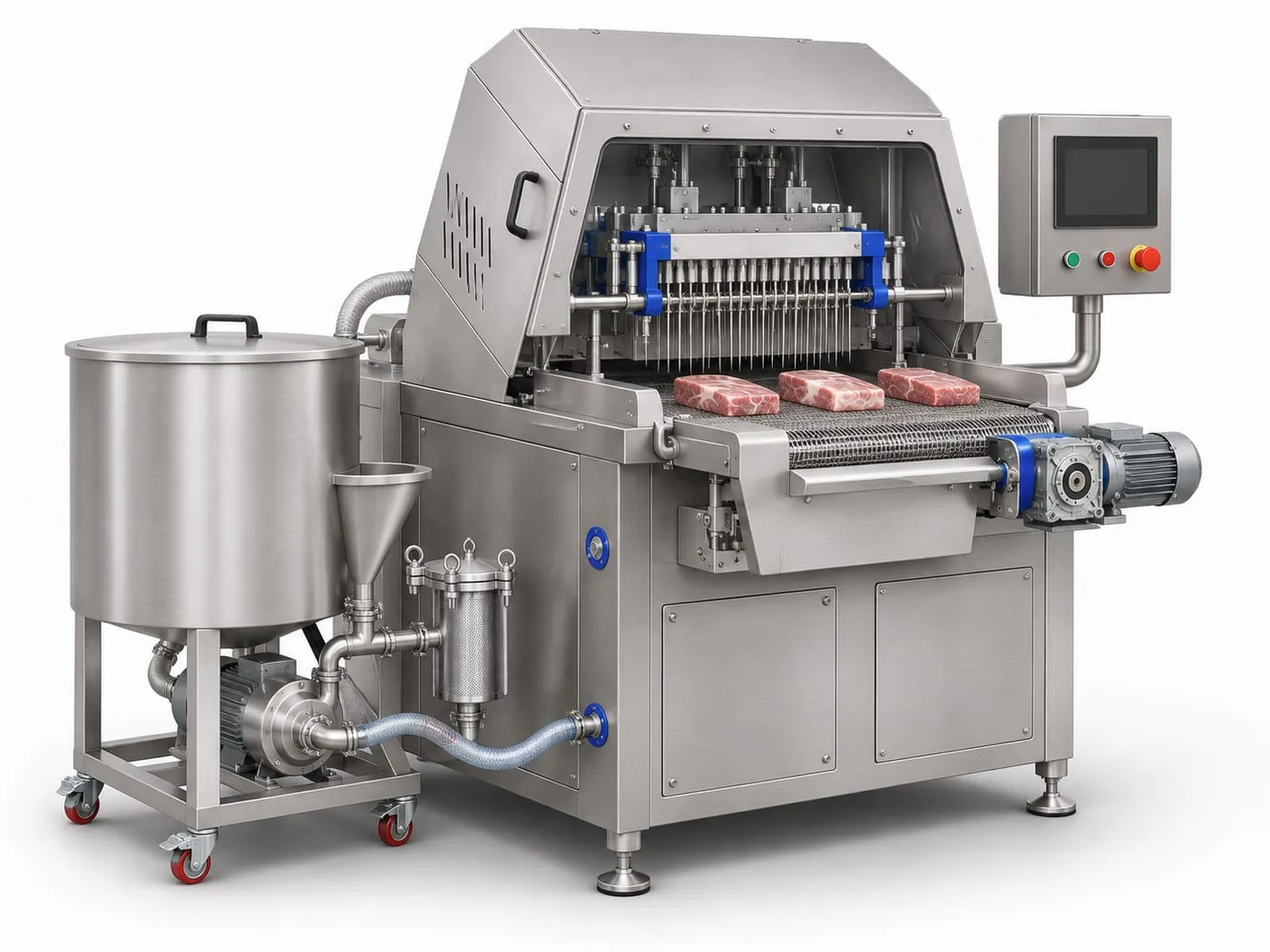
Meat & Seafood Processing
Processors making ham, bacon, cured cuts or marinated whole poultry and large cuts.
Sized to belt width and raw meat throughput (kg/h) at the target injection rate
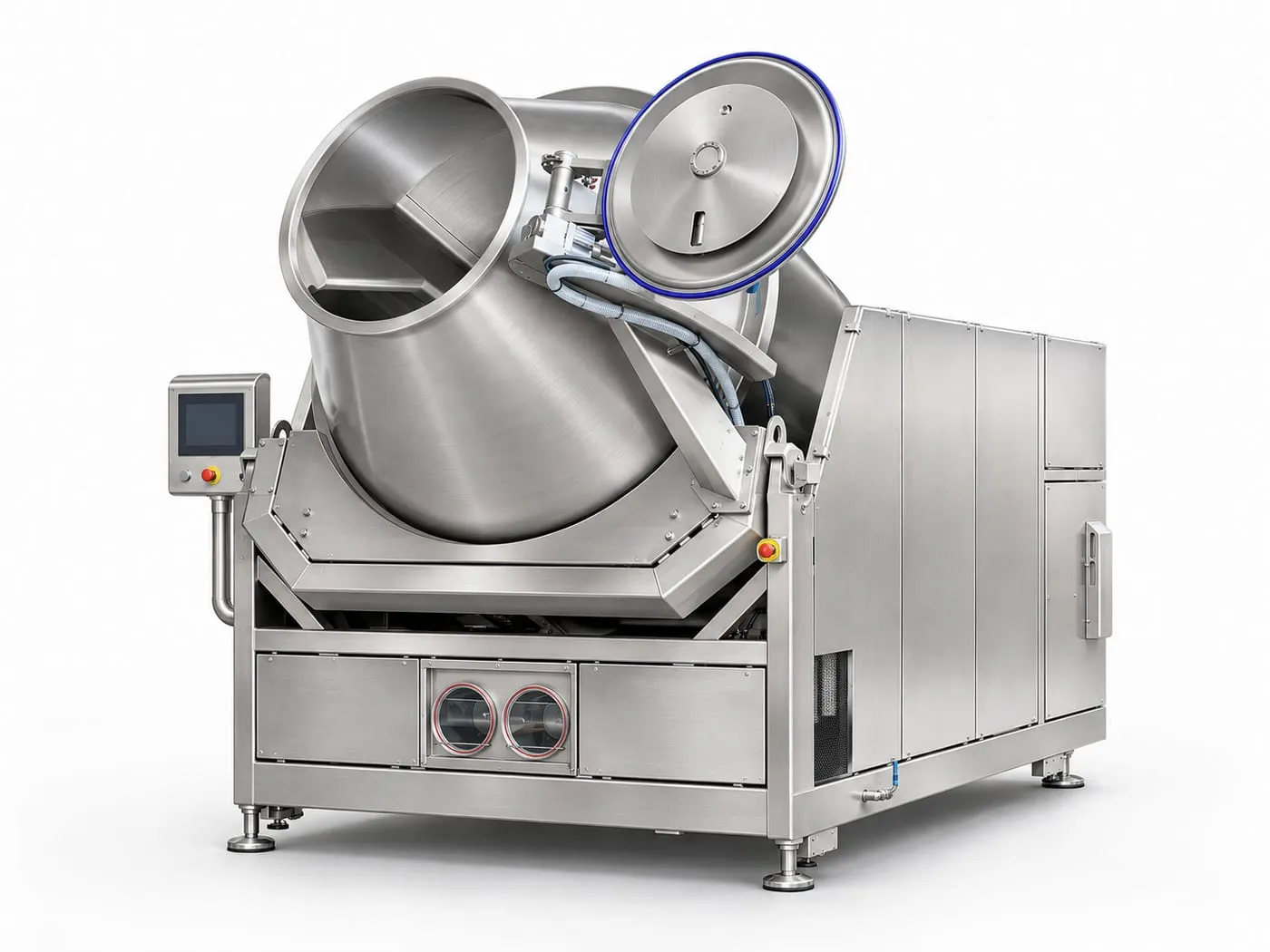
Meat & Seafood Processing
Processors marinating chicken, pork, beef or seafood for cooked, smoked or frozen products.
Sized to drum volume and effective load per batch (kg of raw meat)