Meat & Seafood Processing
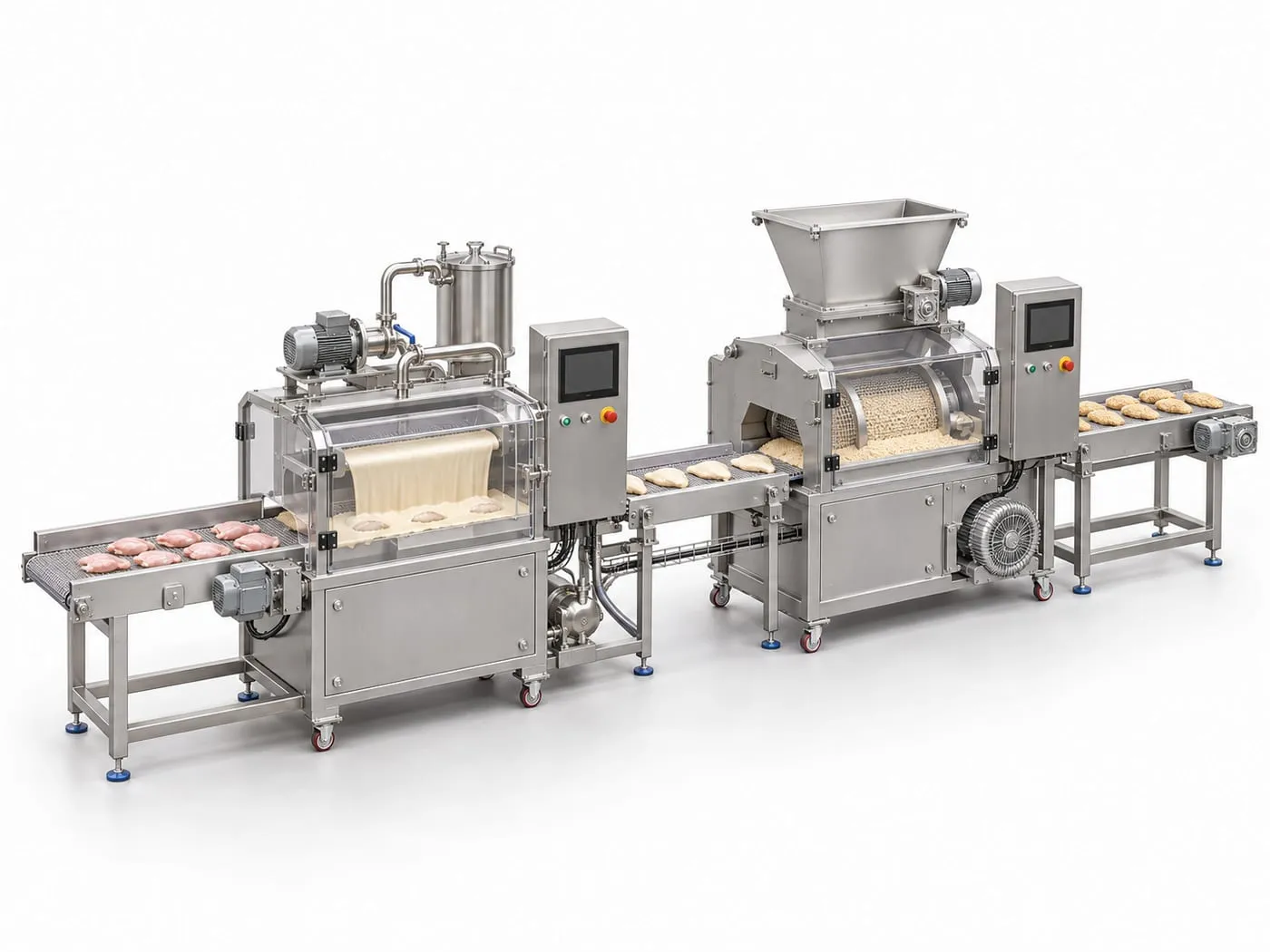
Coating and Breading Line
Factories making breaded chicken, fish fingers, coated vegetables or nuggets for frozen and food-service markets.
Sized to belt width and coated product output (kg/h of finished product)

06 · Meat & Seafood Processing — Equipment
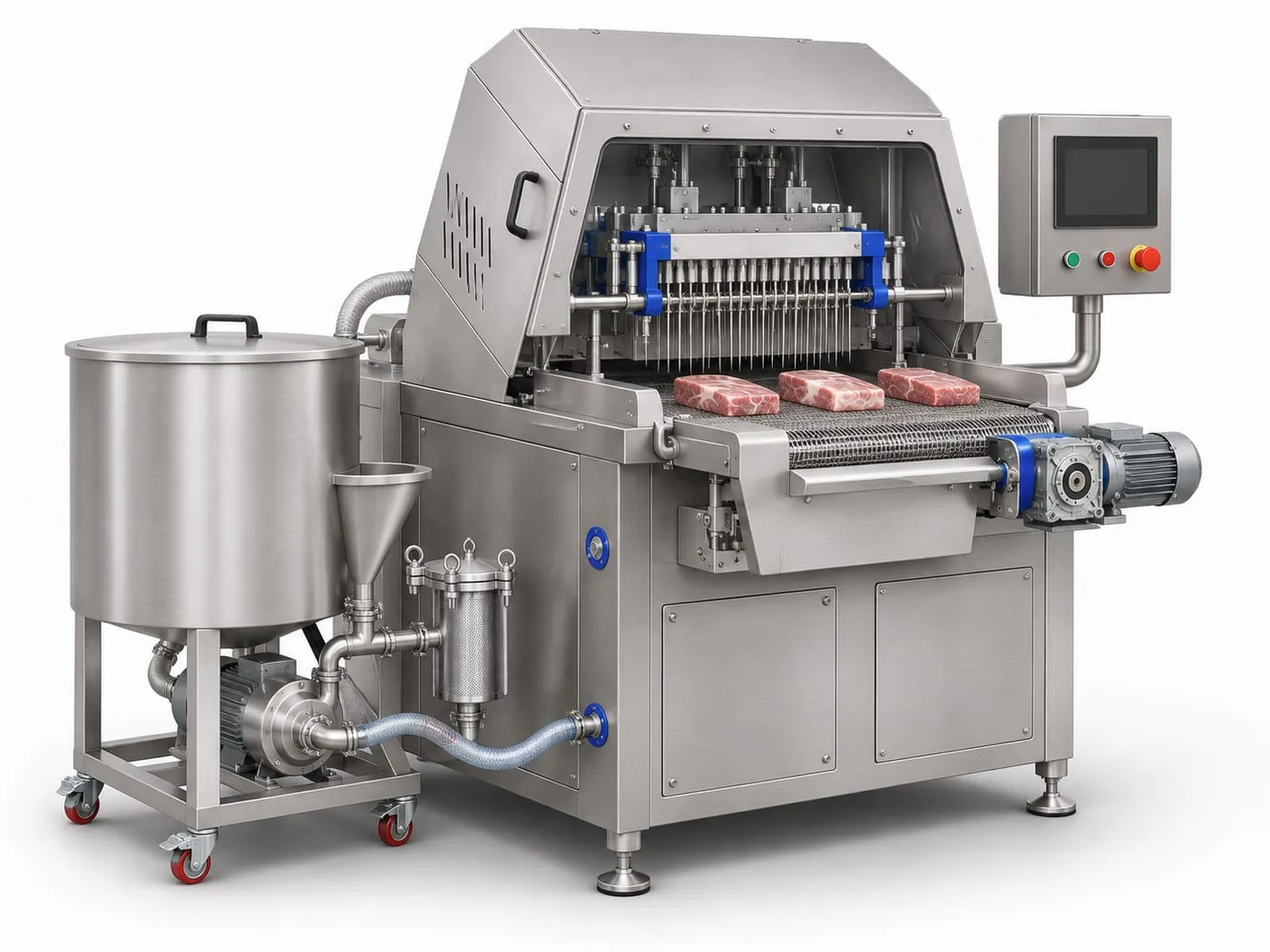
Needle heads inject a measured amount of brine or marinade inside whole cuts, so curing and flavour reach the centre rather than just the surface.
Short answer: A brine injector pushes brine or marinade into meat through rows of hollow needles, so salt and flavour are spread through the cut instead of sitting on the surface. The configuration is decided by the injection rate you are aiming for, the type of cut (bone-in or boneless) and how clean the brine must be kept during the run.
Meat travels on a stepping conveyor under a needle head. At each step the head lowers, the needles enter the meat, and brine is pumped through them under pressure while they withdraw. The amount injected depends on the brine pressure, the number of needles, the stroke rate and the speed of the conveyor.
Brine that is not absorbed drains back into a tank below. It passes through filters and is pumped back to the needle head. Needles are usually spring-loaded so that a needle meeting bone stops instead of bending. Most plants weigh product before and after injection to check that they are hitting the target rate.
| Form | Suits | Watch out for |
|---|---|---|
| Single needle row | Small batches, simple brines | Lower throughput |
| Multi-row needle head | Large cuts, continuous production | More needles to clean and inspect |
| Recirculation and filtration | Long runs, marinades with particles | Filters need regular cleaning |
If you inject several products, needle heads with different spacing can be swapped, so one machine can cover bacon slabs and whole poultry. Brine with fine spices calls for the filtration option from the start.
Injection usually comes after trimming and before a vacuum tumbler, which spreads the brine and works the surface. Injected and tumbled products then go to cooking, smoking or freezing in a food freezer, and are often packed on a vacuum packaging machine.
Single needle row
a compact injector for smaller batches and simple brines.
Multi-row needle head
more needles per stroke for higher throughput and a more even spread in large cuts.
Brine recirculation and filtration
returns unabsorbed brine through filters so it can be reused, important for long runs and brines with fine particles.
Our engineers check these points with you, so the quotation fits your site rather than a catalogue default.
It depends on the cut, its temperature, the brine and the number of passes. Rather than promise a figure, we set the needle pattern, pressure and speed against your target and confirm during trials.
Yes, if the needles are spring-loaded so they stop when they meet bone. Tell us the products so the needle type and head travel suit them.
Brine that drips back from the meat carries small pieces of fat and protein. Without filtration they block needles and give uneven injection. Marinades with herbs or spices need filters chosen for that particle size.
Tell us your raw material, finished product and target output. Our engineers reply with a matched configuration and quotation.
What to send with your inquiry
Email sales@hnfoda.com
Meat & Seafood Processing
Factories making breaded chicken, fish fingers, coated vegetables or nuggets for frozen and food-service markets.
Sized to belt width and coated product output (kg/h of finished product)
Meat & Seafood Processing
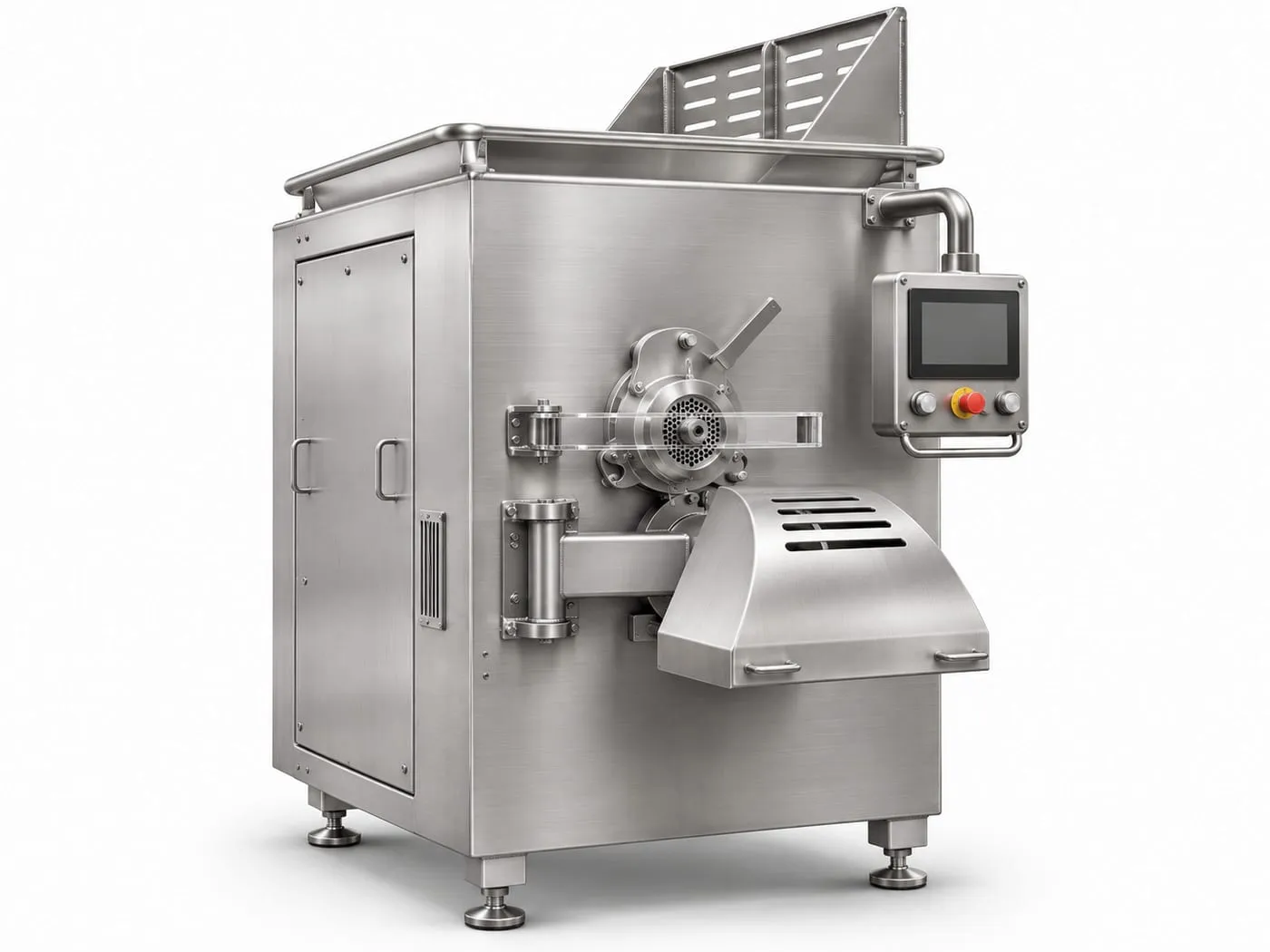
Meat plants and food factories making sausages, patties, dumpling fillings or minced products.
Sized to raw meat input (kg/h) at a stated feed temperature and plate size
Meat & Seafood Processing
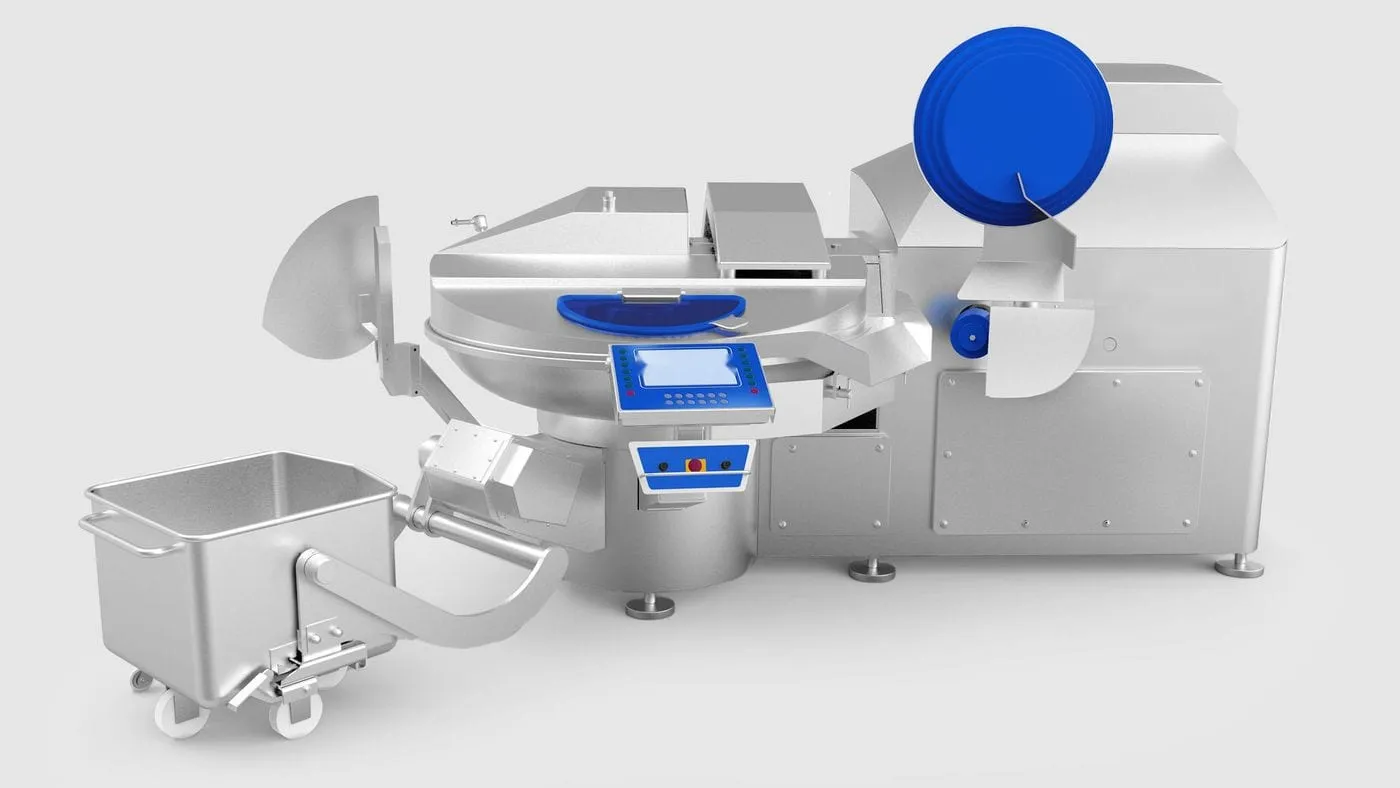
Sausage, meatball, fish ball and dumpling-filling producers who need fine or emulsified textures.
Sized to bowl volume and batch weight (kg per batch)
Meat & Seafood Processing
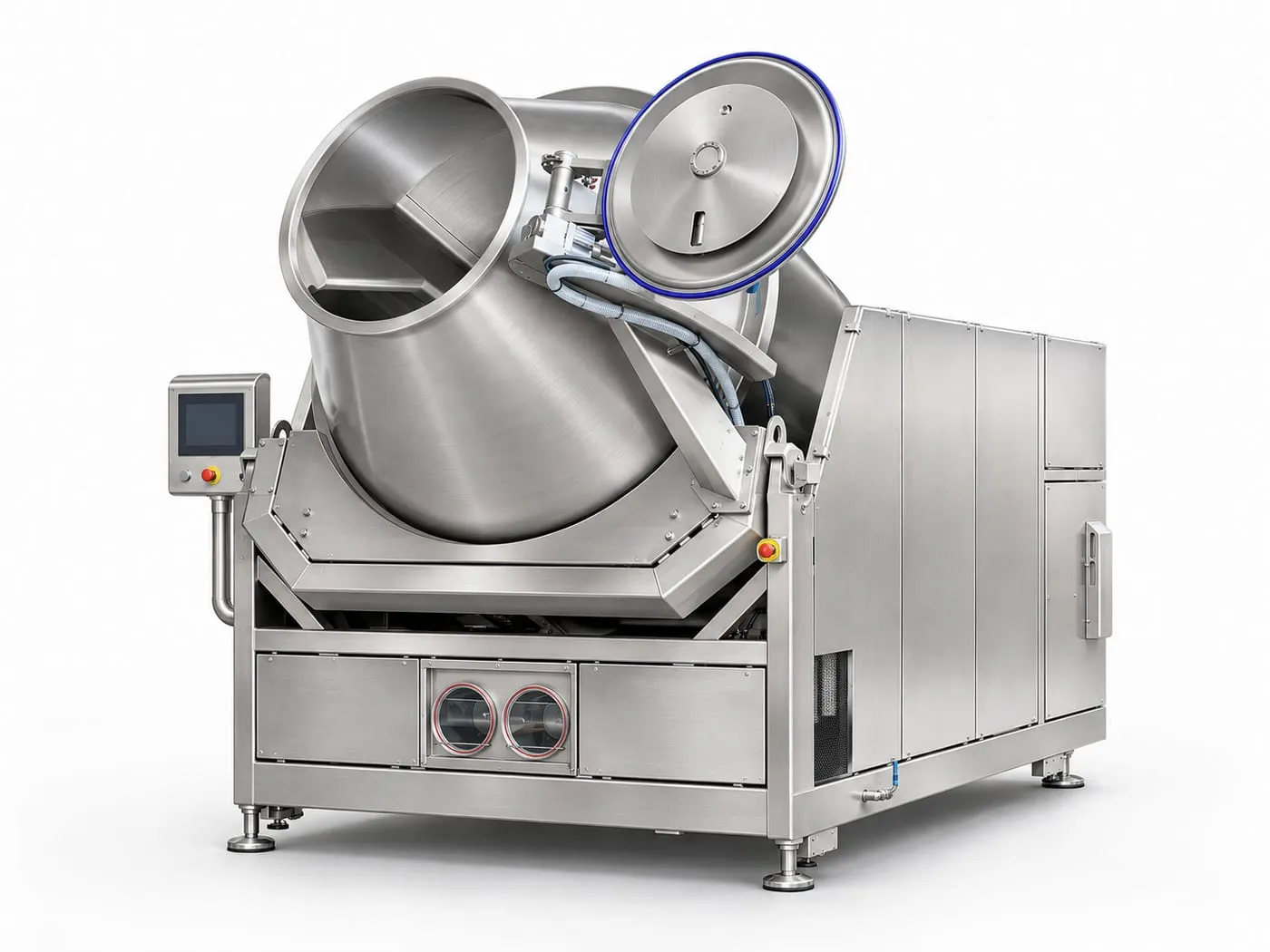
Processors marinating chicken, pork, beef or seafood for cooked, smoked or frozen products.
Sized to drum volume and effective load per batch (kg of raw meat)