Meat & Seafood Processing
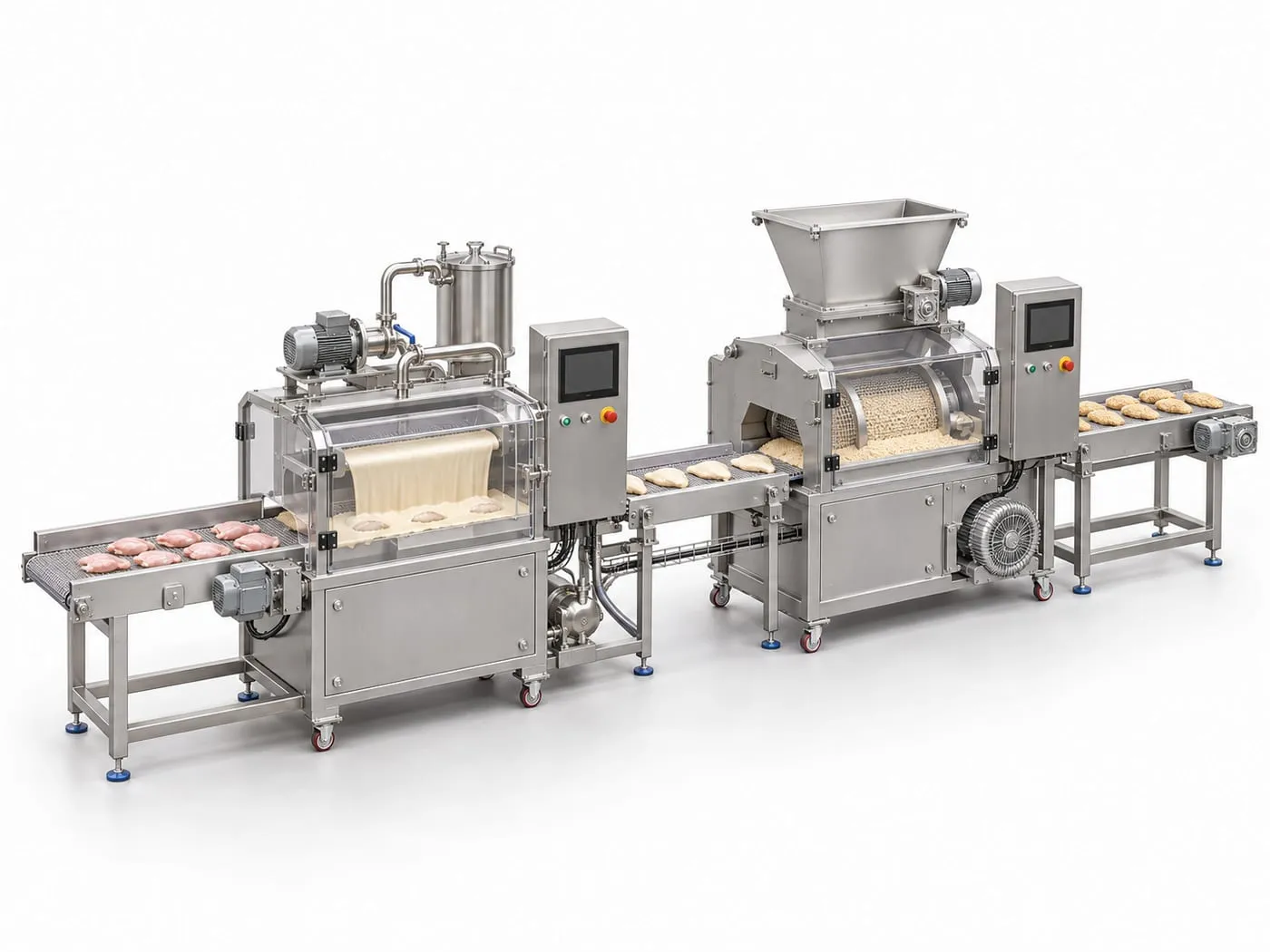
Coating and Breading Line
Factories making breaded chicken, fish fingers, coated vegetables or nuggets for frozen and food-service markets.
Sized to belt width and coated product output (kg/h of finished product)

06 · Meat & Seafood Processing — Equipment
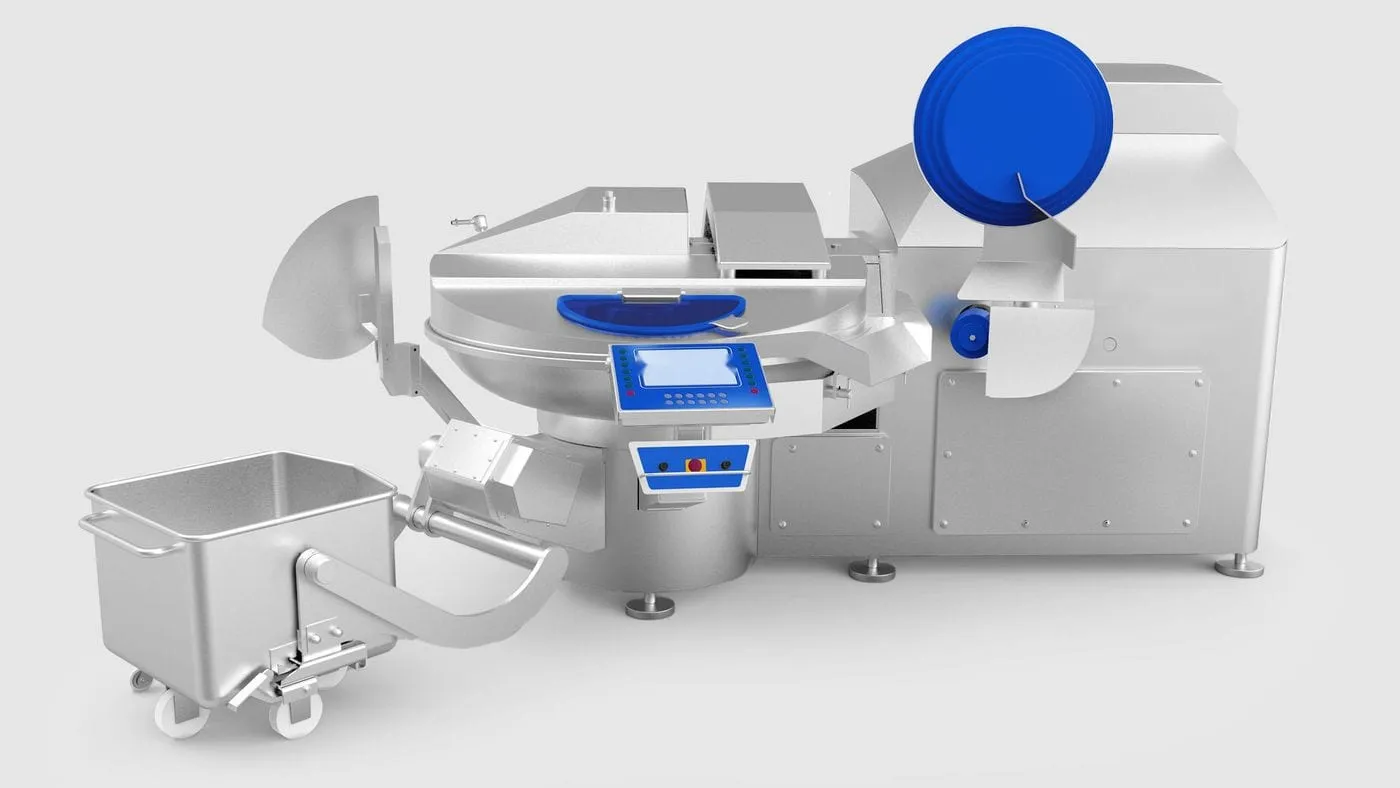
High-speed knives in a rotating bowl chop, mix and emulsify meat, fish or vegetable fillings to the texture your product needs.
Short answer: A bowl cutter chops and mixes product with a set of fast-turning knives while the bowl rotates, turning ground meat, fish or vegetables into a coarse filling or a fine emulsion. The configuration depends on the batch size, the texture you need and whether air in the batter is a problem, which is when a vacuum version makes sense.
The bowl turns slowly and carries the product past a knife shaft that spins at high speed under a cover. Each pass cuts the material smaller and mixes in ingredients added through the lid, such as salt, spices, ice or starch. Knife speed, bowl speed and running time together set the final texture.
Fine emulsions depend on salt-soluble proteins binding water and fat, and that only works within a narrow temperature range. The operator or the controller watches batter temperature and stops at the right point. An unloader then empties the bowl into a trolley or onto the next machine. On vacuum models, the lid seals and air is removed during chopping.
| Form | Suits | Watch out for |
|---|---|---|
| Open bowl | Fillings, coarse products, general use | Air bubbles in fine emulsions |
| Vacuum bowl | Fine sausages, fish balls, dense batters | Needs vacuum pump maintenance |
| Variable speed | Plants making a wide product range | More settings to train operators on |
For a new plant making both fillings and sausages, a variable-speed open bowl is a common first machine; a vacuum cutter can be added later if fine emulsions become a main product.
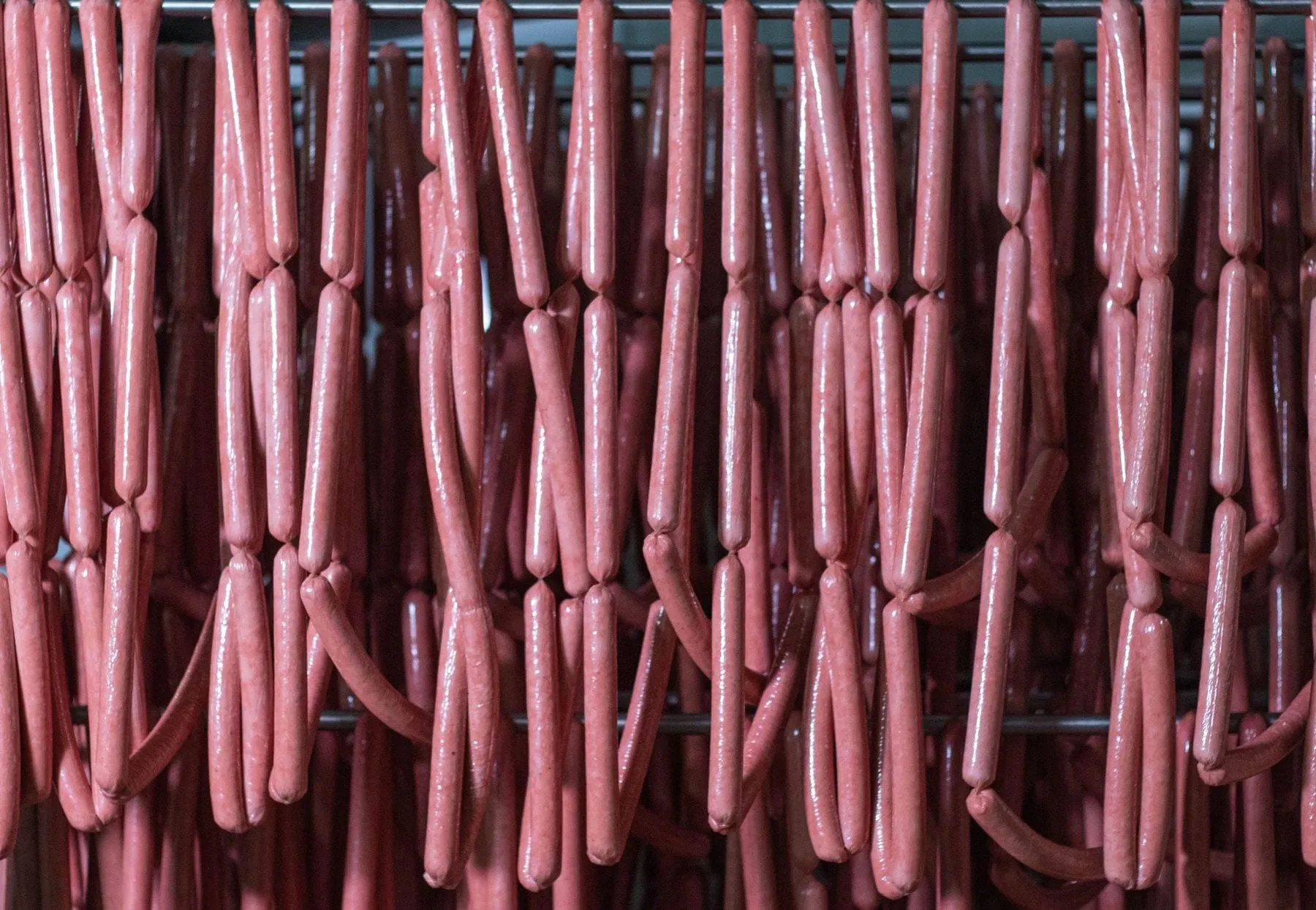
A bowl cutter normally follows an industrial meat grinder. The batter then goes to a sausage stuffer, a food forming machine for balls and patties, or into a frozen dumpling production line as filling.
Open bowl cutter
the standard machine for chopping and mixing fillings and coarse to fine meat products.
Vacuum bowl cutter
chops under vacuum to reduce air in the batter, for denser, smoother emulsions with better colour.
Variable-speed cutter
adjustable knife and bowl speeds so one machine can make coarse fillings and fine emulsions.
Our engineers check these points with you, so the quotation fits your site rather than a catalogue default.
The knives turn fast and generate heat. If the batter gets too warm, the fat separates and the emulsion breaks. Plants control this with chilled raw materials, ice or chilled water in the recipe and a timed chopping programme.
When air bubbles show in the finished product or affect colour and texture, for example in fine sausages or fish balls. For coarse fillings an open bowl is usually enough.
Knives are balanced as a set and should be sharpened together and checked for cracks. Blunt or unbalanced knives raise product temperature and vibration. Keep a spare set and follow the safe changing procedure in the manual.
Tell us your raw material, finished product and target output. Our engineers reply with a matched configuration and quotation.
What to send with your inquiry
Email sales@hnfoda.com
Meat & Seafood Processing
Factories making breaded chicken, fish fingers, coated vegetables or nuggets for frozen and food-service markets.
Sized to belt width and coated product output (kg/h of finished product)
Meat & Seafood Processing
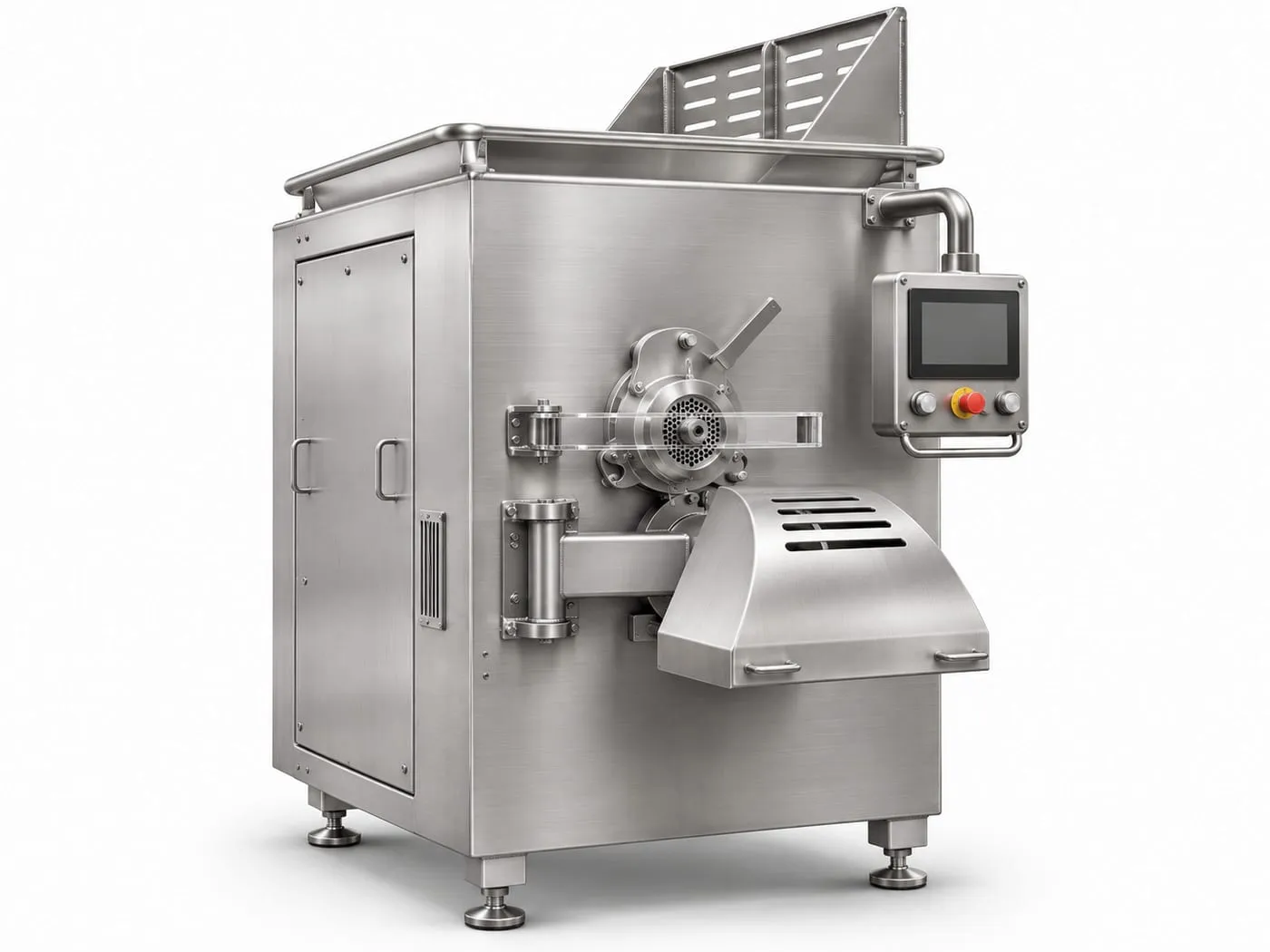
Meat plants and food factories making sausages, patties, dumpling fillings or minced products.
Sized to raw meat input (kg/h) at a stated feed temperature and plate size
Meat & Seafood Processing
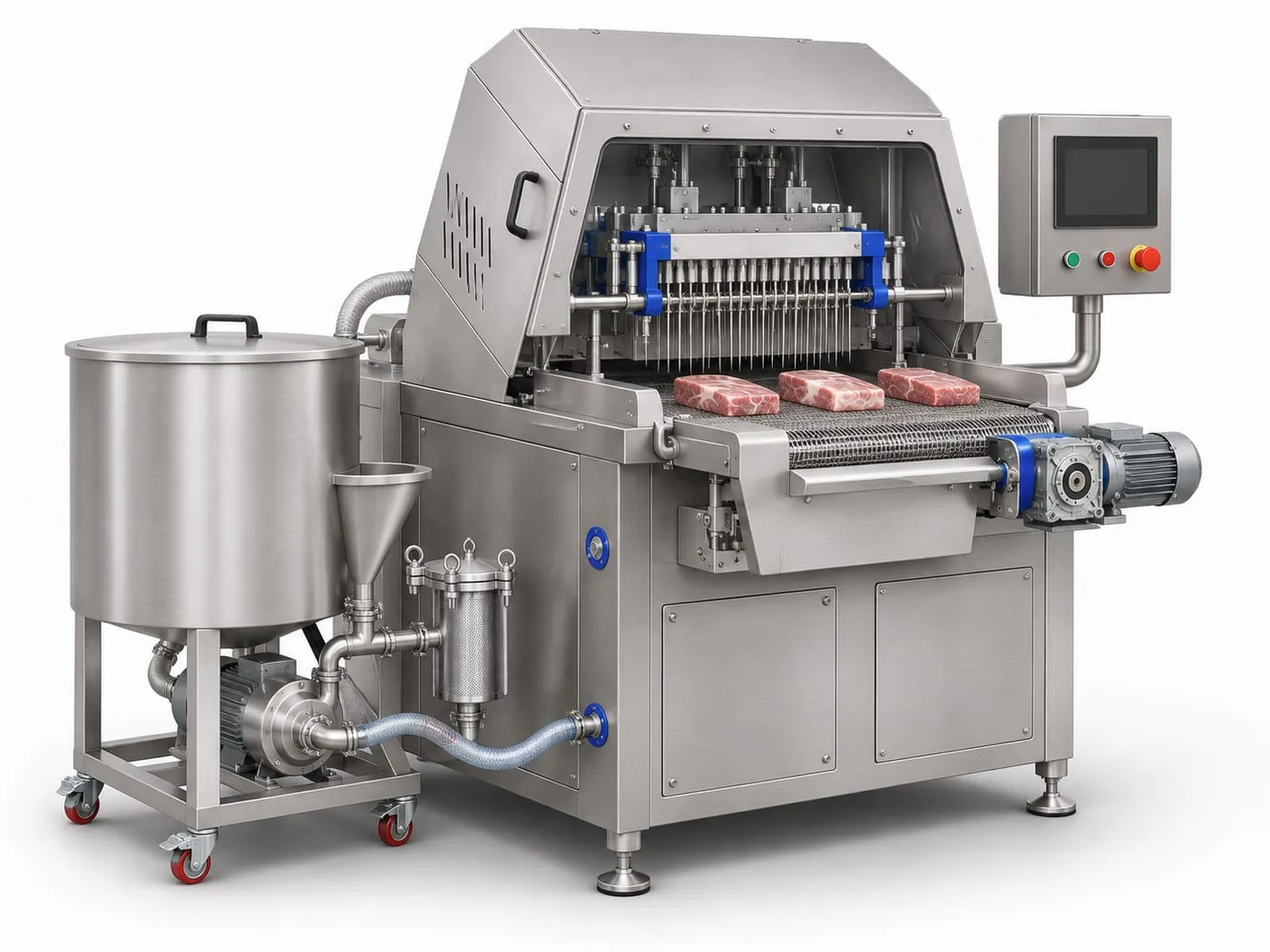
Processors making ham, bacon, cured cuts or marinated whole poultry and large cuts.
Sized to belt width and raw meat throughput (kg/h) at the target injection rate
Meat & Seafood Processing
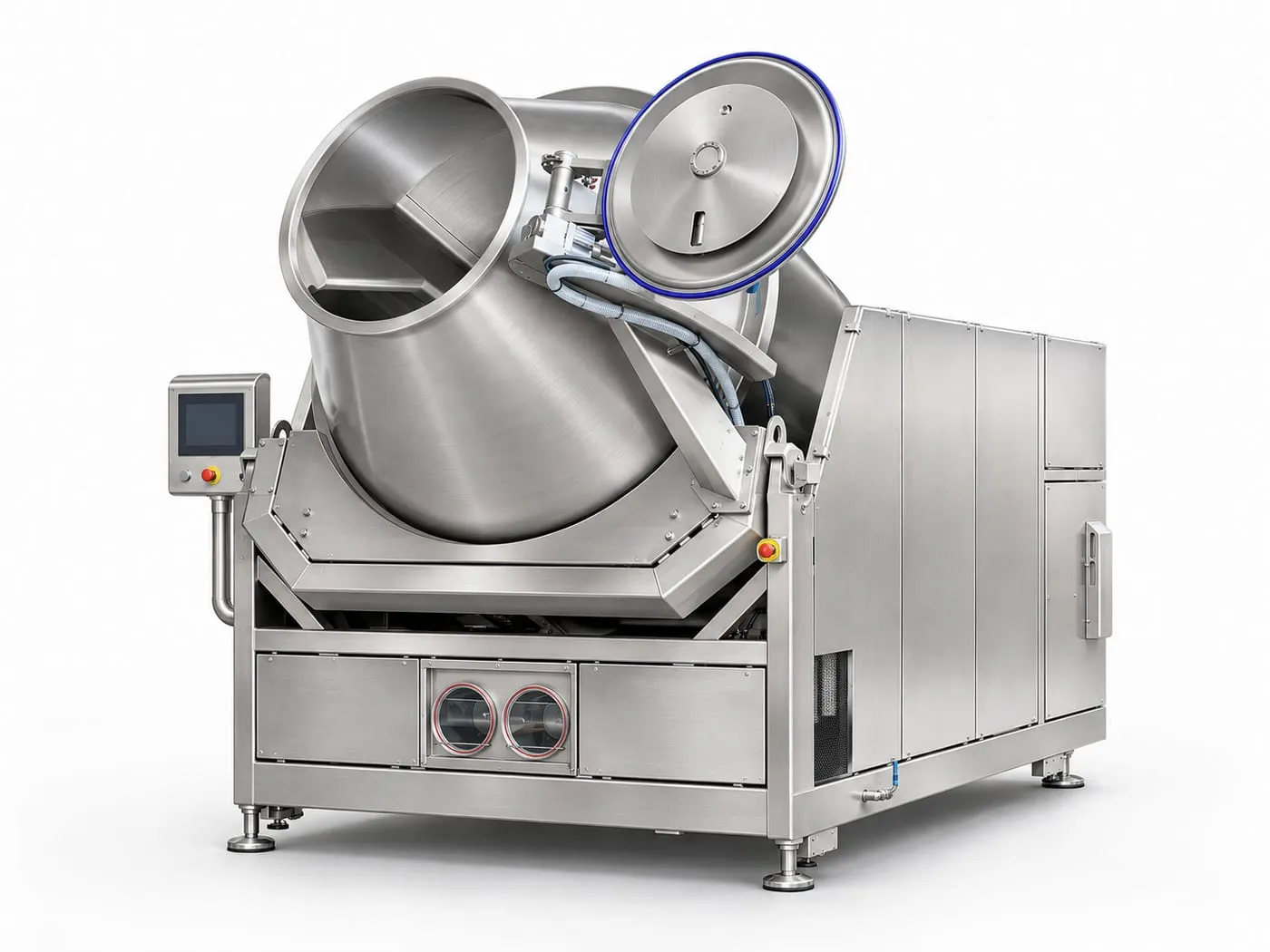
Processors marinating chicken, pork, beef or seafood for cooked, smoked or frozen products.
Sized to drum volume and effective load per batch (kg of raw meat)