Meat & Seafood Processing
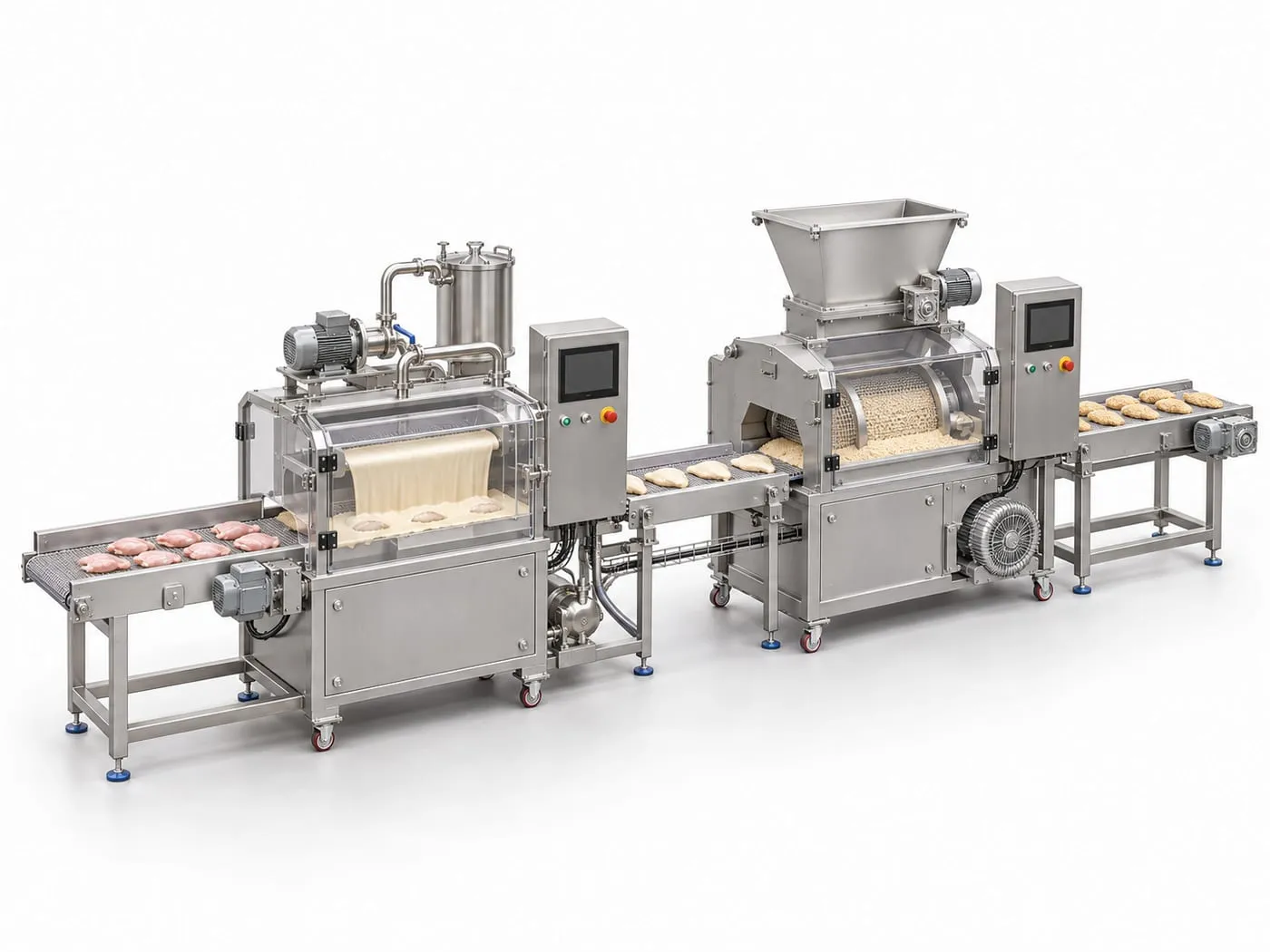
Coating and Breading Line
Factories making breaded chicken, fish fingers, coated vegetables or nuggets for frozen and food-service markets.
Sized to belt width and coated product output (kg/h of finished product)

06 · Meat & Seafood Processing — Equipment
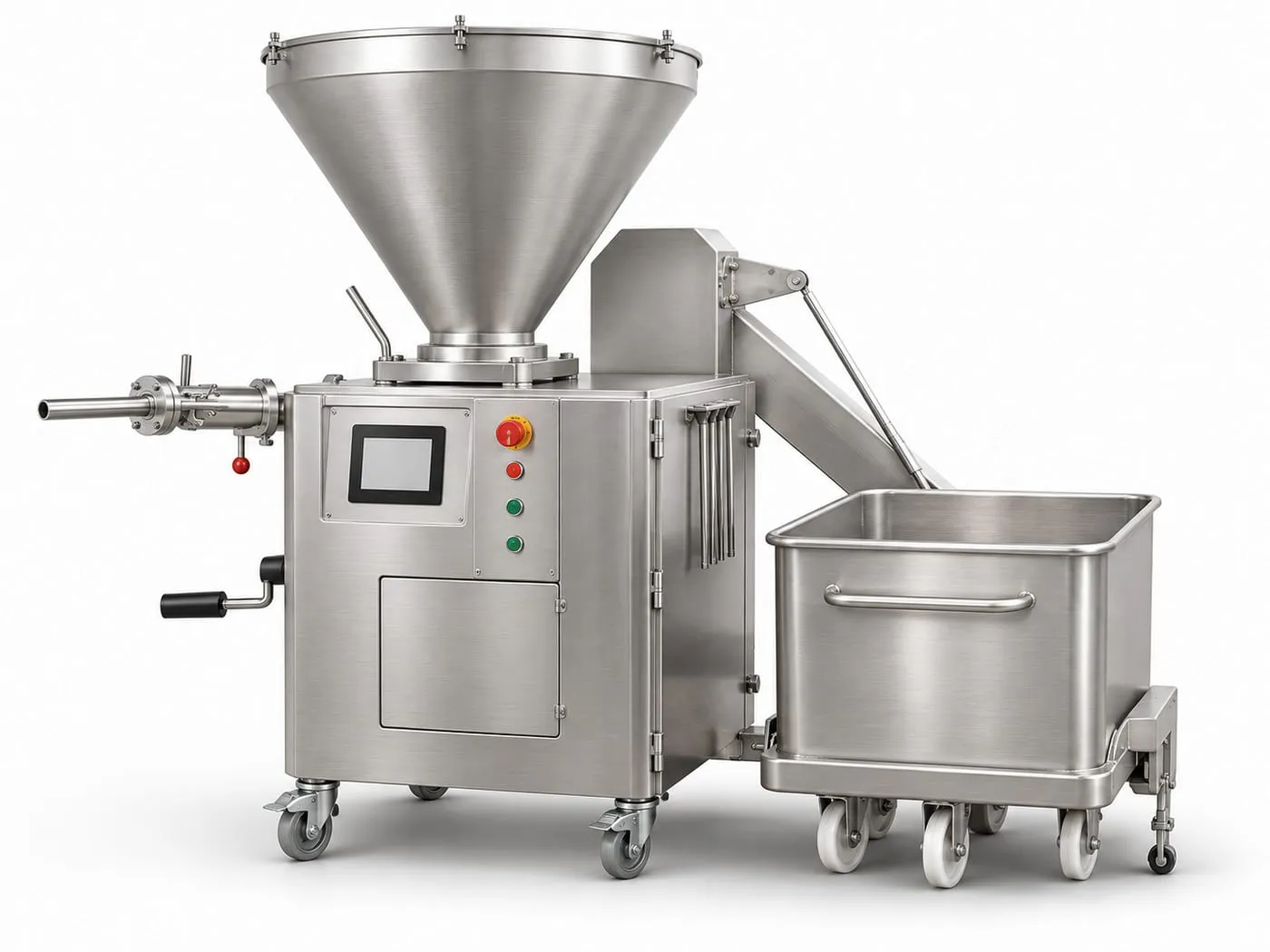
Fills meat batter or coarse fillings into casings at a set portion weight, with options to link, twist or hang the sausages.
Short answer: A sausage stuffer pushes meat batter or coarse filling through a horn into a casing, dividing it into portions of set weight or length. The configuration depends on your batter (fine or coarse, sticky or loose), whether trapped air is a problem, the casings you use and whether linking and hanging should be automatic.
The batter is loaded into a hopper. On a piston stuffer, a piston drives the batter out of a cylinder and through the stuffing horn; the operator controls the flow, often with a portioning device. On a vacuum continuous filler, a vane or screw pump draws batter from the hopper under vacuum, which removes trapped air, and pumps it out in measured portions.
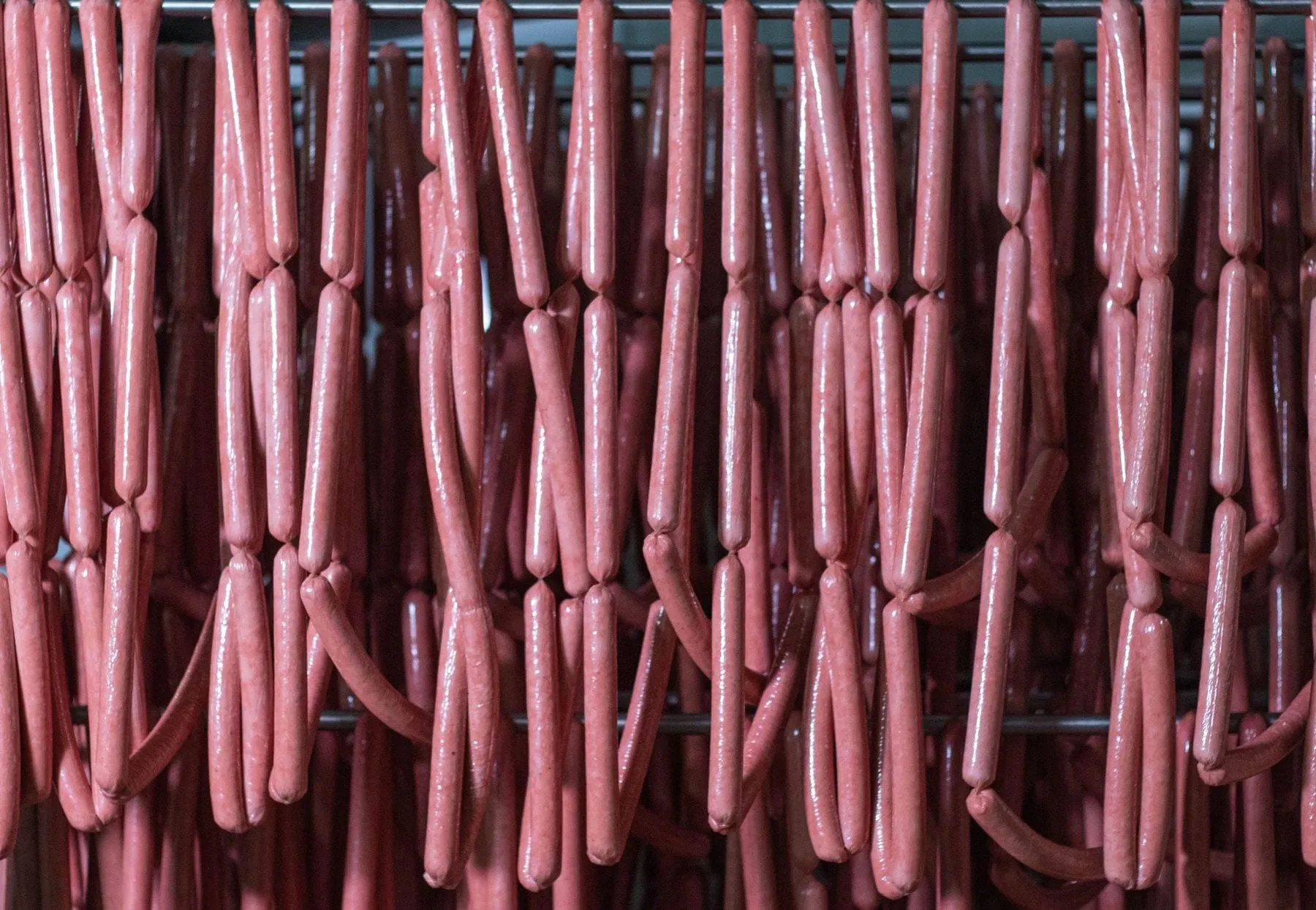
The casing is shirred onto the horn and fills as product comes out. A linker can twist the casing between portions or a clipper can close each end. A hanging unit then loops the links onto sticks ready for smoking, cooking or chilling.
| Form | Suits | Watch out for |
|---|---|---|
| Piston stuffer | Small batches, many recipes | Portion weight depends more on the operator |
| Vacuum continuous filler | Consistent weight, long runs | Higher investment and more parts to clean |
| With linker or hanging | Higher output, less hand work | Works best with even-calibre casings |
Many plants begin with a piston stuffer and move to a vacuum filler when volumes grow, keeping the piston machine for small specialty runs and trials of new recipes.
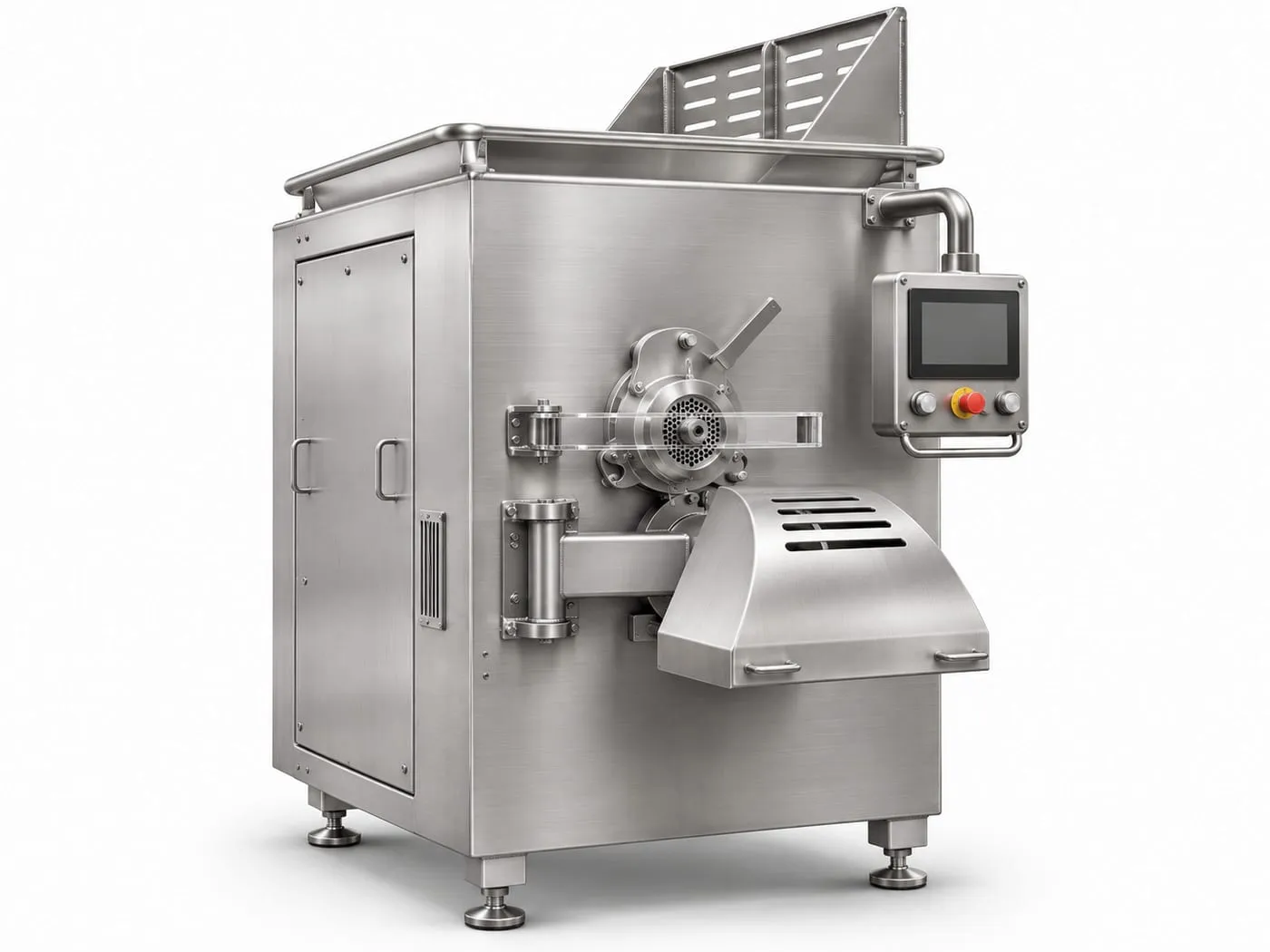
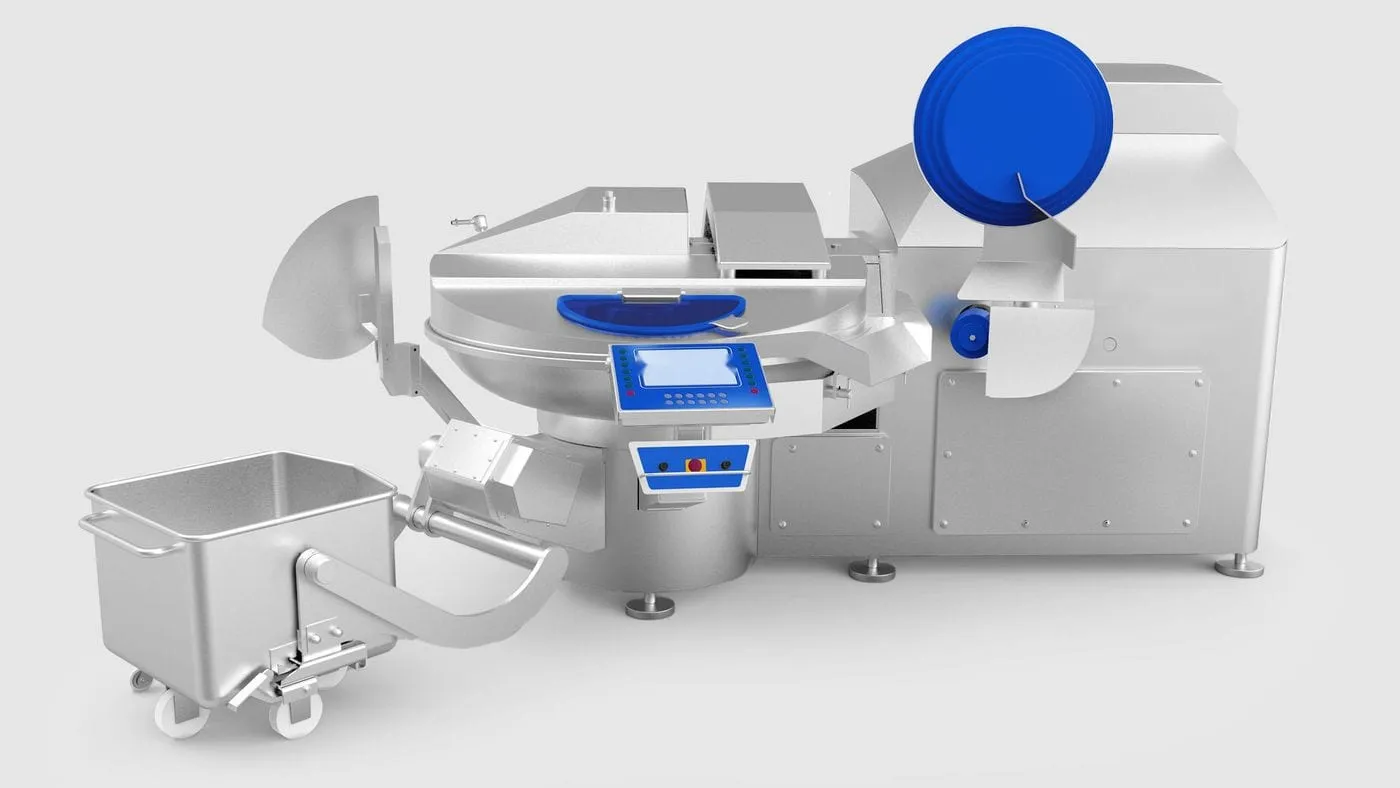
The stuffer follows batter preparation on an industrial meat grinder and a bowl cutter. Filled sausages go on to smoking or cooking, then cooling, and are packed on a vacuum packaging machine or tray sealer, with a food metal detector before dispatch.
Piston stuffer
a cylinder pushes batter out through the stuffing horn; simple, affordable and suited to small batches and frequent recipe changes.
Vacuum continuous filler
a vane or screw pump under vacuum fills continuously and portions by weight, with less air in the product.
With linker or hanging unit
adds automatic twisting or clipping to length and hanging onto sticks for smoking or cooking.
Our engineers check these points with you, so the quotation fits your site rather than a catalogue default.
A piston stuffer is enough for small batches and many recipe changes. If you need consistent portion weights over long runs, or air pockets are a problem, a vacuum continuous filler is the better choice.
Yes. Natural casings vary in calibre, so portioning by length and weight needs adjustment and operator attention. Collagen and cellulose casings give more even results on automatic linking.
With other attachments a vacuum filler can portion fillings, deposit into trays or feed a forming head. Tell us your other products and we check what attachments make sense.
Tell us your raw material, finished product and target output. Our engineers reply with a matched configuration and quotation.
What to send with your inquiry
Email sales@hnfoda.com
Meat & Seafood Processing
Factories making breaded chicken, fish fingers, coated vegetables or nuggets for frozen and food-service markets.
Sized to belt width and coated product output (kg/h of finished product)
Meat & Seafood Processing
Meat plants and food factories making sausages, patties, dumpling fillings or minced products.
Sized to raw meat input (kg/h) at a stated feed temperature and plate size
Meat & Seafood Processing
Sausage, meatball, fish ball and dumpling-filling producers who need fine or emulsified textures.
Sized to bowl volume and batch weight (kg per batch)
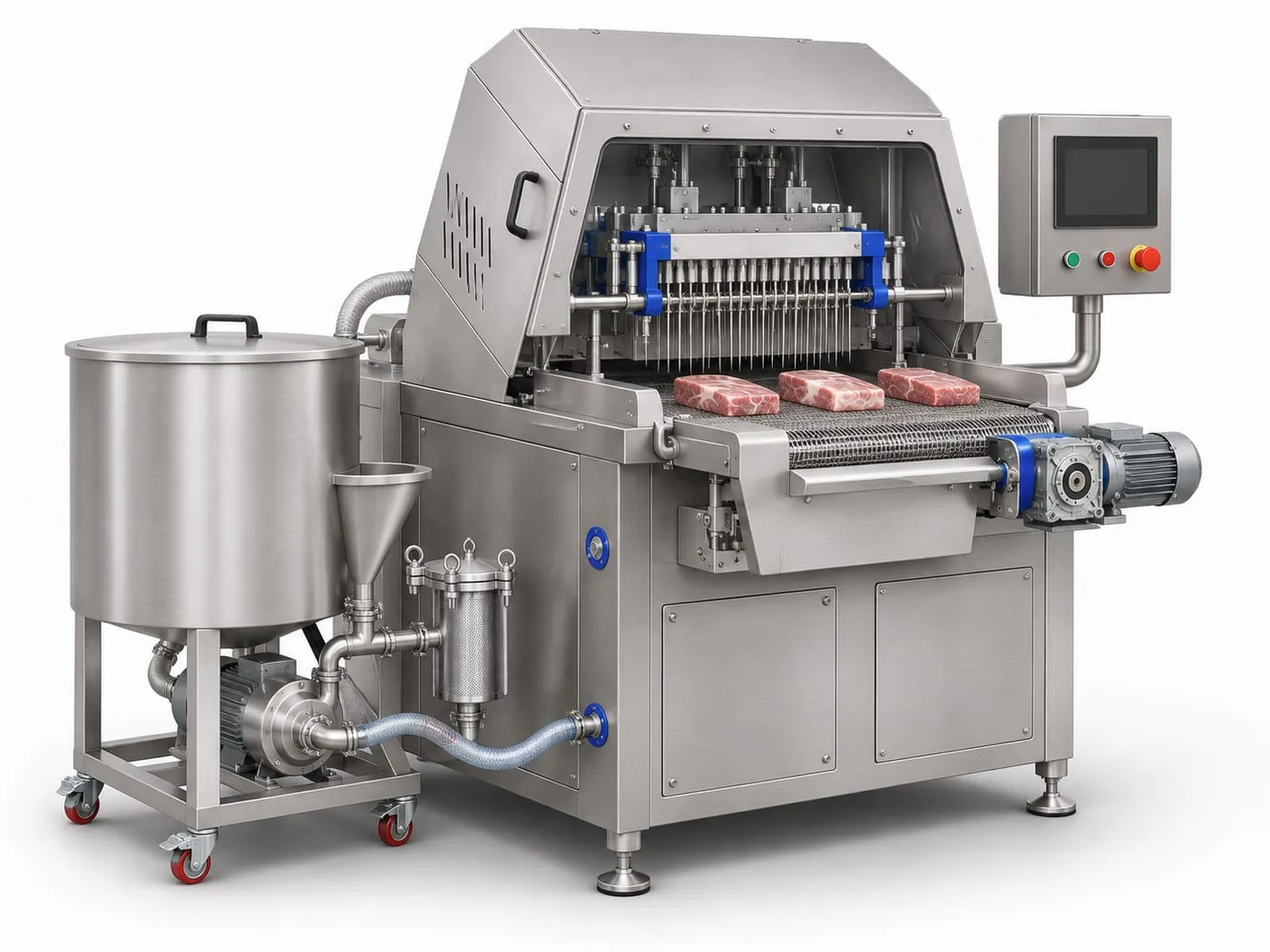
Meat & Seafood Processing
Processors making ham, bacon, cured cuts or marinated whole poultry and large cuts.
Sized to belt width and raw meat throughput (kg/h) at the target injection rate