Packaging & Inspection
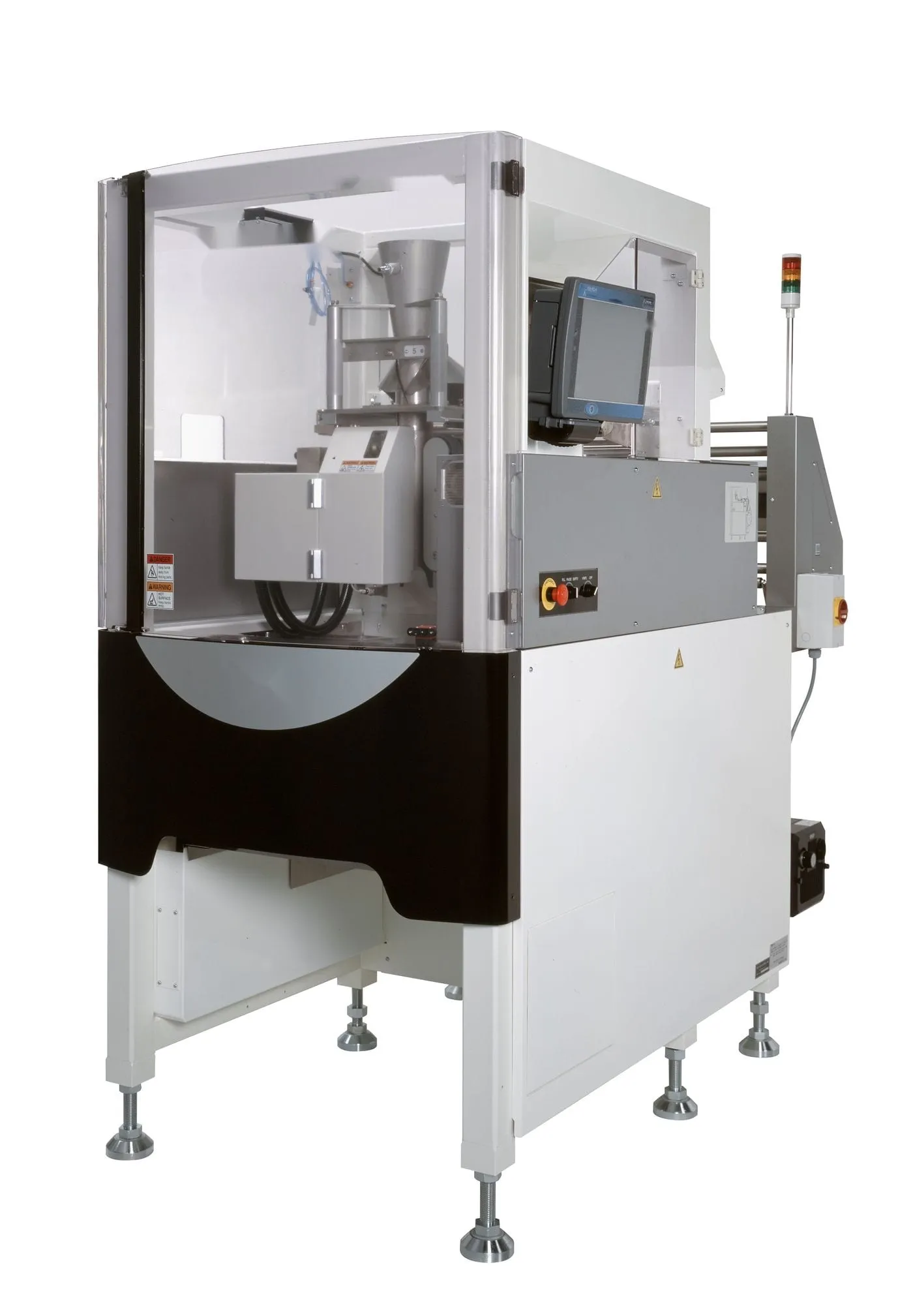
Vertical Form Fill Seal Machine
Snack, nut, frozen food, grain and powder producers moving from manual bagging to automatic packing.
Rated in finished bags per minute, set by bag length, fill weight and film

09 · Packaging & Inspection — Equipment
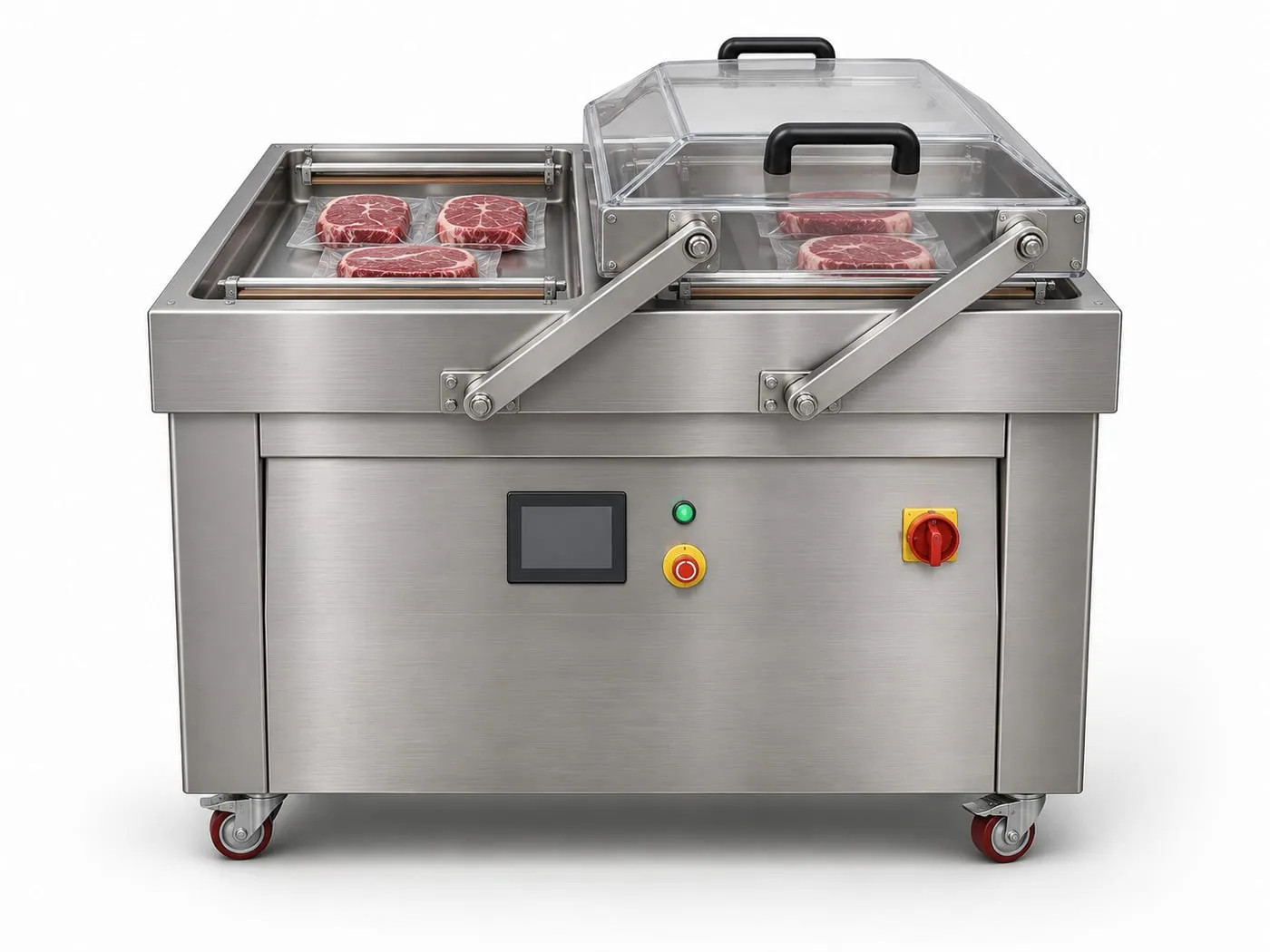
A chamber or belt-type vacuum packer that draws air out of bags and heat-seals them to protect meat, cured products, nuts and grains.
Short answer: A vacuum packaging machine places a filled bag in a chamber, pumps the air out and heat-seals the bag mouth, which slows oxidation and moisture change in meat, cured products, nuts and grains. The configuration depends on the bag size and material, how low you need residual air, and whether moist products will boil under vacuum.
The operator, or a belt, places filled bags with their open ends across the sealing bars. When the lid closes, a vacuum pump draws air out of the chamber and the bag. Once the set vacuum level or time is reached, inflatable pressure pads press the heated sealing bars together and weld the bag mouth. Optional gas flushing can let in an inert gas before sealing. Air then returns to the chamber, the lid opens and the sealed bags are removed. Shrink bags can then go through a hot water or hot air tunnel for a tight finish.
Vacuum level, sealing time and cooling time are stored per product. Moist products need particular care, because water boils at low pressure; a controlled vacuum end point stops the cycle before juice is drawn to the seal.
| Form | Suits | Watch out for |
|---|---|---|
| Single chamber | Small batches, trials, butcher shops | Low output; operator waits for cycle |
| Double chamber | Meat, cheese, nut plants | Bag sizes limited by chamber |
| Continuous rolling (belt) | Higher output, larger meat cuts | Larger footprint and investment |
Meat products often come from a vacuum tumbler or sausage stuffer and cooking. Nuts come from a nut roaster and cooling; rice from a rice milling line. After sealing, a food metal detector and an in-line checkweigher check each pack, and products can go into a food freezer for frozen distribution.
Single chamber
one chamber, one lid; good for small batches, test runs and smaller plants.
Double chamber
one chamber runs while the operator loads the other, roughly doubling working time on the same footprint.
Continuous rolling (belt)
bags travel on a belt through an automatic chamber; for higher output with less manual handling.
Our engineers check these points with you, so the quotation fits your site rather than a catalogue default.
As pressure drops, water in the product starts to boil at room temperature. This draws juice into the seal area and can weaken the seal. Chilling the product, setting a lower vacuum or using a sensor that stops at the boiling point helps.
Single chamber suits small volumes and trials. Double chamber keeps one operator busy loading while the other chamber runs. A belt machine is for steady, higher output. Your daily bag count and labour plan decide which fits.
Yes. Rice is often vacuum-packed into firm bricks; nuts may use gas flushing to avoid crushing or sharp shells piercing the bag. Bag thickness and puncture resistance matter, so we ask about the product and bag you plan to use.
Tell us your raw material, finished product and target output. Our engineers reply with a matched configuration and quotation.
What to send with your inquiry
Email sales@hnfoda.com
Packaging & Inspection
Snack, nut, frozen food, grain and powder producers moving from manual bagging to automatic packing.
Rated in finished bags per minute, set by bag length, fill weight and film
Packaging & Inspection
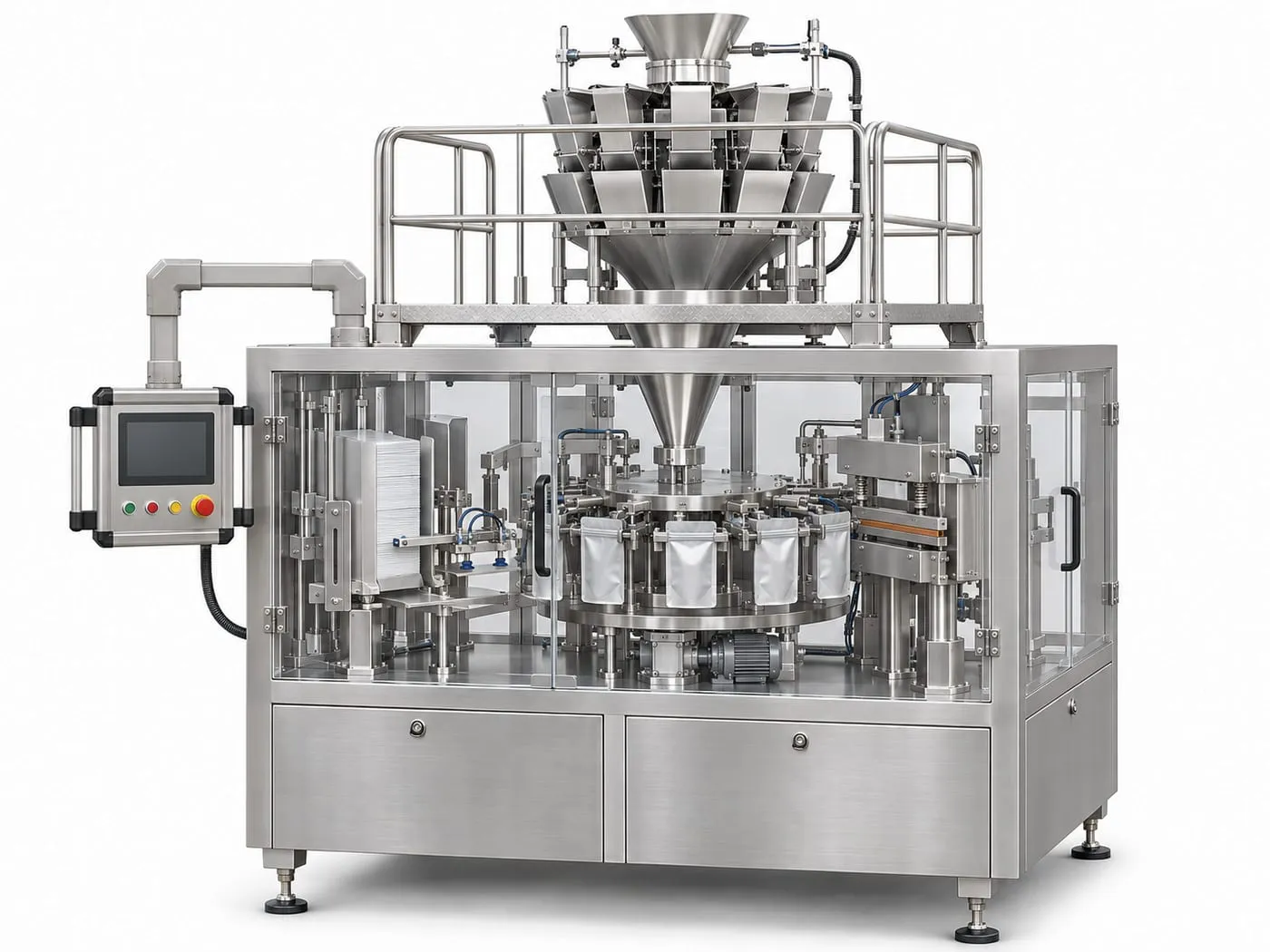
Brands and co-packers selling snacks, nuts, spices, sauces or pet food in stand-up and zipper pouches.
Rated in filled pouches per minute, set by pouch size, product and dosing
Packaging & Inspection
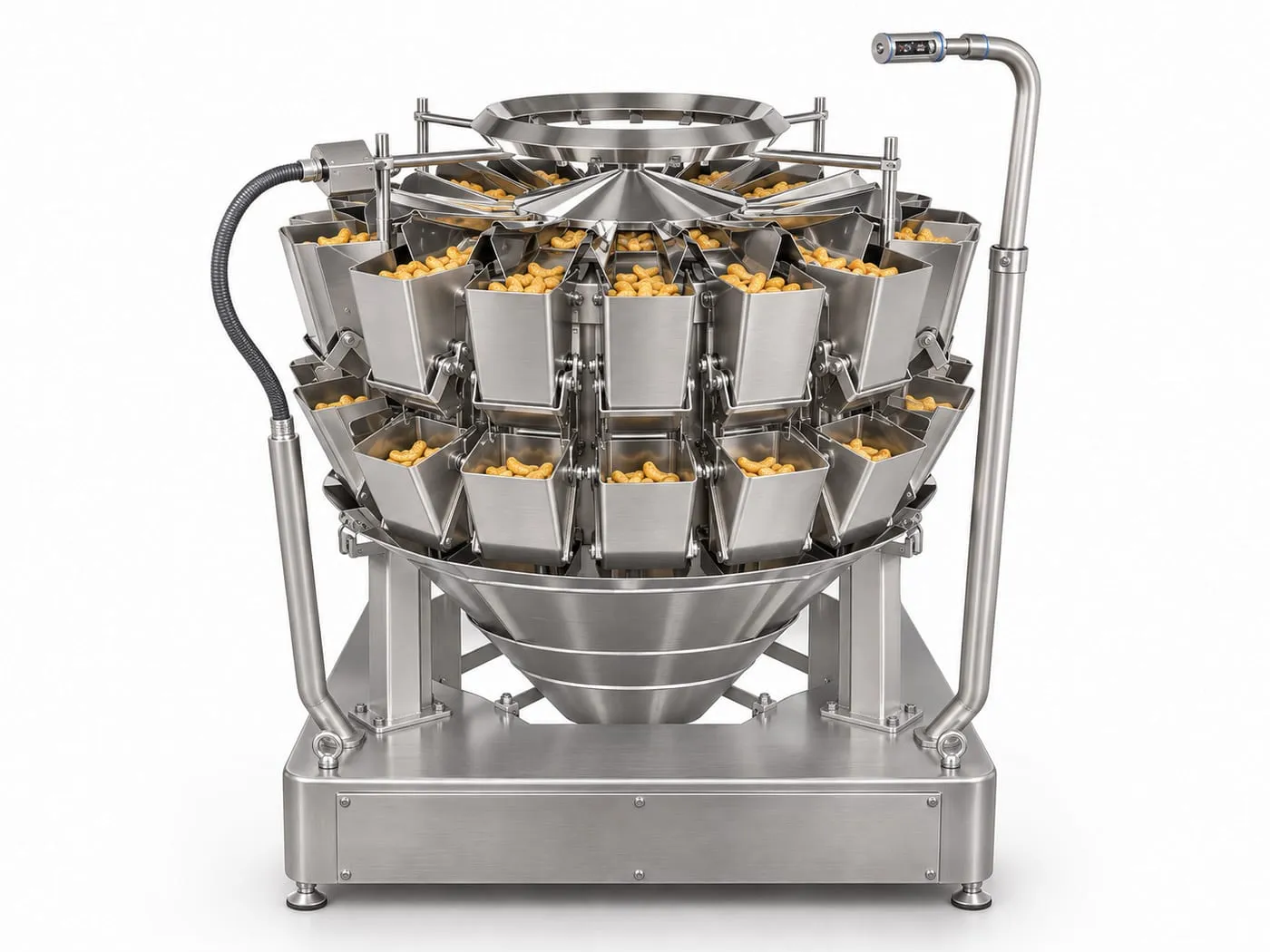
Snack, nut, confectionery, frozen and fresh food packers who need fast, accurate portions.
Rated in weighments per minute, matched to the packing machine
Packaging & Inspection
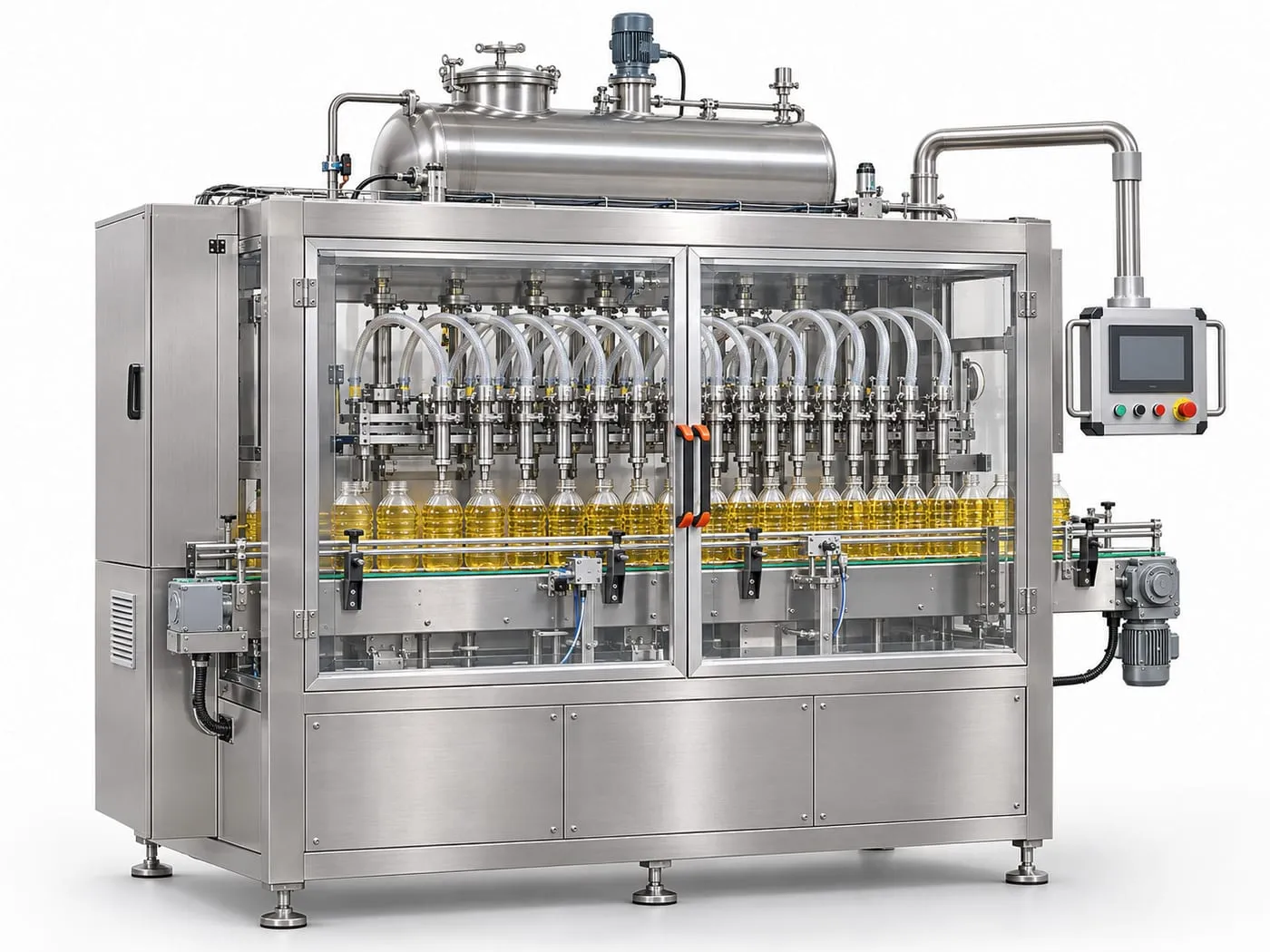
Beverage, edible oil, sauce and condiment producers filling bottles, jars or cans.
Rated in filled containers per hour, set by fill volume and container