Skip to content

02 · Dried Fruit & Nut Processing — Equipment

Nut Roaster

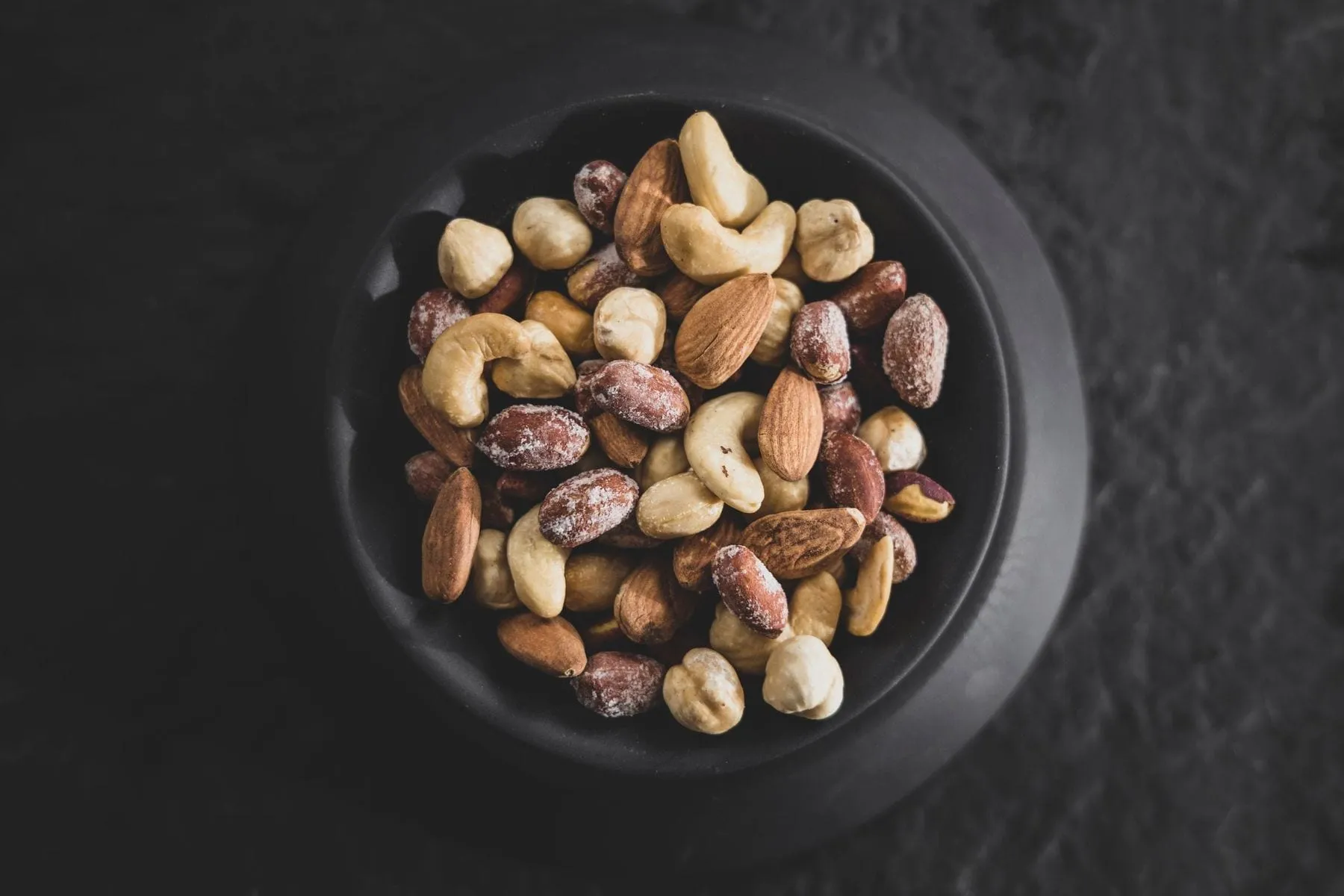
Roasts peanuts, almonds, cashews and seeds to the colour and flavour you want. Drum, tray and continuous belt designs.

Rating
Sized to raw nut input per batch or per hour
Versions
Rotary drum · Tray oven · Continuous belt roaster
Best for
Snack nut, nut butter, confectionery and bakery ingredient producers
  • Batch or continuous roasting
  • Temperature control by zone or by batch profile
  • Integrated or separate cooling to stop the roast on time
  • Gas, electric or thermal-oil heating depending on site

Short answer: A nut roaster heats peanuts, almonds, cashews, seeds and similar products until they reach the colour, flavour and crunch you want. The design follows your nut types and sizes, whether you roast in batches or continuously, how many temperature zones the recipe needs, and how even the colour must be.

How it works

In a rotary drum roaster, nuts are loaded into a drum that turns inside a heated chamber; hot air or the drum wall heats them while flights keep them moving. The operator or controller follows a time and temperature profile and discharges the batch onto a cooling tray, where stirring arms and a fan bring the temperature down quickly.

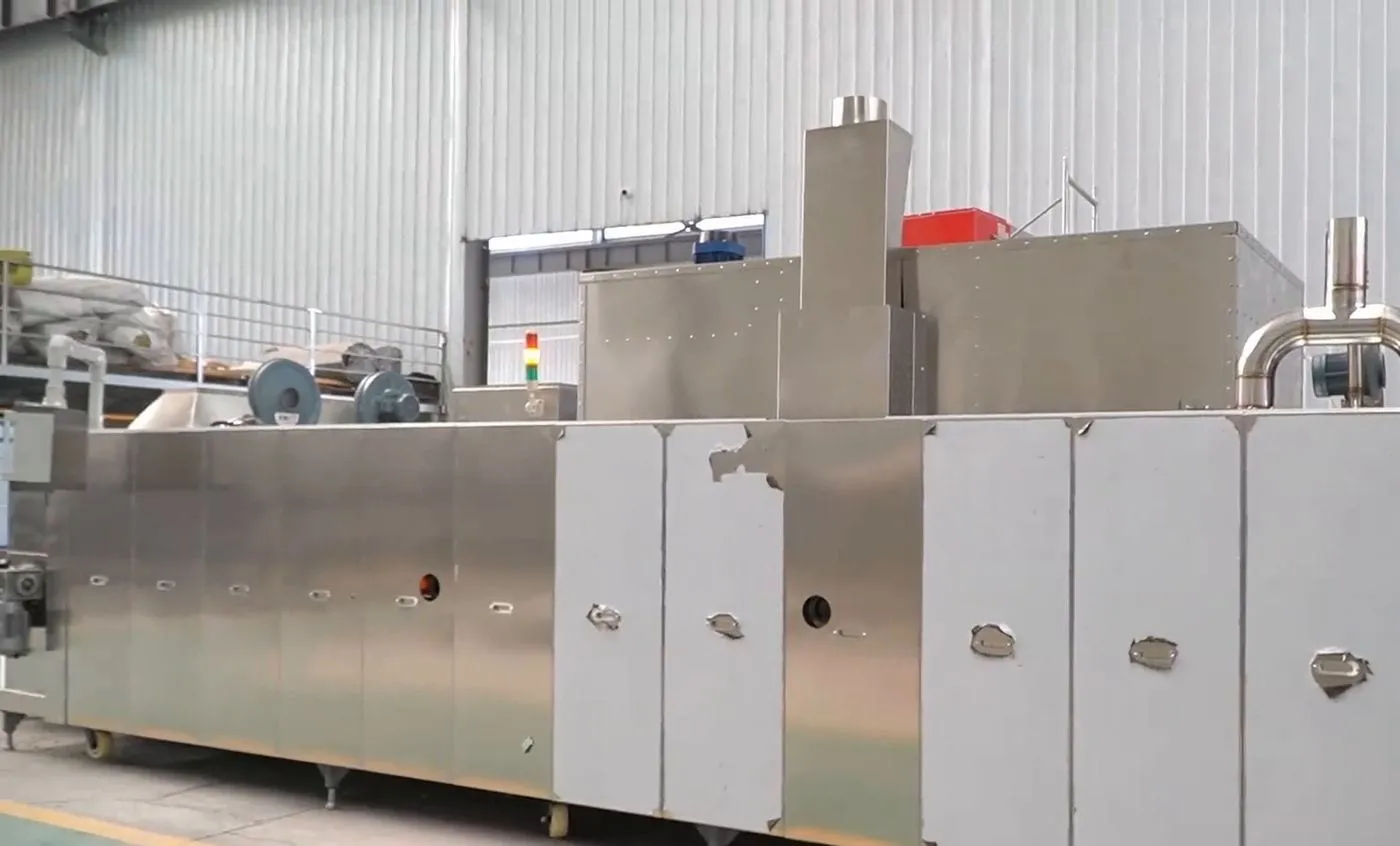
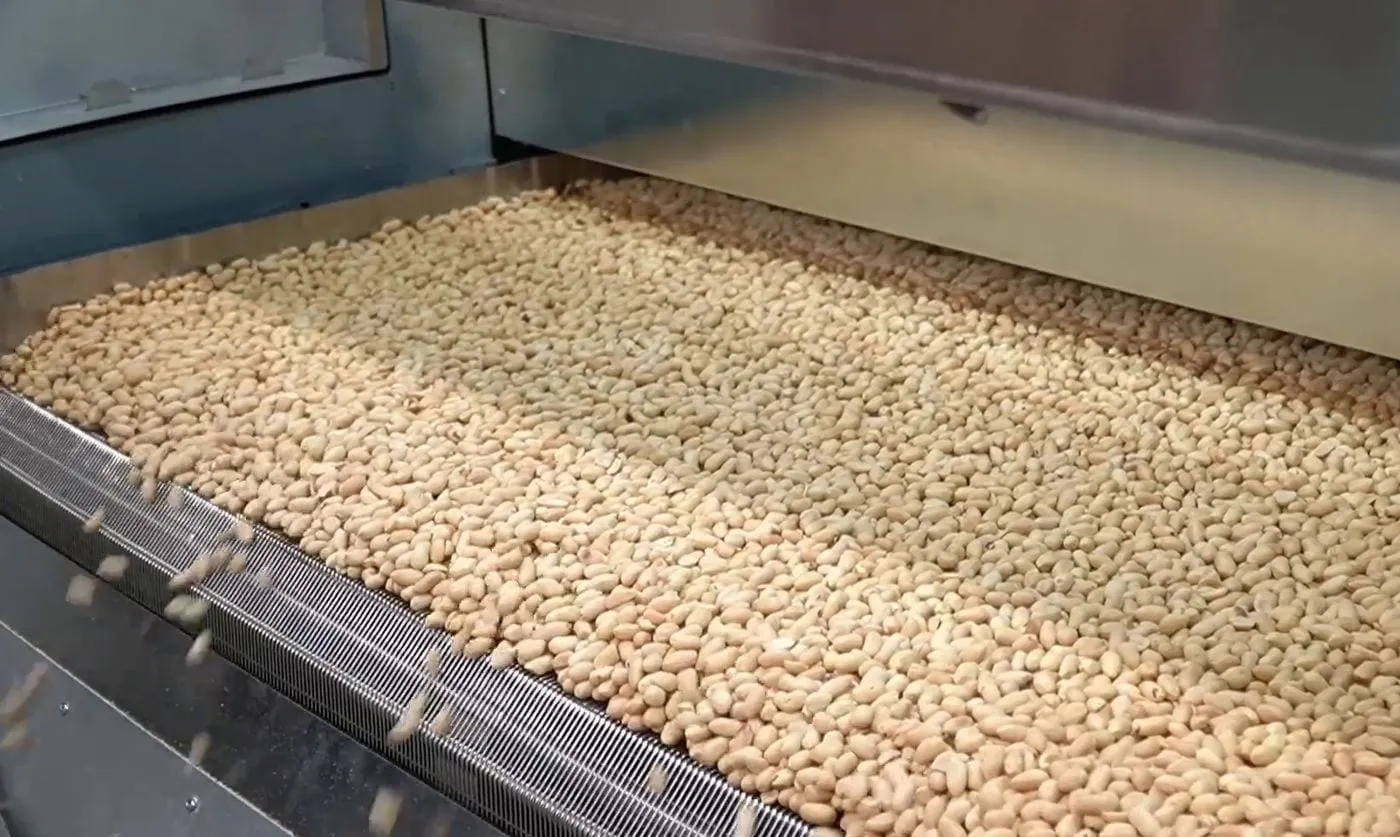
A tray oven roasts nuts spread on trays in a hot-air chamber. A continuous belt roaster carries a bed of nuts through several zones; each zone has its own temperature and air flow, so you can heat, roast and cool in one pass. Exhaust gas and chaff are drawn off through a cyclone or filter.

Moisture leaves the nuts during roasting, so the roasted weight is lower than the raw input; we size the roaster on raw nut input. Roasting time and temperature are a trade-off: a hotter, shorter roast gives more surface colour, while a lower, longer roast cooks the nut more evenly through.

Which configuration fits

Form Suits Watch out for
Rotary drum Mixed nut types, batch recipes, small to medium output Batch handling; cooling must keep up
Tray oven Seeds, small batches, product trials Labour for tray loading
Continuous belt Long runs of one nut type, large output Needs steady feed and graded nuts

What we need from you to quote

  • Nut types, size grades and starting moisture
  • Batch size or hourly output measured on raw nut input
  • Roasting profile or a reference product colour and flavour
  • Colour uniformity target and how it is checked
  • Heat source available and exhaust options
  • Next process: seasoning, peeling, grinding or packing

Where it sits in a line

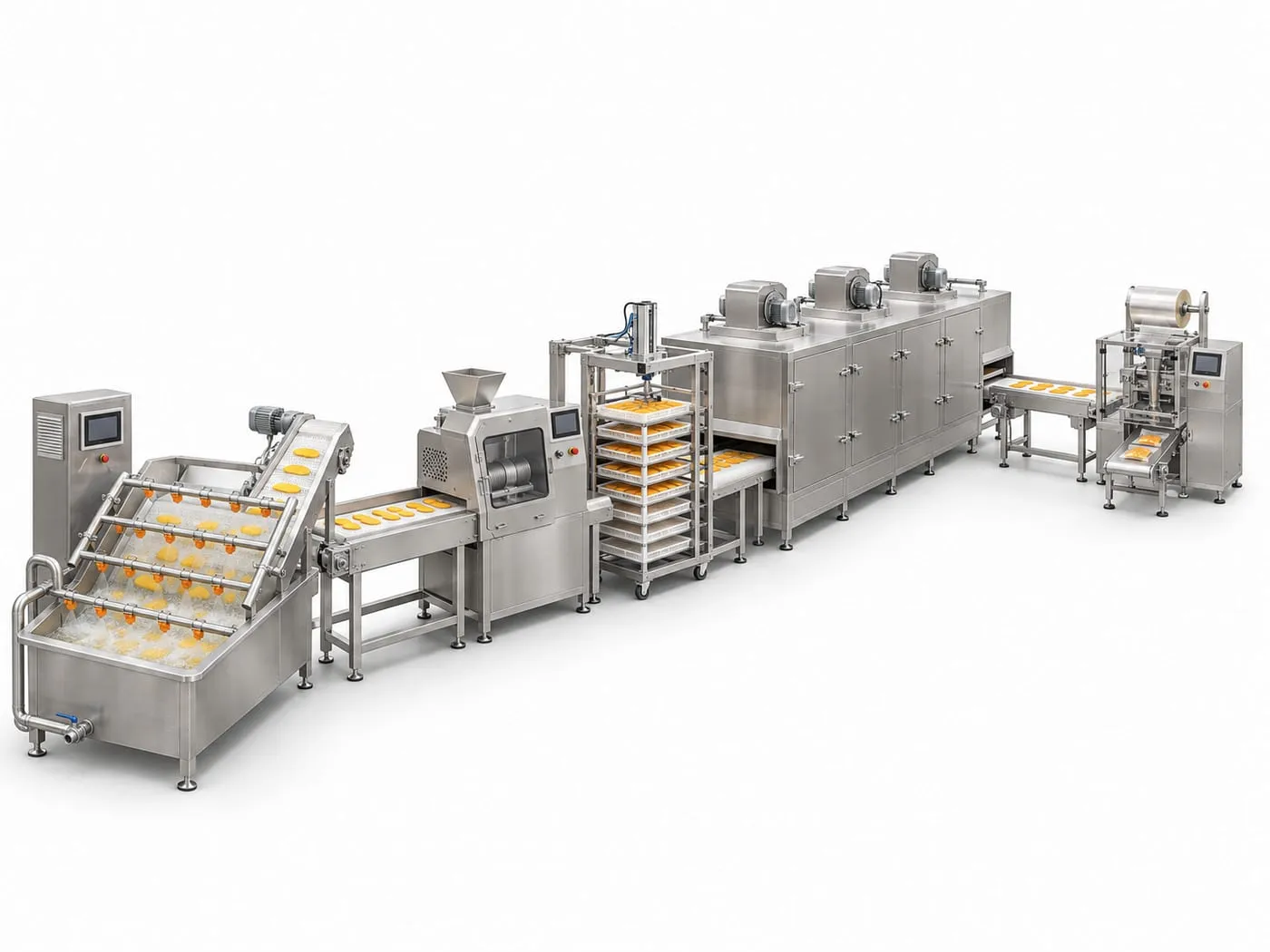
Raw nuts arrive cleaned and, for shelled products, from a nut shelling machine. After roasting and cooling they go to a nut skin peeling machine, a nut seasoning line or a nut butter production line, and finally to packing.

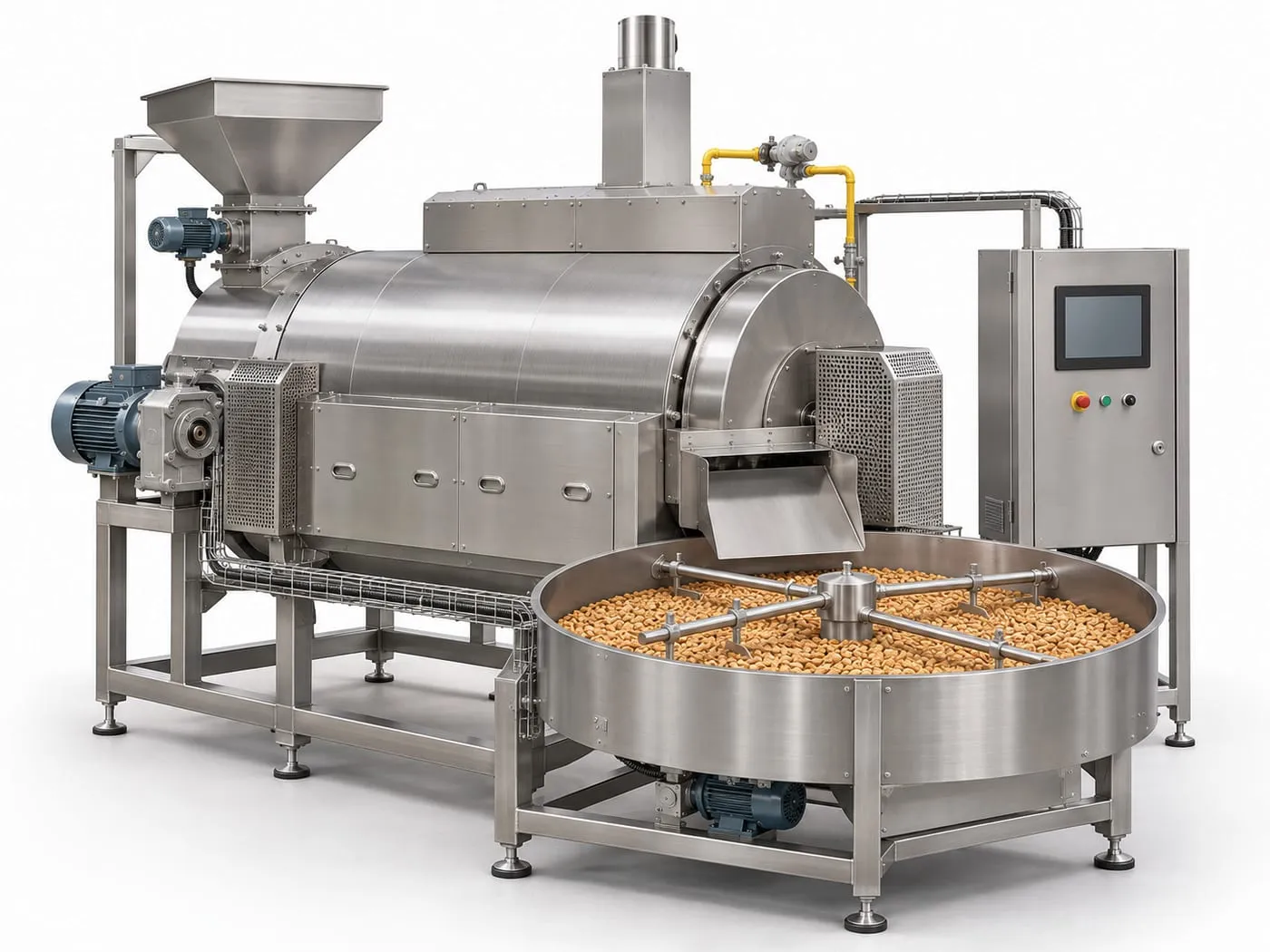
Common configurations

  1. Option A

    Rotary drum

    nuts tumble in a heated drum; flexible batch roasting for many nut types and smaller volumes.

  2. Option B

    Tray oven

    nuts on trays in a hot-air chamber; simple, gentle, suits small production and seeds.

  3. Option C

    Continuous belt roaster

    nuts travel through temperature zones on a belt; suits steady high-volume production.

What we confirm before quoting

Our engineers check these points with you, so the quotation fits your site rather than a catalogue default.

  1. 01Nut types and size grades
  2. 02Batch size or continuous hourly output
  3. 03Number of temperature zones and roasting profile
  4. 04Colour uniformity target and how it is checked
  5. 05Heat source and exhaust arrangement
  6. 06Cooling method after roasting

Frequently asked questions

  1. Why is my roast colour uneven?

    Mixed nut sizes, uneven loading, uneven air flow and slow cooling are common causes. Grading nuts by size and cooling them quickly after discharge usually help most.

  2. Drum roaster or belt roaster?

    A drum is flexible for changing products and smaller volumes. A belt roaster gives steadier results for long runs of one product but needs more floor space and a continuous feed.

  3. Do I need a separate cooler?

    Yes in most cases. Nuts keep cooking after leaving the roaster, so a cooling tray or belt with air flow is needed to stop the roast at the right colour.

Get a quote for the Nut Roaster

Tell us your raw material, finished product and target output. Our engineers reply with a matched configuration and quotation.

What to send with your inquiry

  1. 1Raw material and its condition
  2. 2Finished product and packaging
  3. 3Target output — raw input or finished product
  4. 4Site photos, power supply, utilities

Email sales@hnfoda.com

Send your inquiry

Your details are used only to answer your inquiry — see our Privacy Policy.

Buyer guides

  • Dried Fruit & Nut Processing

    Dried Fruit Processing Line

    Investors and food companies starting or expanding dried fruit, fruit chip or dried fruit snack production.

    Sized to fresh fruit input (kg/h or tonnes per day); dried output depends on moisture removed

  • Dried Fruit & Nut Processing

    Date Processing Line

    Date packers and processors adding value with washed, pitted or paste products for retail and industry.

    Sized to whole date input (kg/h or tonnes per day)

  • Dried Fruit & Nut Processing

    Nut Butter Production Line

    Food companies and brand owners launching peanut butter, almond butter or nut spread products.

    Sized to roasted nut input (kg/h); output is close to input for pure nut butter

  • Dried Fruit & Nut Processing

    Nut Seasoning Line

    Snack nut producers making salted, spiced, honey-roasted or coated nuts.

    Sized to roasted nut input (kg/h) plus the seasoning added

WhatsAppRequest a quote