Guides
Cashew and Groundnut Processing Machines: Shelling, Roasting and Peeling for African Processors
How cashew and groundnut lines work: cleaning, shelling, roasting, peeling, grading, what differs between the nuts, and what to send for a quote.
- Prepared by
- HNFODA Applications Engineering
- Topic
- Guides
- Published
- Reading time
- 6 min read · 2 sources
On this page
- 01Why processors move from hand work to machines
- 02Groundnuts: the line step by step
- 03Cashews: where the process differs
- 04Choosing machines by stage
- 05Planning notes for Nigeria, Ghana and Kenya
- 06Whole kernels, broken kernels and where the money is
- 07What to prepare for a quotation
- 08Maintenance and spare parts
- 09Mistakes to avoid
Short answer: cashew and groundnut processing share the same skeleton: clean, shell, roast, remove skins, grade and pack. The big difference is the shell: groundnuts crack in a roller or impact sheller, while cashews have a tough, curved shell holding a caustic liquid (CNSL) and usually need a dedicated shelling step. Because whole kernels earn more than broken ones, choose the shelling stage first, then size roasting, peeling and packing to match.
Why processors move from hand work to machines
A 2020 survey of cashew processors in Enugu State, Nigeria, found that most still processed nuts by hand and only a few used machines. It also reported that many of the machines were not working and that the shelling efficiency and precision of the machines surveyed were low compared with manual work. In that survey only a small part of the harvested nuts was processed, and the authors noted that stored nuts deteriorated because producers lacked storage experience.
The practical lesson for a buyer: a shelling machine that sits idle is no better than none. Ask for training, a spare-parts list and a plan for operators and maintenance, and plan storage with the machines.
Groundnuts: the line step by step
- Cleaning and grading. Remove stones, soil, empty pods and loose material, then grade by size.
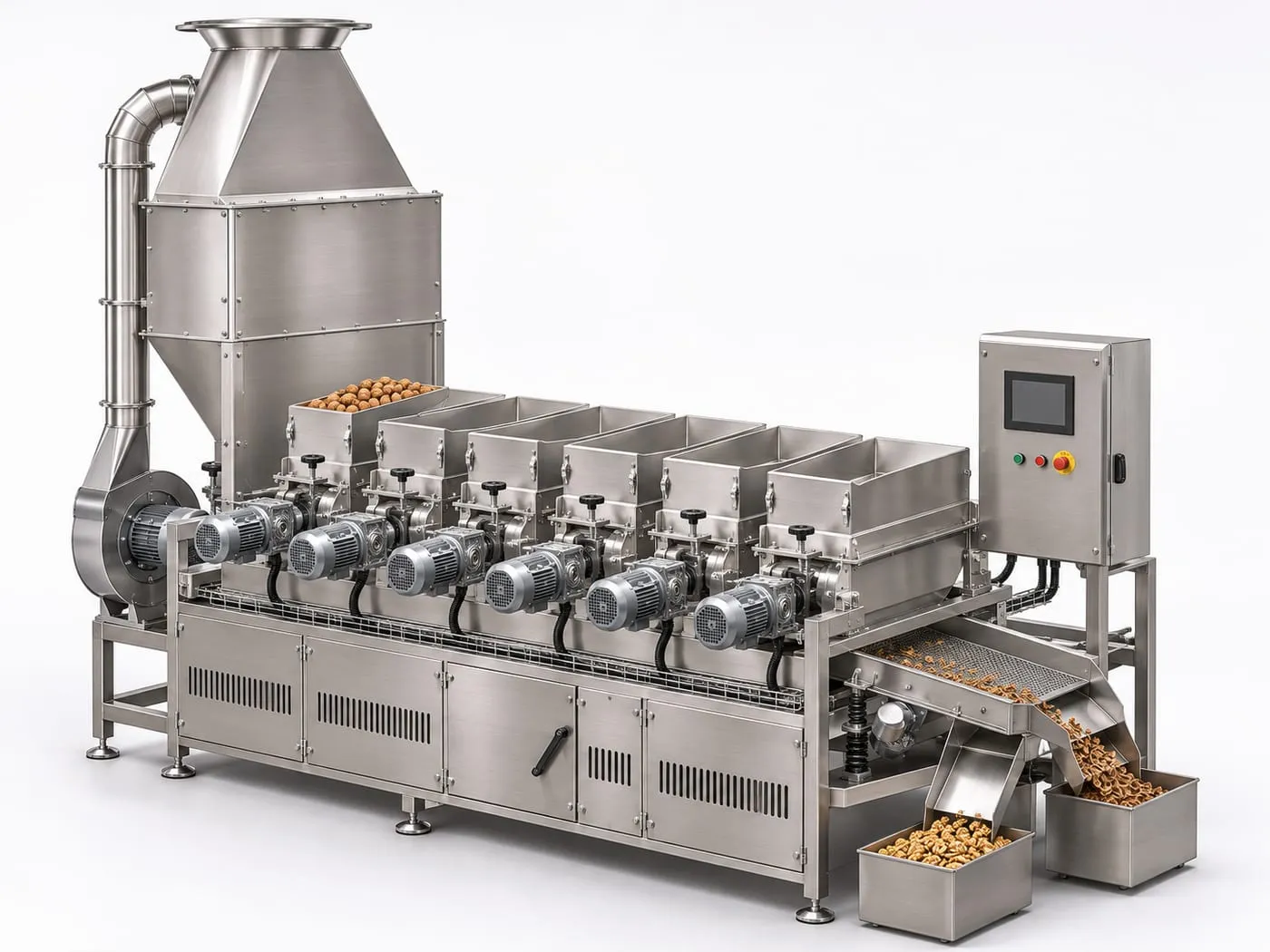
- Shelling. A nut shelling machine cracks the pod; roller crackers suit peanuts with fairly uniform size. Screens and air aspiration then separate shells from kernels.
- Sorting. Remove damaged, mouldy, shrivelled and discoloured kernels. The AFLAH guide for peanut processors stresses sorting before storage, after shelling and after roasting, because mouldy kernels can contaminate a whole batch with aflatoxin.
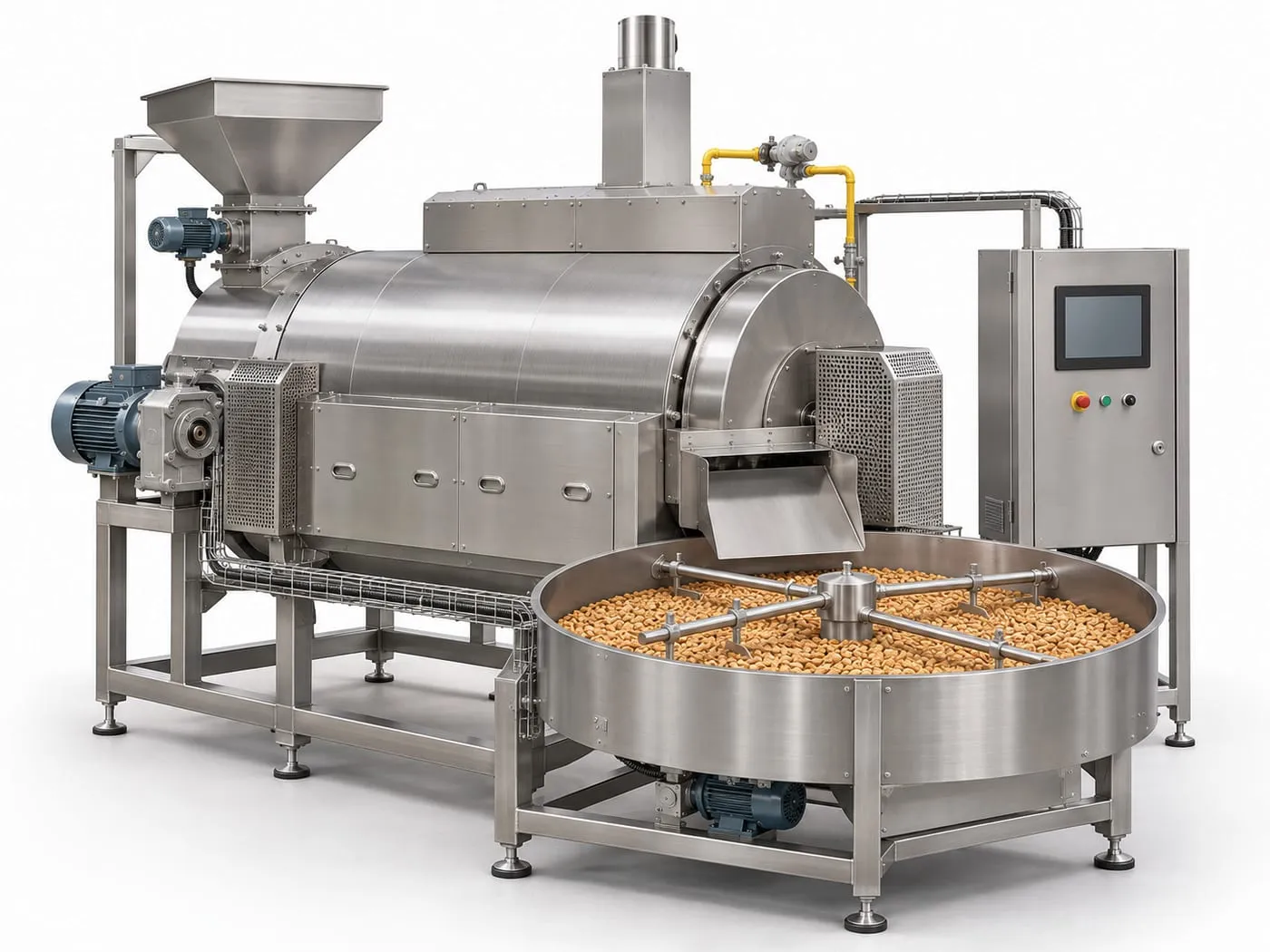
- Roasting. A nut roaster in drum, tray or continuous belt form brings kernels to the colour and flavour you sell.
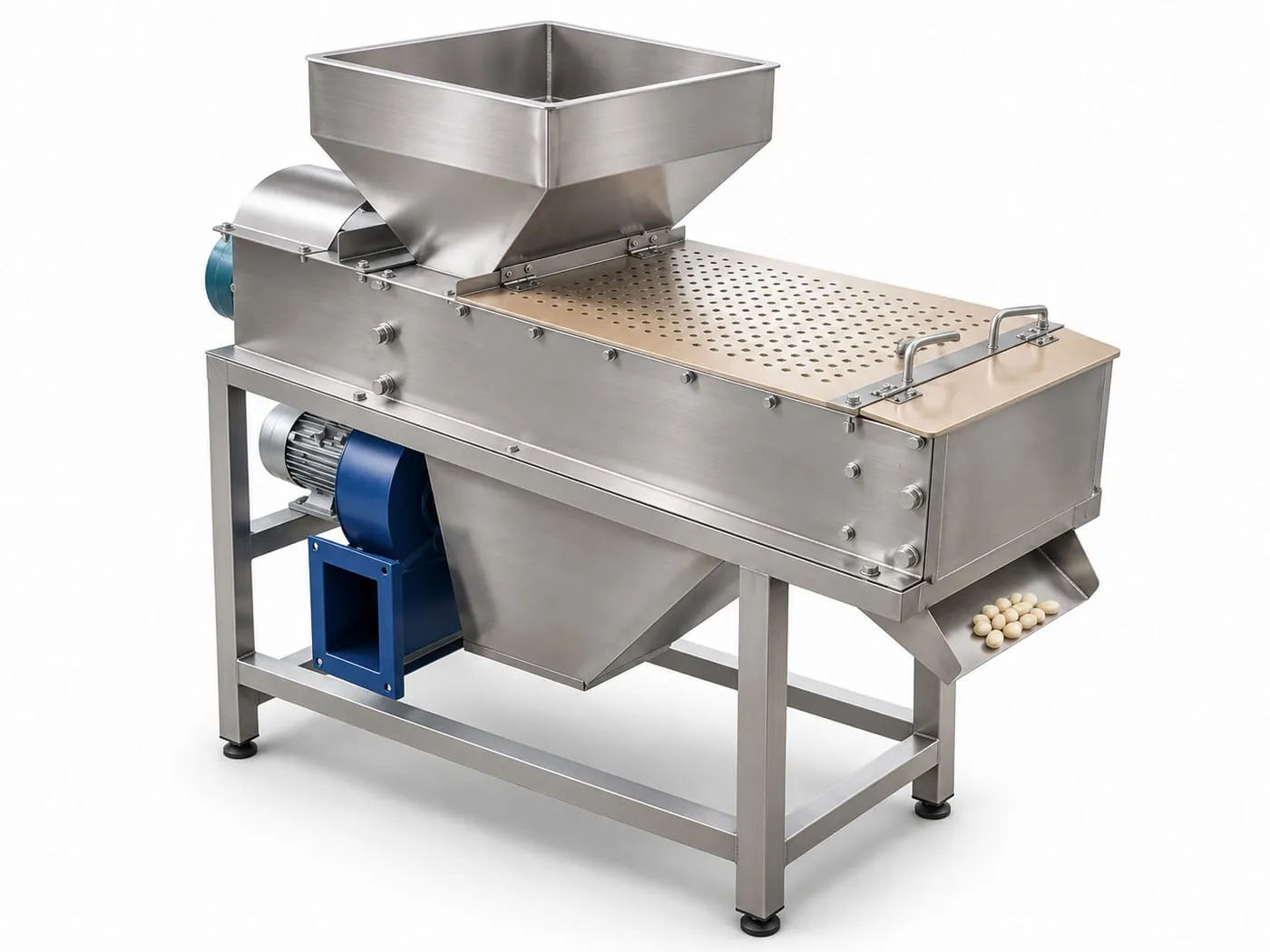
- Skin removal (blanching). A nut skin peeling machine takes off the red skin for blanched nuts or for butter.
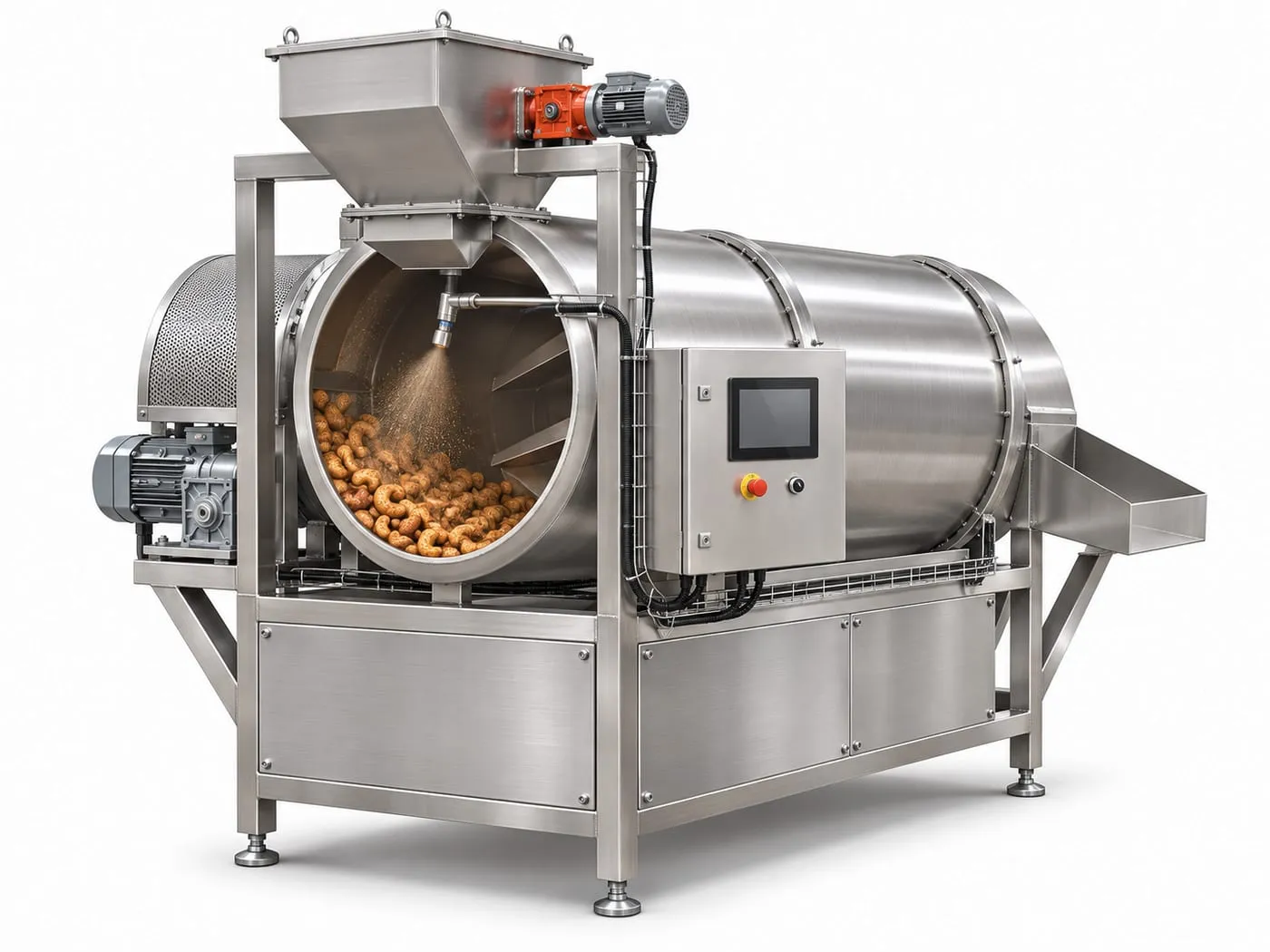
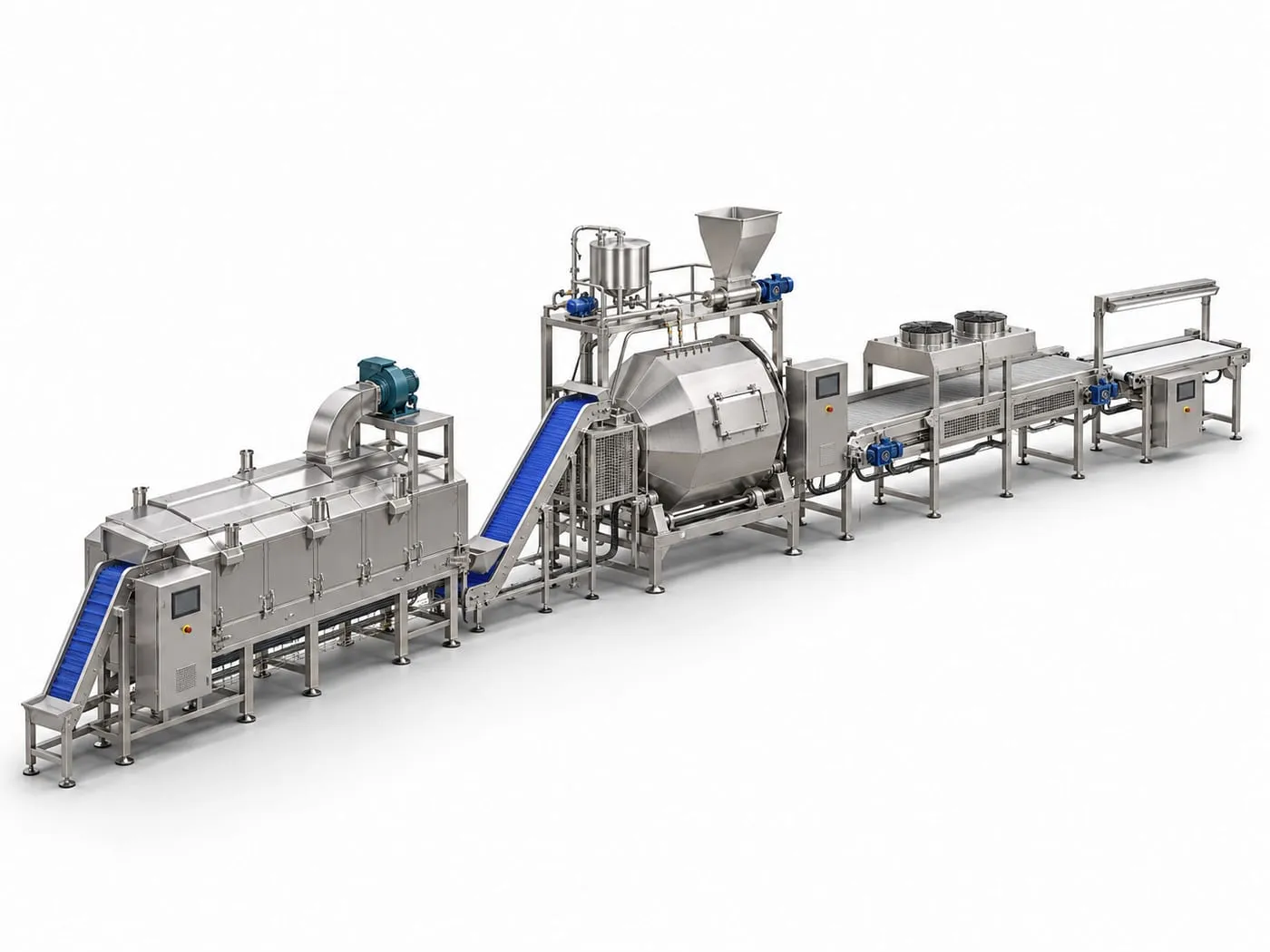
- Seasoning, coating and packing. Salted, spiced or coated nuts go through a rotary coating drum or nut seasoning line, then into a vertical form-fill-seal machine.
Cashews: where the process differs
A review of cashew processing in the CIGR Journal paper describes the sequence for the cashew nut: drying, steaming or roasting to loosen the shell, shelling, drying the kernel, peeling off the thin skin (testa), grading and quality inspection. Points that matter when you buy:
- CNSL. The shell holds a caustic liquid. Roasting releases it, and it needs handling; hand shellers use gloves or tumble nuts in sawdust or ash. The same paper notes that for very small-scale processors, collecting CNSL is unlikely because the special roasting equipment is costly.
- Whole kernels are worth more. Care must be taken not to break or split the kernel at shelling and later stages.
- Peeling comes after drying. Testa removal follows a drying step, so plan a dryer or drying space.
- Grading is manual in many plants. In the Nigerian survey, cleaning, sizing and grading were mostly manual. Decide early if you will automate grading.
Shell shape, hardness and moisture differ by origin and harvest, so the sheller needs to be configured for your nuts. HNFODA supplies cashew shelling equipment and complete cashew processing lines. Tell us your cashew origin and send a sample so we can configure the shelling step and run a trial on your own nuts; we do not promise whole-kernel rates before we see them.
Choosing machines by stage
| Stage | Groundnut | Cashew | What decides the choice |
|---|---|---|---|
| Cleaning and grading | Screens and gravity separators | Size graders | Dirt level, size spread |
| Shelling | Roller or impact sheller | Dedicated shelling step | Whole-kernel target, moisture, nut size |
| Roasting | Drum, tray or belt | Drum or belt, with shell handling | Volume, roast profile |
| Skin removal | Blancher / peeler | After kernel drying | Skin-on or skin-off product |
| Sorting | Hand, belt or optical | Hand or optical | Aflatoxin and quality control |
| Packing | Bags or pouches | Bags, tins or jars | Product, shelf life |
Planning notes for Nigeria, Ghana and Kenya
- Season and storage. Raw nuts arrive in a short season. Storage that is dry, ventilated and off the ground protects quality; the AFLAH guide lists rain exposure, floor storage and unventilated sacks as risks.
- Power. Check mains stability and the need for a generator or stabiliser before specifying motors and control panels.
- Local rules. Your national food-safety authority sets limits and registration rules; confirm them before you start production.
- Support. Ask what training, spare parts and remote help come with the machine.
You can see how these stations connect in our roasted nut plant guide.
Whole kernels, broken kernels and where the money is
Processors sell grades, not just kernels. Whole, white kernels normally fetch the best price; splits, pieces and broken kernels sell for less, and discoloured or scorched ones less again. A small change in the whole-kernel share therefore changes income more than a small change in machine price.
How to protect the whole-kernel share:
- Grade before shelling. Nuts of one size crack with one setting. Mixed sizes break.
- Condition the nuts. Moisture changes how shells crack and how brittle kernels are. Test a few batches to find the right range for your nut.
- Set the machine per grade. Change the cracking gap or impact force when the size grade changes, and check output samples every hour.
- Handle kernels gently. Long drops, rough conveyors and over-fast stirring break kernels after shelling.
- Keep a record. Write down the whole-kernel percentage per lot and supplier; it tells you which nuts and which settings pay.
When you send us a nut sample, tell us the share of whole kernels you hope to reach and the price difference between your grades. That helps us advise whether extra grading or a gentler roaster is worth the cost.
What to prepare for a quotation
- Which nut or nuts you process, origin and variety, and a sample in shell (about 1 kg is usually enough to start).
- Tonnes of in-shell nuts per season, and hours per day you expect to run.
- Moisture of the nuts at receiving, and how you dry and store them.
- Target product: whole kernels, splits, blanched, roasted, seasoned or nut butter.
- Target share of whole kernels and the grades you sell.
- Packing format and customers.
- Site: building, power supply, water and staff skills.
- Delivery location and whether you need installation and training.
Send these through the contact page. For a full processing site, see turnkey projects.
Maintenance and spare parts
In the Nigerian survey, many shelling machines were out of service. Avoid the same fate by planning maintenance from the start. Ask which parts wear (rollers, screens, blades, belts and bearings), request a spare parts list with your quotation, and keep the fast-wearing items in stock on site. Train at least two operators, write a simple daily cleaning and checking routine, and note the machine’s output each week so you notice when performance drops. A small, regular effort keeps a machine running through the season, when a breakdown costs the most.
Mistakes to avoid
- Buying a sheller before you grade your nuts. Mixed sizes mean more broken kernels.
- No sorting capacity. Aflatoxin and quality problems begin with unsorted nuts.
- Underestimating storage. Good nuts spoil if stored wet.
- Choosing the cheapest machine without support. A machine that cannot be repaired locally becomes scrap.
- Skipping a trial. Test your nuts, not a demonstration lot.
Frequently asked questions
- Can one machine shell both cashew and groundnuts?
- Not normally. Groundnut shells crack in a roller or impact sheller. Cashew shells are hard, curved and contain a caustic shell liquid, so shelling is usually a dedicated step with different tooling and pre-treatment. Tell us which nut you mainly process and the volume of each.
- How do I get more whole kernels?
- Grade nuts by size before shelling, bring moisture into the right range for the nut, set the cracking gap for each size grade and handle shelled kernels gently. Ungraded nuts are the most common reason for broken kernels.
- Do I need a peeling machine?
- For blanched groundnuts and for peanut butter you remove skins; for cashew you peel the thin testa from the kernel after drying. Whether you need a machine depends on whether you sell skin-on, skin-off or blanched kernels.
- What shelf life can I expect for roasted nuts?
- It depends on moisture, roast level, oil content and packaging. Test finished products from your own nuts in your climate before you set a printed date, and use moisture-resistant packaging.
- What size of machine should a small processor start with?
- Start from the tonnes of in-shell nuts you can buy and store per season, then divide by the hours you expect to run. We size on in-shell input and the target share of whole kernels; ask for a configuration that leaves room for a second line.
Sources
- [1]A survey questionnaire of cashew nuts processing methods in Enugu state — Agricultural Engineering International: CIGR Journal, 2020
- [2]Guide to good practices for peanut processing (AFLAH project) — Université Laval, AFLAH project
HNFODA Applications Engineering
Line design, product trials and commissioning
Engineers who size, build and commission HNFODA food processing lines, writing from the questions buyers ask before a quotation. About HNFODA