Meat & Seafood Processing
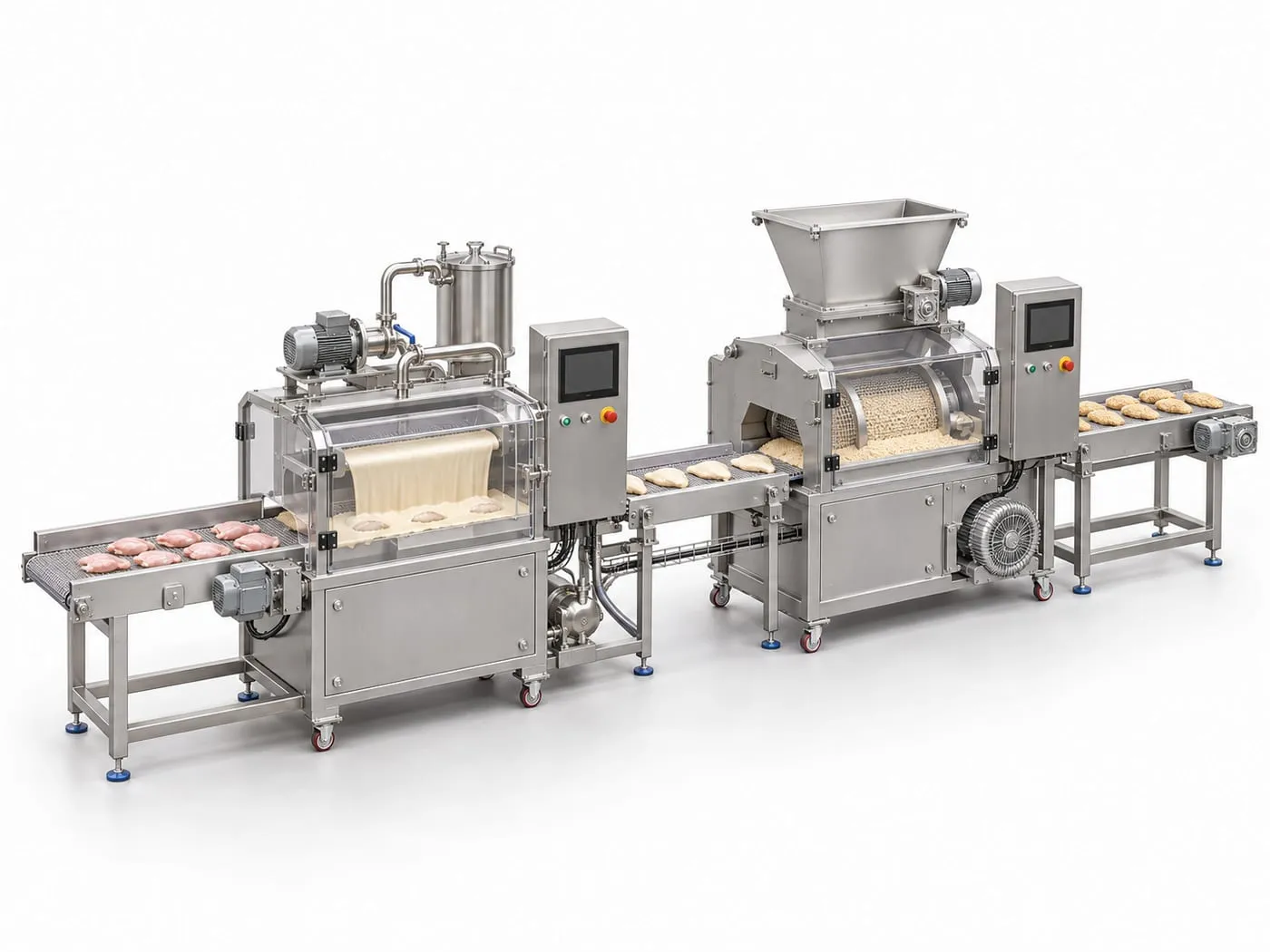
Coating and Breading Line
Factories making breaded chicken, fish fingers, coated vegetables or nuggets for frozen and food-service markets.
Sized to belt width and coated product output (kg/h of finished product)

Equipment group 06
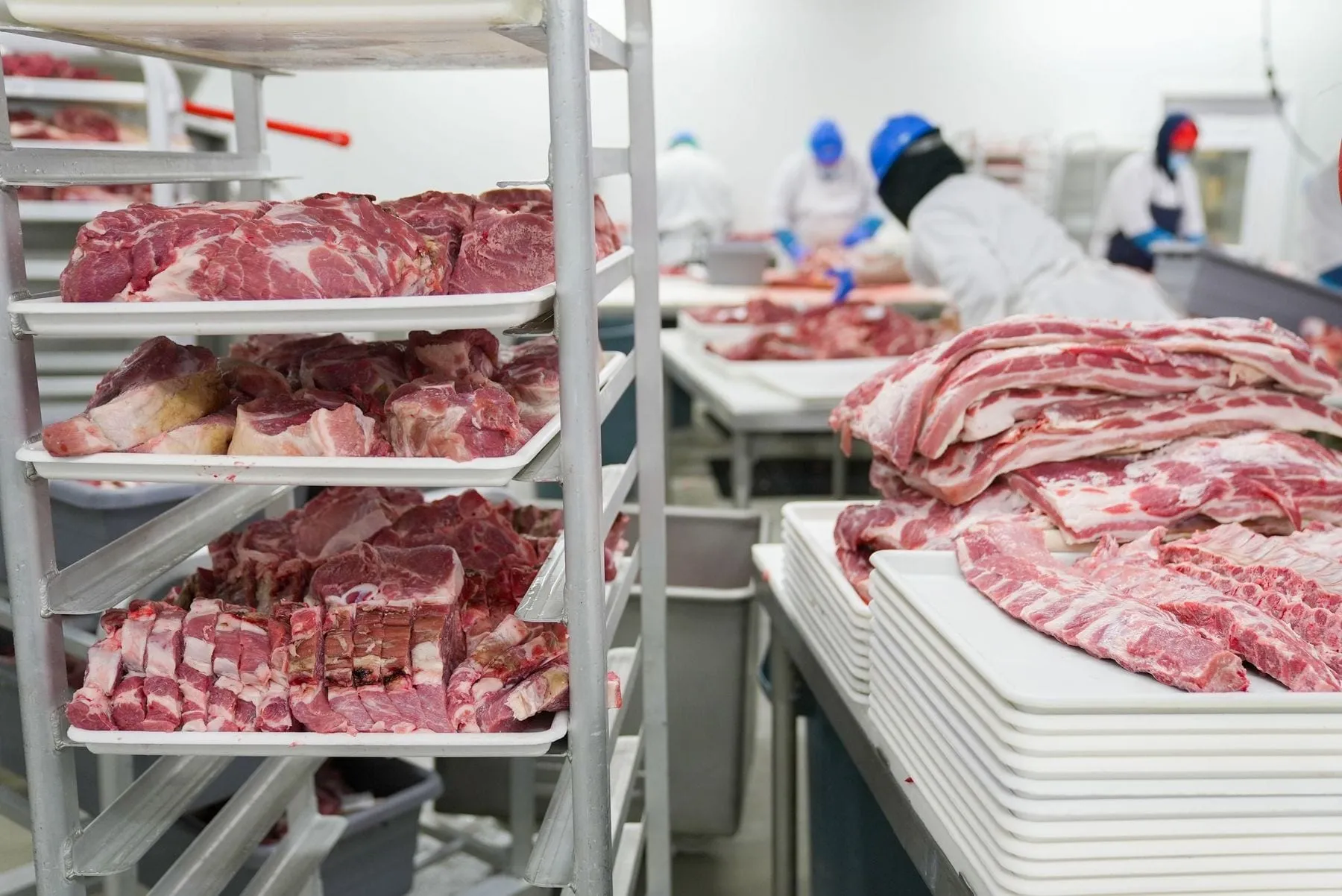
Machines for minced, marinated, formed and coated meat products, sausages and fish pre-processing, sized to batch volume, product temperature and cleaning routine.
Complete lines combine several machines with conveyors and controls. Station count and sizes follow your product and target output.
Meat & Seafood Processing
Factories making breaded chicken, fish fingers, coated vegetables or nuggets for frozen and food-service markets.
Sized to belt width and coated product output (kg/h of finished product)
Machines you can buy on their own or add to an existing line. Each page lists the forms available and what we check before quoting.
Meat & Seafood Processing
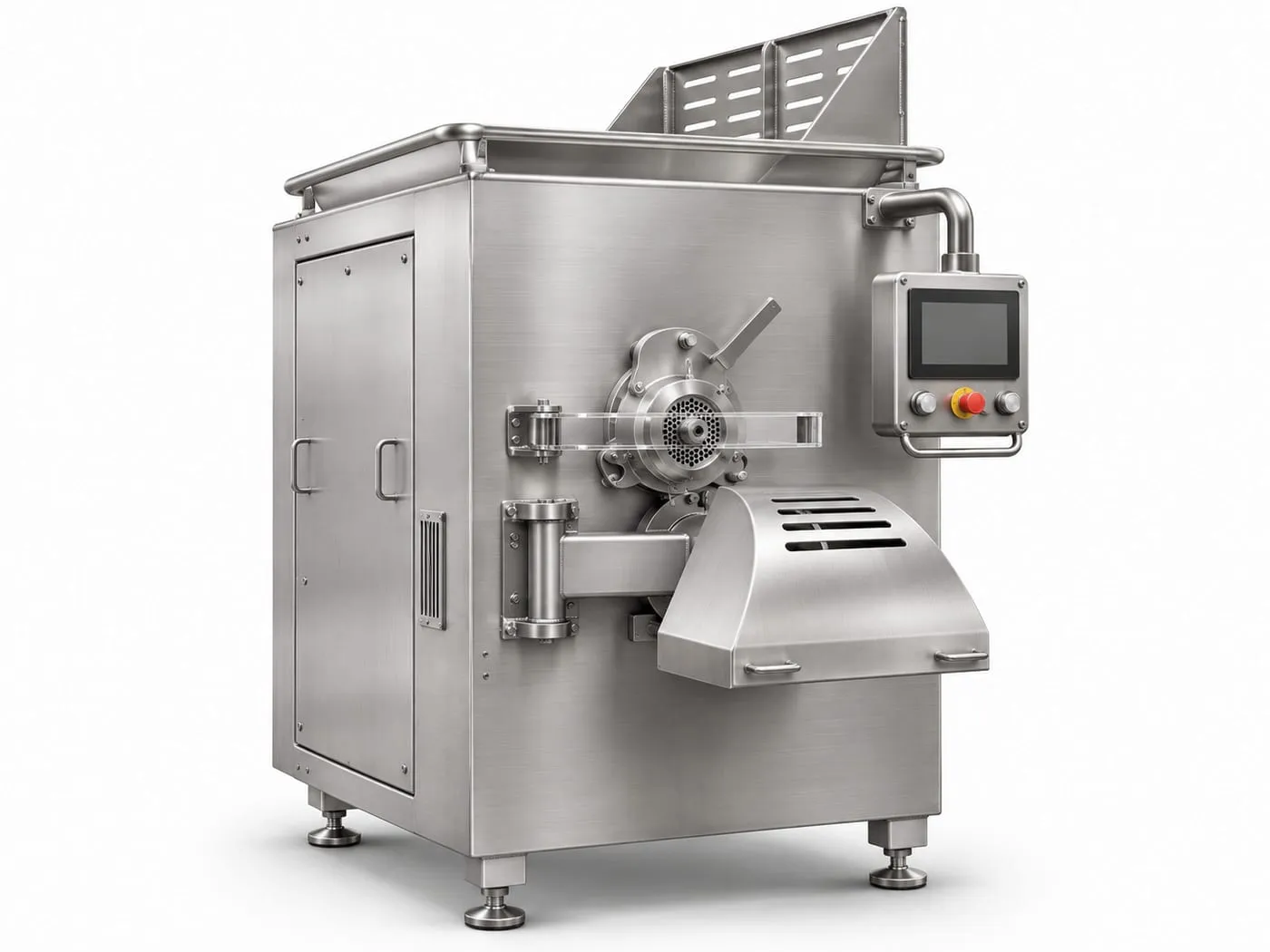
Meat plants and food factories making sausages, patties, dumpling fillings or minced products.
Sized to raw meat input (kg/h) at a stated feed temperature and plate size
Meat & Seafood Processing
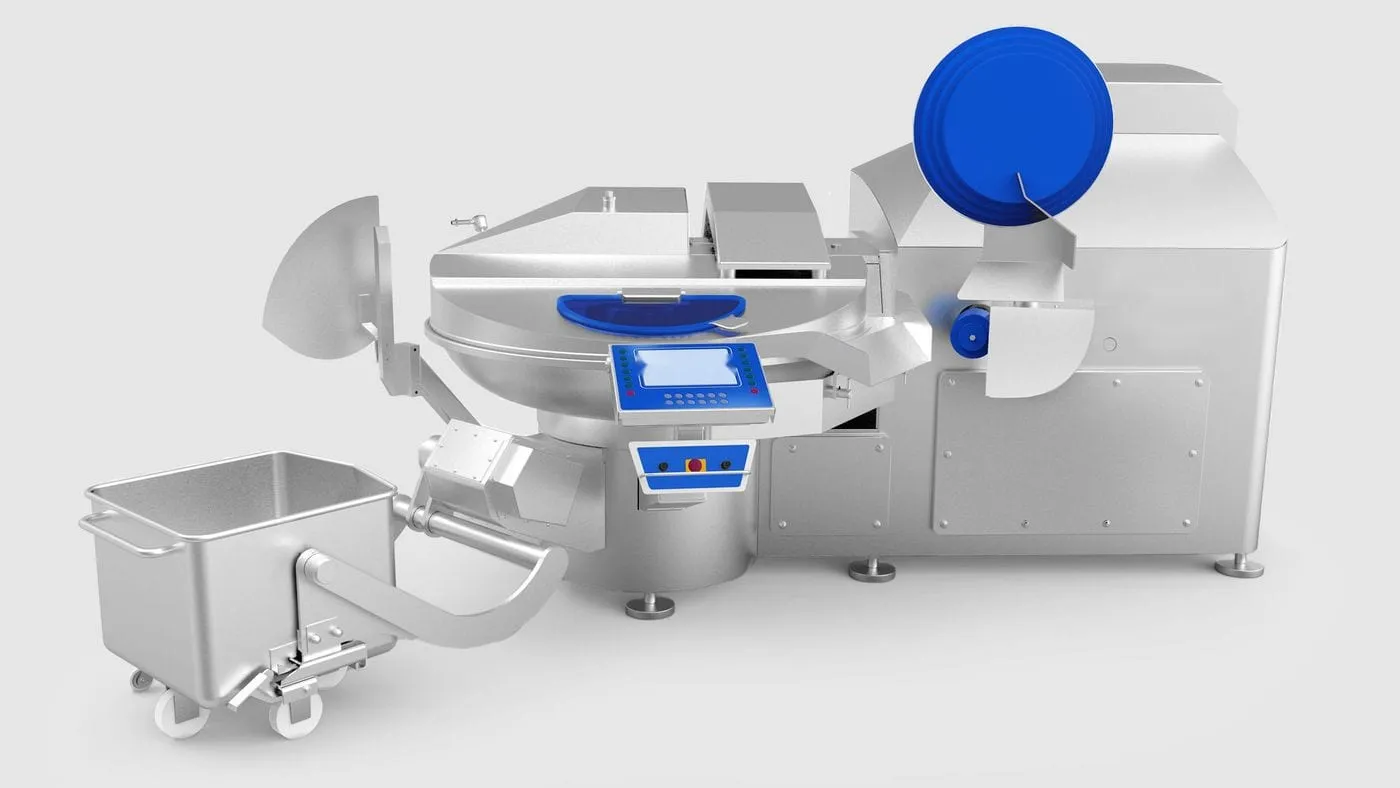
Sausage, meatball, fish ball and dumpling-filling producers who need fine or emulsified textures.
Sized to bowl volume and batch weight (kg per batch)
Meat & Seafood Processing
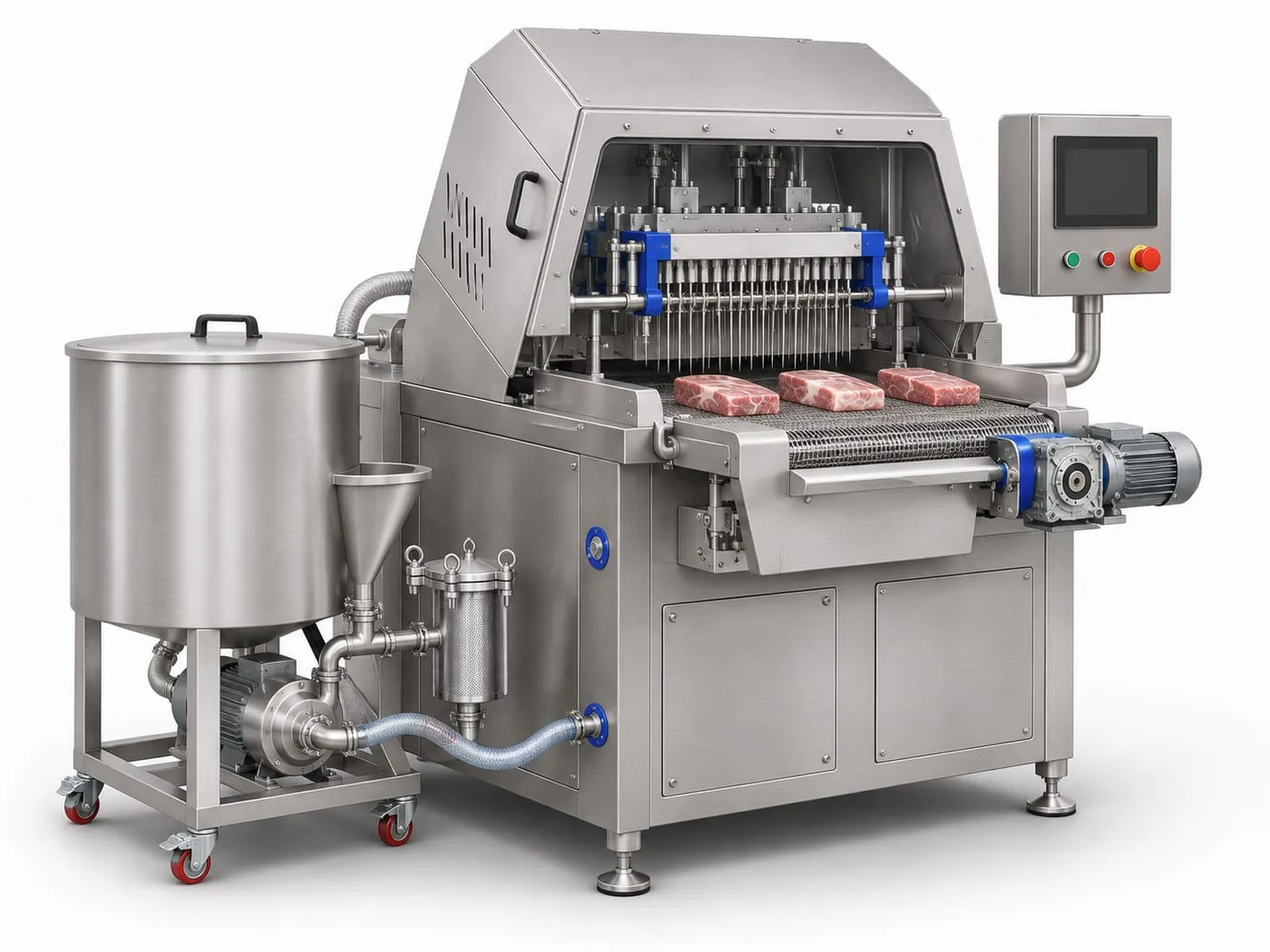
Processors making ham, bacon, cured cuts or marinated whole poultry and large cuts.
Sized to belt width and raw meat throughput (kg/h) at the target injection rate
Meat & Seafood Processing
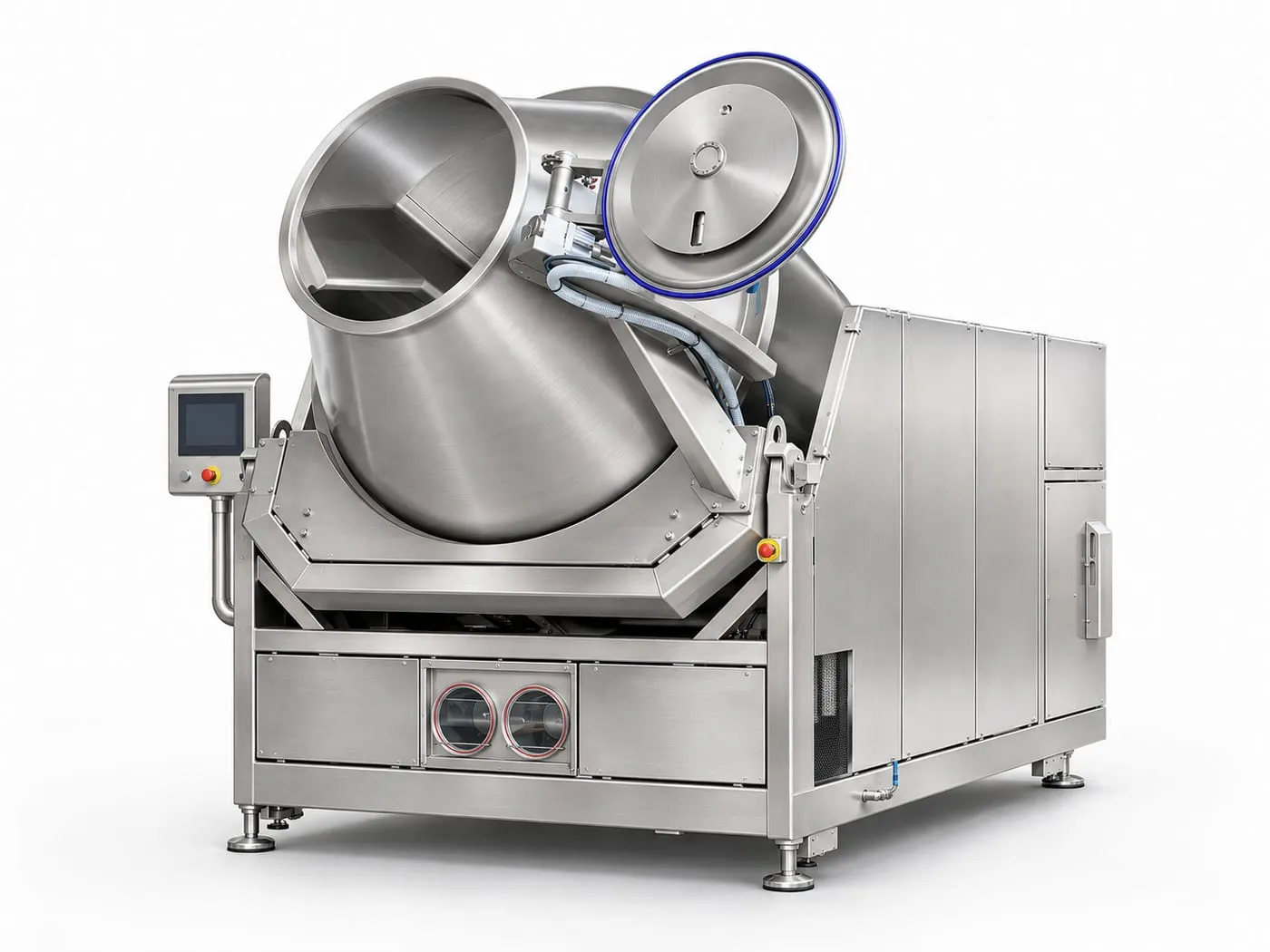
Processors marinating chicken, pork, beef or seafood for cooked, smoked or frozen products.
Sized to drum volume and effective load per batch (kg of raw meat)
Meat & Seafood Processing
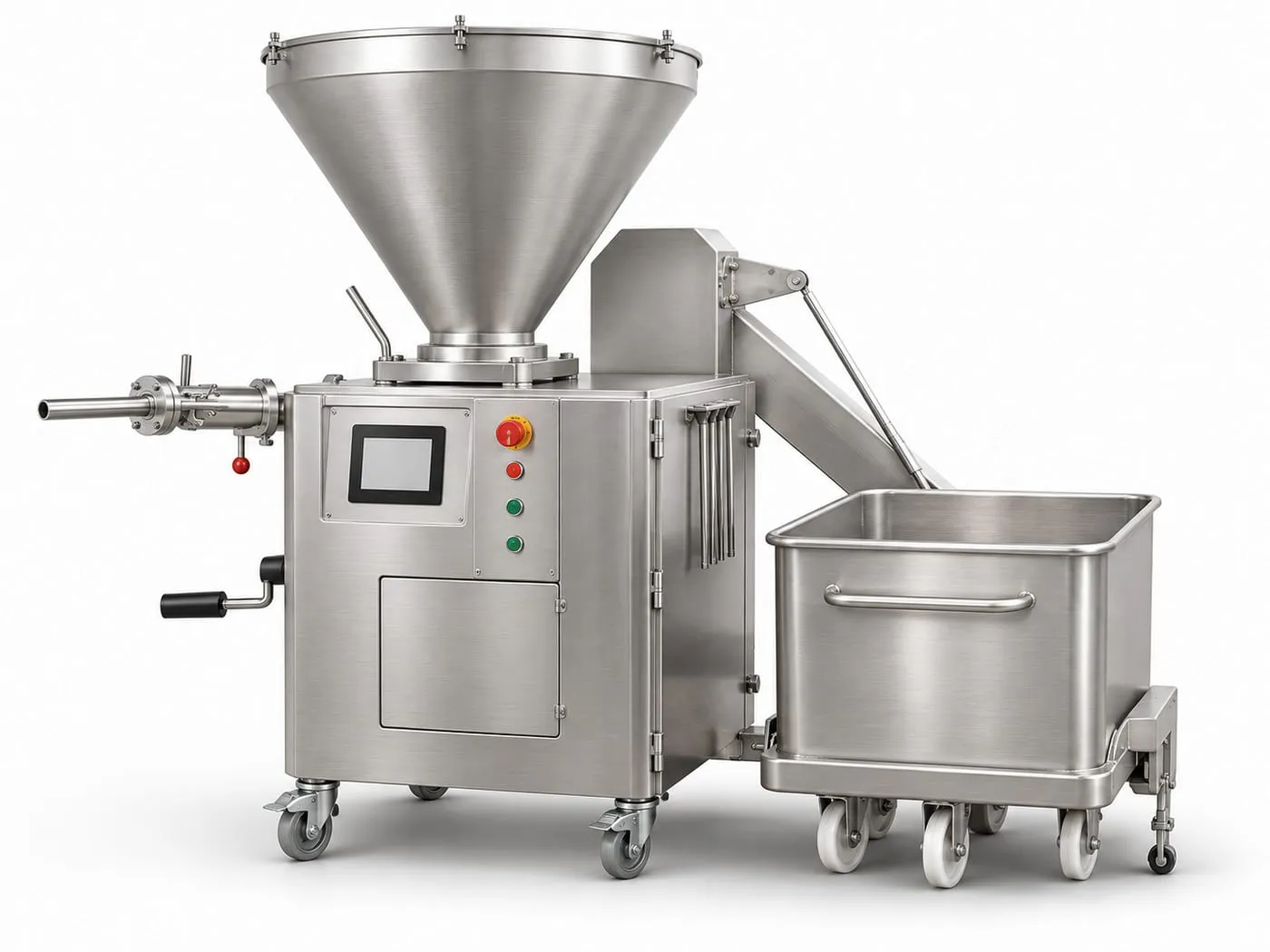
Sausage makers moving from small batches to steady production, and meat plants adding sausage products.
Sized to filled product output (kg/h) at a given portion weight and casing size
Meat & Seafood Processing
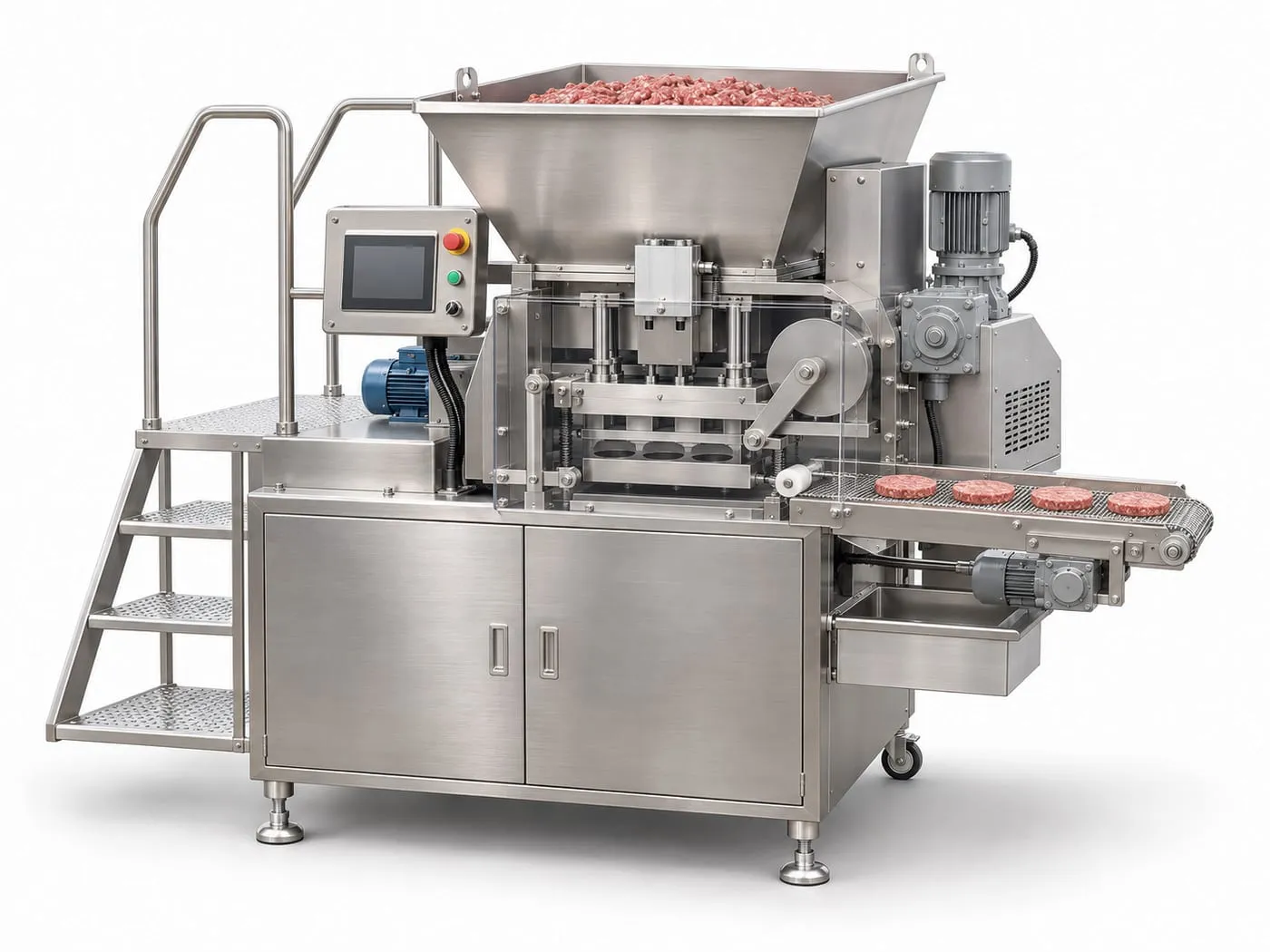
Plants making burger patties, nuggets, fish cakes or vegetable patties for frozen or food-service markets.
Sized to formed pieces per minute at a given piece weight and shape
Meat & Seafood Processing
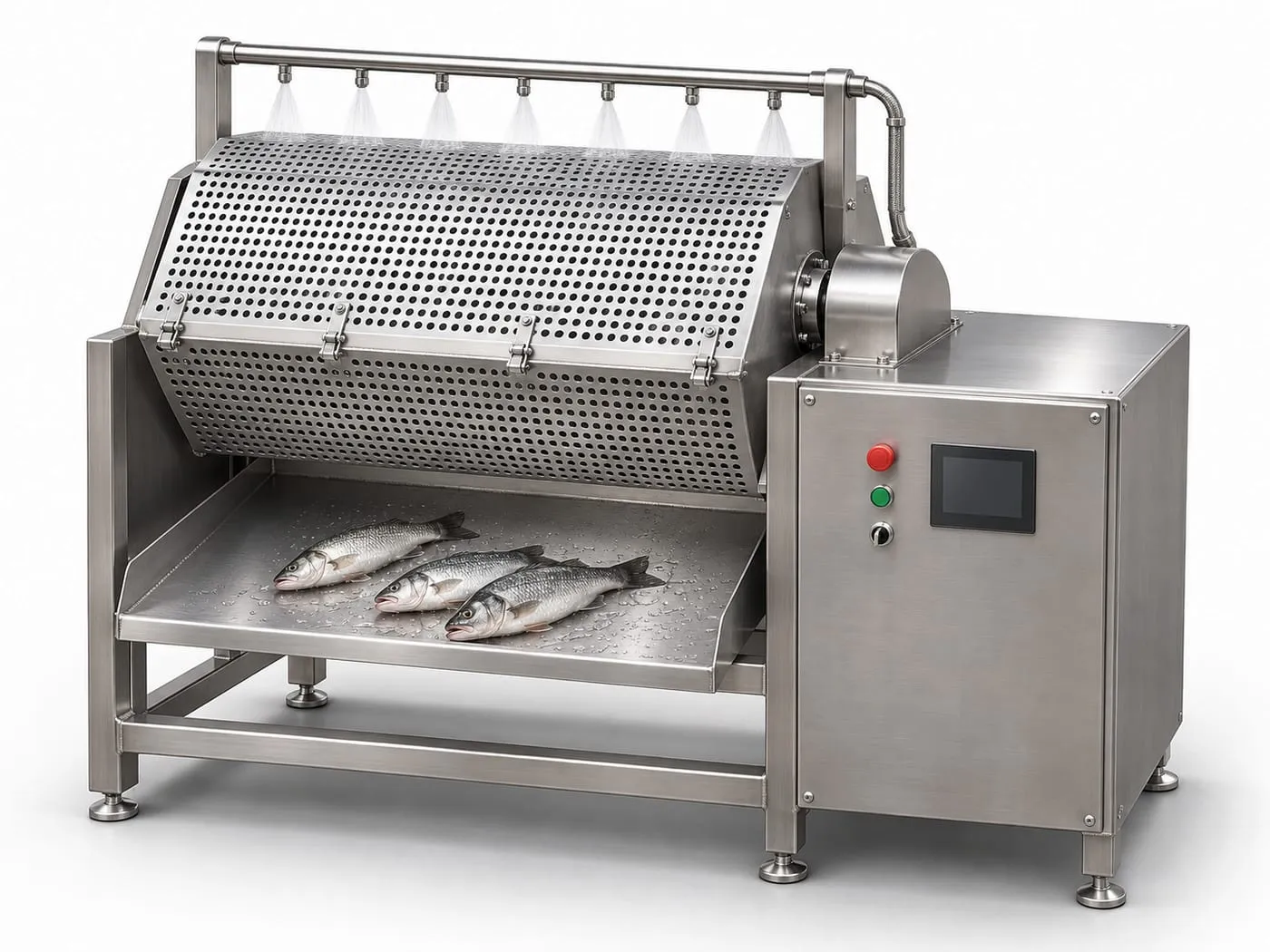
Seafood processors, fish markets and aquaculture packers handling scaled freshwater or marine fish.
Sized to whole fish input (kg/h) for a given species and size range
Short answer: Group your products by how the meat or fish is treated — minced, finely chopped, injected and marinated, formed, coated or stuffed — and choose the machines that each group needs. Then size them on batch volume and product temperature, because meat quality depends on keeping product cold and moving between steps.
| Machine or line | What it does | Choose it when |
|---|---|---|
| Industrial Meat Grinder | Minces fresh or frozen meat through a plate | You make sausages, patties, fillings or other minced products |
| Bowl Cutter | Chops meat, fat, ice and spices into a fine batter | You make emulsified sausages, meatballs or fish balls |
| Brine Injector | Injects brine into whole cuts through needles | You make ham, bacon, cured cuts or marinated large pieces |
| Vacuum Tumbler | Massages meat under vacuum to spread marinade | You marinate pieces or finish injected products |
| Food Forming Machine | Shapes mince or batter into patties, nuggets and cakes | You sell formed products for freezing or food service |
| Coating and Breading Line | Applies predust, batter and crumbs | You make breaded chicken, fish fingers or coated vegetables |
| Sausage Stuffer | Fills casings with meat batter or mince | Sausages are part of your range |
| Fish Descaling Machine | Removes scales from whole fish | You handle scaled fish before filleting or freezing |
For related complete plants, see the frozen dumpling plant, the ready meal plant and our turnkey projects page.
Usually the machine that prepares the raw material for everything else: a grinder for minced products, a bowl cutter for emulsified sausages and fish balls, or an injector and tumbler for whole-muscle and marinated products. Forming, coating and stuffing come next. Buy the first machine with the later steps in mind, because batch size and product temperature must carry through the line.
Grinders, bowl cutters and tumblers often work in batches, while formers, breading lines and freezers run continuously. Calculate how many batches per hour the continuous part needs, add time for loading, unloading and cleaning, and size the batch machines or the number of them to keep the continuous line fed without letting product warm up while it waits.
It depends on how different the products are and on your allergen and hygiene rules. Changing between two meat recipes may need only a rinse and inspection, while switching from a breaded product with wheat to a gluten-free one, or from meat to seafood, needs full disassembly and cleaning. Choose machines whose food-contact parts can be removed without tools where possible, and plan the daily schedule around the full cleaning.
Share your raw material, finished product, target output and site — our engineers reply with a matching line configuration.
Request a quote →What to send with your inquiry