Production lines · Frozen dumplings
Frozen Dumpling Factory: Planning a Dumpling Production and Freezing Plant
Plan a frozen dumpling factory: dough and filling preparation, forming, quick freezing, packing and cold storage, sizing on pieces per hour.
- Prepared by
- HNFODA Applications Engineering
- Topic
- Production lines · Frozen dumplings
- Published
- Reading time
- 5 min read · 3 sources
On this page
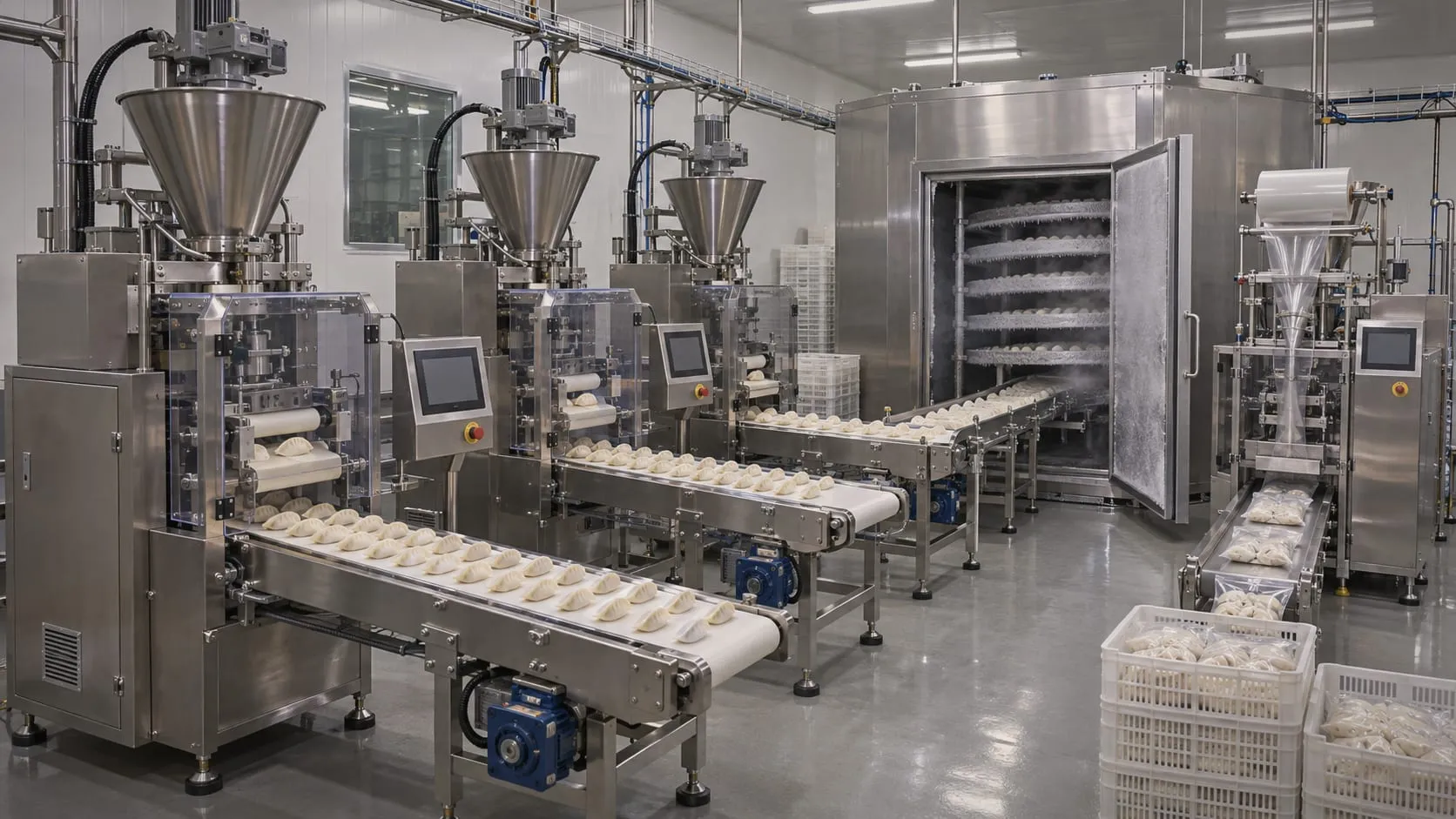
Short answer: A frozen dumpling factory prepares dough and filling, forms dumplings on an automatic machine, freezes them quickly, then weighs, packs, inspects and stores them frozen. Forming machines are quoted in pieces per hour, but the freezer is usually what limits output, so the plant should be sized in kg/h at your piece weight, with cold storage and the cold chain planned from the start.
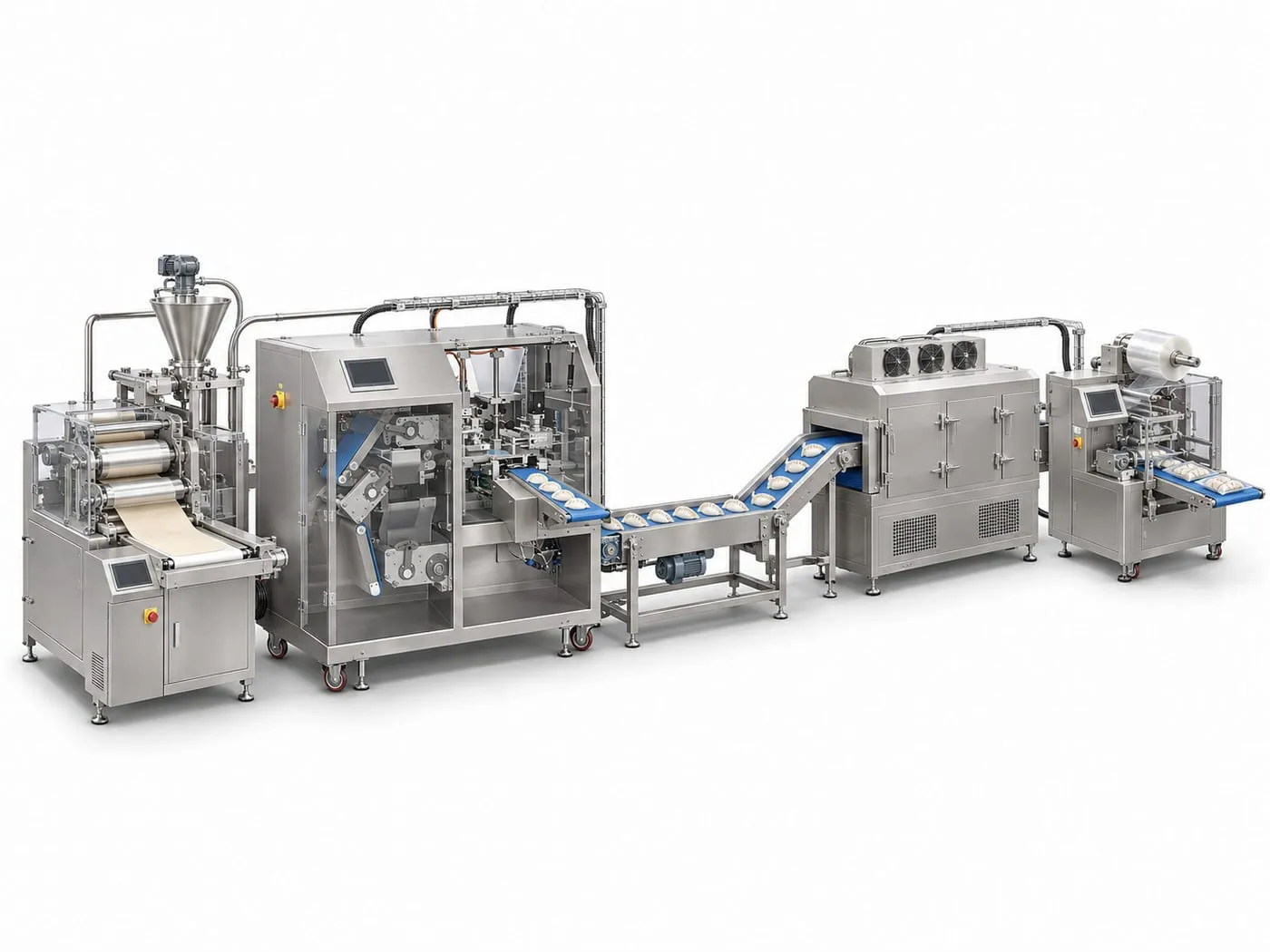
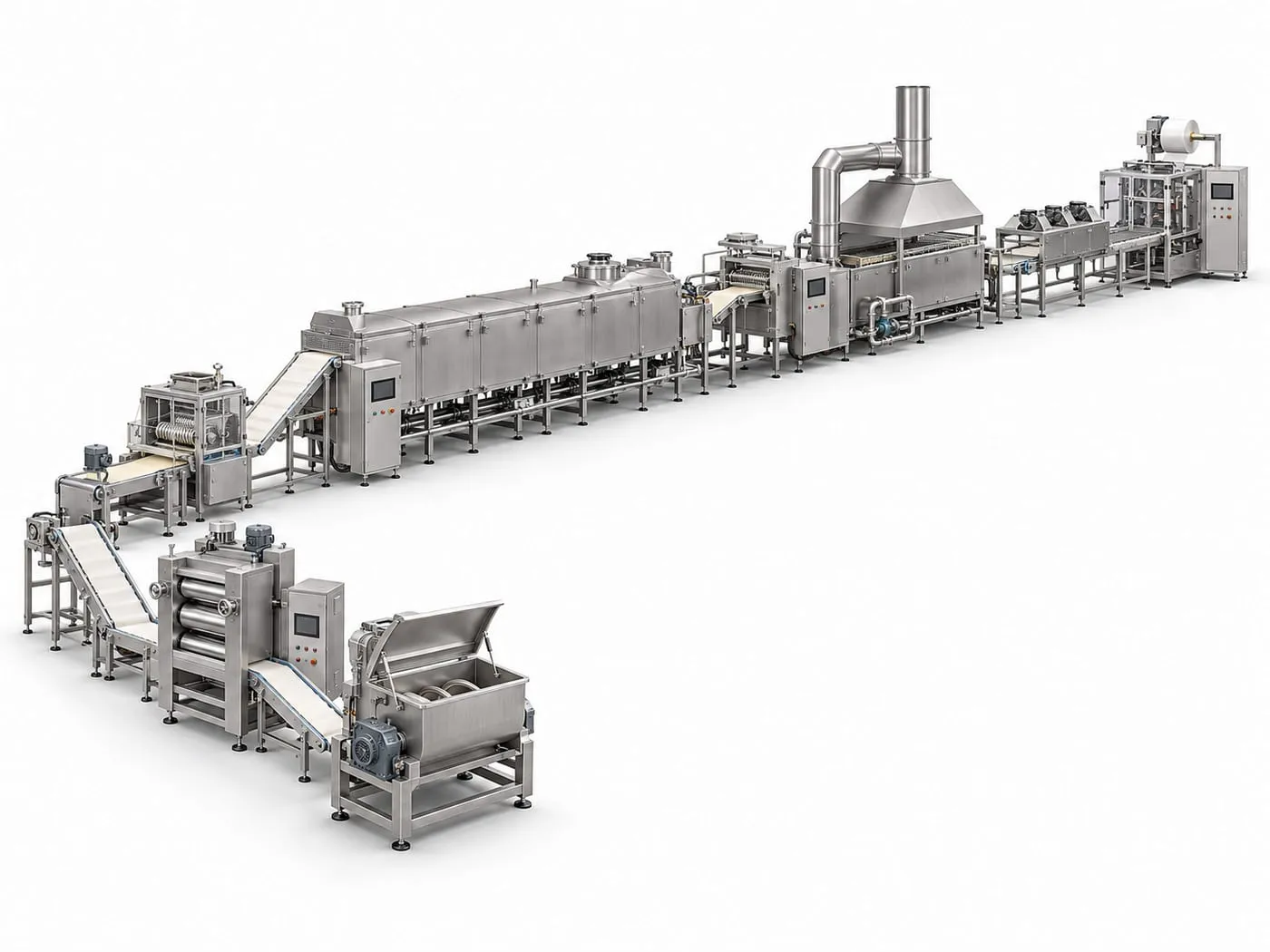
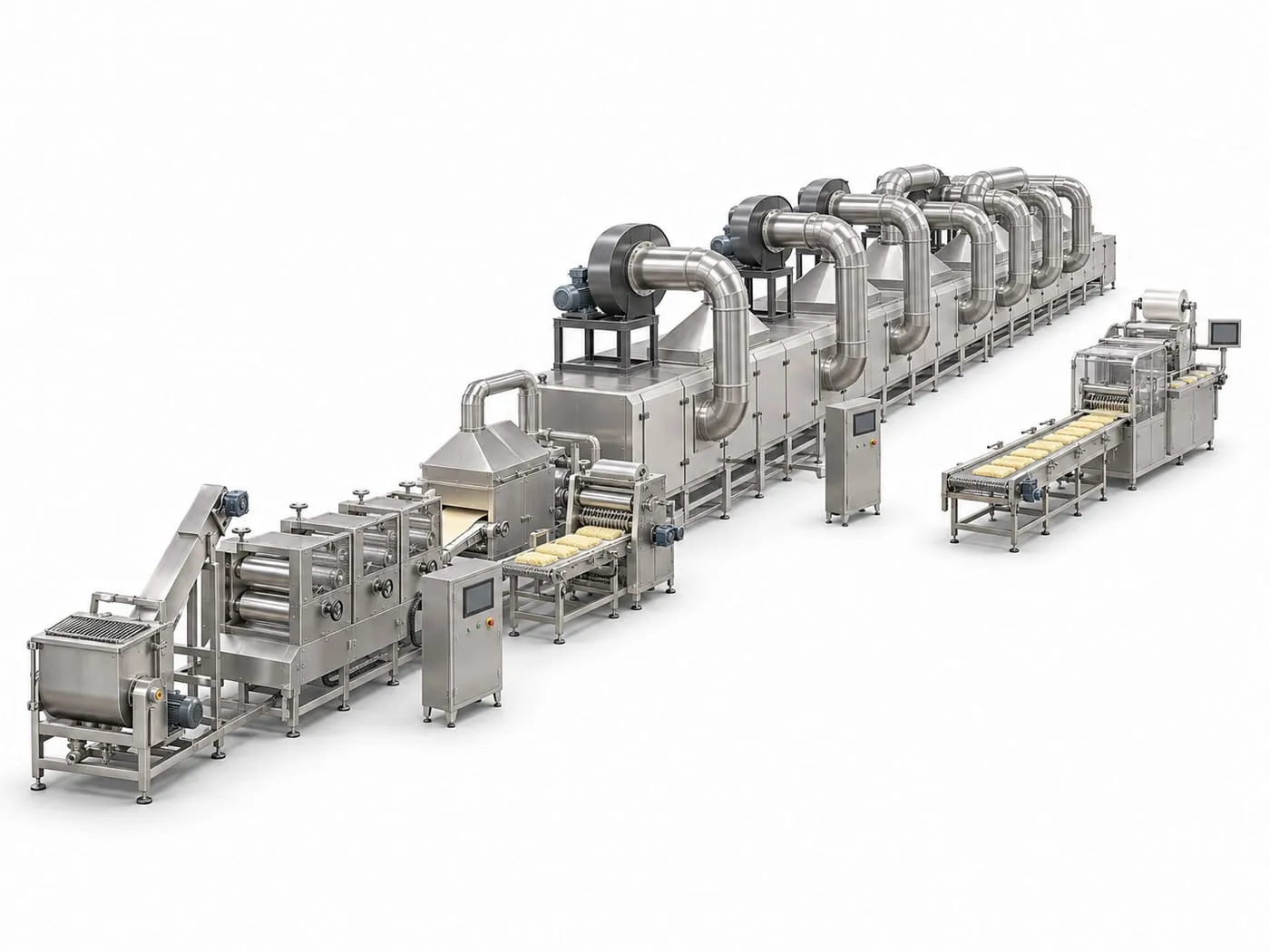
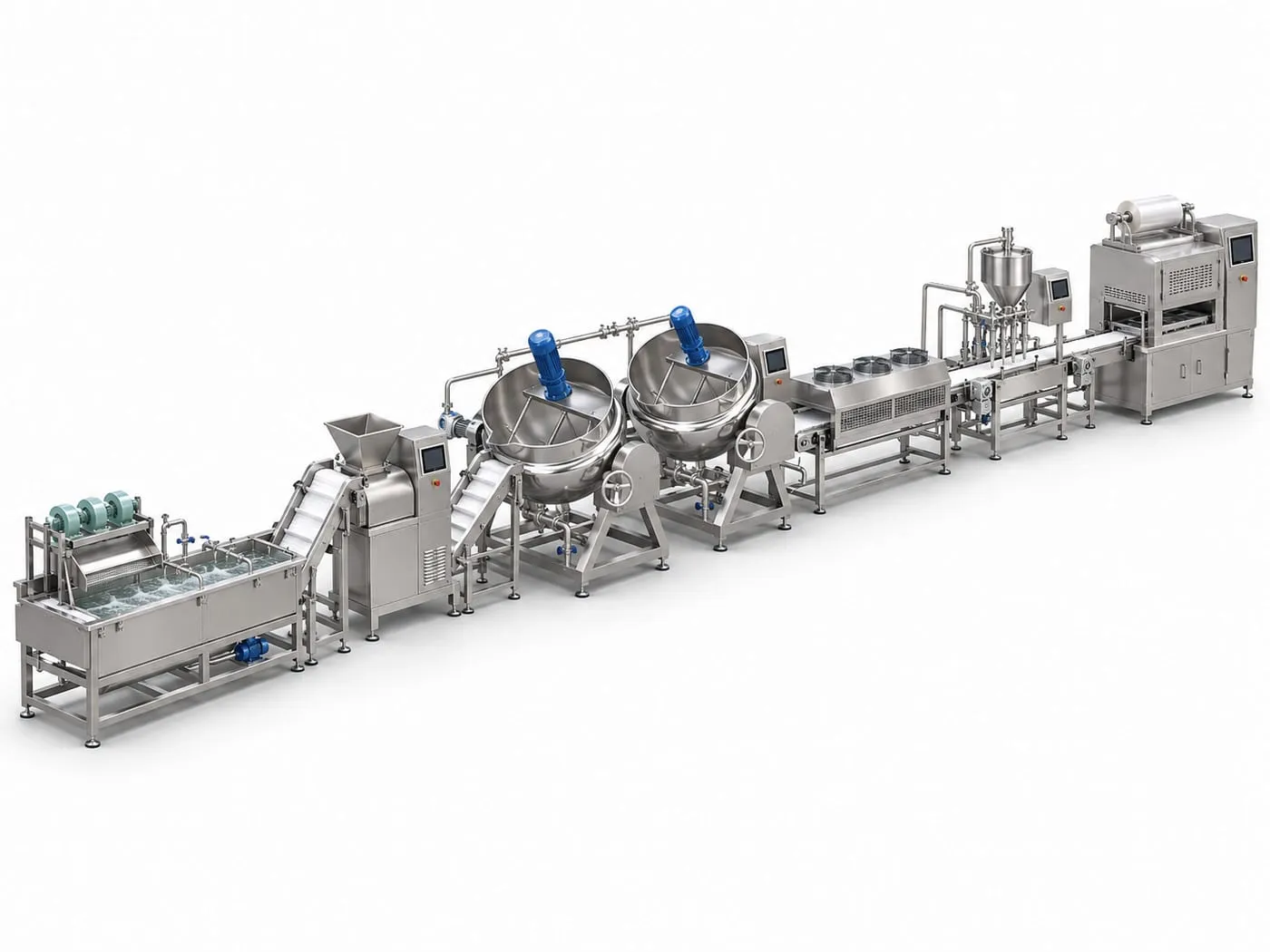
This page is about the whole plant. For the line itself, see the frozen dumpling production line.
What a frozen dumpling plant consists of
- Raw material receiving and cold storage: flour, meat, vegetables, seasonings and packaging, with chilled and frozen stores.
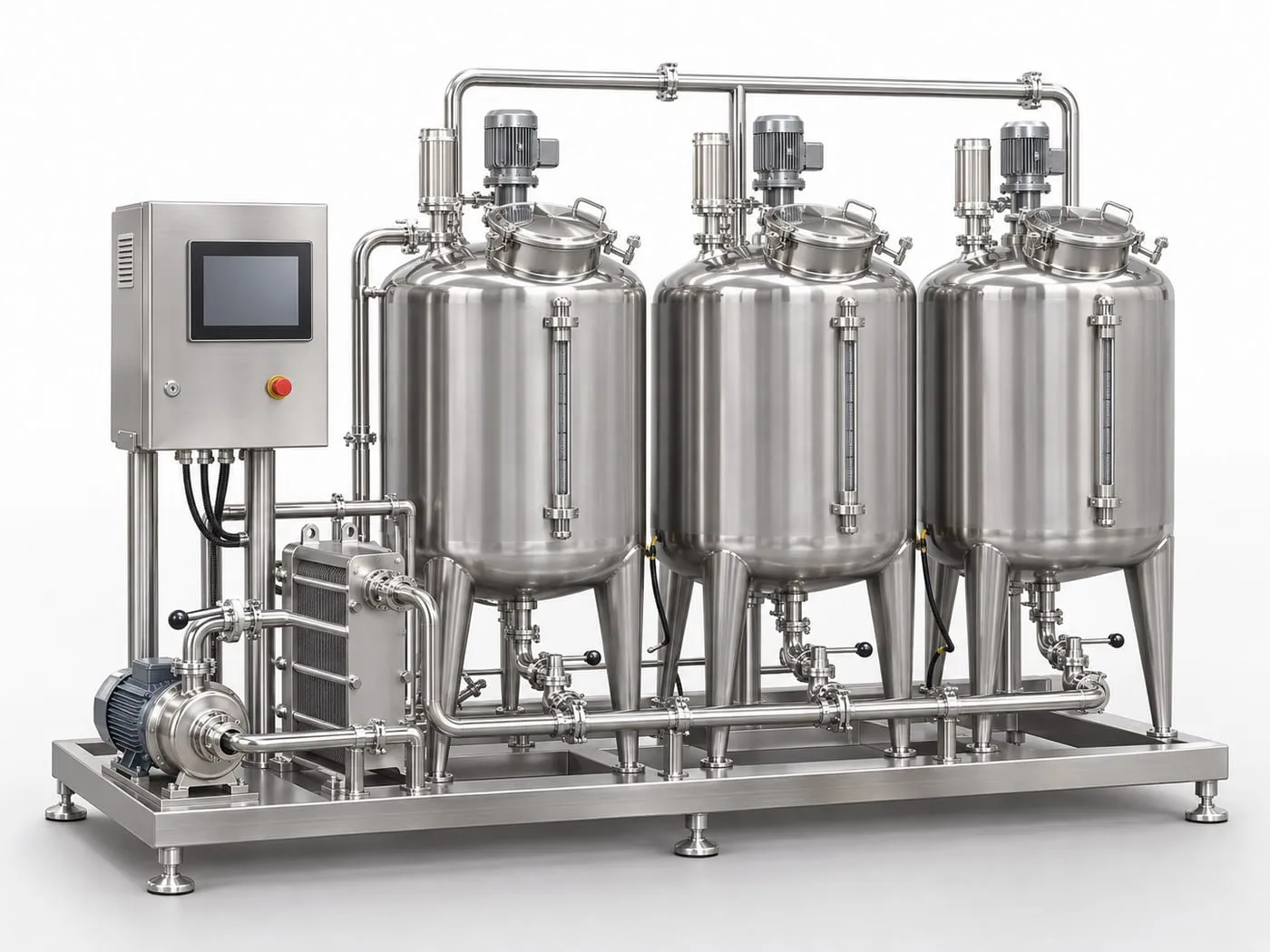
- Filling preparation: thawing, grinding or chopping meat, washing and cutting vegetables, mixing with seasoning, and chilling the filling.
- Dough preparation: mixing and resting the dough, sheeting if the machine needs a sheet.
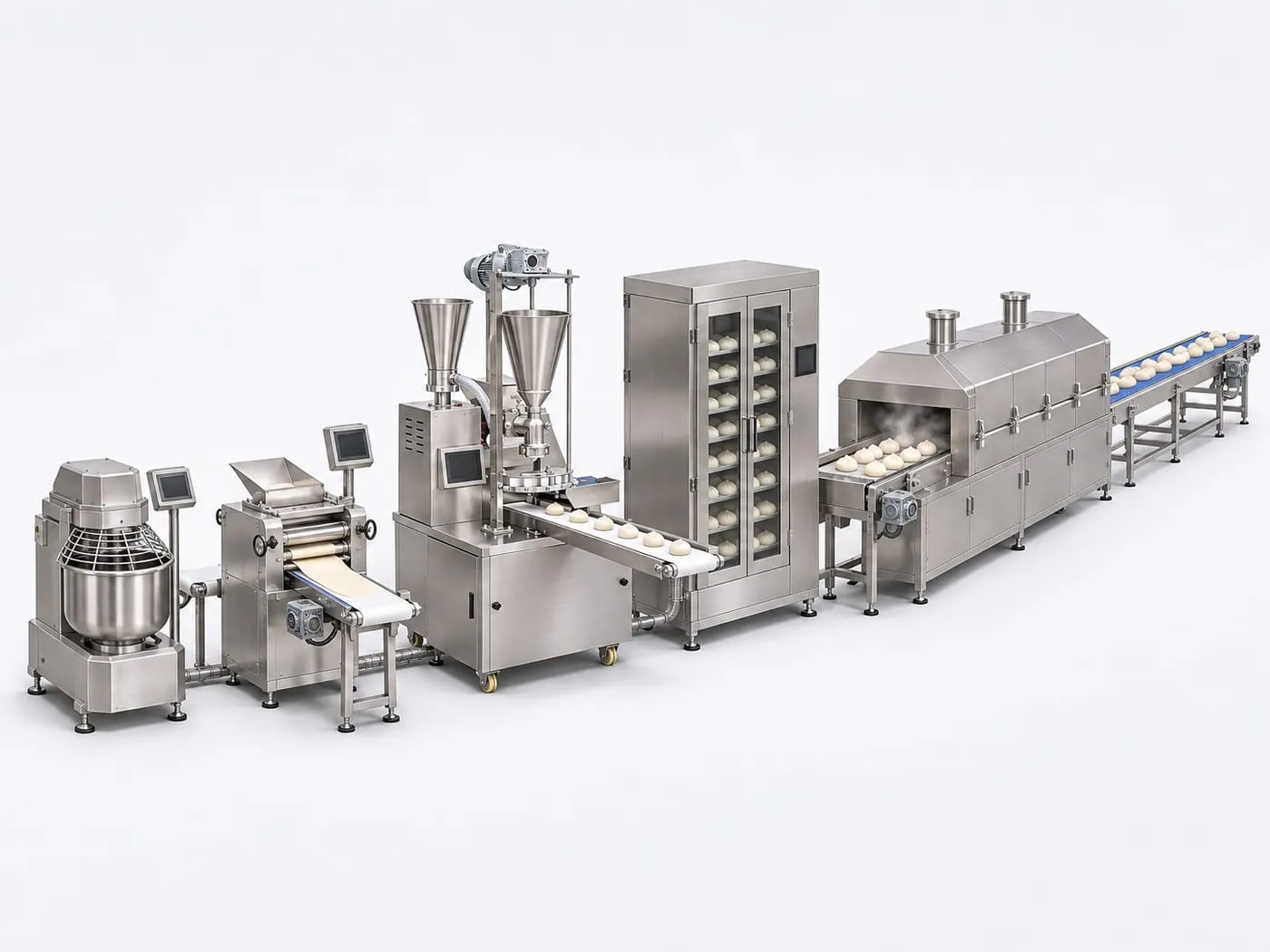
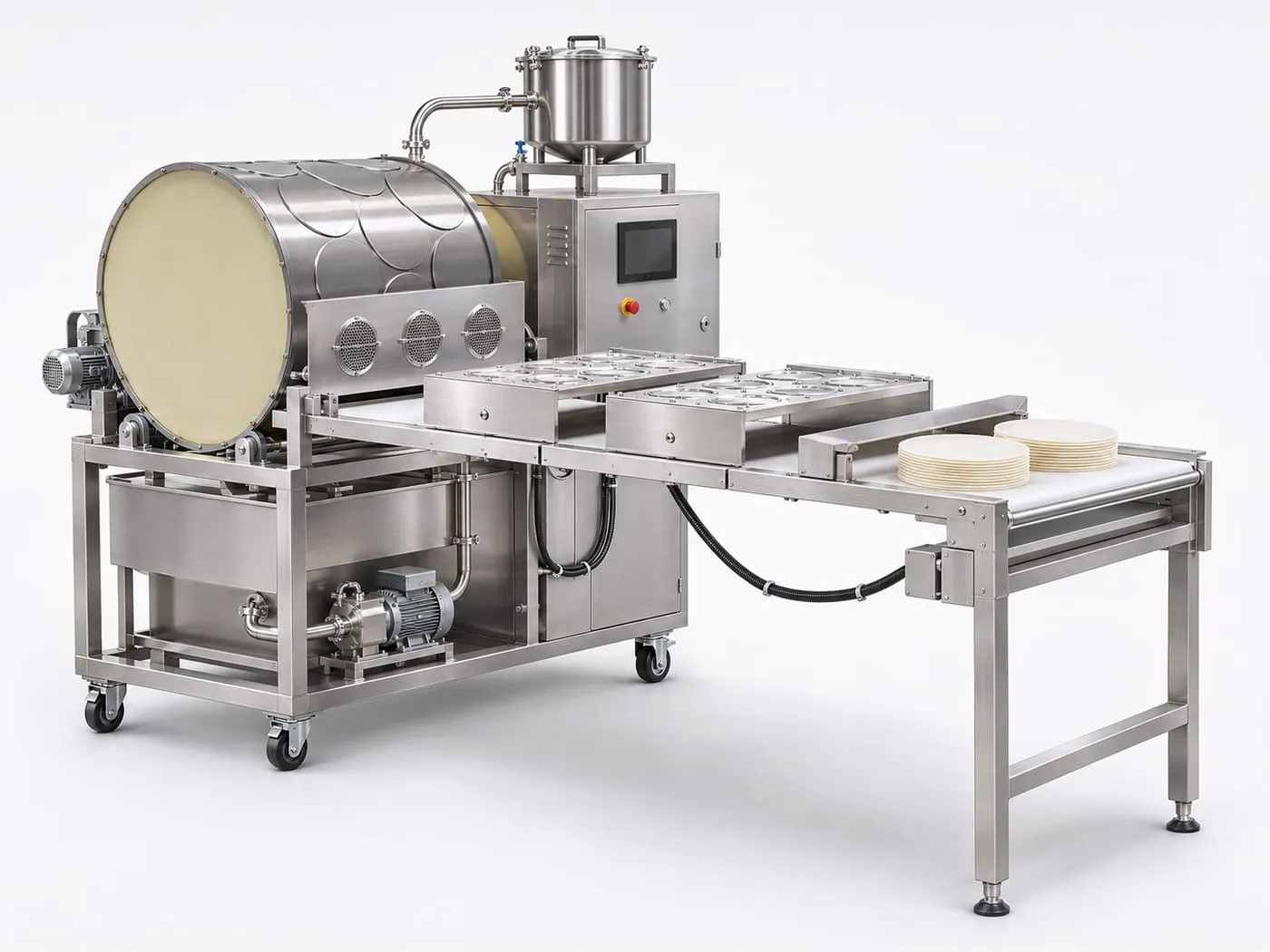
- Forming: automatic forming machines that wrap filling in dough and seal the edge.
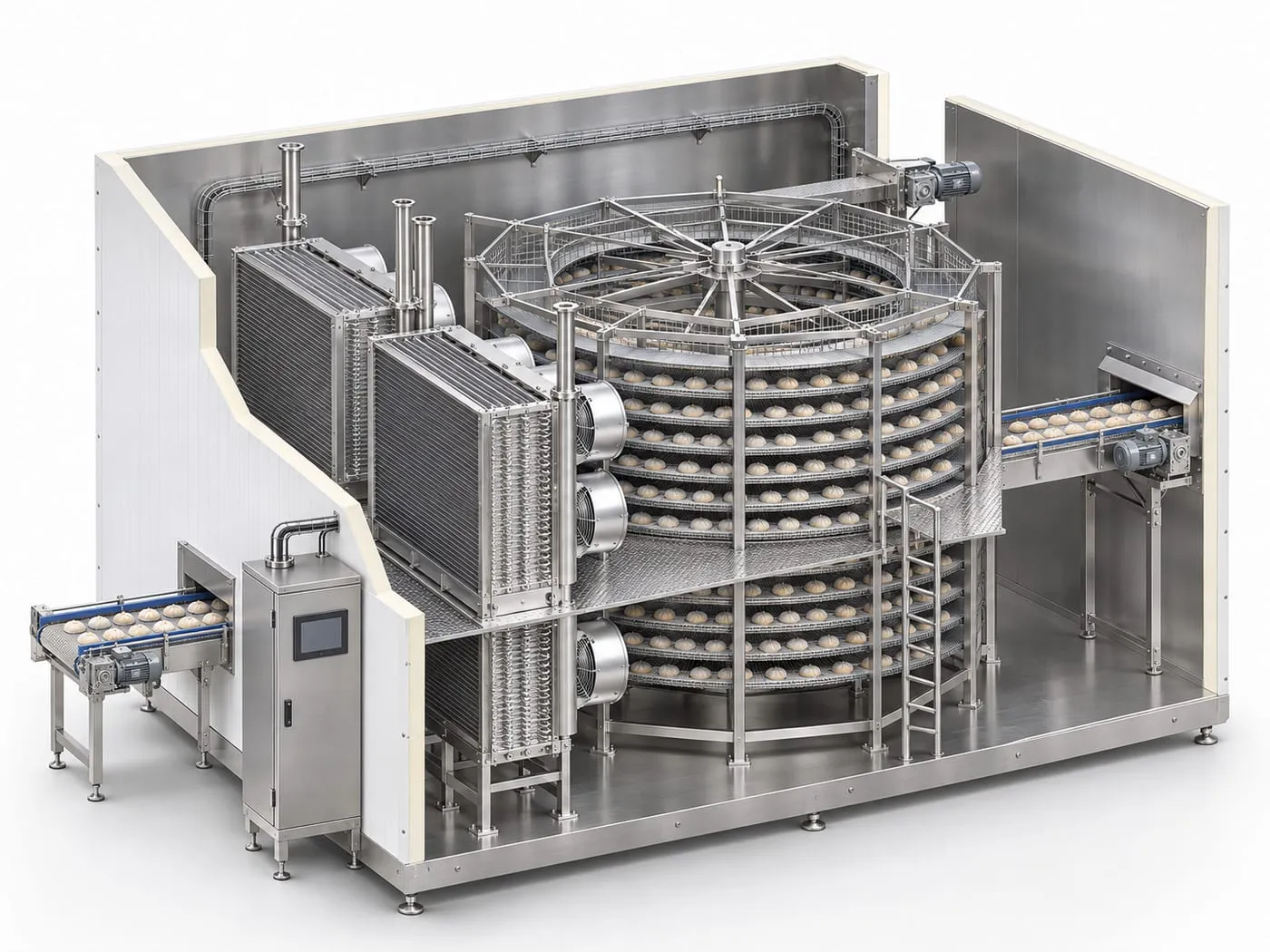
- Quick freezing: tunnel, spiral or batch blast freezers.
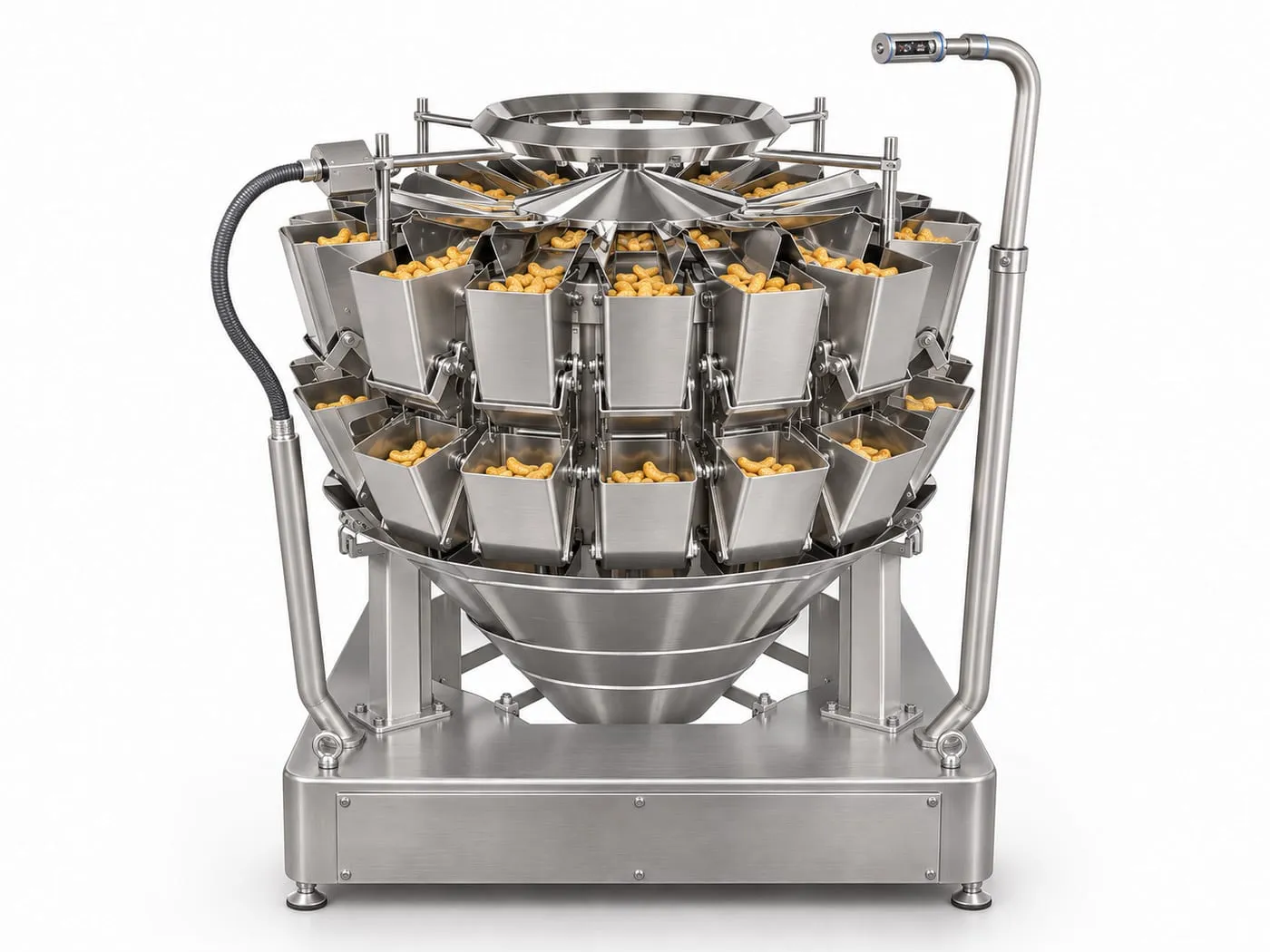
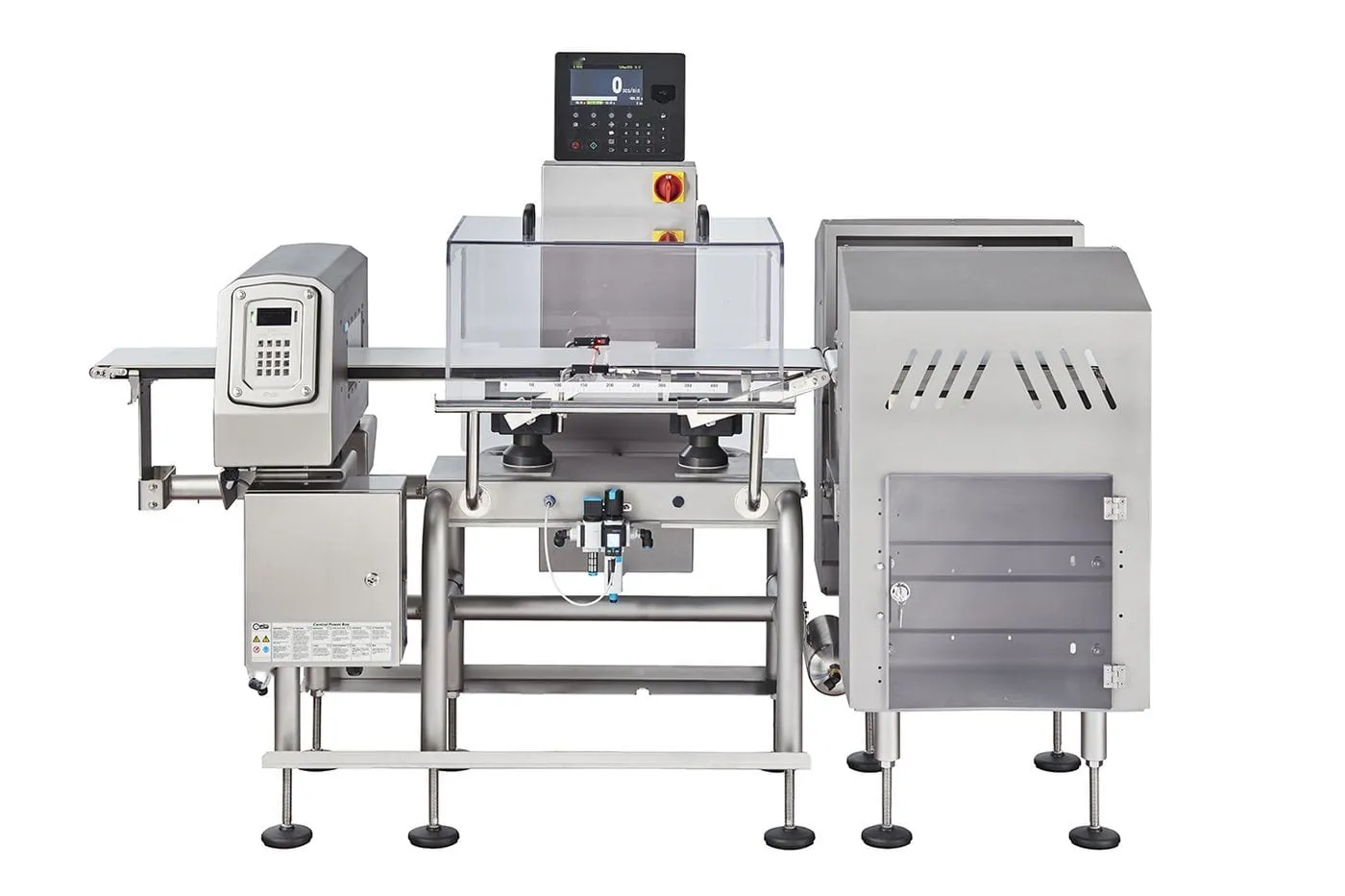
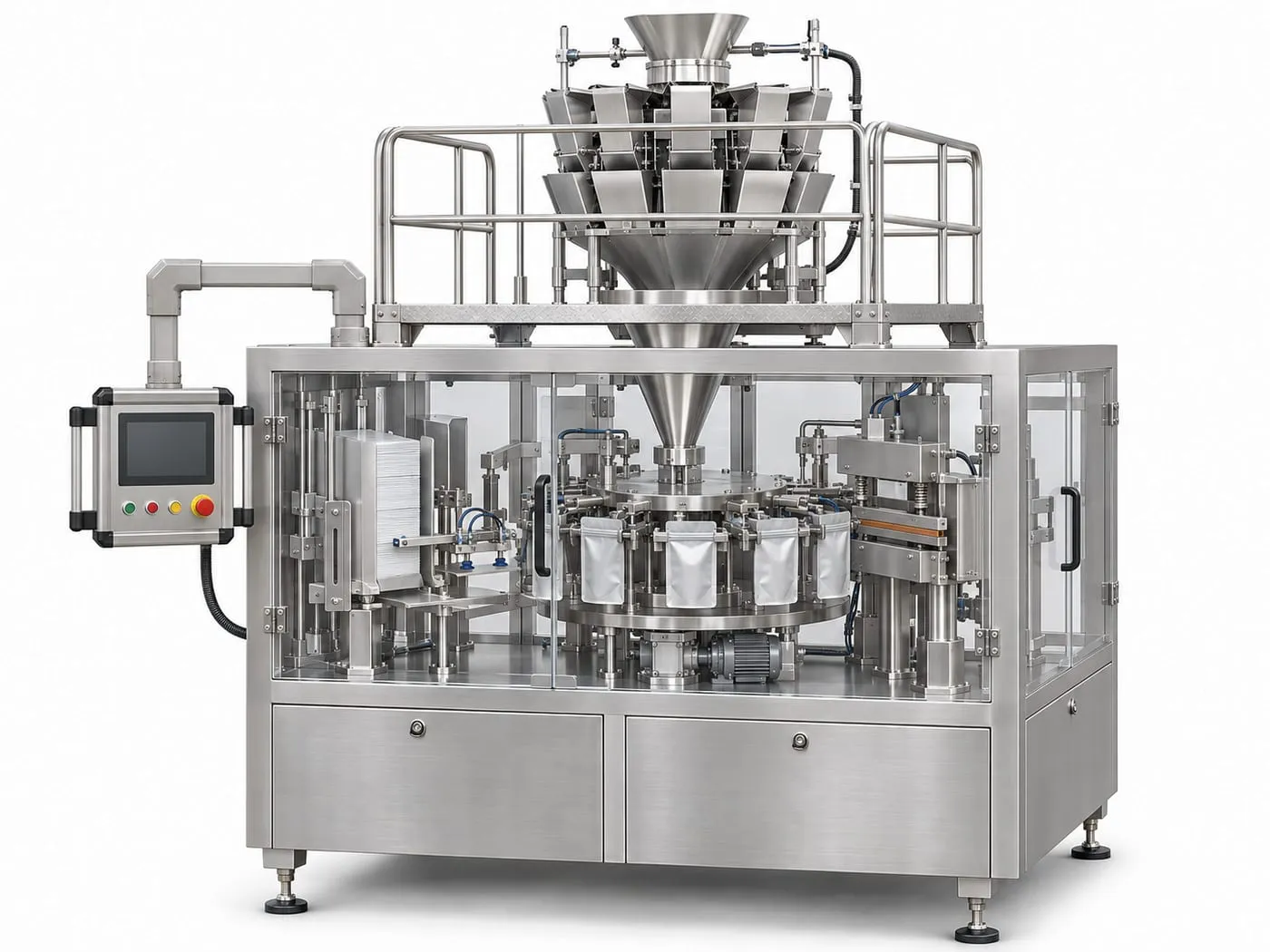
- Packing and inspection: weighing into bags or trays, sealing, metal detection, checkweighing, cartoning.
- Frozen storage and dispatch.
Process route and key machines
| Station | Purpose | Key machine |
|---|---|---|
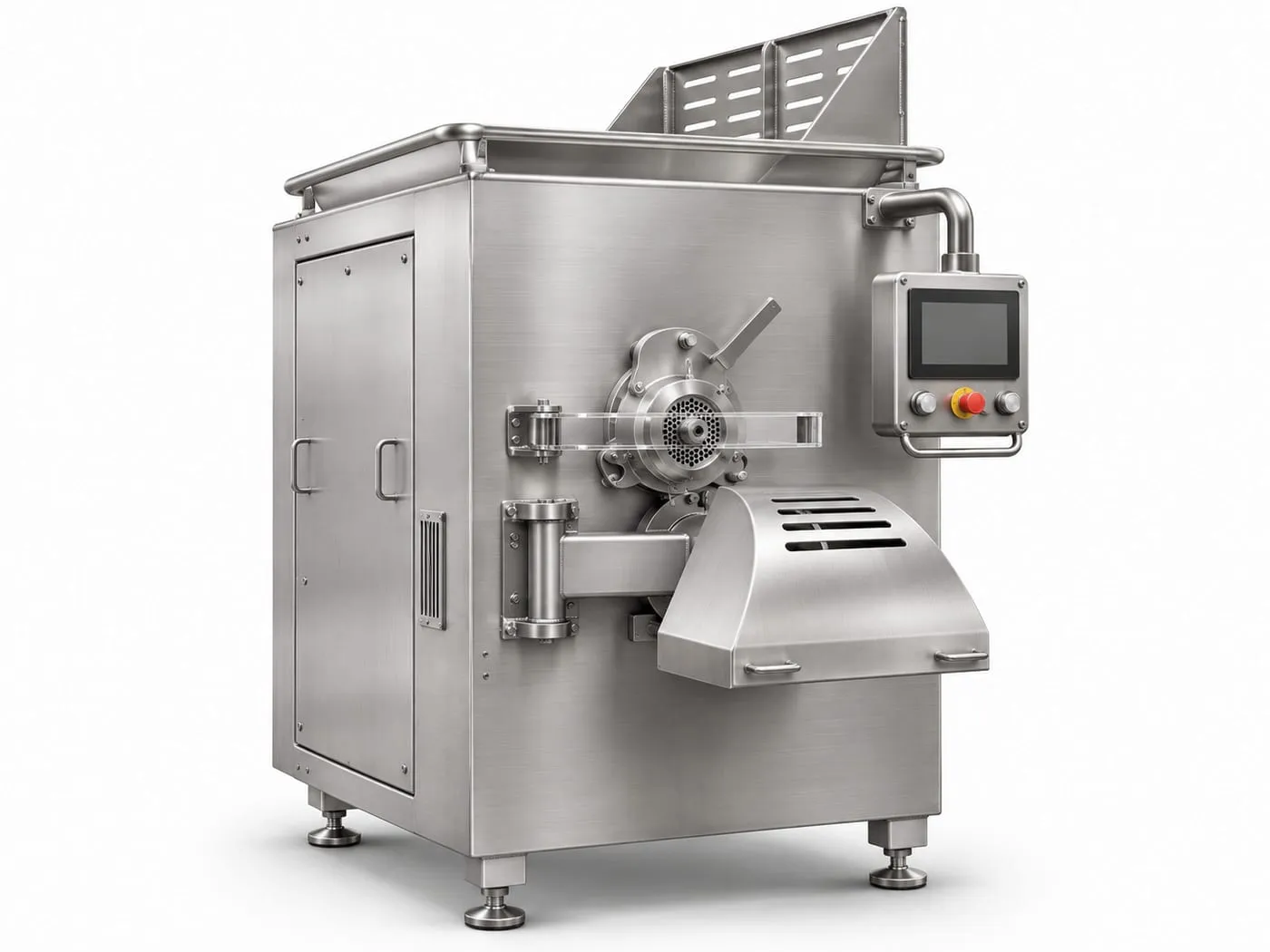
| Meat grinding | Reduce meat to the right particle size for filling | Industrial meat grinder |
| Vegetable cutting | Chop cabbage, leek, mushrooms and other vegetables | Vegetable cutting machine |
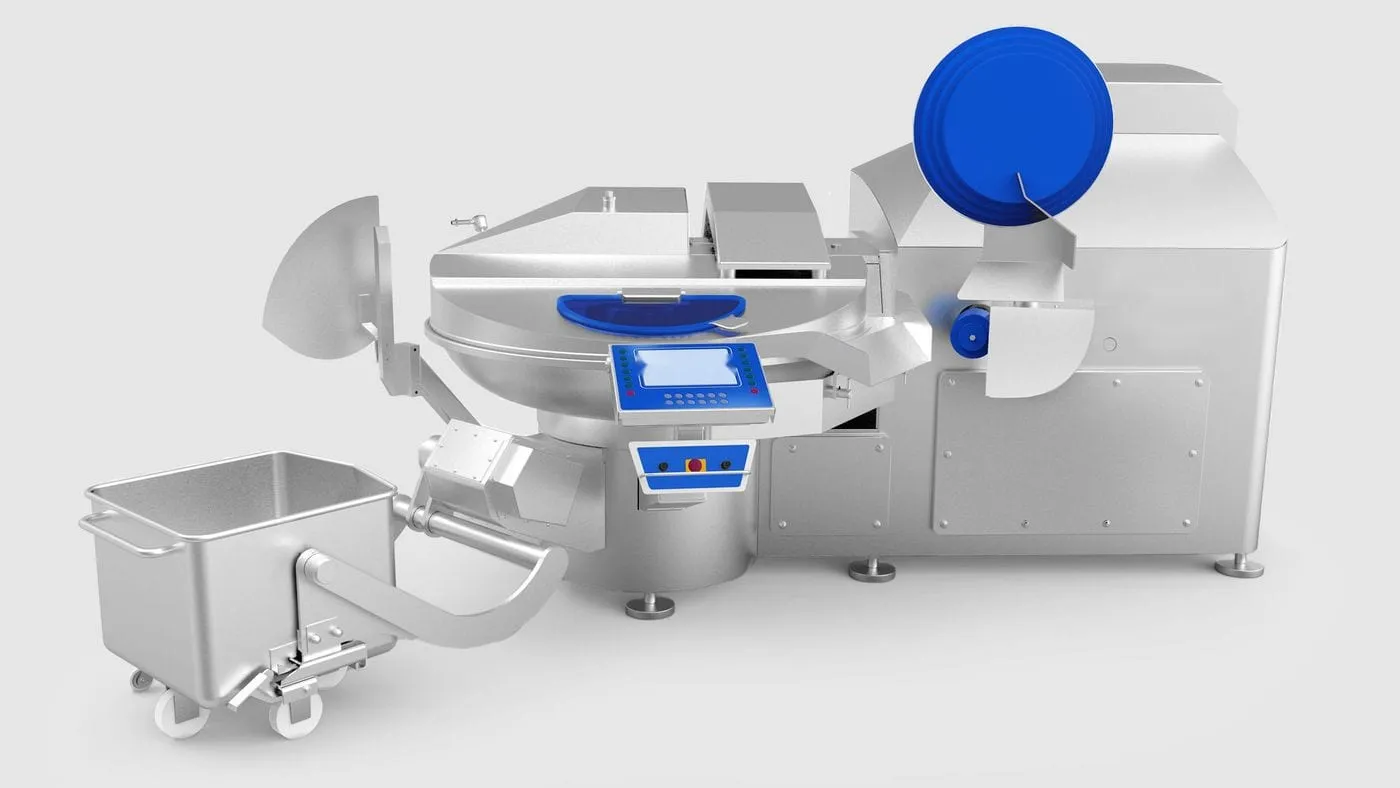
| Filling mixing | Mix meat, vegetables and seasoning to a stable paste | Bowl cutter |
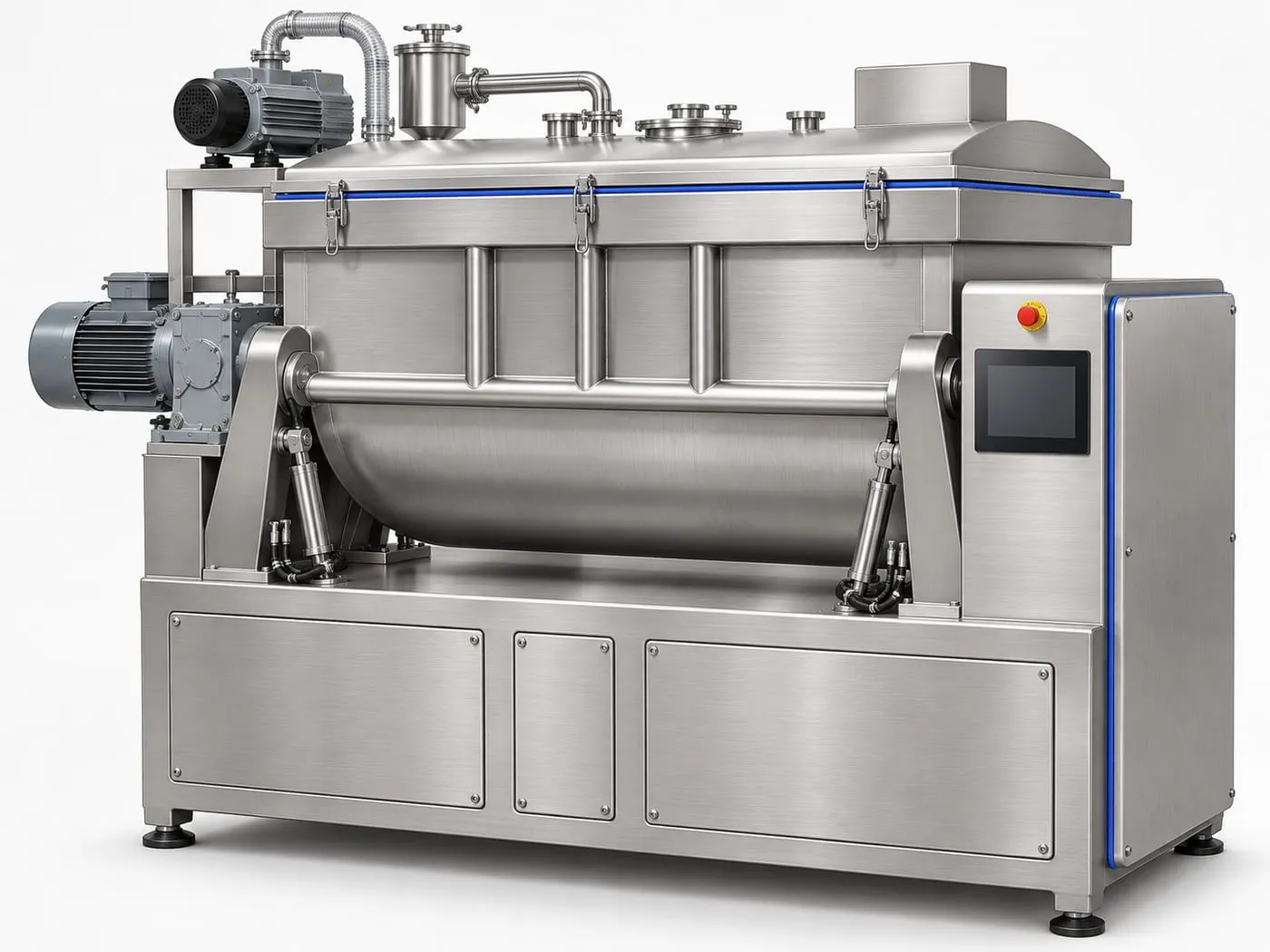
| Dough mixing | Dough with consistent water content and elasticity | Vacuum dough mixer |
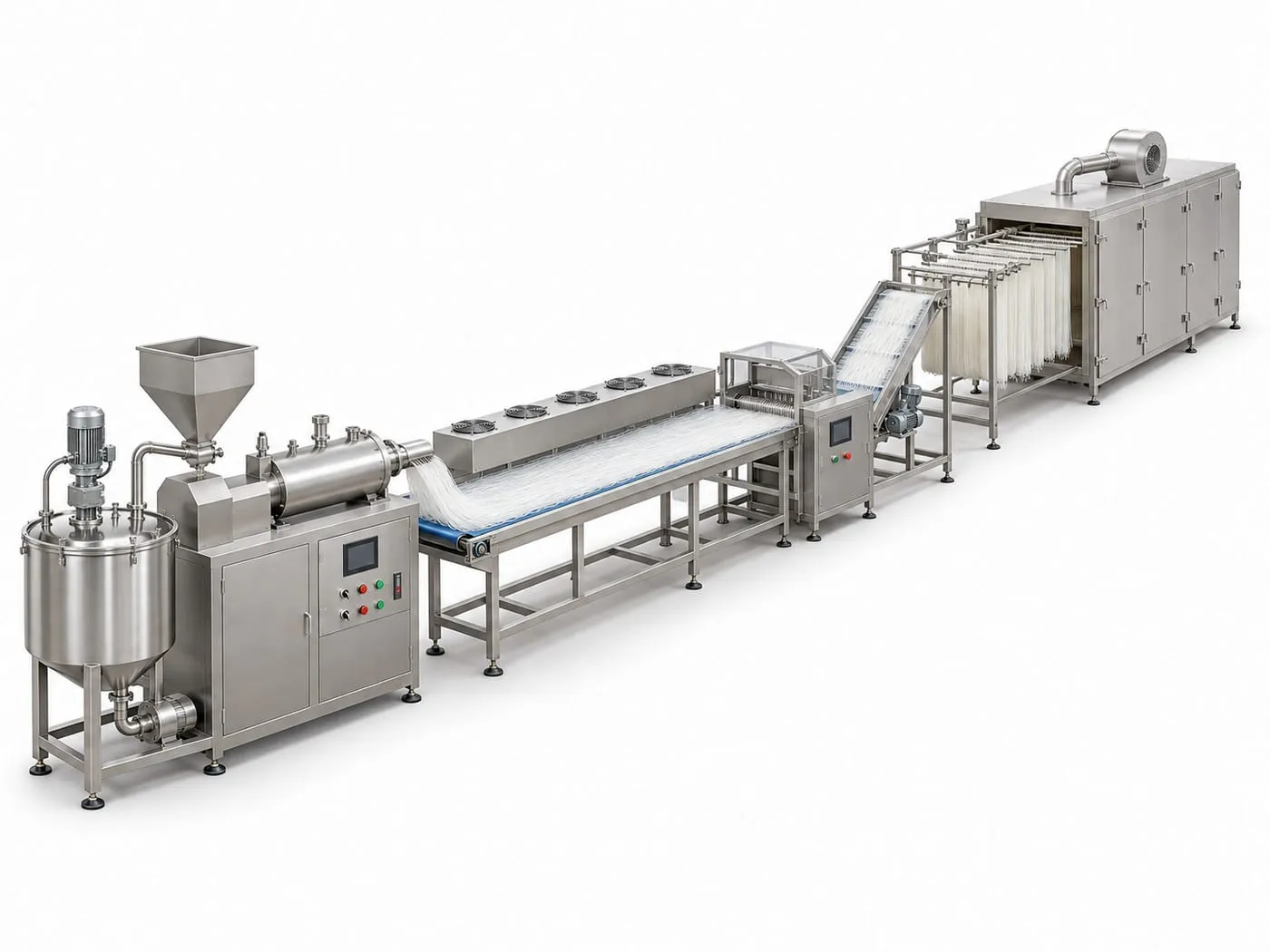
| Forming | Wrap and seal dumplings at set piece weight | Frozen dumpling production line |
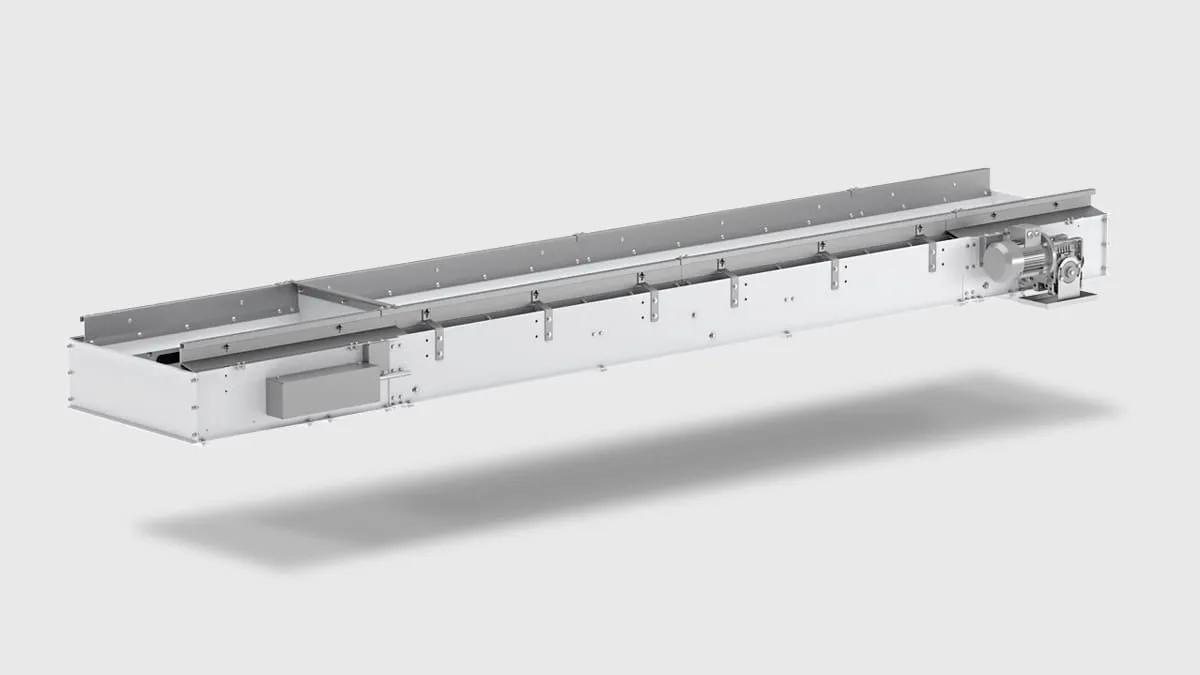
| Transfer | Move fresh dumplings to the freezer without damage | Hygienic conveyor |
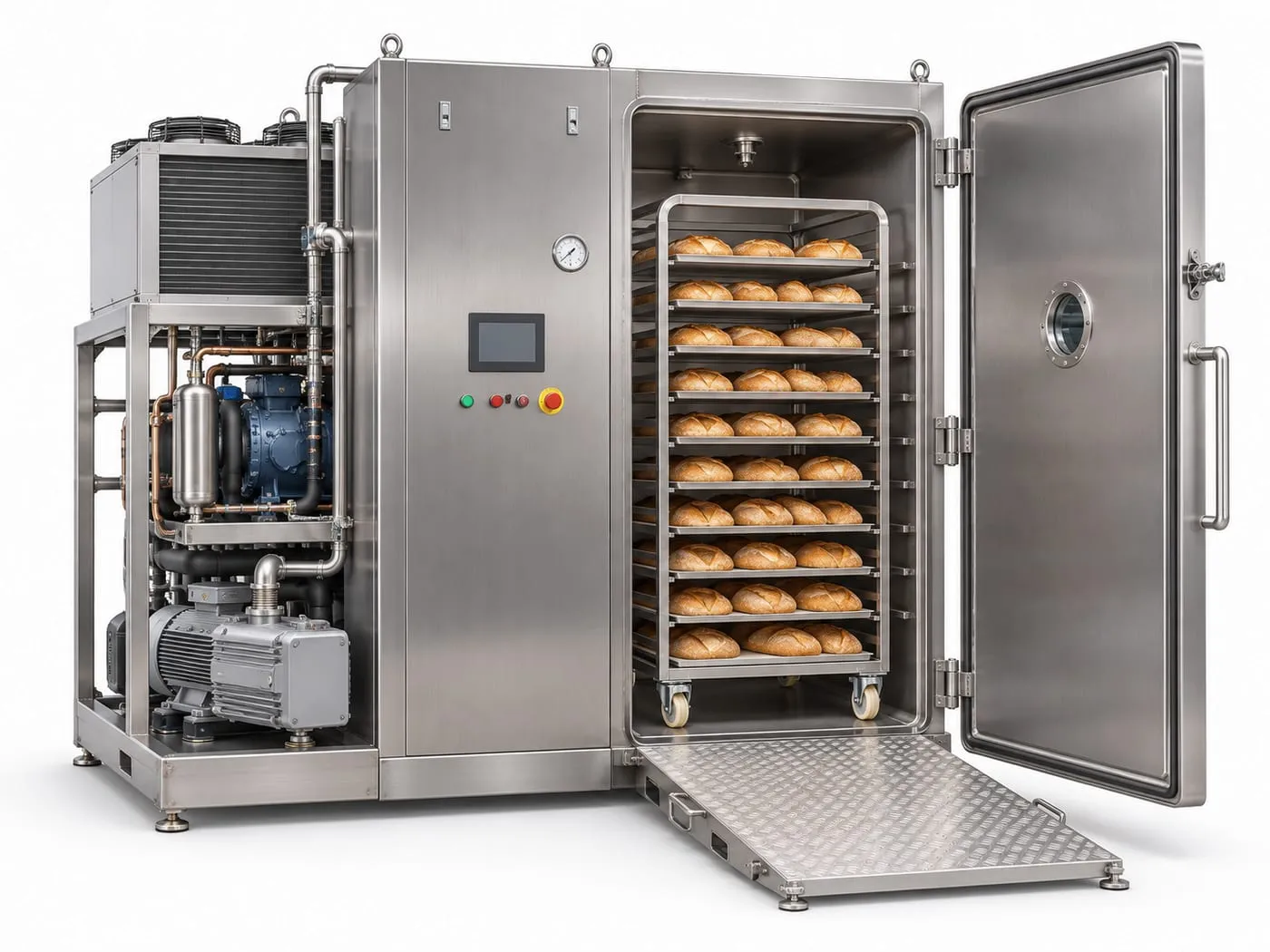
| Quick freezing | Freeze quickly to keep shape and texture | Food freezer |
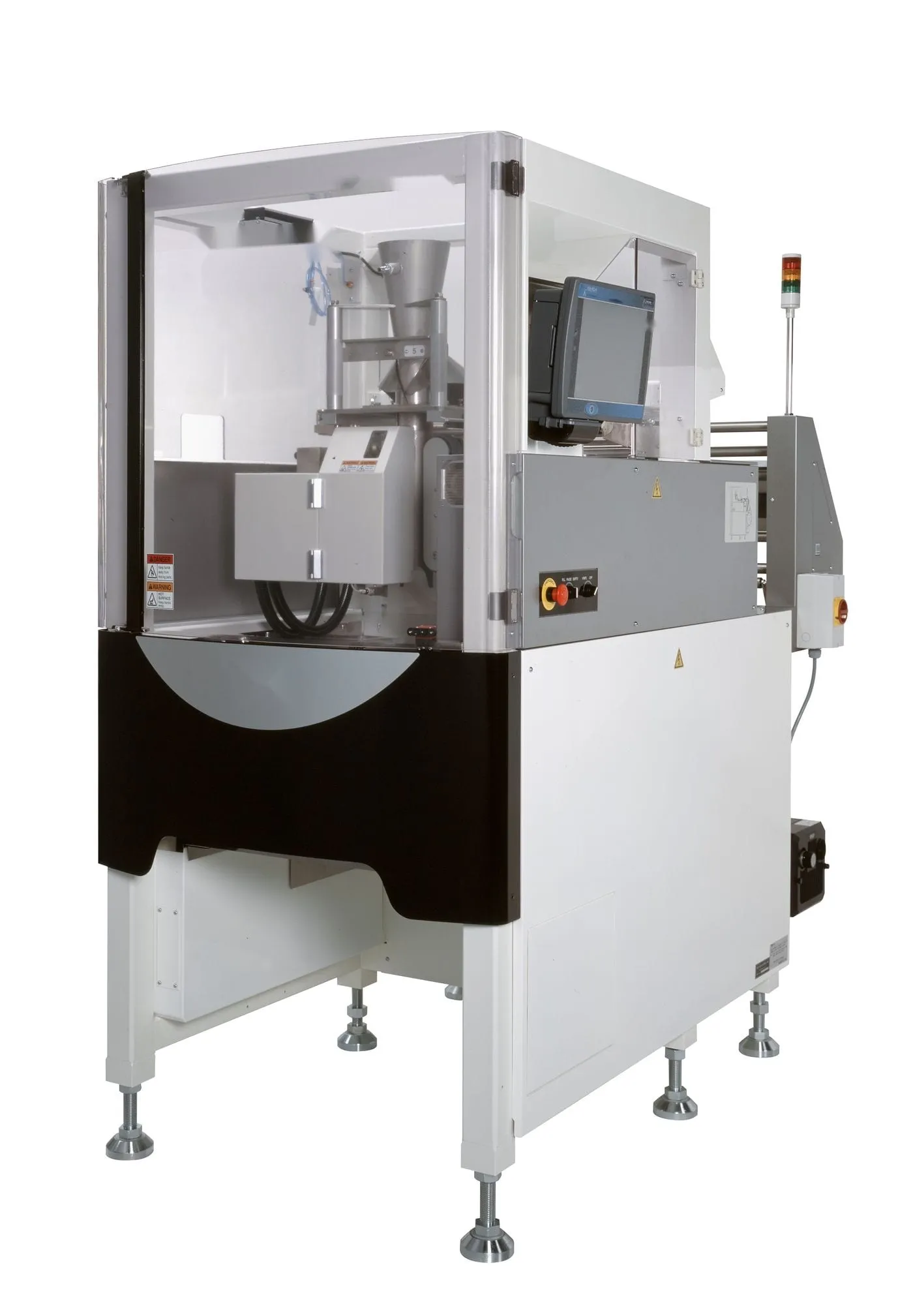
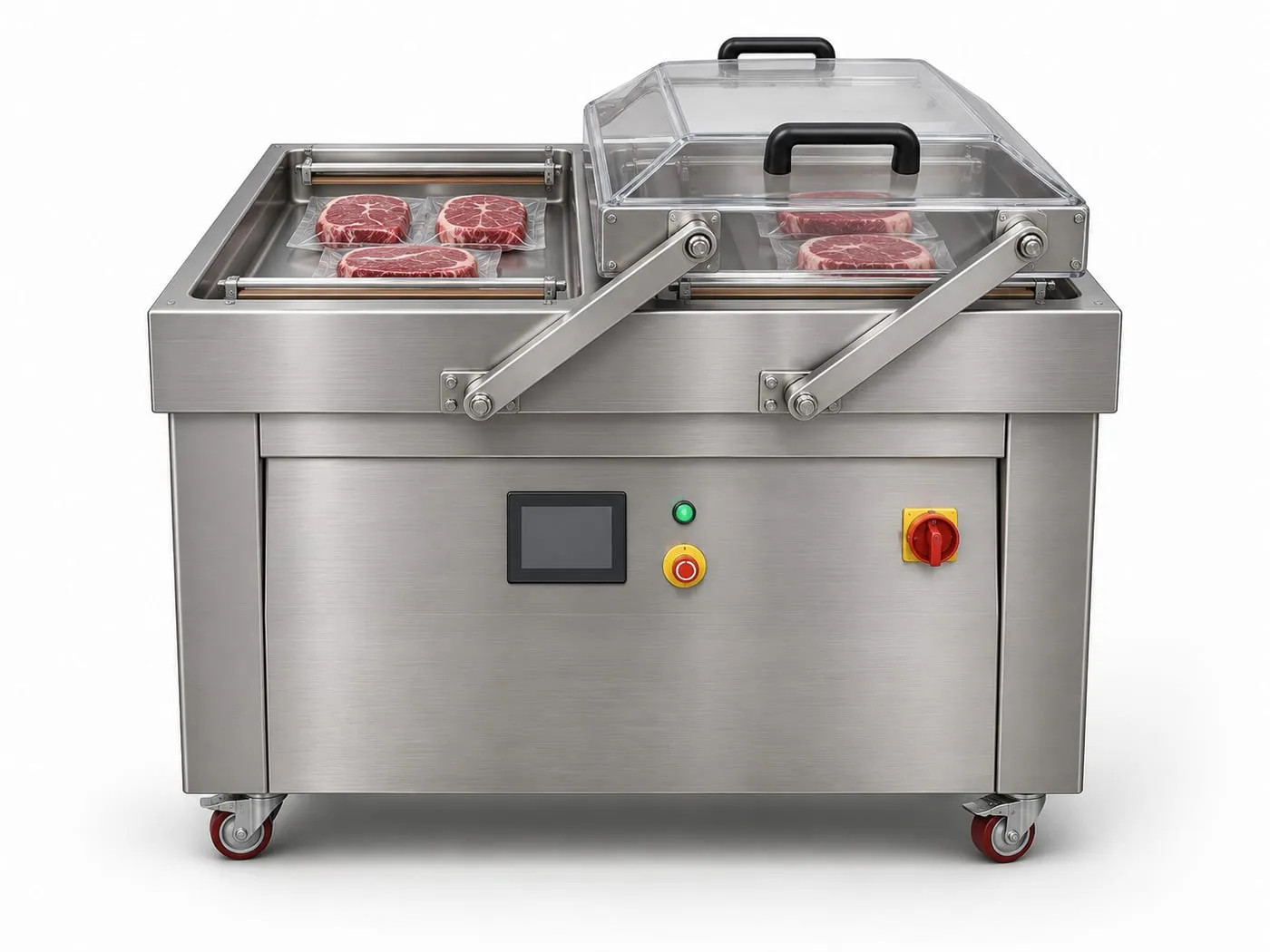
| Weighing and packing | Bags or trays at set count or weight | Multihead weigher, VFFS packaging machine |
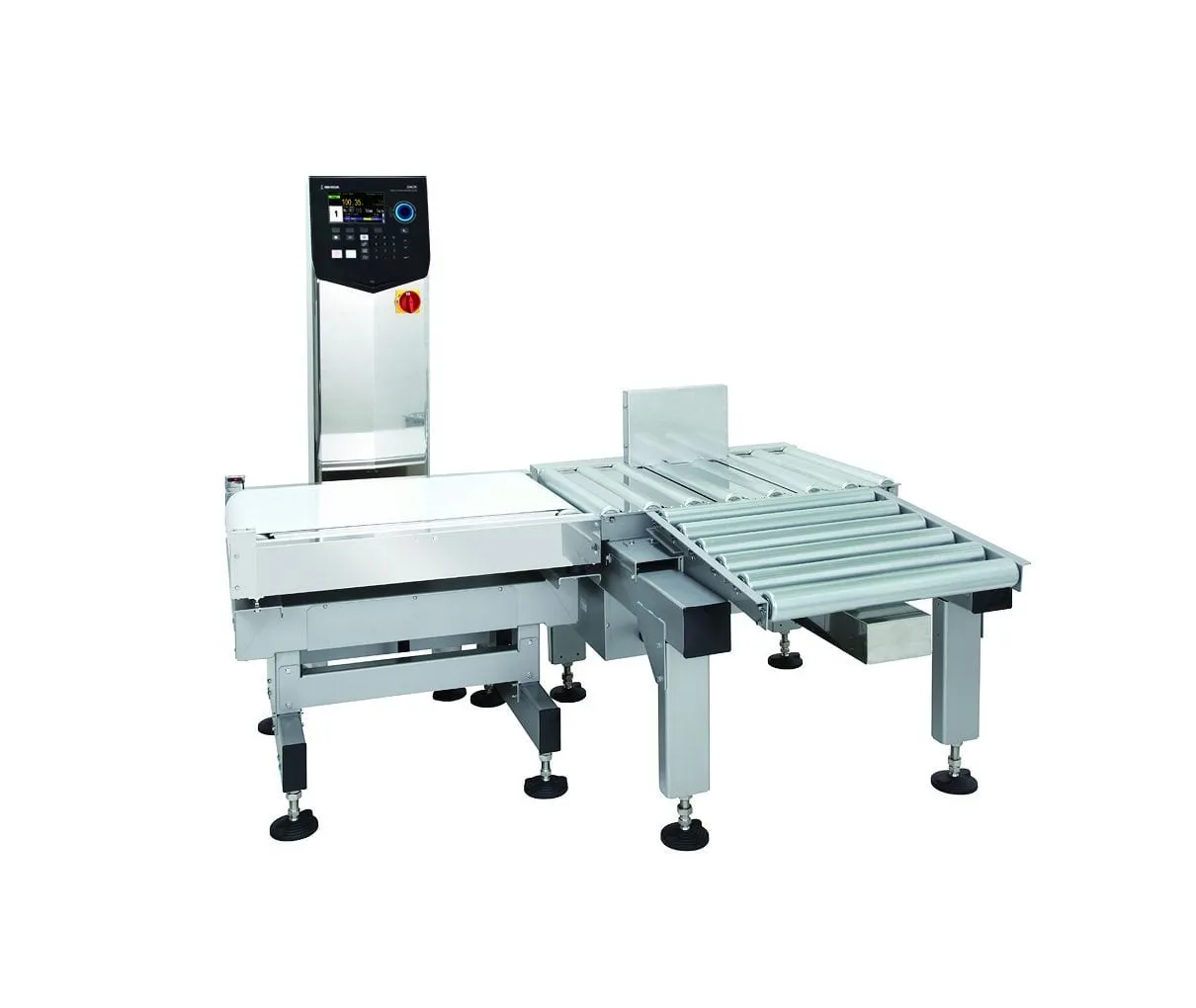
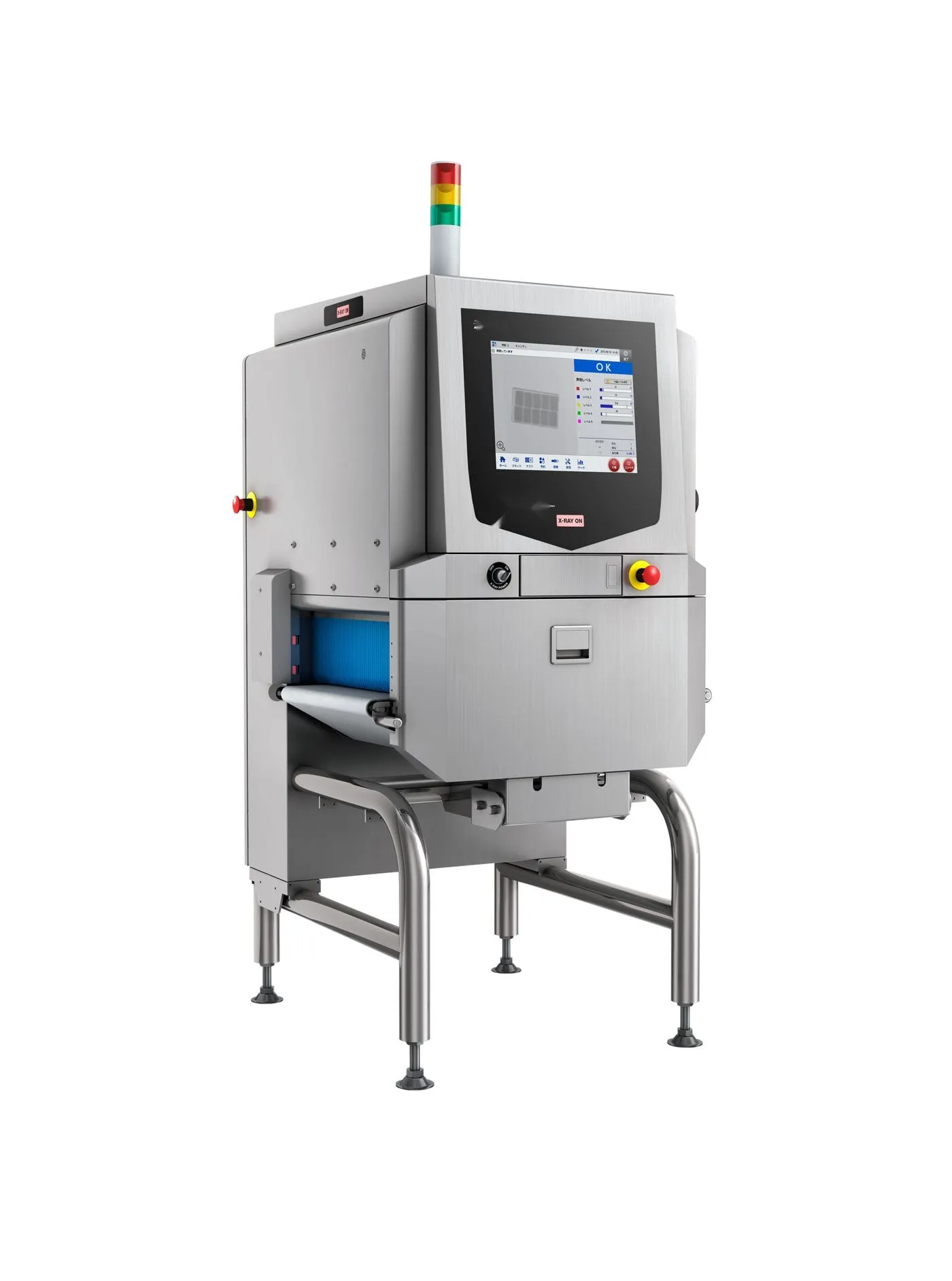
| Inspection | Metal and weight control | Food metal detector, in-line checkweigher |
How to size the plant
Use one basis and work through the stations:
- Product definition: piece weight, wrapper-to-filling ratio, shape, pieces per pack.
- Daily output in packs, then pieces, then kg/h of formed product.
- Freezer: the freezer must remove heat from that kg/h load in the freezing time your product needs. The refrigeration plant behind it is a large part of the investment and power demand.
- Forming: number of forming machines to reach the kg/h, with allowance for changeovers and cleaning. Running two machines gives redundancy.
- Filling and dough preparation: batch sizes and times to keep forming fed.
- Packing: weigher and bagger rate at the frozen product weight, plus cartoning.
If dumplings wait too long between forming and freezing, they stick together, lose shape or warm up. Keep this transfer short and planned.
Hygiene, zoning and cold chain
Dumplings combine raw meat, raw vegetables and dough, so the layout matters:
- Separate zones: raw material handling and filling preparation away from forming, freezing and packing, with controlled staff and material flows.
- Temperature control: chilled filling preparation and a cool forming room help keep the filling safe and the dough workable.
- Cleaning: forming machines have many parts that touch filling; plan cleaning time daily. Hygienic design references such as the EHEDG guidelines help with equipment and drainage choices.
- Cold chain: the Codex code of practice for quick frozen foods (CXC 8-1976) covers handling from freezing through storage, transport and retail, and is a widely used reference for keeping product frozen once it leaves the freezer.
Food safety plans and process validation are the producer’s responsibility. If you export to the United States, the FDA preventive controls rule requires a written food safety plan; other markets have comparable rules.
Utilities and building
- Refrigeration for the freezer, cold stores and chilled rooms: usually the largest power load in the plant.
- Water and drainage for vegetable washing and daily cleaning.
- Insulated building sections with vapour barriers and floors that will not heave under freezing rooms.
- Loading docks with cold protection for dispatch.
A worked sizing example
The numbers here illustrate the method only; your own recipe, piece weight and sales plan replace them.
A company plans 6,000 bags a day of 20 dumplings each, with each dumpling weighing about 20 g. That is 120,000 pieces, or 2,400 kg of formed product a day. On two shifts with 14 effective production hours, the plant must form and freeze around 8,600 pieces, or about 170 kg, every hour. A forming machine with a higher nameplate rate may still be the right choice, because changeovers, cleaning and breakage reduce effective output. The freezer is then sized for 170 kg/h plus a safety margin, at the freezing time your product needs to reach its target core temperature; the refrigeration plant behind it is sized for that load at your summer ambient temperature. Packing must handle 6,000 bags across the same hours, roughly 7 bags a minute, and the cold store must hold the number of days of stock your distribution needs.
Which business model fits
- Own-brand producers for supermarkets need consistent piece weight, attractive shapes and retail packs, and must plan for the supermarket’s audits.
- Food service suppliers to restaurants and caterers often sell bulk bags with fewer packing steps, but need flexible recipes.
- Contract manufacturers for other brands need several moulds, fast changeovers and strong allergen and traceability systems.
- Existing meat or vegetable processors can add dumplings using their filling preparation, and invest mainly in forming, freezing and packing.
Supply levels
- Single machine: an extra forming machine or freezer.
- Section: filling preparation, or forming with freezing.
- Complete line: from dough and filling preparation to packing.
- Turnkey project: complete line plus installation, commissioning, training and acceptance runs. See turnkey projects.
What drives the cost
- Output in kg/h and the freezer and refrigeration capacity it needs
- Number of products, shapes and moulds
- Filling preparation automation (manual versus machine chopping and mixing)
- Packing format: bulk bags, retail bags or trays, cartoning
- Insulated building, cold stores and refrigeration plant
- Hygiene level and cleaning systems
Common mistakes
- Buying forming machines rated in pieces per hour without checking the freezer at the same load.
- Under-sizing the refrigeration plant for summer conditions.
- Mixing raw filling preparation and finished product packing in one room.
- Long transfer between forming and freezing, causing sticking and deformed pieces.
- Planning cold storage for the first year’s volume only.
What to send us for a quotation
- Products: dumpling types, shapes, piece weight, wrapper thickness, filling recipe
- Target output: packs per day, pieces per pack, operating hours and shifts
- Acceptable breakage and shape tolerance
- Freezing: preferred freezer type, refrigerant, available power
- Packaging: bag or tray, net weight, cartoning
- Building plan and cold storage plans
- Equipment you already have
- Samples or photos of a reference product
Frequently asked questions
- How many dumplings per hour do I need?
- Work back from your sales plan: packs per day multiplied by pieces per pack, divided by effective production hours. Then convert to kg/h with your piece weight, because the freezer and packing machines are sized by weight, not by pieces.
- Tunnel freezer or spiral freezer?
- Tunnel freezers are straight and simple to load and clean; they suit moderate outputs and plants with a long hall. Spiral freezers fit a large freezing time into a small footprint and suit higher outputs. Both need refrigeration capacity sized for the product load.
- Can the same line make dumplings, wontons and buns?
- Forming machines often change shape with different moulds, but dough, filling texture and piece weight differ between products. Confirm each product in trials. Steamed buns usually need their own line; see our steamed bun production line.
- What about cold storage?
- Frozen dumplings must stay frozen until they reach the consumer. Plan a frozen store sized for your stock days, plus loading docks that keep product cold during dispatch.
Sources
- [1]Codex Alimentarius: codes of practice (incl. CXC 8-1976 Code of Practice for the Processing and Handling of Quick Frozen Foods) — FAO/WHO Codex Alimentarius Commission
- [2]FSMA Final Rule for Preventive Controls for Human Food — U.S. Food and Drug Administration
- [3]EHEDG guideline catalogue (hygienic design) — European Hygienic Engineering & Design Group
HNFODA Applications Engineering
Line design, product trials and commissioning
Engineers who size, build and commission HNFODA food processing lines, writing from the questions buyers ask before a quotation. About HNFODA