Instant Noodle & Frozen Food
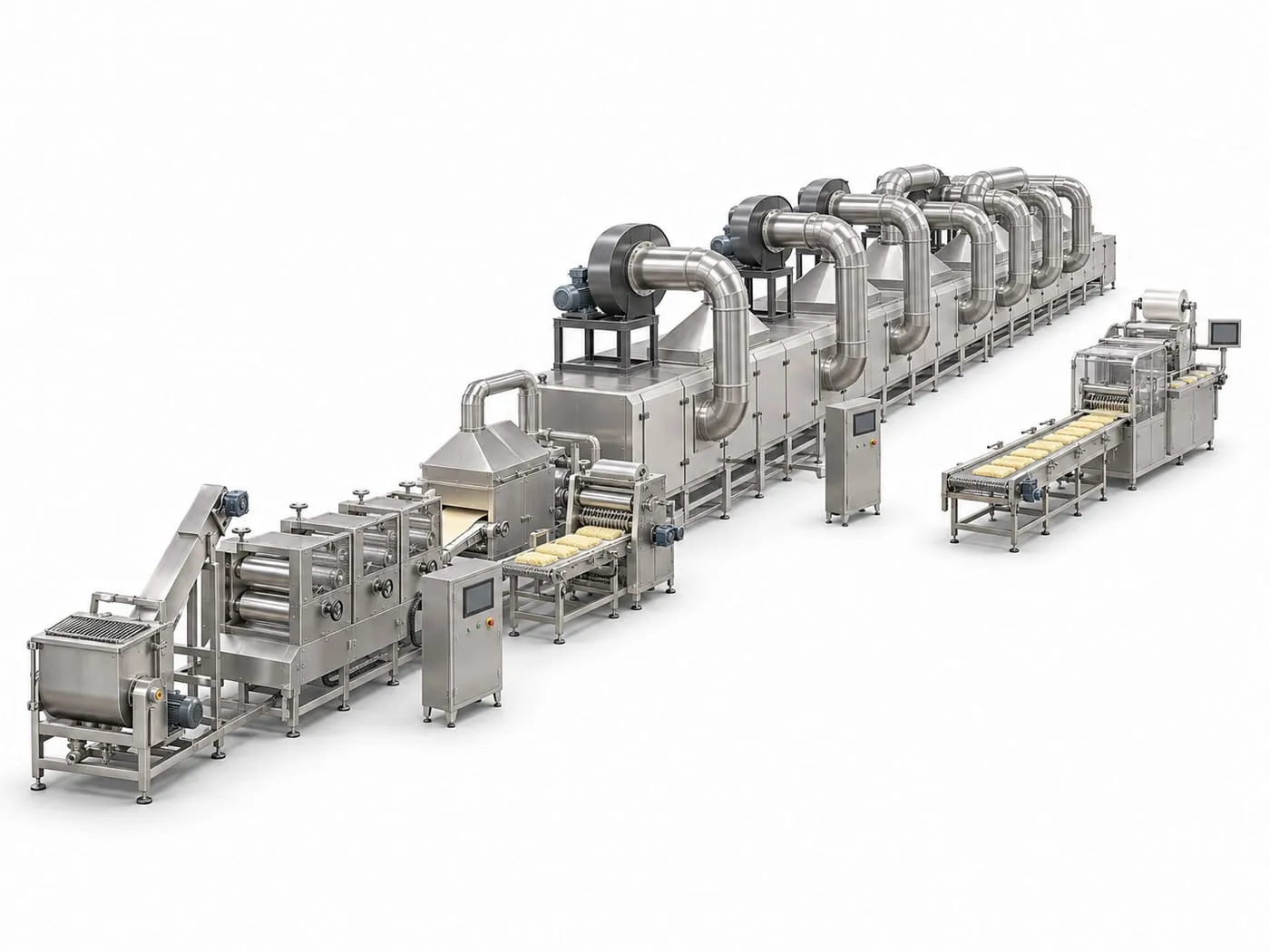
Instant Noodle Production Line
New and expanding noodle brands that need one supplier for the whole line, from dough mixing to packing.
Sized to finished noodle blocks per hour at a set block weight

04 · Instant Noodle & Frozen Food — Production line
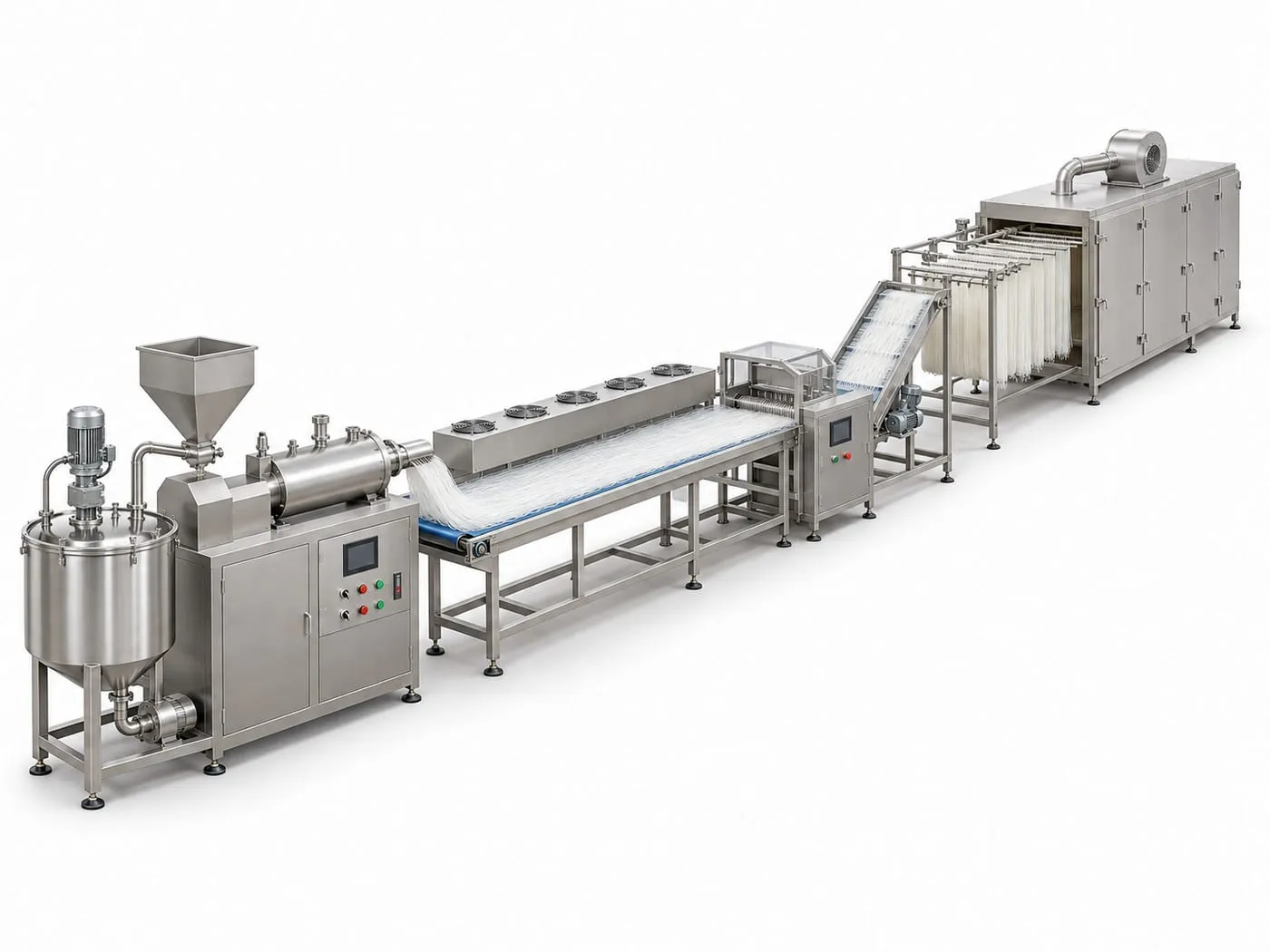
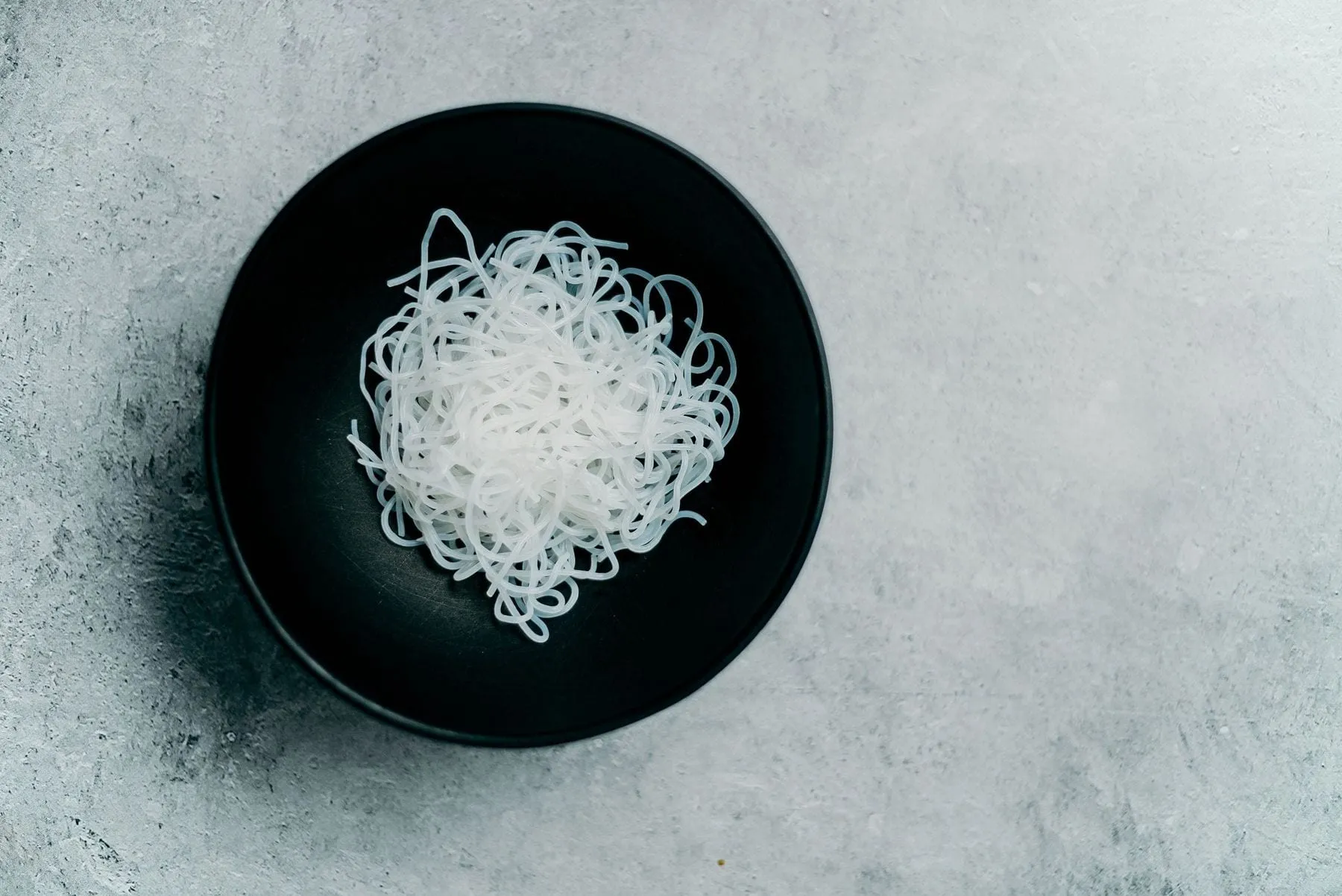
Makes glass noodles from bean or tuber starch by forming a cooked starch paste into strands, then setting, washing and drying them.
Short answer: A starch vermicelli production line turns mung bean, pea, potato or sweet potato starch into glass noodles: the starch is made into a paste, formed into strands by extrusion or by dropping through a perforated plate, cooked, set (often by freezing), washed and dried. The starch source and the clarity and boil resistance you want decide the route.
| Form | Suits | Watch out for |
|---|---|---|
| Extruded | Steady output, compact layout | Die choice per diameter, paste consistency |
| Drop-through | Fine, very even strands, traditional texture | Hot water management, operator skill |
| Freeze-thaw washing | Better strand separation and texture | Refrigeration load and floor space |
The freeze-thaw step can be combined with either forming method. Drying is often the bottleneck: many traditional producers dry outdoors or in drying rooms, while a mechanical dryer gives steadier results year-round at the cost of energy and equipment.
Starch arrives as a purchased raw material in most plants. Cooking water and steam come from a food steam generator; the setting step can use a food freezer. Dried noodles can be finished in a hot air dryer and packed on a VFFS packaging machine. For noodles made from rice rather than starch, see the rice noodle production line.
Extruded vermicelli
a starch dough is cooked and pressed through a die, a compact route for steady output.
Drop-through forming
a starch paste falls through a perforated plate into hot water, the traditional way to form fine, even strands.
Freeze-thaw washing
strands are frozen, thawed and washed to separate them and improve texture before drying.
Our engineers check these points with you, so the quotation fits your site rather than a catalogue default.
Mung bean and pea starch are known for clear, firm noodles; potato and sweet potato starch are widely used and cost less. Many producers blend starches. The choice changes the process settings, so tell us what you plan to use.
Freezing and thawing the cooked strands helps the starch set and makes the noodles separate cleanly without sticking. Whether you need it depends on the starch and the forming method.
Starch purity, how fully the starch is cooked, water quality and drying conditions. We discuss your clarity target and check sample starch before fixing the line.
Tell us your raw material, finished product and target output. Our engineers reply with a matched configuration and quotation.
What to send with your inquiry
Email sales@hnfoda.com
Instant Noodle & Frozen Food
New and expanding noodle brands that need one supplier for the whole line, from dough mixing to packing.
Sized to finished noodle blocks per hour at a set block weight
Instant Noodle & Frozen Food
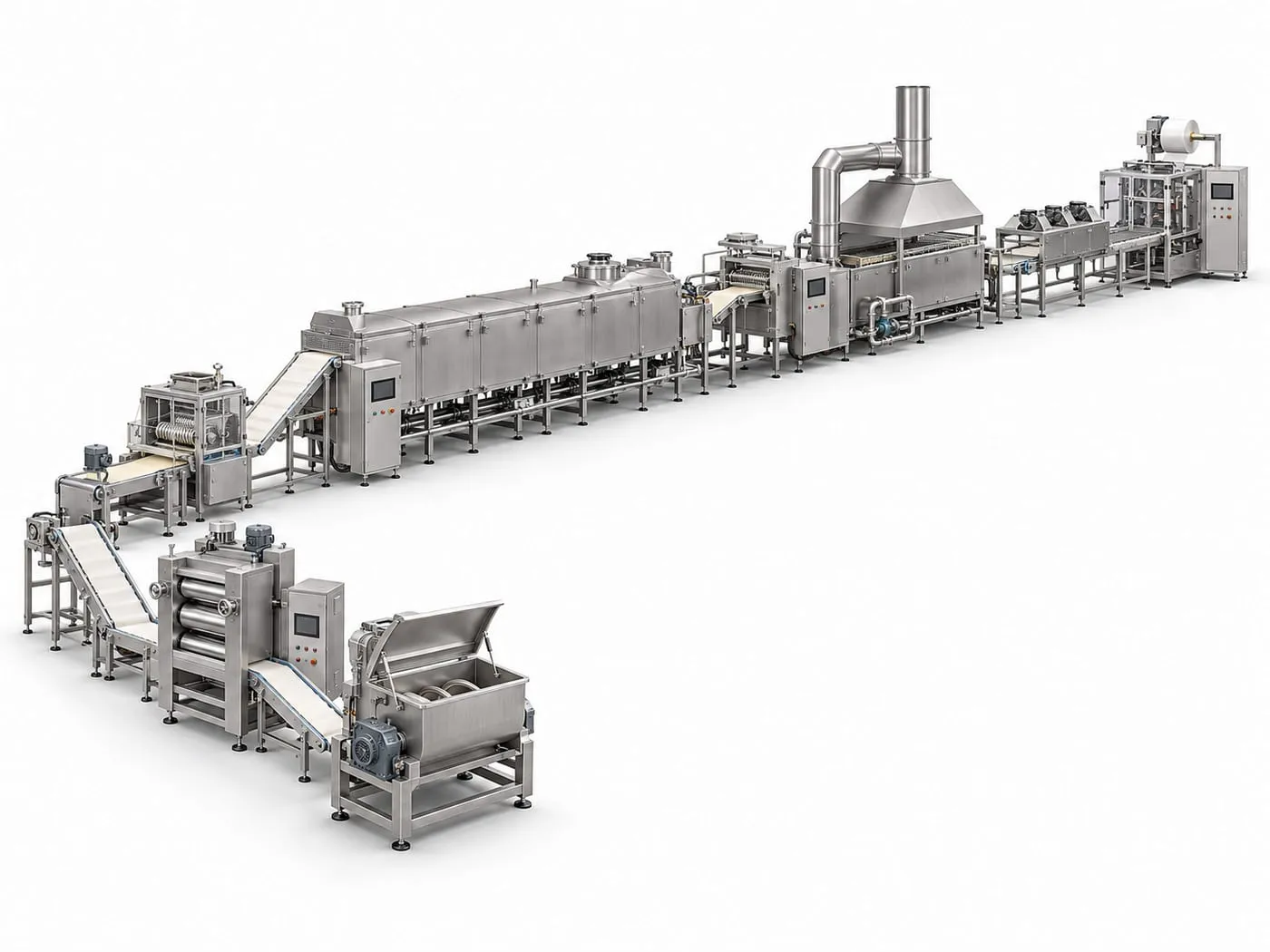
Noodle makers adding an air-dried, lower-fat product or building a dedicated non-fried plant.
Sized to dried noodle blocks per hour at a set block weight
Instant Noodle & Frozen Food
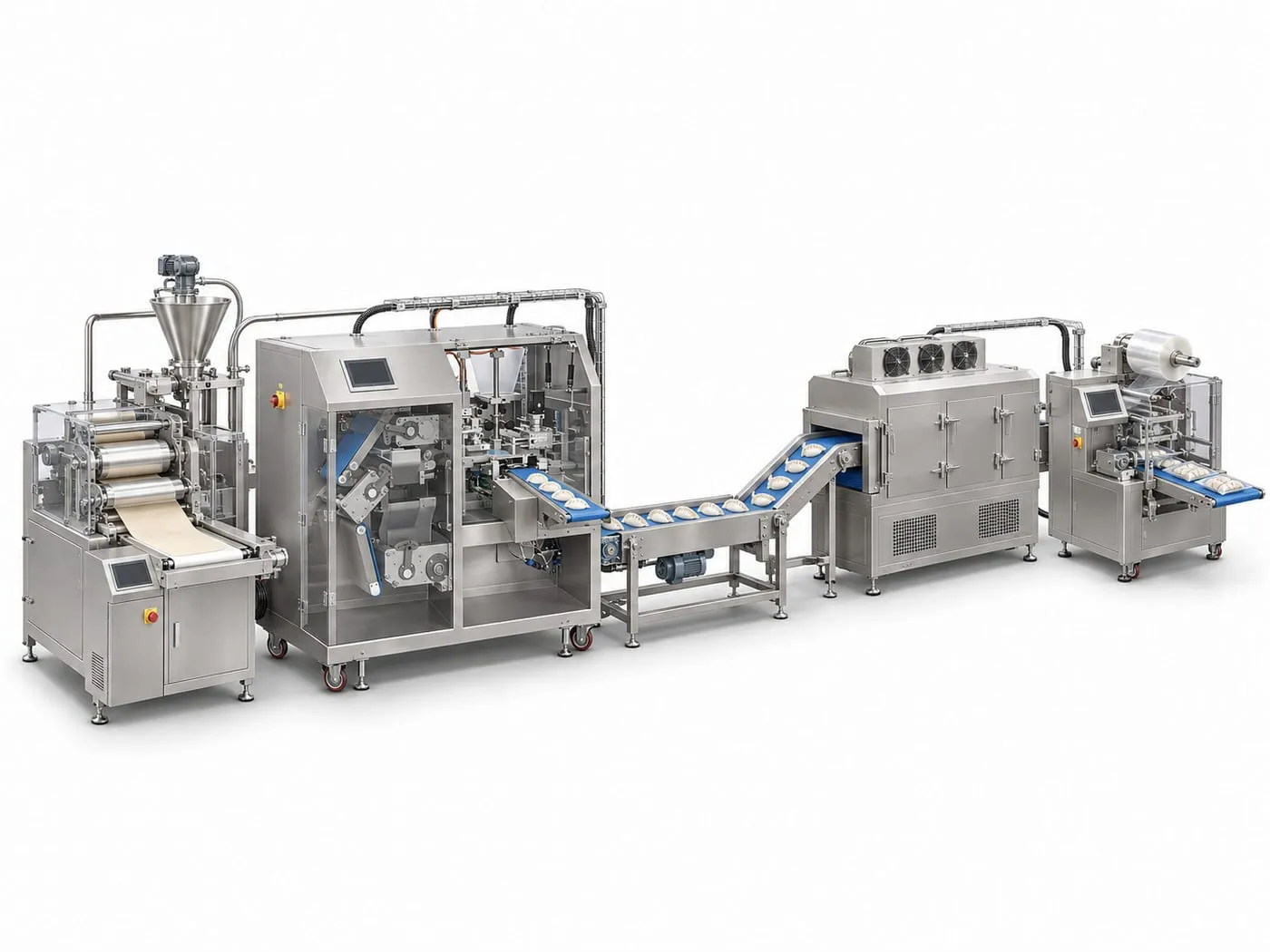
Frozen food factories and new brands moving from hand-made or semi-automatic dumplings to steady machine output.
Sized to finished frozen dumplings per hour at a set piece weight
Instant Noodle & Frozen Food
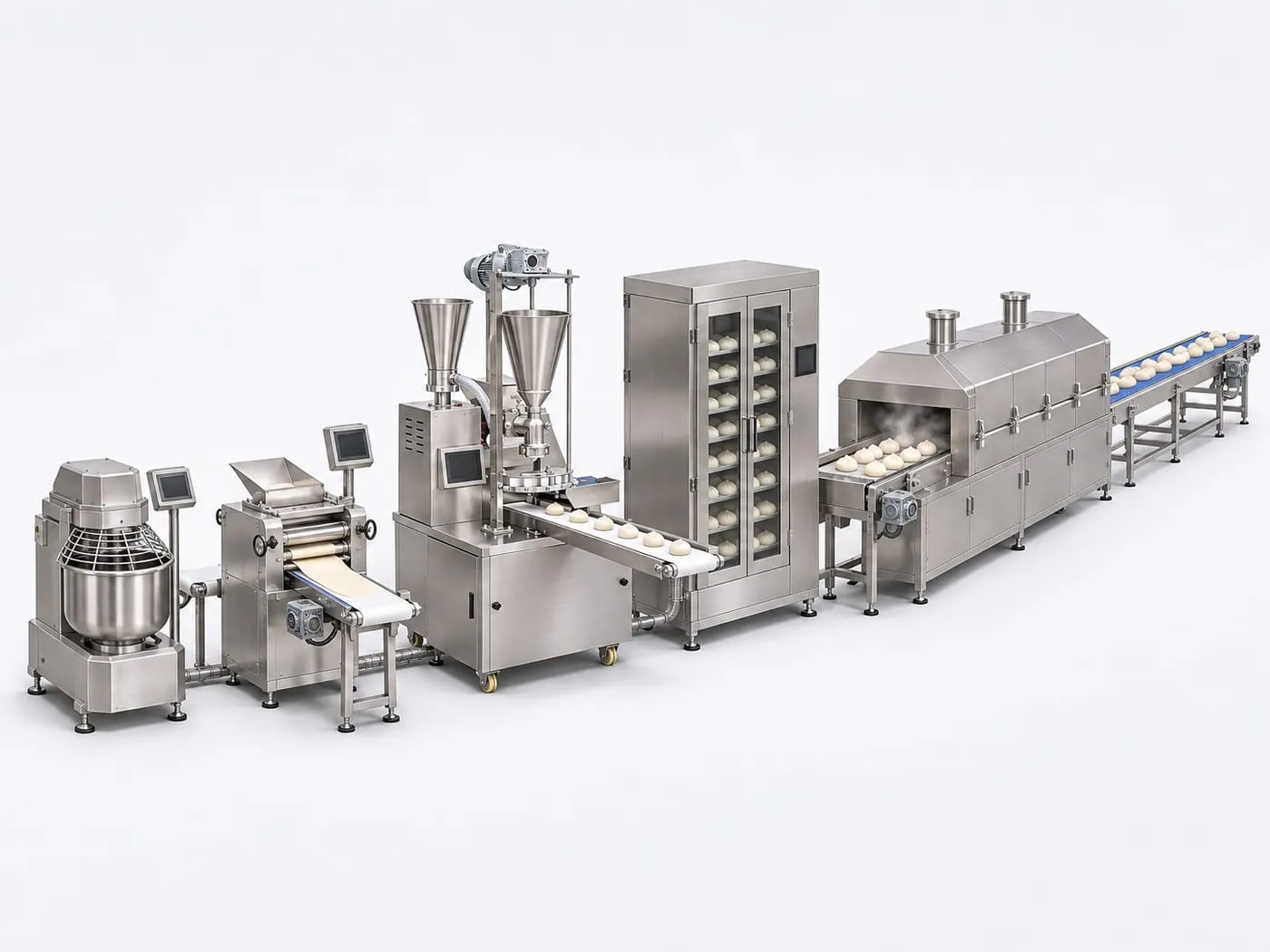
Central kitchens, frozen food plants and bakeries scaling up plain or filled steamed buns.
Sized to finished buns per hour at a set piece weight