Skip to content

02 · Dried Fruit & Nut Processing — Equipment

Hot-Air Dryer

Dries fruit, vegetables, nuts and similar foods with circulating hot air. Tray, heat pump and multi-layer belt designs.

Rating
Sized to wet product loading (kg per batch or kg/h) and the moisture to remove
Versions
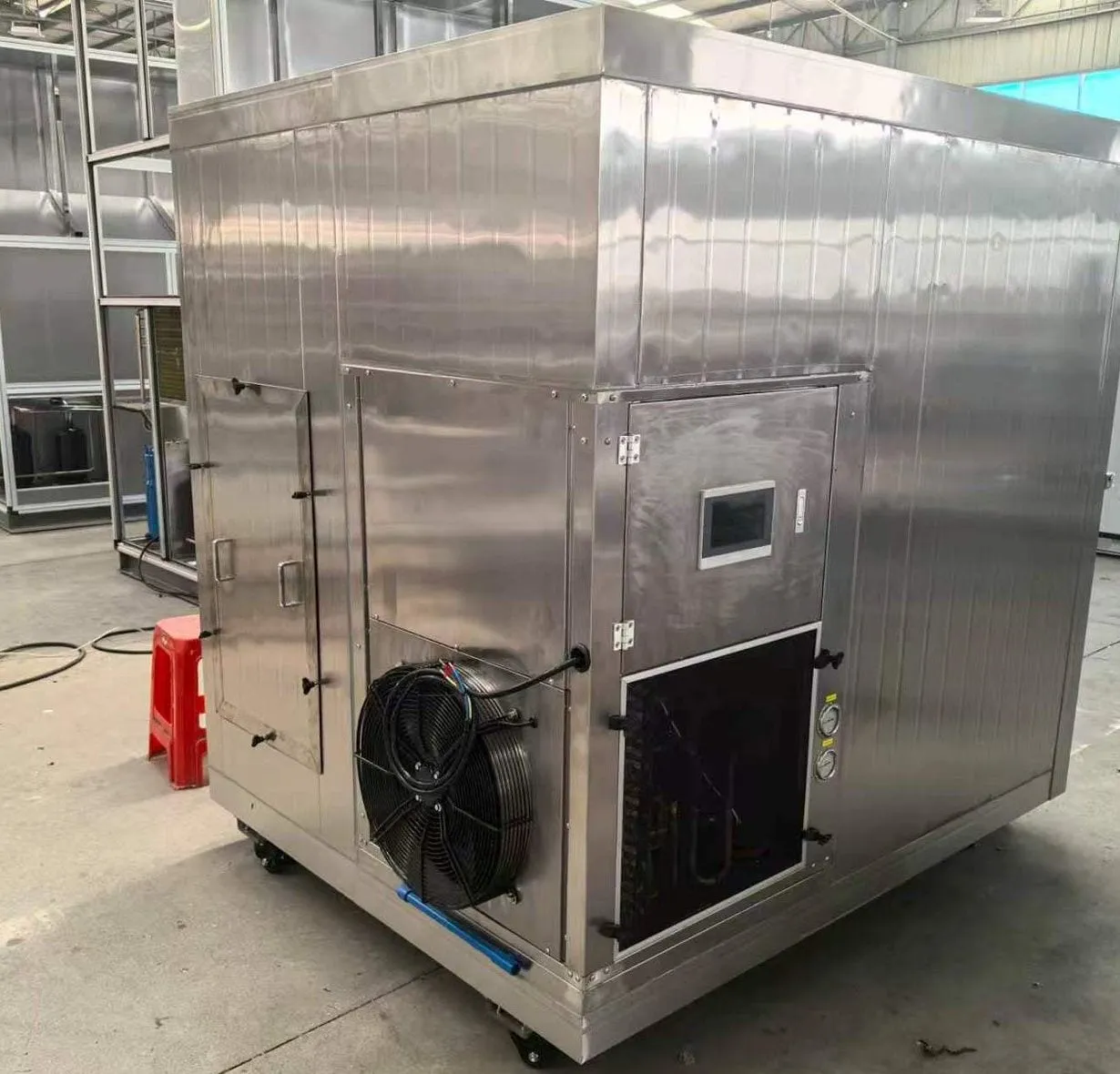
Tray cabinet · Heat pump dryer · Multi-layer belt dryer
Best for
Dried fruit, dehydrated vegetable, herb, spice and nut processors from small batches to continuous plants
  • Batch or continuous designs from one supplier
  • Heat source chosen to match your site and energy prices
  • Controlled air temperature and humidity exhaust
  • Food-contact trays and belts in stainless steel on most models; confirm per quote

Short answer: A hot-air dryer lowers the moisture of fruit, vegetables, nuts and herbs by blowing heated air over and through the product and carrying the humid air away. The design is set by how much water must be removed, the final water activity you need, how much product sits on each square metre, and the heat source available at your site.

How it works

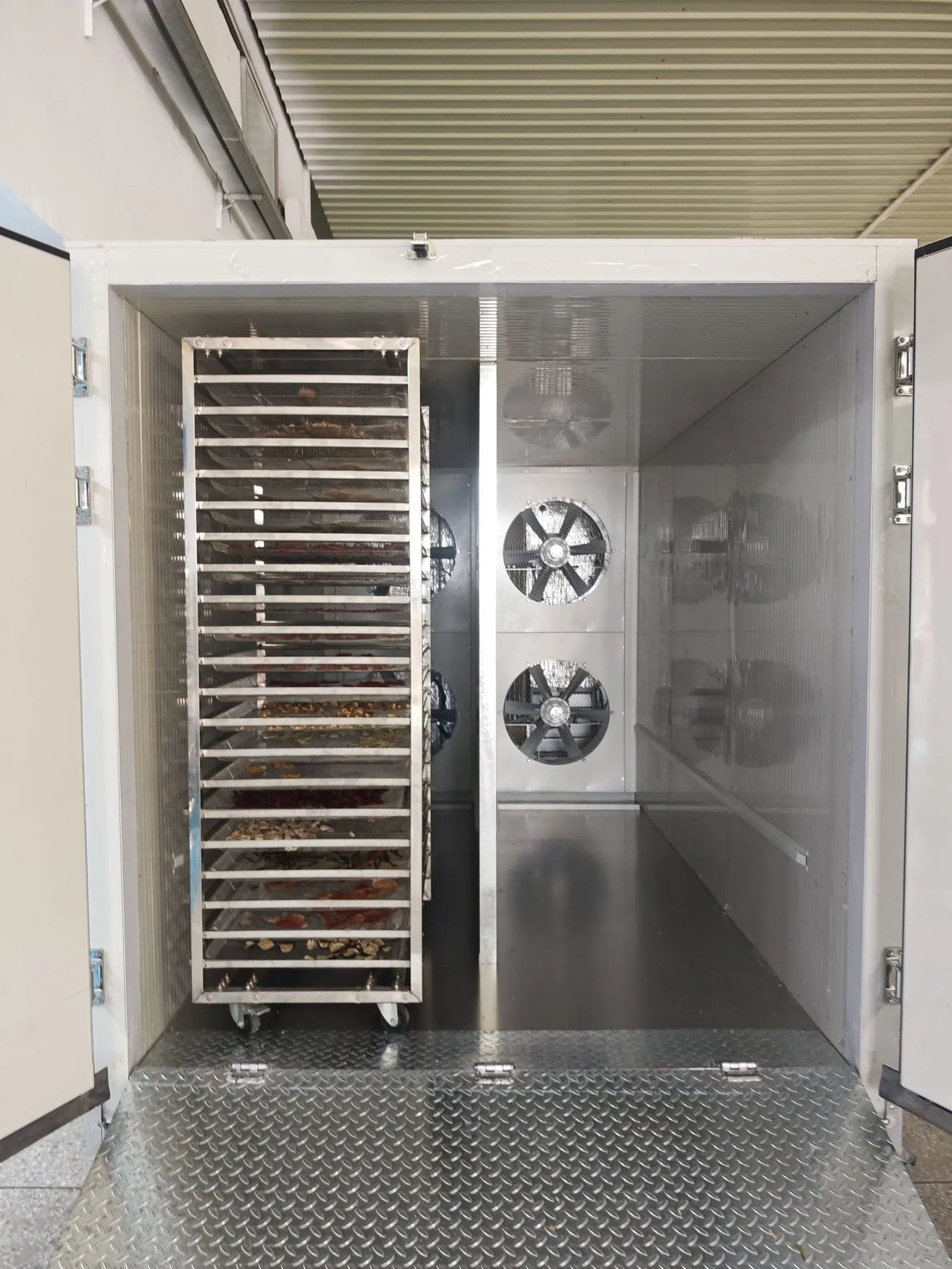
Fans circulate air across a heater and then through the drying chamber, where product sits on trays or moving belts. Warm air picks up moisture from the product surface; part of this humid air is exhausted and replaced by fresh air so drying keeps going. A controller holds the air temperature and adjusts the exhaust.

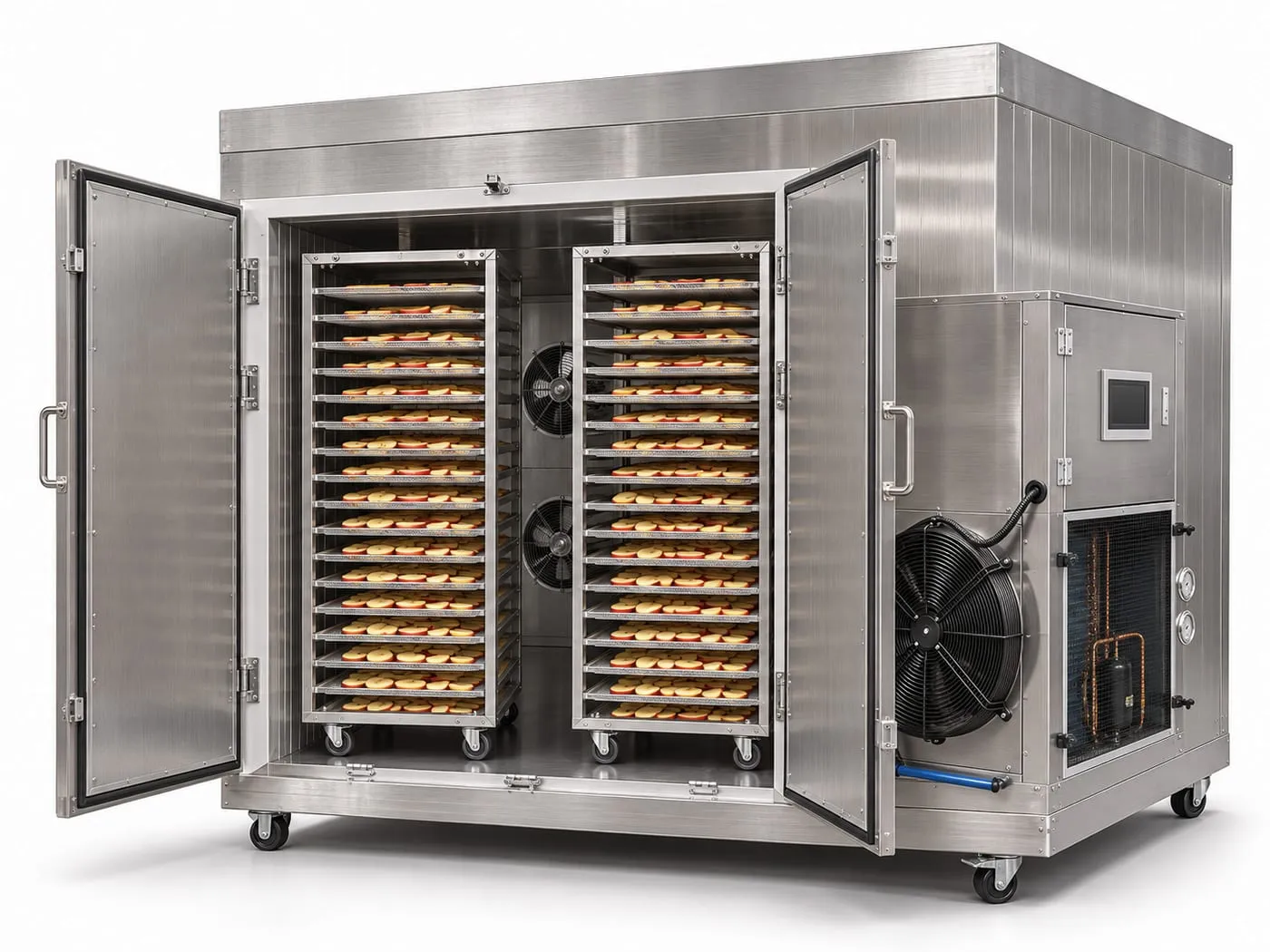
In a tray cabinet, trolleys are wheeled in and stay until the batch is done; air direction may be reversed during the cycle so all trays dry evenly. A heat pump dryer passes humid air over a cold coil to condense water and reuses the heat, so drying can run at lower temperatures. A multi-layer belt dryer carries product on several stacked belts; it falls from one belt to the next, which turns it over, and dries through zones with different temperatures.

Which configuration fits

Form Suits Watch out for
Tray cabinet Many products, small to medium batches Loading and unloading labour
Heat pump dryer Heat-sensitive fruit, herbs, higher energy prices Higher purchase cost; drying slower at low temperature
Multi-layer belt dryer Large volumes of vegetables, fruit dice, nuts Needs steady feed of one product

What we need from you to quote

  • Products, piece size and thickness
  • Starting moisture and target moisture or water activity
  • Throughput measured on wet product loaded per batch or per hour
  • Heat source and energy prices, plus power supply
  • Building space and how humid air can be exhausted
  • Upstream preparation and downstream cooling and packing

Where it sits in a line

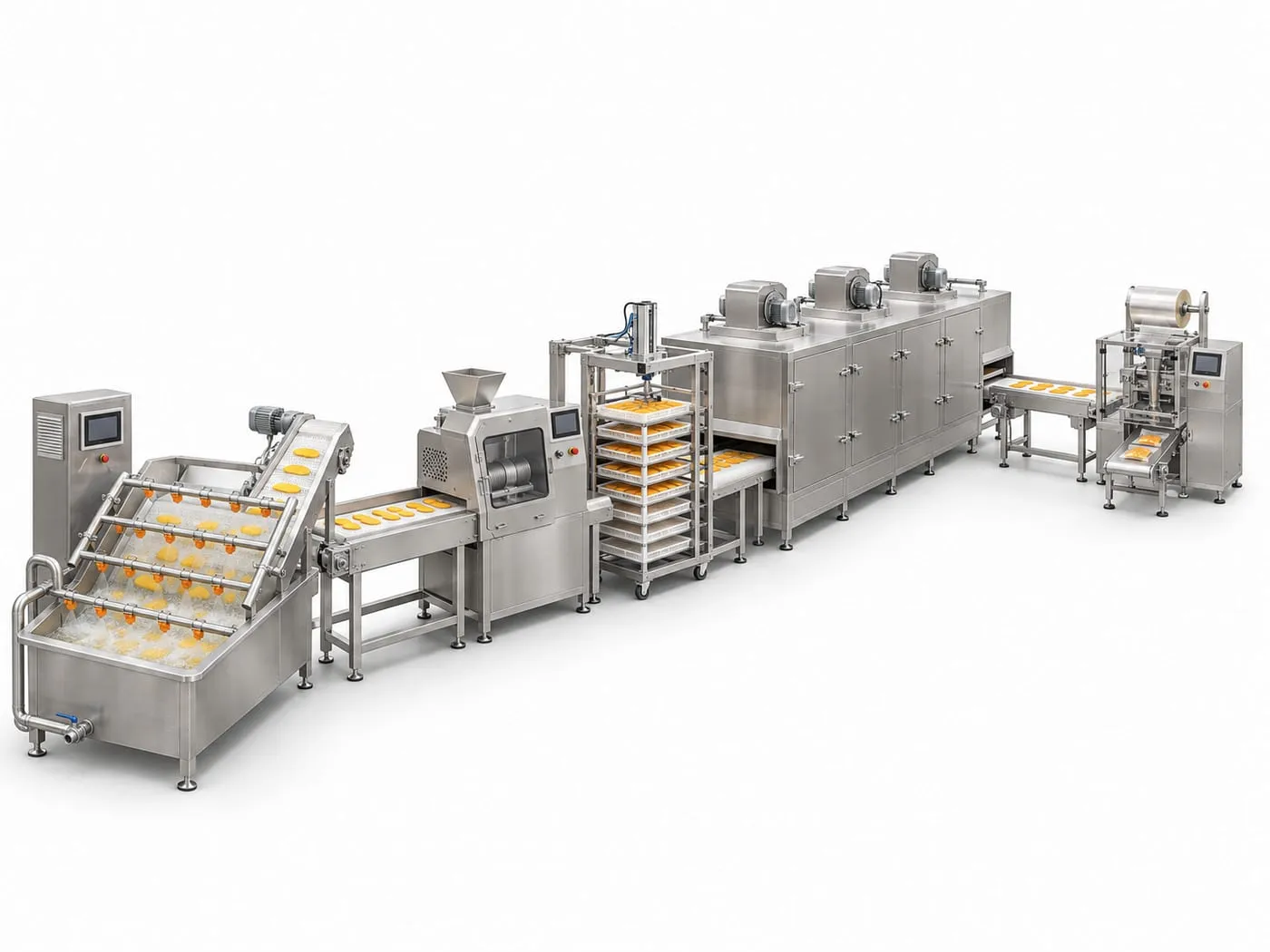
Product arrives from a vegetable cutting machine, a blanching and cooling line or an air knife dewatering machine. It is the drying stage of a dried fruit processing line. For crisp, high-value products compare it with a freeze dryer.

Common configurations

  1. Option A

    Tray cabinet

    product on trays in trolleys or racks; flexible for many products and small to medium batches.

  2. Option B

    Heat pump dryer

    recovers heat from exhaust air; lower drying temperatures and lower energy use per kg of water removed in many cases.

  3. Option C

    Multi-layer belt dryer

    product moves continuously over several belts; suits high volumes of one product.

What we confirm before quoting

Our engineers check these points with you, so the quotation fits your site rather than a catalogue default.

  1. 01Initial and final moisture content
  2. 02Target water activity of the finished product
  3. 03Loading density per tray or belt area
  4. 04Heat source available: steam, gas, electricity, biomass or heat pump
  5. 05Humid air exhaust and how it is controlled
  6. 06Batch or continuous operation

Frequently asked questions

  1. How long does drying take?

    It depends on the product, piece thickness, starting and final moisture, loading density and air temperature. Thin fruit slices dry much faster than whole fruit. We estimate cycle time from your product data and confirm it in trials where possible.

  2. Is a heat pump dryer worth the extra cost?

    It often uses less energy per kg of water removed and dries at gentler temperatures, which helps colour. It pays off when energy is expensive and the dryer runs many hours a year. We compare running costs with your energy prices.

  3. Why is water activity more important than moisture?

    Water activity indicates how available the water is for microbial growth and browning, so it relates directly to shelf stability. Two products with the same moisture can have different water activity, especially with added sugar.

Get a quote for the Hot-Air Dryer

Tell us your raw material, finished product and target output. Our engineers reply with a matched configuration and quotation.

What to send with your inquiry

  1. 1Raw material and its condition
  2. 2Finished product and packaging
  3. 3Target output — raw input or finished product
  4. 4Site photos, power supply, utilities

Email sales@hnfoda.com

Send your inquiry

Your details are used only to answer your inquiry — see our Privacy Policy.

Buyer guides

  • Dried Fruit & Nut Processing

    Dried Fruit Processing Line

    Investors and food companies starting or expanding dried fruit, fruit chip or dried fruit snack production.

    Sized to fresh fruit input (kg/h or tonnes per day); dried output depends on moisture removed

  • Dried Fruit & Nut Processing

    Date Processing Line

    Date packers and processors adding value with washed, pitted or paste products for retail and industry.

    Sized to whole date input (kg/h or tonnes per day)

  • Dried Fruit & Nut Processing

    Nut Butter Production Line

    Food companies and brand owners launching peanut butter, almond butter or nut spread products.

    Sized to roasted nut input (kg/h); output is close to input for pure nut butter

  • Dried Fruit & Nut Processing

    Nut Seasoning Line

    Snack nut producers making salted, spiced, honey-roasted or coated nuts.

    Sized to roasted nut input (kg/h) plus the seasoning added

WhatsAppRequest a quote