Guides
Fruit Drying Machine for Mango and Tropical Fruit: Hot Air, Freeze or Microwave
Compare hot-air, heat pump, freeze and microwave dryers for mango and tropical fruit: quality, energy, sizing and a quote checklist.
- Prepared by
- HNFODA Applications Engineering
- Topic
- Guides
- Published
- Reading time
- 6 min read · 2 sources
On this page
Short answer: for mango and most tropical fruit slices, start with a hot-air or heat pump dryer; it is the usual route for chewy dried fruit and handles large volumes at reasonable cost. Freeze drying gives a crisp, light, high-value product but costs more to buy and run. Microwave drying is mostly a finishing or combined step. Whichever you choose, size the plant on fresh fruit per day and the water to be removed, and get the pre-treatment right, because it shapes quality as much as the dryer does.
Three drying routes compared
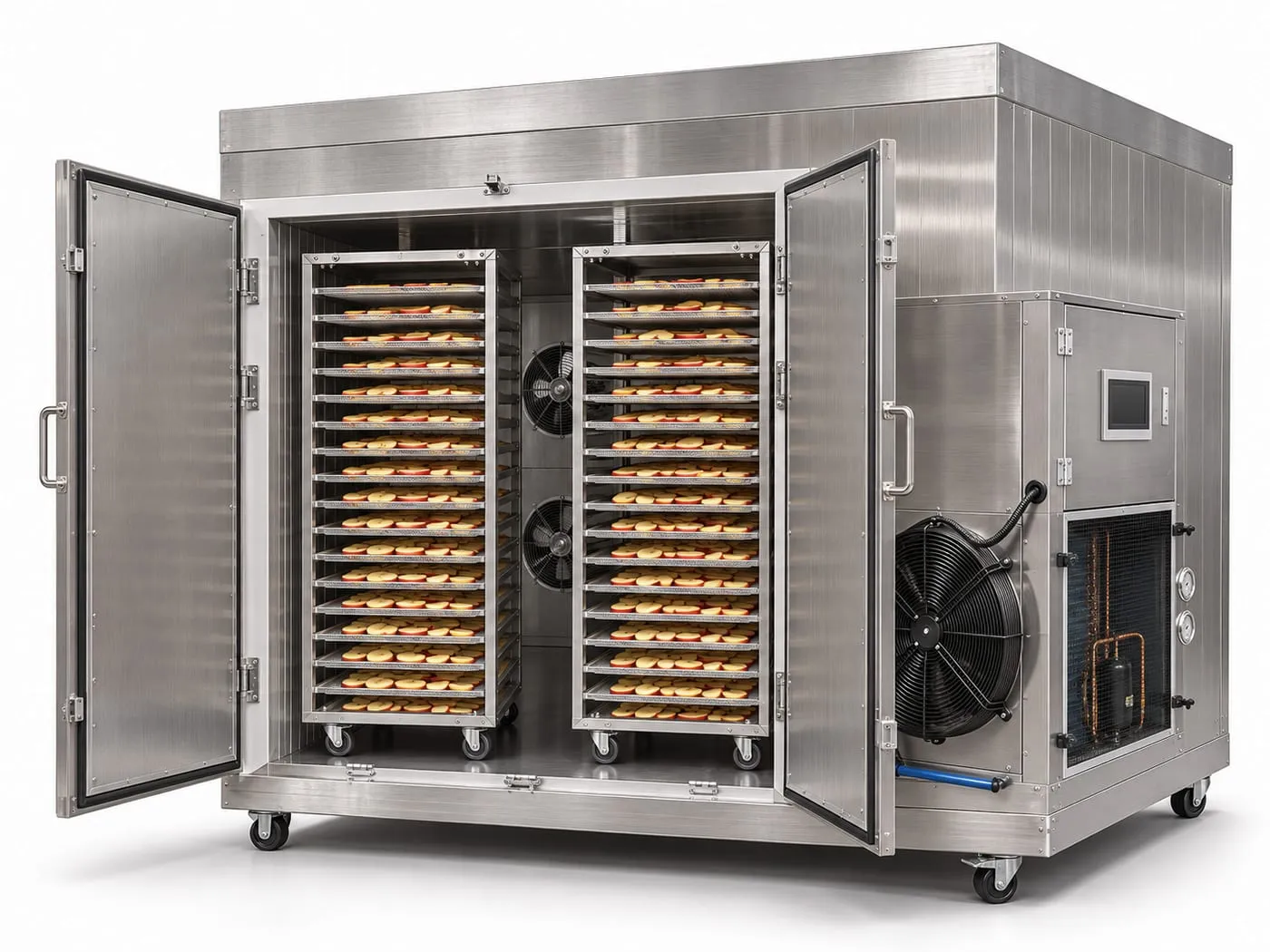
Hot air. Warm air passes over fruit slices on trays or belts. Dryers use steam, gas, biomass or electric heat. The product is chewy with a deeper colour. See our hot-air dryer page for tray cabinet, heat pump and multi-layer belt designs.
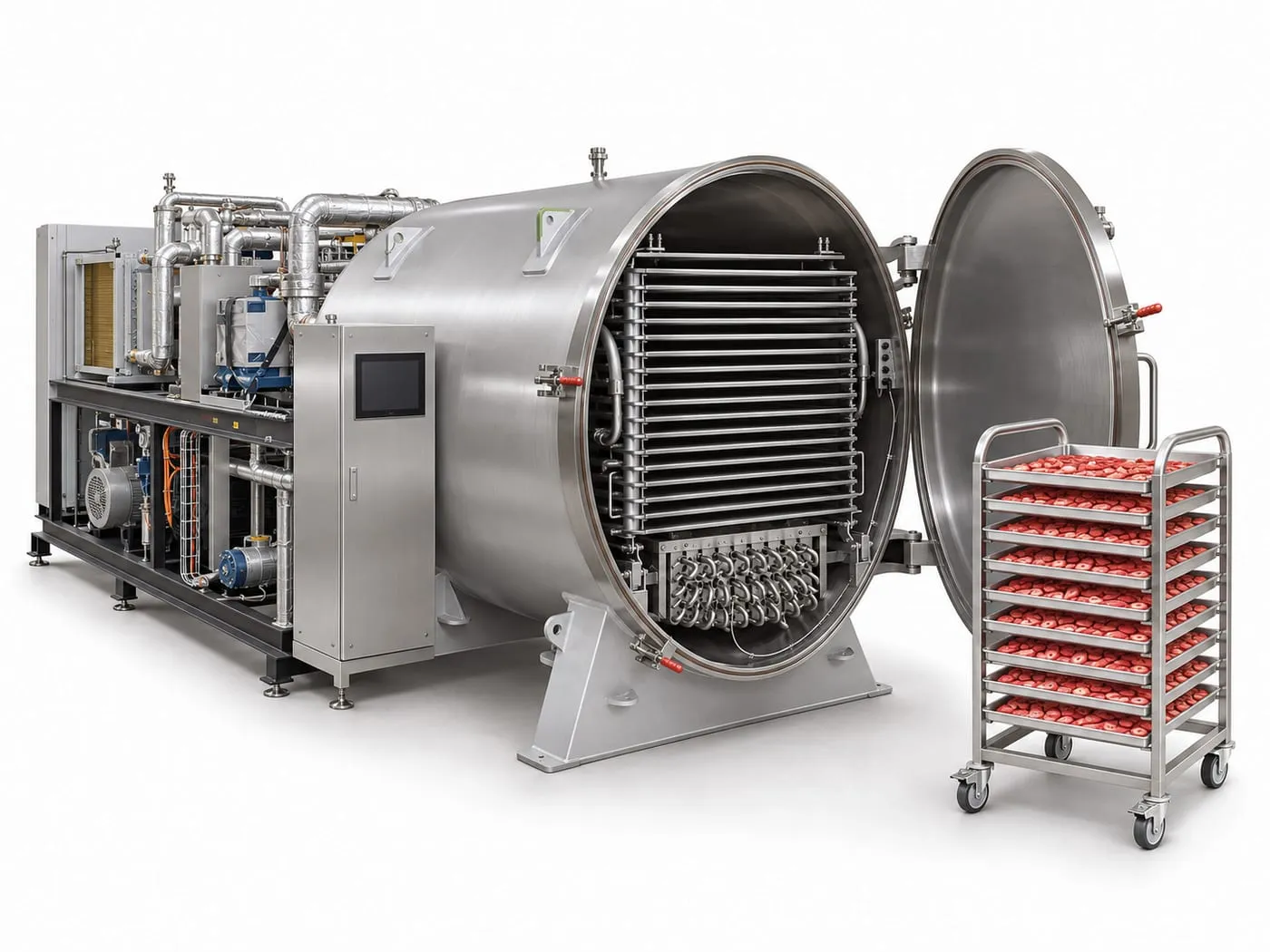
Freeze drying. Fruit is frozen and then dried under vacuum. The result is a light, crisp product that keeps shape and colour well. The freeze dryer comes as a batch cabinet or an industrial tray system and is a larger investment with longer cycle times.
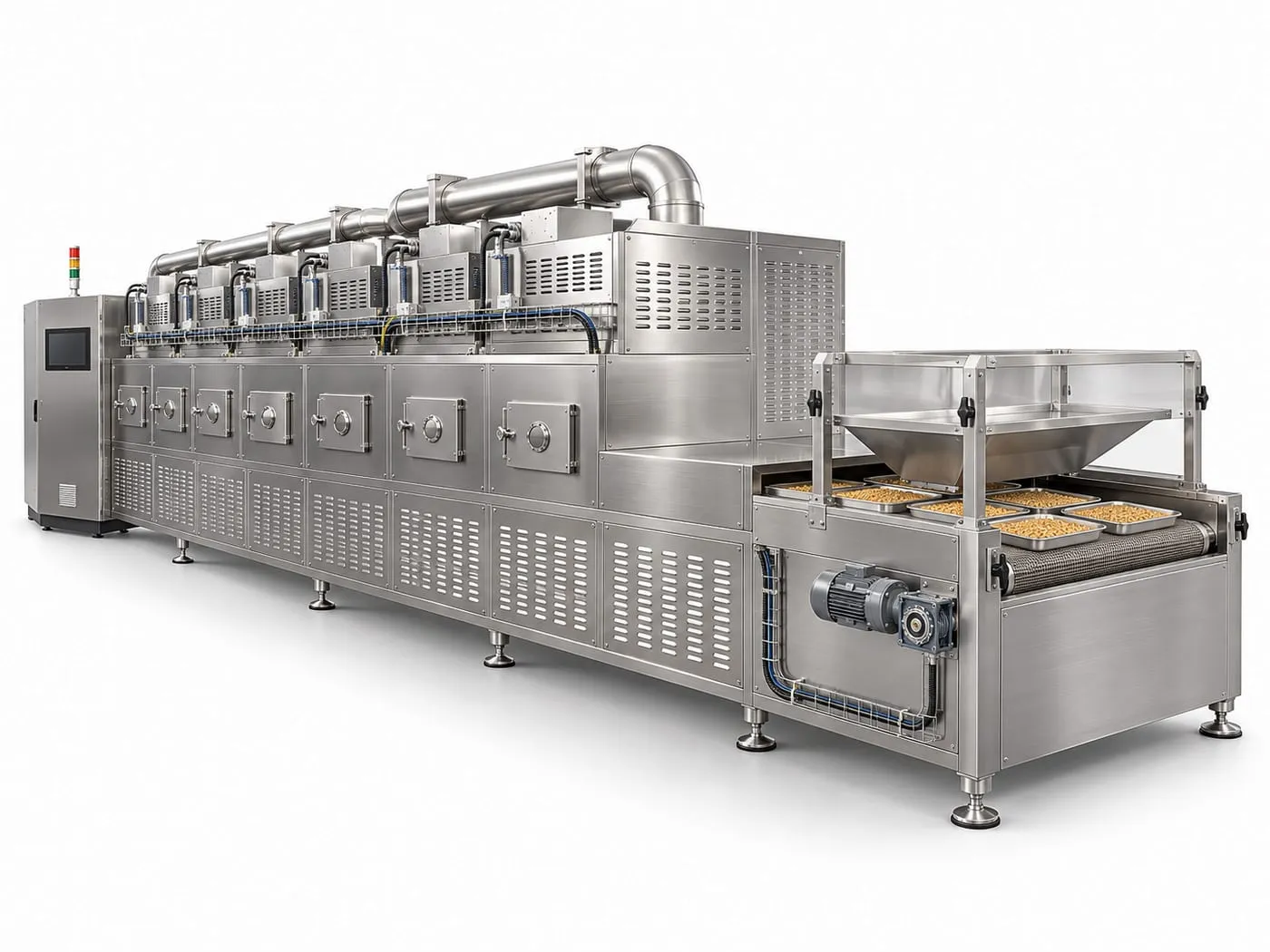
Microwave. Microwave energy heats water inside the fruit. A microwave food dryer can be a continuous belt, a batch unit, or combined with hot air. It is usually chosen to speed up the final stage, not to replace the dryer for a whole mango line.
What published mango research shows
A laboratory study in the journal Food Chemistry: X compared three methods on mango slices: hot-air, far-infrared-assisted drying and vacuum freeze drying, at temperatures from 50 to 70 °C and slice thicknesses from 3 to 10 mm. It looked at quality (ascorbic acid, rehydration, sugar-acid ratio) and energy use, and reported that the far-infrared route was the most cost-effective of the three in that test. The study is a laboratory comparison, not a factory guide, but it makes two useful points: slice thickness and drying temperature matter, and the cheapest route to good dried mango is not always the one you assume.
A 2024 pilot-scale study of dried mango in Vietnam used a heat pump dryer. The slices were blanched, soaked in a sugar solution with citric acid and glycerol and dried at low temperature to a moisture content of about 14–16 percent. The authors reported that the low-temperature route retained polyphenols and gave a product of good appearance. Lower temperature usually means longer drying time, which is the trade-off you accept.
Choosing between them
| Route | Product | Best when | Watch out for |
|---|---|---|---|
| Hot-air (tray or belt) | Chewy dried slices | Mainstream dried mango, large volumes | Colour and case hardening if too hot or too thick |
| Heat pump | Chewy slices at lower drying temperature | Costly fuel, heat-sensitive fruit, steady electricity | Higher purchase price, slower cycles |
| Freeze drying | Crisp, light pieces and powders | Premium snacks, ingredient markets, export niches | High equipment and energy cost, batch cycles |
| Microwave | Faster final drying | Combined with hot air, quality or speed targets | Less common as the only dryer for mango |
Mango line steps
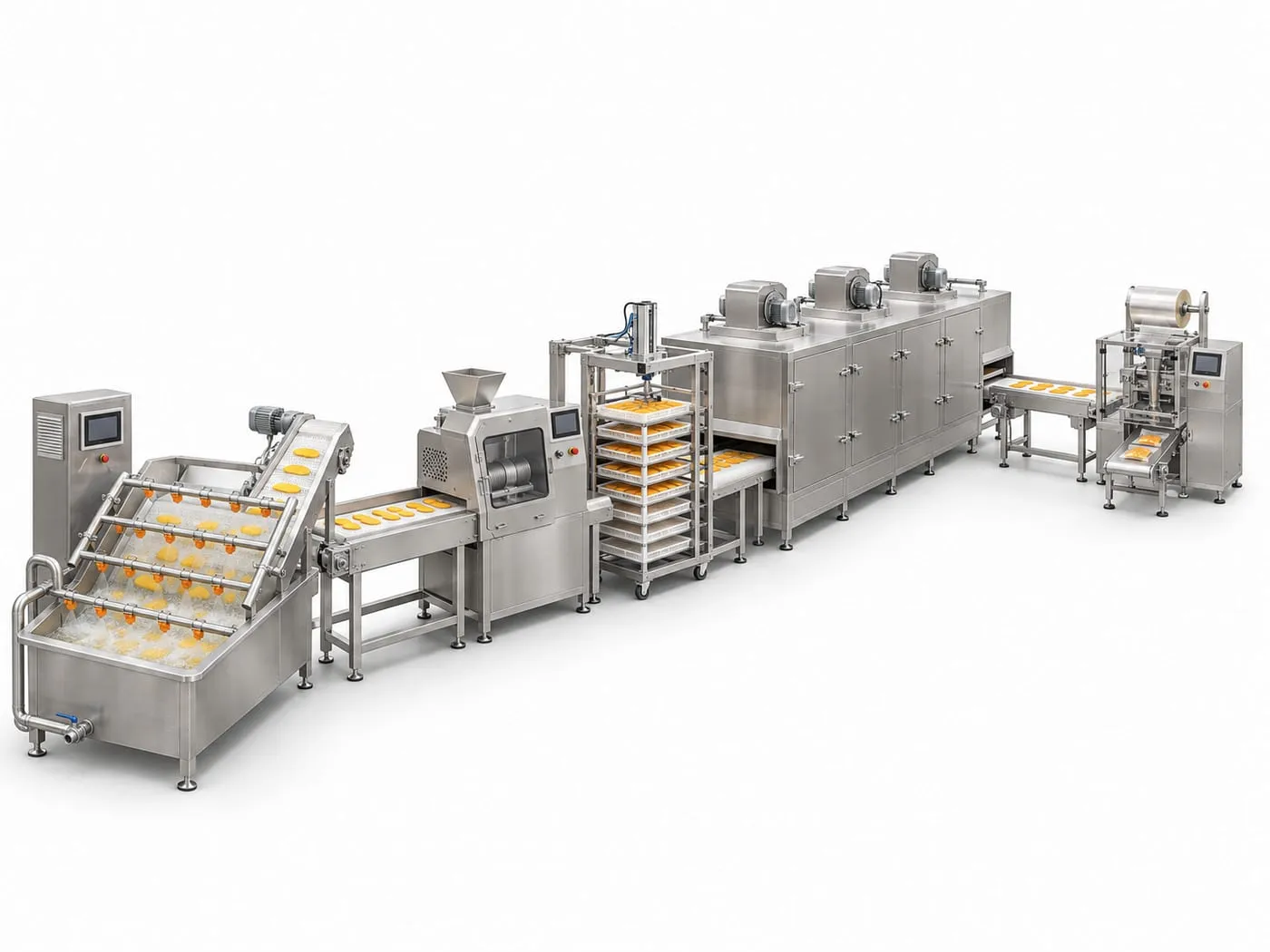
A dried mango plant does more than dry:
- Receive and sort fruit by ripeness and size.
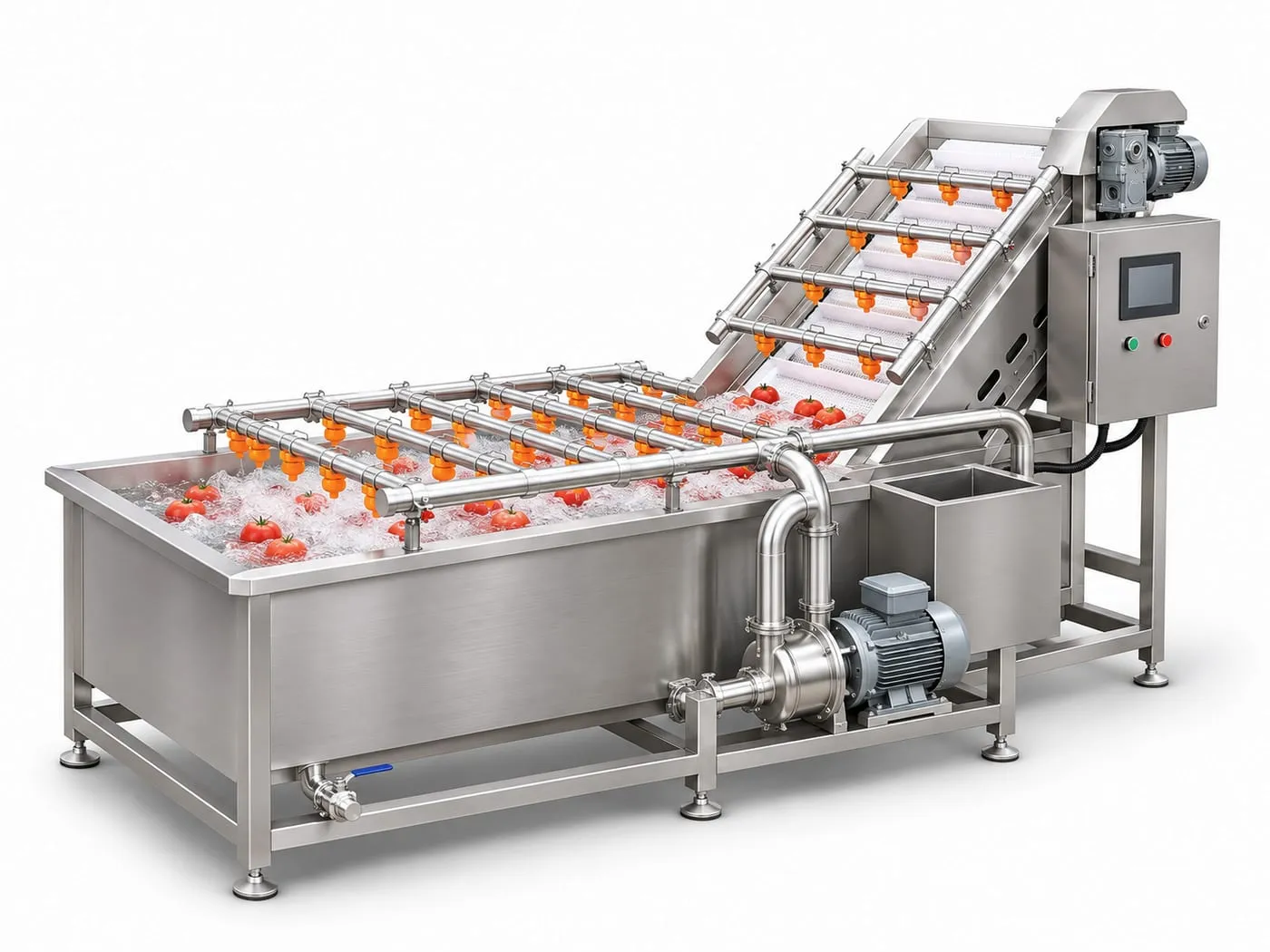
- Wash with a fruit and vegetable washer.
- Peel and stone; mango needs peeling and de-stoning before slicing.
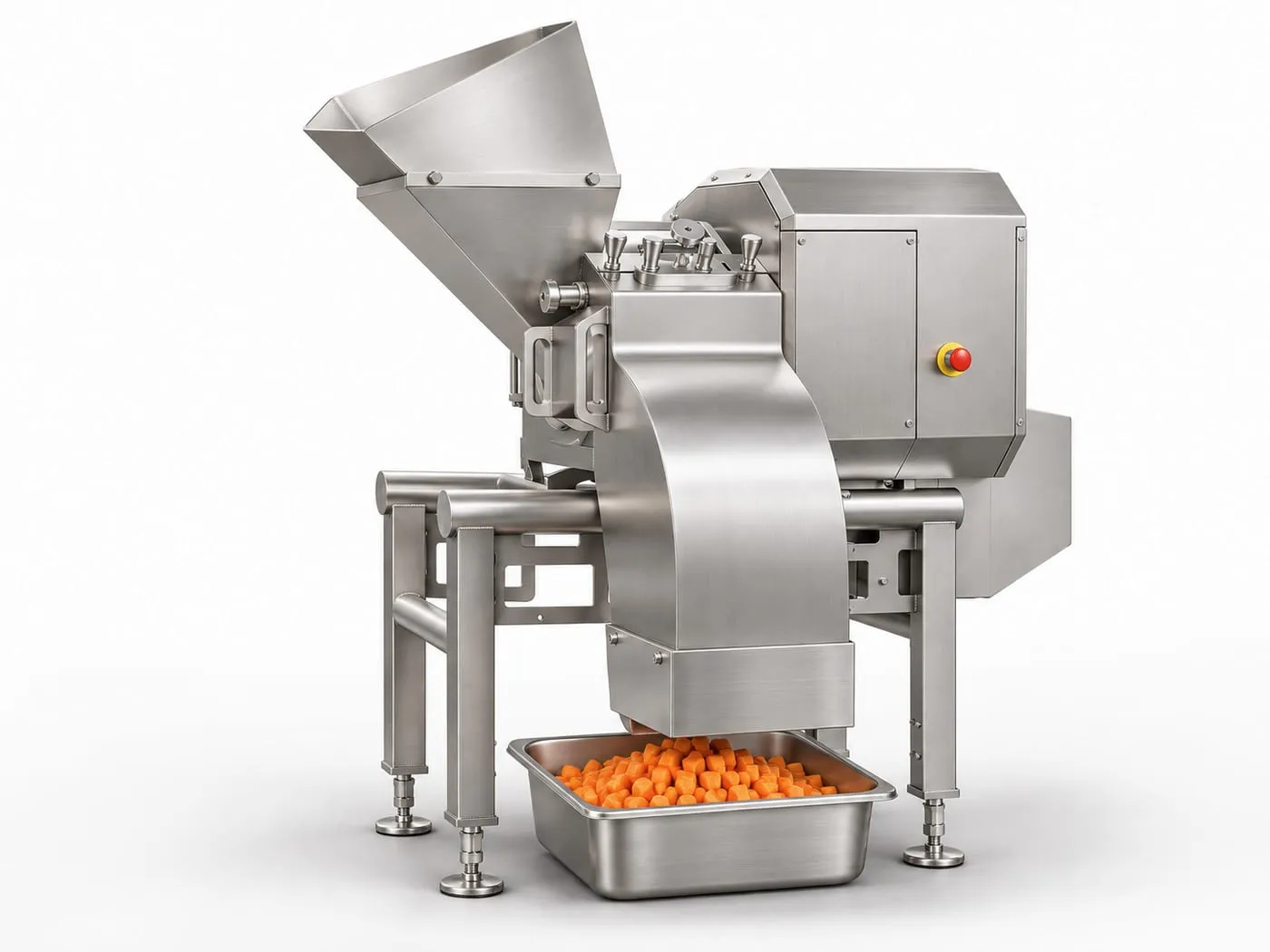
- Slice with a vegetable cutting machine set to a consistent thickness.
- Pre-treat: blanch or dip to protect colour; some producers soak in syrup.
- Dry in the chosen dryer.
- Cool, grade and pack into moisture-resistant packaging.
Our dried fruit processing line page shows how these stations connect, and the dried fruit plant guide covers layout and food-safety flow.
How to size the dryer
- Start from fresh input. Decide how many kilograms of fresh mango you can buy per day in season.
- Estimate water removed. The difference between fresh weight and dried weight is what the dryer must evaporate; this is the capacity measure that matters.
- Account for season. Mango and many tropical fruits are seasonal. A dryer that runs 12 weeks per year costs more per kilogram than one that runs all year on several fruits.
- Plan for batches. Tray dryers run in loads, so match batch size to how much you can slice and load per shift.
- Think about the supply of heat. Check fuel and electricity prices in your area. In places where grid power is unreliable, plan a backup or a fuel-fired heat source.
A drying trial worth running first
Mango varieties differ in sugar, fibre and water content, so a trial with your own fruit is the most useful step before you buy a dryer. A basic trial plan:
- Slice several batches at two or three thicknesses, keeping each batch uniform.
- Pre-treat some batches (blanch, dip or soak) and leave one untreated as a control.
- Dry at two or three temperatures, weigh trays at regular intervals and record time to the target moisture.
- Judge colour, chew, taste and stickiness after cooling, and again after a week in the pack.
- Calculate fresh weight in, dried weight out and the energy or fuel used.
The published mango studies followed this logic: they varied slice thickness, temperature and drying method and measured quality and energy. Your trial does the same for your fruit, and it gives your supplier real data to size the dryer: the water to remove per batch, the drying time and the number of trays. If you cannot run a trial, send a fruit sample and ask whether sample drying can be arranged; we will tell you what is possible for your project.
What to prepare for a quotation
- Fruit type, variety and ripeness at slicing, and a sample if you can send one.
- Fresh fruit per day (or per hour) and days of operation per year.
- Target product: slices, chips, whole fruit, powder; target final moisture.
- Slice thickness and pre-treatment you plan to use.
- Available energy: electricity (voltage, phases), steam, gas, biomass, and local prices.
- Packing format and shelf-life target.
- Site: building size, water, drainage, and staff.
- Delivery location, and whether you need installation and training.
Send these to us through the contact page. For a full plant, see turnkey projects.
Packing and storing dried mango
Dried fruit takes up moisture from the air, which turns it sticky and invites mould. Pack it soon after cooling, in sealed bags or pouches with a good moisture barrier, and store it in a cool, dry place away from sunlight. Measure the final moisture of each batch and keep records of the settings, because a batch dried slightly too little can spoil in the pack even if it looked fine on the tray. Decide your pack sizes early, since they affect the choice of weigher and sealing machine at the end of the line.
Mistakes to avoid
- Sizing on dried output. The dryer must remove the water; size on fresh input.
- Cutting slices unevenly. Thin and thick pieces dry at different speeds, which ruins batch quality.
- Skipping pre-treatment trials. Brown or soft product is usually a pre-treatment or temperature issue.
- Buying a freeze dryer for a mainstream market. Make sure customers will pay for the extra cost.
- Ignoring packaging. Dried fruit picks up moisture quickly; use sealed, moisture-resistant packs.
Frequently asked questions
- Which dryer is best for mango slices?
- Hot-air or heat pump dryers are the usual choice for chewy dried mango: they handle large volumes at moderate cost. Freeze drying gives a light, crisp product at a higher price. Microwave is typically used with hot air or as a finishing stage.
- How much fresh mango do I need for one kilogram of dried mango?
- It depends on the variety, ripeness and target final moisture. Dried fruit is mostly what is left after water is removed, so the fresh input is several times the dried weight. Test your variety to get a yield figure before you size the plant.
- Is a heat pump dryer worth it?
- It runs at lower temperatures and can use less energy per kilogram of water removed, which suits heat-sensitive fruit and areas with costly fuel. It usually costs more to buy and dries more slowly, so compare running cost against purchase price.
- Can I dry several tropical fruits in one dryer?
- Often yes, with separate trays and programmes, but each fruit has its own slice size, pre-treatment and drying curve. Dry fruits one at a time and record the settings.
- What power supply do I need?
- Hot-air dryers can use steam, gas, biomass-fired heat exchangers or electric heaters; heat pump and freeze dryers are electric. Tell us your power, fuel prices and outage history and we will suggest a configuration.
Sources
- [1]Based on quality, energy consumption selecting optimal drying methods of mango slices and kinetics modelling — Food Chemistry: X (via PubMed Central)
- [2]Application of heat pump drying technology to produce dried mango products from Tu Quy mango, Vietnam, on a pilot scale — Frontiers in Sustainable Food Systems, 2024
HNFODA Applications Engineering
Line design, product trials and commissioning
Engineers who size, build and commission HNFODA food processing lines, writing from the questions buyers ask before a quotation. About HNFODA