Fruit & Vegetable Processing
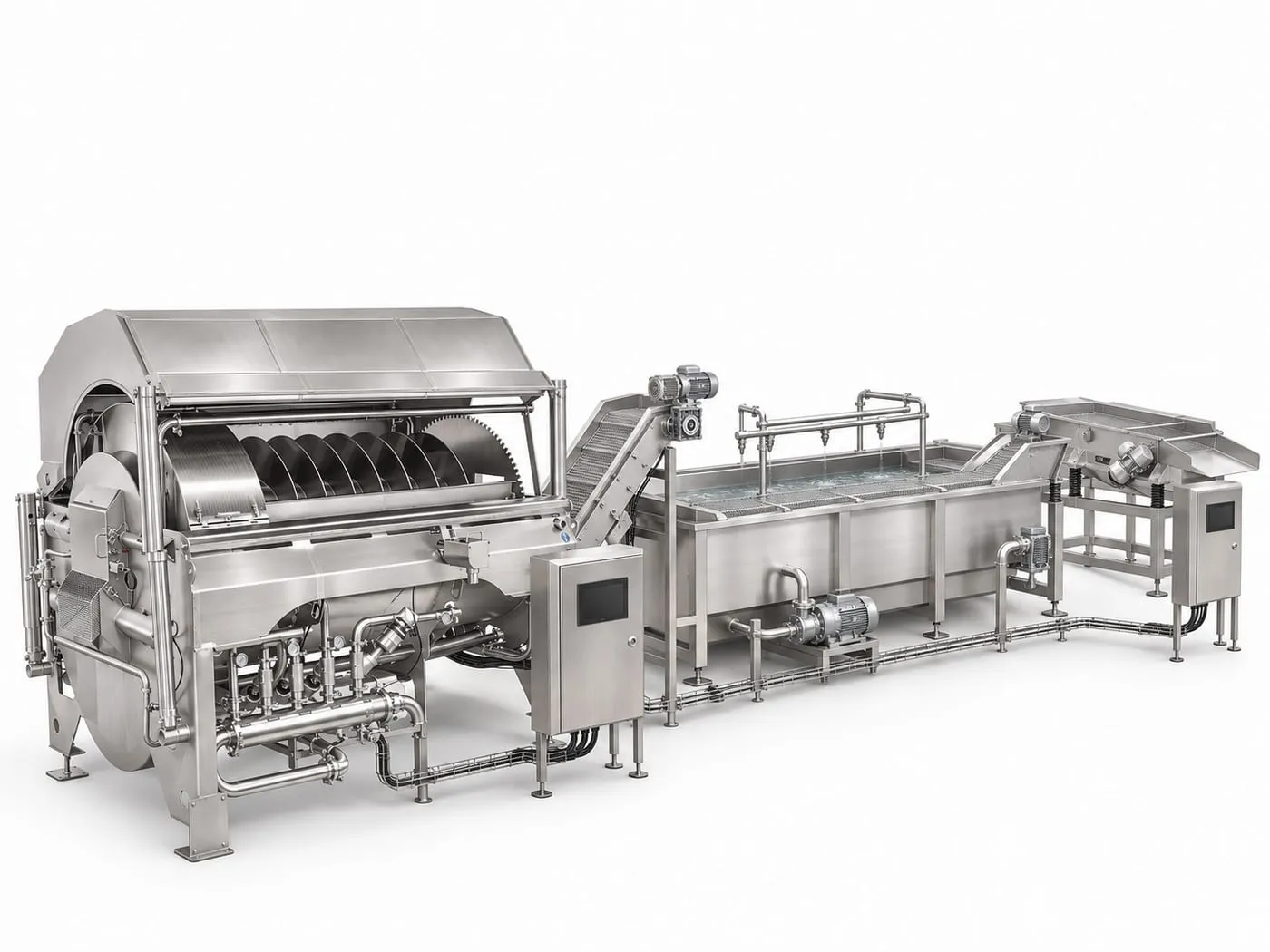
Blanching and Cooling Line
Frozen vegetable, dehydrated vegetable and canning plants that need controlled heat treatment before the next step.
Sized to product input (kg/h) at your residence time and piece thickness

01 · Fruit & Vegetable Processing — Equipment
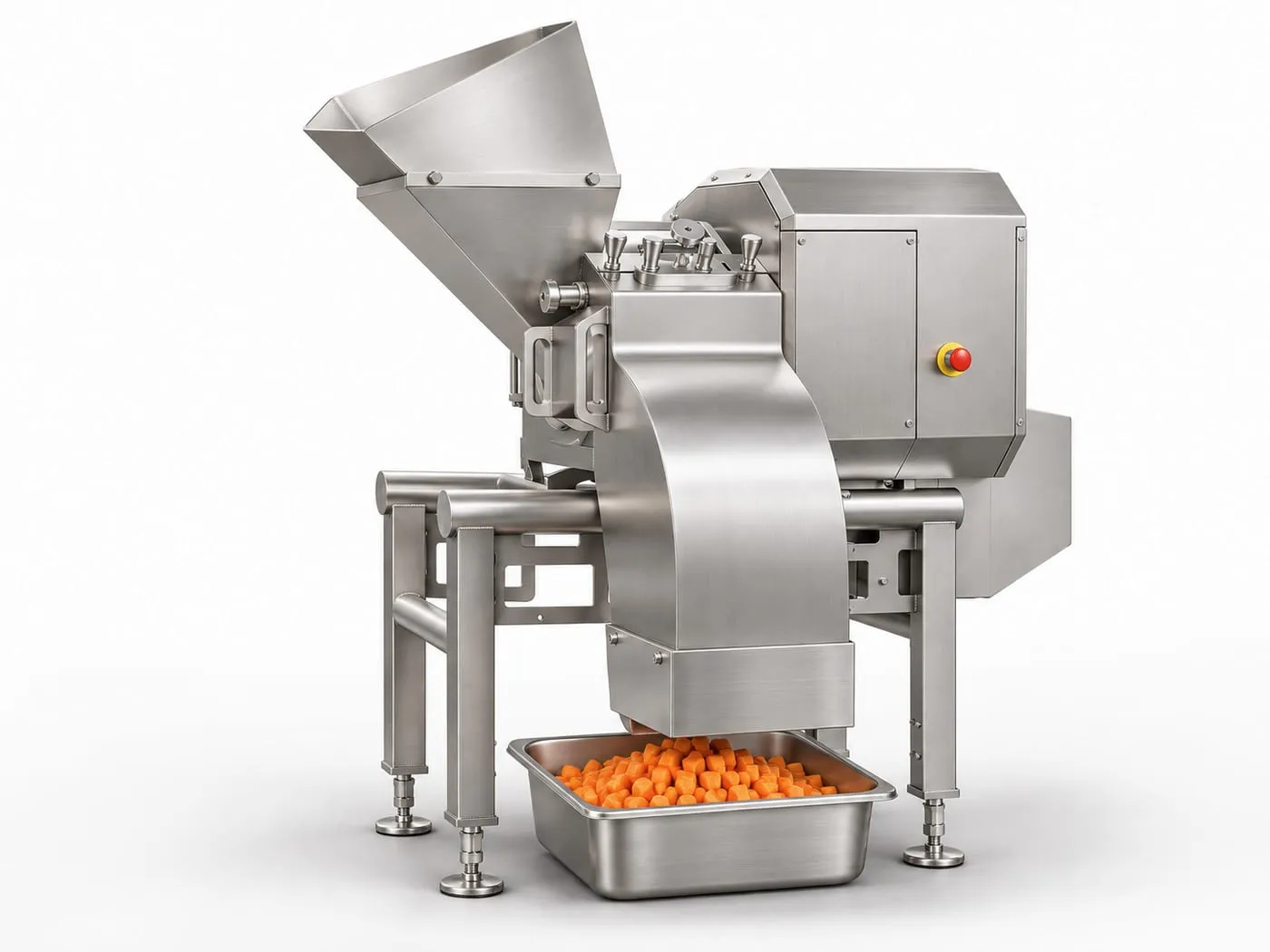
Cuts vegetables and fruit into slices, strips or dice for cooking, freezing, drying or packing. Centrifugal, belt and 3D dicing designs.
Short answer: An industrial vegetable cutting machine turns washed and peeled produce into slices, strips, lengths or dice for cooking, freezing, drying or packing. The cut shape and the produce itself decide the design: round firm vegetables suit a centrifugal slicer, long or leafy ones a belt cutter, and uniform cubes need a 3D dicer.
In a centrifugal slicer, product drops into a rotating impeller that throws it against stationary knives around the wall, producing slices; extra cross-cutting knives turn slices into strips. A belt cutter carries product on a conveyor under a reciprocating or rotating blade that cuts it into lengths, with the belt speed setting the length. A 3D dicer first slices the product, then cuts the slices into strips with a circular knife set and finally cross-cuts them into cubes.
Cut pieces fall onto a conveyor or into a water flume for washing away starch and fines before the next step. Even feeding matters as much as the blades: a dicer that is starved or overloaded produces more irregular pieces, so most lines place a small buffer hopper or metering conveyor in front of the cutter.
| Form | Suits | Watch out for |
|---|---|---|
| Centrifugal slicer | Potato, onion, carrot, cucumber slices and strips | Long thin produce does not orient well |
| Belt cutter | Leeks, greens, cabbage, herbs, celery | Less precise for cubes |
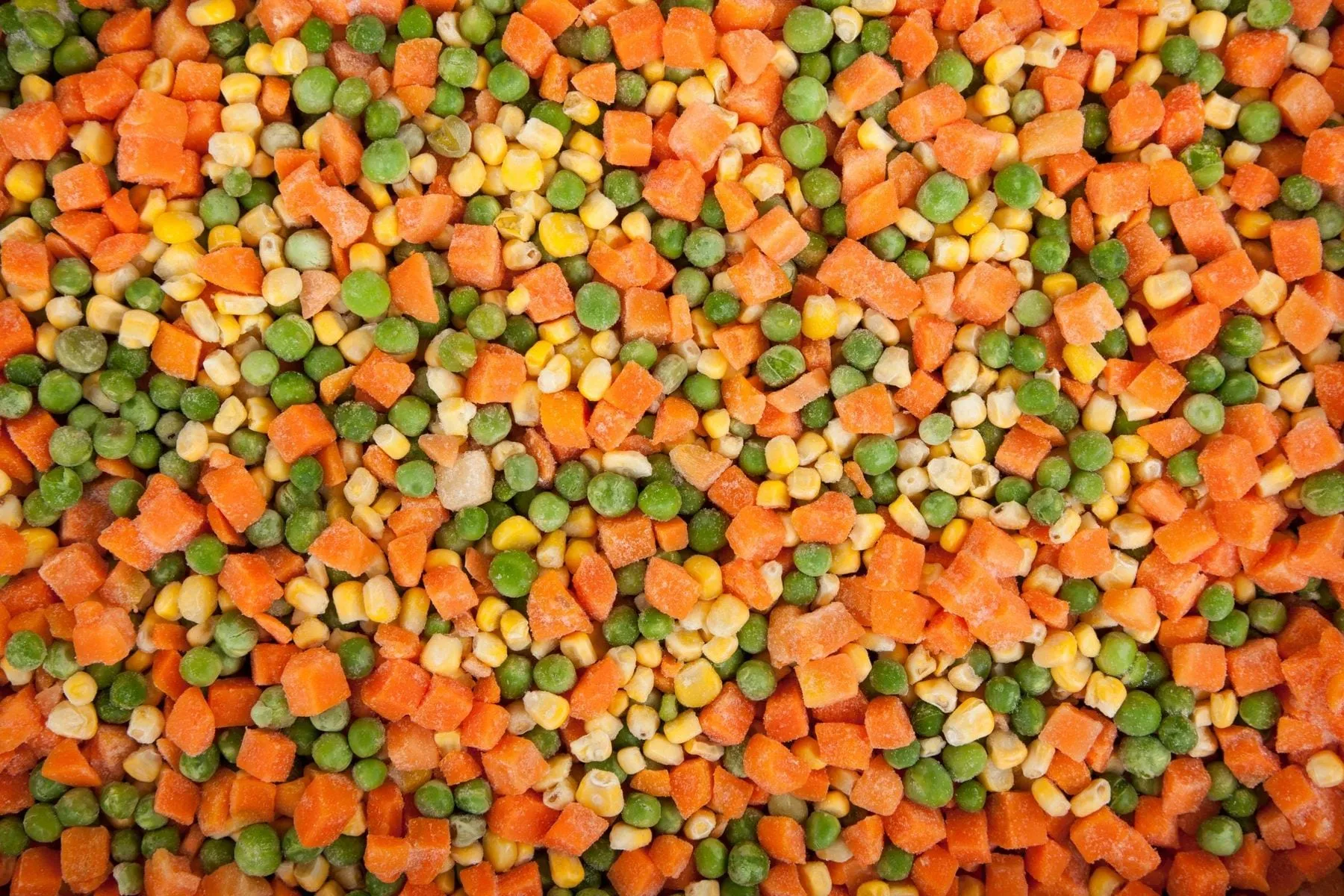
| 3D dicer | Cubes for frozen mixes, soups, salads, meals | Very soft produce can crush; check samples |
Cutting follows a fruit and vegetable washer and, for root crops, a brush washer and peeler. Cut product often goes to a blanching and cooling line before freezing in a food freezer, to a hot-air dryer for dehydrated vegetables, or to a prepared meal production line.
Centrifugal slicer
for round, firm produce such as potatoes, onions and carrots cut into slices, crinkle slices or strips.
Belt cutter
for long, leafy or soft produce such as leeks, greens, cabbage and herbs cut into lengths.
3D dicer
for cubes and dice of consistent size, used for frozen mixes, soups, salads and ready meals.
Our engineers check these points with you, so the quotation fits your site rather than a catalogue default.
Some machines can with changeable blade sets, but each design has a sweet spot. A 3D dicer is best for cubes, a centrifugal slicer for slices of round produce, and a belt cutter for long or leafy items. Plants with a wide product mix often run two types.
Blade sharpness, raw material firmness and temperature, and how evenly the product is fed. Soft or overripe produce smears and creates fines; we ask for samples to check this before confirming a design.
It depends on the model and the operator, but cutting heads are designed to be removed without dismantling the machine. Tell us how many changeovers you run per shift and we will match a design to it.
Tell us your raw material, finished product and target output. Our engineers reply with a matched configuration and quotation.
What to send with your inquiry
Email sales@hnfoda.com
Compare hot-air, heat pump, freeze and microwave dryers for mango and tropical fruit: quality, energy, sizing and a quote checklist.
Choose a potato chips production line: size capacity on potato input, pick batch or continuous fryer, plan seasoning and packing, and manage acrylamide.
Fruit & Vegetable Processing
Frozen vegetable, dehydrated vegetable and canning plants that need controlled heat treatment before the next step.
Sized to product input (kg/h) at your residence time and piece thickness
Fruit & Vegetable Processing
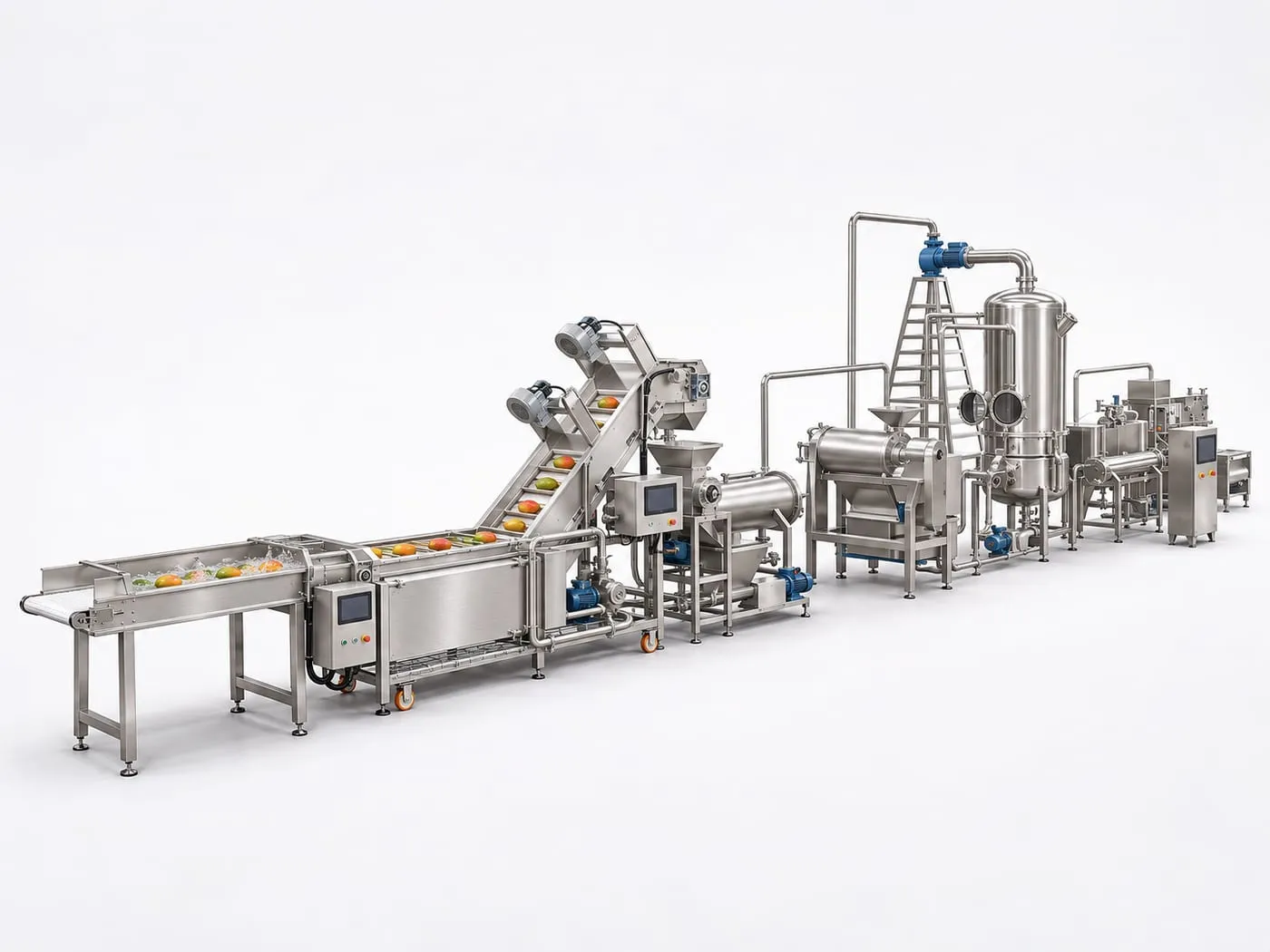
Plants producing fruit puree, tomato paste base, jam, baby food, nectar or sauce bases.
Sized to raw fruit input (kg/h); pulp output depends on fruit and screen size
Fruit & Vegetable Processing
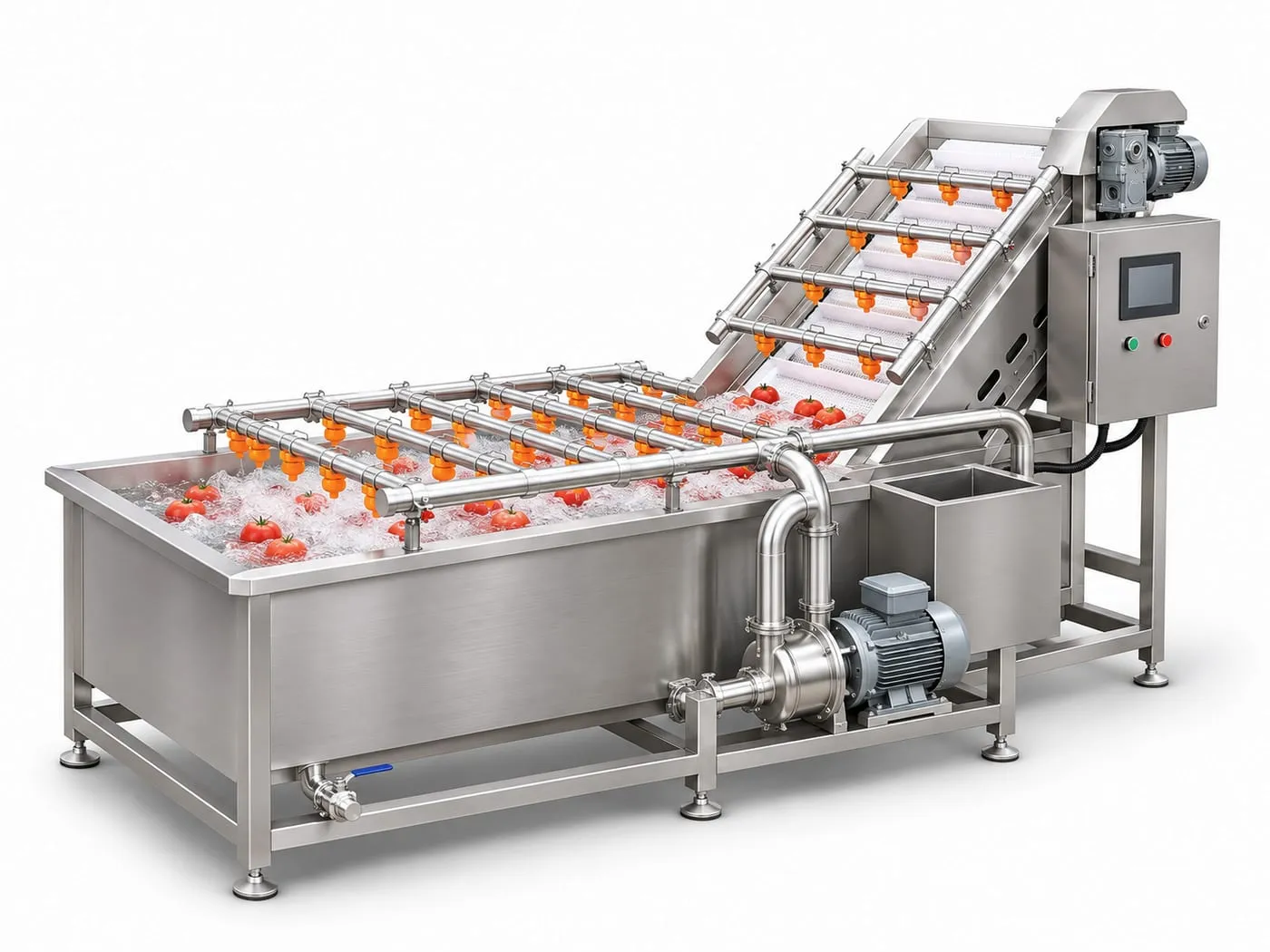
Plants washing fresh produce before peeling, cutting, blanching, drying or packing.
Sized to raw produce input (kg/h), not finished product
Fruit & Vegetable Processing
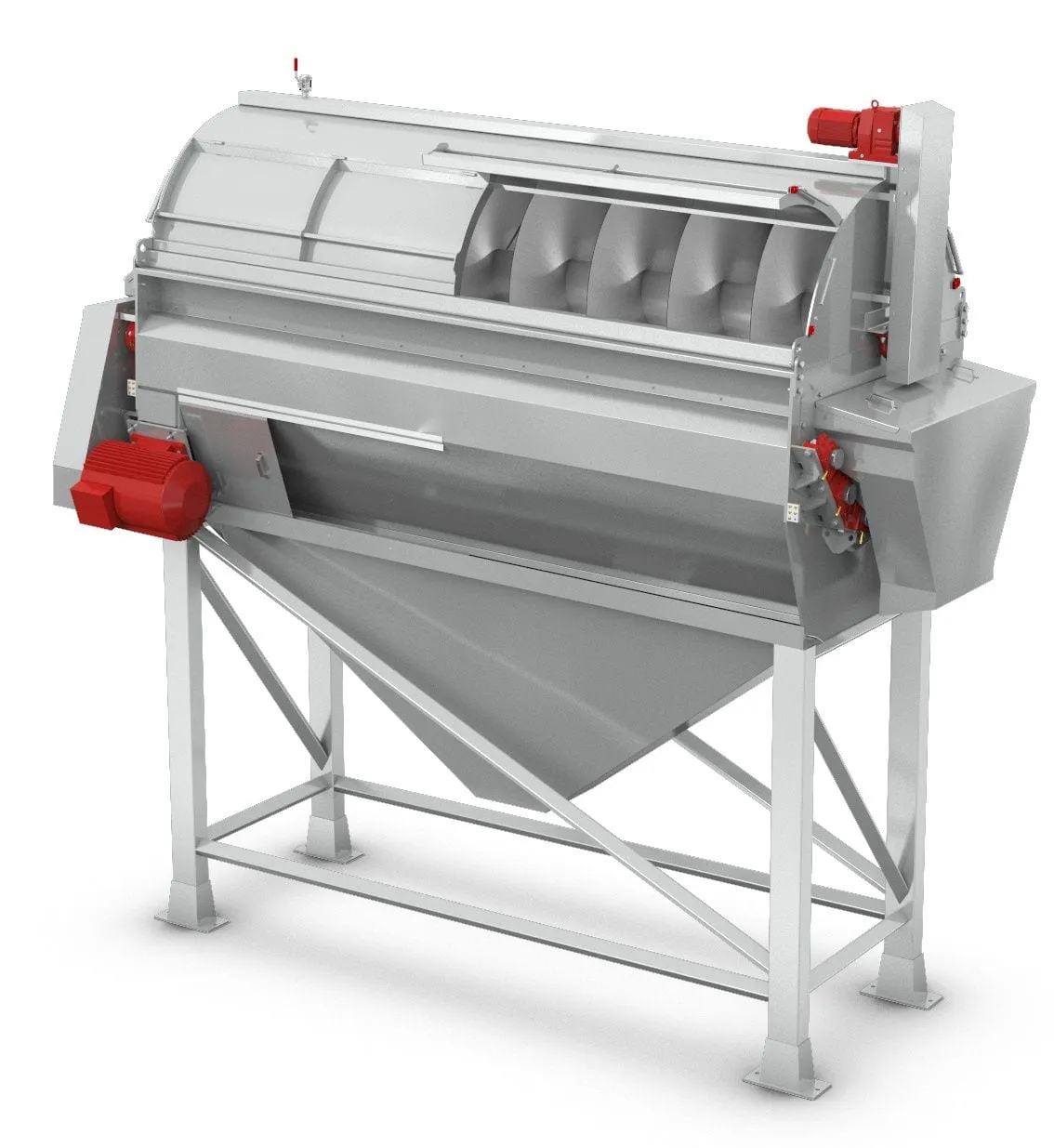
Potato, carrot, cassava, ginger and taro processors who wash and peel before cutting.
Sized to raw root crop input (kg/h or kg per batch)