Fruit & Vegetable Processing
Blanching and Cooling Line
Frozen vegetable, dehydrated vegetable and canning plants that need controlled heat treatment before the next step.
Sized to product input (kg/h) at your residence time and piece thickness

01 · Fruit & Vegetable Processing — Equipment
Removes soil, sand and floating debris from fresh produce at the head of a processing line. Bubble tank, drum and spray-brush designs suit different crops.
Short answer: A fruit and vegetable washer removes soil, sand, leaves and floating debris from fresh produce before it is peeled, cut, blanched, dried or packed. The deciding factor is how the produce behaves in water and how much handling it can take: delicate items go to a bubble tank, tough and dirty root crops go to a drum, and firm round produce often suits a spray-and-brush design.
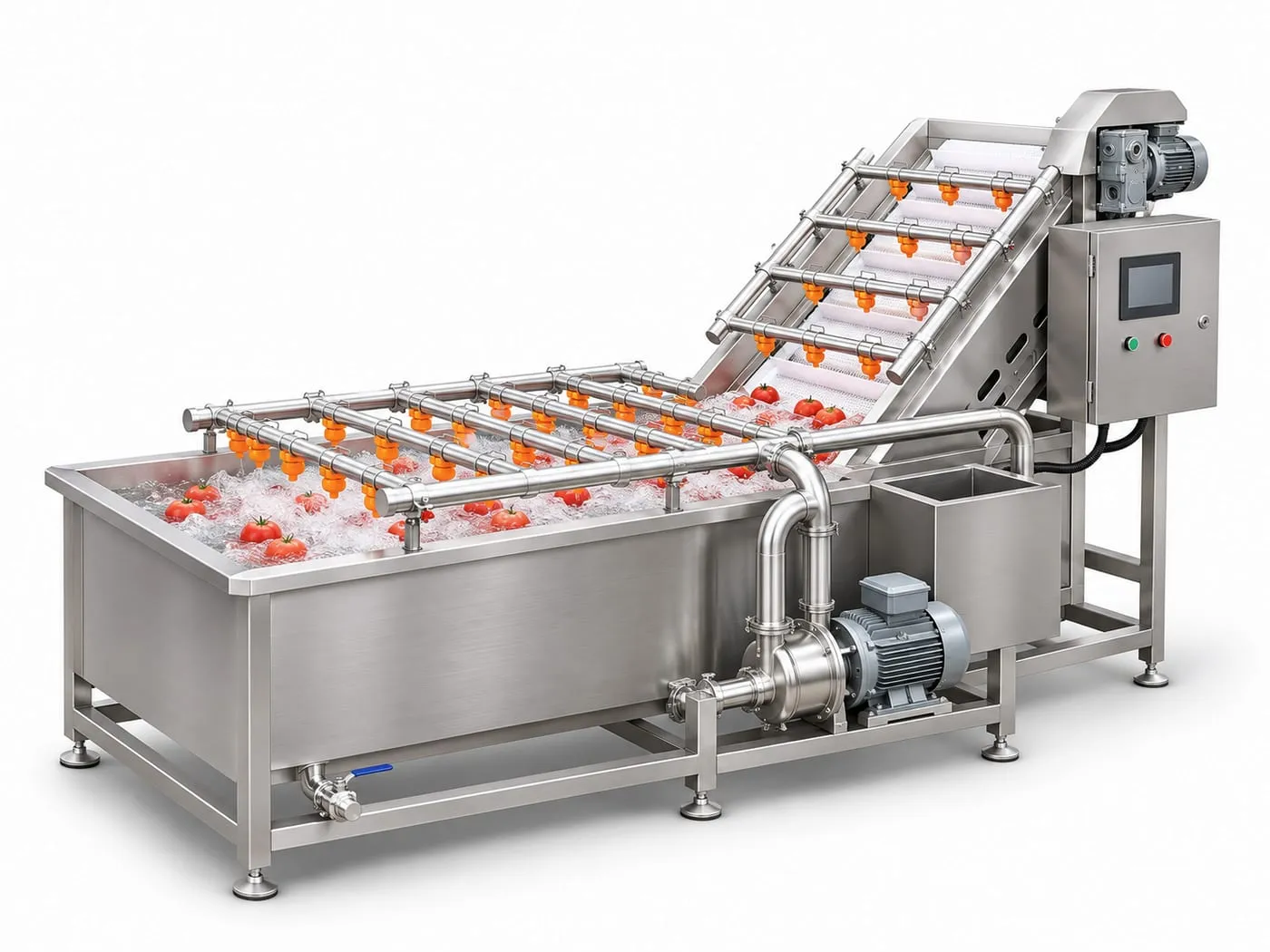
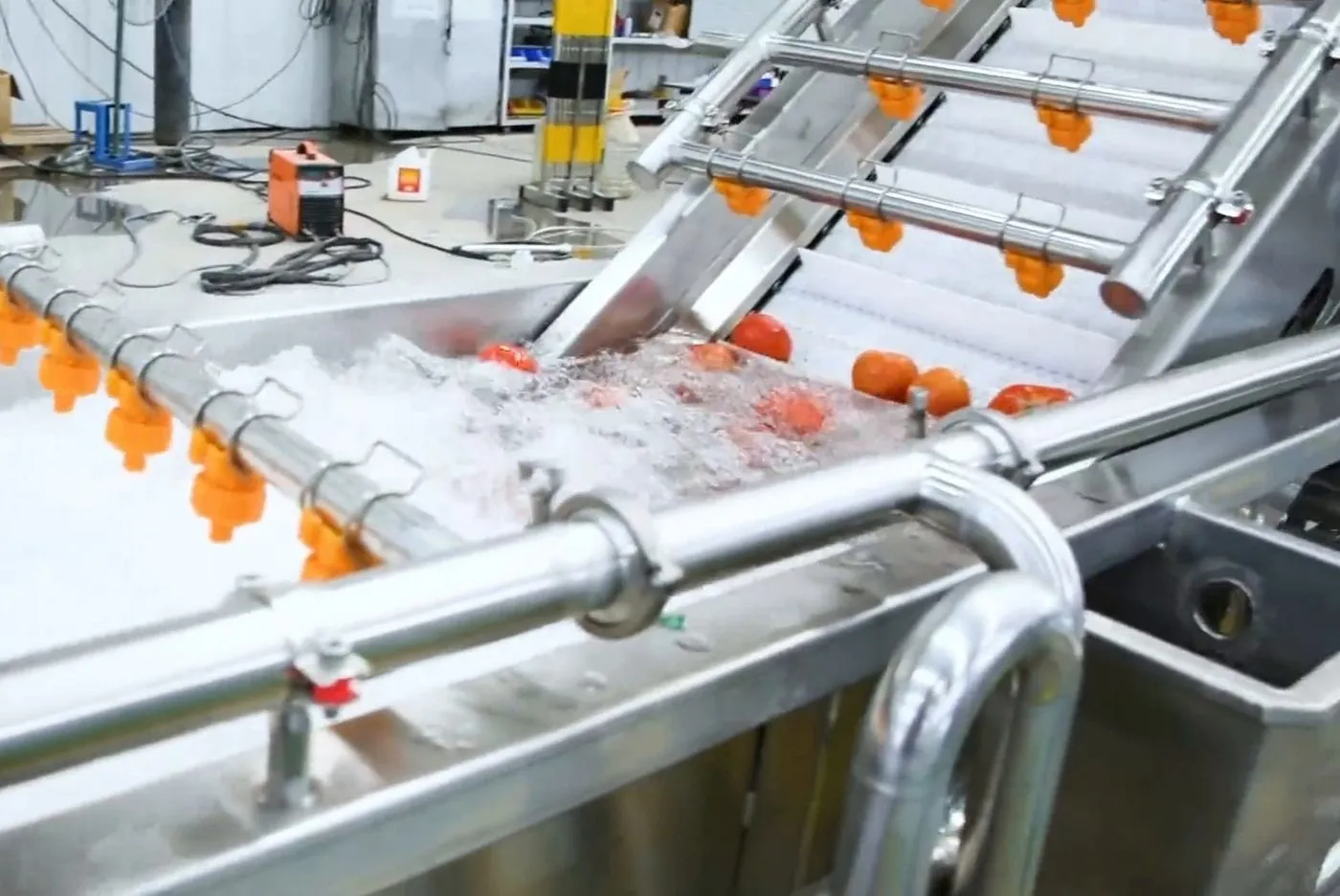
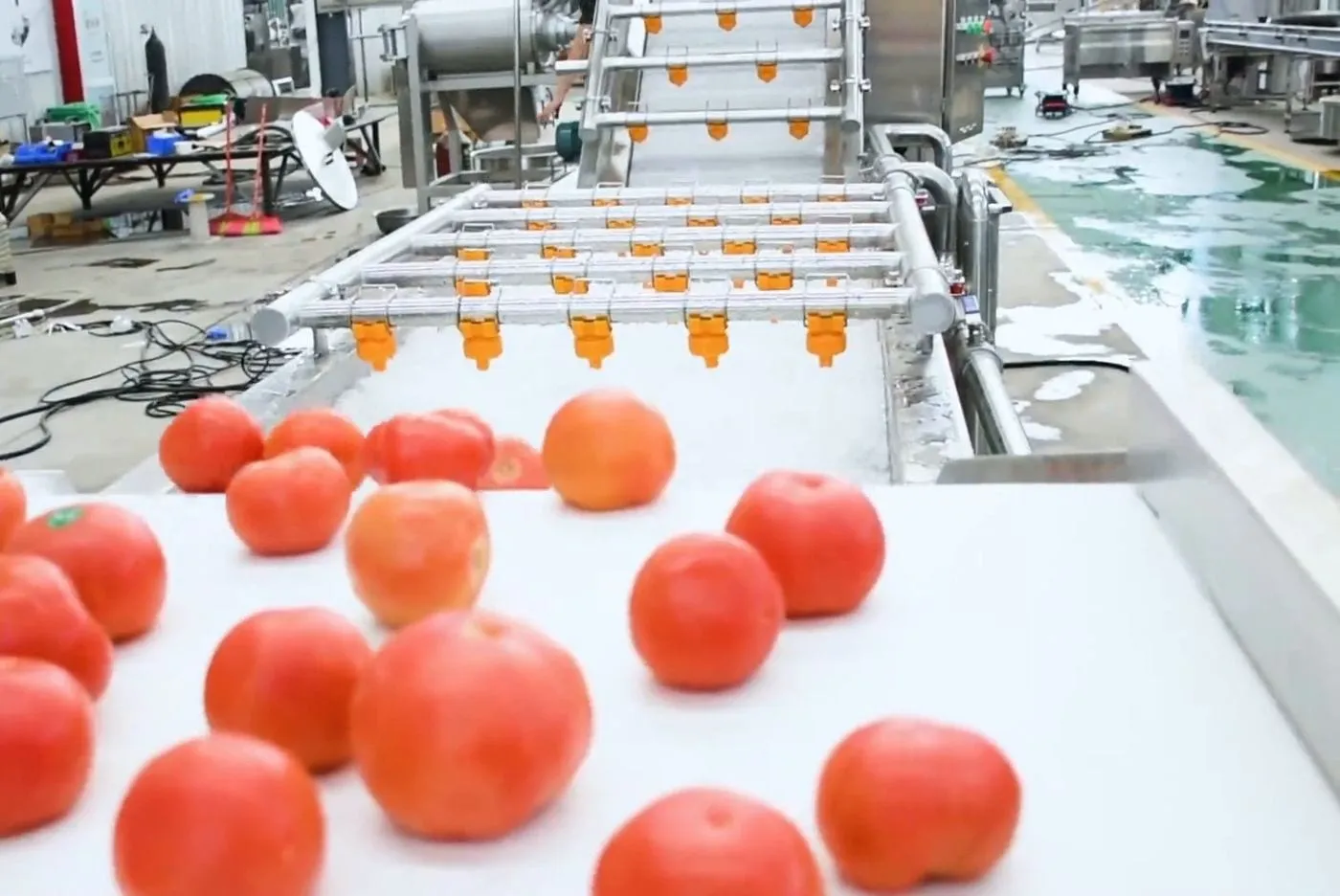
Produce is fed into the machine by hand, by an elevator or from a dumping hopper. In a bubble washer, air blown through the tank floor makes the water churn, so dirt is loosened while the produce floats or tumbles gently towards a mesh conveyor. Heavier particles settle and are drained off, while floating leaves and stems are skimmed. A spray bar at the outlet gives a final rinse with cleaner water.
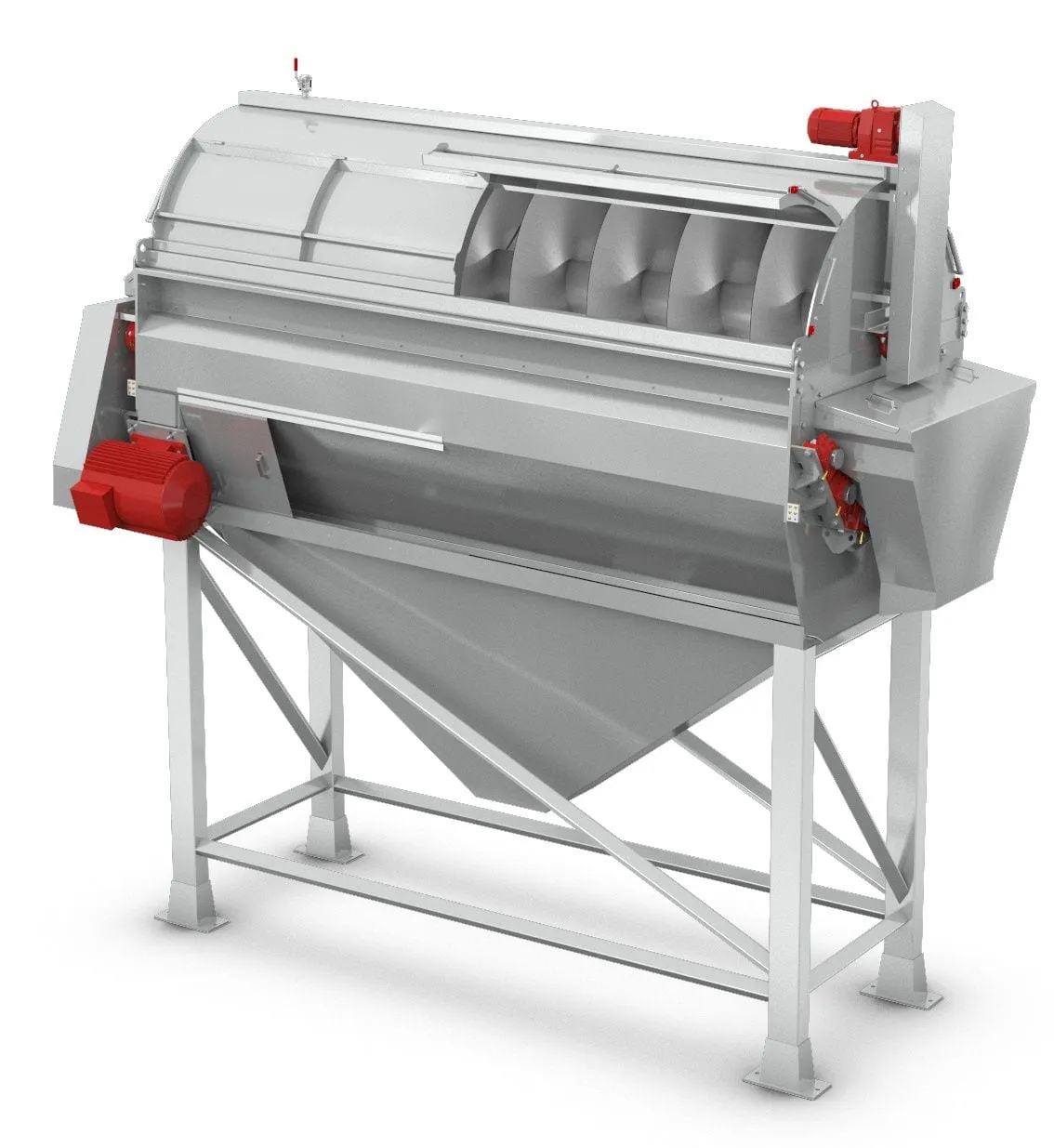
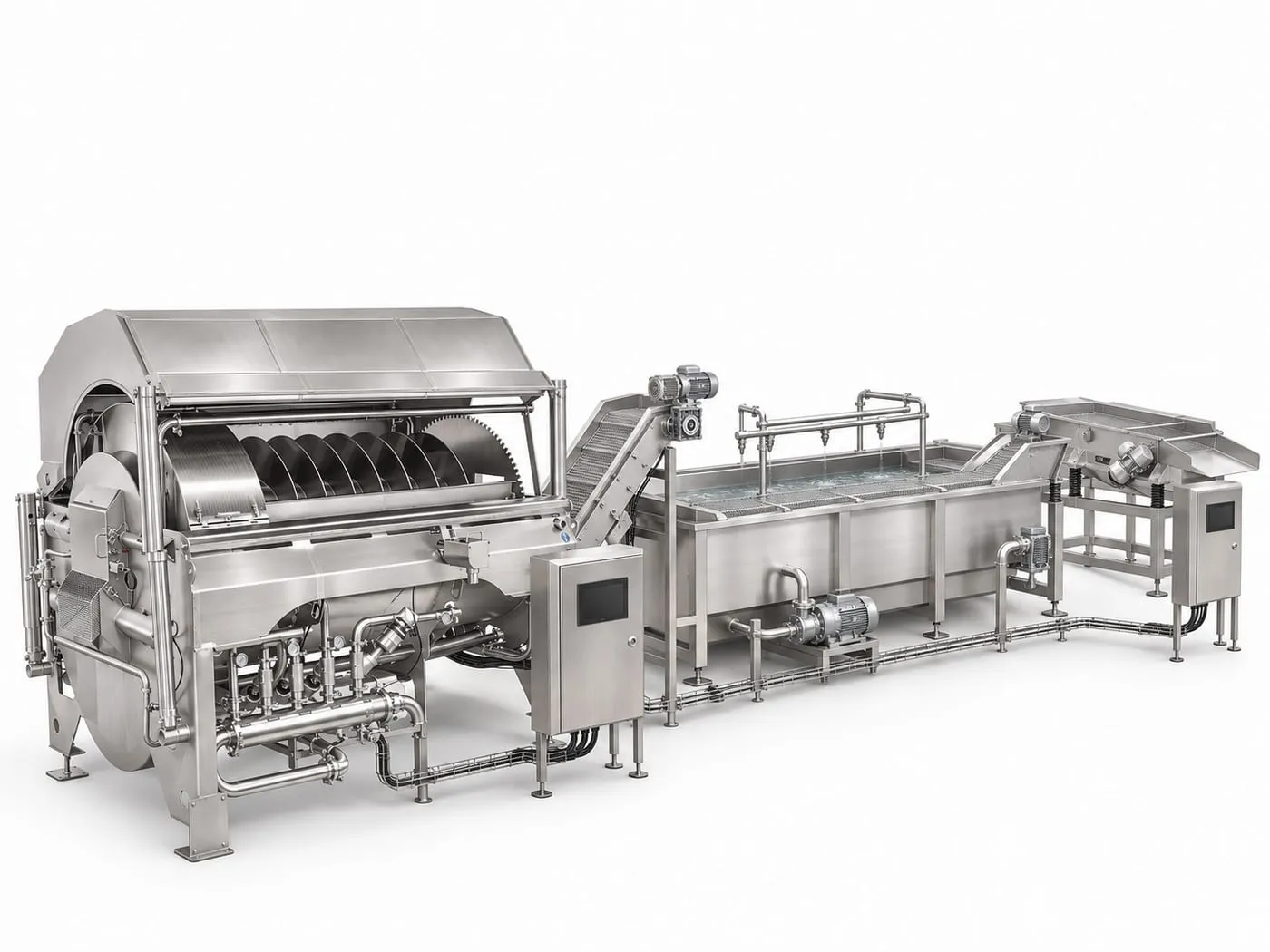
A drum washer tumbles produce inside a rotating perforated cylinder under water sprays; friction between pieces does most of the cleaning. A brush washer carries produce over rotating brush rollers while nozzles spray from above. In all three designs, water can be recirculated through a filter so that fresh water is used mainly for the final rinse.
| Form | Suits | Watch out for |
|---|---|---|
| Air-bubble tank | Leafy greens, berries, tomatoes, cut produce | Heavy stone and clay loads need a pre-wash or stone trap |
| Rotary drum | Potatoes, carrots, ginger, other root crops | Not for soft fruit or leaves |
| Spray and brush roller | Apples, citrus, cucumbers, firm vegetables | Brush stiffness must match skin toughness |
The washer is normally the first wet step after receiving and manual picking. Downstream it can feed a brush washer and peeler for root crops, a fruit and vegetable sorter, a vegetable cutting machine or a blanching and cooling line. If the produce is packed fresh, an air knife dewatering machine removes surface water before packing.
Air-bubble tank
for leafy greens, berries and other delicate or floating produce that must not be rubbed hard.
Rotary drum
for firm, heavily soiled produce such as potatoes, carrots and other root crops that can tumble.
Spray and brush roller
for round fruit and firm vegetables where surface scrubbing plus clean rinse water is needed.
Our engineers check these points with you, so the quotation fits your site rather than a catalogue default.
Leafy greens and soft fruit are usually washed in an air-bubble tank, where rising air keeps the produce moving without hard contact. Drum and brush washers suit firmer produce that can handle tumbling or scrubbing.
It depends on soil load, tank volume, how often the water is changed and whether recirculation with filtration is fitted. Tell us your raw material and how dirty it arrives, and we size the water circuit around that.
Often yes, if the crops are similar in size and toughness. Mixed programmes, such as potatoes and lettuce, usually need either two washer types or adjustable settings; we check this against your product list before quoting.
Tell us your raw material, finished product and target output. Our engineers reply with a matched configuration and quotation.
What to send with your inquiry
Email sales@hnfoda.com
Compare hot-air, heat pump, freeze and microwave dryers for mango and tropical fruit: quality, energy, sizing and a quote checklist.
Fruit & Vegetable Processing
Frozen vegetable, dehydrated vegetable and canning plants that need controlled heat treatment before the next step.
Sized to product input (kg/h) at your residence time and piece thickness
Fruit & Vegetable Processing
Plants producing fruit puree, tomato paste base, jam, baby food, nectar or sauce bases.
Sized to raw fruit input (kg/h); pulp output depends on fruit and screen size
Fruit & Vegetable Processing
Potato, carrot, cassava, ginger and taro processors who wash and peel before cutting.
Sized to raw root crop input (kg/h or kg per batch)
Fruit & Vegetable Processing
Packing houses and processors that sell or process produce in defined size or quality grades.
Sized to produce input (kg/h or pieces per minute), depending on grading method