Fruit & Vegetable Processing
Blanching and Cooling Line
Frozen vegetable, dehydrated vegetable and canning plants that need controlled heat treatment before the next step.
Sized to product input (kg/h) at your residence time and piece thickness

01 · Fruit & Vegetable Processing — Equipment
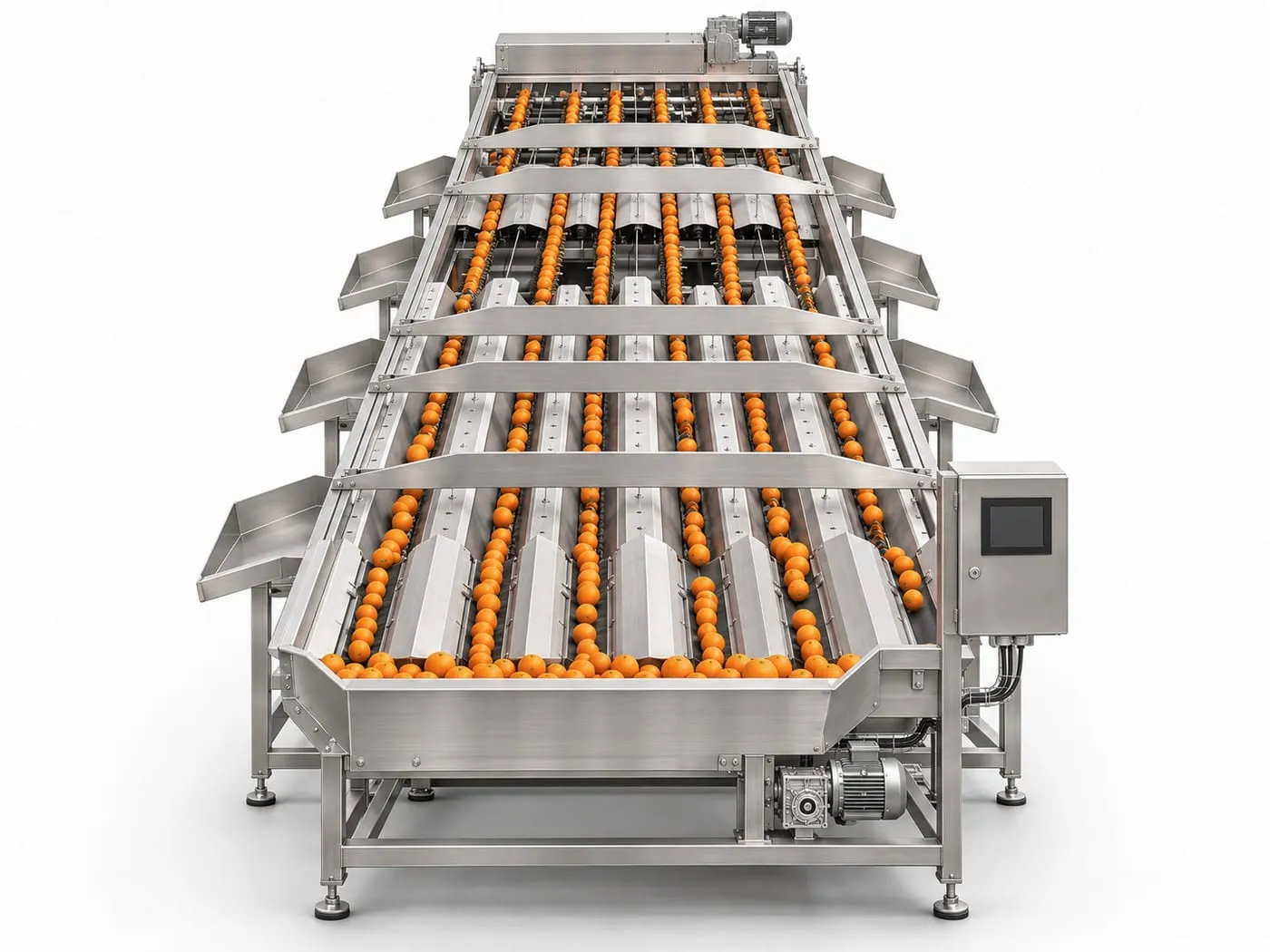
Grades fresh produce by size, weight or appearance so each grade goes to the right pack or process. Roller, weight-grading and optical designs available.
Short answer: A fruit and vegetable sorter splits incoming produce into grades by size, weight or appearance so each grade can be packed, sold or processed separately. Which type fits depends on what your buyers pay for: size alone, an exact weight band, or freedom from visible defects.
Produce is spread into a single layer by an infeed conveyor or vibrating table, so pieces can be measured one at a time. In a roller grader, the gap between rollers widens along the machine; smaller pieces drop through first and larger pieces travel further before falling into their chute. A weight grader places each piece in a cup or carrier that passes over a load cell, and the cup tips at the outlet matching the weight band. An optical sorter uses cameras, and sometimes extra light sources, to measure size and colour and look for blemishes, then uses air jets or mechanical fingers to divert each piece.
Grades leave on separate belts or into bins, and the rejects go to a waste or reprocessing outlet.
| Form | Suits | Watch out for |
|---|---|---|
| Roller size grader | Potatoes, onions, citrus, tomatoes, apples | Elongated or flat produce grades less accurately |
| Weight grader | Mangoes, apples, kiwifruit, premium packs | Lower throughput per lane than roller types |
| Optical sorter | Export fruit, defect removal, colour grading | Needs product-specific setup and trained operators |
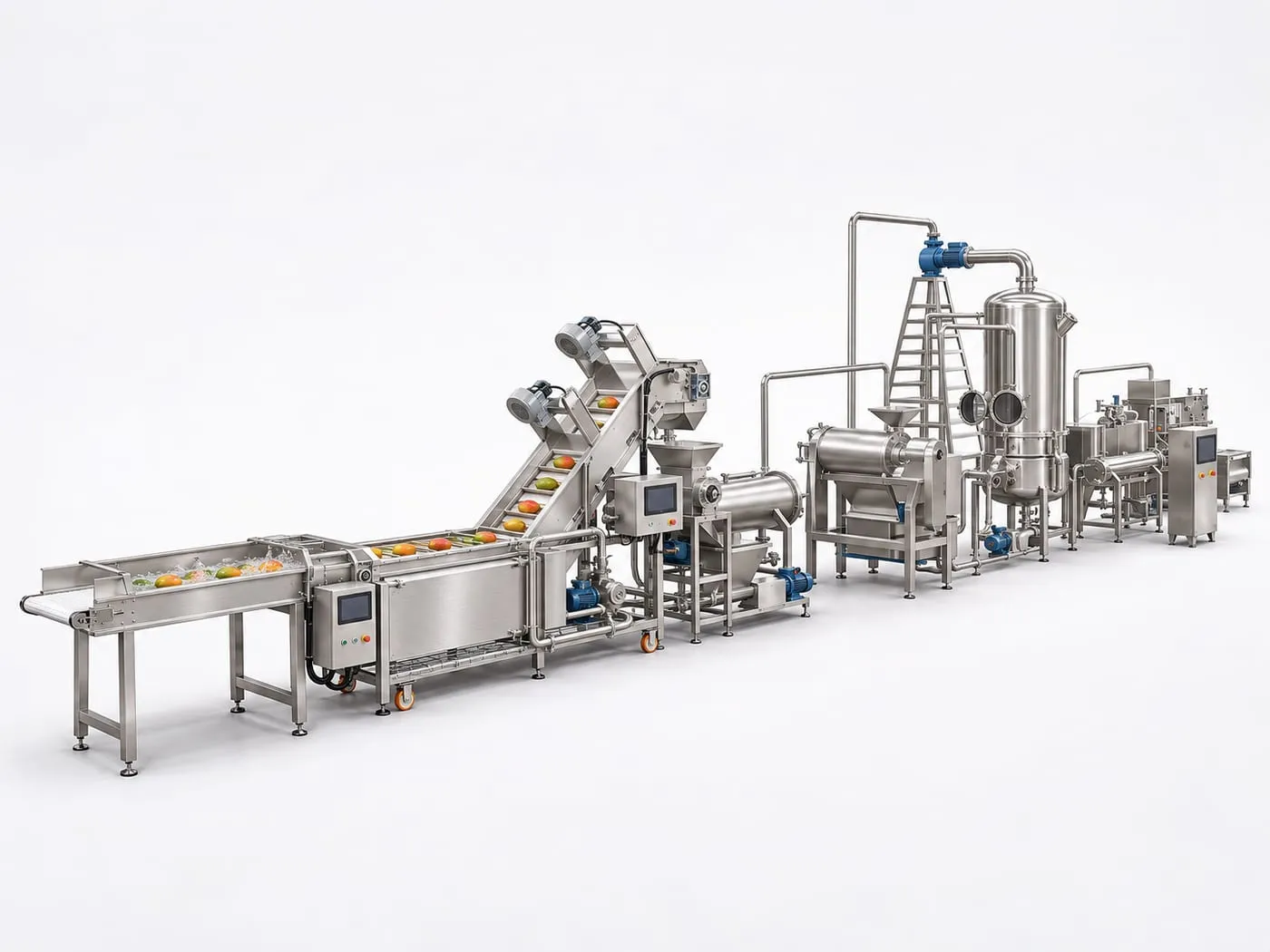
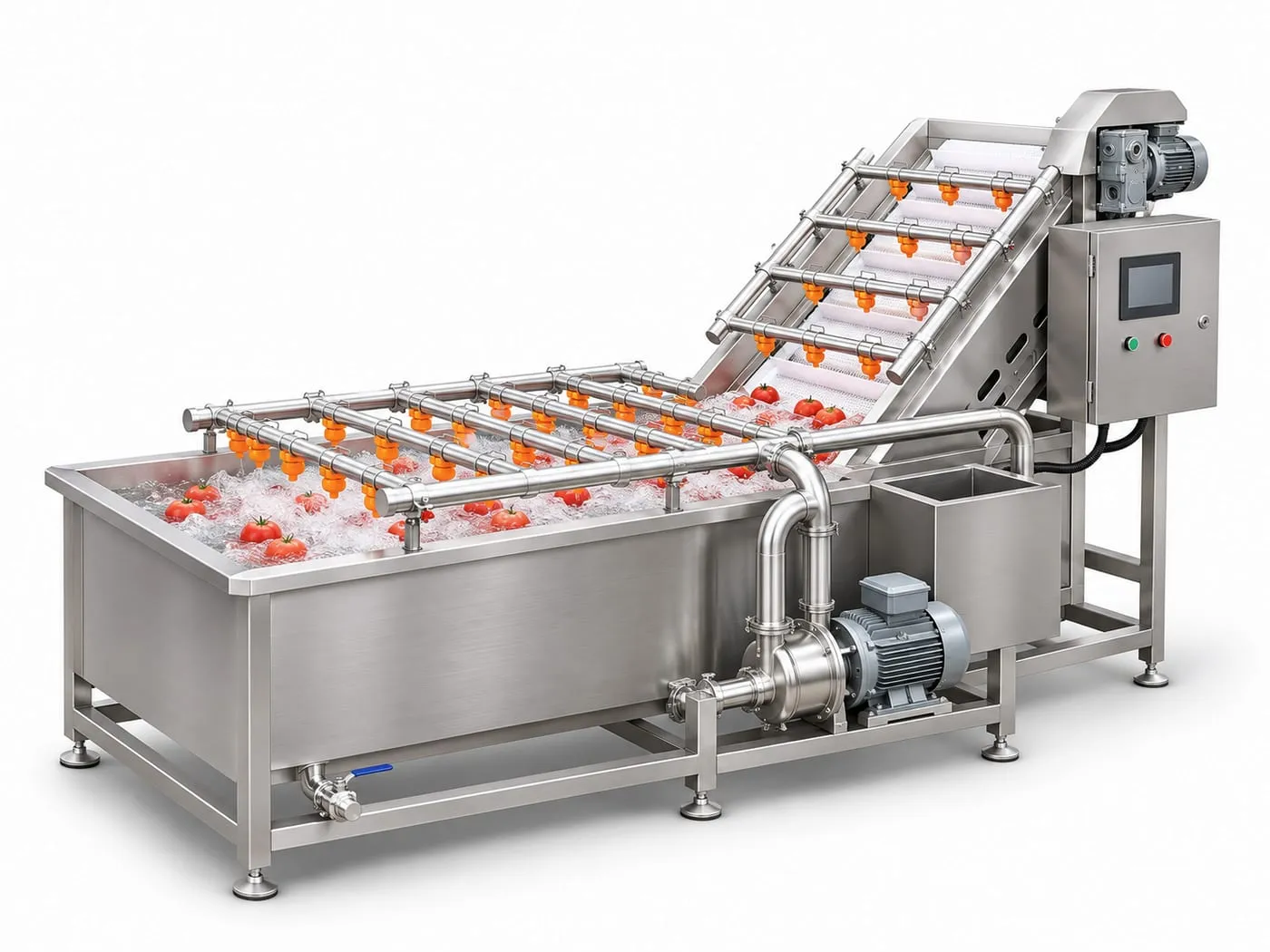
Sorting normally follows a fruit and vegetable washer and, for fresh packing, an air knife dewatering machine. In processing plants it sends uniform pieces to a vegetable cutting machine, fruit pitting machine or fruit and vegetable pulping line, where even sizing improves yield. Graded fresh produce can go on to a multihead weigher or packing station.
Roller size grader
for round or near-round produce where size alone decides the grade, at moderate cost.
Weight grader
for higher-value fruit sold by weight band, or produce whose shape makes size grading unreliable.
Optical sorter
when colour, blemishes or defects must be detected as well as size, usually for export or premium packs.
Our engineers check these points with you, so the quotation fits your site rather than a catalogue default.
Size grading is simpler and suits round produce such as potatoes, onions or citrus. Weight grading is more accurate for irregular shapes and for fruit sold in weight bands. Your buyer specification usually decides it.
Cameras detect colour, surface defects or rot as well as size, so defective pieces can be rejected automatically. It costs more and needs setting up for each product, so it pays back mainly where defect sorting would otherwise take many workers.
Yes, within limits. Roller gaps and cup sizes are adjustable or changeable, and optical settings can be stored per product. Very different shapes, such as cherries and melons, normally need different machines.
Tell us your raw material, finished product and target output. Our engineers reply with a matched configuration and quotation.
What to send with your inquiry
Email sales@hnfoda.com
Fruit & Vegetable Processing
Frozen vegetable, dehydrated vegetable and canning plants that need controlled heat treatment before the next step.
Sized to product input (kg/h) at your residence time and piece thickness
Fruit & Vegetable Processing
Plants producing fruit puree, tomato paste base, jam, baby food, nectar or sauce bases.
Sized to raw fruit input (kg/h); pulp output depends on fruit and screen size
Fruit & Vegetable Processing
Plants washing fresh produce before peeling, cutting, blanching, drying or packing.
Sized to raw produce input (kg/h), not finished product
Fruit & Vegetable Processing
Potato, carrot, cassava, ginger and taro processors who wash and peel before cutting.
Sized to raw root crop input (kg/h or kg per batch)