Fruit & Vegetable Processing
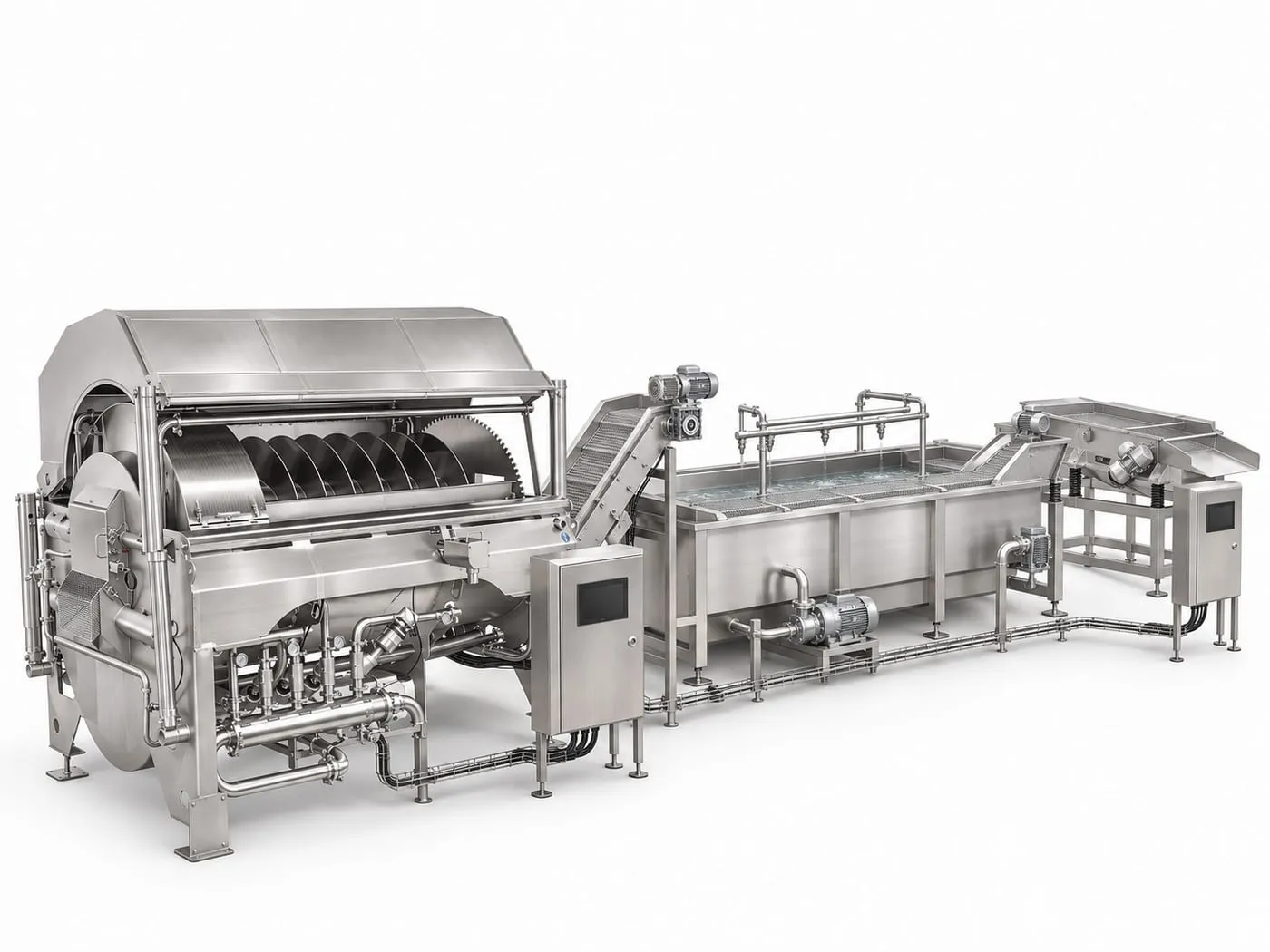
Blanching and Cooling Line
Frozen vegetable, dehydrated vegetable and canning plants that need controlled heat treatment before the next step.
Sized to product input (kg/h) at your residence time and piece thickness

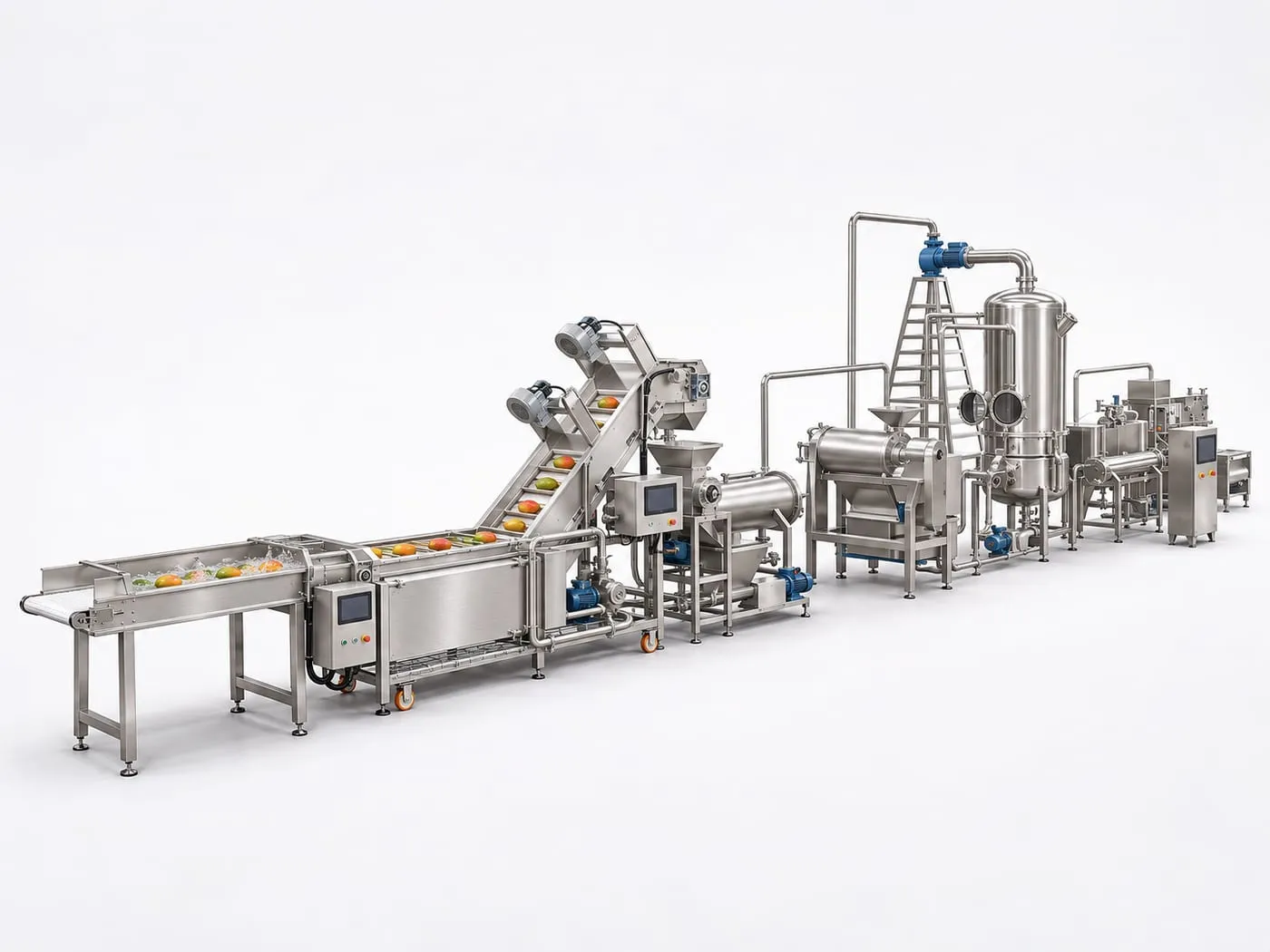
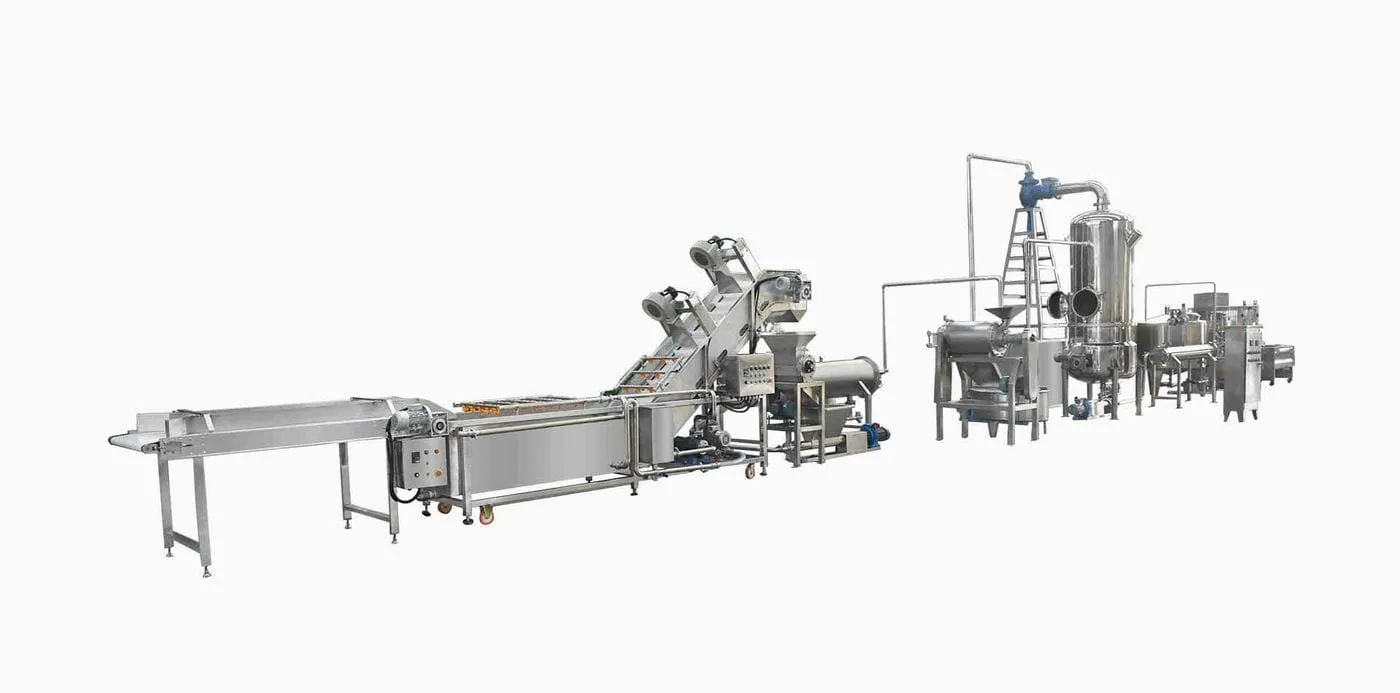
01 · Fruit & Vegetable Processing — Production line
Crushes fruit or vegetables and separates seeds, skins and coarse fibre to produce pulp or puree for further processing.
Short answer: A fruit and vegetable pulping line crushes washed fruit and pushes it through screens to separate pulp from seeds, skins and coarse fibre. The screen size of each stage, together with the share of seeds and skins in your fruit and the heat treatment that follows, decides how many stages you need and what yield you can expect.
Rotor speed and the gap between rotor blades and screen can be adjusted. A tighter setting presses more pulp out of the waste but can also break seeds and add bitterness or dark specks, so the setting is tuned during commissioning with your own fruit.
| Form | Suits | Watch out for |
|---|---|---|
| Crusher and pulper | Berries, guava, papaya, coarse fruit bases | Texture is coarse; seeds must not be crushed |
| Multi-stage finisher | Baby food, nectar, smooth puree | More waste with each finer screen |
| Hot break | Tomato paste, thick sauces | Needs steam or hot water and a holding stage |
The pulping line follows a fruit and vegetable washer and, for stone fruit, a fruit pitting machine. Pulp then goes to a pasteurizer, a food homogenizer or straight to a liquid filling machine. Plants making both juice and pulp often combine it with a juice processing line.
Crusher and pulper
a simple line for fruit with soft flesh and small seeds, producing a coarse pulp.
Single or multi-stage finisher
two or more sieving stages with finer screens when a smooth puree is required.
Hot break
product is heated right after crushing to stop enzyme activity and keep viscosity, mainly for tomato.
Our engineers check these points with you, so the quotation fits your site rather than a catalogue default.
Fruit variety and ripeness, the share of seeds and skins, screen size and the rotor setting. Finer screens give smoother puree but leave more material in the waste. We measure yield on raw fruit input unless you specify otherwise.
Hot break keeps more viscosity because enzymes are stopped quickly, which suits tomato paste and thick sauces. Cold break keeps more fresh colour and aroma but gives a thinner product. Your end product decides.
Some lines use a destoner pulper that separates stones without cutting them, while large stones such as mango or peach are often removed first. We confirm this with your fruit list.
Tell us your raw material, finished product and target output. Our engineers reply with a matched configuration and quotation.
What to send with your inquiry
Email sales@hnfoda.com
Fruit & Vegetable Processing
Frozen vegetable, dehydrated vegetable and canning plants that need controlled heat treatment before the next step.
Sized to product input (kg/h) at your residence time and piece thickness
Fruit & Vegetable Processing
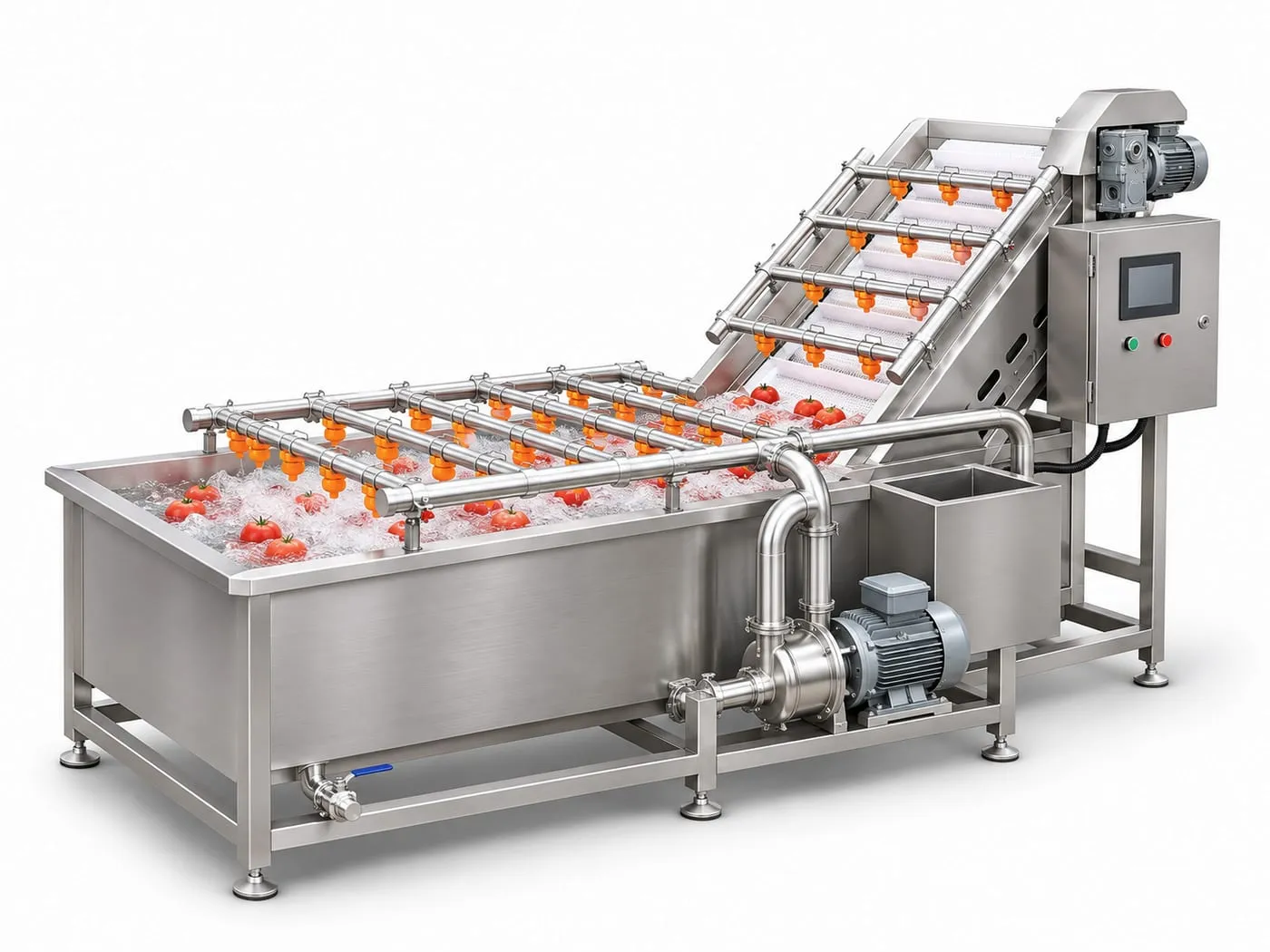
Plants washing fresh produce before peeling, cutting, blanching, drying or packing.
Sized to raw produce input (kg/h), not finished product
Fruit & Vegetable Processing
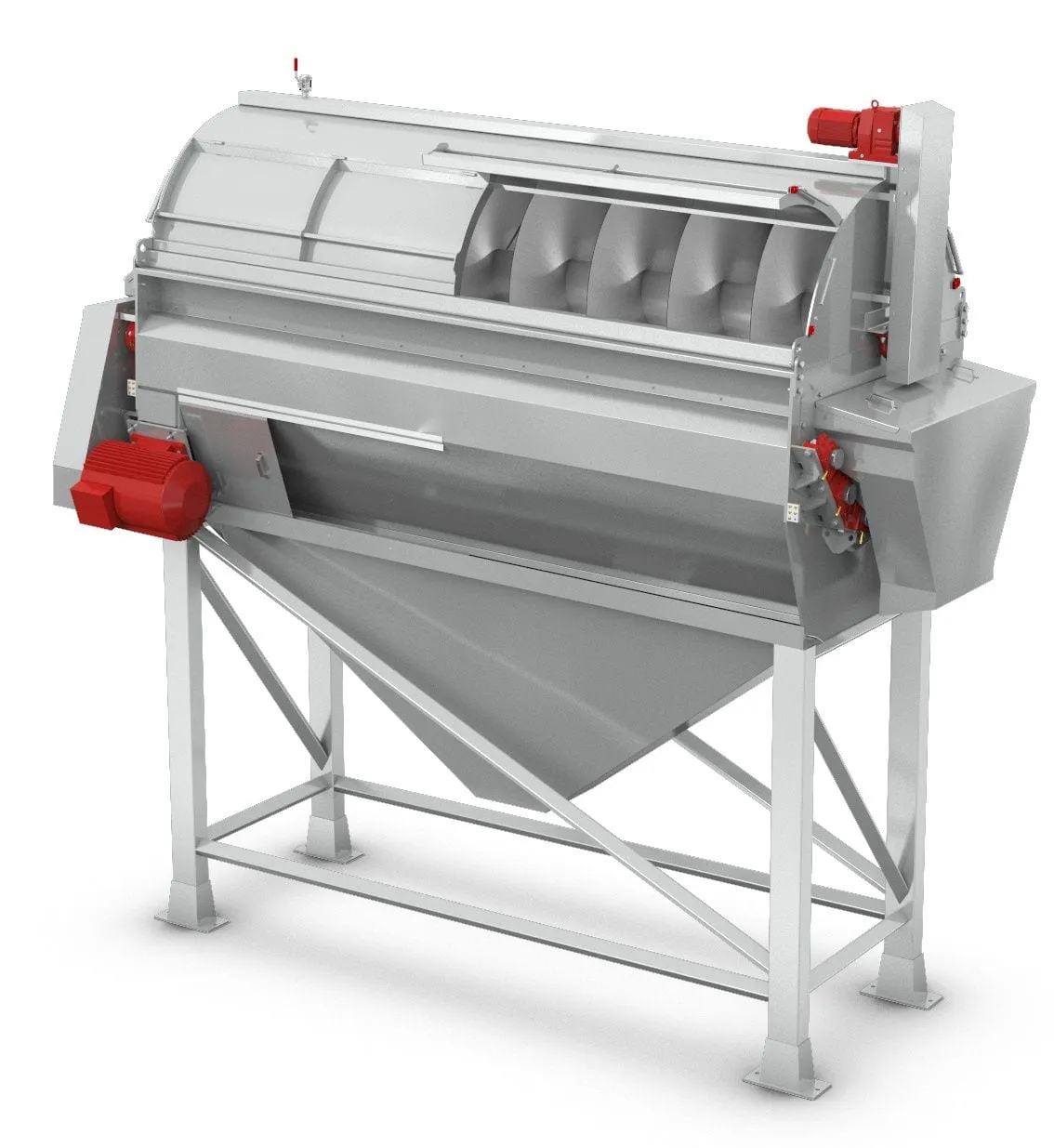
Potato, carrot, cassava, ginger and taro processors who wash and peel before cutting.
Sized to raw root crop input (kg/h or kg per batch)
Fruit & Vegetable Processing
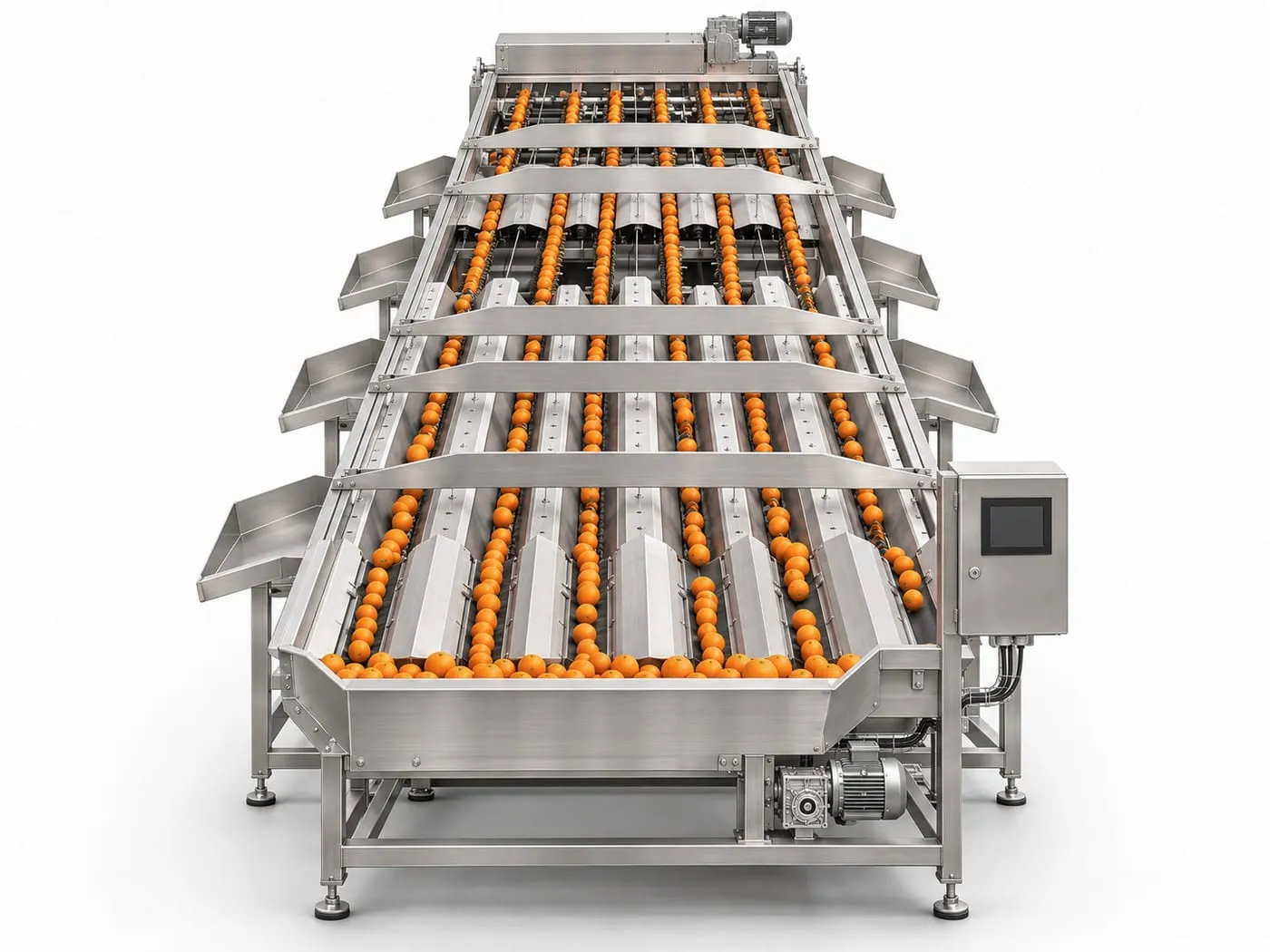
Packing houses and processors that sell or process produce in defined size or quality grades.
Sized to produce input (kg/h or pieces per minute), depending on grading method