Beverage, Dairy & Sauce
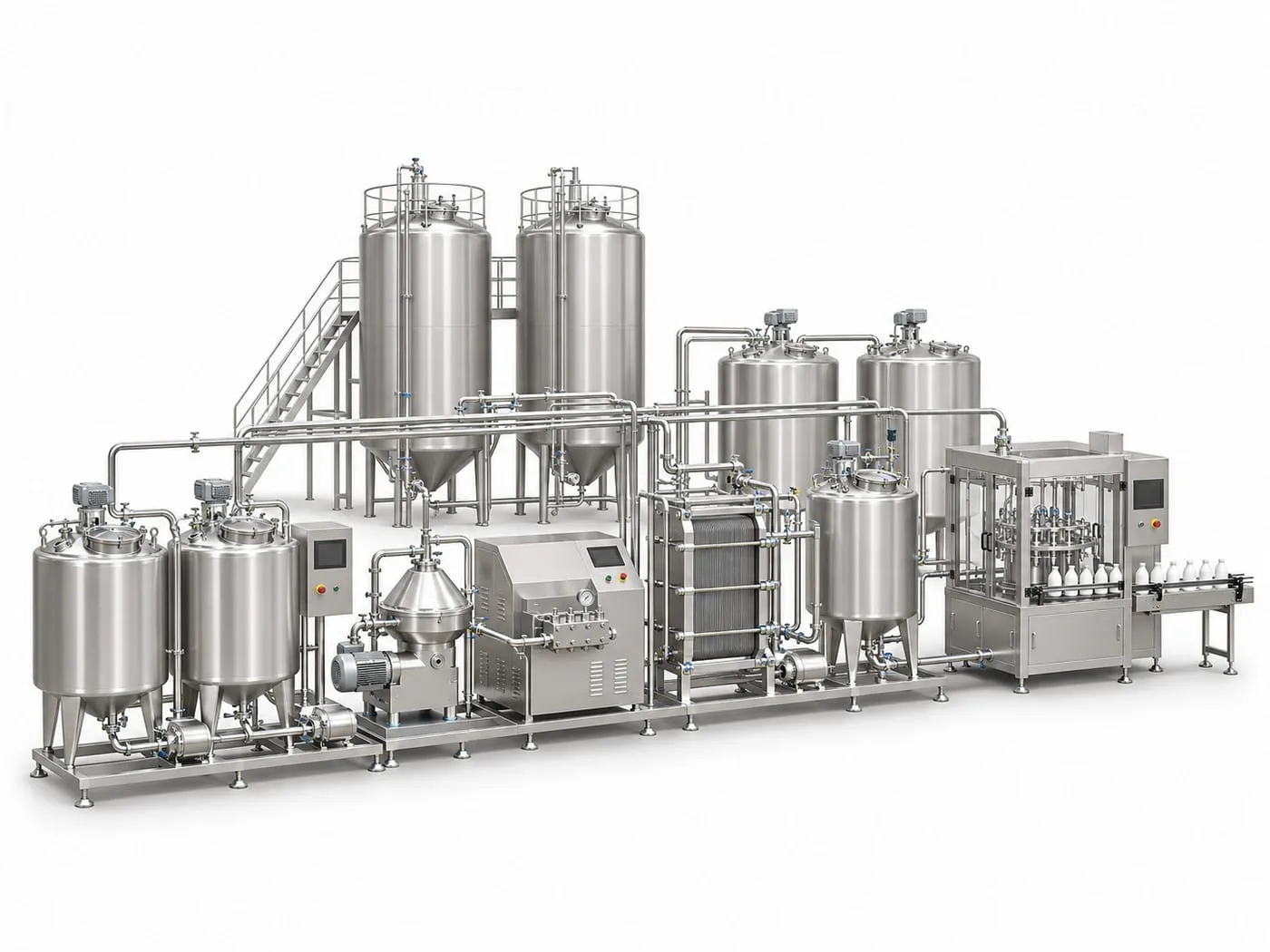
Dairy Processing Line
Dairies, cooperatives and investors starting or expanding fresh milk, yogurt or long-life milk production.
Sized to raw milk received per day and finished product filled per hour

07 · Beverage, Dairy & Sauce — Production line
Connects juice extraction or syrup blending with filtration, heat treatment and a filling route matched to your product and shelf life.
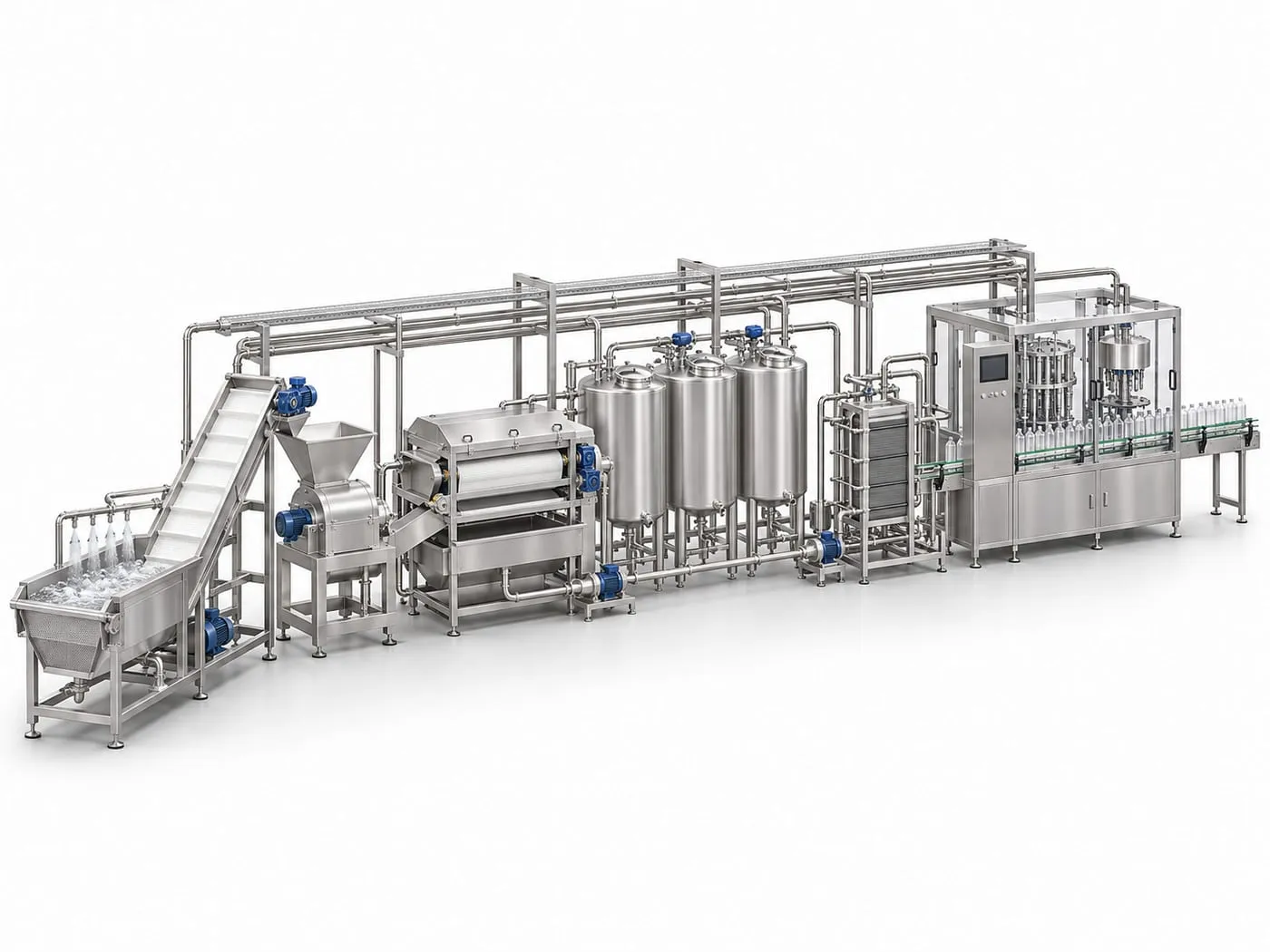
Short answer: A juice and beverage processing line turns fruit or concentrate into a filled drink by linking extraction or blending, filtration, heat treatment and filling. The deciding factor is the shelf life you need and the container you fill, which together set the route: chilled fresh juice, hot-fill or aseptic.
A typical line includes:
| Form | Suits | Watch out for |
|---|---|---|
| Fresh chilled | Local premium juice, short distribution | Short shelf life, cold chain needed |
| Hot-fill | Shelf-stable juices and teas in PET, glass or cans | Heat affects flavour; containers must tolerate heat |
| Aseptic | Long shelf life, wide distribution | Highest cost and control requirements |
The route also affects your packaging budget. Hot-fill needs containers rated for the filling temperature, while aseptic filling usually needs a dedicated packaging format and sterilisation of the packs themselves. Plan the container together with the process, not after it.
The front end can use an industrial juicer or a fruit pulping line after a fruit and vegetable washer. Downstream, a food homogenizer, a pasteurizer and a liquid filling machine complete the process, with a CIP cleaning system for hygiene.
Fresh chilled juice
minimal heat treatment and cold filling, for short shelf life products sold through a cold chain.
Hot-fill line
product is heat treated and filled hot into heat-resistant containers, a common route for shelf-stable juices and teas.
Aseptic filling line
product is heat treated, cooled and filled into sterilised packs in a sterile zone, for long shelf life with less heat damage.
Our engineers check these points with you, so the quotation fits your site rather than a catalogue default.
Hot-fill is simpler and works with heat-resistant bottles, glass or cans, but the product sits hot for longer. Aseptic filling protects flavour and colour better and allows lighter packs, but costs more and needs stricter sterile control and staff training.
Yes. Fresh fruit needs washing, extraction and sometimes enzyme treatment; concentrate needs dissolving, blending and dosing. Many lines include both front ends feeding the same heat treatment and filling.
Output, how many fruit types and recipes you run, the filling route, the container, the level of automation, and whether you need deaeration, evaporation or aseptic storage. Site utilities also matter.
Tell us your raw material, finished product and target output. Our engineers reply with a matched configuration and quotation.
What to send with your inquiry
Email sales@hnfoda.com
Beverage, Dairy & Sauce
Dairies, cooperatives and investors starting or expanding fresh milk, yogurt or long-life milk production.
Sized to raw milk received per day and finished product filled per hour
Beverage, Dairy & Sauce
Food companies, brand owners and contract packers producing chilli, tomato or compound seasoning sauces.
Sized to finished sauce filled per hour or per batch (kg)
Beverage, Dairy & Sauce
Soy food workshops scaling up, plant-based drink brands and tofu factories supplying retail or food service.
Sized to dry soybean input (kg/h) and the finished product it turns into
Beverage, Dairy & Sauce
Dairies, juice and beverage plants and sauce makers that need controlled, recorded heat treatment.
Sized to product flow (L/h) for continuous units, or batch volume for tank and in-pack units