Beverage, Dairy & Sauce
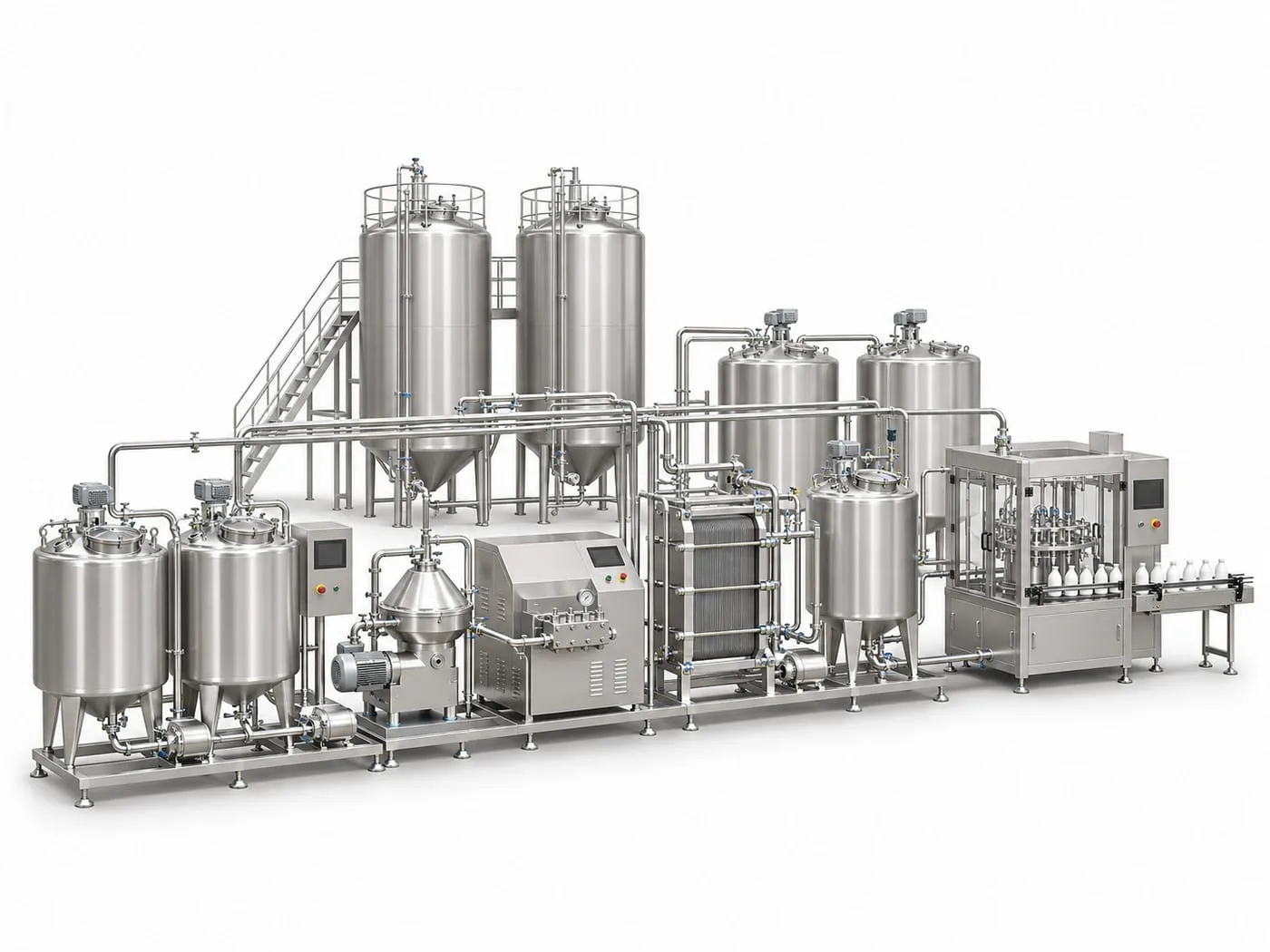
Dairy Processing Line
Dairies, cooperatives and investors starting or expanding fresh milk, yogurt or long-life milk production.
Sized to raw milk received per day and finished product filled per hour

07 · Beverage, Dairy & Sauce — Production line
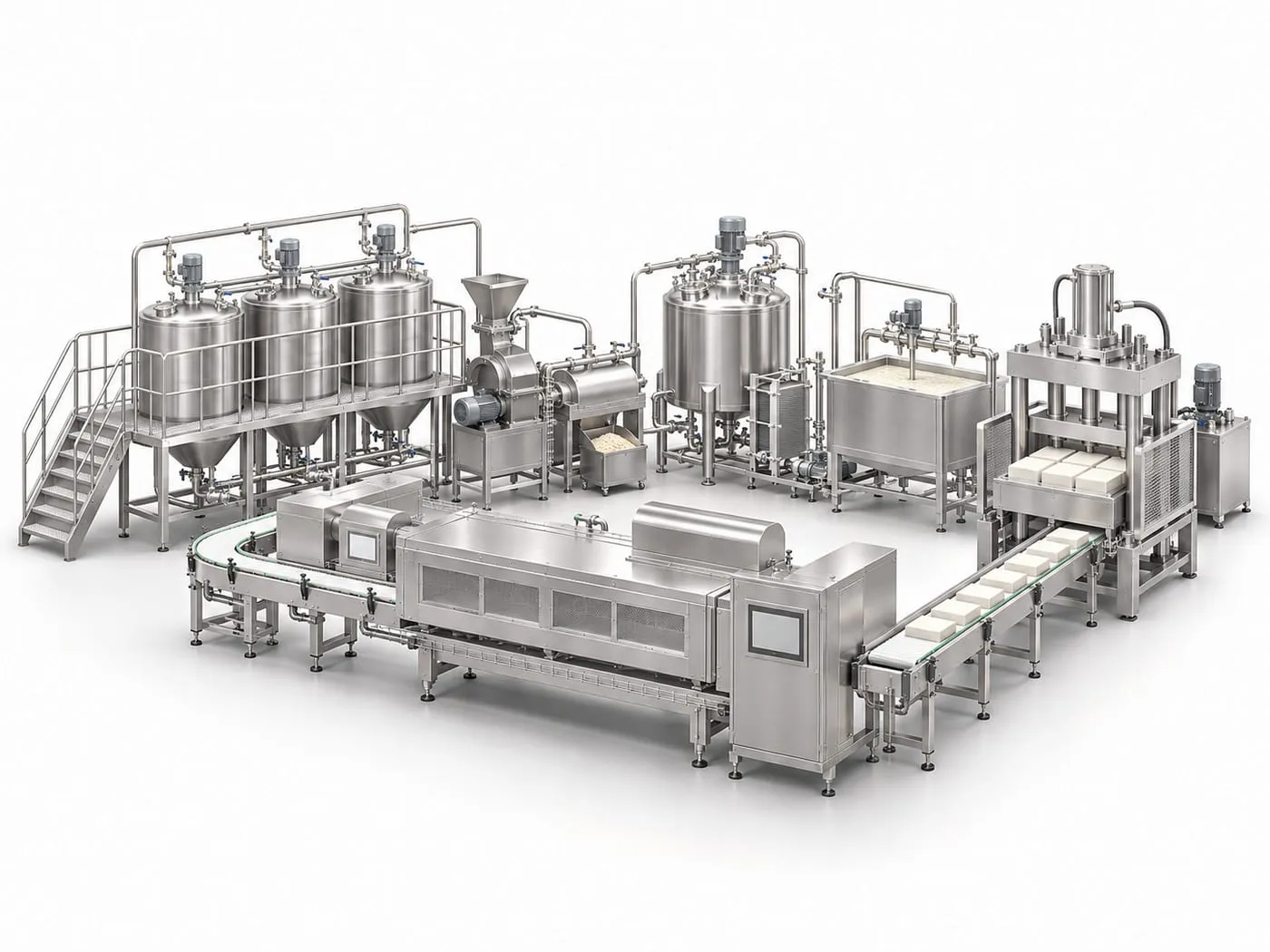
Soaks and grinds soybeans, separates and cooks the soy milk, then sends it to drink filling or to coagulation and pressing for tofu.
Short answer: A soy milk and tofu line soaks and grinds soybeans, separates the pulp, cooks the soy milk and then either fills it as a drink or coagulates and presses it into tofu. The main design choices are your bean to water ratio, the coagulant and setting method, and how products are kept cold after production.
A typical line includes:
| Form | Suits | Watch out for |
|---|---|---|
| Soy milk | Plant-based drinks for retail | Heat treatment route sets shelf life |
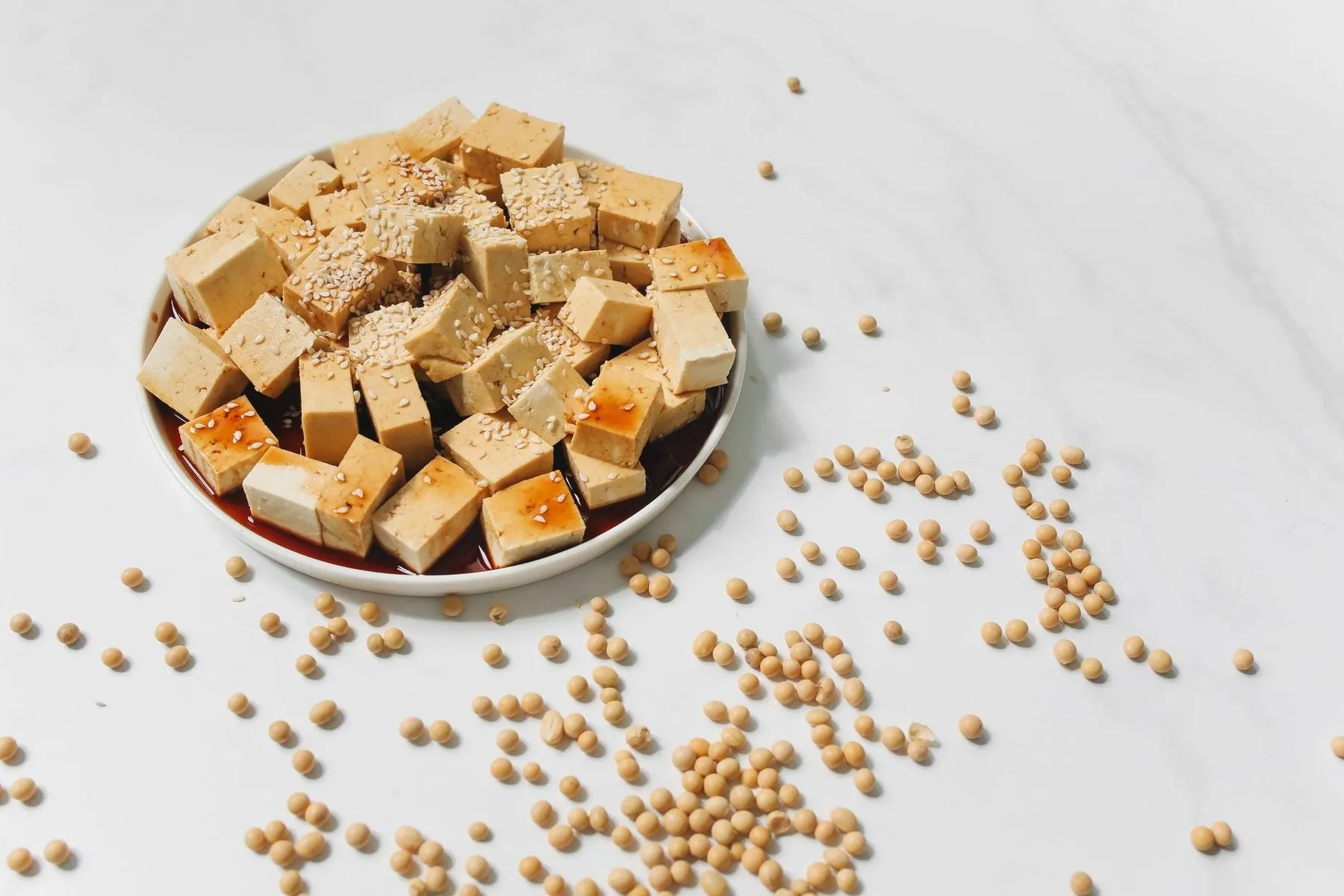
| Firm tofu | Restaurants, markets, retail blocks | Pressing time and labour on manual moulds |
| Silken tofu | Boxed retail tofu | Sealing and setting control |
Many plants start with a shared front end and one tofu type, then add a soy drink or a second tofu style using the same grinding, separation and cooking equipment. Size the front end for that future output if the space allows.
A food steam generator usually supplies heat for cooking. Soy drinks go through a food homogenizer and pasteurizer to a liquid filling machine. Tofu can be packed on a tray sealer or vacuum packaging machine, and the whole line is cleaned with a CIP cleaning system.
Soy milk line
grinding, separation, cooking, standardising and filling for soy drinks, chilled or heat treated for longer shelf life.
Firm tofu line
cooked soy milk is coagulated, the curd is broken and pressed in moulds, then cut and cooled.
Silken tofu line
cooled soy milk is mixed with coagulant (often GDL), filled into boxes, sealed and set by heating.
Our engineers check these points with you, so the quotation fits your site rather than a catalogue default.
Bean variety and protein content, soaking, grinding fineness, separation efficiency, soy milk concentration, the coagulant and pressing. We base our design on your beans and product, and confirm yield during commissioning rather than promise a figure.
Yes, the front end is shared. Soaking, grinding, separation and cooking are the same; the line splits after cooking to drink filling or to coagulation and pressing.
Okara is a wet by-product in large volume. Plants sell it as animal feed, use it in food products or dry it. Plan its collection and storage, since it spoils quickly.
Tell us your raw material, finished product and target output. Our engineers reply with a matched configuration and quotation.
What to send with your inquiry
Email sales@hnfoda.com
Beverage, Dairy & Sauce
Dairies, cooperatives and investors starting or expanding fresh milk, yogurt or long-life milk production.
Sized to raw milk received per day and finished product filled per hour
Beverage, Dairy & Sauce
Fruit processors, beverage start-ups and contract packers making juices, nectars or blended drinks.
Sized to finished beverage filled per hour, with fruit input calculated from your yield
Beverage, Dairy & Sauce
Food companies, brand owners and contract packers producing chilli, tomato or compound seasoning sauces.
Sized to finished sauce filled per hour or per batch (kg)
Beverage, Dairy & Sauce
Dairies, juice and beverage plants and sauce makers that need controlled, recorded heat treatment.
Sized to product flow (L/h) for continuous units, or batch volume for tank and in-pack units