Freezing, CIP & Conveying
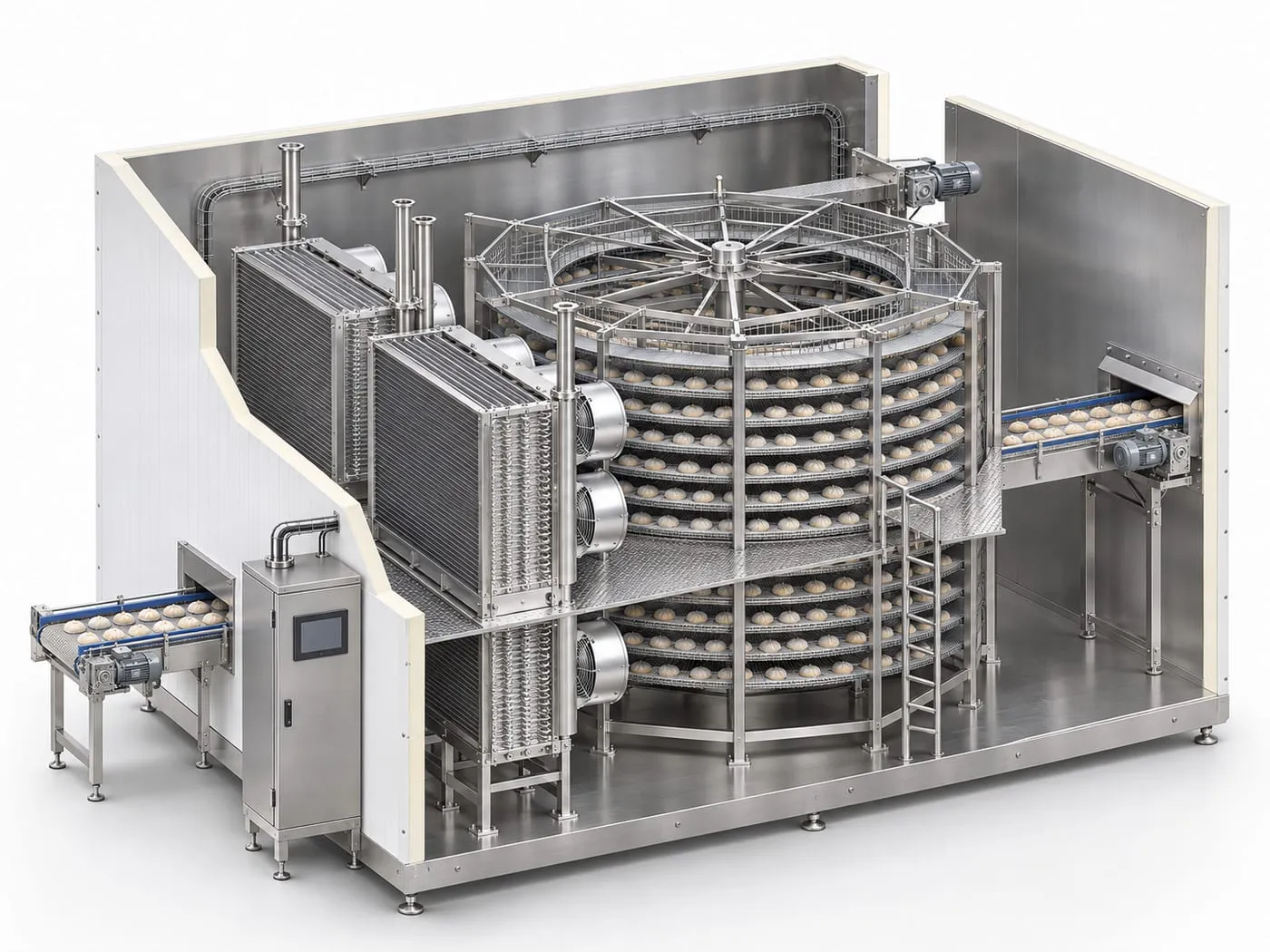
Industrial Food Freezer
Frozen food, meat, seafood and fruit processors adding or expanding quick-freezing capacity.
Sized on product input (kg/h) at stated inlet and outlet temperatures

10 · Freezing, CIP & Conveying — Equipment
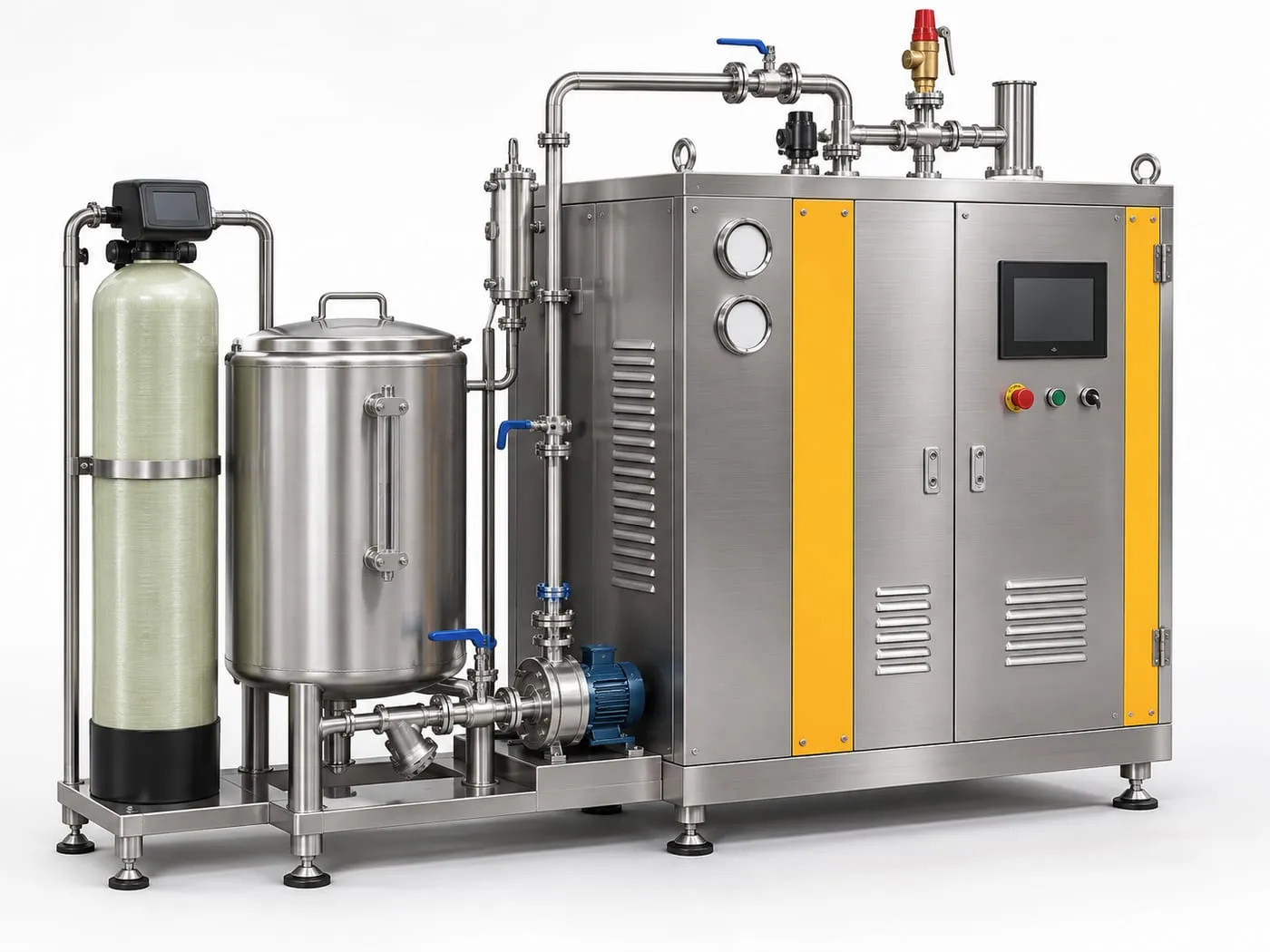
A compact steam source for cooking kettles, steamers, blanchers and heat exchangers, sized to the steam demand of your process equipment.
Short answer: A steam generator for food processing produces steam for jacketed kettles, steam cabinets, blanchers and heat exchangers. The configuration depends on how much steam your equipment needs and at what pressure, on whether steam contacts the food directly, and on the quality of your water, since scale and blowdown determine reliability.
Treated feed water is pumped into the generator, where an electric element or a gas burner heats it until it boils. Steam collects at the top and leaves through a main valve to a header that distributes it to the consumers. Pressure controls start and stop heating to hold the set pressure, and safety valves protect against overpressure. Dissolved solids build up in the water as steam is produced, so the generator is regularly blown down to drain concentrated water. Condensate from the process equipment can be collected and returned to the feed tank to save water and energy.
Water treatment — softening and, in some cases, further treatment — is part of the system, not an extra, because scale reduces heat transfer and shortens equipment life.
| Form | Suits | Watch out for |
|---|---|---|
| Electric | Small to medium loads, indoor clean areas | High electrical demand; running cost on large loads |
| Gas-fired | Larger loads where gas is affordable | Flue, ventilation and gas approval |
| Central steam connection | Sites with an existing boiler | Steam quality and pressure reduction at the point of use |
Local rules on pressure equipment differ by country; check registration and inspection requirements before installation.
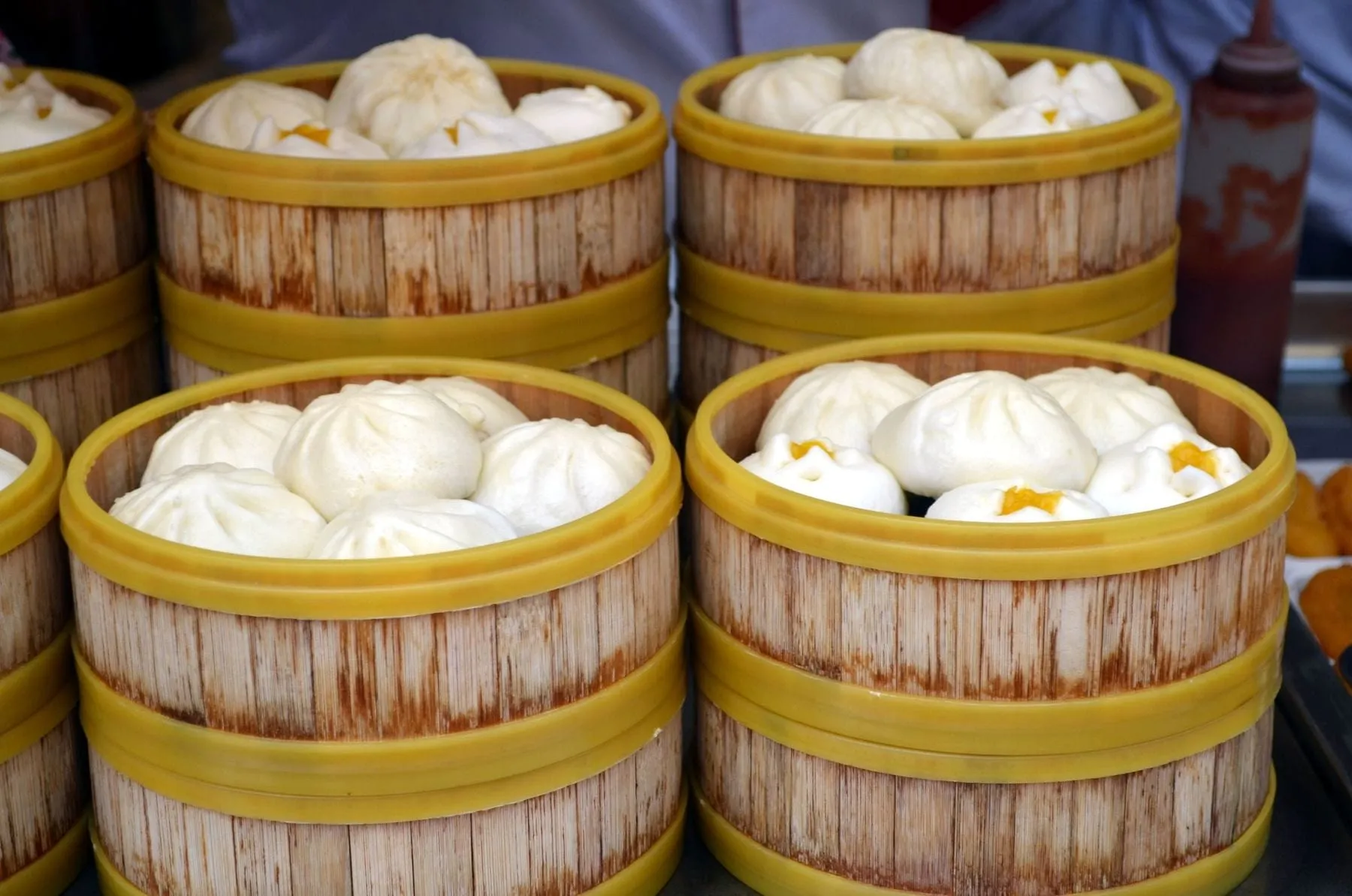
The generator supplies equipment such as the jacketed cooking kettle, steamed bun production line, blanching and cooling line and food retort. It can also heat solutions for a CIP cleaning system.
Electric
no flue or fuel supply; suits smaller loads, sites with good power supply and clean indoor installation.
Gas-fired
lower running cost on larger loads where natural gas or LPG is available; needs a flue and ventilation.
Central steam connection
pressure reducing, filtering and distribution kit to take steam from an existing plant boiler.
Our engineers check these points with you, so the quotation fits your site rather than a catalogue default.
Add up the steam demand of each consumer — kettles, steamers, blanchers, heat exchangers, CIP heating — and consider which run at the same time and how big start-up peaks are. Equipment suppliers can give steam consumption figures; we review them together with your production schedule.
Electric units are simpler to install and need no flue, but energy cost is often higher on large loads. Gas units cost less to run where gas is affordable but need a flue, gas connection and local approval. Local energy prices and regulations usually decide.
Direct contact needs culinary or clean steam: suitable feed water treatment, approved boiler chemicals or none, and filtration at the point of use. Tell us where steam touches food so the system is designed for it, and check the standard that applies in your market.
Tell us your raw material, finished product and target output. Our engineers reply with a matched configuration and quotation.
What to send with your inquiry
Email sales@hnfoda.com
Freezing, CIP & Conveying
Frozen food, meat, seafood and fruit processors adding or expanding quick-freezing capacity.
Sized on product input (kg/h) at stated inlet and outlet temperatures
Freezing, CIP & Conveying
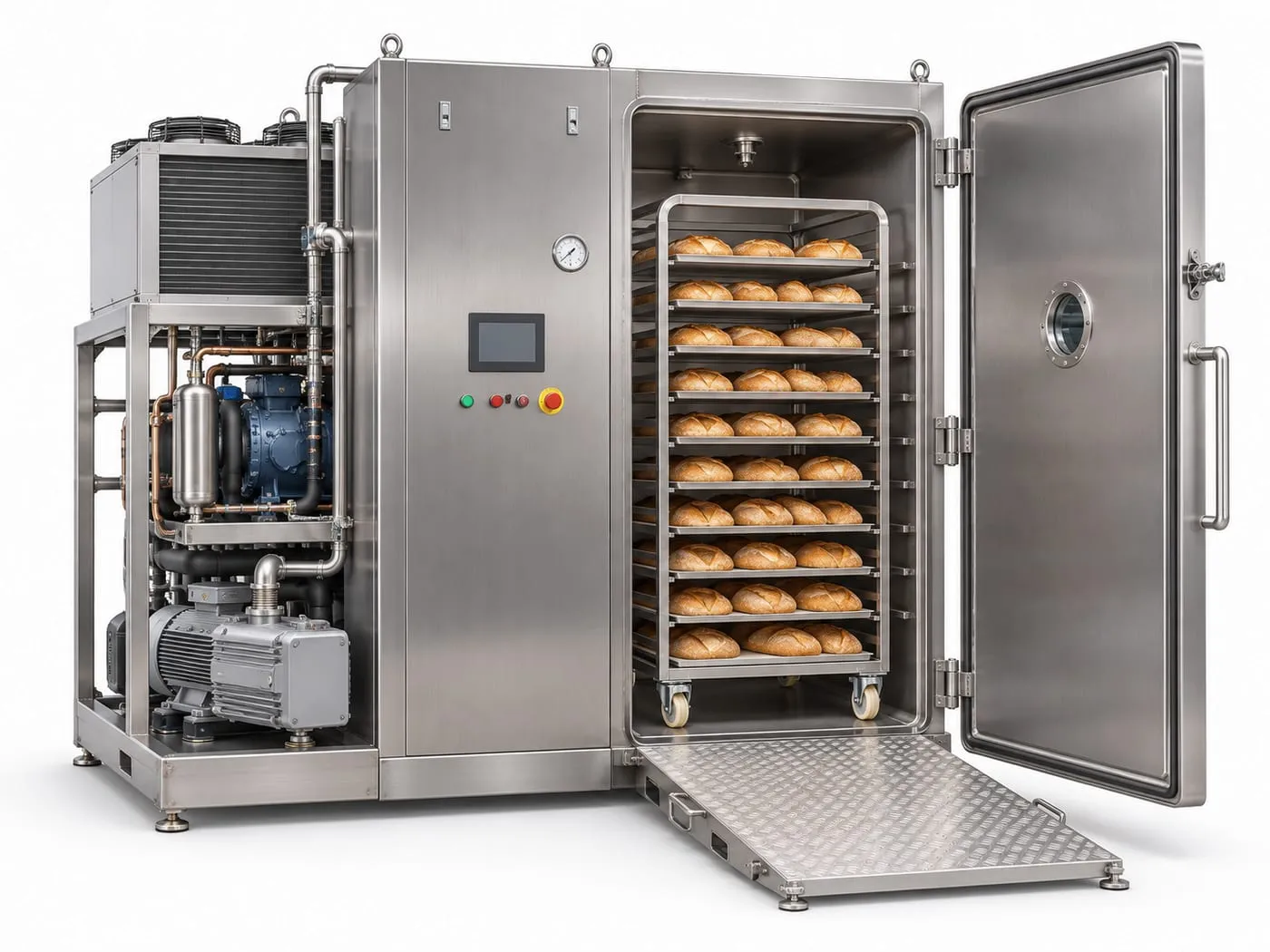
Central kitchens, bakeries, ready meal makers and produce packers who need fast cooling before chilling or packing.
Sized on product per batch (kg/batch) and cycle time
Freezing, CIP & Conveying
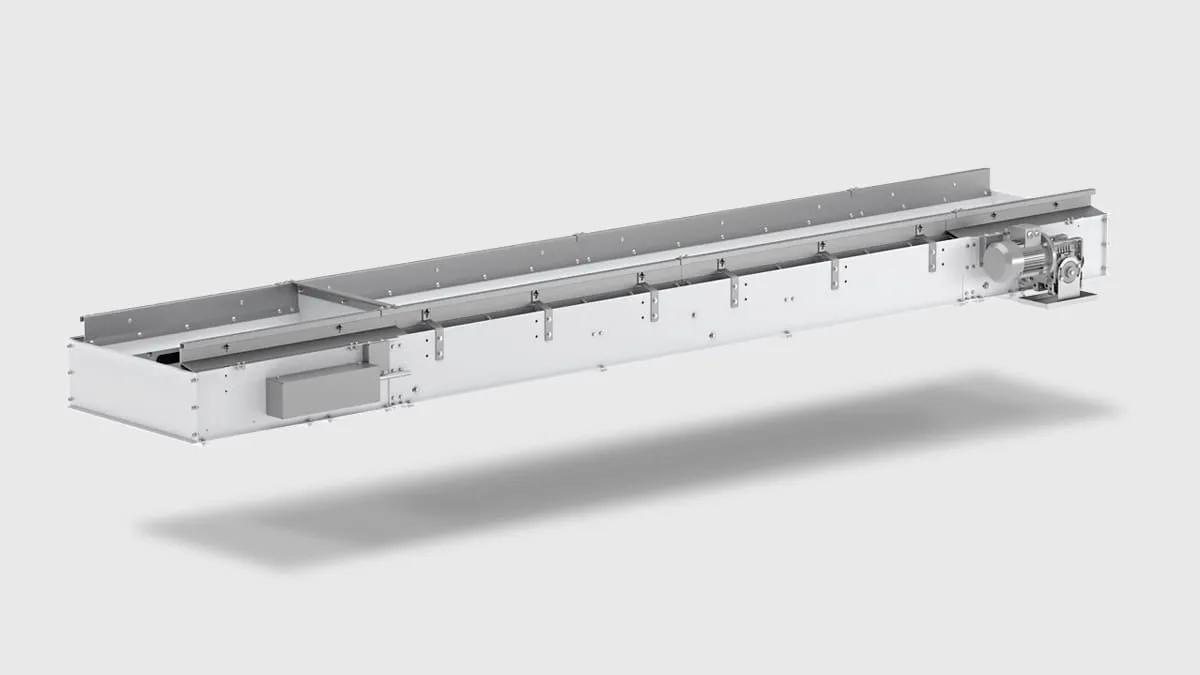
Plants connecting individual machines into a line, or replacing manual transfer between steps.
Sized to the throughput of the machines it links (kg/h or pieces/min)
Freezing, CIP & Conveying
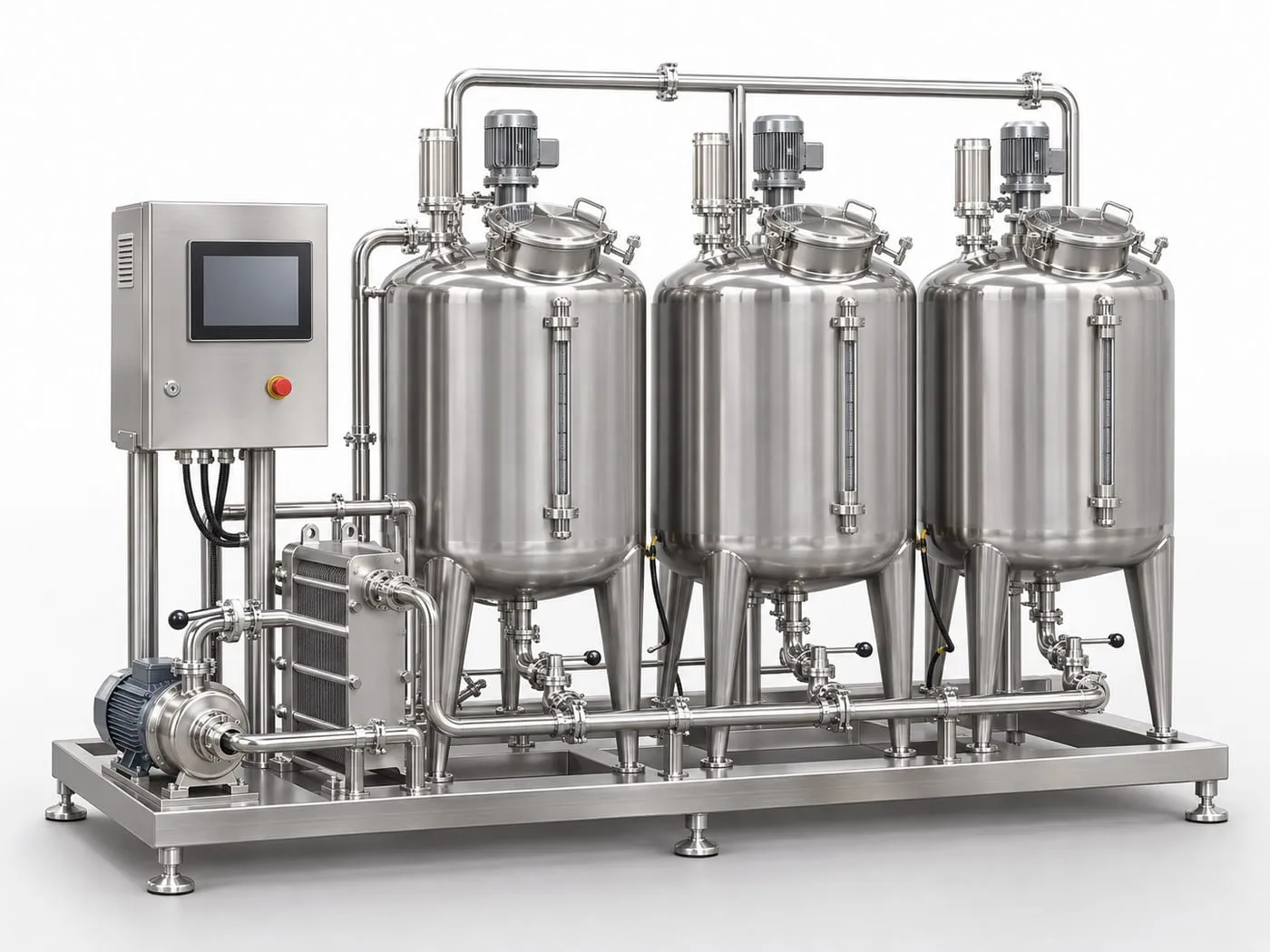
Beverage, dairy, sauce and liquid food plants with closed tanks and pipework.
Sized on circuit flow rate and circuit volume, set by pipe size and tank spray devices