Beverage, Dairy & Sauce
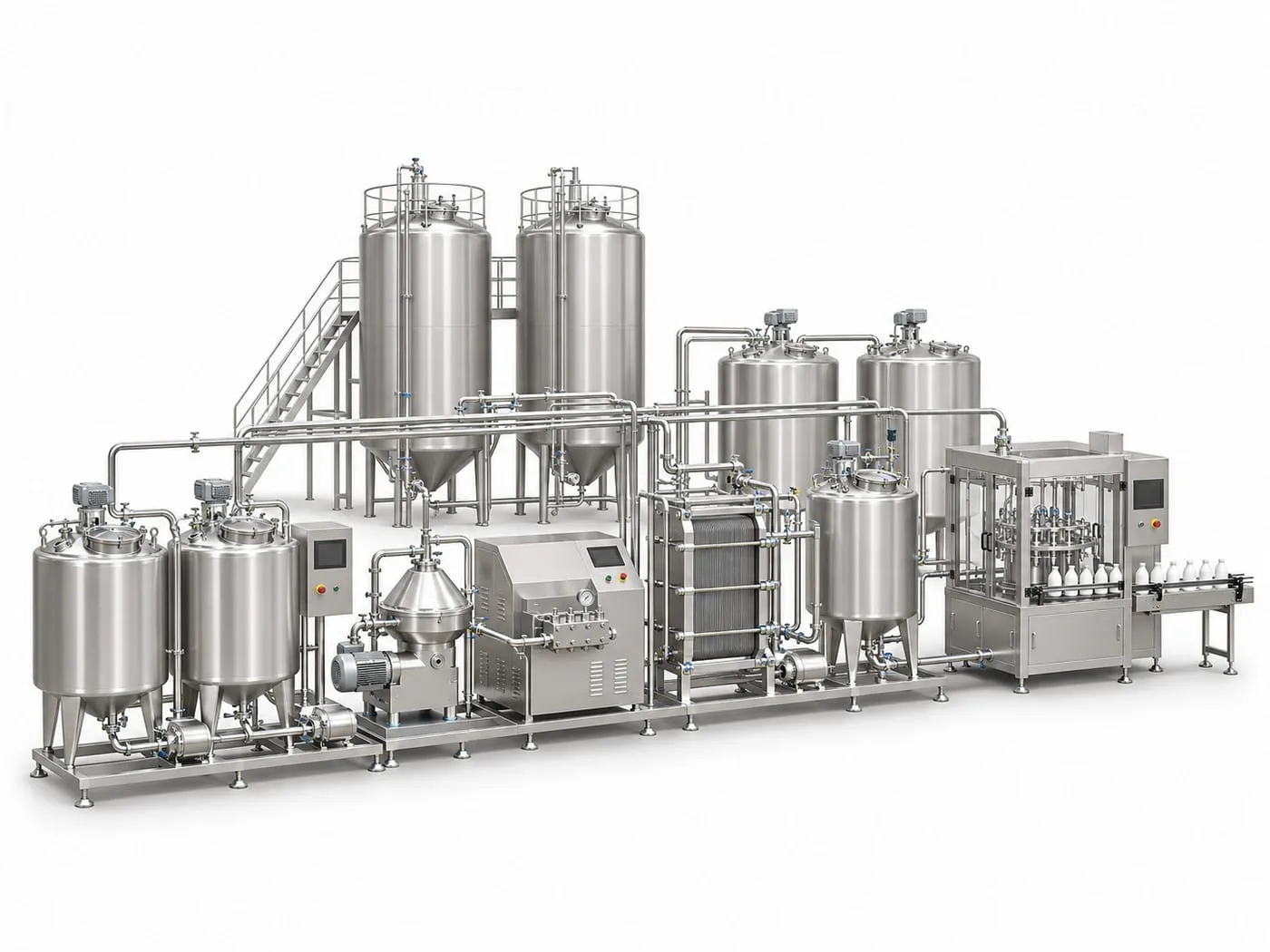
Dairy Processing Line
Dairies, cooperatives and investors starting or expanding fresh milk, yogurt or long-life milk production.
Sized to raw milk received per day and finished product filled per hour

07 · Beverage, Dairy & Sauce — Equipment
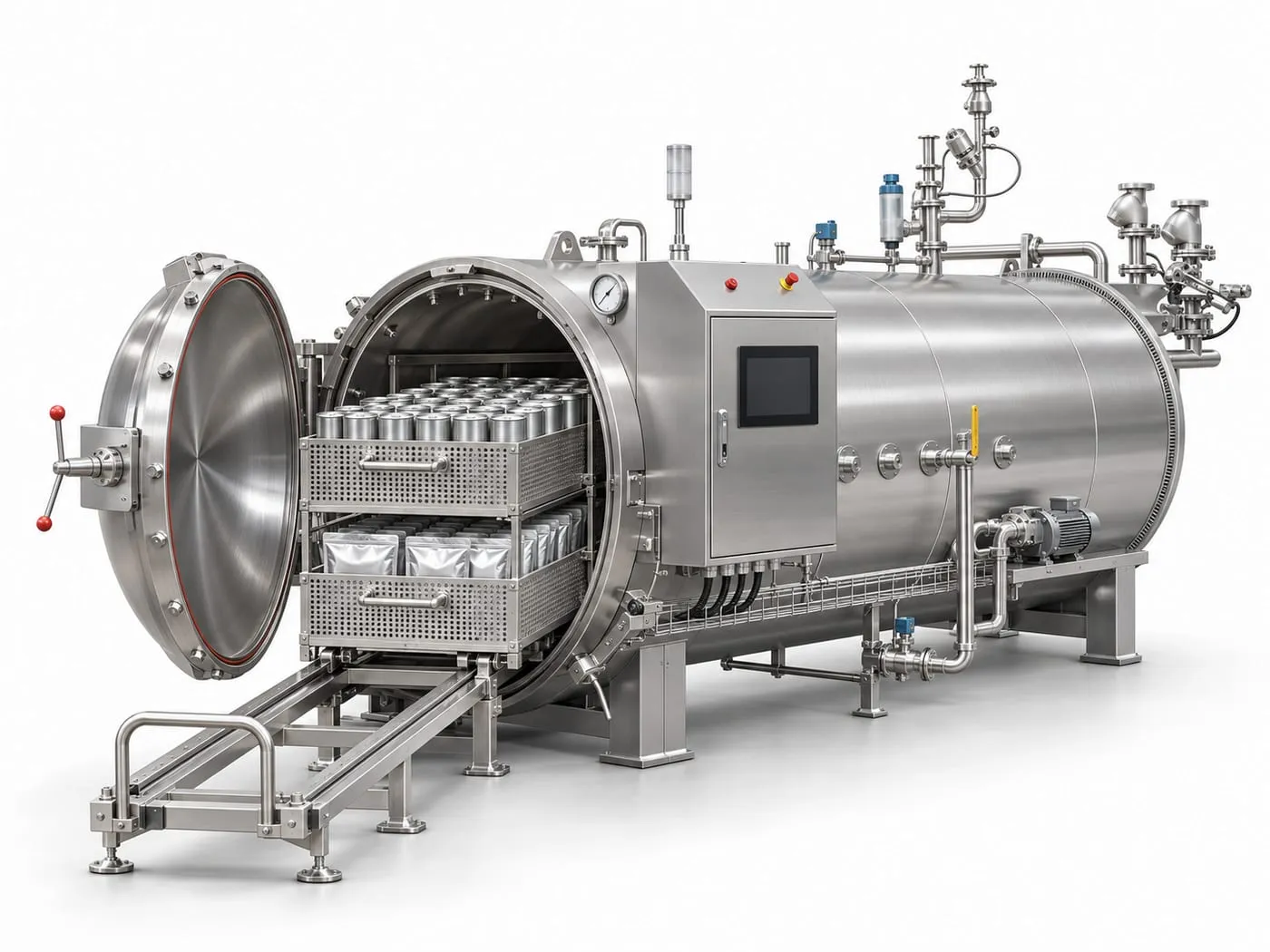
Heats sealed containers under pressure to run a validated sterilisation process, with water spray, immersion, steam or rotary options.
Short answer: A food retort heats sealed cans, jars, bottles or pouches under pressure to run a sterilisation process that has been validated for your product and pack. Which type fits depends mainly on your container, how heat reaches the coldest point of the product, and the records your market requires.
Filled and sealed containers are loaded into baskets or onto trays and pushed into a pressure vessel. The door is locked and the cycle begins:
Air supplies overpressure in spray and immersion retorts, which is why they handle pouches and plastic packs. In rotary retorts, the baskets turn during the cycle to mix the contents and speed up heat transfer.
| Form | Suits | Watch out for |
|---|---|---|
| Water spray | Pouches, trays, jars and cans | Spray distribution needs checking per load |
| Water immersion | Delicate or flexible packs | More water to heat each cycle |
| Steam | Metal cans | Air removal must be complete |
| Rotary | Viscous or particulate products | Packs and baskets must tolerate rotation |
Throughput is set by how many containers fit in each basket and how long each cycle takes, including come-up and cooling. Adding a second vessel is a common way to raise output while keeping cycles unchanged.
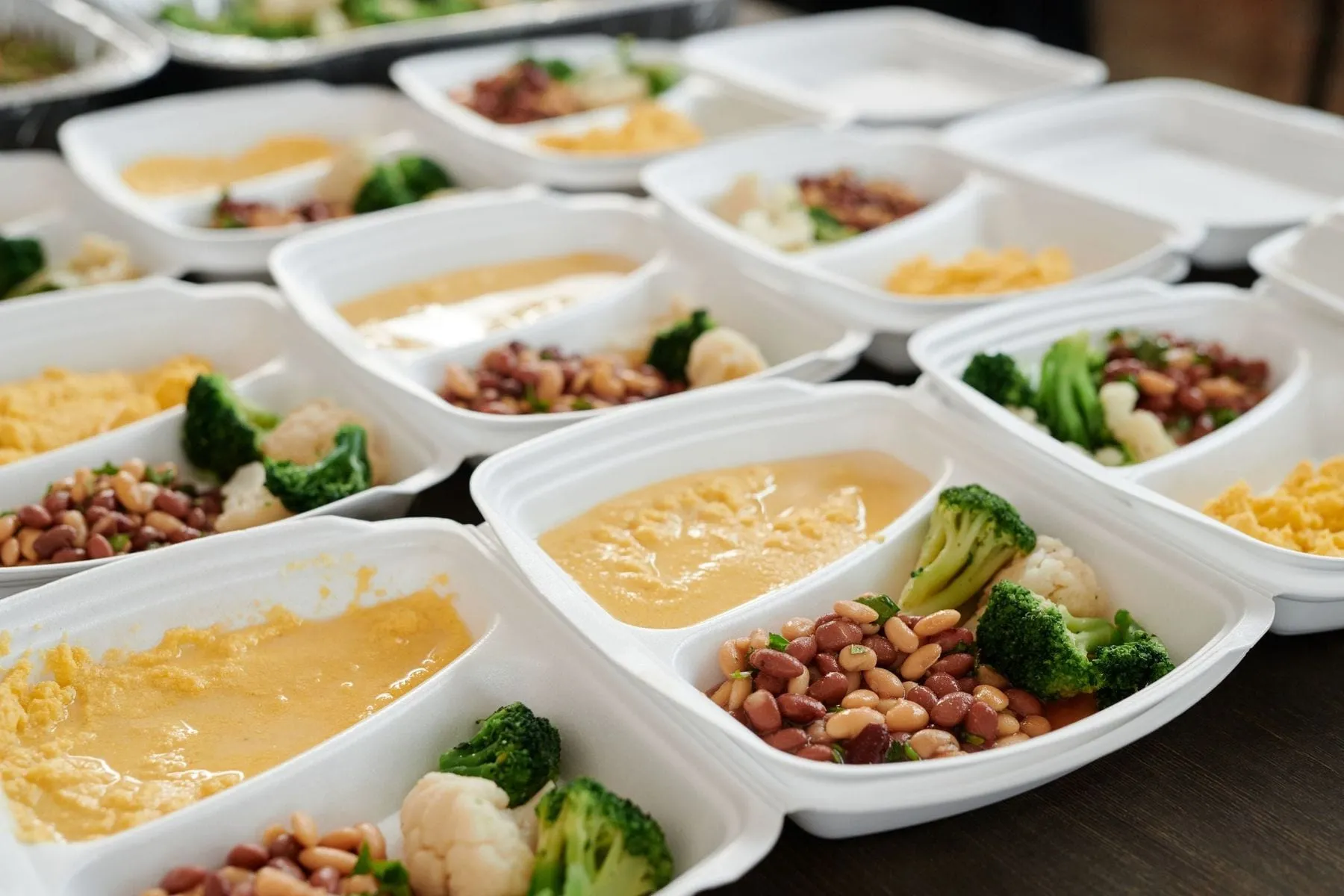
The retort comes after filling and sealing, for example on a liquid filling machine or premade pouch packing machine. It is common at the end of a sauce processing line or prepared meal production line, with a food steam generator as the heat source.
Water spray retort
hot water sprayed over the load with overpressure; suits pouches, trays and plastic packs as well as cans and jars.
Water immersion retort
containers fully covered in hot water, giving even heating and support for flexible or delicate packs.
Steam retort
saturated steam heats the load directly; a common choice for metal cans.
Rotary retort
baskets rotate during the cycle to mix contents, shortening heat penetration time for viscous or particulate products.
Our engineers check these points with you, so the quotation fits your site rather than a catalogue default.
Pouches and plastic trays need overpressure control so they do not burst or deform, which is why water spray and water immersion retorts are most often used. Steam retorts are more common for metal cans.
The time and temperature schedule must be established by heat penetration and distribution testing for your product and pack, usually by a qualified process authority, and accepted by your regulator. The retort is built to deliver and record that schedule.
A steam supply, water for processing and cooling, compressed air for overpressure and controls, a way to load and unload baskets, and space for records. Many plants also add a cooling tower or water recovery.
Tell us your raw material, finished product and target output. Our engineers reply with a matched configuration and quotation.
What to send with your inquiry
Email sales@hnfoda.com
Plan a small milk plant: cooling, pasteurising, homogenising and filling equipment, sizing litres per day, cost drivers and a quote checklist.
Beverage, Dairy & Sauce
Dairies, cooperatives and investors starting or expanding fresh milk, yogurt or long-life milk production.
Sized to raw milk received per day and finished product filled per hour
Beverage, Dairy & Sauce
Fruit processors, beverage start-ups and contract packers making juices, nectars or blended drinks.
Sized to finished beverage filled per hour, with fruit input calculated from your yield
Beverage, Dairy & Sauce
Food companies, brand owners and contract packers producing chilli, tomato or compound seasoning sauces.
Sized to finished sauce filled per hour or per batch (kg)
Beverage, Dairy & Sauce
Soy food workshops scaling up, plant-based drink brands and tofu factories supplying retail or food service.
Sized to dry soybean input (kg/h) and the finished product it turns into