Beverage, Dairy & Sauce
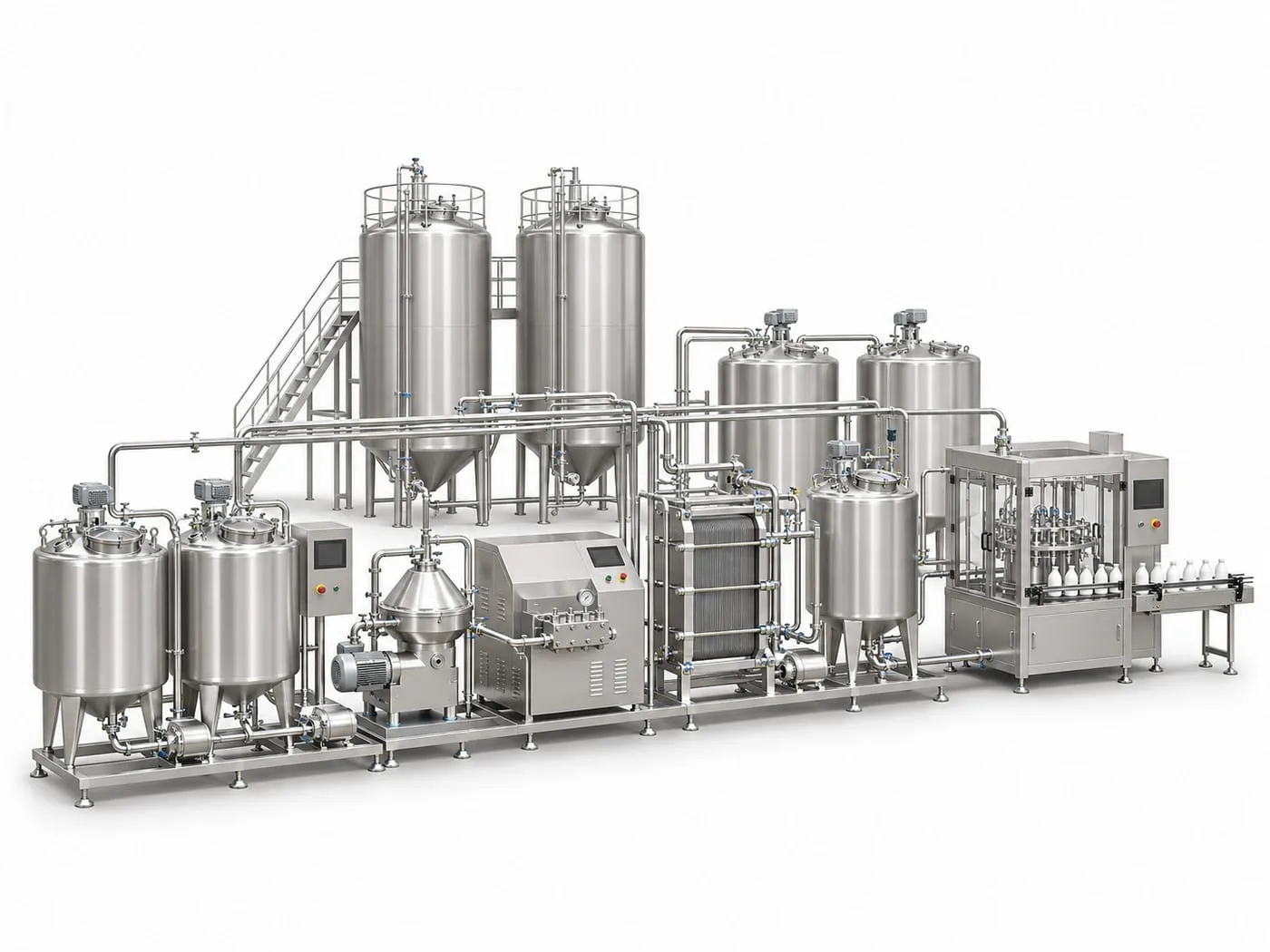
Dairy Processing Line
Dairies, cooperatives and investors starting or expanding fresh milk, yogurt or long-life milk production.
Sized to raw milk received per day and finished product filled per hour

07 · Beverage, Dairy & Sauce — Production line
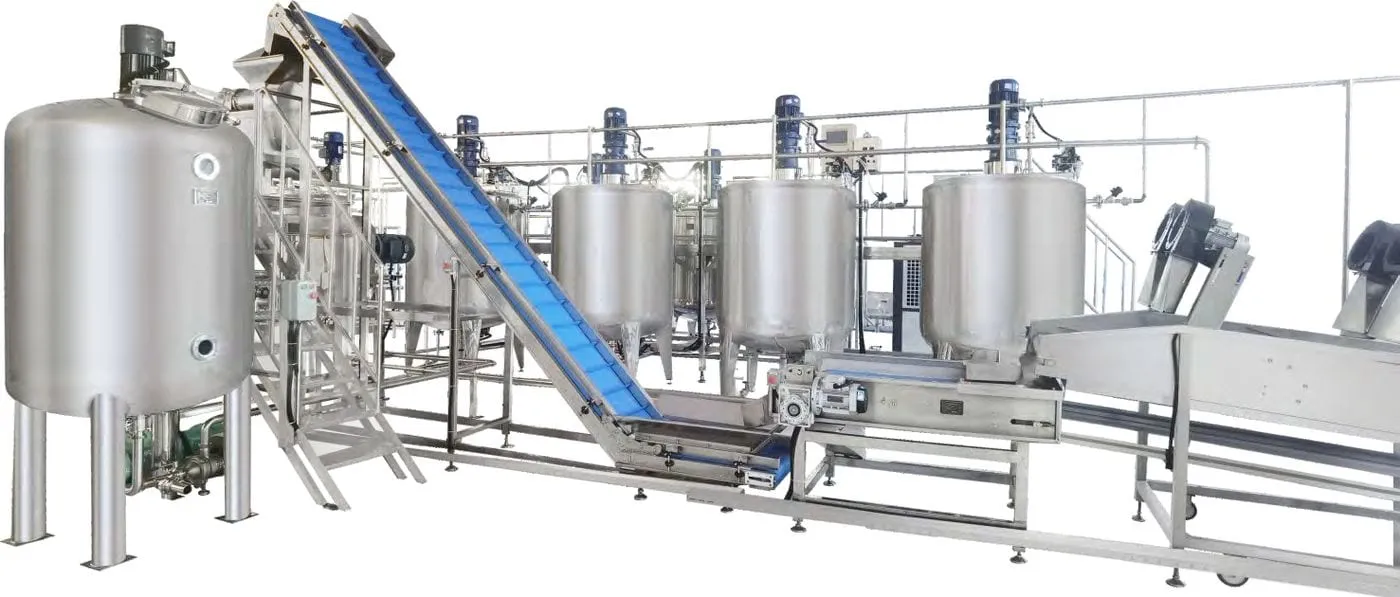
Washes and grinds raw ingredients, cooks and blends the sauce, then heat treats and fills it into jars, bottles or pouches.
Short answer: A sauce processing line washes and grinds raw ingredients, blends and cooks them, then heat treats and fills the sauce into jars, bottles or pouches. Its configuration depends on viscosity, the size of pieces you want to keep, the container and how the product is made shelf stable.
A typical line includes these stations:
| Form | Suits | Watch out for |
|---|---|---|
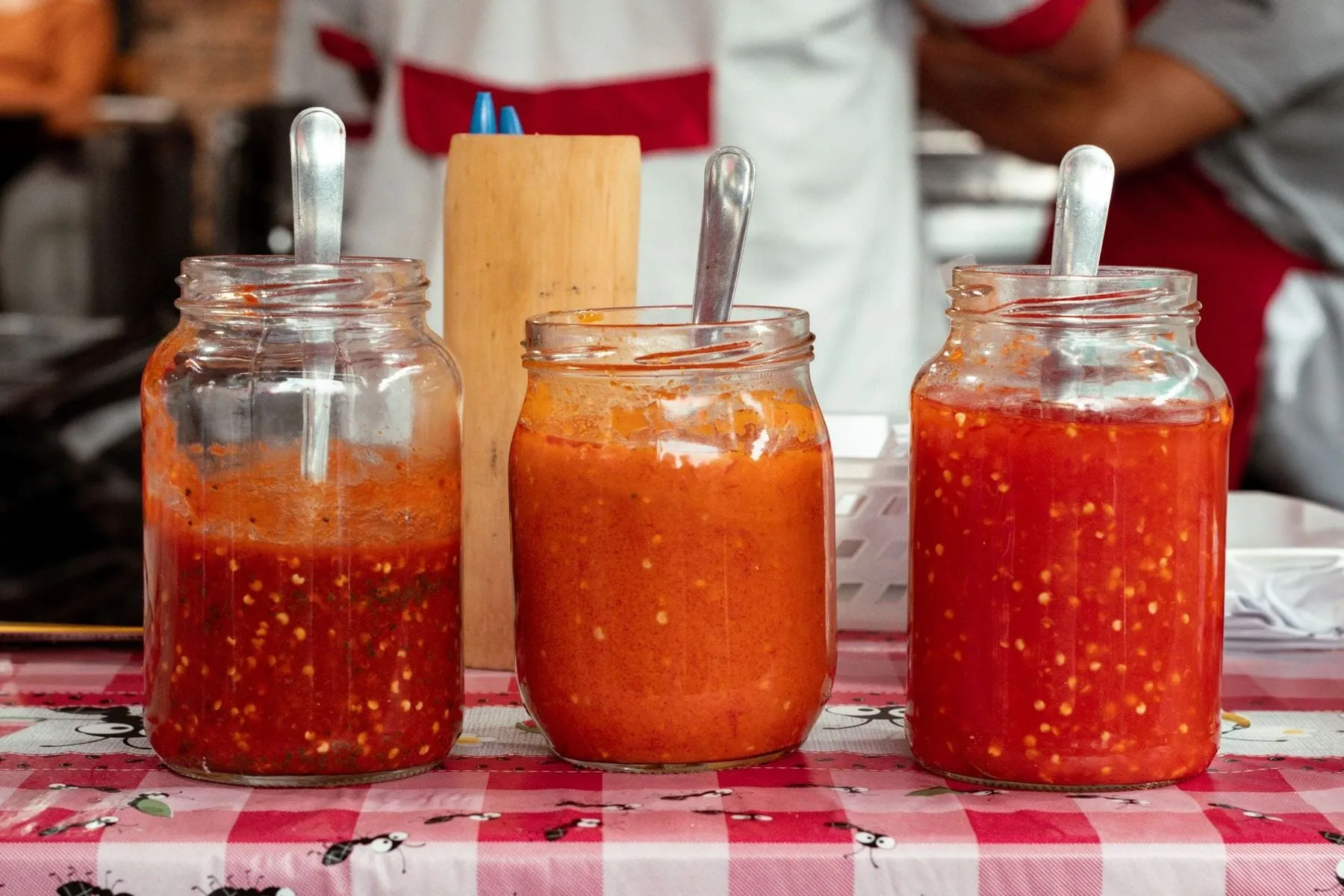
| Chilli sauce | Oil-based or water-based chilli sauces, with pieces | Oil separation, capsaicin dust when grinding dry chillies |
| Tomato ketchup | Smooth, thick sauces from paste or pulp | Viscosity control, fine milling |
| Blended seasoning sauce | Hot pot bases, cooking sauces, dips | Many ingredients, longer cooking and cleaning |
Many new sauce makers begin with batch kettles and semi-automatic filling, then add continuous milling, buffer tanks and automatic capping as volumes grow. Designing the layout for that second stage from the start avoids moving equipment later.
Front-end preparation uses a fruit and vegetable washer and a vegetable cutting machine. Cooking takes place in a jacketed cooking kettle, fine milling in a colloid mill, and filling on a liquid filling machine. Some products then go through a food retort.
Chilli sauce line
washing and destemming, grinding to the required texture, cooking with oil and seasonings, and filling hot into jars or bottles.
Tomato ketchup line
blending paste or fresh tomato pulp with sugar, vinegar and spices, fine milling, cooking and filling into bottles or sachets.
Blended seasoning sauce line
batch cooking of several ingredients with particles, for hot pot bases, cooking sauces or dips.
Our engineers check these points with you, so the quotation fits your site rather than a catalogue default.
Usually yes, if the sauces have similar viscosity and the same container. Different particle sizes, oil content or allergens may need extra cleaning time or separate equipment. List all planned sauces so we design the line for the hardest one.
Choose cooking with a gentle agitator, pumps that do not shear particles, and fillers with nozzles large enough for the pieces. Tell us the largest particle size you want to keep.
It depends on the recipe, acidity, water activity, container and shelf life. Some sauces are hot filled and inverted, others need a retort. Your process authority or local regulator should confirm the route for each product.
Tell us your raw material, finished product and target output. Our engineers reply with a matched configuration and quotation.
What to send with your inquiry
Email sales@hnfoda.com
Beverage, Dairy & Sauce
Dairies, cooperatives and investors starting or expanding fresh milk, yogurt or long-life milk production.
Sized to raw milk received per day and finished product filled per hour
Beverage, Dairy & Sauce
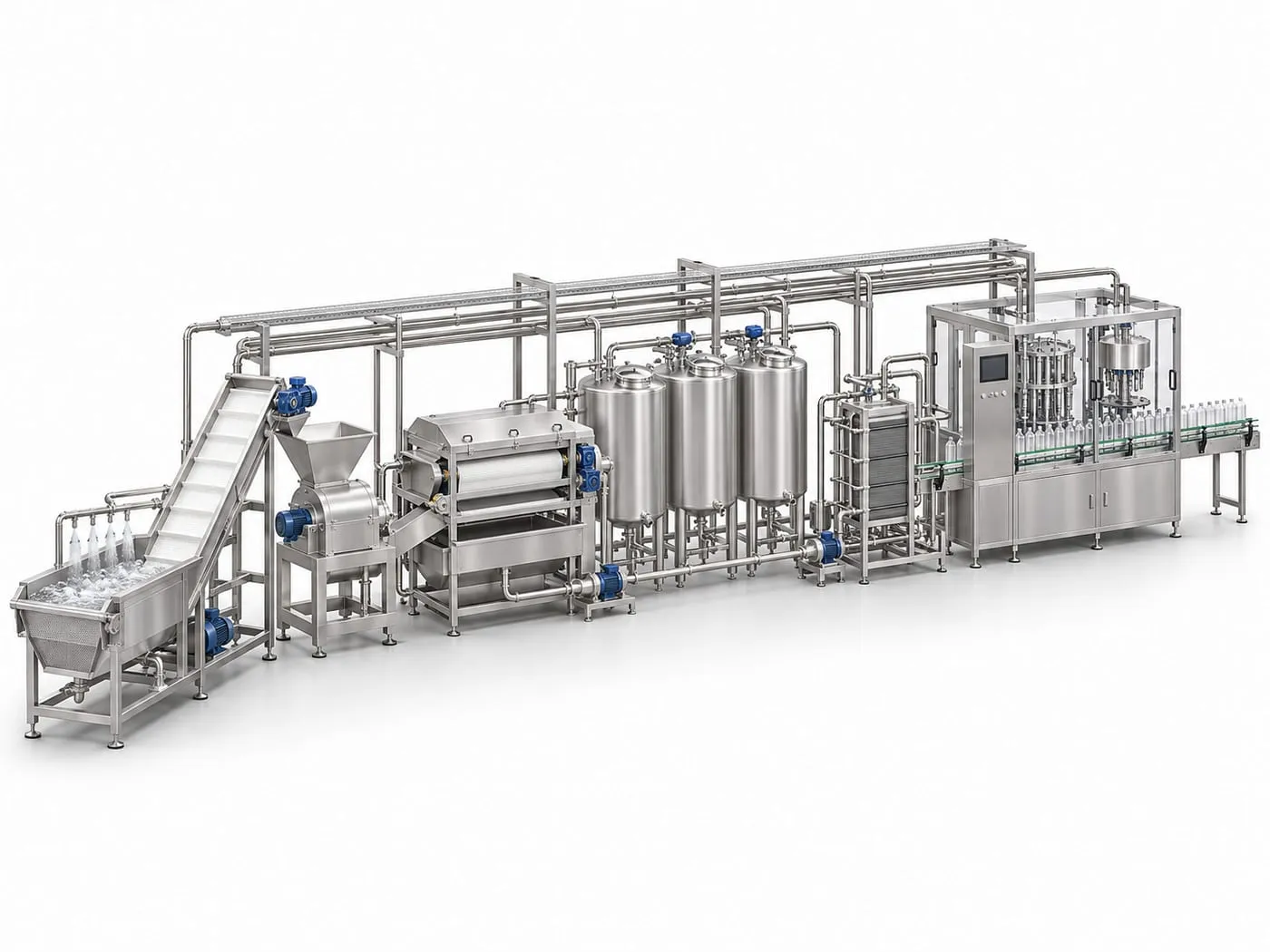
Fruit processors, beverage start-ups and contract packers making juices, nectars or blended drinks.
Sized to finished beverage filled per hour, with fruit input calculated from your yield
Beverage, Dairy & Sauce
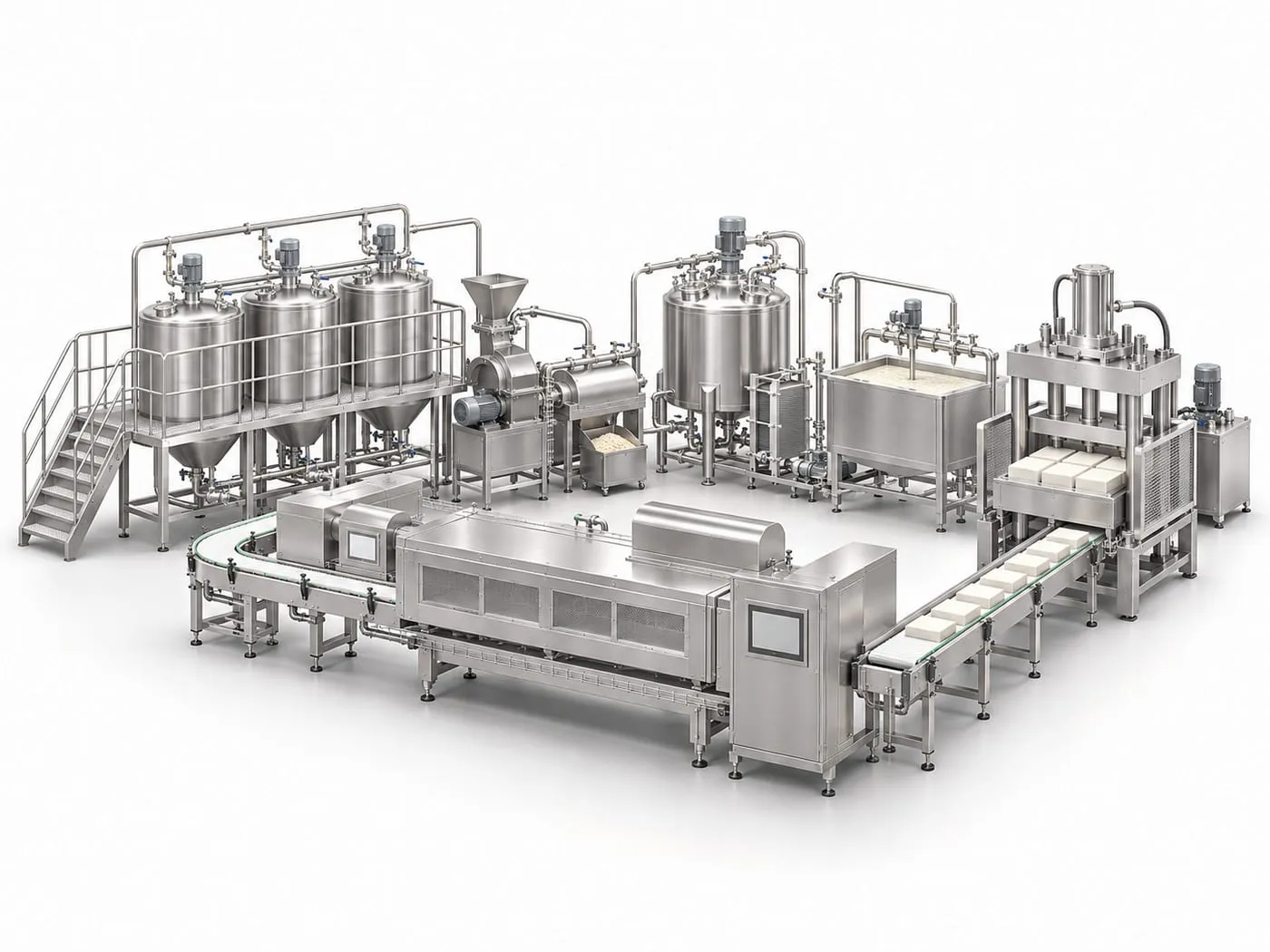
Soy food workshops scaling up, plant-based drink brands and tofu factories supplying retail or food service.
Sized to dry soybean input (kg/h) and the finished product it turns into
Beverage, Dairy & Sauce
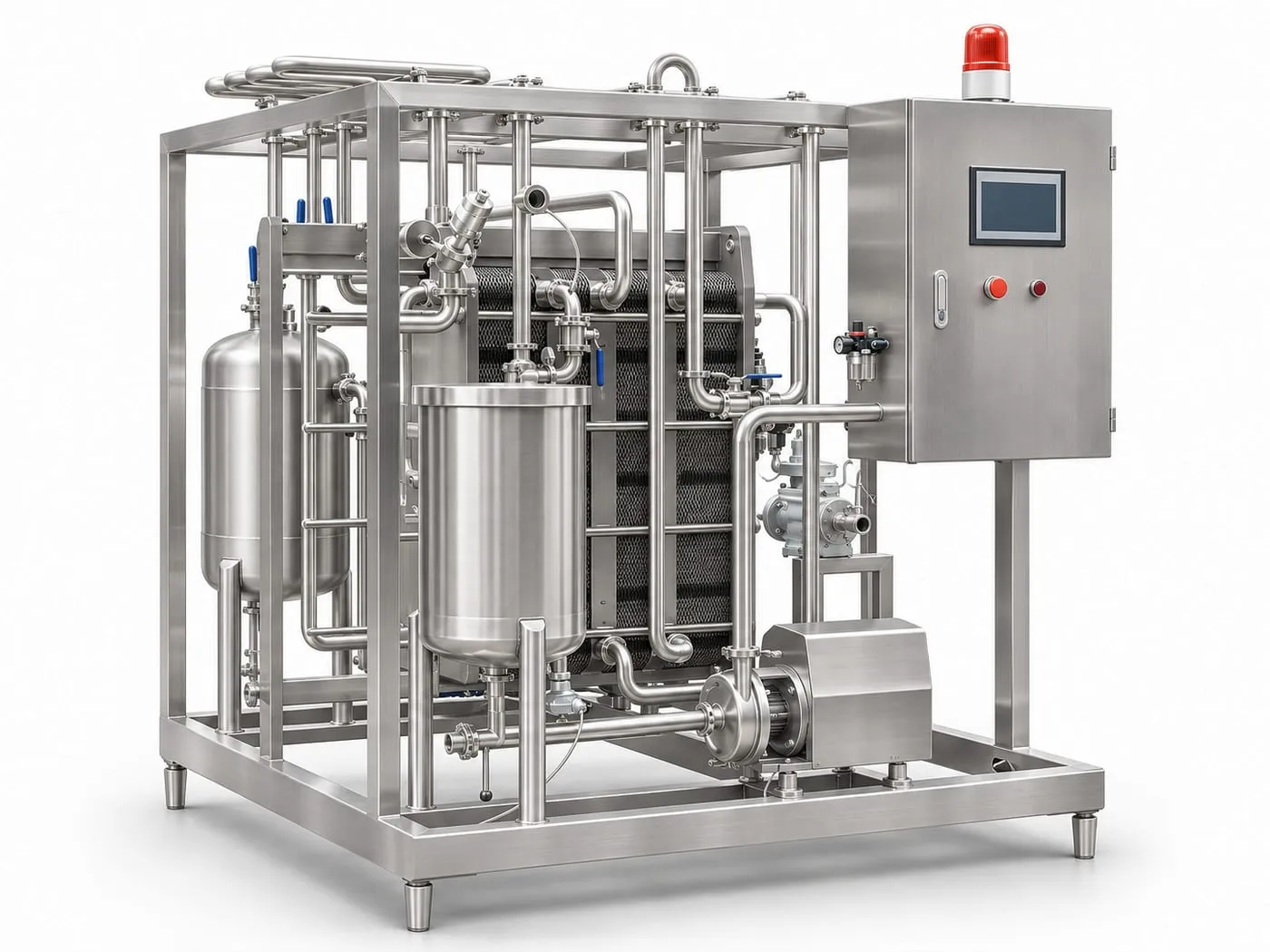
Dairies, juice and beverage plants and sauce makers that need controlled, recorded heat treatment.
Sized to product flow (L/h) for continuous units, or batch volume for tank and in-pack units