Beverage, Dairy & Sauce
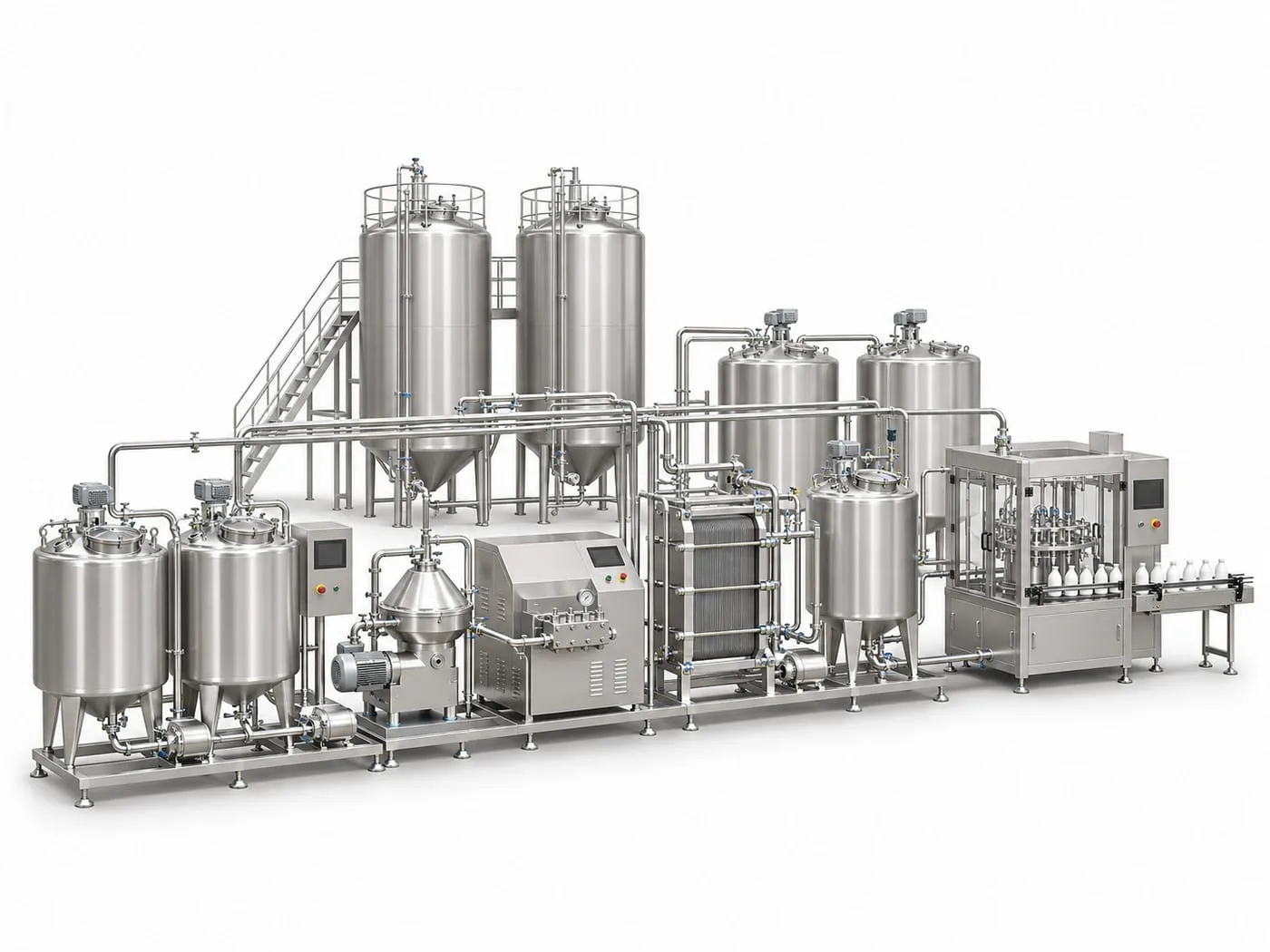
Dairy Processing Line
Dairies, cooperatives and investors starting or expanding fresh milk, yogurt or long-life milk production.
Sized to raw milk received per day and finished product filled per hour

07 · Beverage, Dairy & Sauce — Equipment
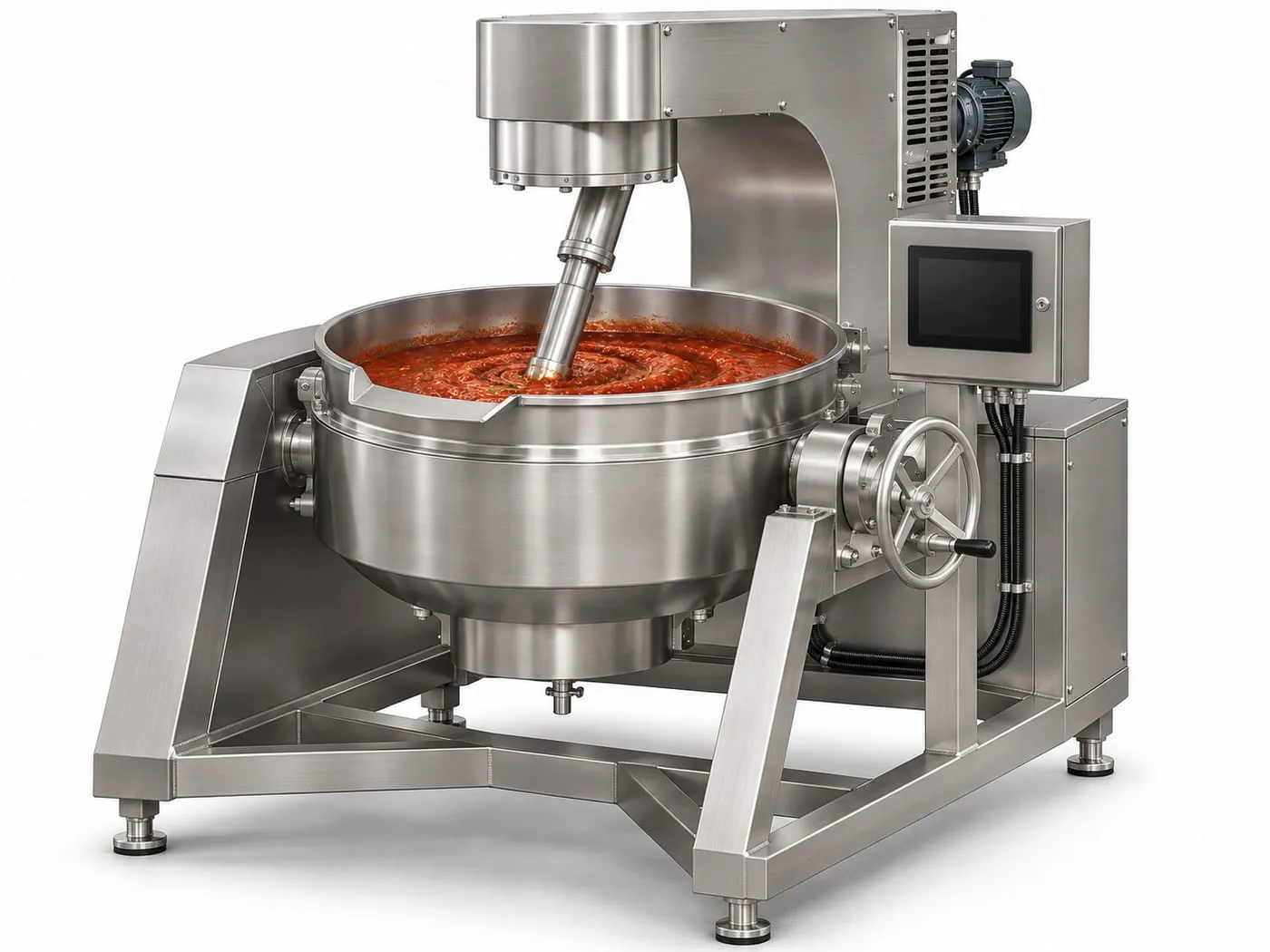
Heats and stirs sauces, soup bases, jams and fillings in a jacketed pan, with scraping agitators that stop product burning on the wall.
Short answer: A jacketed cooking kettle heats product through a double wall while an agitator stirs and scrapes it, so sauces, jams, soup bases and fillings cook evenly without burning. The configuration depends on viscosity, the largest pieces in your recipe, the heat source on site and how the batch is discharged.
The pan has an outer jacket filled with steam, thermal oil or water. Heat passes through the inner wall into the product, which avoids hot spots from a direct flame. An agitator mounted on the lid or frame stirs the batch; scrapers on its arms sweep the bottom and wall so a cooked layer does not build up.
The operator or controller sets jacket temperature, stirring speed and time. Ingredients are added in stages through the lid. When cooking finishes, the batch leaves through a bottom valve, by pump, or by tilting the pan.
| Form | Suits | Watch out for |
|---|---|---|
| Steam jacketed | Larger batches, plants with steam | Needs a steam supply and condensate return |
| Electric heated | Sites without steam, smaller batches | Slower heating on large volumes |
| Planetary stirring | Thick pastes, fillings, sugary recipes | More complex drive to maintain |
| Tilting discharge | Thick or chunky products | Needs space in front to pour |
For a first kettle, many small sauce makers choose electric heating with a scraping agitator and tilting discharge, and switch to steam as they add kettles.
The kettle is the cooking station of a sauce processing line and is common in a prepared meal production line. Ingredients may be milled first in a colloid mill, and cooked product is pumped to a liquid filling machine. Steam kettles are supplied by a food steam generator.
Steam jacketed kettle
fast, even heating from a steam boiler or plant steam, suited to larger batches and plants that already have steam.
Electric heated kettle
a thermal oil or water jacket heated by elements, for sites without steam or for smaller batches.
Planetary stirring
the agitator turns on its own axis while circling the pan, for thick pastes and fillings that would burn with a simple stirrer.
Tilting discharge
the pan tips to pour out the batch, useful for thick products and chunky recipes that do not flow through an outlet valve.
Our engineers check these points with you, so the quotation fits your site rather than a catalogue default.
Steam heats faster and evenly and is cheaper to run when steam is already on site. Electric kettles need no boiler and suit smaller plants or single kettles. Tell us your utilities and batch size and we recommend a heat source.
Use an agitator with scrapers that sweep the bottom and wall, control the jacket temperature, and match stirring speed to viscosity. Planetary stirrers are the usual choice for very thick or sugary recipes.
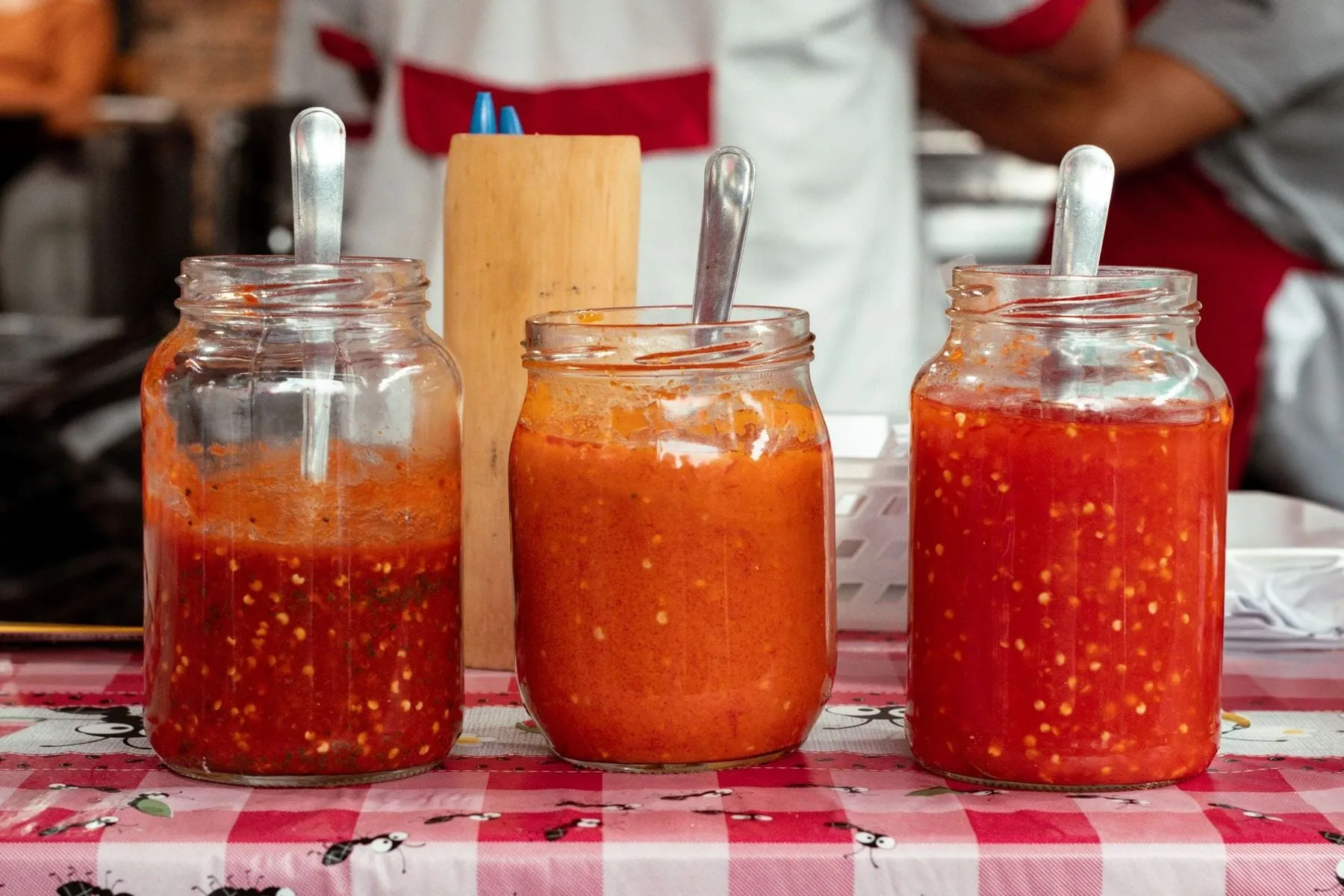
Yes, if viscosity and batch size are similar. Allergens and strong flavours such as chilli mean cleaning between recipes, so check that the lid and agitator can be lifted or removed easily.
Tell us your raw material, finished product and target output. Our engineers reply with a matched configuration and quotation.
What to send with your inquiry
Email sales@hnfoda.com
Beverage, Dairy & Sauce
Dairies, cooperatives and investors starting or expanding fresh milk, yogurt or long-life milk production.
Sized to raw milk received per day and finished product filled per hour
Beverage, Dairy & Sauce
Fruit processors, beverage start-ups and contract packers making juices, nectars or blended drinks.
Sized to finished beverage filled per hour, with fruit input calculated from your yield
Beverage, Dairy & Sauce
Food companies, brand owners and contract packers producing chilli, tomato or compound seasoning sauces.
Sized to finished sauce filled per hour or per batch (kg)
Beverage, Dairy & Sauce
Soy food workshops scaling up, plant-based drink brands and tofu factories supplying retail or food service.
Sized to dry soybean input (kg/h) and the finished product it turns into