Instant Noodle & Frozen Food
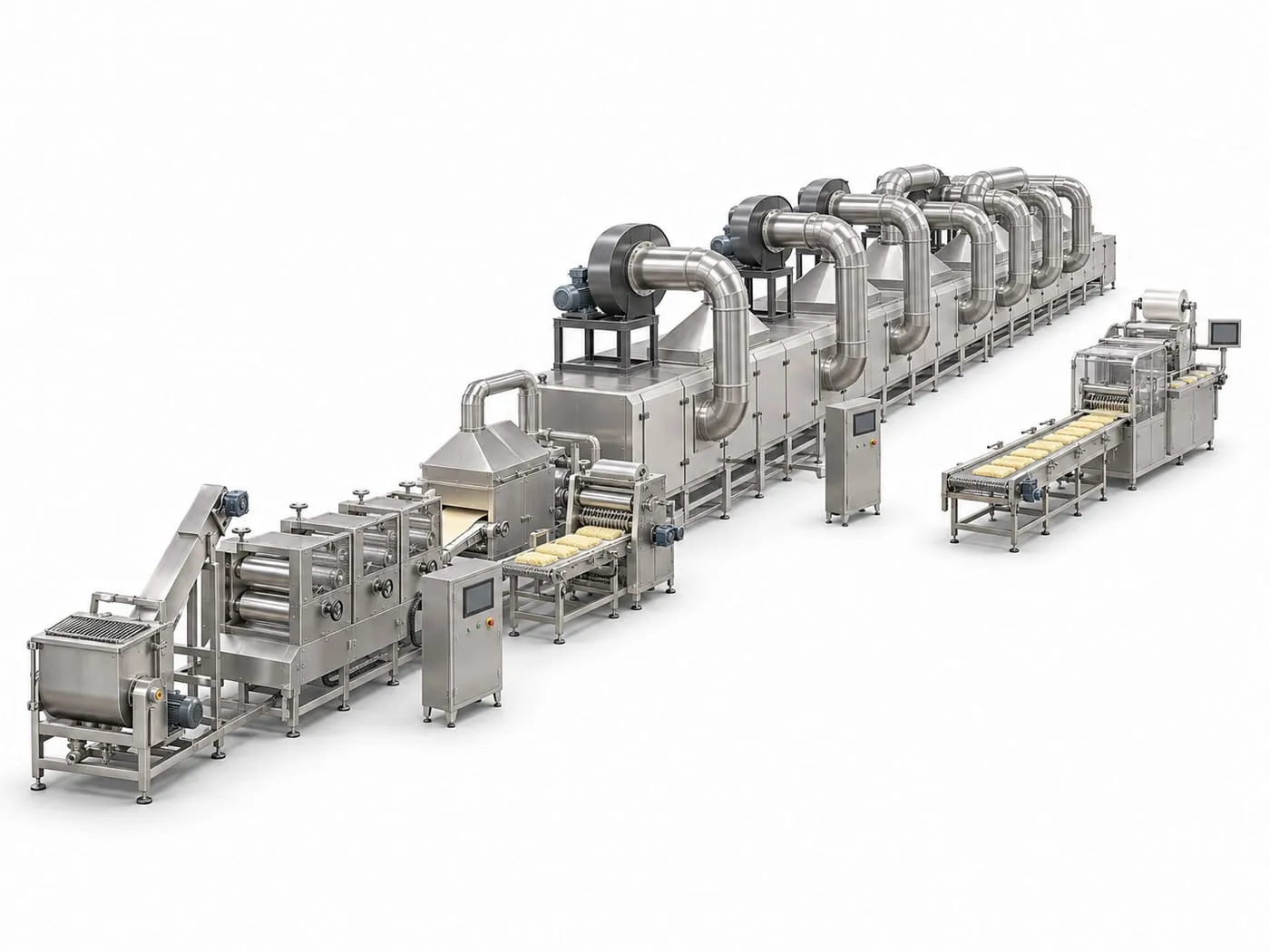
Instant Noodle Production Line
New and expanding noodle brands that need one supplier for the whole line, from dough mixing to packing.
Sized to finished noodle blocks per hour at a set block weight

04 · Instant Noodle & Frozen Food — Production line
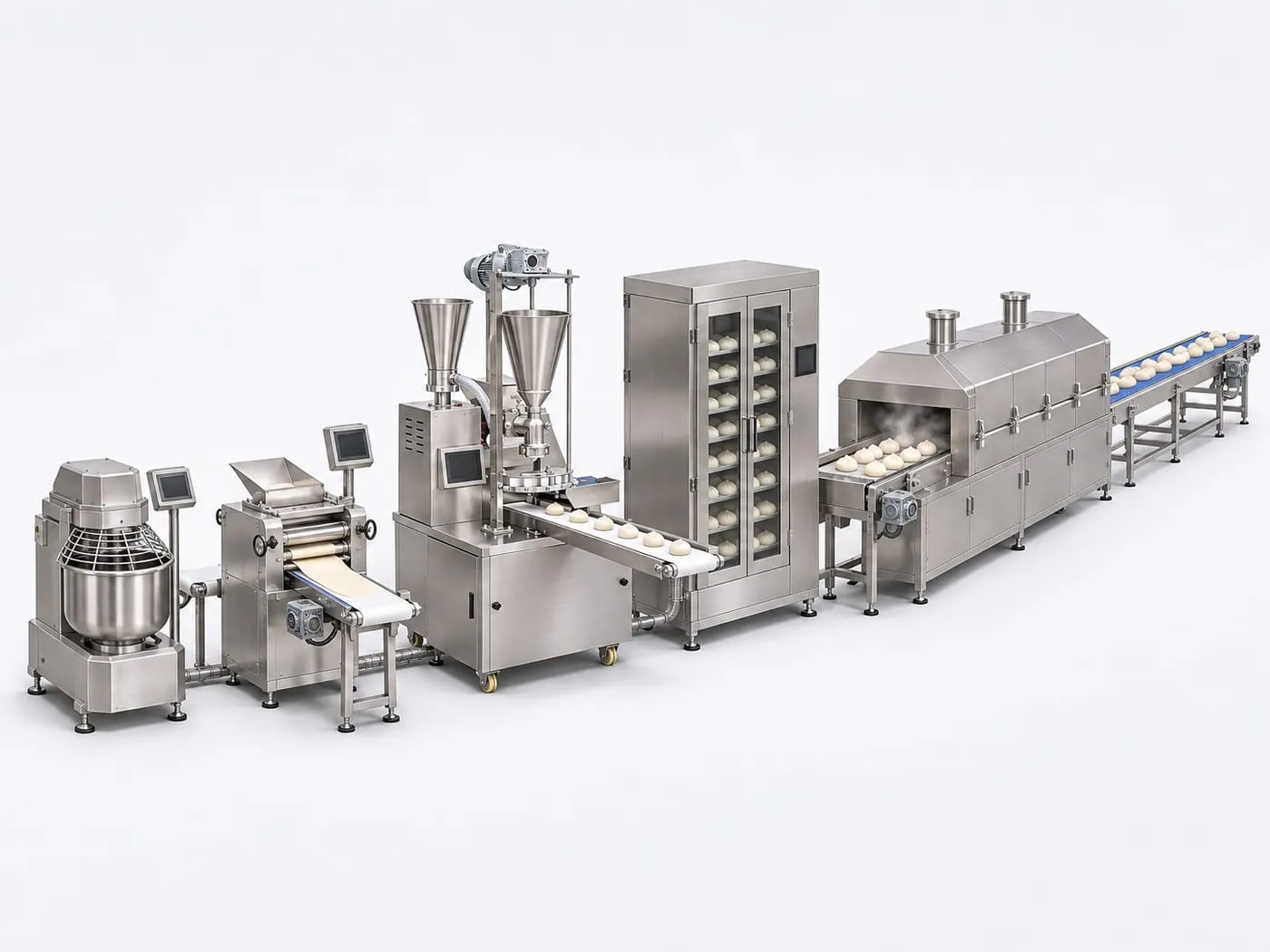
Connects dough mixing, dividing or filling, proofing and steaming for plain steamed buns and filled buns, chilled or frozen afterwards.
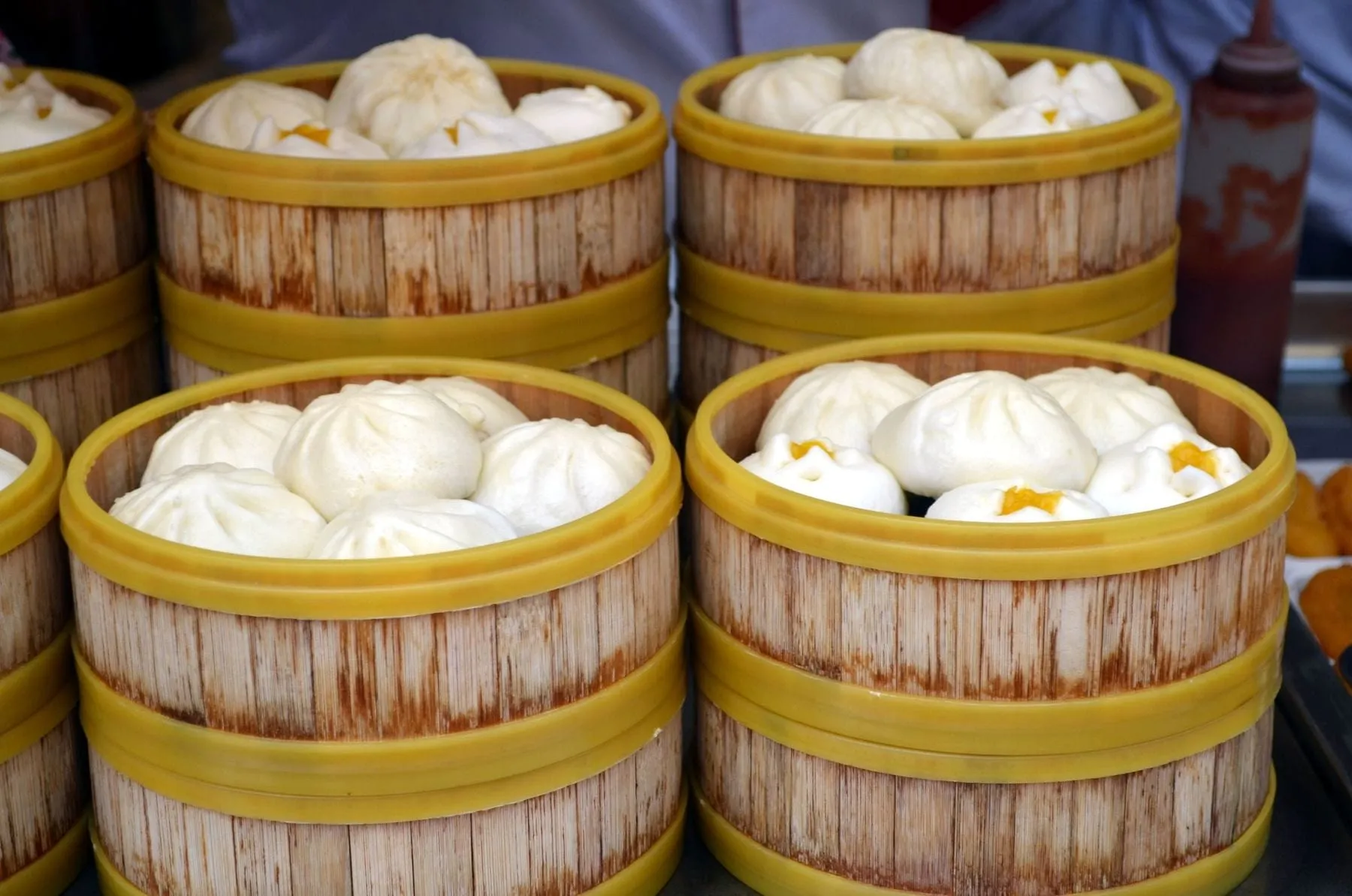
Short answer: A steamed bun production line mixes and rests the dough, divides or wraps it into buns, proofs them under controlled warmth and humidity, then steams them. Whether you make plain mantou or filled baozi, and how the finished bun is sold (fresh, chilled or frozen), decide which forming machine and which back end you need.
| Form | Suits | Watch out for |
|---|---|---|
| Mantou rounding | Plain buns, high volume, simple recipe | Even rounding needs stable dough consistency |
| Filled bun forming | Baozi with meat, vegetable or sweet fillings | Filling texture and share limit closing quality |
| Continuous proofing and steaming | Steady output of one or two products | Long equipment footprint; proof time fixes belt length |
Rack-based proofers and steam cabinets cost less and handle many products, but need more labour to move trays. A continuous proofer and steamer suits plants running long shifts on a few products. The proofing time in your recipe directly sets the length of a continuous proofer, which is why we ask for it early.
Dough comes from a vacuum dough mixer; filling from an industrial meat grinder or vegetable cutting machine. Steam can be supplied by a food steam generator. Frozen buns continue to a food freezer and then packing; a food vacuum cooler is one option for fast cooling after steaming.
Mantou rounding
dough is divided and rounded or cut into plain buns, the simplest route for high volume.
Filled bun forming
a forming machine wraps filling and closes the top with pleats or a twist, for baozi-type products.
Continuous proofing and steaming
buns travel through a proofer and steam tunnel on a belt instead of racks, reducing handling.
Our engineers check these points with you, so the quotation fits your site rather than a catalogue default.
The mixing, proofing and steaming sections can be shared. Plain buns and filled buns use different forming machines, so the line is usually planned with both formers feeding the same proofer and steamer.
Common causes are under- or over-proofing, too-fast cooling after steaming and uneven steam. These depend on the recipe as much as the machines, so we ask for your current process before sizing the proofer and steamer.
Only if the buns are sold frozen. Fresh and chilled buns need cooling and packing; frozen buns add a quick freezer after cooling.
Tell us your raw material, finished product and target output. Our engineers reply with a matched configuration and quotation.
What to send with your inquiry
Email sales@hnfoda.com
Instant Noodle & Frozen Food
New and expanding noodle brands that need one supplier for the whole line, from dough mixing to packing.
Sized to finished noodle blocks per hour at a set block weight
Instant Noodle & Frozen Food
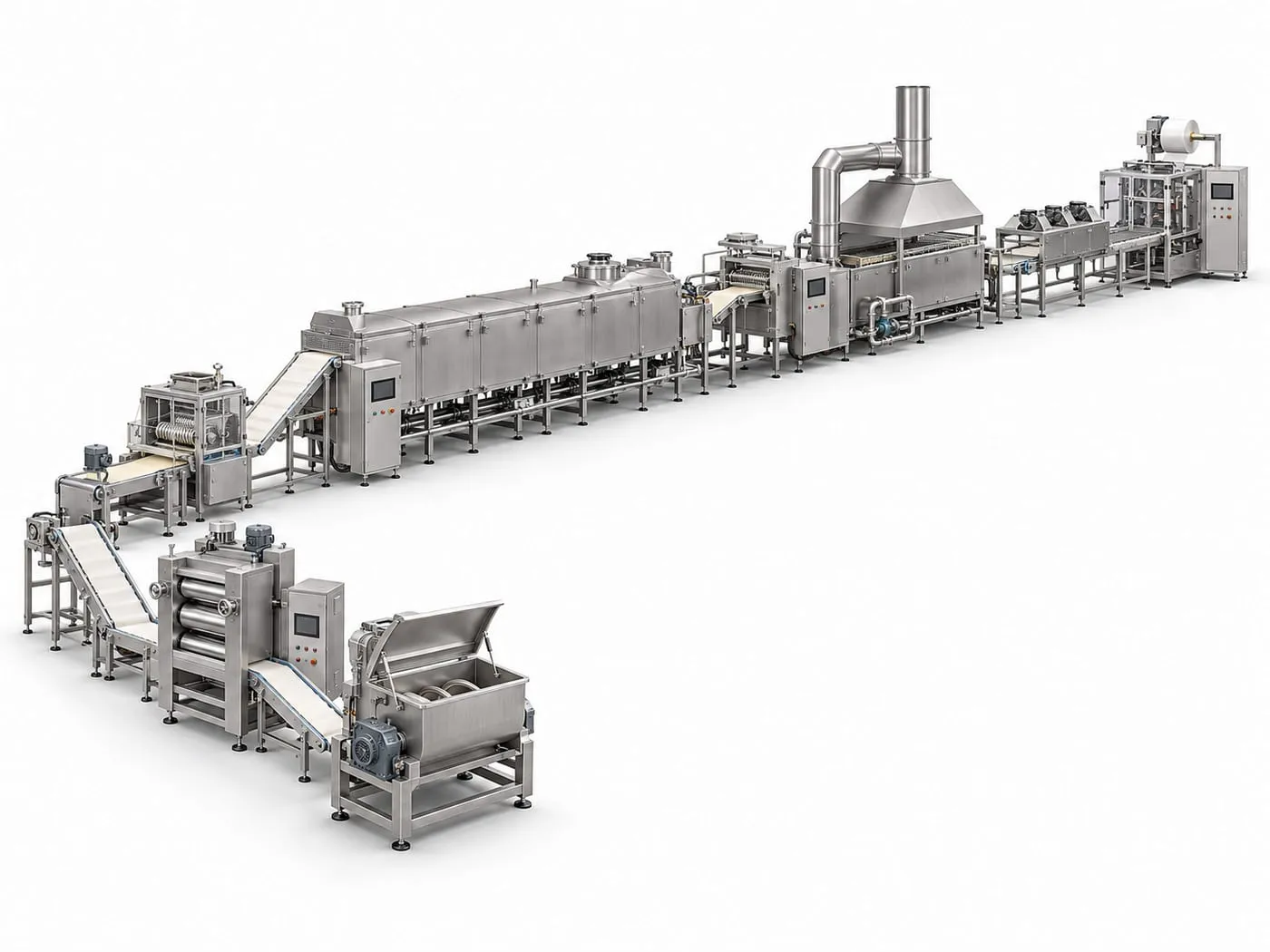
Noodle makers adding an air-dried, lower-fat product or building a dedicated non-fried plant.
Sized to dried noodle blocks per hour at a set block weight
Instant Noodle & Frozen Food
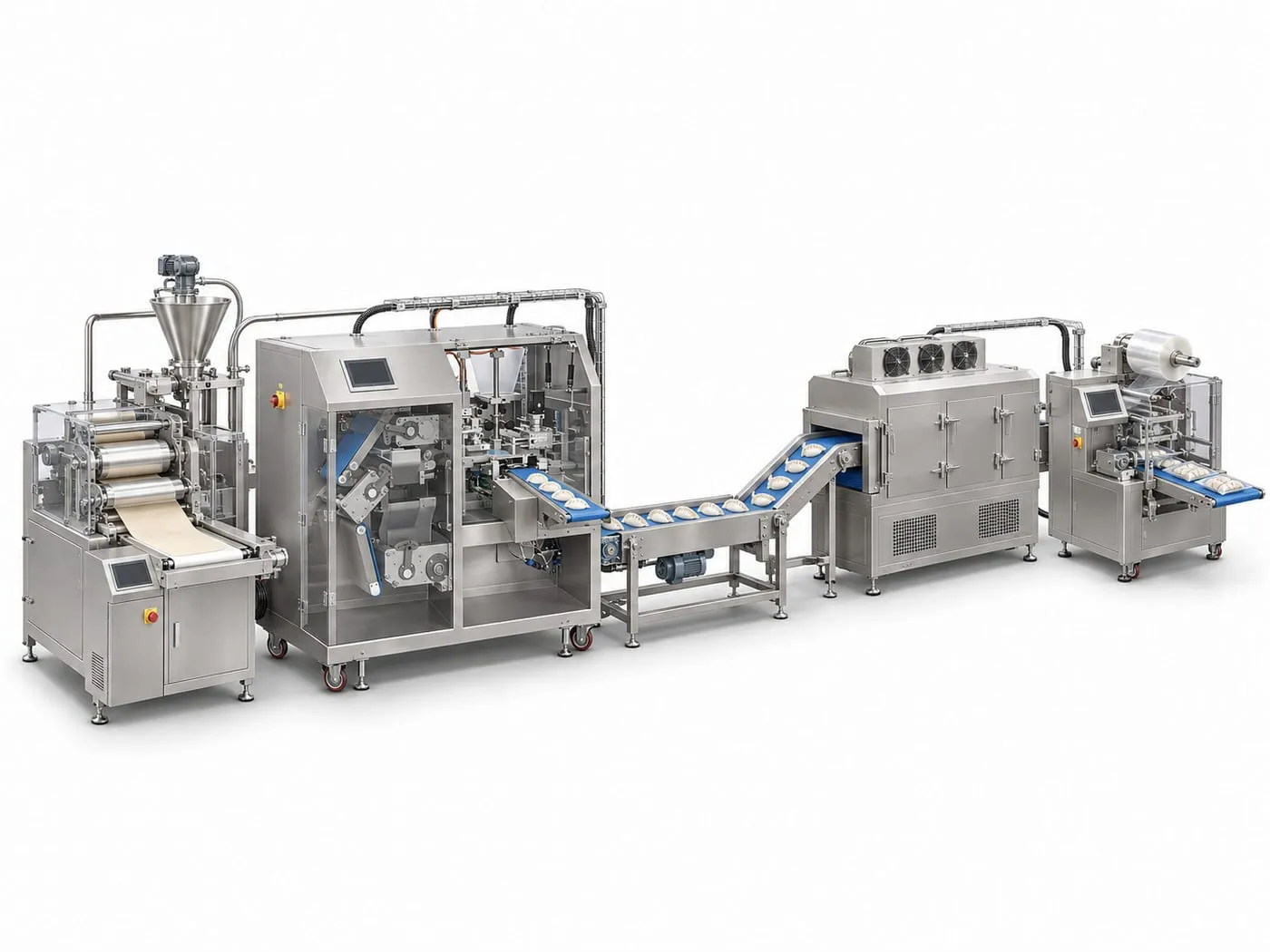
Frozen food factories and new brands moving from hand-made or semi-automatic dumplings to steady machine output.
Sized to finished frozen dumplings per hour at a set piece weight
Instant Noodle & Frozen Food
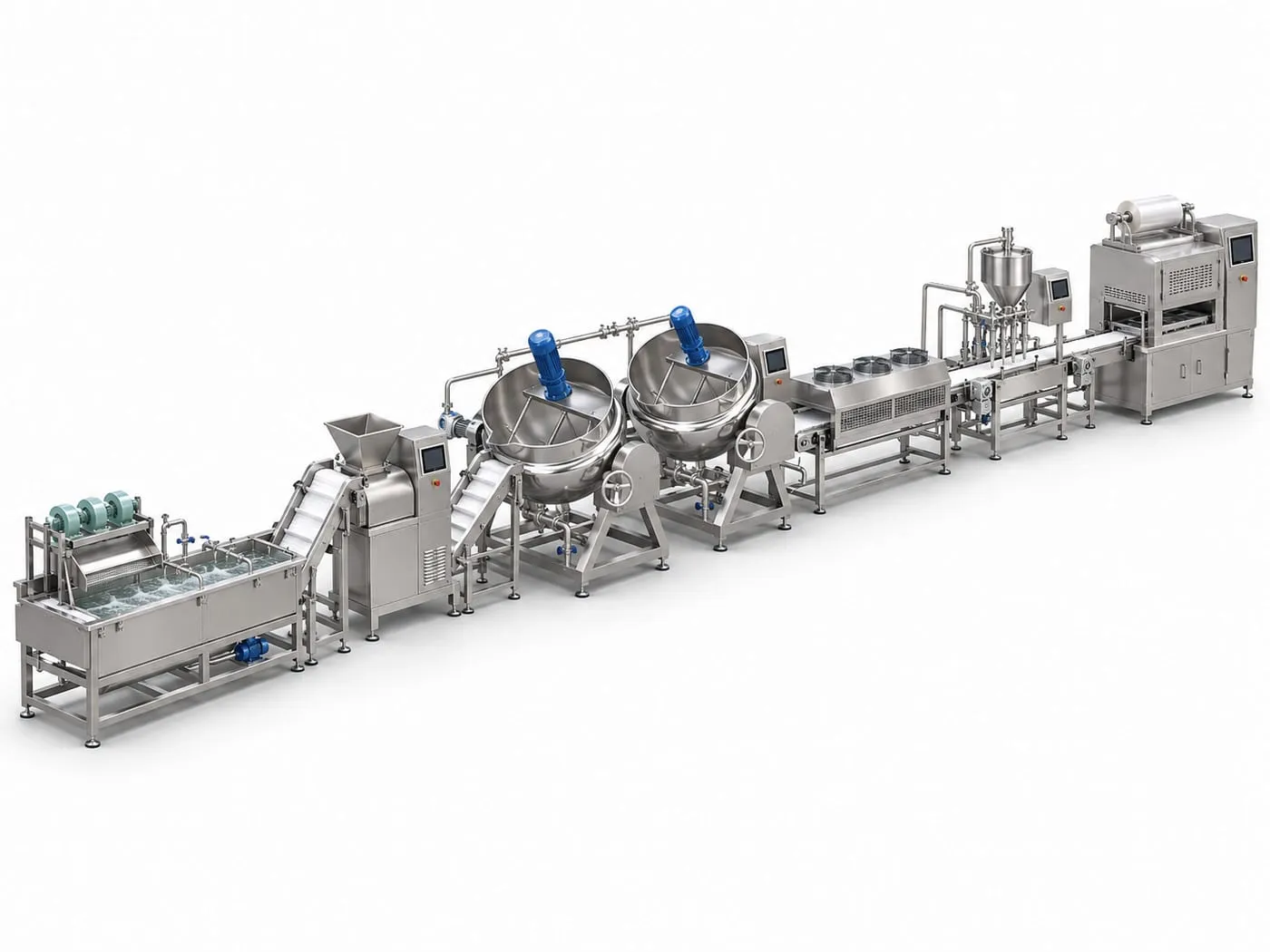
Central kitchens, ready-meal start-ups and food plants supplying retail, catering or airline-style meals.
Sized to packed meal portions per hour at a set portion weight