Instant Noodle & Frozen Food
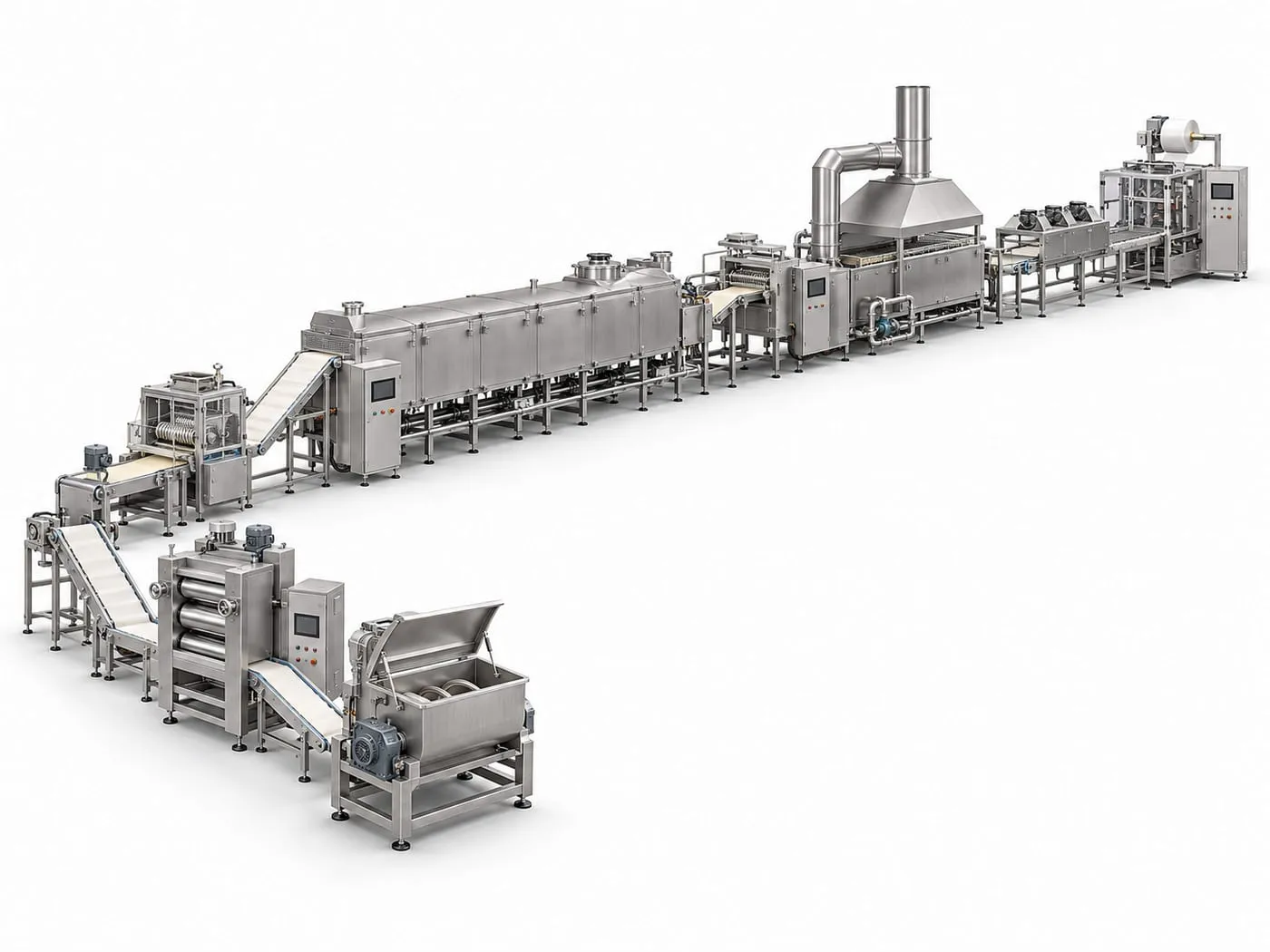
Instant Noodle Production Line
New and expanding noodle brands that need one supplier for the whole line, from dough mixing to packing.
Sized to finished noodle blocks per hour at a set block weight

04 · Instant Noodle & Frozen Food — Production line
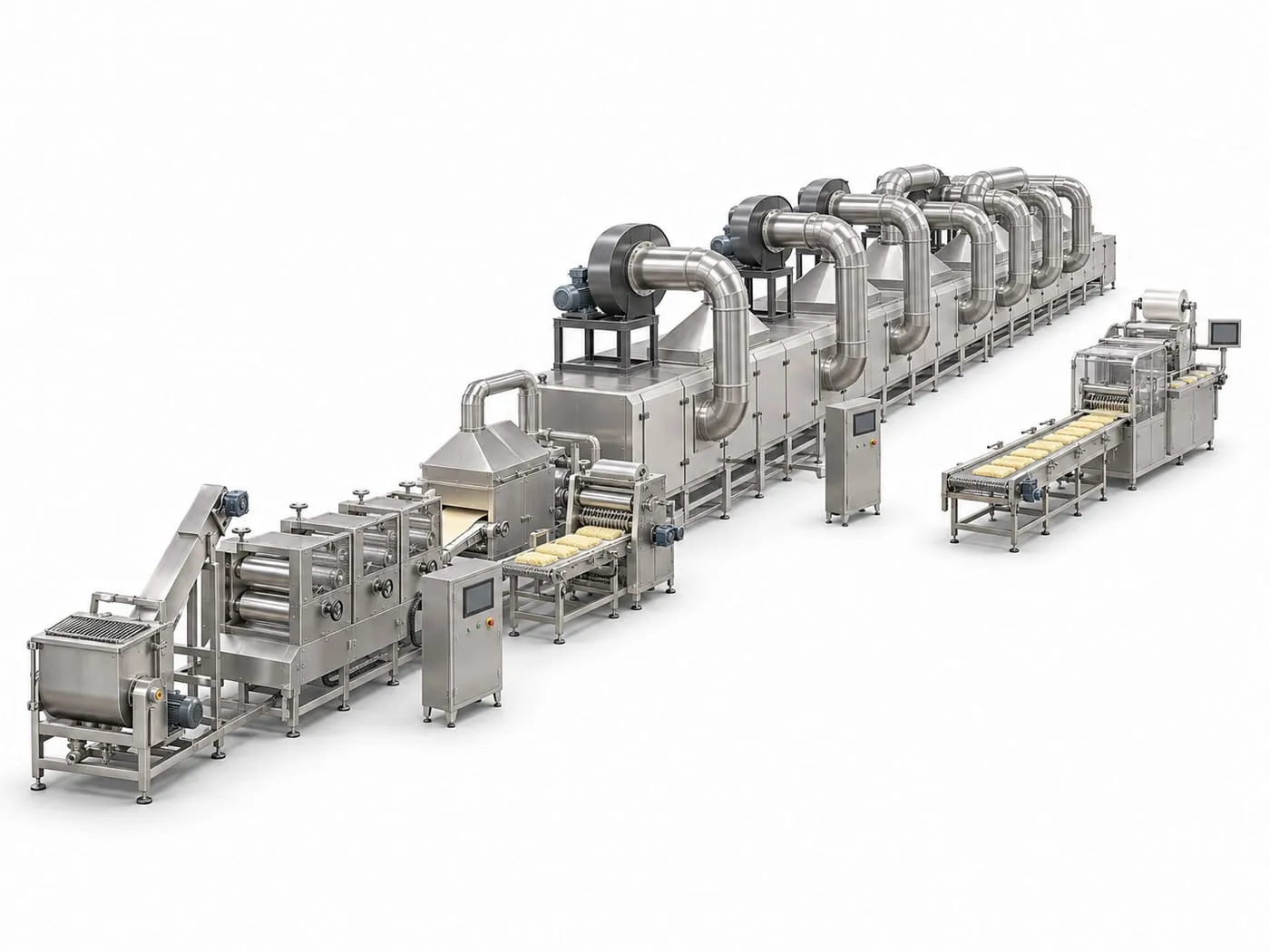
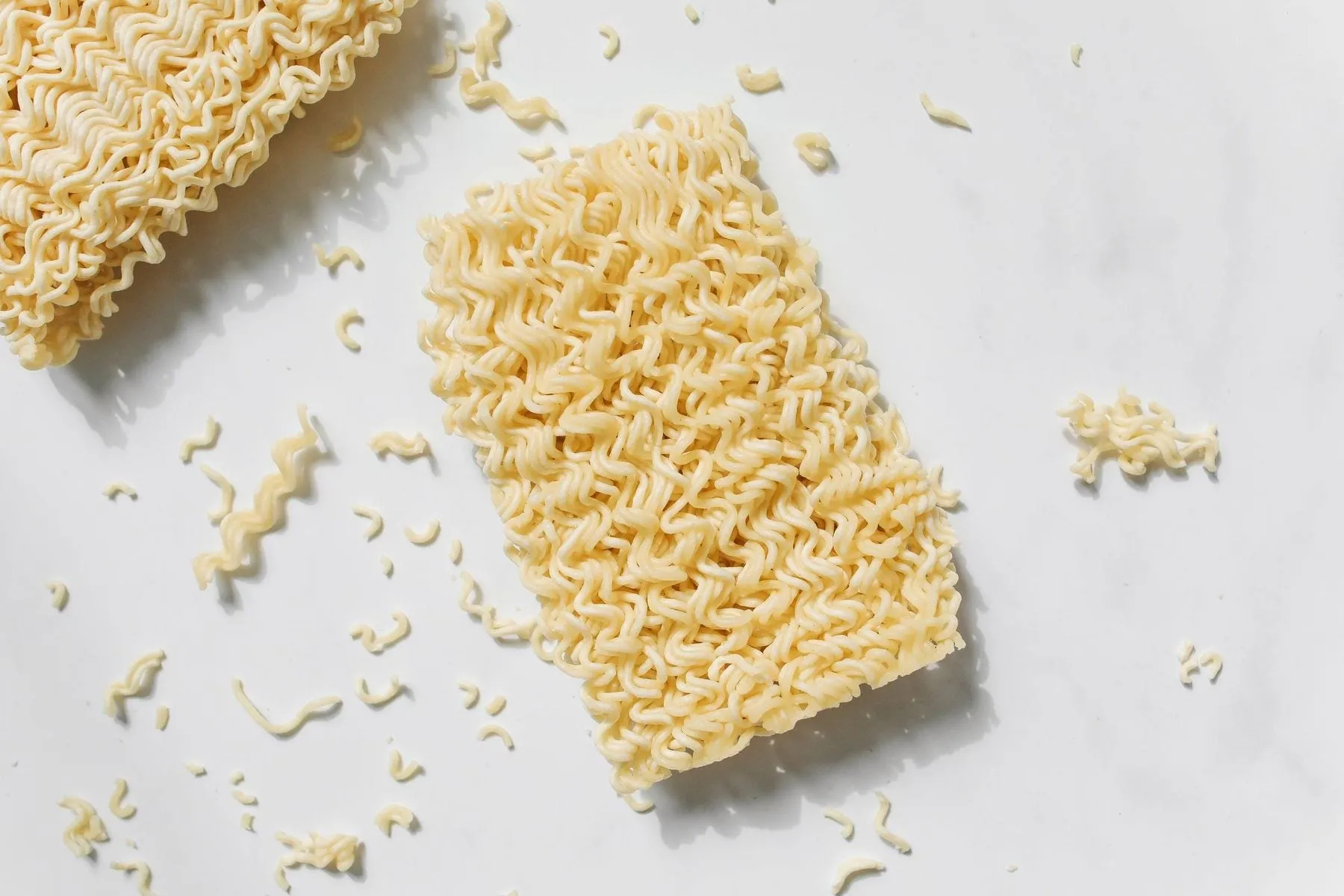
A noodle line that sets steamed blocks in shape and removes water with staged hot air, then cools them for packing.
Short answer: A non-fried instant noodle line follows the same front end as a fried line (mixing, sheeting, cutting, steaming), but dries the noodle blocks with staged hot air instead of oil. The rehydration time you promise the consumer and the block weight decide how long and how complex the dryer has to be.
Most of the engineering work is in step 4: air temperature, air speed and residence time in each zone are matched to your block thickness and recipe.
| Form | Suits | Watch out for |
|---|---|---|
| Multi-layer belt | Limited floor length, long drying times | Transfer between layers can break thin blocks |
| Chain tray | Shaped blocks, cup noodles | More moulds to clean and maintain |
| Zoned drying | Products needing a defined drying curve | More control points to set during commissioning |
These are not exclusive: a tray dryer is often also zoned. Thicker blocks or a shorter rehydration target usually mean a longer dryer, so we size it from your product rather than from a standard length.
Upstream sits the vacuum dough mixer and the sheeting and steaming section described on the instant noodle production line page. Steam can come from a food steam generator. After cooling, blocks are typically checked by a food metal detector and packed on a VFFS packaging machine or a cup line.
Multi-layer belt dryer
blocks pass over several stacked belts, saving floor space for longer drying times.
Chain tray dryer
blocks stay in individual trays or moulds through drying, which helps keep a uniform shape.
Zoned drying
the dryer is split into sections with separate temperature and air control to follow a drying curve.
Our engineers check these points with you, so the quotation fits your site rather than a catalogue default.
Without frying, the open structure that lets noodles rehydrate quickly has to come from steaming and the drying profile. If the air temperature and speed are wrong, blocks can crack, shrink unevenly or rehydrate slowly.
There is no oil cost, but drying usually takes longer and needs more heat and floor space. The balance depends on your energy prices and output, so we compare both routes for your product before quoting.
Send us your recipe or a reference product and the rehydration target. Our engineers will discuss how the drying curve would need to be set and what trials make sense before the line design is fixed.
Tell us your raw material, finished product and target output. Our engineers reply with a matched configuration and quotation.
What to send with your inquiry
Email sales@hnfoda.com
Compare fried and non-fried (hot-air dried) instant noodle lines: product, oil handling, energy, shelf life, equipment and what to prepare before you buy.
Why instant noodle line quotes differ so much: capacity, fried or non-fried drying, automation, packing and site costs, plus what to prepare for a quote.
Instant Noodle & Frozen Food
New and expanding noodle brands that need one supplier for the whole line, from dough mixing to packing.
Sized to finished noodle blocks per hour at a set block weight
Instant Noodle & Frozen Food
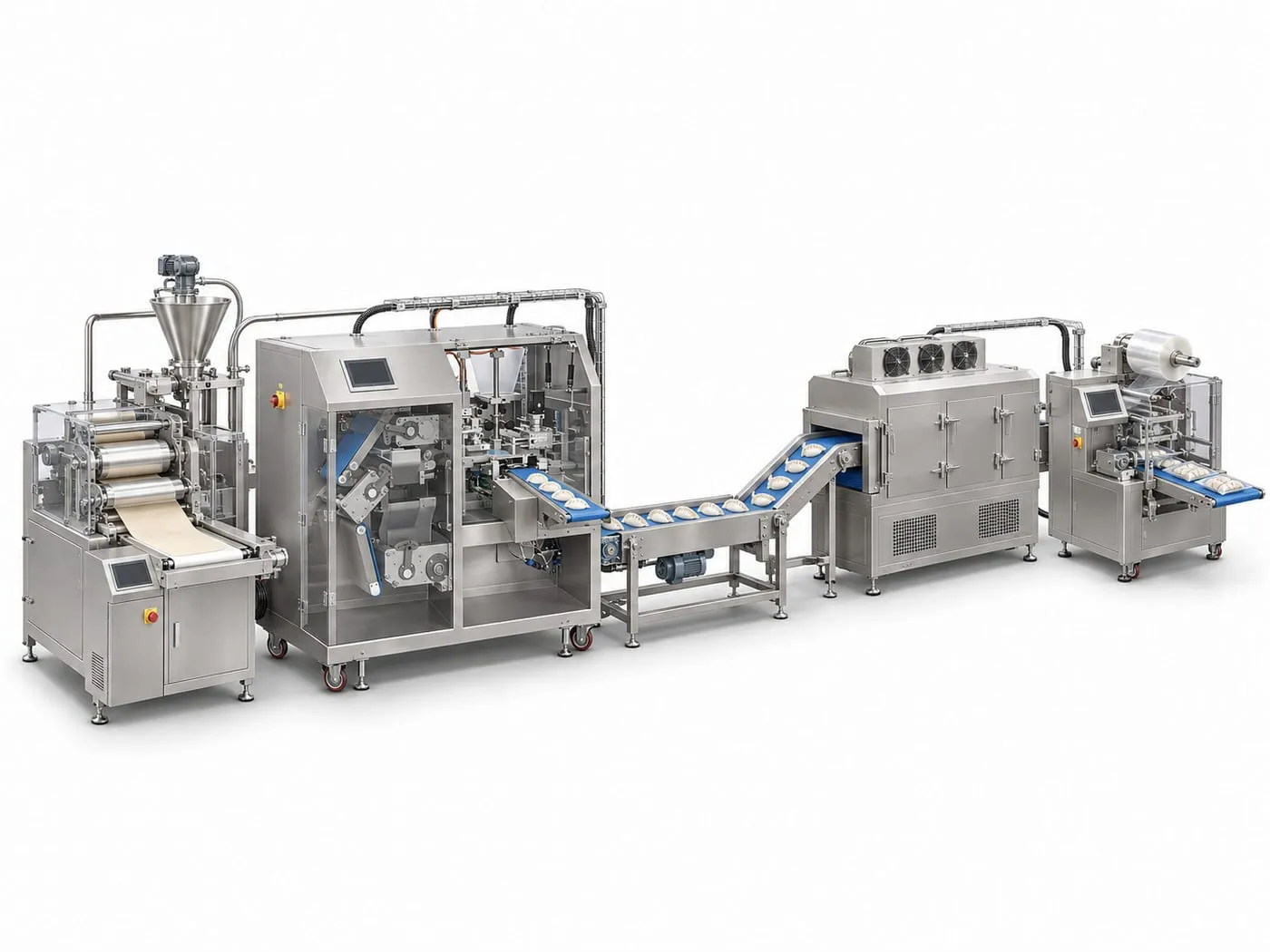
Frozen food factories and new brands moving from hand-made or semi-automatic dumplings to steady machine output.
Sized to finished frozen dumplings per hour at a set piece weight
Instant Noodle & Frozen Food
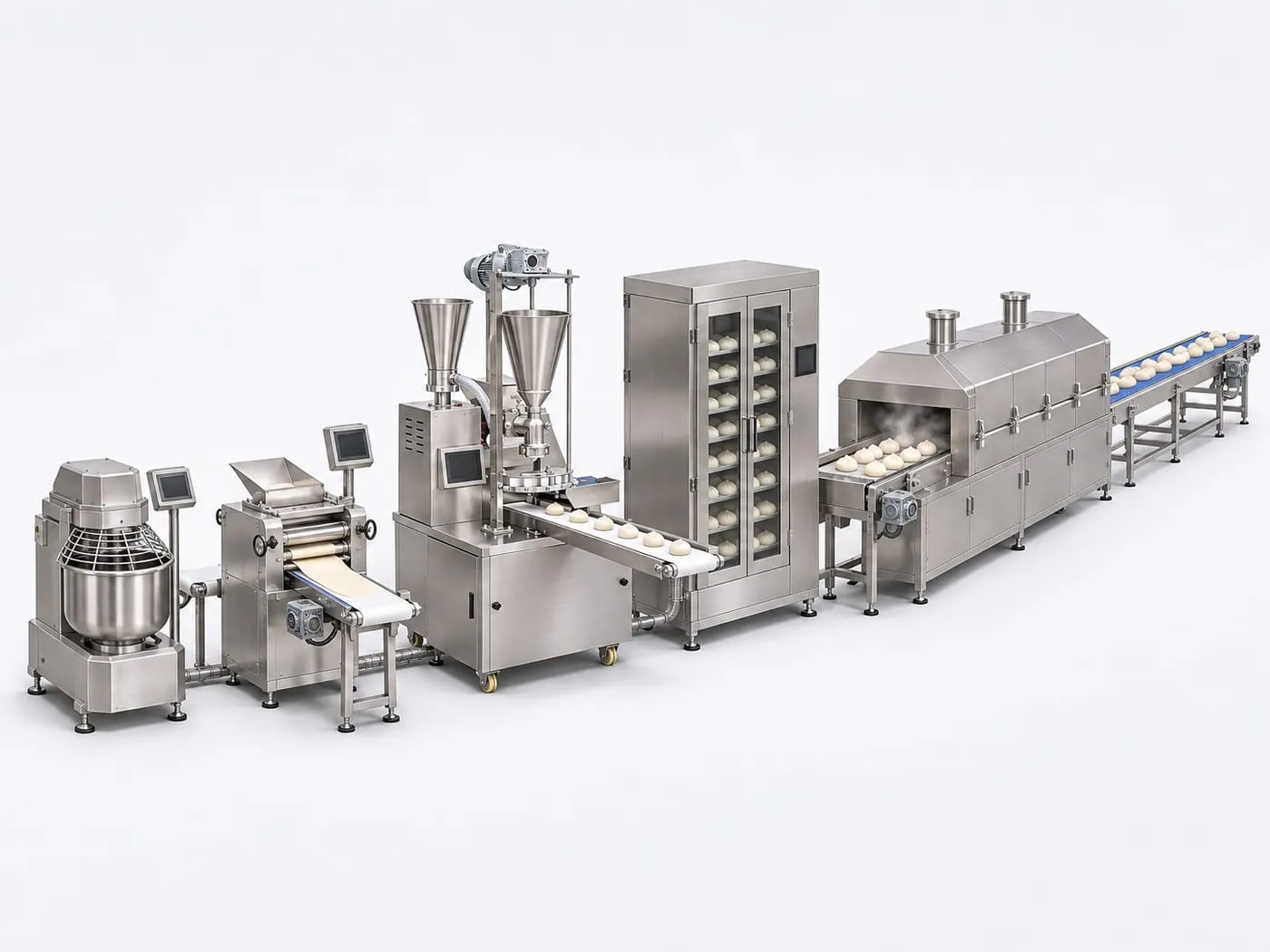
Central kitchens, frozen food plants and bakeries scaling up plain or filled steamed buns.
Sized to finished buns per hour at a set piece weight
Instant Noodle & Frozen Food
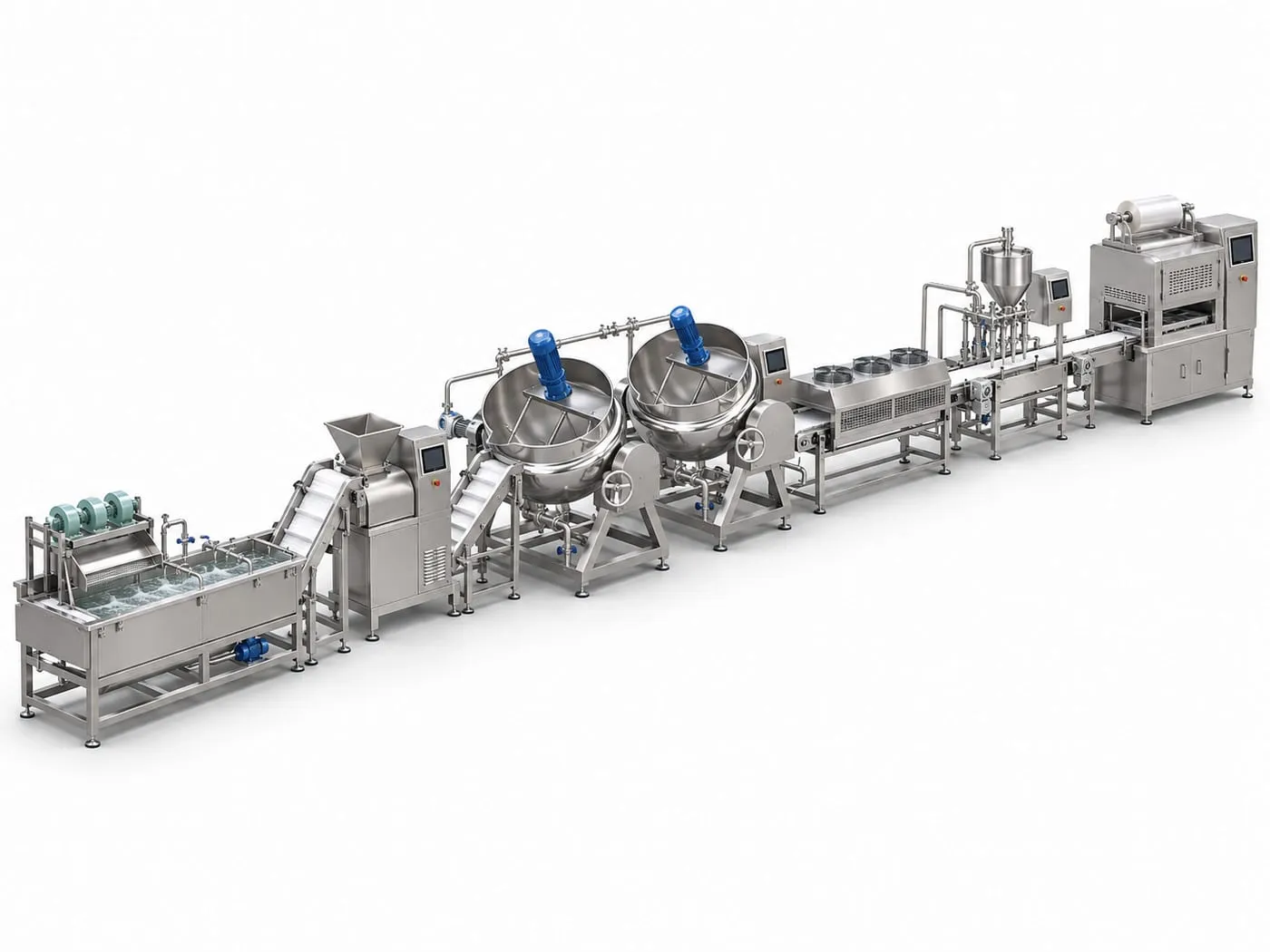
Central kitchens, ready-meal start-ups and food plants supplying retail, catering or airline-style meals.
Sized to packed meal portions per hour at a set portion weight