Guides
Fried vs Non-Fried Instant Noodle Line: Which to Buy for Your Market
Compare fried and non-fried (hot-air dried) instant noodle lines: product, oil handling, energy, shelf life, equipment and what to prepare before you buy.
- Prepared by
- HNFODA Applications Engineering
- Topic
- Guides
- Published
- Reading time
- 6 min read · 2 sources
On this page
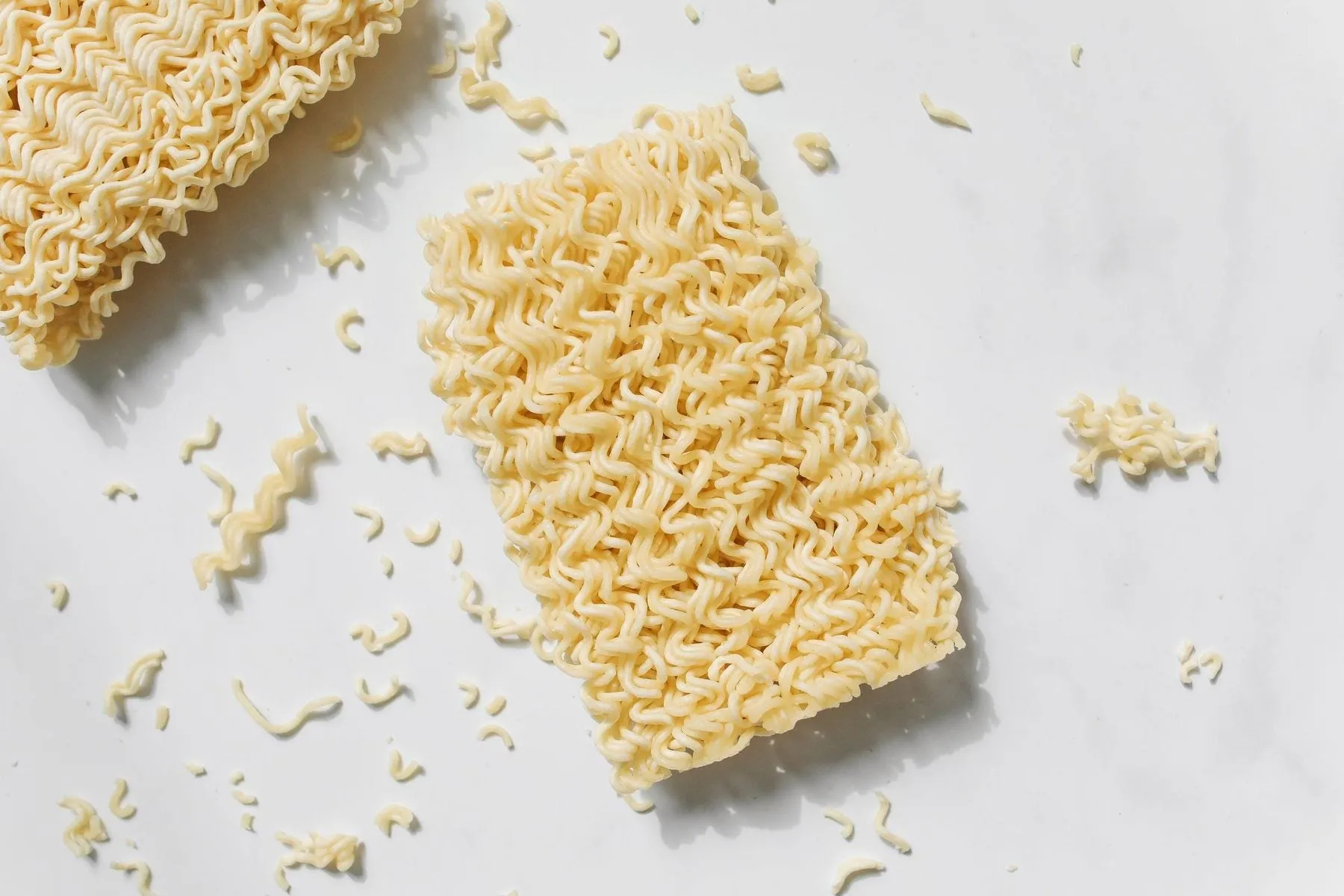
Short answer: buy the line that matches the product your customers already want. A fried line makes the classic instant noodle block with a continuous fryer; a non-fried line replaces the fryer with a hot-air drying section and gives a lower-fat product. Both lines share most of the front end, so the choice is really about the drying step, the oil you handle, the energy you pay for and the shelf position you are aiming at.
What is the same in both lines
Whether the noodles are fried or air-dried, the process starts the same way:
- Flour, water and salt or alkaline solution are mixed into dough, often under vacuum.
- The dough rests, then is rolled into thin sheets.
- The sheet is cut into strands and waved or folded.
- The strands are steamed so the starch gelatinises, which is what lets the noodle rehydrate when cooked.
- The noodle is cut into blocks.
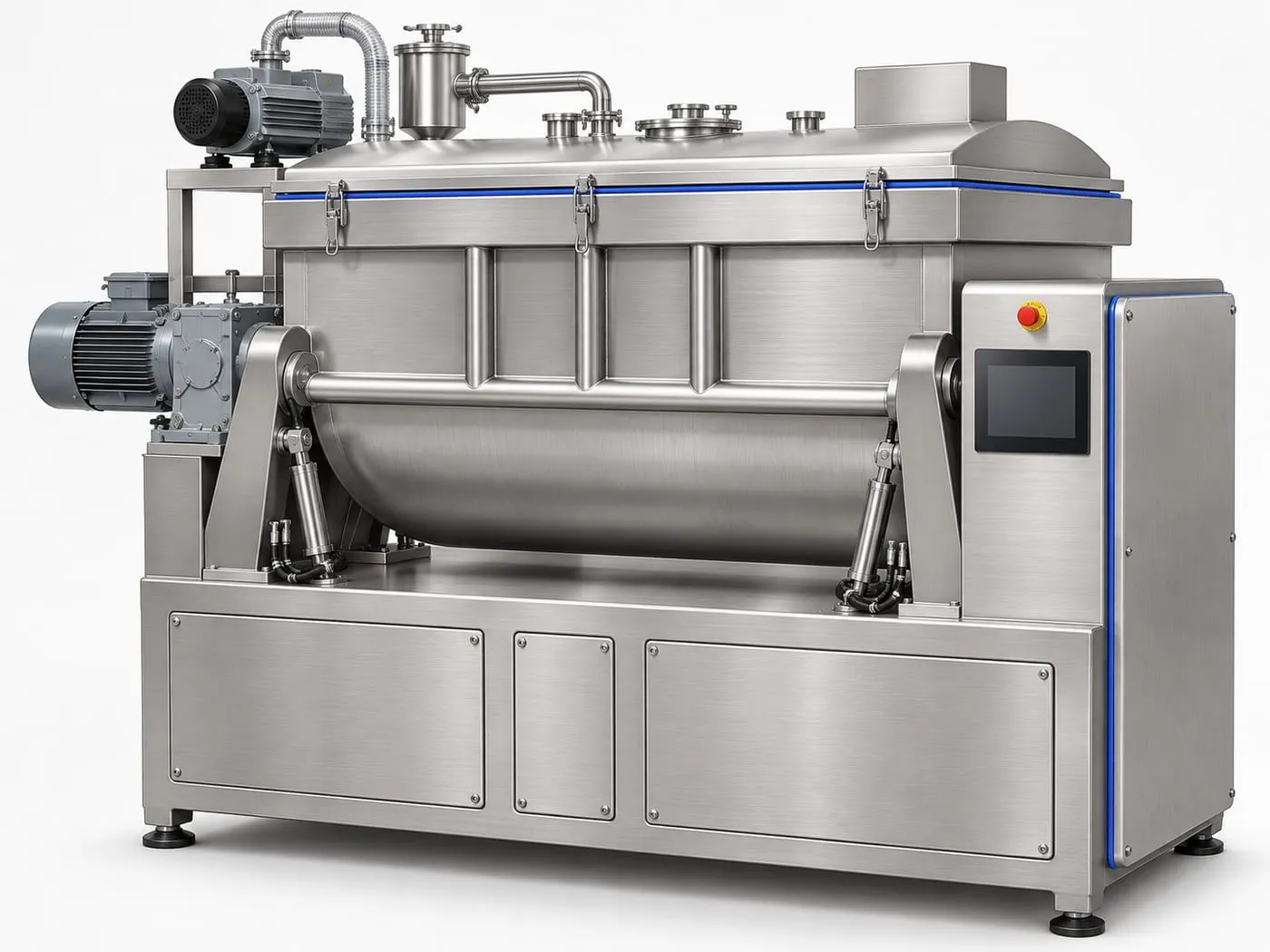
After steaming, the product is dehydrated. This is where the routes split. For the stations upstream, see our instant noodle plant guide and the vacuum dough mixer.
Fried route: continuous fryer
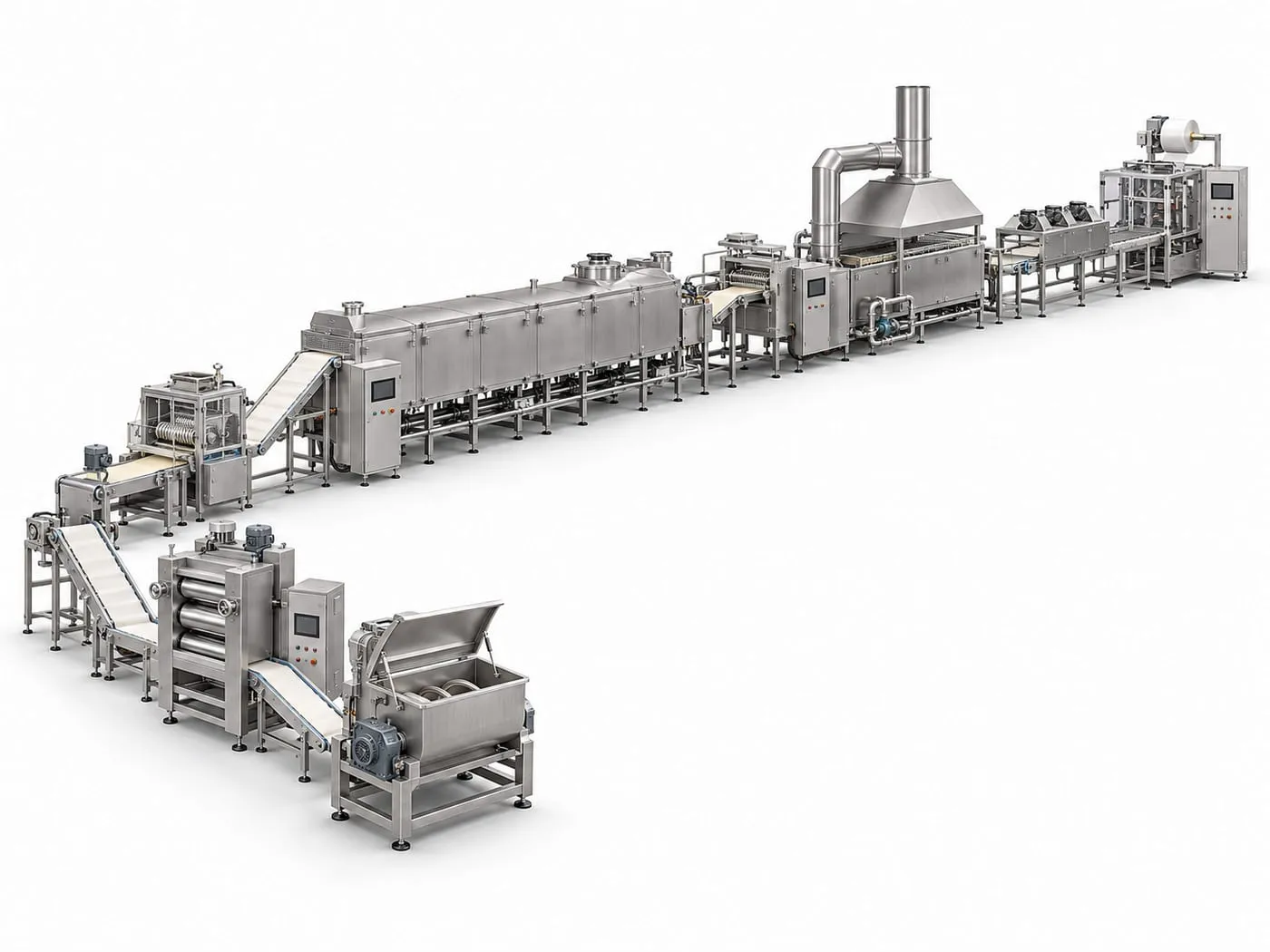
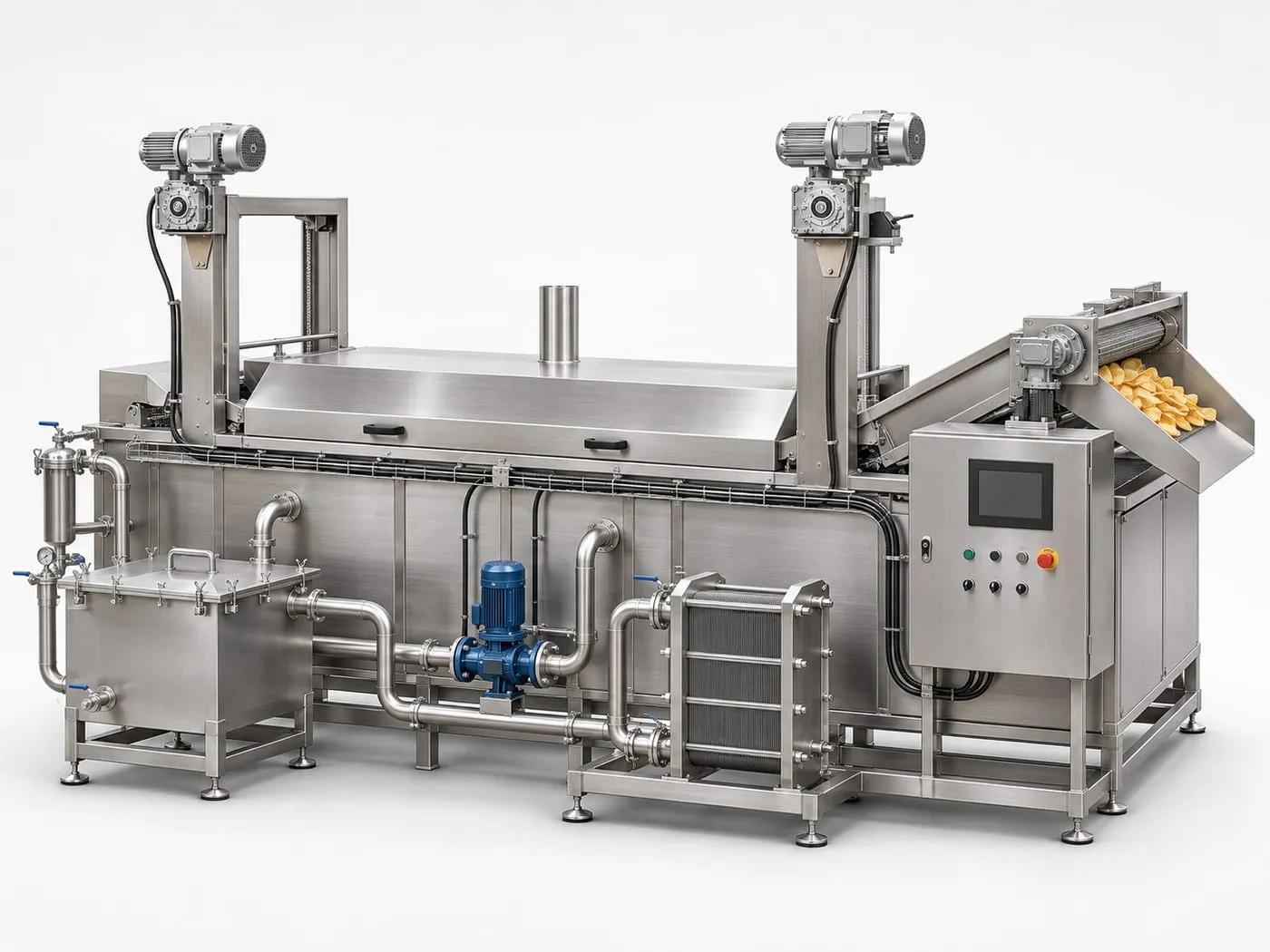
In a fried line the noodle blocks travel through hot oil, usually in moulds, which removes moisture quickly and sets the structure. The machine is a continuous fryer with oil heating, circulation and filtration, followed by a cooling tunnel.
What the research says: in a 2022 study of commercial fried and non-fried samples, frying gave a higher fat content and was linked to better texture, surface colour and sensory properties, shorter cooking time and lower cooking loss; non-fried samples had higher protein and fibre. That matches what many buyers see in the market: fried noodles cook fast and look familiar.
What you take on with frying:
- Oil supply. You need a steady source of suitable frying oil and a place to store it.
- Oil management. Filtration, topping up and replacing oil affect flavour and shelf life.
- Fire and exhaust safety. Hot oil needs guarded equipment, extraction and trained operators.
- A fat figure on the label, which some buyers and retailers read closely.
Non-fried route: hot-air drying
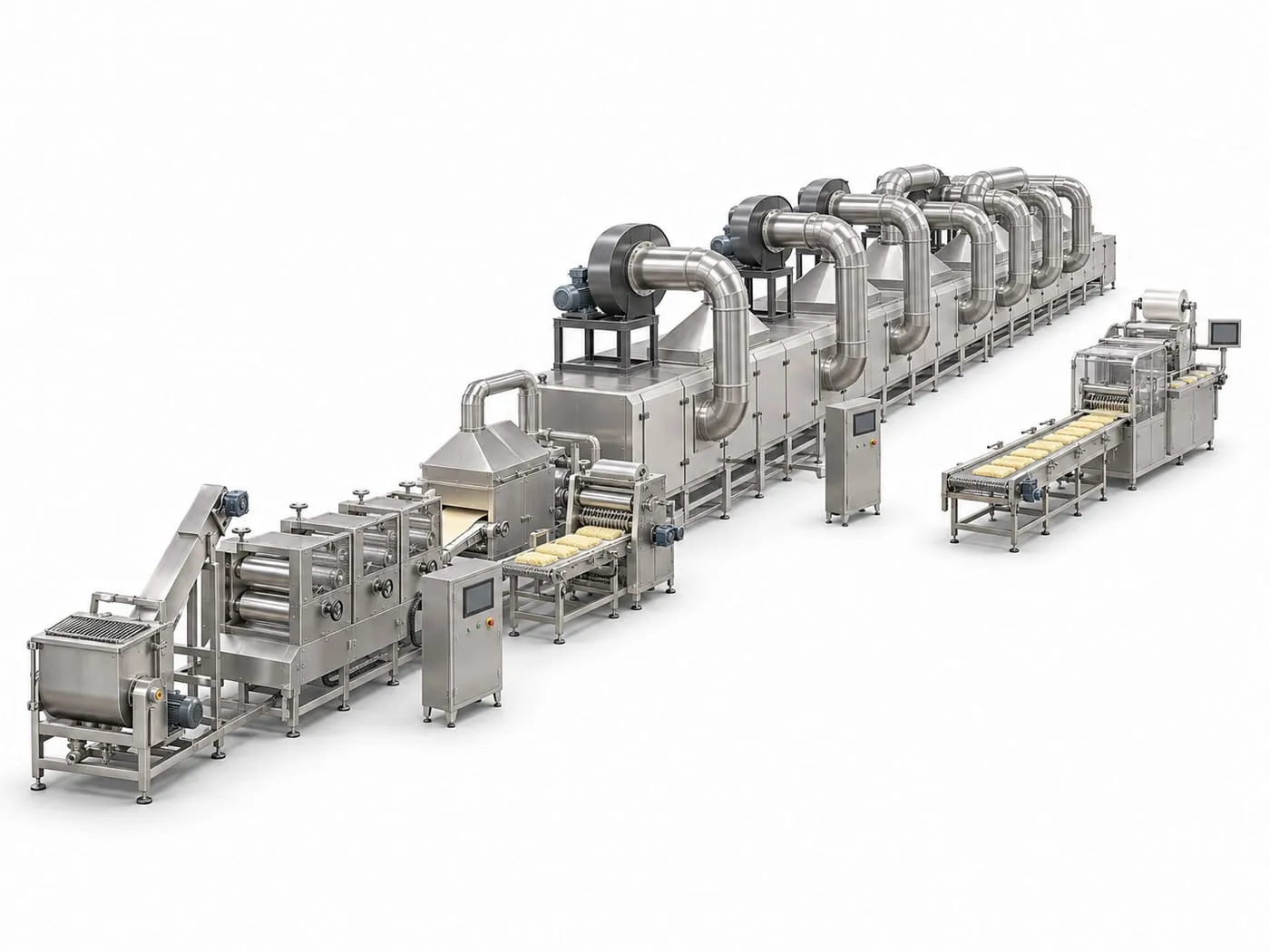
In a non-fried line the steamed noodle is dried in a hot-air dryer for a longer time at moderate temperatures. Some designs use extrusion or puffing before drying; ask the supplier which method their line uses and for noodle samples. The finished product has no added frying oil, so the fat comes from the flour.
What you take on:
- A longer drying section and more floor space than a fryer of the same output.
- An air-heating system (steam, gas or electric) and the fuel for it.
- A product that may cook a little differently. Your trials should check cooking time, bite and breakage before you go to market. Our non-fried instant noodle line page lists the stations.
Side-by-side comparison
| Factor | Fried line | Non-fried (hot-air) line |
|---|---|---|
| Drying step | Continuous fryer, hot oil | Hot-air drying tunnel |
| Typical product | Classic noodle block, fast cooking | Lighter-fat block |
| Fat content | Higher (oil absorbed) | Lower (only flour fat) |
| Utilities | Oil, oil heating, exhaust | Air heating, long dryer, fuel or power |
| Operator skills | Oil quality, fire safety | Humidity and temperature control |
| Space | Compact fryer section | Longer dryer section |
| Flexibility | Fixed to fried product | Fixed to dried product |
| Market fit | Where fried noodles dominate shelves | Where light or “not fried” claims sell |
How to decide for your market
Walk through these questions with your sales team before you ask for prices:
- What is on the shelf now? Walk through shops in your target city and note price, pack size and whether the leading brands are fried. Your product has to compete on a price that your costs support.
- Who is the buyer? Households that cook noodles for families, students and workers who want a quick meal, or institutional buyers each respond to different pack sizes.
- What oil and fuel can you buy locally? Compare delivered oil price with delivered fuel or power price.
- What shelf life do you need? Long distribution chains need robust packaging and a tested shelf life.
- Do you plan to add products later? A line sized for one pack format may need extra station capacity for cups or bowls.
Packing is the same either way
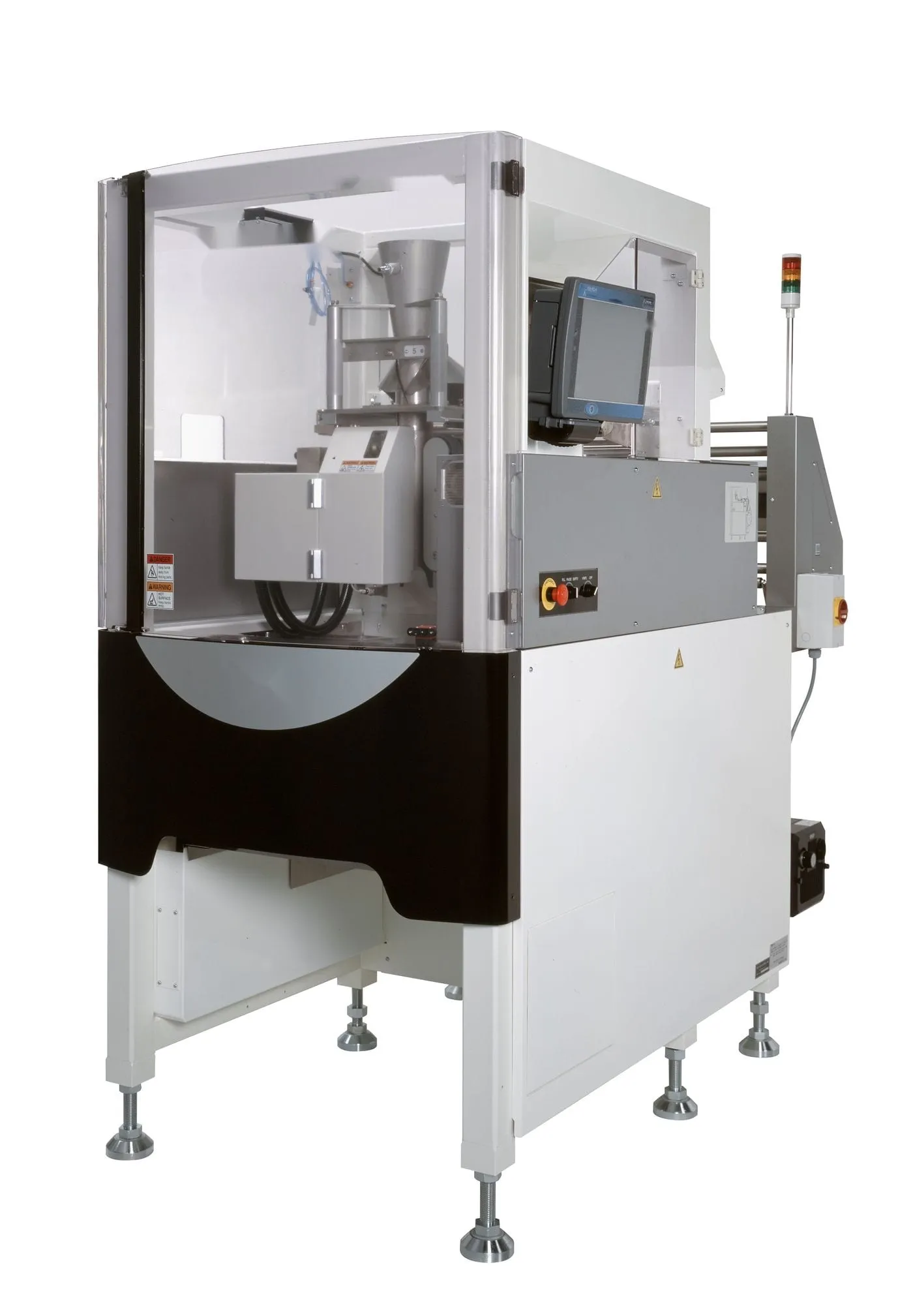
Both routes finish with cooling and packing. Most bag noodles go into flow-wrap film; cups and bowls need filling and sealing equipment. You can see the options on our vertical form-fill-seal packaging machine page. Budget packing early; it affects layout and operators.
A simple test before you commit
Before you sign for either route, run a side-by-side product trial with your own flour. Ask for samples of both a fried and a non-fried block made from the same dough, then judge them the way your customers will:
- Cook them as the pack instructs (steep or boil) and note cooking time, bite, breakage and how the broth looks.
- Taste them plain and with your seasoning. Fried and dried noodles carry flavour differently.
- Check the pack. Look at how each block behaves in the film and in a shaken carton, since fragile blocks break in transport.
- Compare cost per pack. Include flour, oil or fuel, packaging film, labour and the share of machine cost.
- Show both to buyers. Distributors and shop owners will tell you which one they can sell.
If the trial points to one route clearly, buy that line. If the market is split, consider whether you can start with one product and plan space in the building for the second drying section later. Bring the trial results to us when you request a quotation, and our engineers can size the matching line on facts instead of guesses.
What to prepare for a quotation
- The product you want: fried block, non-fried block, or both, and the target pack format (bag, cup, bowl).
- Output per hour and shifts per day, in finished product weight.
- A flour sample or flour specification, and the recipe if you already have one.
- Frying oil you plan to use, or the fuel for air heating.
- Site data: building size, power supply and voltage, water and steam or boiler fuel.
- Delivery location and delivery term (for example FOB or CIF, defined by the ICC’s Incoterms rules).
- Whether you want installation and training at your site.
Send these through the contact page. If you plan a full factory with utilities, ask about turnkey projects.
Mistakes to avoid
- Choosing by price alone. A fryer line and a dryer line are priced on different components; compare complete lines including packing and utilities.
- Skipping product trials. Cook samples the way your customers do before you set the recipe.
- Underestimating oil handling. Poor oil management shows up in flavour and shelf life long before it shows up on a balance sheet.
- Ignoring spare parts. Ask which parts wear (moulds, chains, filters) and keep stock on site.
- Planning no room to grow. Leave space and utility capacity for a second dryer, fryer or packing machine.
Frequently asked questions
- Can one line make both fried and non-fried noodles?
- The front section (mixing, sheeting, steaming, cutting and shaping) is similar, so some plants are designed to accept either a fryer or a hot-air dryer. The two drying sections are different machines. If you want both products, say so when you ask for a quotation so the layout can allow for it.
- Are non-fried noodles healthier?
- They contain less added fat. A published study of commercial samples found higher fat in fried noodles, and also reported that frying improved texture, colour and cooking quality and shortened cooking time. Nutrition and taste are different trade-offs, so choose by what your customers want.
- Which is cheaper to run?
- It depends on local prices. Frying needs cooking oil and oil filtration; hot-air drying needs fuel or electricity to heat a large air volume for a long time. Compare your local oil price against your local fuel or power price at the output you plan.
- What shelf life should I expect?
- Shelf life depends on moisture, packaging and, for fried noodles, oil quality and oxidation. Ask for samples made from your own flour and test them in your climate before you commit to a shelf life claim.
- Do I need a vacuum mixer for either route?
- It is not mandatory for either route, but a vacuum dough mixer gives more uniform dough and is often considered for lines aimed at better noodle texture. Our engineers will advise based on your flour and product.
Sources
- [1]Effect of Frying Process on Nutritional Property, Physicochemical Quality, and in vitro Digestibility of Commercial Instant Noodles — Frontiers in Nutrition, 2022
- [2]Incoterms rules — International Chamber of Commerce
HNFODA Applications Engineering
Line design, product trials and commissioning
Engineers who size, build and commission HNFODA food processing lines, writing from the questions buyers ask before a quotation. About HNFODA