Bakery & Snack Food
Biscuit Production Line
Biscuit factories, private-label bakeries and investors entering packaged biscuits.
Sized to baked biscuits per hour (kg/h of finished product) for a given size and weight

05 · Bakery & Snack Food — Equipment
Carries products through hot oil at a controlled time and temperature, then drains them, with oil circulation and filtering.
Short answer: A continuous fryer carries products through hot oil on a belt or with paddles, holds them there for a set time at a controlled temperature, then lifts them out to drain. How long the product must fry, how fast the oil recovers its temperature when cold product enters, and whether the product floats decide the conveyor type and heating size.
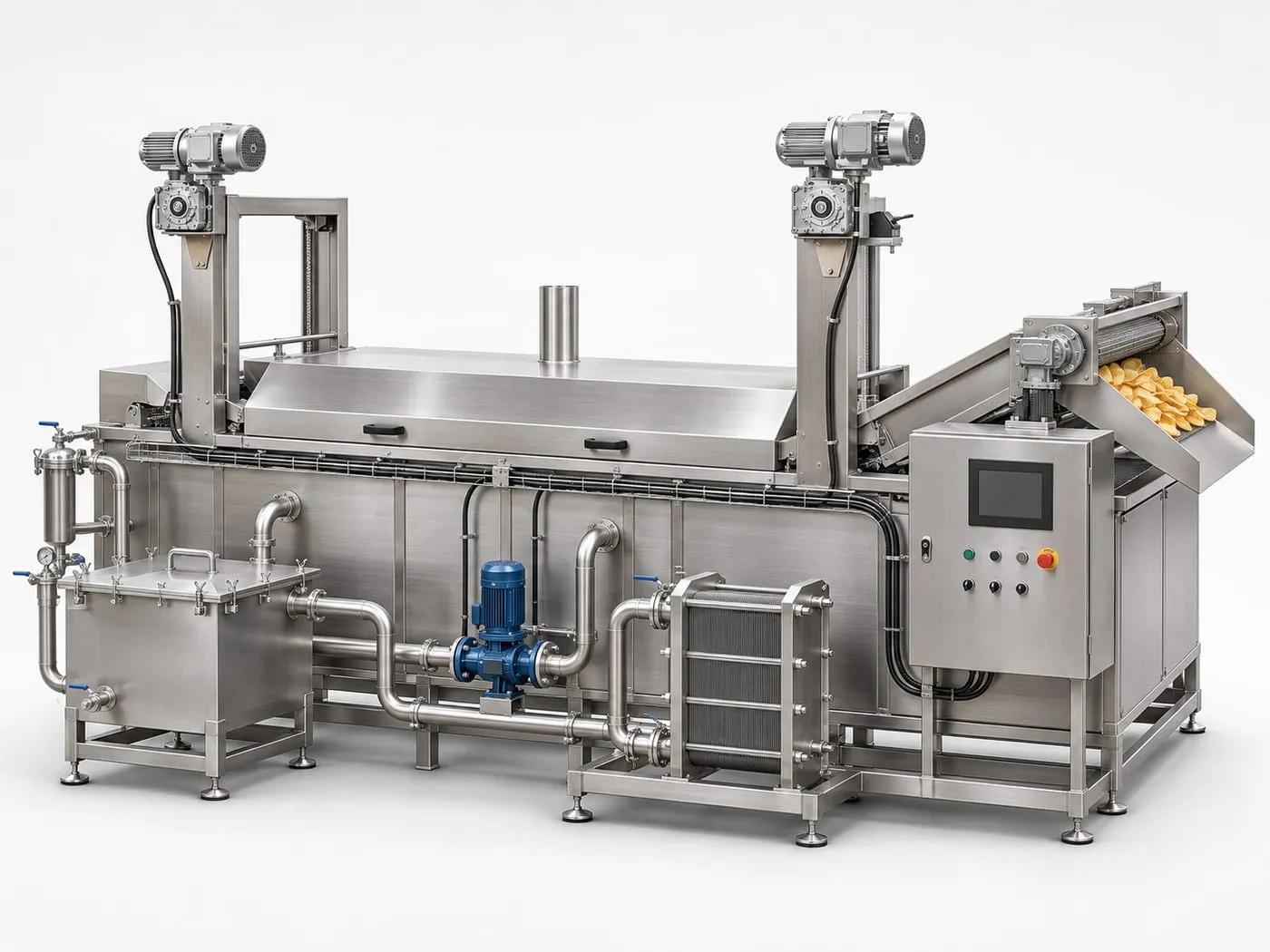
The fryer has an oil pan, a conveyor (mesh belt with hold-down belt, or paddles), a lifting hood with fume outlet, a heating system, an oil circulation pump and a filter.
| Form | Suits | Watch out for |
|---|---|---|
| Mesh belt | Nuts, pellets, formed and coated products, floating items | Belt cleaning, crumbs caught in mesh |
| Paddle | Potato chips and loose slices | Breakage of fragile products |
| Indirect heat exchanger | Larger fryers, steady oil temperature | External heater and piping space |
The heat exchanger is about heating, not conveying, so it can be combined with either belt or paddle fryers.
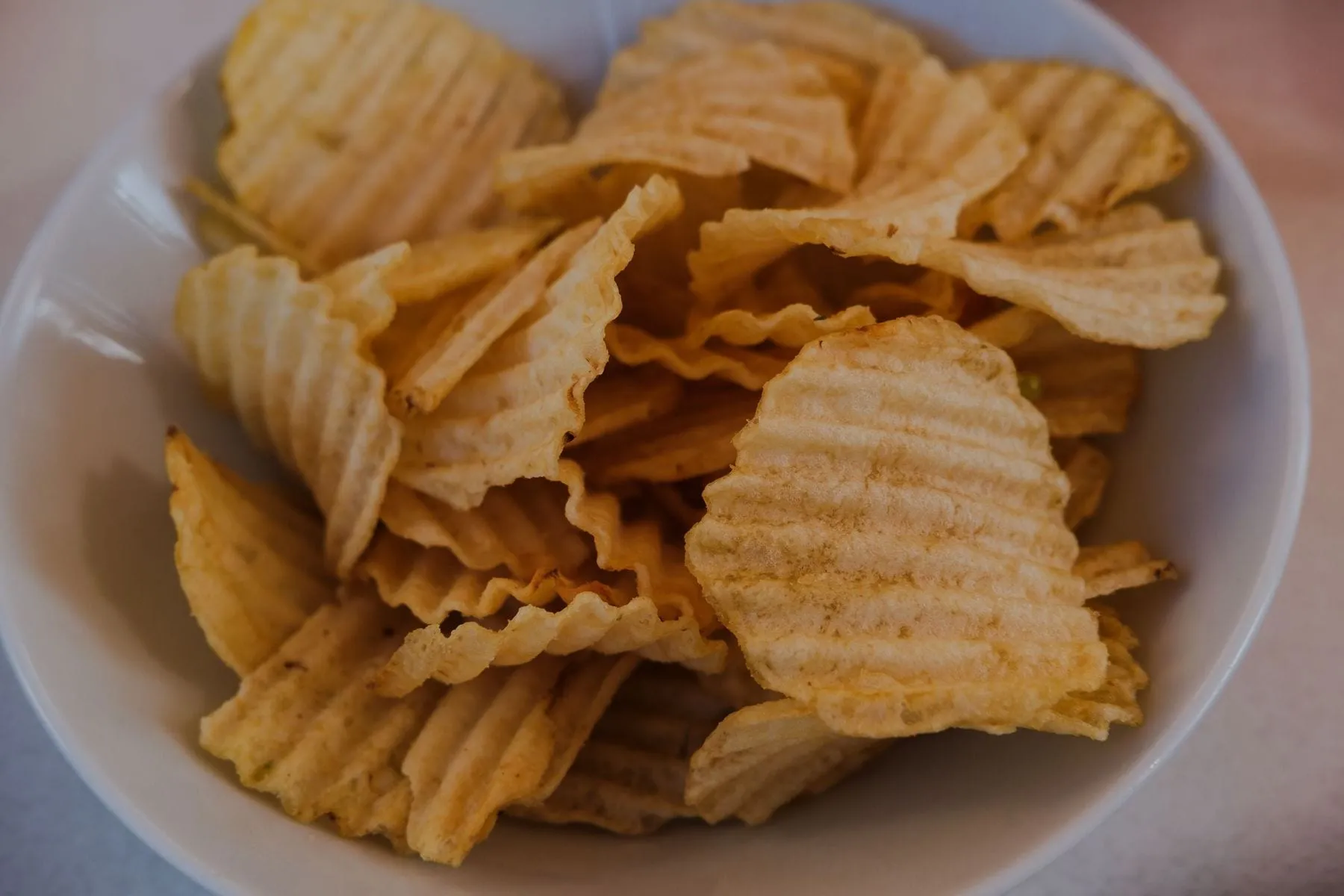
On the potato chips and French fries line the fryer follows an air knife dewatering machine. It also expands pellets from the extruded snack production line, and fries breaded products from a batter and breading line. After frying, products typically go to a rotary coating drum or a food freezer.
Mesh belt fryer
products ride on a belt with a hold-down belt above, for items that float or must stay submerged.
Paddle fryer
paddles push and turn products through the oil, suited to chips and loose products that need moving.
Indirect heat exchanger
oil is heated outside the fryer by thermal oil, steam or gas, giving even temperature and easier oil management.
Our engineers check these points with you, so the quotation fits your site rather than a catalogue default.
Cold, wet product cools the oil when it enters. If the heating system cannot recover quickly, frying time grows, colour varies and oil uptake rises. Heating capacity is sized on your product load, not just on oil volume.
Continuous filtration removes crumbs that burn and degrade oil, and a steady top-up keeps fresh oil coming in. Low oil volume relative to throughput helps oil turn over faster.
A heating source (gas, thermal oil, steam or electric), fume extraction to outside, fire safety measures agreed with your local authority, and space for oil storage and filtration.
Tell us your raw material, finished product and target output. Our engineers reply with a matched configuration and quotation.
What to send with your inquiry
Email sales@hnfoda.com
Compare fried and non-fried (hot-air dried) instant noodle lines: product, oil handling, energy, shelf life, equipment and what to prepare before you buy.
Why instant noodle line quotes differ so much: capacity, fried or non-fried drying, automation, packing and site costs, plus what to prepare for a quote.
Choose a potato chips production line: size capacity on potato input, pick batch or continuous fryer, plan seasoning and packing, and manage acrylamide.
Bakery & Snack Food
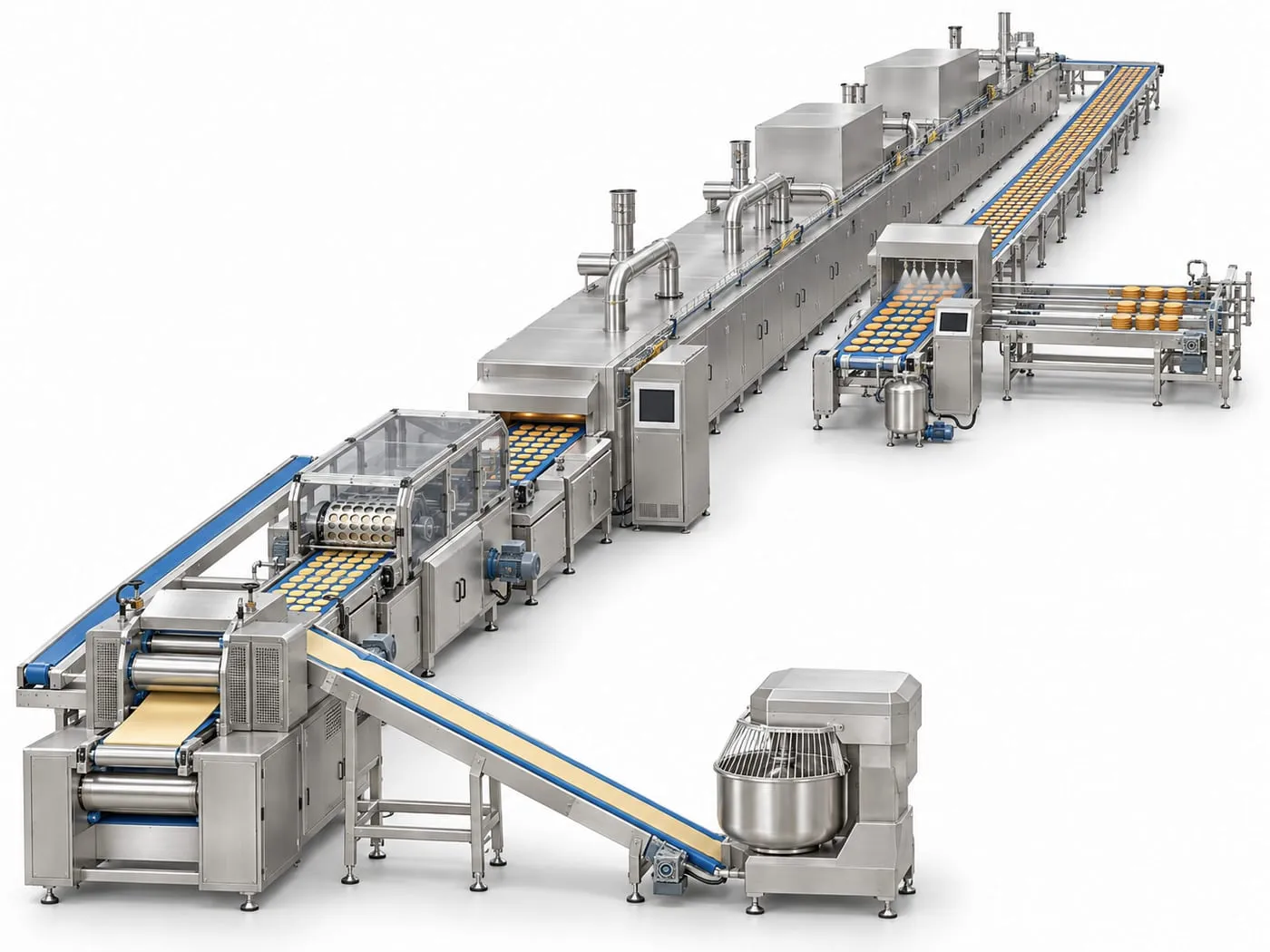
Biscuit factories, private-label bakeries and investors entering packaged biscuits.
Sized to baked biscuits per hour (kg/h of finished product) for a given size and weight
Bakery & Snack Food
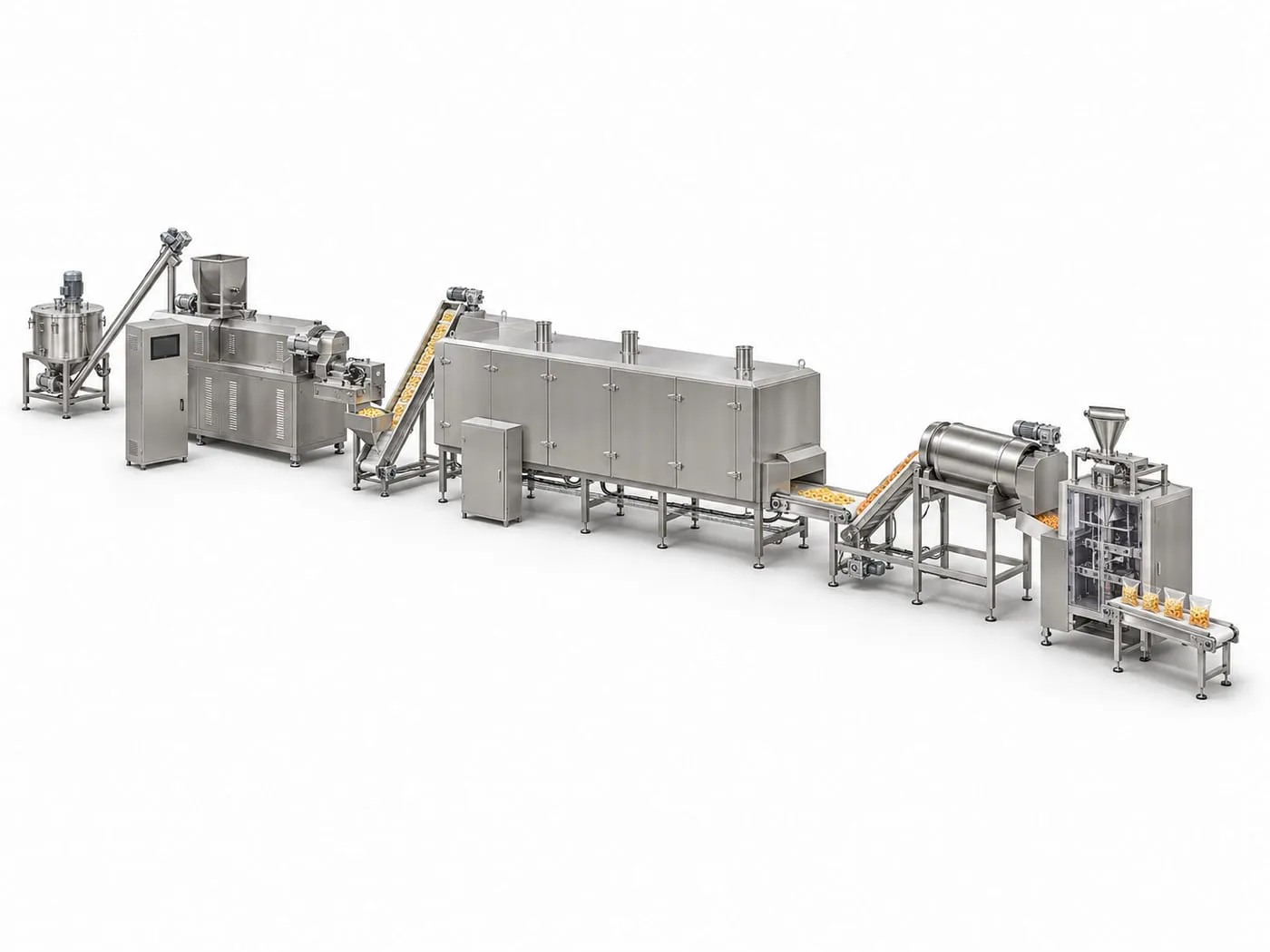
Snack brands and contract manufacturers making corn puffs, cereal shapes and snack pellets.
Sized to extruder throughput (kg/h of dry mix) with finished output stated separately
Bakery & Snack Food
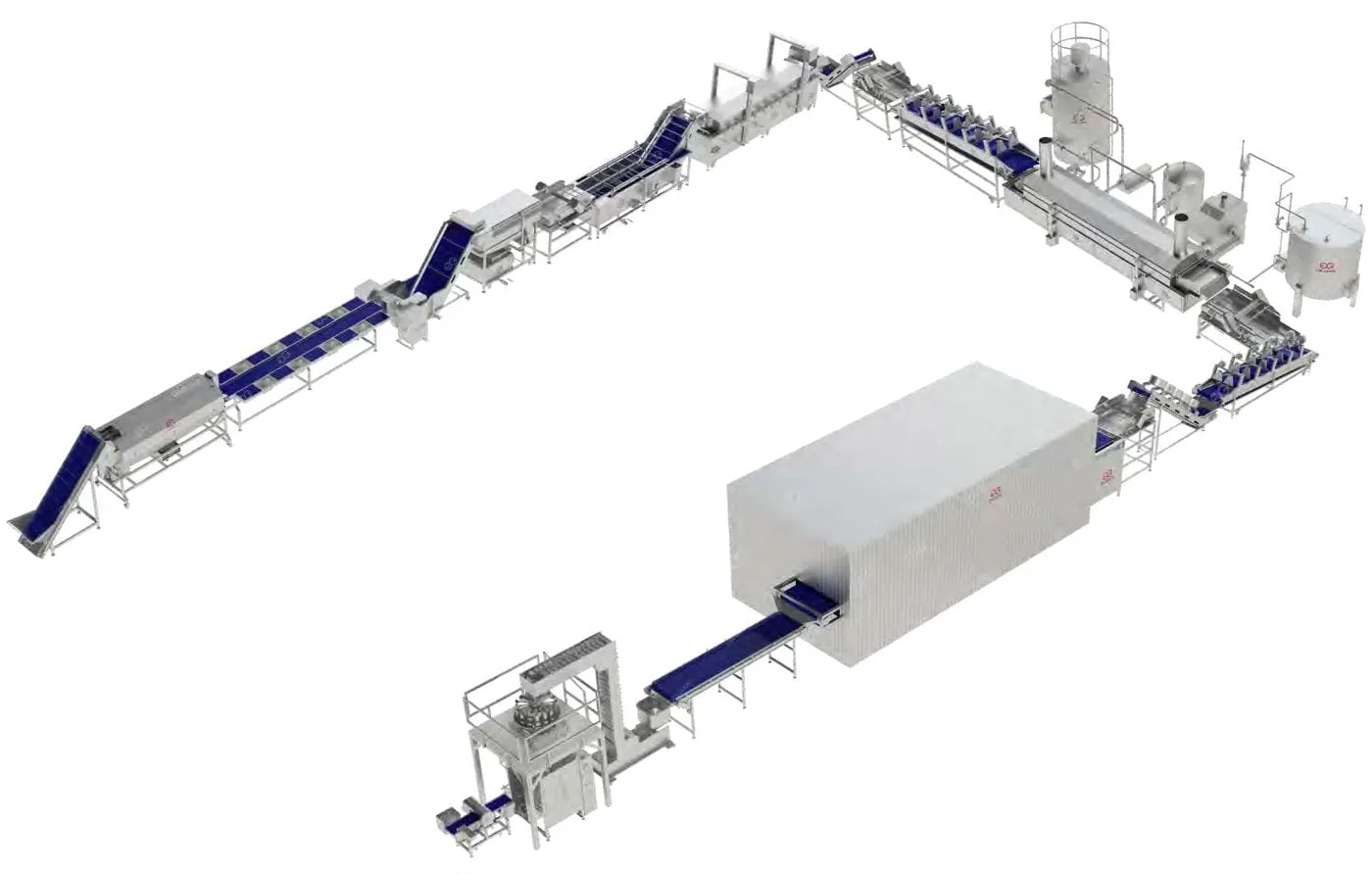
Potato snack brands, frozen fries producers and agricultural investors near potato growing areas.
Sized to fresh potato input (kg/h) with finished output stated separately
Bakery & Snack Food
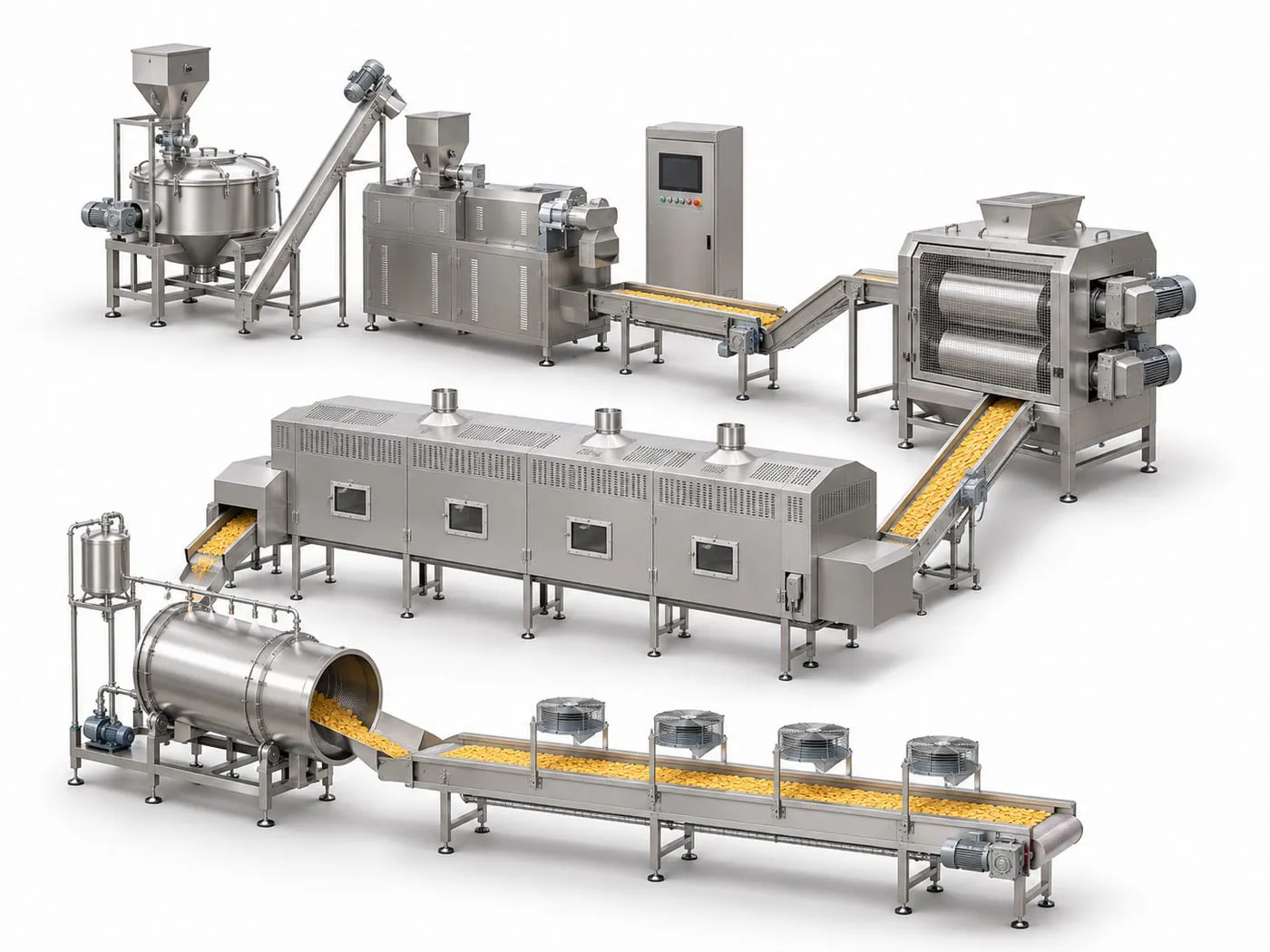
Breakfast cereal brands, private-label packers and snack plants adding corn flakes or coated cereals.
Sized to finished cereal output (kg/h) for a set flake thickness