Guides
Potato Chips Production Line: How to Choose Capacity, Fryer and Packing
Choose a potato chips production line: size capacity on potato input, pick batch or continuous fryer, plan seasoning and packing, and manage acrylamide.
- Prepared by
- HNFODA Applications Engineering
- Topic
- Guides
- Published
- Reading time
- 6 min read · 2 sources
On this page
Short answer: a potato chips line is a chain of washing, peeling, slicing, starch washing, frying, de-oiling, seasoning and packing. The fryer and the packing machine usually set capacity, so choose them first. Size the plant on fresh potatoes per hour, pick a batch fryer for a small or premium start or a continuous fryer for steady volume, and control potato variety and frying temperature to manage colour and acrylamide.
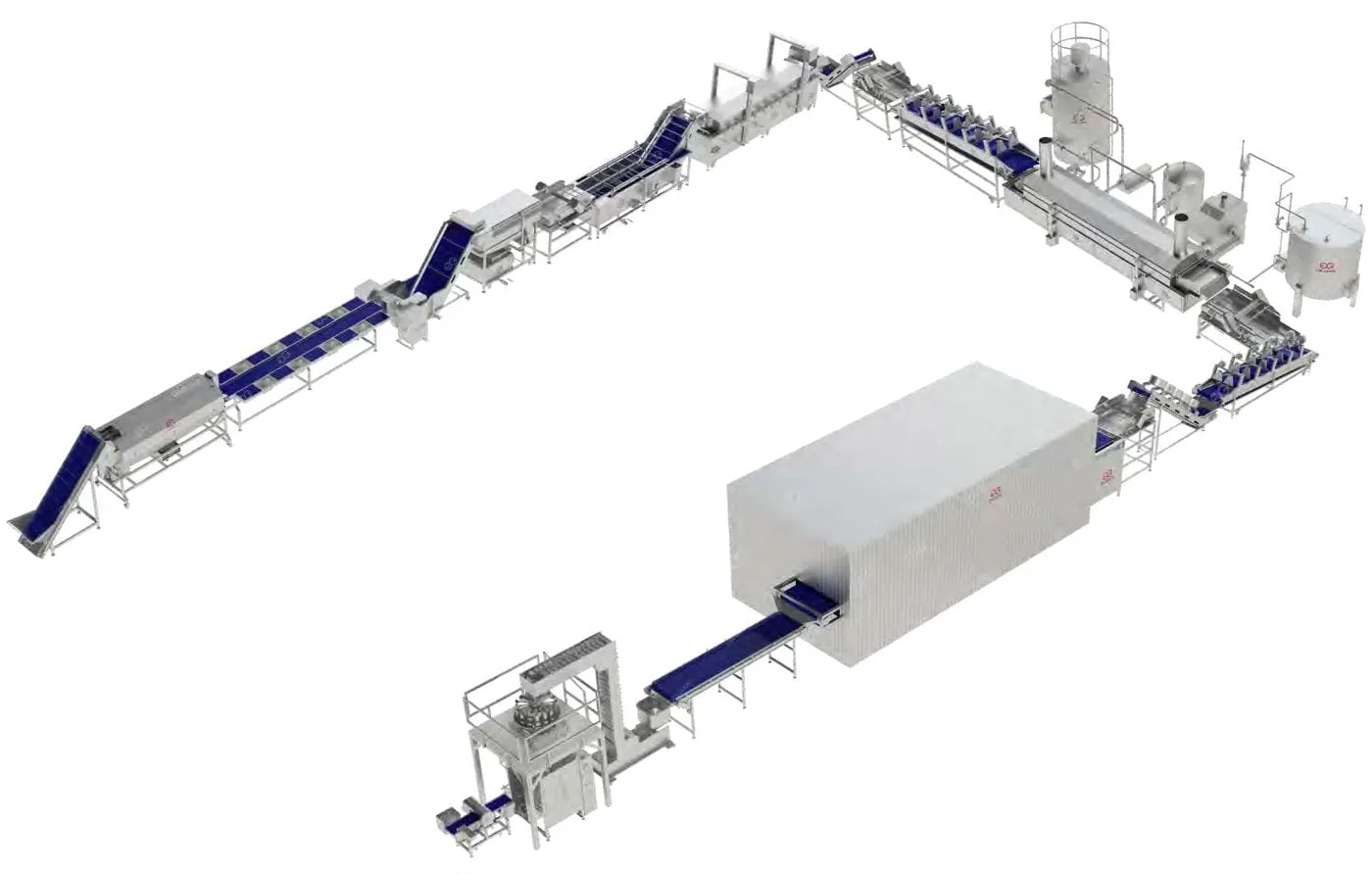
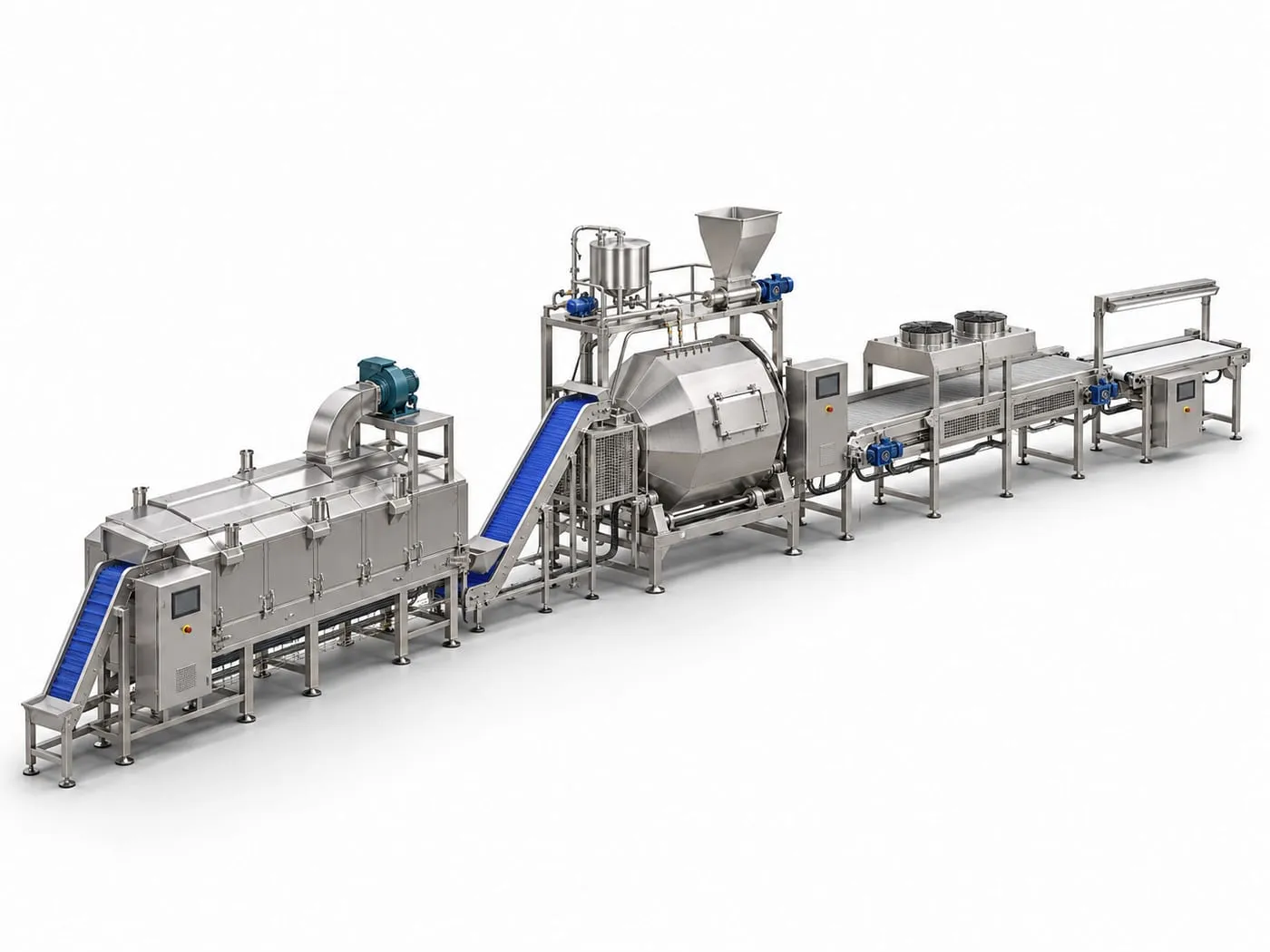
The line, step by step
- Receiving and storage. Potatoes are stored ventilated; temperature affects sugar levels.
- Washing and peeling. A brush washer and peeler removes soil and skin.
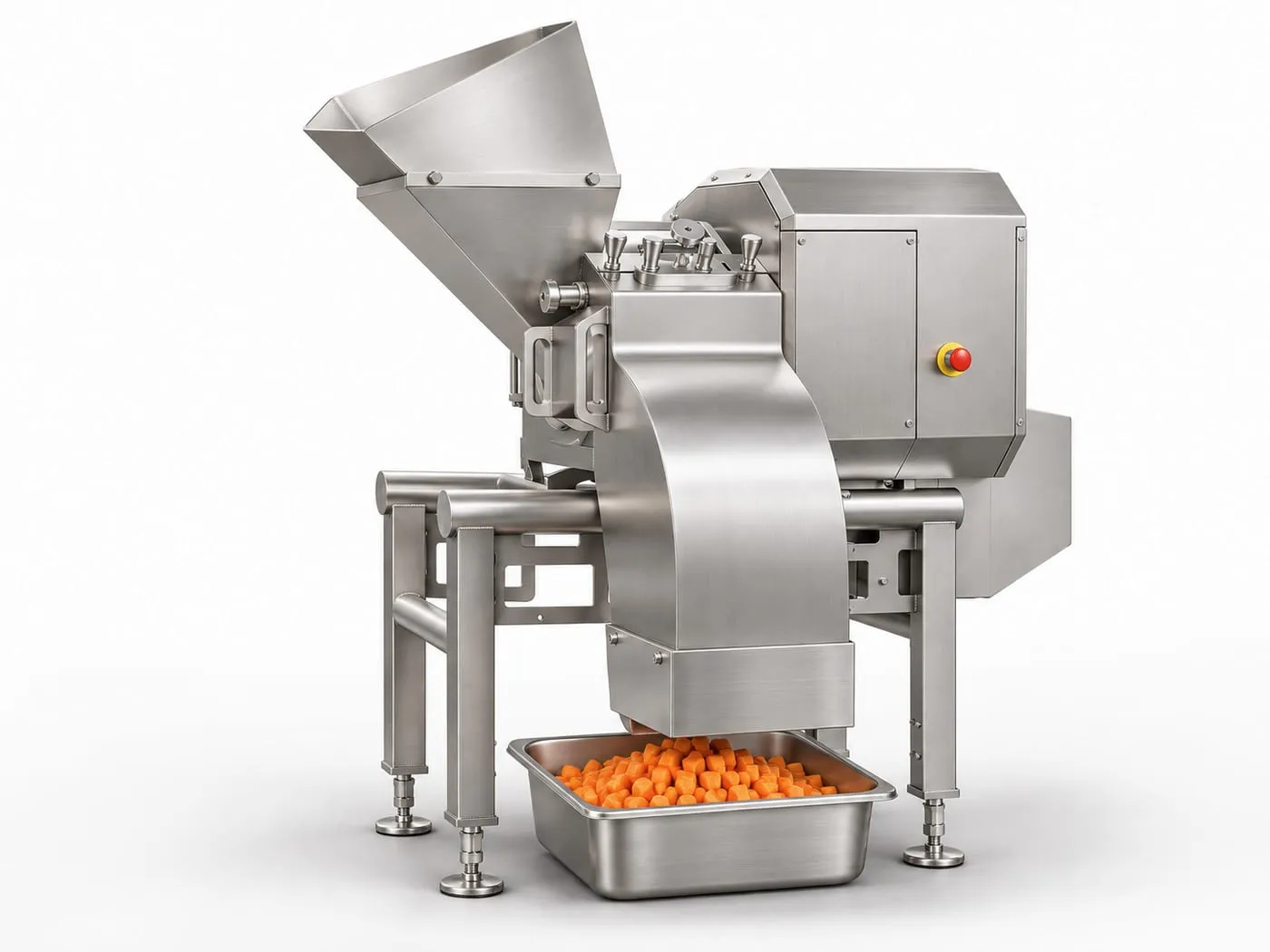
- Slicing. A vegetable cutting machine cuts slices to a set thickness; thickness affects fry time, oil content and breakage.
- Starch washing. Slices are rinsed to remove surface starch so they do not clump.
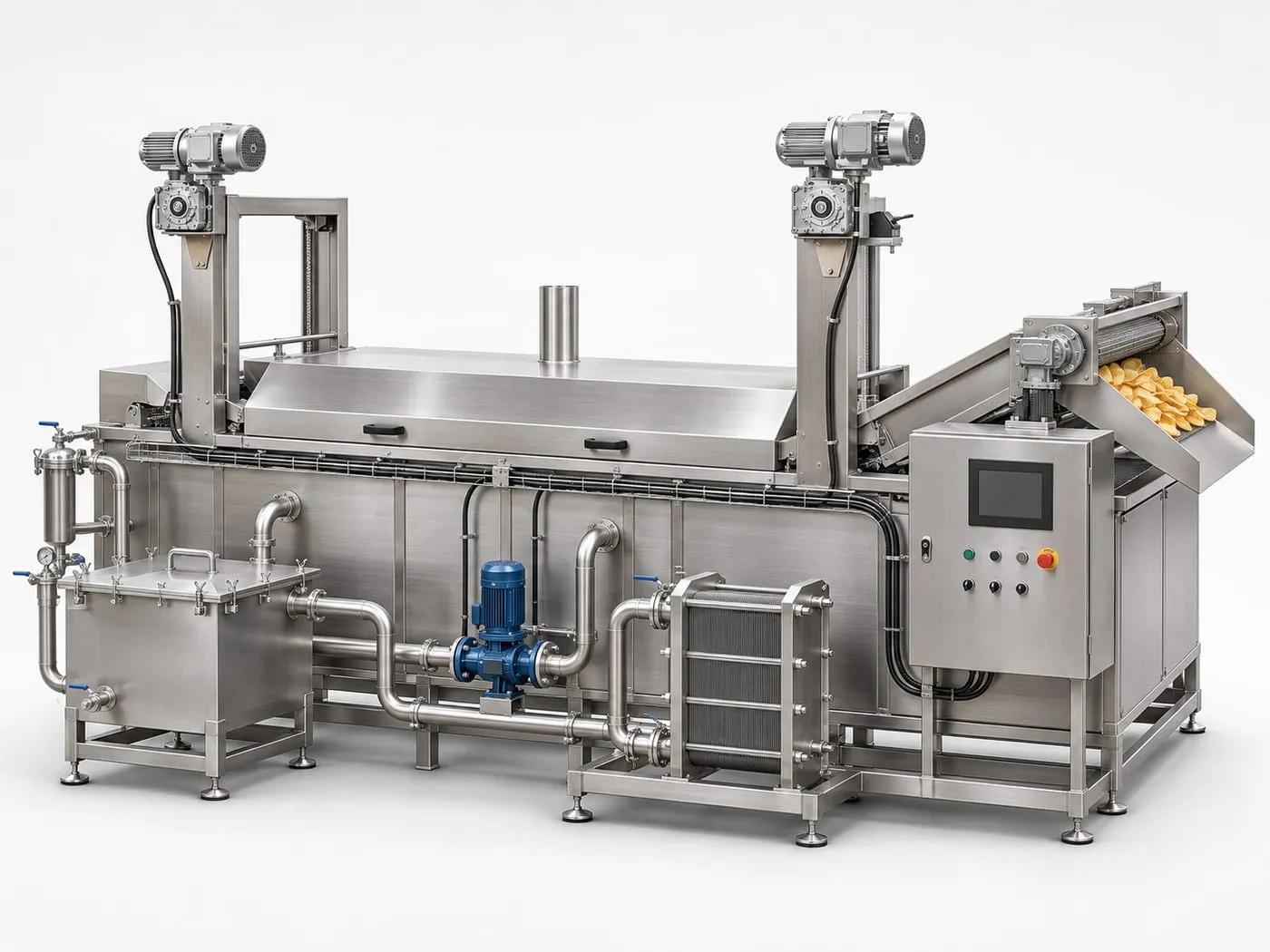
- Frying. Slices fry until crisp. See continuous fryer for paddle, mesh belt and indirect-heat designs.
- De-oiling. Excess oil is removed by a shaker, air or a centrifuge.
- Seasoning. A seasoning drum applies flavour; our nut seasoning line and rotary drums show the principle.
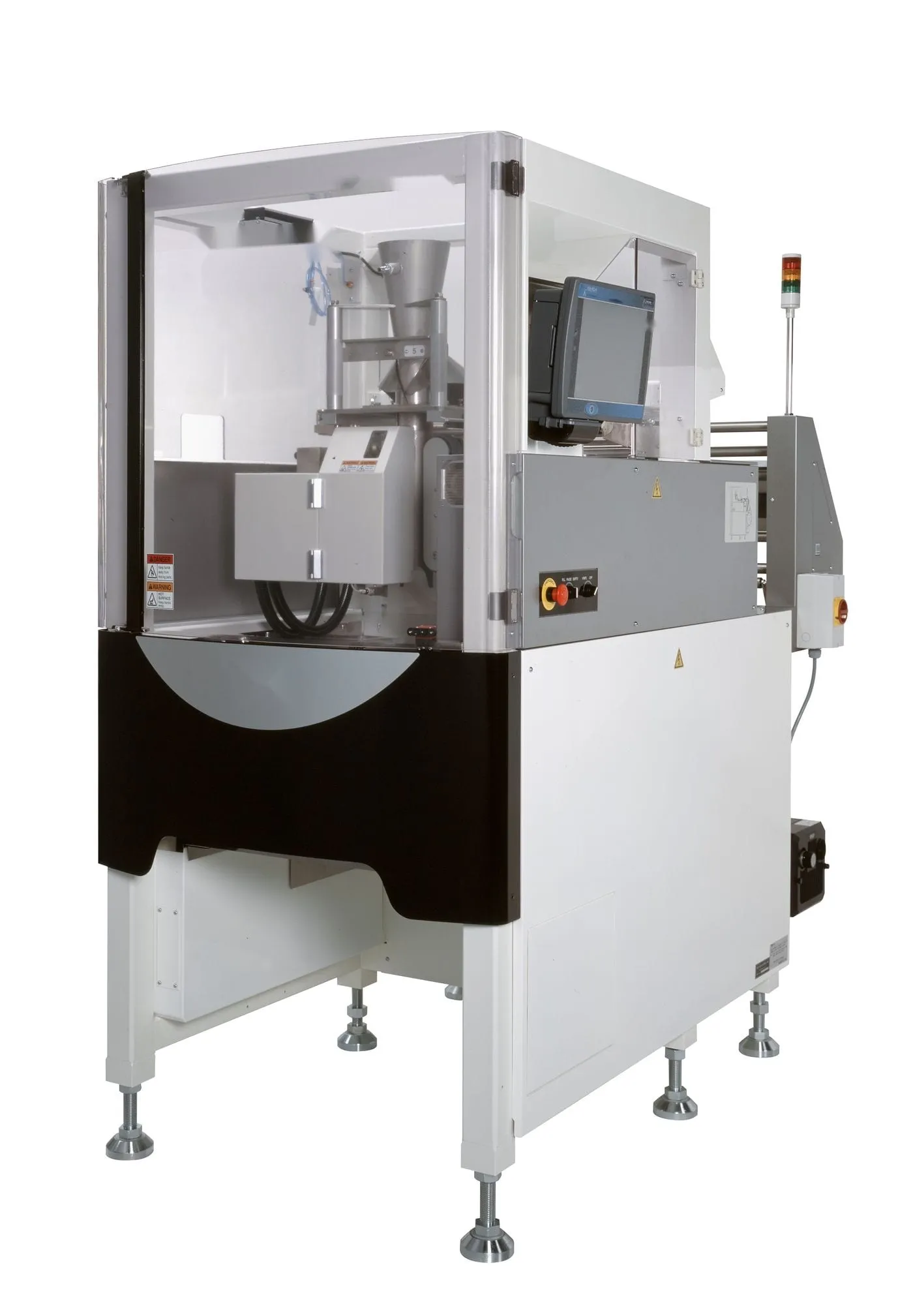
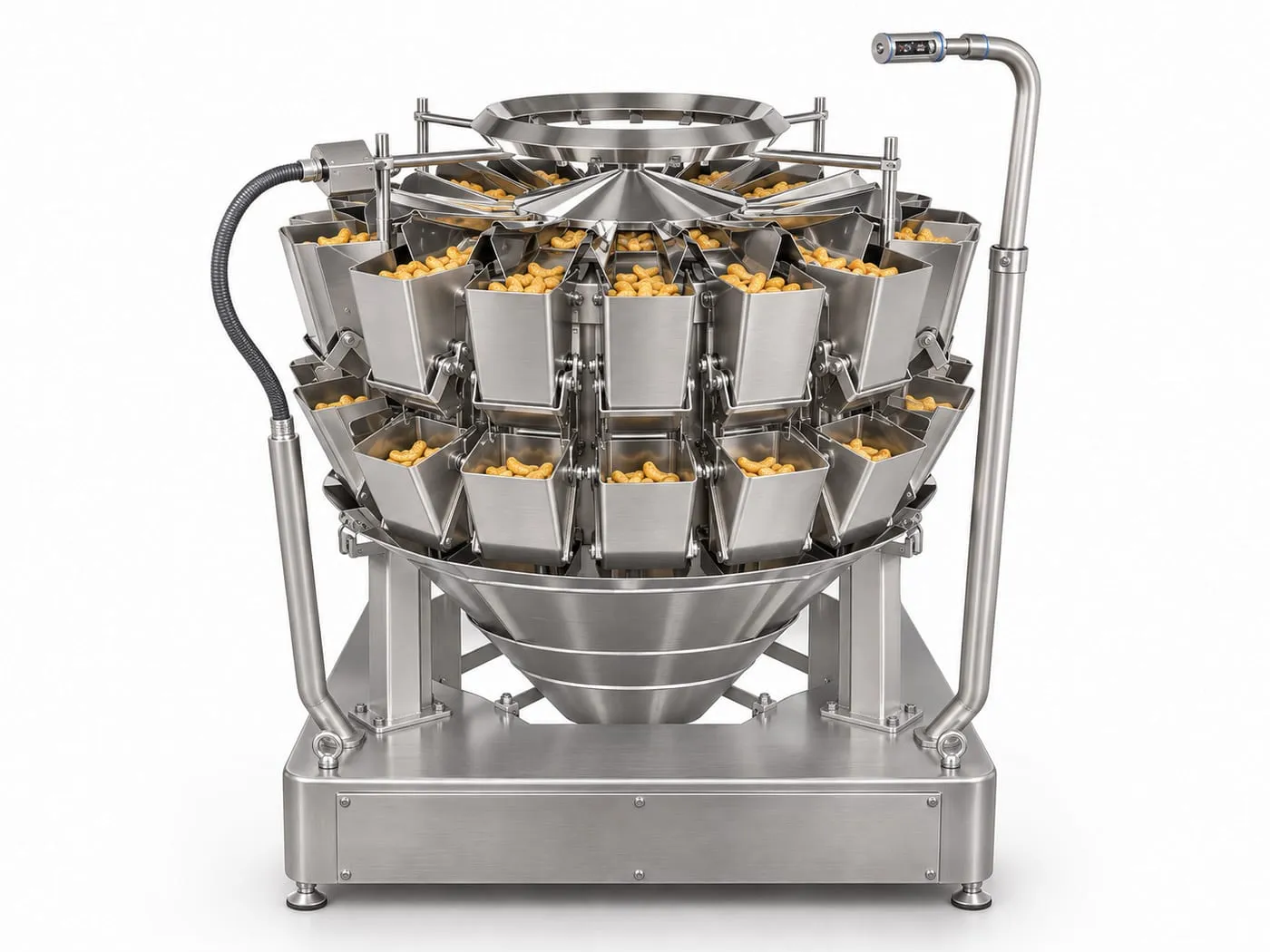
- Packing. A multihead weigher and a vertical form-fill-seal machine fill bags.
Our potato chips and French fries line page shows how stations fit together. Fresh-cut potato chips and par-fried French fries are different products with different downstream steps, so say which you want.
Sizing capacity
Capacity is not a single number. Settle these in order:
- Choose the basis. Fresh potato per hour is the clearest input measure. Finished chips per hour depends on potato dry matter, slice thickness and final moisture and oil content.
- Check the bottleneck. The fryer’s heating and residence time set its throughput; the packing machine speed limits bagging. A faster slicer does not help if the fryer cannot keep up.
- Plan the operating pattern. One shift, two or three. A small plant on one shift may not need continuous frying.
- Allow for peaks. Festival seasons or promotions may double demand for weeks; discuss it with us so the line can be extended.
- Think about cleaning. Fryers and slicers need cleaning time. Real hours per shift are fewer than 8.
Batch or continuous fryer
| Feature | Batch (kettle-style) fryer | Continuous fryer |
|---|---|---|
| Typical use | Small business, premium or hand-crafted chips | Steady medium to large production |
| Labour | More, loading and unloading | Less, automatic feed and discharge |
| Product consistency | Depends on the operator and oil temperature recovery | More uniform: fixed residence time |
| Oil management | Simple, smaller oil volume | Filtration and top-up built in |
| Heat source | Gas, electric, thermal oil | Usually thermal oil, steam or gas through an external heat exchanger |
| Capacity limit | Batch size and cycle time | Belt or paddle size |
| Upgrade path | Replace with continuous later | Add a second fryer or extend |
Potatoes, colour and acrylamide
The fried colour of chips comes from sugars. The US FDA’s fact sheet on acrylamide in potato foods explains that acrylamide forms when asparagine and reducing sugars react at elevated temperatures, usually above 120 °C and in low-moisture conditions. Steps the FDA lists for chips and fries include:
- selecting potato varieties low in precursors, allowing for seasonal variation;
- avoiding cold temperatures during harvest, transport and storage;
- assessing reducing-sugar levels in incoming potatoes;
- reducing frying temperature and cooking to a lighter colour;
- removing more peel and washing or soaking slices before frying, taking care that quality does not suffer.
Practical consequences: run trials with each potato supply across the season, set a colour standard, and monitor oil temperature. Your national food authority may set limits or guidance, so check its rules.
Packing and shelf life
Chips lose crispness quickly if air and moisture get in, and fat can turn rancid over time. Plan:
- Barrier film with a good moisture and light barrier.
- Nitrogen flushing if your market and shelf life target need it.
- Dosing by weight with a multihead weigher.
- Coding and inspection for date codes and metal detection where required.
- Cartons and storage away from heat and sunlight.
What affects the cost
We do not publish prices; each line is quoted to the product and output. The main drivers are:
- Fryer type and size, and its heat source.
- Slicing, washing and de-oiling capacity.
- Packing automation and film type.
- Seasoning method.
- Utilities: power, gas or thermal oil, water and exhaust.
- Building and layout.
- Freight terms such as FOB or CIF (defined in the ICC’s Incoterms rules).
- Spare parts and training.
Marketplace listings for small chips lines show a very wide spread of prices because they describe different capacities and automation levels. Compare complete lines for the same output, not single machines.
Notes for India, Pakistan, Nigeria and South Africa
- Potato supply. Check varieties, harvest months and storage options near your site; ask what your growers can supply for chipping.
- Frying oil. Choose an oil you can buy reliably and plan to filter and replace it.
- Power and fuel. Compare gas, thermal oil and electricity at your site; plan a generator if needed.
- Competition. Chips are a crowded category. Differentiate by flavour, pack size or price band.
A sizing example
Say you plan to sell chips in 50 g bags and want to fill 3,000 bags per day. That is 150 kg of finished chips per day. Fresh potatoes lose most of their weight as water during frying, so the fresh potato input is several times the finished weight; the exact ratio depends on the potato’s dry matter and the final moisture and oil content of the chips, and a frying trial with your potatoes will give you the figure.
Work through the stations in order. How many kilograms of potatoes must the washer and peeler handle per hour? How many slices per minute does the slicer need? Does the fryer’s capacity in kilograms of fresh slices per hour cover that? Then check the packing end: how many bags per minute must the vertical form-fill-seal machine make to finish the day’s work in a shift?
The answers show whether a batch fryer is enough or whether you need a continuous one, and whether the packing machine runs at a comfortable speed. The numbers above are only an illustration of the method. Send us your own target and a potato sample, and we will help you check each step.
What to prepare for a quotation
- The product: fresh-cut chips, kettle-style, or French fries; slice thickness.
- Fresh potato supply and variety, and a sample if you have it.
- Target output per hour, shifts per day.
- Heat source for the fryer and local prices.
- Frying oil type.
- Seasoning types, packing format and bag sizes.
- Site: building, power, water, drainage.
- Delivery location, delivery term, and installation and training needs.
Send these through the contact page. For a full factory see turnkey projects.
Mistakes to avoid
- Buying slicers before choosing the fryer. Fryer capacity sets the line.
- Ignoring potato quality. Dark or uneven chips are usually a raw material problem.
- Under-specifying oil handling. Filtration protects flavour and shelf life.
- Packing in thin film. Chips go stale fast.
- No plan for seasonal supply. Prepare for variety change across the year.
Frequently asked questions
- What capacity should I choose for a small business?
- Start from the potatoes you can buy and sell chips from each week, then choose a line that runs one shift at a comfortable load. Leave room for a second fryer or packing machine. We size on fresh potato input and the finished weight you need.
- Batch fryer or continuous fryer?
- A batch fryer is cheaper and simpler, gives a kettle-style product and suits small output, but needs more labour and gives less steady results. A continuous fryer keeps oil temperature and residence time constant, so it suits larger or round-the-clock production.
- Which potatoes make good chips?
- Varieties with low reducing sugars and suitable dry matter give lighter colour and better texture. Storage matters: cold storage raises sugars. Run frying trials with the potatoes you can buy locally across the season.
- What is acrylamide and should I worry?
- Acrylamide is a compound that can form in fried and baked foods at high temperatures. Regulators such as the US FDA suggest steps including variety choice, avoiding cold storage, and lower frying temperatures and lighter colour. Check what your market requires.
- How should I pack chips?
- Most chips go into nitrogen-flushed pillow bags on a vertical form-fill-seal machine, dosed by a multihead weigher. Use a barrier film to protect crispness and limit fat oxidation.
Sources
- [1]Reducing Acrylamide in Potato-based Foods: Fact Sheet — U.S. Food and Drug Administration
- [2]Incoterms rules — International Chamber of Commerce
HNFODA Applications Engineering
Line design, product trials and commissioning
Engineers who size, build and commission HNFODA food processing lines, writing from the questions buyers ask before a quotation. About HNFODA