Skip to content

02 · Dried Fruit & Nut Processing — Production line

Nut Seasoning Line

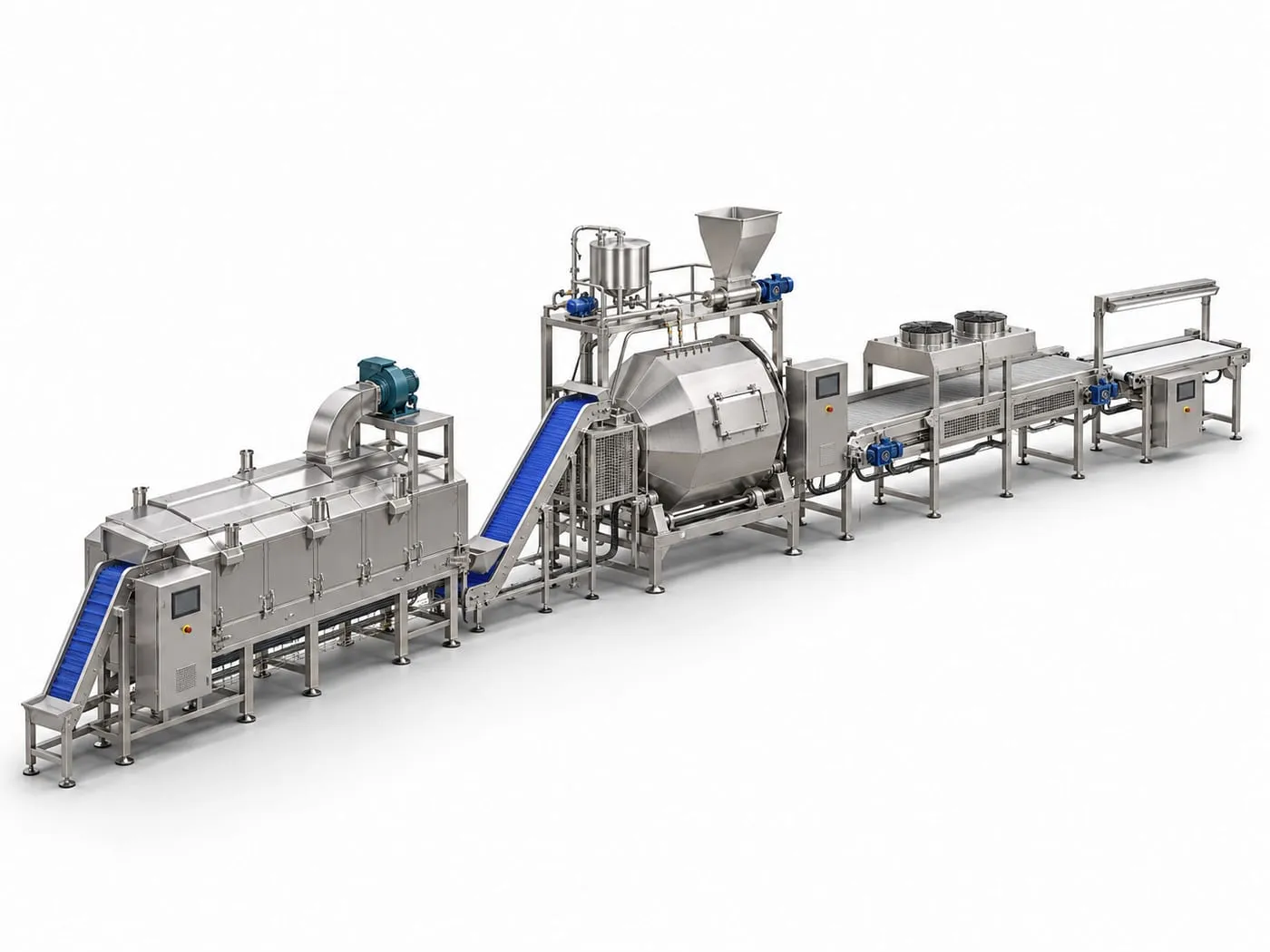
Doses and mixes seasoning powders, oil or syrup onto roasted nuts and links the roaster with cooling and packing.

Rating
Sized to roasted nut input (kg/h) plus the seasoning added
Versions
Drum powder seasoning · Oil spray and tumble · Coating pan
Best for
Snack nut producers making salted, spiced, honey-roasted or coated nuts
  • Powder and liquid dosing linked to nut flow
  • Gentle tumbling to limit broken nuts
  • Batch or continuous designs
  • Planned for cleaning between flavours and allergens

Short answer: A nut seasoning line meters seasoning powder, oil or syrup onto roasted nuts and mixes them so the flavour sticks evenly, then passes them on to cooling and packing. What the seasoning is made of and how well it must adhere decide the design, together with how many flavours and allergens you change between.

How it works

  1. Infeed from roasting – roasted nuts arrive warm from the roaster, by belt or bucket elevator, at a steady rate.
  2. Liquid application (optional) – nozzles spray a measured amount of oil, syrup or flavour liquid onto the tumbling nuts.
  3. Powder dosing – a screw or vibratory feeder adds powder in proportion to the nut flow.
  4. Tumbling – a rotating drum or coating pan turns the nuts so each one is coated; flights inside the drum are shaped to avoid breaking nuts.
  5. Cooling or drying – coated nuts go to a cooling belt, or a dryer if syrup has been used, so they do not stick together.
  6. Inspection and packing – broken nuts and lumps are screened off before weighing and packing.

In continuous systems the dosing rate follows the nut flow; in batch pans the operator adds a measured amount per batch.

Which configuration fits

Form Suits Watch out for
Drum powder seasoning Salted, spiced, barbecue nuts Powder dust; adhesion on dry nuts
Oil spray and tumble Heavier seasoning loads Oil adds calories and affects shelf life
Coating pan Honey-roasted, sugar-coated, layered nuts Longer cycle; cooling and drying needed

What we need from you to quote

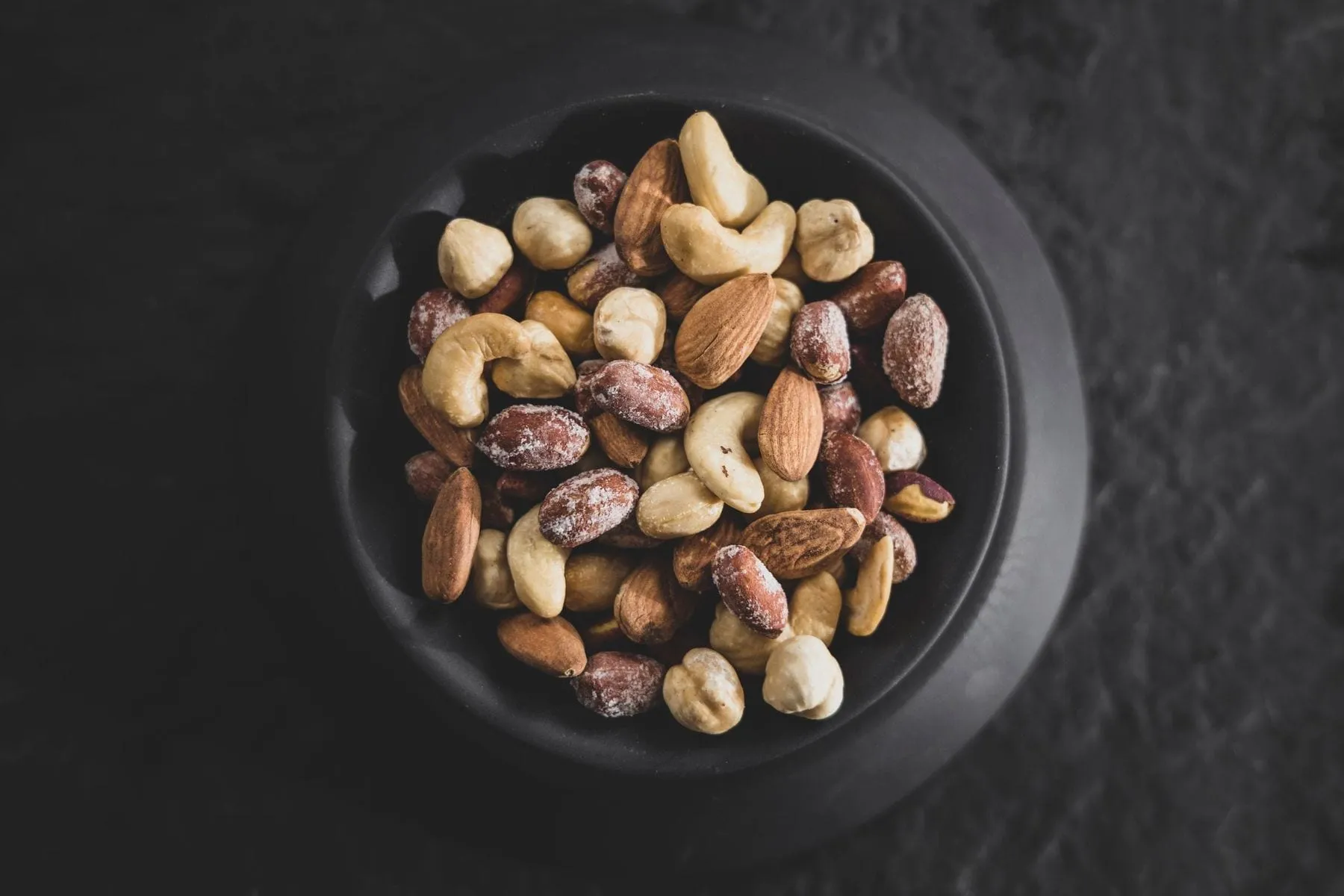
  • Nut types and whether they are roasted, fried or raw
  • Seasoning recipes, including particle size and liquid components
  • Target seasoning level and acceptable broken nut share
  • Throughput measured on nut input (kg/h)
  • Number of flavours, changeovers per day and allergen rules
  • Pack format and the packing machine you use

Where it sits in a line

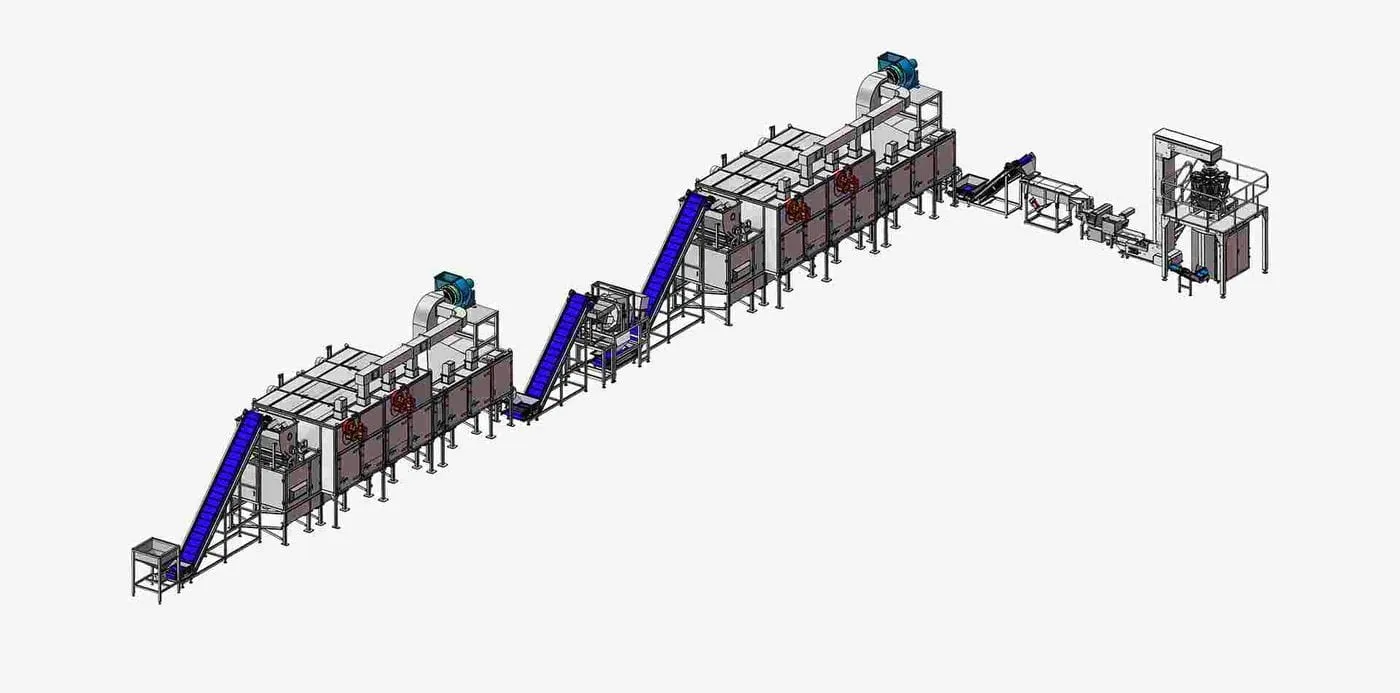
The line sits after a nut roaster and, for blanched nuts, a nut skin peeling machine. Layered coatings may use a rotary coating drum. After cooling, nuts go to a multihead weigher and a VFFS packaging machine or pouch packer.

Common configurations

  1. Option A

    Drum powder seasoning

    nuts tumble in a rotating drum while a feeder doses powder; suits salted and spiced nuts.

  2. Option B

    Oil spray and tumble

    a light oil spray helps powder stick; suits dry-roasted nuts with heavier seasoning.

  3. Option C

    Coating pan

    syrup and powder are built up in layers for honey-roasted or coated nuts.

What we confirm before quoting

Our engineers check these points with you, so the quotation fits your site rather than a catalogue default.

  1. 01Seasoning type: powder, oil, syrup, and its flow properties
  2. 02Target adhesion and how much seasoning ends up on the nut
  3. 03Acceptable share of broken nuts
  4. 04Allergen changeover between flavours and nut types
  5. 05Cooling and drying needed after seasoning

Frequently asked questions

  1. Why does seasoning fall off the nuts?

    Dry nuts have little surface for powder to grip. A small amount of oil or syrup, seasoning while the nuts are still warm, and a fine powder all improve adhesion. We adjust these with your recipe.

  2. Batch or continuous seasoning?

    Batch pans and drums are flexible for many flavours and smaller volumes. Continuous drums suit long runs of one flavour and steady feed from a continuous roaster.

  3. How do I manage allergen changeovers?

    Plan the flavour sequence, choose equipment with open access and few hidden corners, and set a cleaning routine between allergens. Separate lines may be needed if you label products free of a specific allergen.

Get a quote for the Nut Seasoning Line

Tell us your raw material, finished product and target output. Our engineers reply with a matched configuration and quotation.

What to send with your inquiry

  1. 1Raw material and its condition
  2. 2Finished product and packaging
  3. 3Target output — raw input or finished product
  4. 4Site photos, power supply, utilities

Email sales@hnfoda.com

Send your inquiry

Your details are used only to answer your inquiry — see our Privacy Policy.

Buyer guides

  • Dried Fruit & Nut Processing

    Dried Fruit Processing Line

    Investors and food companies starting or expanding dried fruit, fruit chip or dried fruit snack production.

    Sized to fresh fruit input (kg/h or tonnes per day); dried output depends on moisture removed

  • Dried Fruit & Nut Processing

    Date Processing Line

    Date packers and processors adding value with washed, pitted or paste products for retail and industry.

    Sized to whole date input (kg/h or tonnes per day)

  • Dried Fruit & Nut Processing

    Nut Butter Production Line

    Food companies and brand owners launching peanut butter, almond butter or nut spread products.

    Sized to roasted nut input (kg/h); output is close to input for pure nut butter

  • Dried Fruit & Nut Processing

    Hot-Air Dryer

    Dried fruit, dehydrated vegetable, herb, spice and nut processors from small batches to continuous plants.

    Sized to wet product loading (kg per batch or kg/h) and the moisture to remove

WhatsAppRequest a quote