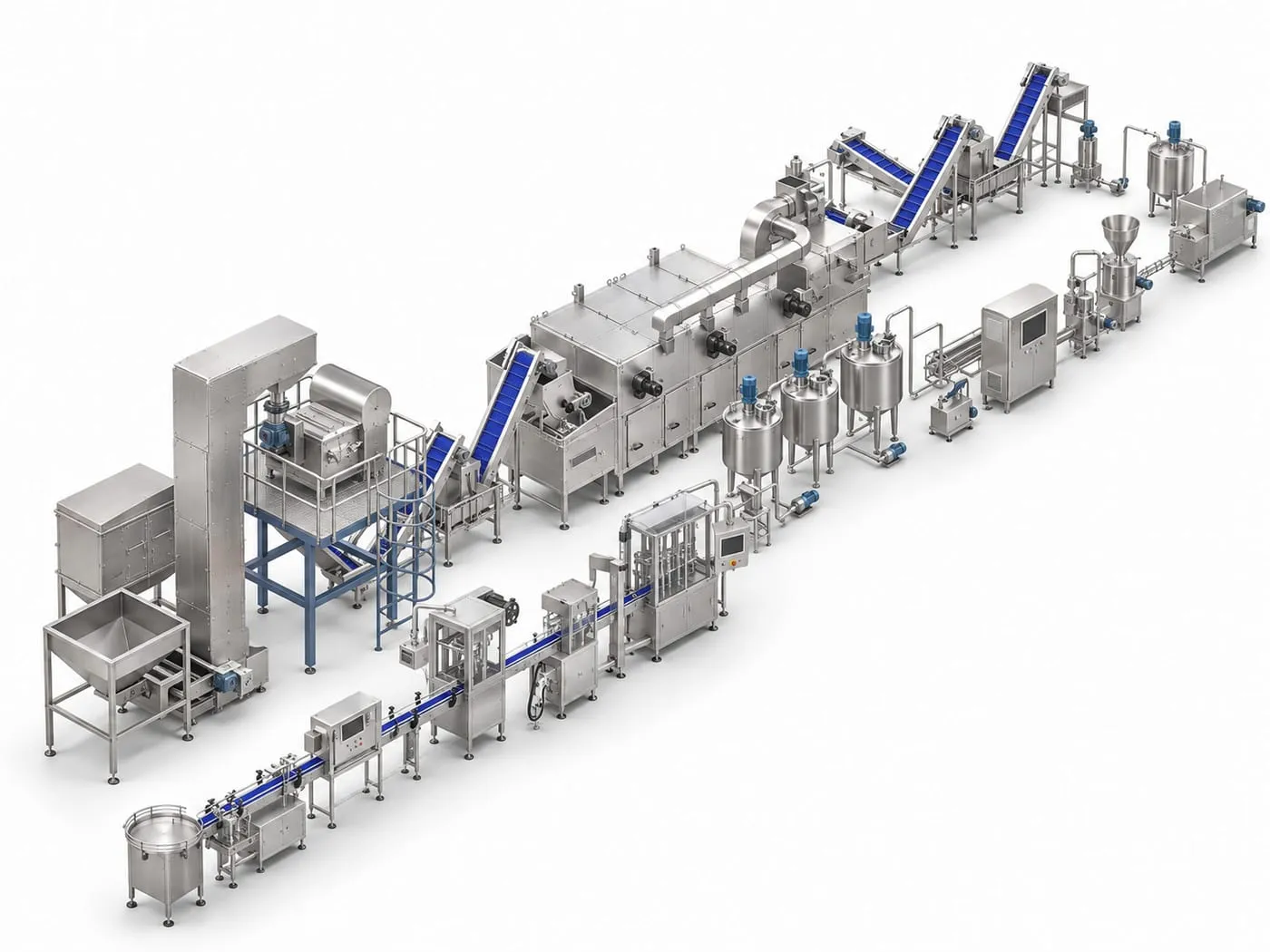
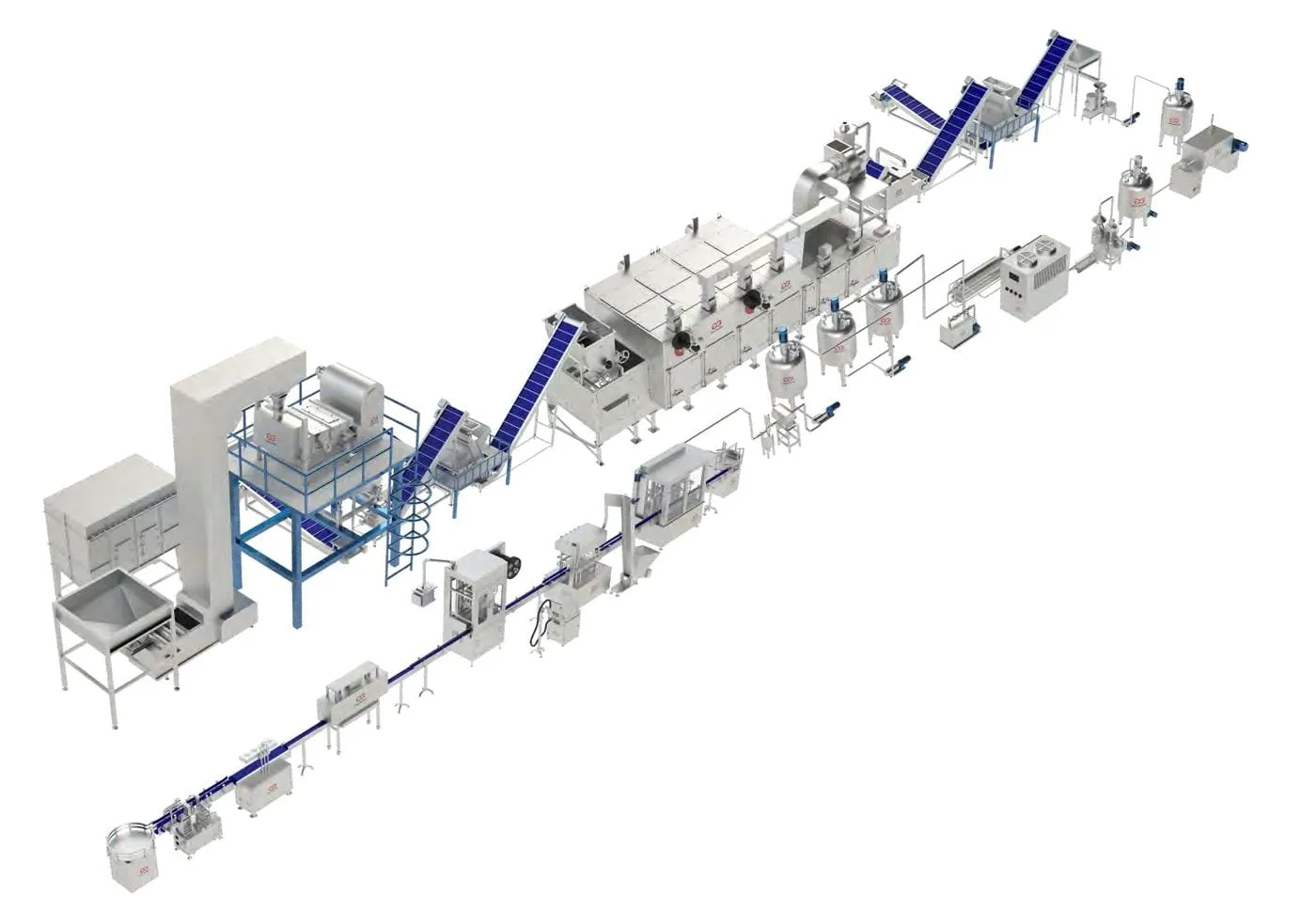
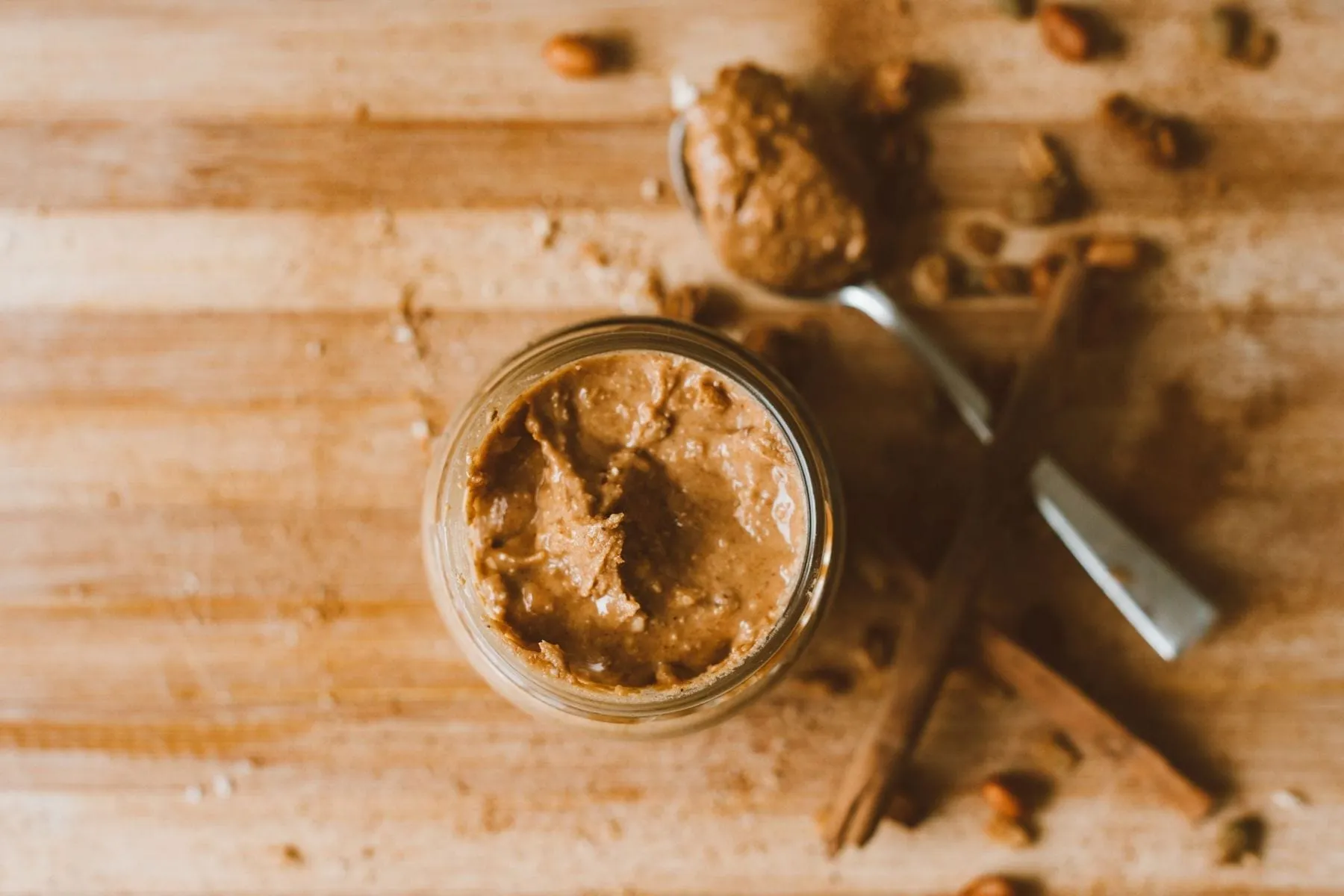
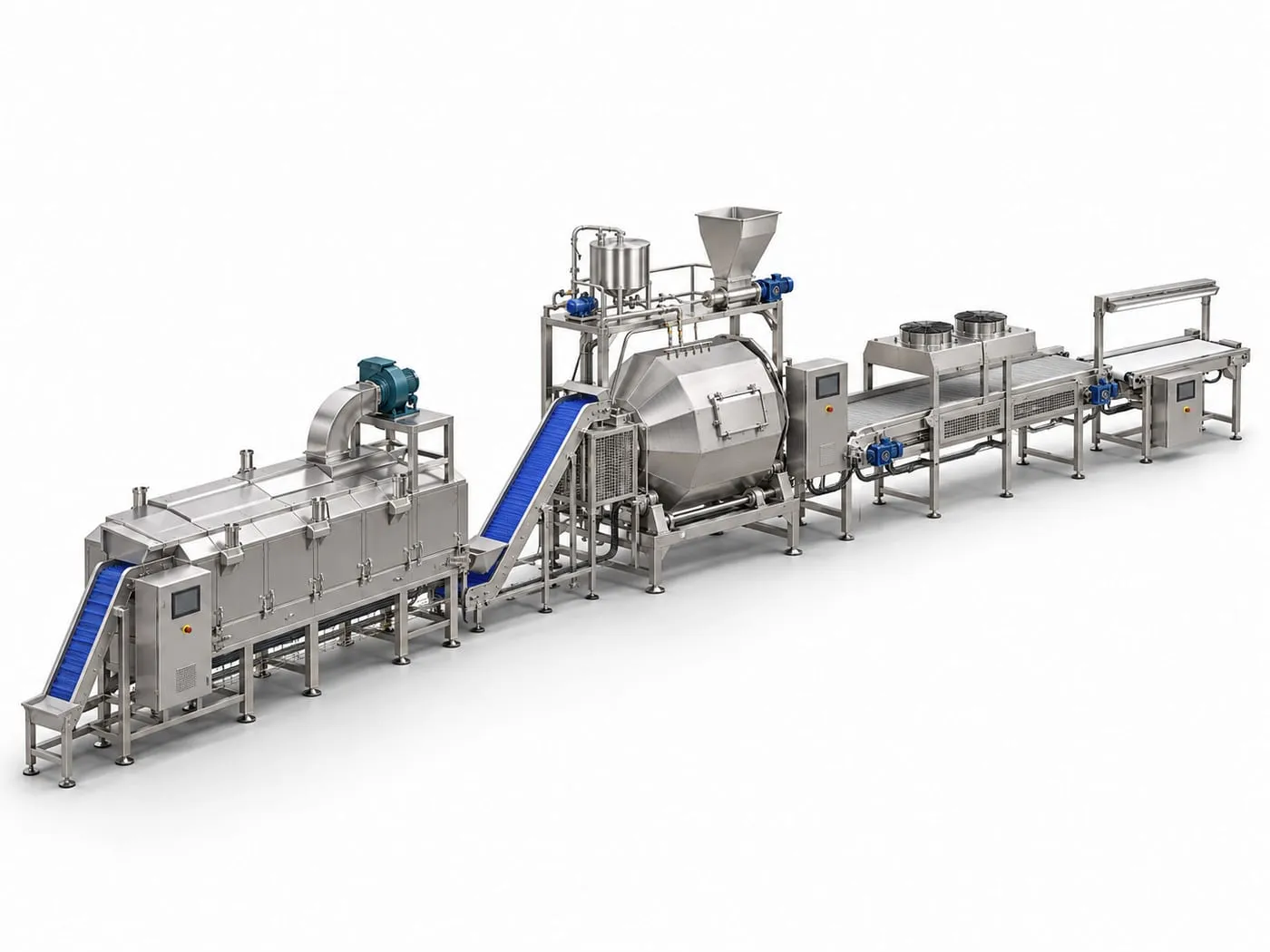
Short answer: A nut butter production line takes roasted nuts through cooling, skin removal, grinding, mixing and filling to make peanut butter, almond butter and other nut spreads. The fineness you want, how hot the paste gets during grinding and whether the line must keep allergens apart are what shape the configuration.
How it works
- Roasting – nuts are roasted to the target colour and flavour.
- Cooling – a cooling tray or belt stops the roast quickly.
- Skin removal – a peeling machine rubs off the thin skin and blows it away; nuts are inspected for burnt or defective pieces.
- Coarse grinding – a mill turns nuts into a paste.
- Fine grinding – a colloid mill or similar fine grinder reduces particle size for a smooth texture, with cooling to limit temperature rise.
- Mixing – salt, sugar, oil, stabiliser or nut pieces are added in a jacketed tank.
- Deaeration and filling – entrapped air is removed and the butter is filled into jars at a controlled temperature, then capped and labelled.
Grinding releases a lot of heat because of friction in a thick, oily paste. If the temperature climbs too far, the flavour can turn and the oil oxidises faster, so mills are normally fitted with cooling jackets and the feed rate is set to keep the outlet temperature in a safe range for your product.
Which configuration fits
| Form |
Suits |
Watch out for |
| Pure nut butter |
Natural peanut or almond butter |
Oil separation over shelf life |
| Blended spread |
Sweetened, cocoa or stabilised spreads |
Dosing accuracy and mixing time |
| Crunchy |
Peanut butter with pieces |
Even distribution of pieces during filling |
What we need from you to quote
- Nut types and whether they arrive raw, roasted, with or without skin
- Recipe and target texture, ideally with a reference product
- Throughput measured on nut input (kg/h), hours per day
- Container type and fill sizes
- Allergen policy and cleaning method between products
- Power, cooling water and compressed air on site
Where it sits in a line
The line starts with a nut roaster and a nut skin peeling machine. Fine grinding often uses a colloid mill, mixing a jacketed cooking kettle or mixing tank, and the finished product goes to a liquid filling machine suited to viscous paste.