Guides
How to Start a Peanut Butter Business: Equipment, Capacity and Cost Checklist
Plan a peanut butter business: equipment by stage, how to size capacity on nut input, aflatoxin control, cost drivers and a quotation checklist.
- Prepared by
- HNFODA Applications Engineering
- Topic
- Guides
- Published
- Reading time
- 6 min read · 2 sources
On this page
Short answer: to start a peanut butter business you need equipment for a dry front end (clean, sort, roast, cool, remove skins) and a paste back end (grind, mix, cool, fill and seal), plus aflatoxin control and a place to store nuts dry. Size the line on kilograms of nuts per hour, not jars per day, because grinding generates heat and usually decides the real output. Start with a line that fits your nut supply and your first customers, and leave room to grow.
What the process looks like
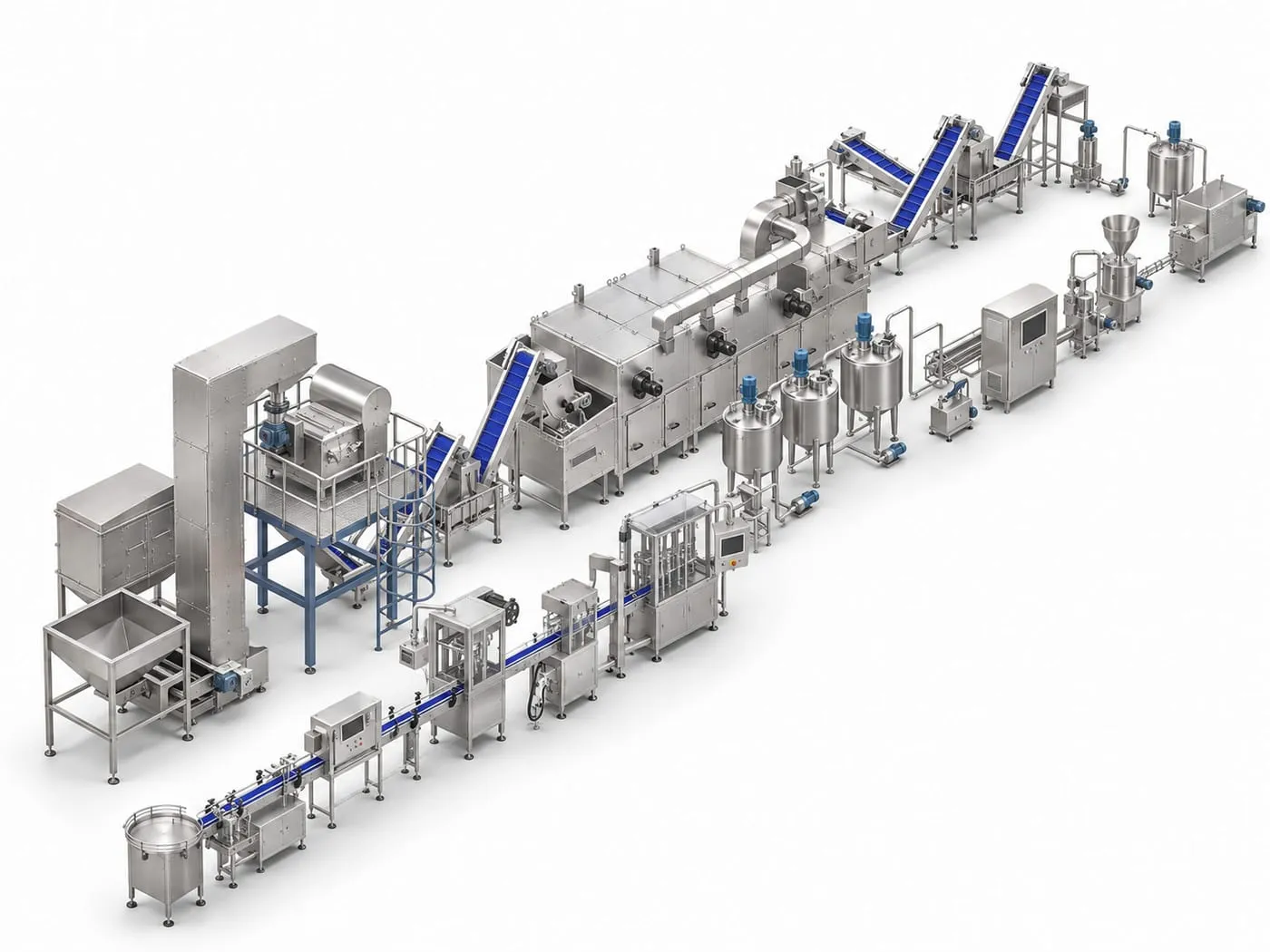
Peanut butter is made by roasting, grinding and mixing groundnut kernels. A practical sequence for a plant:
- Receive and test nuts. Check quality on arrival; a poor lot makes a poor product.
- Clean and sort. Remove stones, husks, damaged and mouldy kernels.
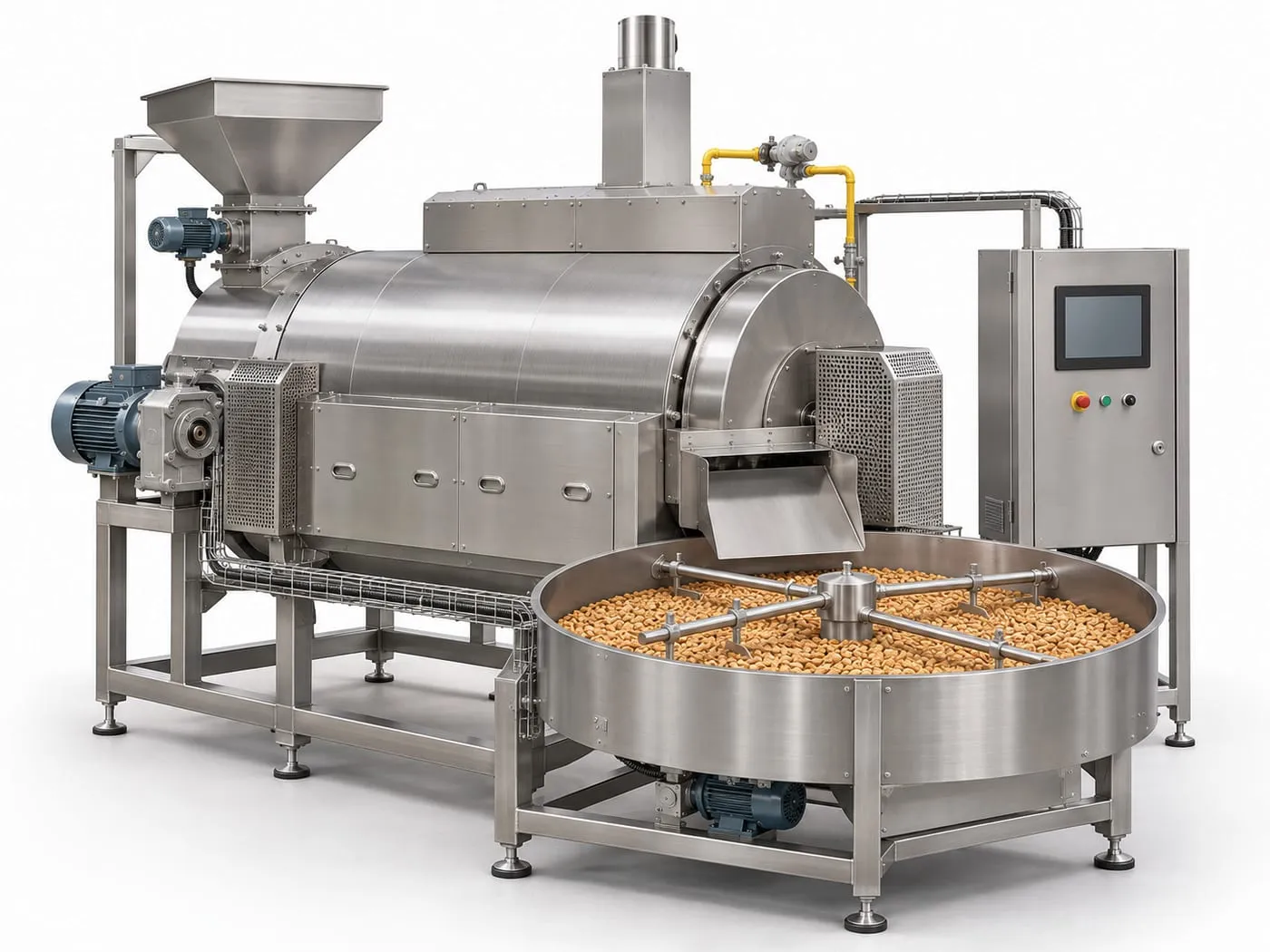
- Roast. The roast sets colour and flavour. See the nut roaster page for drum, tray and continuous belt designs.
- Cool. Roasted nuts must cool quickly and evenly before the next step.
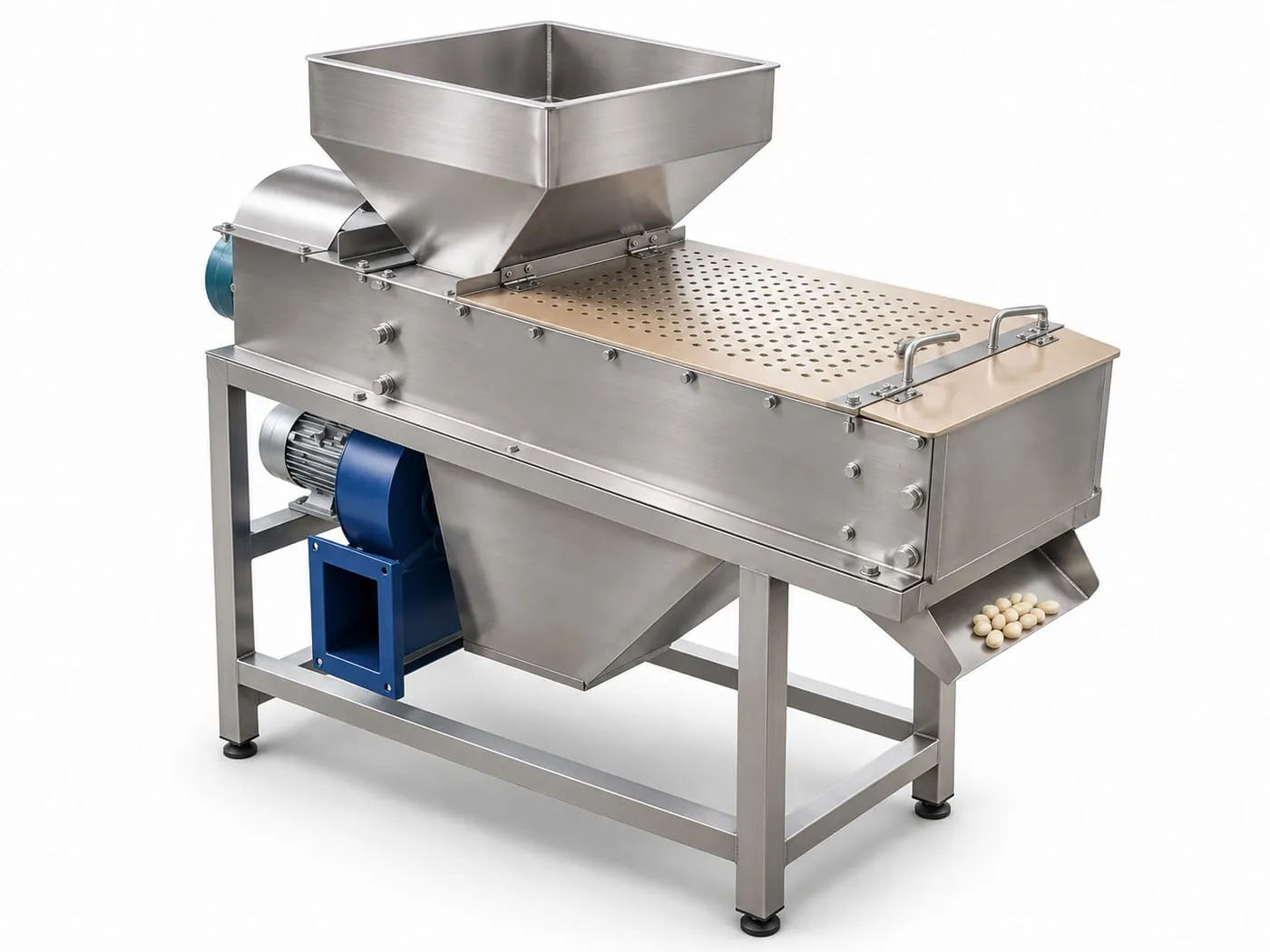
- Blanch and remove skins if you want light colour and smooth texture, using a nut skin peeling machine.
- Sort again. Remove burnt, blackened or shrivelled kernels.
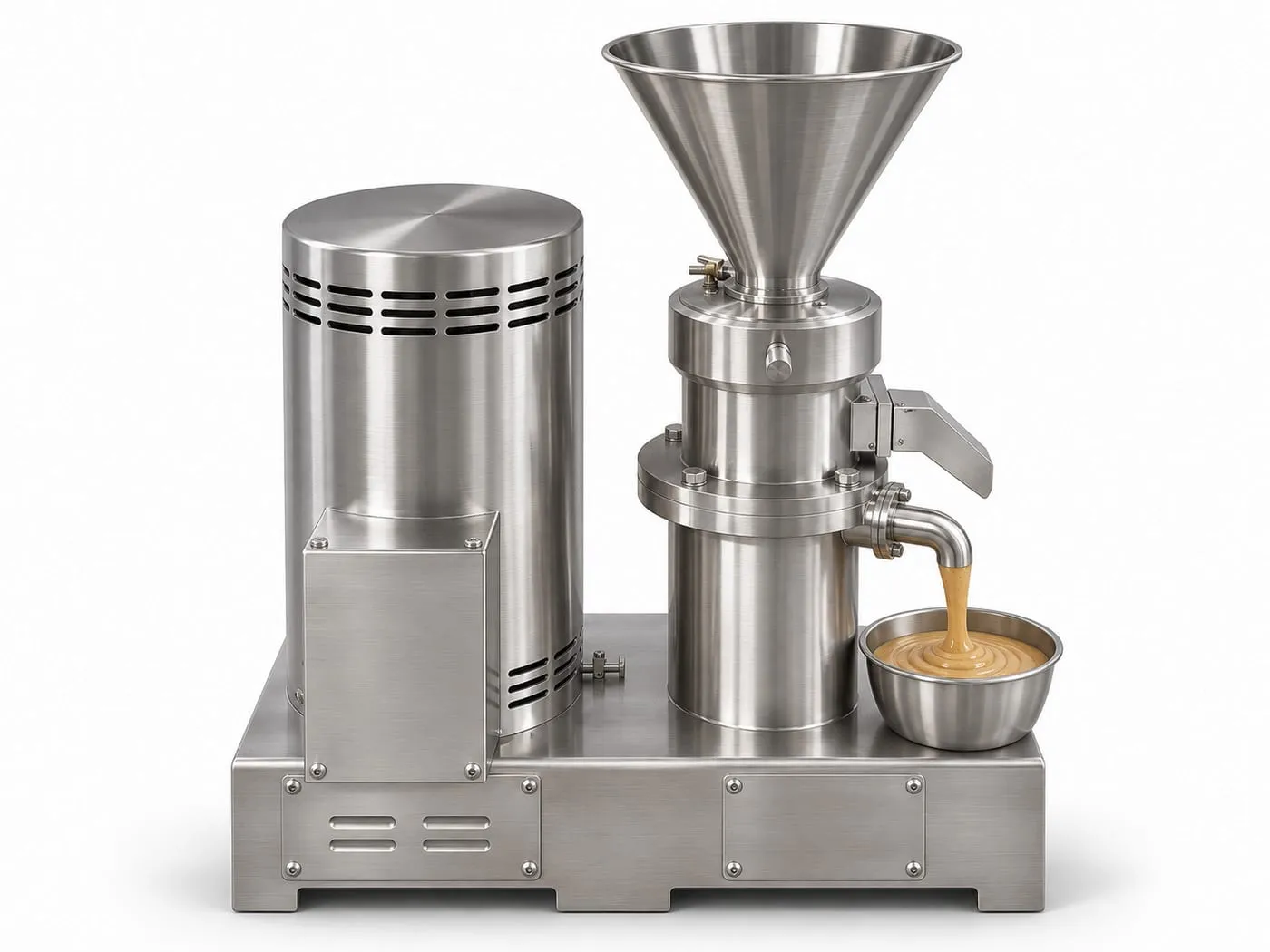
- Grind. A mill reduces nuts to paste; a colloid mill is commonly used for fine grinding.
- Mix. Salt, sugar, stabiliser or extra oil go in here.
- Cool, deaerate if needed and fill into jars or pouches.
- Inspect and pack. Metal detection, labelling and cartons.
Our nut butter production line page shows how these stations connect, and the peanut butter plant guide covers layout.
Aflatoxin: the risk that decides your quality system
Groundnuts can carry aflatoxin from the field or from poor storage. A practical guide written for small processors lists the steps where risk enters: sorting before warehousing, storage conditions (rained on, stored on the ground, unventilated sacks and bags), sorting after shelling, roasting, sorting after roasting and grinding. If moulded kernels are allowed into the mill, they can contaminate the whole batch. FAO’s HACCP example for commercial peanut butter in southern Africa notes that roasting can reduce aflatoxin by roughly a fifth to a third, depending on operating conditions, so roasting is good practice but does not replace sorting and testing.
What this means for equipment and layout:
- Keep raw nuts and roasted nuts in separate areas.
- Plan sorting capacity before and after roasting, by hand, belt or optical sorter.
- Store dry, ventilated and off the floor.
- Check your national limit and ask your food-safety authority what testing it expects. This differs between countries, so confirm before you build.
Sizing capacity
- Start from sales. Estimate jars per day, multiply by fill weight, and you have kilograms of butter per day.
- Convert to nut input. For pure peanut butter the nut input is close to the output; recipes with sugar, salt or added oil use less nuts per kilogram of product.
- Allow for losses. Skins, rejects and burnt kernels reduce yield.
- Think in hours per shift. A plant running one shift for a small market can be a very different size from a plant supplying supermarkets.
- Check the mill, not just the roaster. Grinding heats the paste, so mills need cooling and a controlled feed rate.
What drives the cost
| Cost driver | Why it matters | How to keep it sensible |
|---|---|---|
| Output | Bigger roaster, mill and filler raise the price | Start at the first-year market, leave space for more |
| Skin removal | Needed for light, smooth butter; not for rustic styles | Decide your product style first |
| Automation | Manual transfer versus pumped and pre-set lines | Match to local labour cost |
| Packing format | Jars, pouches and sachets use different fillers | Choose the format your customers buy |
| Safety add-ons | Sorters, metal detection | Treat as part of the plant, not optional |
| Site | Power, cooling water, building finishes | Share your site data early |
Very small hand-fed units suit a micro-business selling locally; a plant that supplies retailers needs a more controlled line with sorting, metal detection and documented hygiene.
Markets and routes to start
- Kenya, Ghana and Nigeria: groundnuts are grown in these countries, so check local supply by season; focus on a consistent, tested supply and clean storage.
- South Africa: retailers and food service buyers will ask about food-safety systems and labelling; plan documentation early.
- Branding: peanut butter sells on taste and trust; invest in jar or pouch design and labelling that meets your national rules.
- Co-packing: if you supply other brands, ask what they need for allergen control, as peanuts are a major allergen.
A sizing example
Suppose you plan to sell 1,000 jars of 400 g per day. That is 400 kg of peanut butter. A recipe of nuts, salt and a little oil needs a little less than 400 kg of roasted kernels, and rather more in raw weight once you allow for skins, rejects and burnt kernels. If you run one shift of six productive hours, the line must handle roughly 70 kg of finished butter per hour, plus the time needed to clean between batches.
Now check each station against that figure: can the roaster turn out enough kernels per hour, can the cooler keep up, can the mill grind that weight without overheating, and can the filler fill a jar every few seconds? The weakest station sets your real capacity. This is why we ask for nut input per hour rather than a machine name.
These numbers are an illustration to show the method, not a recommendation for your plant. Your recipe, rejects and shift pattern will move them. Send us your own target and we will work back from it to a roaster, mill and filler that balance.
What to prepare for a quotation
- Nut type and origin, and a sample of kernels.
- Target output in kilograms of nuts per hour, and shifts per day.
- Product style: smooth, crunchy, blended spread, with or without skins.
- Pack format and fill weights (jar, pouch, bucket for industrial customers).
- Site: building size, power supply, water and cooling.
- Which steps you want automated, and how many operators you can hire.
- Delivery location, and whether you need installation and training.
- Food-safety requirements from your buyers or authority.
Send these to our team through the contact page. For a complete factory, see turnkey projects.
Hygiene and allergen layout
A peanut butter room should be easy to clean and kept dry. Separate the raw nut area from the roasted and ground nut area, give staff hand washing and changing facilities before the production room, and use stainless steel food-contact surfaces that can be cleaned between batches. Peanuts are a major allergen in most markets, so plan clear labelling, and if you ever process other products on the same equipment, plan thorough cleaning and separation. Ask us to show the flow of people, nuts and packaging on a layout drawing before you build.
Mistakes to avoid
- Buying a mill first and a roaster later. The line needs balanced capacity; one machine that is too big or too small throttles the rest.
- Skipping the second sorting step. Burnt or damaged kernels after roasting spoil flavour and colour.
- No plan for oil separation. Natural peanut butter separates; decide on stabiliser or a stirring step.
- Packing in the wrong container. Glass, PET and pouches need different filling and capping equipment.
- Forgetting allergen labelling and cleaning rules. Peanuts are a major allergen in most markets.
Frequently asked questions
- What machines do I need to make peanut butter?
- At minimum: a cleaner or sorter, a roaster, a cooler, a skin remover (blancher) if you want smooth light butter, a grinding mill, a mixing and cooling tank, and a filling and capping machine. Many plants also add a metal detector before filling.
- How much does a peanut butter plant cost?
- The cost depends on output, how much is automated and the packing format. Public figures vary widely and are mostly from templates and listings, so we quote per project once we know your nut supply, output per hour and jar or pouch format.
- How do I size the plant?
- Work back from sales: expected jars per day times fill weight gives kilograms of butter, and nut input is close to that for pure peanut butter. Blended spreads with sugar, salt or oil weigh more per jar than the nuts used, so count the recipe.
- How do I control aflatoxin?
- Buy from suppliers who test lots, sort out damaged and mouldy kernels after shelling and again after roasting, store nuts dry and off the ground, and keep records. Roasting reduces aflatoxin only partly, so it is not a control step on its own. Follow your national food-safety authority for limits.
- Can I make both smooth and crunchy butter?
- Yes. Smooth butter comes from fine grinding; crunchy butter is made by mixing a coarse portion back into smooth butter. Ask for a mixing tank that can handle both.
Sources
- [1]Guide to good practices for peanut processing (AFLAH project) — Université Laval, AFLAH project
- [2]Example 4: Commercially produced peanut butter, Southern Africa (HACCP and mycotoxin control) — Food and Agriculture Organization of the United Nations
HNFODA Applications Engineering
Line design, product trials and commissioning
Engineers who size, build and commission HNFODA food processing lines, writing from the questions buyers ask before a quotation. About HNFODA