Bakery & Snack Food
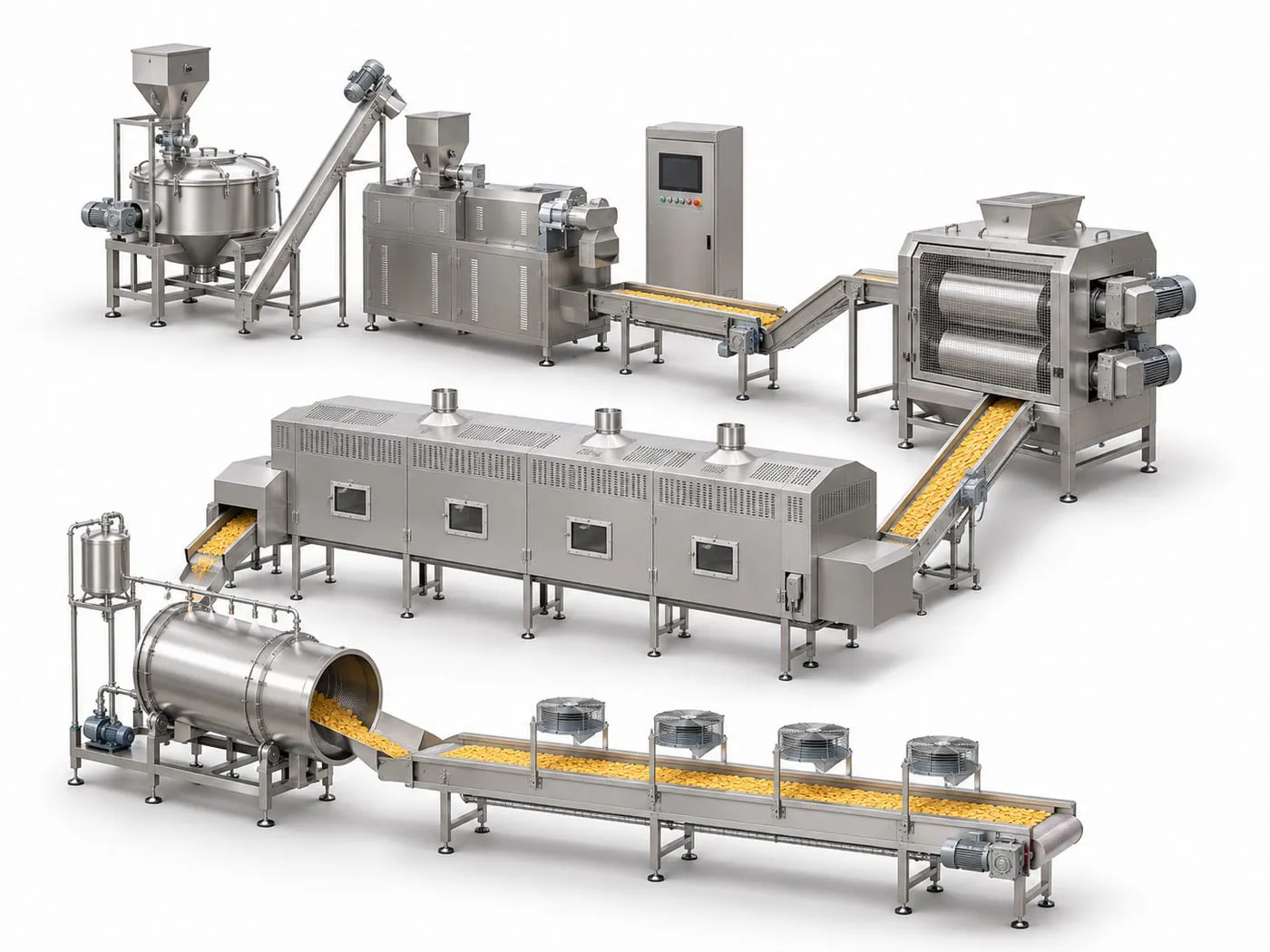
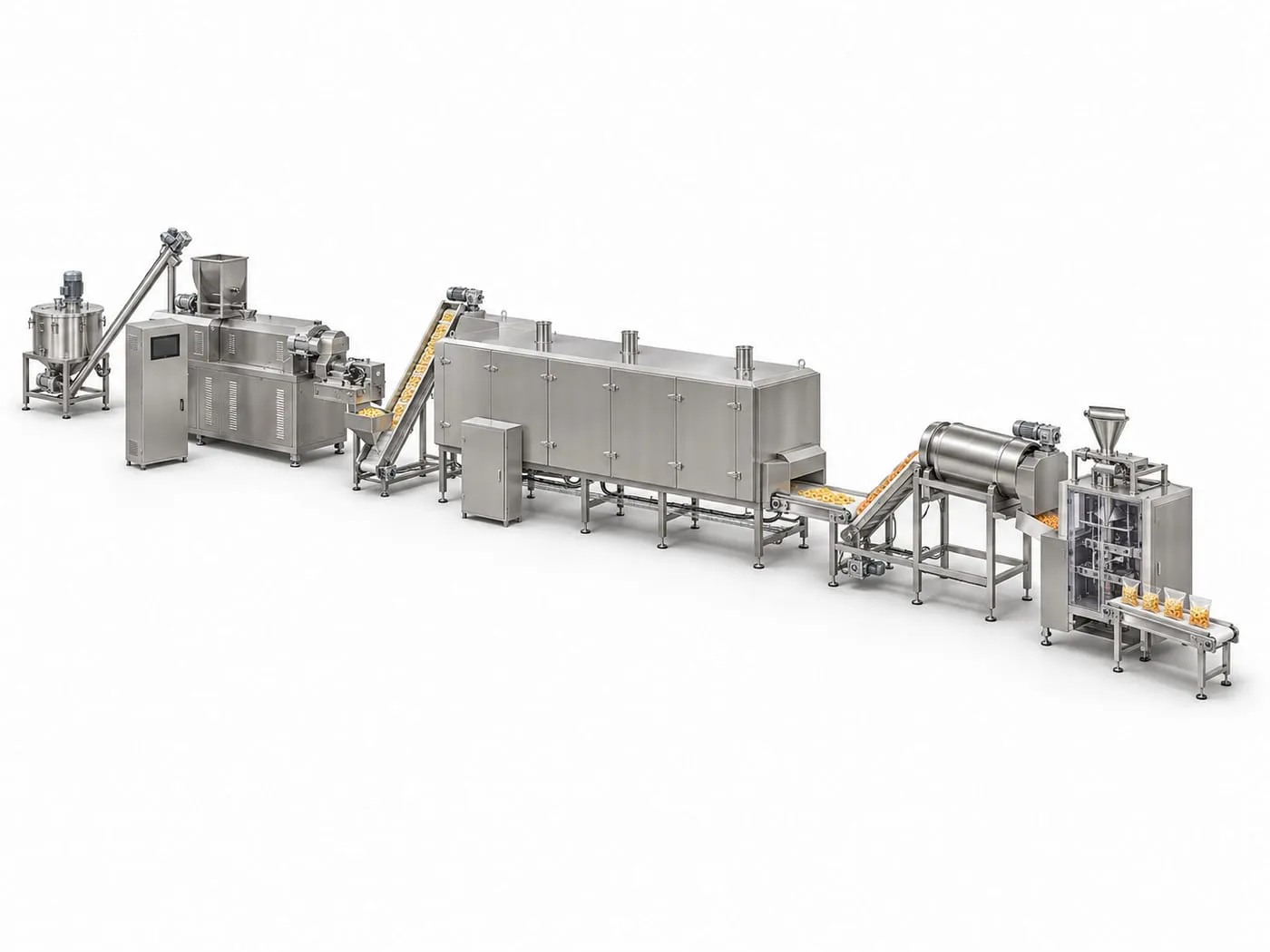
Extruded Snack Production Line
Snack brands and contract manufacturers making corn puffs, cereal shapes and snack pellets.
Sized to extruder throughput (kg/h of dry mix) with finished output stated separately

05 · Bakery & Snack Food — Production line
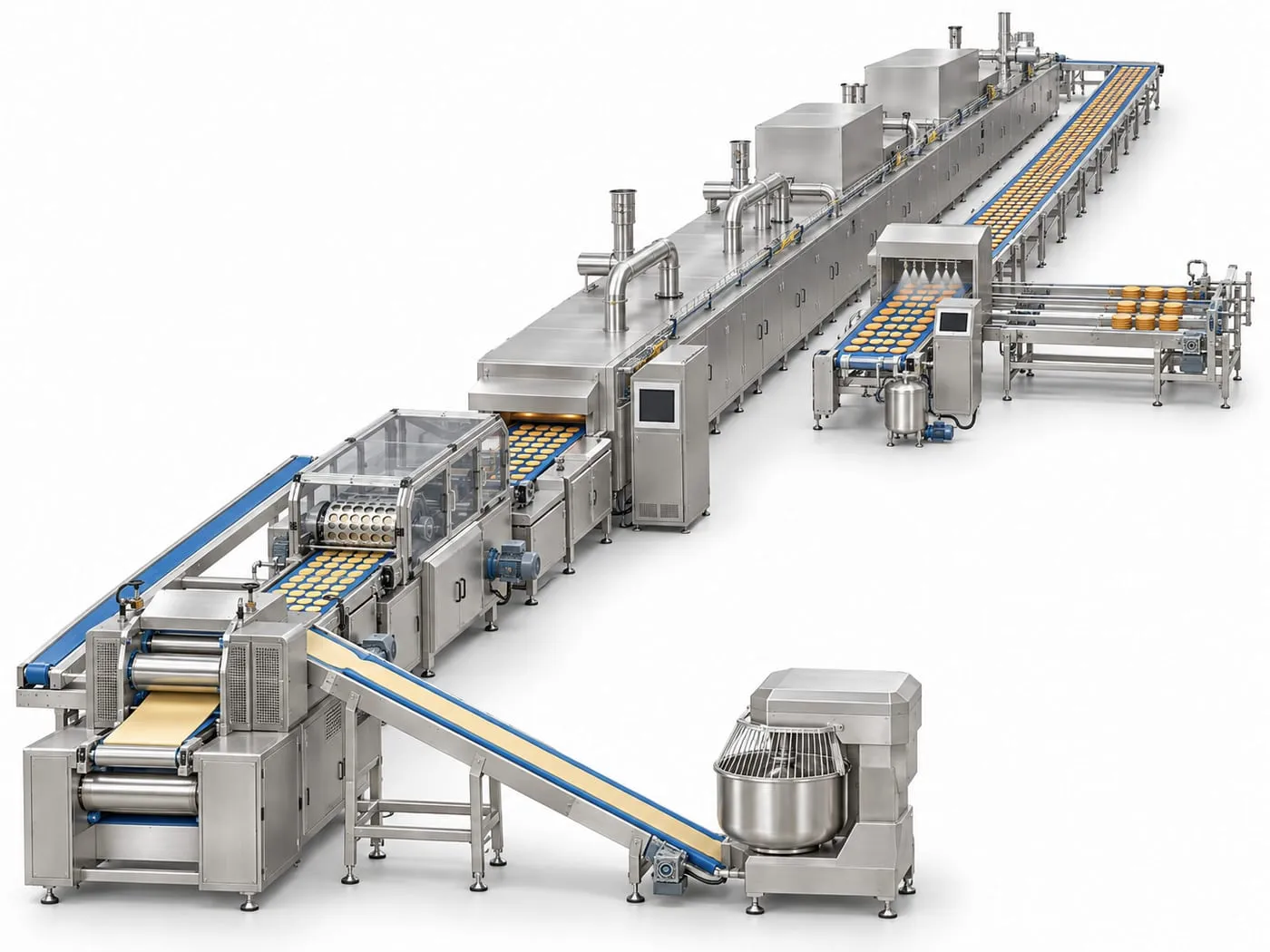
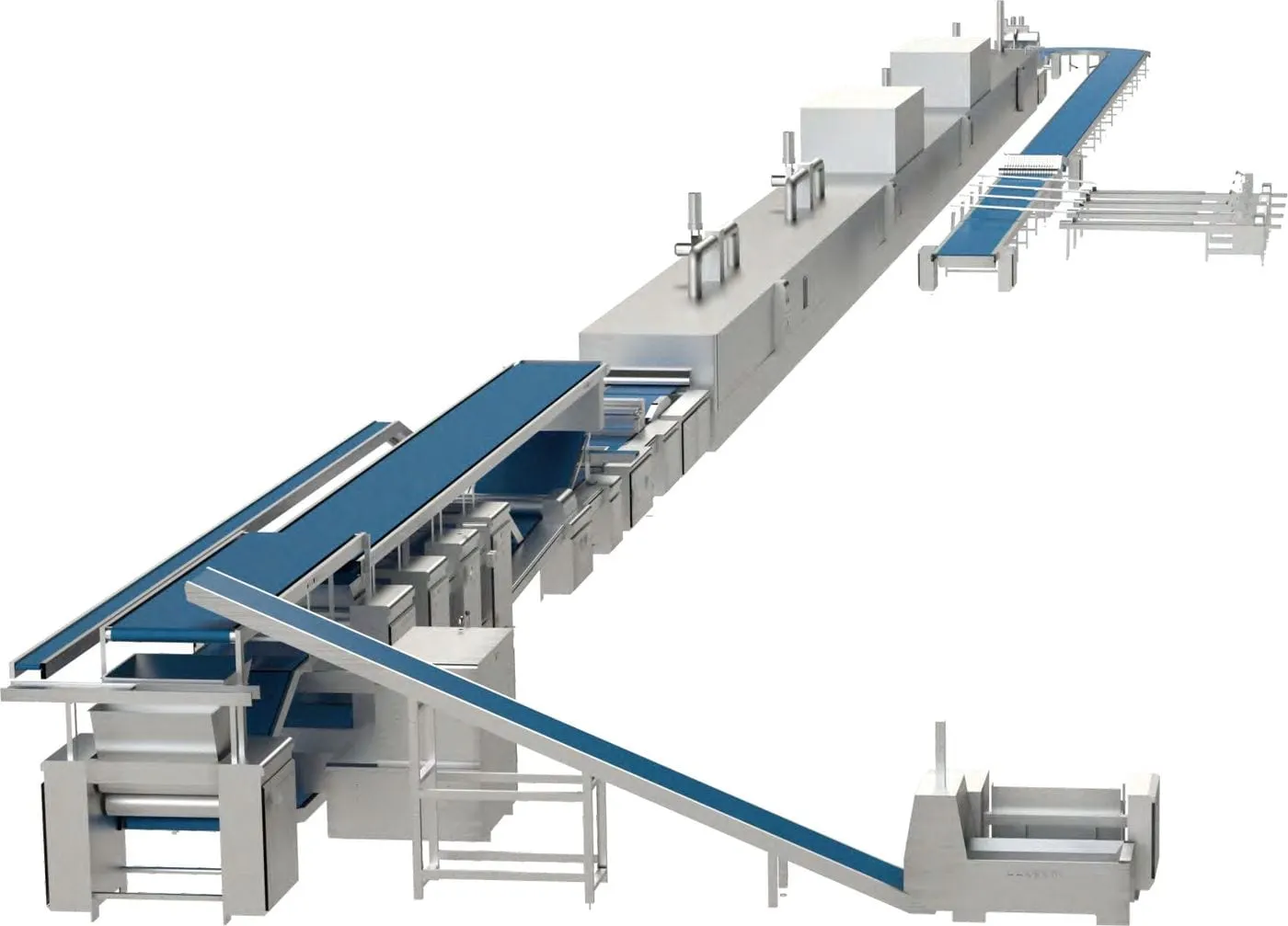
Links ingredient handling, dough mixing, forming, tunnel baking, cooling and packing for hard biscuits, soft biscuits or cookies.
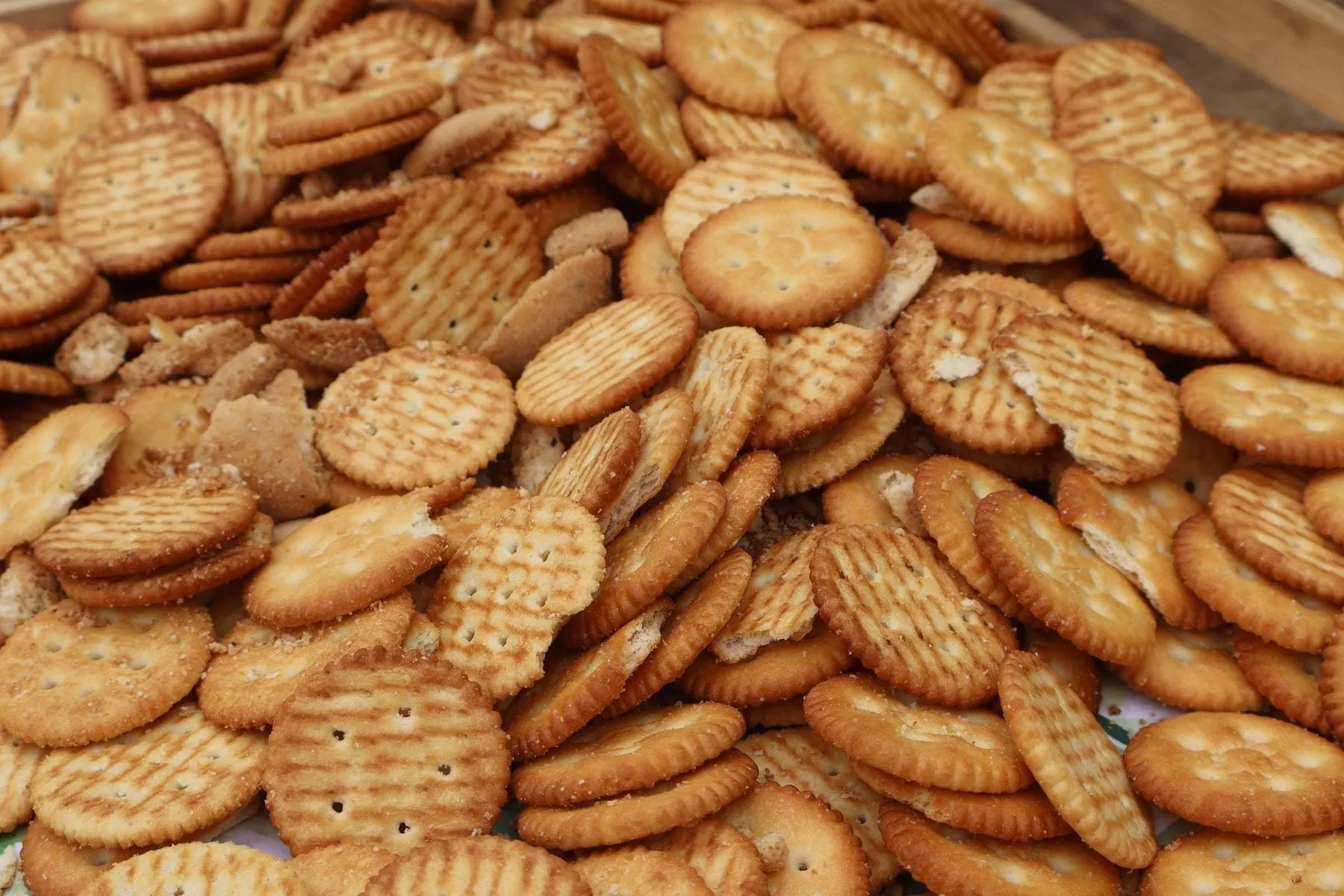
Short answer: A biscuit production line mixes the dough, forms it into pieces, bakes them in a tunnel oven, cools them and sends them to stacking and packing. The dough type (hard, soft or cookie) sets the forming method, and the biscuit thickness and bake profile set the oven length and cooling conveyor.
| Form | Suits | Watch out for |
|---|---|---|
| Sheet-and-cut | Crackers, hard sweet biscuits | Dough rest and lamination time |
| Rotary moulding | Short-dough, printed biscuits | Dough must be consistent; one mould roll per design |
| Cookie depositing | Soft cookies, inclusions | Spread on the band, piece weight control |
A cooling conveyor that is too short is a frequent cause of checking (fine cracks) in biscuits after packing, so it is sized together with the oven rather than as an afterthought.
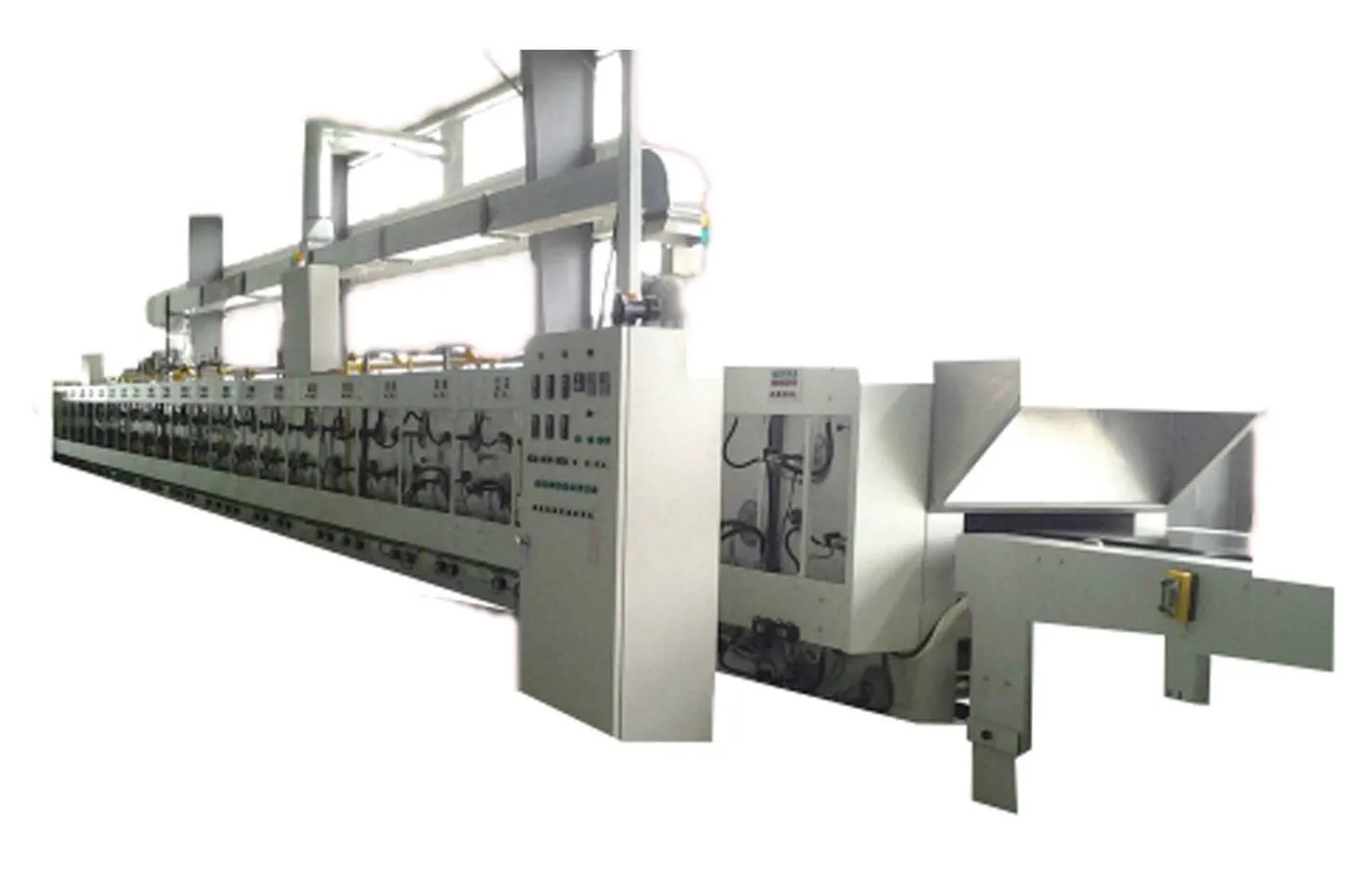
The central piece is the tunnel oven. Flour can come from a grain milling line or bulk storage. After cooling, biscuits may be sandwiched or coated, then packed and checked with a food metal detector and an in-line checkweigher. For wafer products see the wafer biscuit production line.
Hard dough sheet-and-cut
an elastic dough is laminated, gauged and cut, for crackers and hard sweet biscuits.
Soft dough rotary moulding
a short, crumbly dough is pressed into engraved roller cavities, for shortbread-type and printed biscuits.
Cookie depositing
a soft dough is extruded or wire-cut onto the band, for cookies and biscuits with inclusions.
Our engineers check these points with you, so the quotation fits your site rather than a catalogue default.
Yes, many lines combine a sheeter and cutter with a rotary moulder, and sometimes a depositor, all feeding the same oven. The oven and cooling conveyor are shared, so we size them for the most demanding product.
It depends on local energy prices and supply, and on the bake profile. Gas is common for larger lines; electric gives simple control and is often chosen where gas supply is limited.
Product samples or photos, recipes, the biscuit size and weight, target output, pack format and a floor plan with utilities. A line layout is drawn from these before the quotation is finalised.
Tell us your raw material, finished product and target output. Our engineers reply with a matched configuration and quotation.
What to send with your inquiry
Email sales@hnfoda.com
How food machinery distribution works: what dealers get from a factory, what factories expect, territory, spare parts, service and how to start.
Set up a biscuit factory: equipment list from mixer to packing, layout flow, hard vs soft dough, what drives cost, and a checklist for a quotation.
Bakery & Snack Food
Snack brands and contract manufacturers making corn puffs, cereal shapes and snack pellets.
Sized to extruder throughput (kg/h of dry mix) with finished output stated separately
Bakery & Snack Food
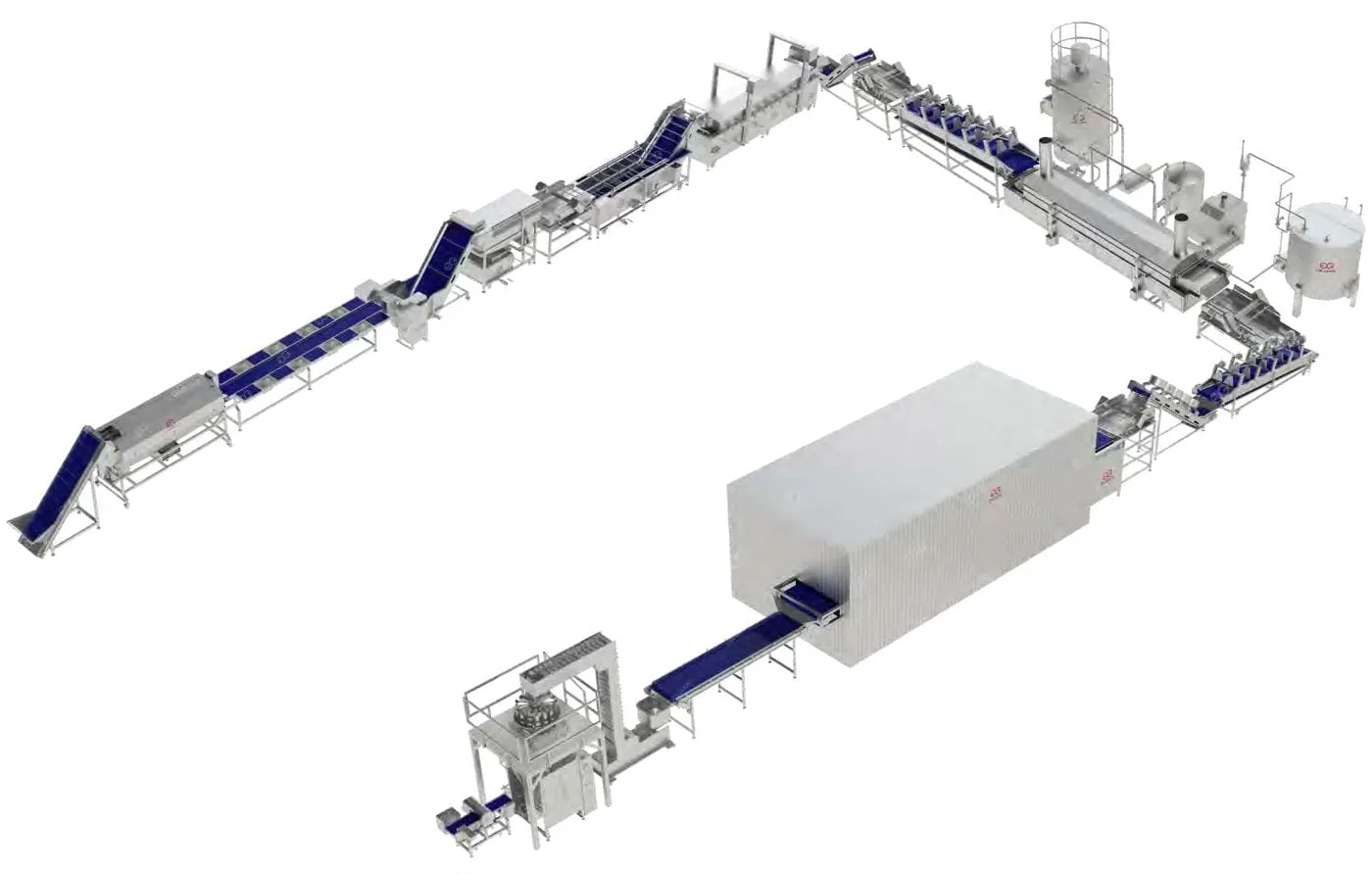
Potato snack brands, frozen fries producers and agricultural investors near potato growing areas.
Sized to fresh potato input (kg/h) with finished output stated separately
Bakery & Snack Food
Breakfast cereal brands, private-label packers and snack plants adding corn flakes or coated cereals.
Sized to finished cereal output (kg/h) for a set flake thickness
Bakery & Snack Food
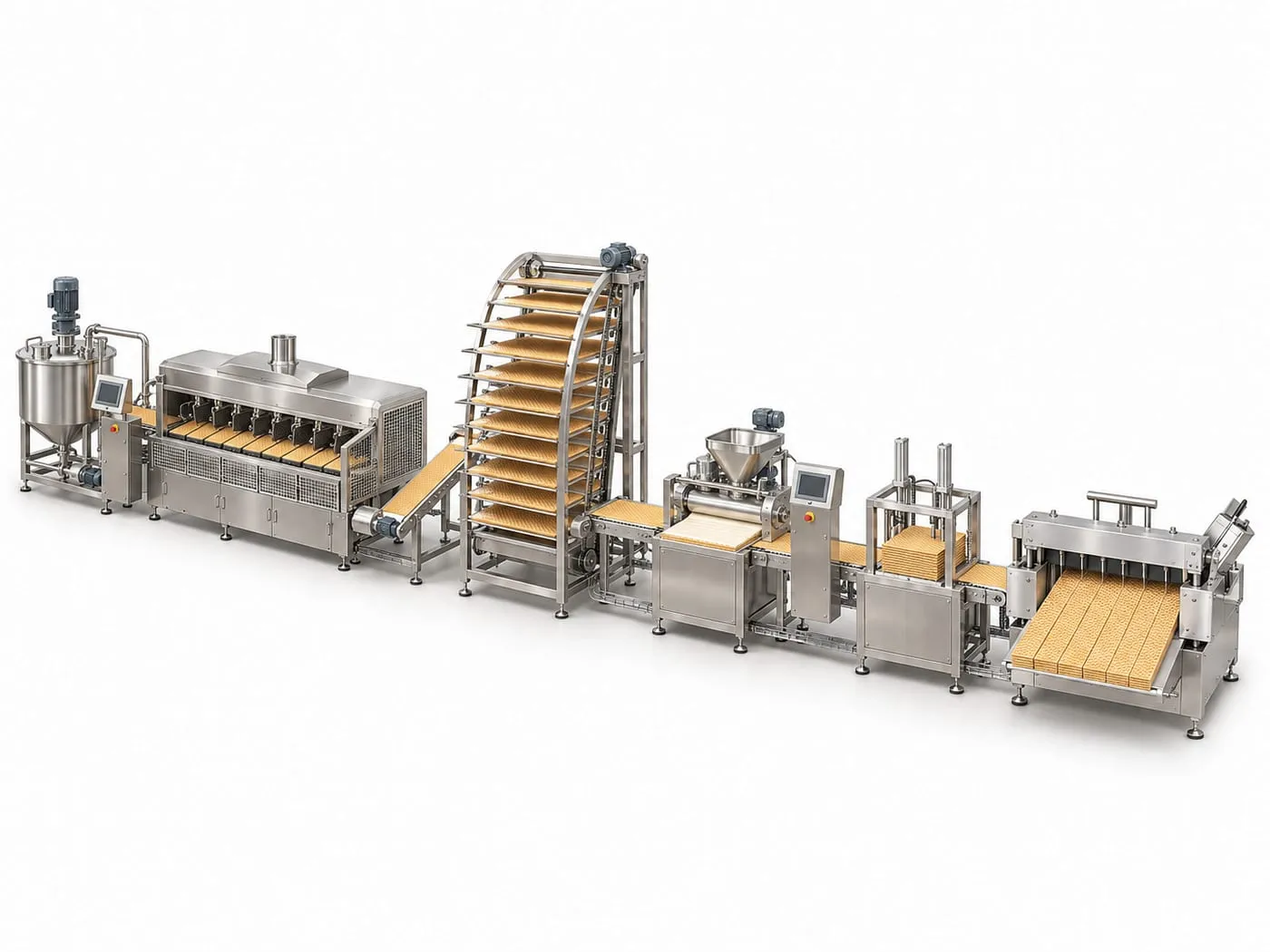
Confectionery and biscuit plants making cream wafers, wafer bars and coated wafer products.
Sized to baked wafer sheets per hour at a set sheet size