Bakery & Snack Food
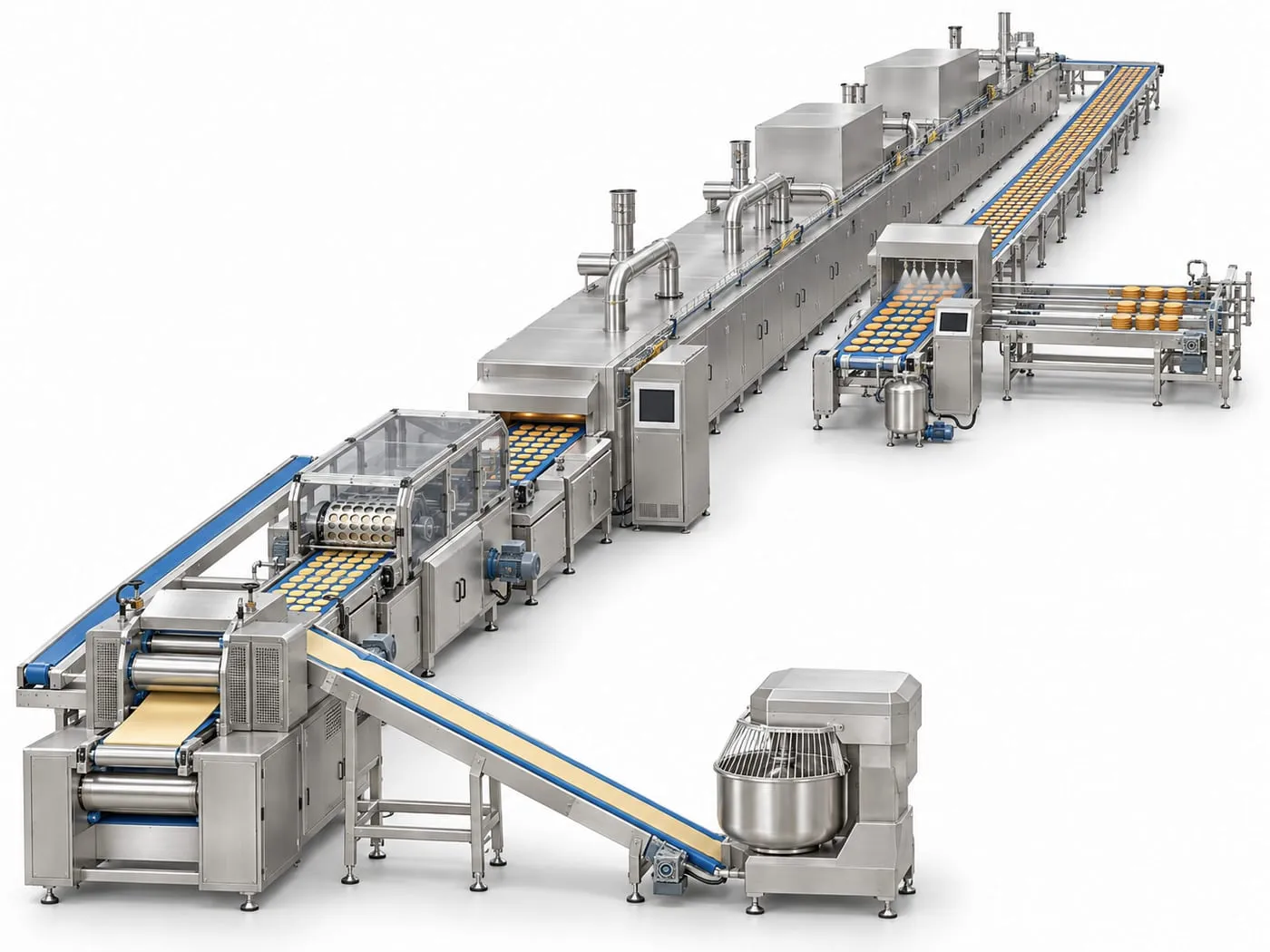
Biscuit Production Line
Biscuit factories, private-label bakeries and investors entering packaged biscuits.
Sized to baked biscuits per hour (kg/h of finished product) for a given size and weight

05 · Bakery & Snack Food — Equipment
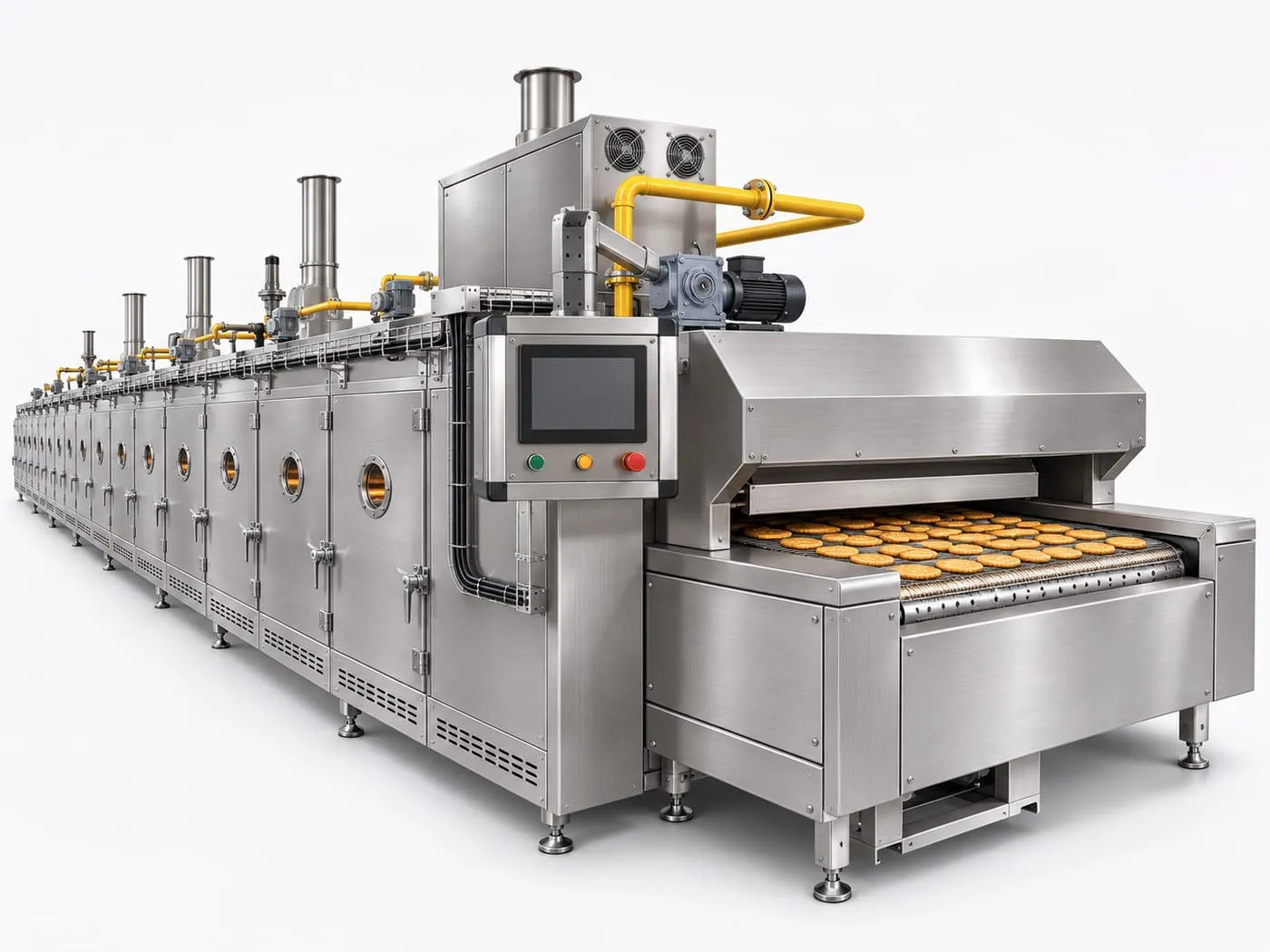
A continuous oven that carries products on a band through heating zones, each set to its own temperature, for steady industrial baking.
Short answer: A tunnel oven is a long continuous oven in which a band carries the product through several heating zones, each with its own temperature and airflow. The baking profile of your product, the band width you need and the energy source on site decide the oven length, zone layout and firing type.
The oven has an infeed end, a series of insulated baking zones, a band (steel or mesh) driven by drums at both ends, burners or electric elements, exhaust fans and dampers, and a control panel.
Each zone’s top and bottom heat can usually be set separately, which is how one oven handles different products.
| Form | Suits | Watch out for |
|---|---|---|
| Gas fired | Large ovens, low gas cost | Gas supply, burner servicing |
| Electric | Sites without gas, simple control | Higher energy cost in many regions |
| Direct firing | Biscuits, crackers | Combustion gases in the chamber |
| Indirect firing | Bread, cakes, sensitive products | Slower heat-up, more complex heat exchanger |
Heating type and firing method are separate choices: a gas oven can be direct or indirect. Many lines also combine the two, with direct-fired zones at the start for fast heat and indirect or convection zones later for even colour. Insulation thickness and exhaust design have a large effect on running cost, so ask for them to be stated in the quotation.
The tunnel oven is the centre of the biscuit production line, fed by the forming section and followed by a cooling conveyor. It is also used for baked snacks and toasting stages, including on the corn flakes and breakfast cereal line. After cooling, products go to packing and a food metal detector.
Gas fired
burners heat the zones, common for larger ovens where gas is available at a good price.
Electric
heating elements in each zone, simple to control and suited to sites without gas supply.
Direct firing
burners heat the baking chamber directly for fast heat transfer, common for biscuits and crackers.
Indirect firing
hot gases circulate in radiator tubes, so combustion gases do not touch the product, often chosen for bread and cakes.
Our engineers check these points with you, so the quotation fits your site rather than a catalogue default.
Oven length follows from bake time and band speed. Band speed is set by the output you need and how many pieces fit across the band. We calculate it from your product size, weight and baking time.
A solid steel band gives a flat base and suits biscuits and crackers. Mesh bands let heat reach the underside more directly and suit products that need more bottom heat or must release moisture underneath.
Direct firing heats faster and is common for biscuits. Indirect firing keeps combustion gases away from the product and gives gentler, more even heat, often used for bread and cakes.
Tell us your raw material, finished product and target output. Our engineers reply with a matched configuration and quotation.
What to send with your inquiry
Email sales@hnfoda.com
Set up a biscuit factory: equipment list from mixer to packing, layout flow, hard vs soft dough, what drives cost, and a checklist for a quotation.
Bakery & Snack Food
Biscuit factories, private-label bakeries and investors entering packaged biscuits.
Sized to baked biscuits per hour (kg/h of finished product) for a given size and weight
Bakery & Snack Food
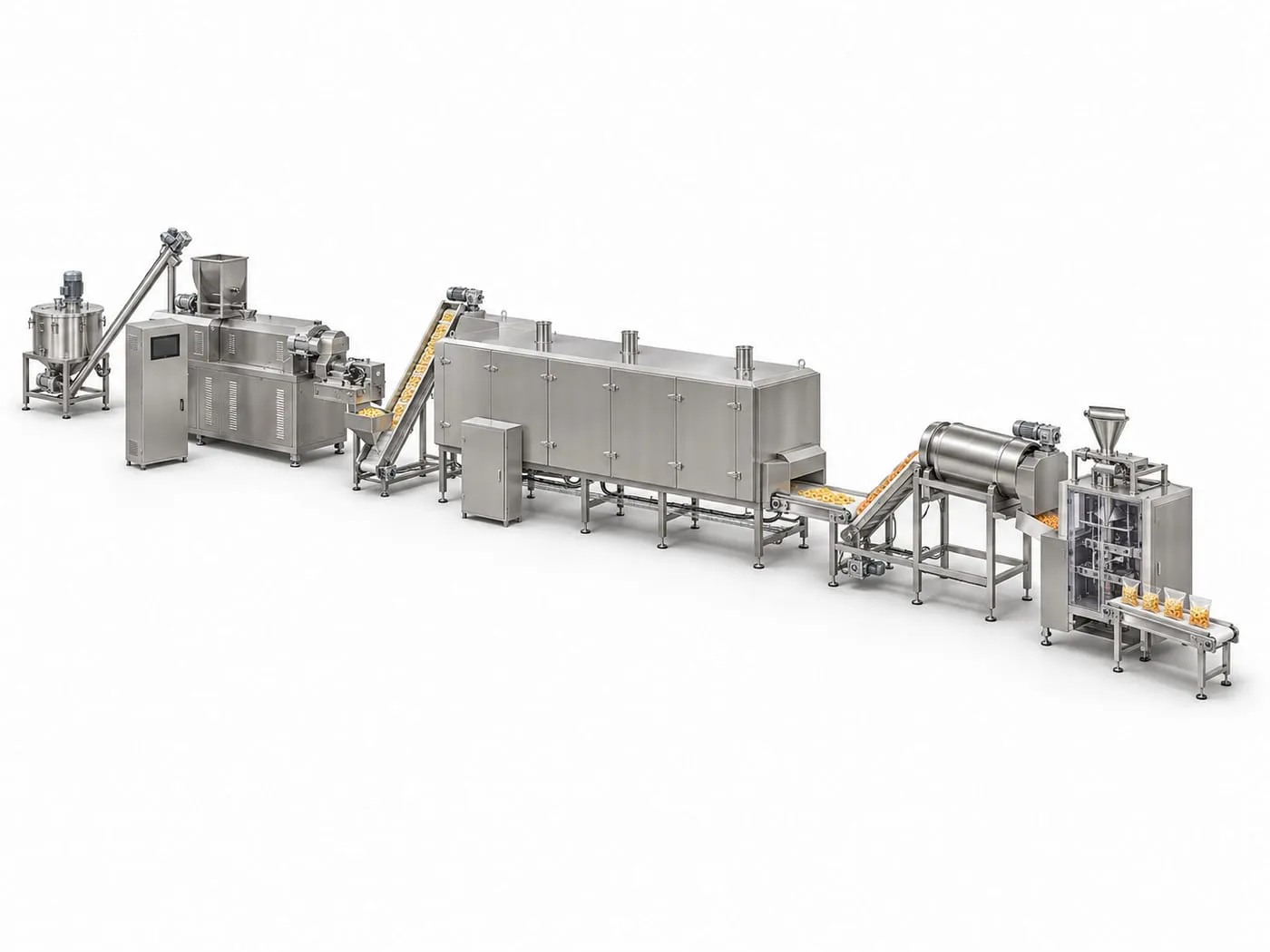
Snack brands and contract manufacturers making corn puffs, cereal shapes and snack pellets.
Sized to extruder throughput (kg/h of dry mix) with finished output stated separately
Bakery & Snack Food
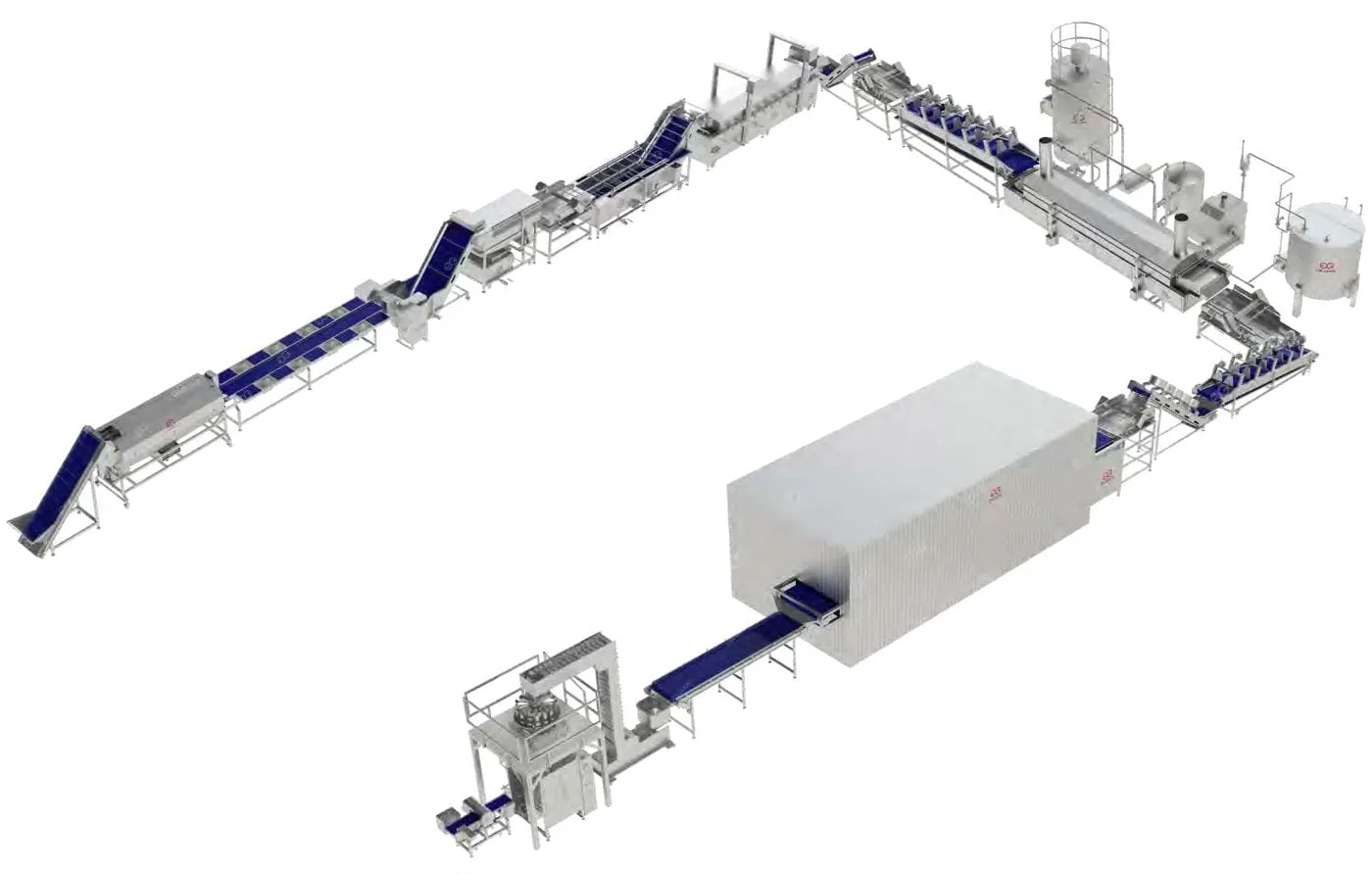
Potato snack brands, frozen fries producers and agricultural investors near potato growing areas.
Sized to fresh potato input (kg/h) with finished output stated separately
Bakery & Snack Food
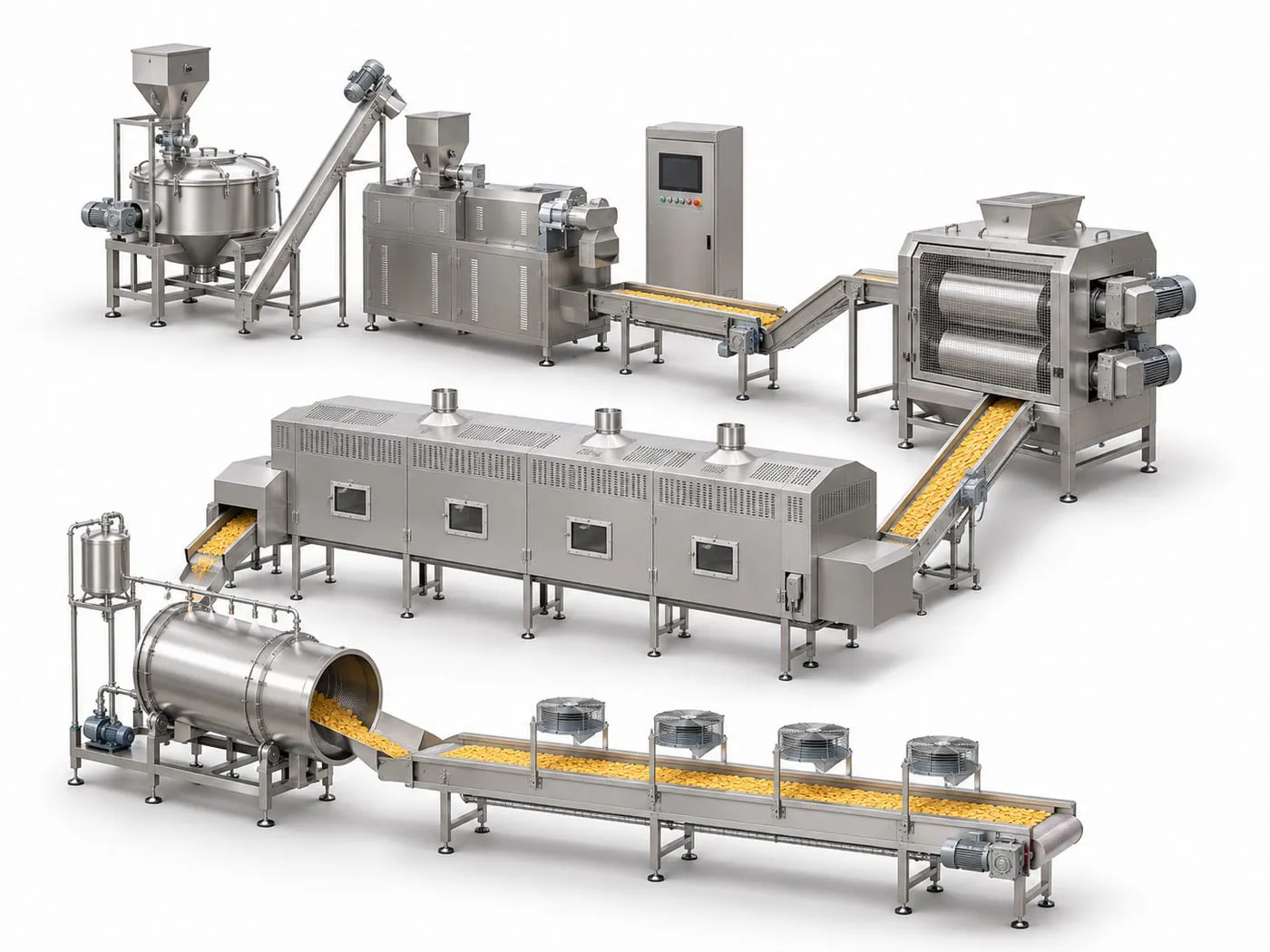
Breakfast cereal brands, private-label packers and snack plants adding corn flakes or coated cereals.
Sized to finished cereal output (kg/h) for a set flake thickness