Guides
Biscuit Factory Setup: Equipment List, Layout and Cost
Set up a biscuit factory: equipment list from mixer to packing, layout flow, hard vs soft dough, what drives cost, and a checklist for a quotation.
- Prepared by
- HNFODA Applications Engineering
- Topic
- Guides
- Published
- Reading time
- 6 min read · 2 sources
On this page
- 01The equipment list, station by station
- 02The dough decides the forming machine
- 03Layout: let the product flow one way
- 04What drives the cost
- 05Choosing capacity and range
- 06Notes for Kenya, Nigeria, Ghana, India and the Philippines
- 07Phasing the investment
- 08What to prepare for a quotation
- 09Mistakes to avoid
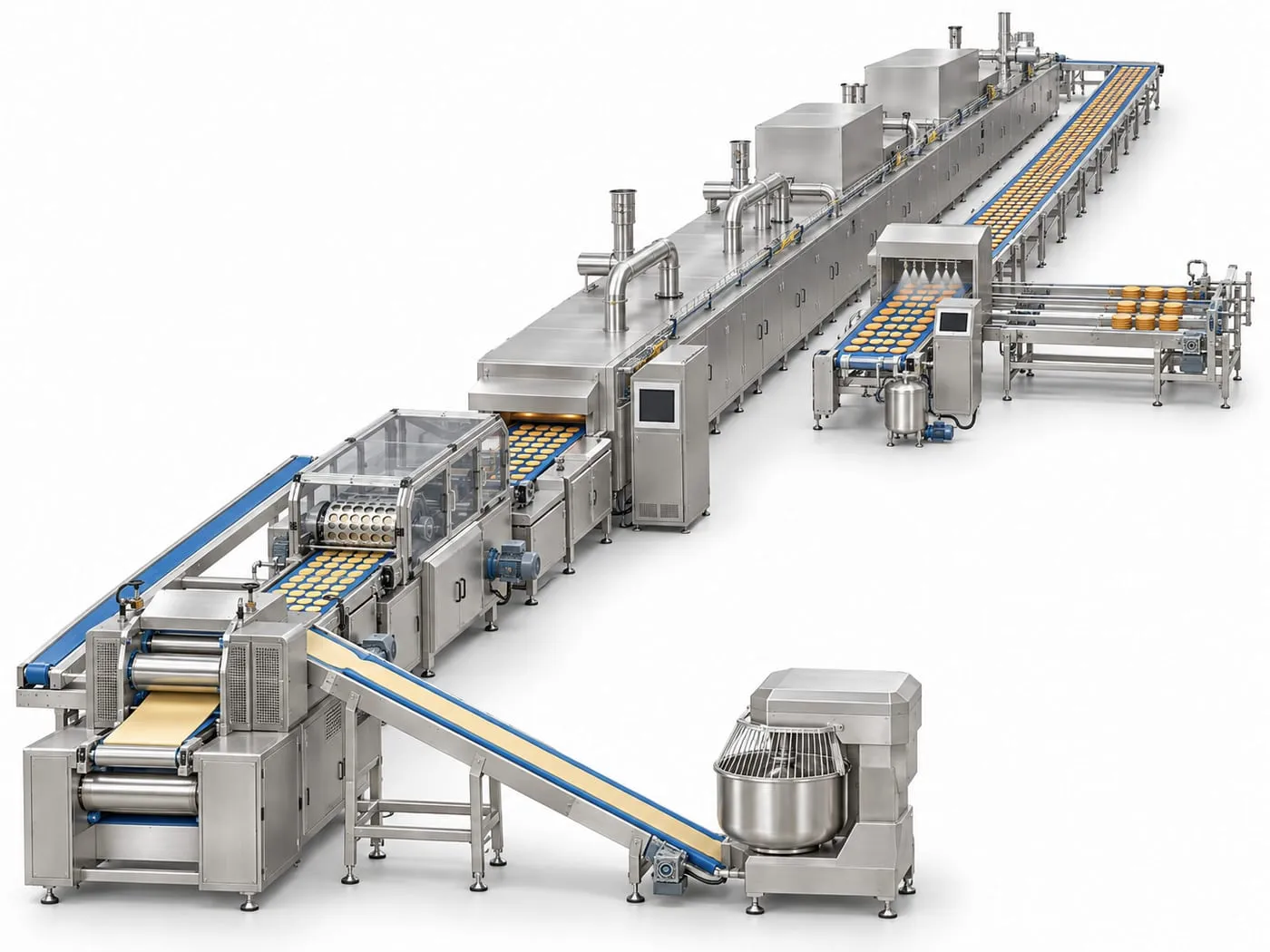
Short answer: a biscuit factory runs as a chain: ingredient handling, mixing, forming, baking, cooling and packing. The forming machine depends on your dough type, and the tunnel oven and packing section usually set the capacity and much of the cost. Decide your product range, output per hour and pack format first; then plan the line, the layout and the utilities around them.
The equipment list, station by station
- Ingredient handling. Bagged flour, sugar and fat arrive, are stored and then weighed. Small plants weigh by hand; larger plants use silos or bag tippers and automatic dosing.
- Mixing. A mixer brings flour, sugar, fat and water into a dough. The FAO small-scale fact sheet stresses that biscuit dough must be well mixed to form a dough that is uniform, which is why the mixer type and mixing time matter for consistency.
- Forming. The dough is shaped. Biscuit dough is rolled out to a thin sheet, around 4–5 mm in the small-scale guide, and cut with shaped cutters. In a factory this is done by machine. See below for forming options.
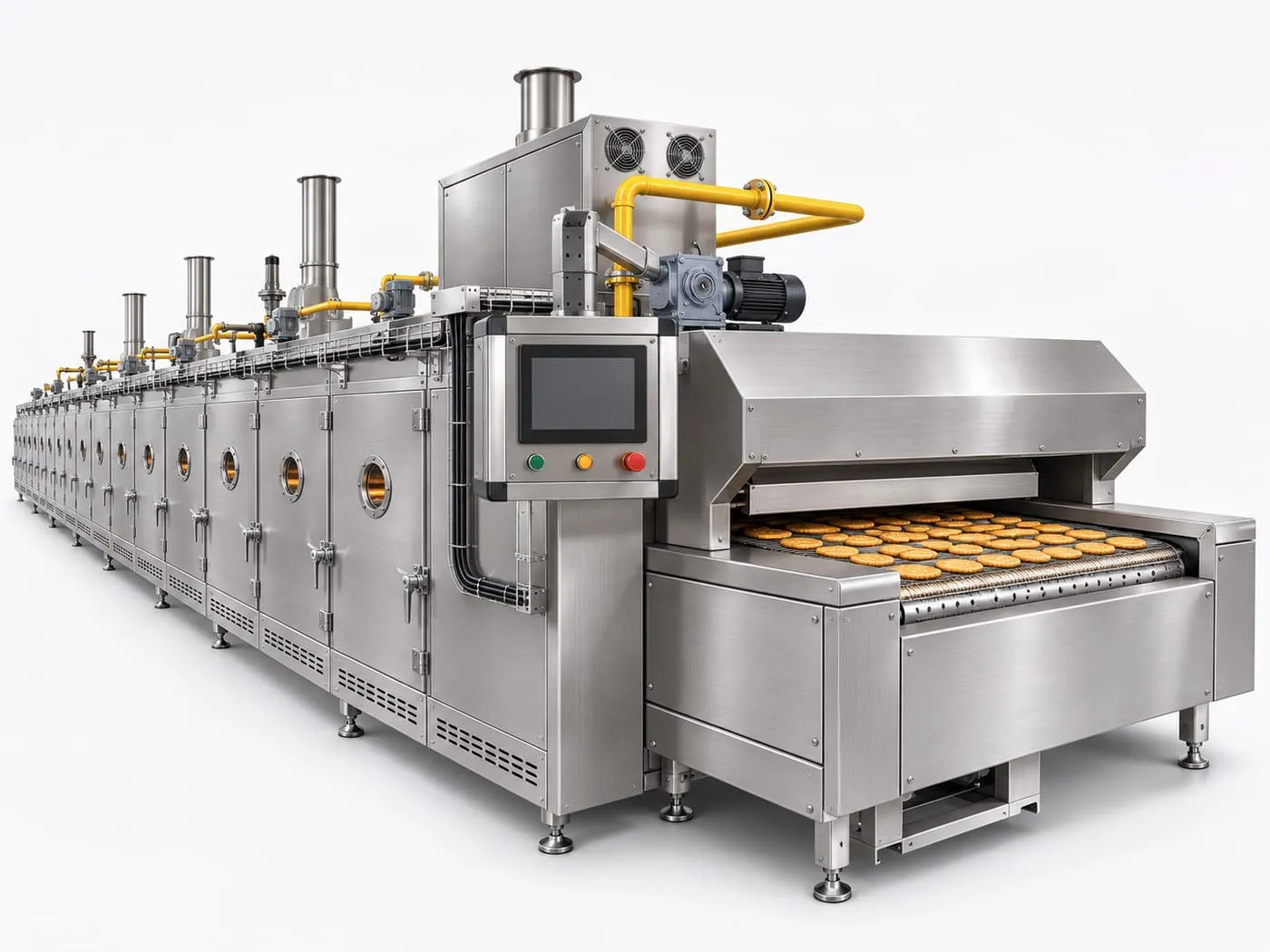
- Baking. A tunnel oven carries pieces on a band through heating zones; temperature, time and product thickness set the bake.
- Cooling. A long cooling conveyor brings biscuits to packing temperature. FAO’s guide advises cooling biscuits fully before packing them in moisture-proof bags, because warm product left in a closed pack gives condensation.
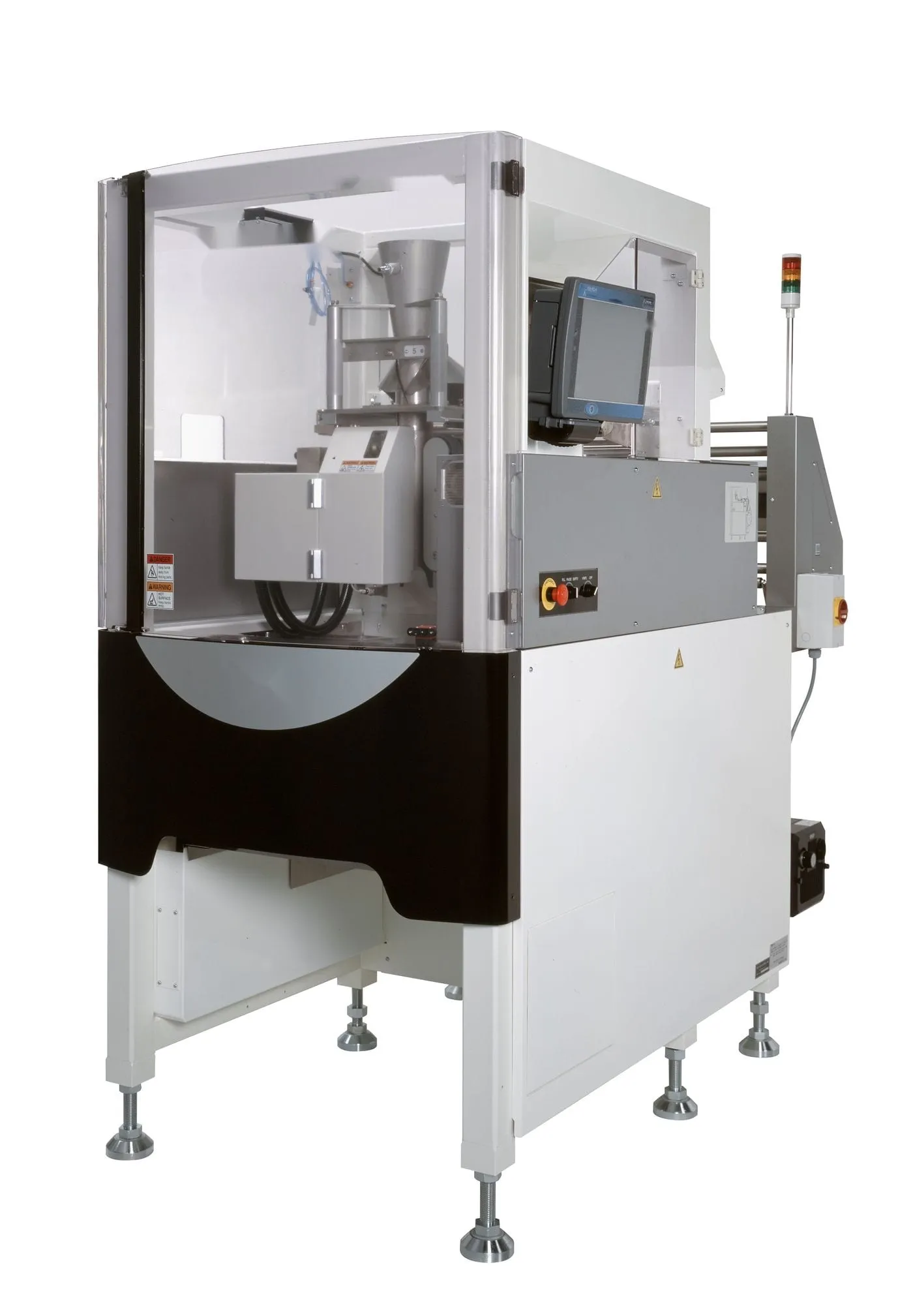
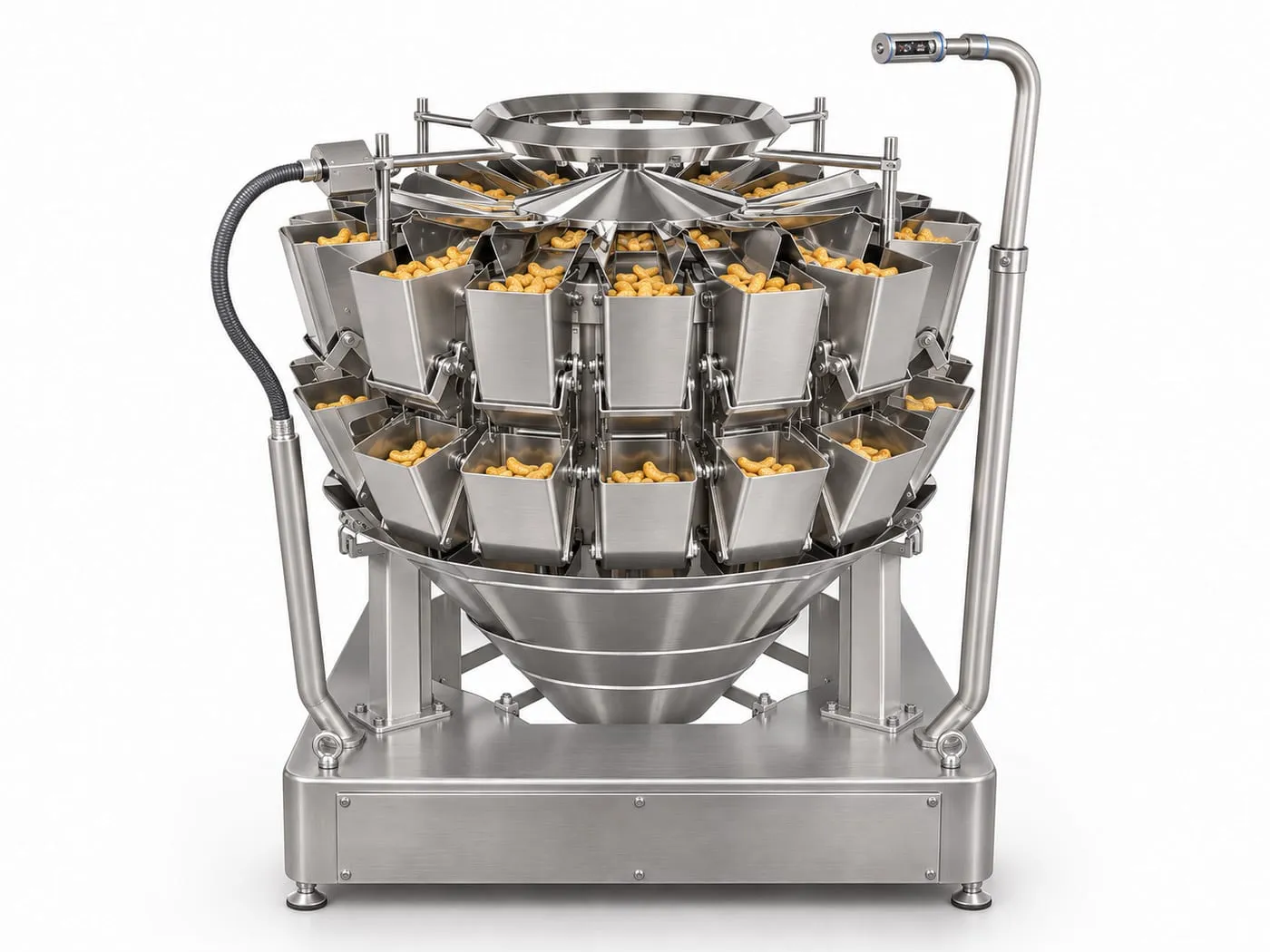
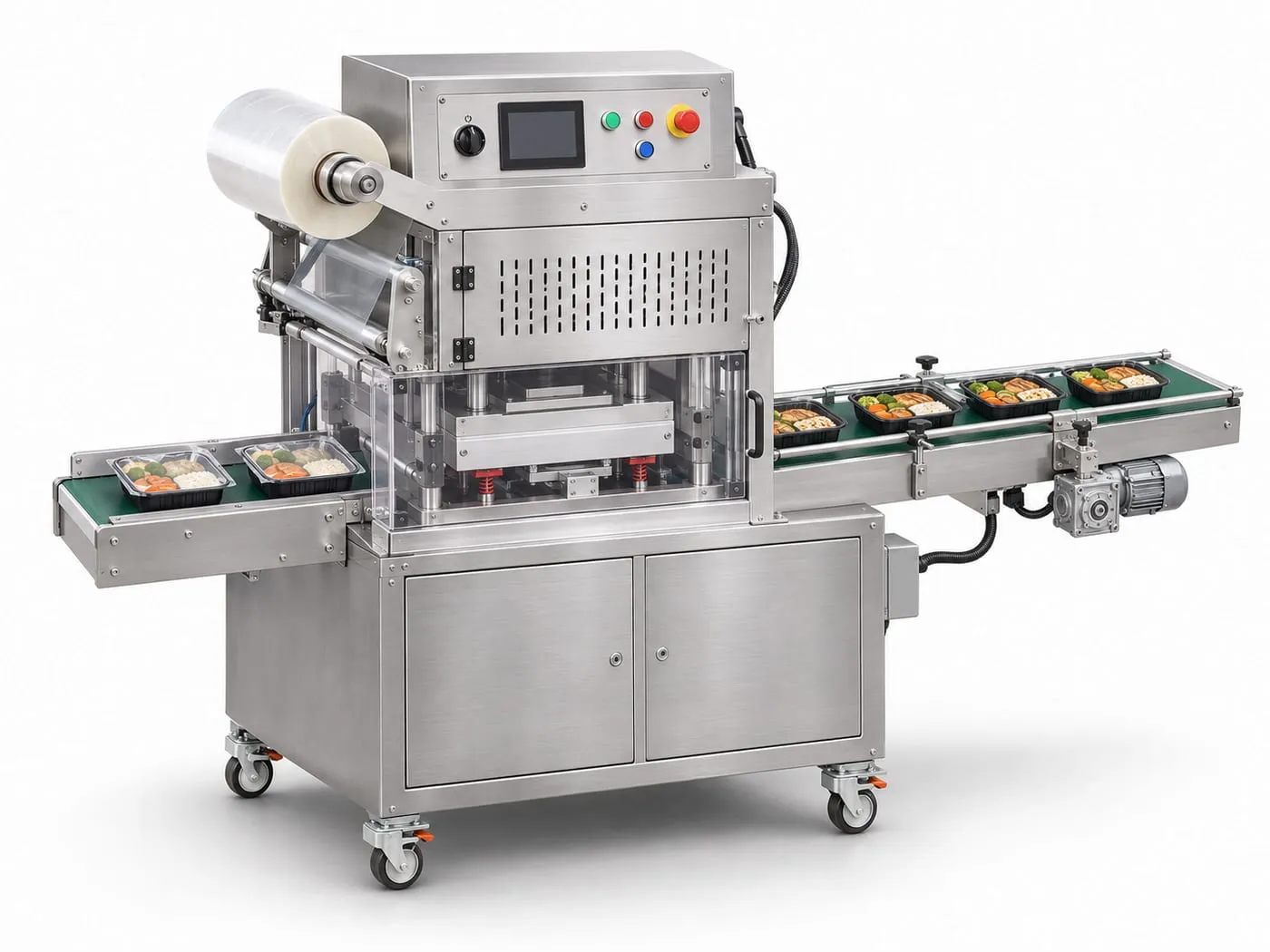
- Stacking and packing. Flow wrap, trays, cartons. A vertical form-fill-seal machine packs loose biscuit snacks or small biscuits; a multihead weigher doses by weight; a tray sealer suits tray packs.
- Cartoning, coding and inspection. Date coding, metal detection where required, and case packing.
Our biscuit production line page shows how these fit together, and the biscuit and snack plant guide covers layout and food safety flow.
The dough decides the forming machine
| Dough type | Forming method | Typical products | Notes |
|---|---|---|---|
| Hard, elastic | Laminating, gauging rolls and rotary cutter | Crackers, hard sweet biscuits | Needs rolled sheet and scrap return |
| Short, crumbly (soft) | Rotary moulder with engraved rolls | Shortbread type, printed biscuits | Pattern is engraved in the roller |
| Soft dough with inclusions | Depositor or wire-cut | Cookies | Handles chips, fruit and nuts |
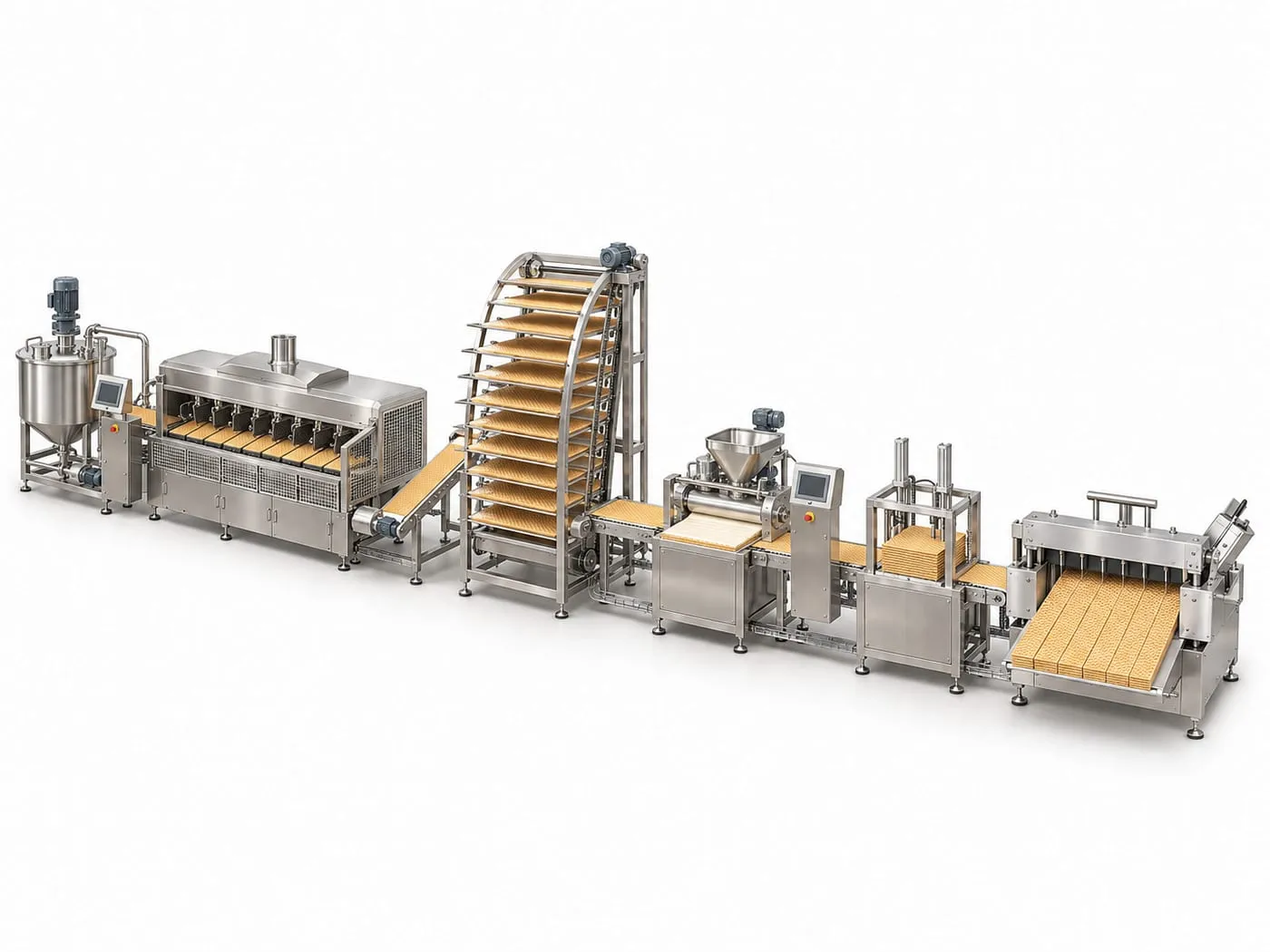
If you want to make wafers or filled wafer bars as well, they use a different baking and creaming process; see our wafer production line.
Layout: let the product flow one way
Plan the floor so that raw material moves in one direction toward finished goods:
- Dry store for flour, sugar and packaging, kept clean and dry, near the mixer.
- Mixing and forming room with floor space for dough handling and scrap return.
- Oven hall with ventilation, flue or exhaust and gas or electric supply.
- Cooling zone long enough to reach packing temperature without crowding.
- Packing room kept clean, with a separate store for film, cartons and finished goods.
- Utilities for compressed air, power and, if needed, steam and water.
- Staff access with hand washing and changing before the production area.
A line gets longer than most newcomers expect, mainly the oven and the cooling conveyor. Give your supplier the building length, width and ceiling height, and leave space to add a second packing machine or extend cooling later.
What drives the cost
We do not publish prices; every line is quoted for the product range and output. The main drivers are:
- Oven length and width. The baking area is set by output and bake time.
- Forming method. One method is cheaper than a changeable line.
- Packing automation. Packing is often as large an item as baking.
- Controls and automation. Fully automatic handoffs versus manual transfers.
- Utilities and building. Gas supply, exhaust, power, floors, drainage.
- Raw material handling. Silos or bags, dosing systems.
- Working capital. Ingredients, packaging and the first months of operation.
- Freight and duty. Delivery terms such as FOB or CIF (defined in the ICC’s Incoterms rules) decide who pays and who carries the risk.
Marketplace and template figures for biscuit factories range from very small to very large, because they describe different plants. Compare complete plants for the same output, not headline machine prices.
Choosing capacity and range
- Start with one product family. A line for crackers is not a line for printed shortbread.
- Size for the first two years, not the dream. Under-loaded ovens waste fuel.
- Plan packing for the market. Retail packs, multipacks and bulk each need different machines.
- Allow for shelf life. Biscuits are dry products, but they pick up moisture; choose barrier packaging and test shelf life.
Notes for Kenya, Nigeria, Ghana, India and the Philippines
- Flour supply. Check the flour you can buy locally and run bake trials; protein and moisture change dough behaviour.
- Fuel and power. Compare gas, LPG and electricity prices at your site.
- Local rules. Confirm registration, labelling and inspection rules with your national food authority before you start.
- Distribution. Biscuits travel well, but packaging and cartons should withstand your transport routes and climate.
Phasing the investment
Few new biscuit makers buy the final factory on day one. A common approach is to plan the full layout but install in phases:
- Phase one: a mixer, a forming machine for your first product, a tunnel oven sized for the first year, a cooling conveyor and a simple packing station. The aim is to start selling and to learn the market.
- Phase two: add automatic packing, a second forming head or extra oven length as sales grow, together with stacking and cartoning.
- Phase three: add a second product family (for example a wafer line or a cookie depositor), laboratory checks and a larger raw material store.
To make phasing work, the building must be designed for the final length of the oven and cooling conveyor from the start, utilities must be sized for the later load, and the supplier must confirm that the first-phase machines can be extended. Ask for a layout drawing that shows all phases and the order in which machines are added. It is much cheaper to leave a space than to rebuild a wall.
Remember that equipment is only part of the budget. Allow for installation, commissioning, training, spare parts and the working capital that pays for flour, sugar, fat and film while the first sales are made.
What to prepare for a quotation
- Product list with dough type, size, weight and thickness; photos or samples help.
- Target output in kilograms or pieces per hour, shifts per day.
- Flour and fat you plan to use.
- Oven fuel: gas, LPG, electricity, with local prices if you know them.
- Packing format and pack weights.
- Building size, power supply and utilities.
- Staff numbers and skills.
- Delivery location, delivery terms and whether you need installation and training.
Send these through our contact page. For a complete plant with building layout and utilities, see turnkey projects.
Mistakes to avoid
- Buying the oven first and the forming machine later. The dough decides the former, and the former decides the oven width.
- Short cooling conveyors. Warm biscuits go soft in packs.
- Packing as an afterthought. Plan film, cartons and sealing early.
- No spare parts plan. Ask which parts wear and keep stock on site.
- Ignoring scrap return. Trim returns affect dough balance and waste.
Frequently asked questions
- What equipment is in a biscuit factory?
- Flour and ingredient handling, a mixer, a forming section (sheeter and cutter, rotary moulder or depositor), a tunnel oven, a cooling conveyor, stacking and packing machines, and utilities for heat, power and compressed air.
- How much does it cost to set up a biscuit factory?
- It depends on output, product types, oven size, packing automation and building work. Public estimates vary widely and are mostly templates, so we quote per project from your product list and output. Ask for a quote that separates equipment, installation, utilities and spare parts.
- Gas or electric oven?
- Gas firing is common where gas is available at a good price; electric ovens suit sites without gas and are simple to control. Compare running cost, supply security and your site limits.
- Can one line make crackers and cookies?
- Not usually without changing the forming section. Hard dough (crackers, hard sweet biscuits), soft dough (printed shortbread type) and cookie dough (deposited) use different forming machines. A tunnel oven and packing section can be shared, so tell us the range you plan.
- How many people do I need?
- It depends on automation, especially at packing. We can give a staffing estimate once you choose the line and shift pattern.
Sources
- [1]Cakes-Biscuits (small-scale processing fact sheet) — Food and Agriculture Organization of the United Nations
- [2]Incoterms rules — International Chamber of Commerce
HNFODA Applications Engineering
Line design, product trials and commissioning
Engineers who size, build and commission HNFODA food processing lines, writing from the questions buyers ask before a quotation. About HNFODA