Bakery & Snack Food
Biscuit Production Line
Biscuit factories, private-label bakeries and investors entering packaged biscuits.
Sized to baked biscuits per hour (kg/h of finished product) for a given size and weight

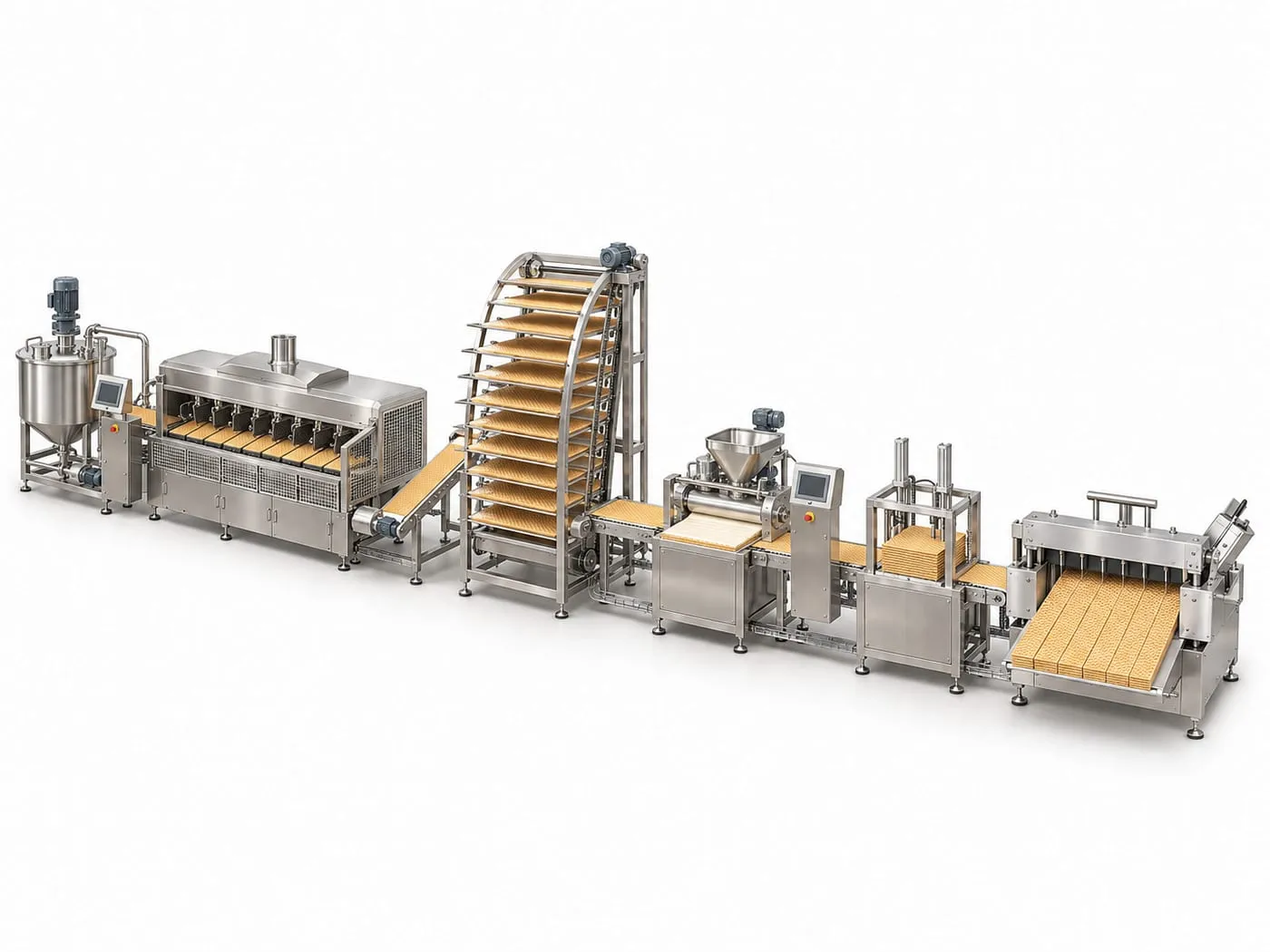
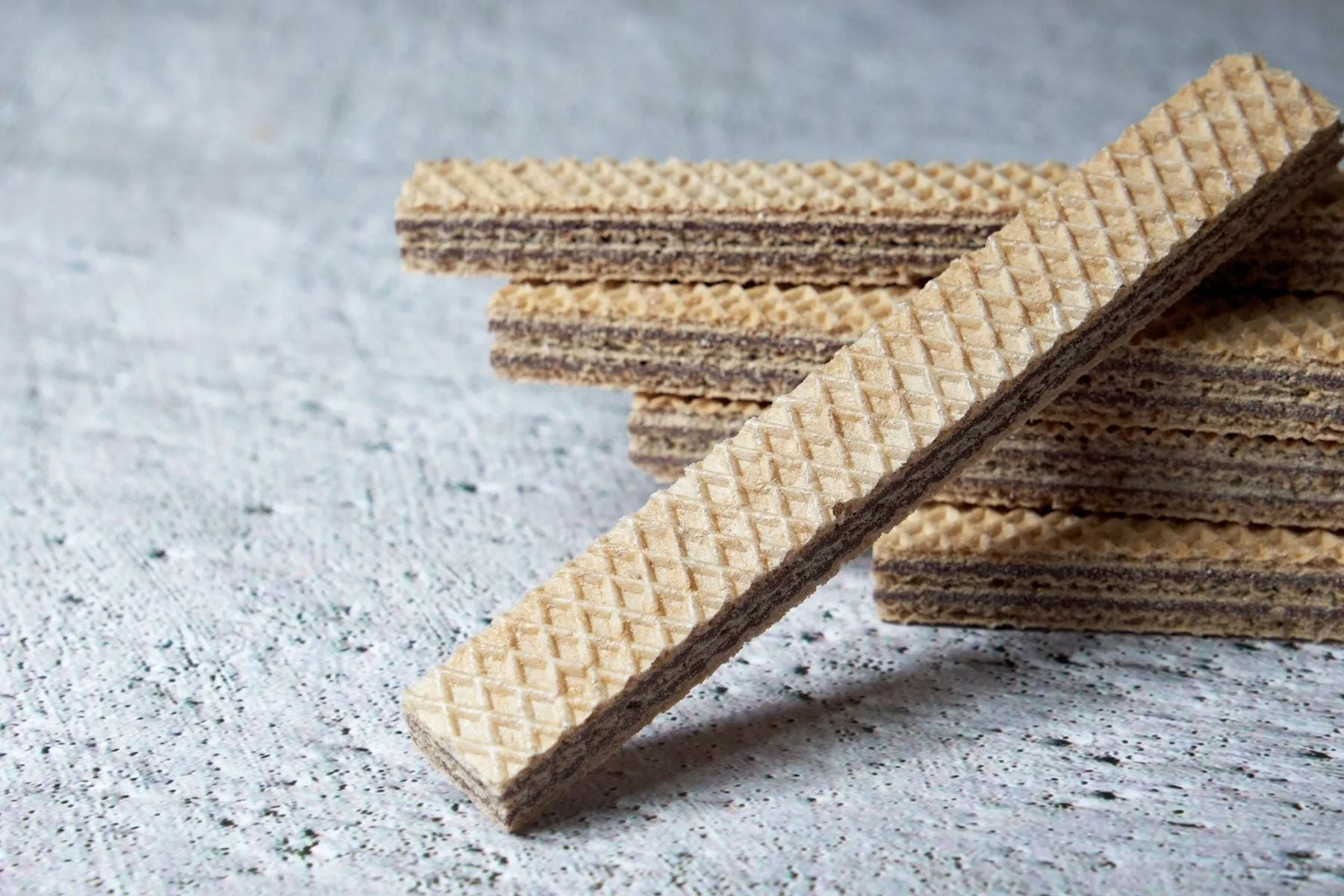
05 · Bakery & Snack Food — Production line
Bakes thin wafer sheets from batter, spreads cream, builds them into books and cuts them, with an optional chocolate coating.
Short answer: A wafer biscuit production line mixes a thin batter, bakes it between heated plates into crisp sheets, spreads cream between sheets, cools the stacked “books” and cuts them into finished wafers, with chocolate coating as an option. Sheet size, plate pattern and the cream recipe decide the oven, spreader and cutter.
| Form | Suits | Watch out for |
|---|---|---|
| Flat wafer | Cream wafers, wafer sticks and bars | Cutting waste, cream setting time |
| Hollow wafer | Cones and shaped shells to be filled | Separate moulds, filling line |
| With chocolate coating | Premium coated bars | Enrober and cooling tunnel space, chocolate handling |
The oven decides line output; the creaming and cutting sections are sized to keep up with it. Number of plate pairs, bake time and sheet size together set how many sheets per hour the oven delivers, so a change in sheet size changes capacity. Cutting waste (edge trim and broken pieces) is usually reworked into cream, which is worth planning for.
The wafer line often sits next to a biscuit production line and shares packing. Finished wafers are typically packed in flow wraps, then passed through a food metal detector and an in-line checkweigher. Cleaning and conveying between sections can use hygienic conveyors.
Flat wafer
sheets are baked between engraved plates, creamed, stacked and cut into fingers or squares.
Hollow wafer
moulds form wafer shells, such as cones or shapes, which are filled afterwards.
Optional chocolate coating
cut wafers pass an enrober and cooling tunnel for chocolate-covered bars.
Our engineers check these points with you, so the quotation fits your site rather than a catalogue default.
Freshly creamed wafer books are soft and the cream has not set. If they are cut too warm, edges crumble and cream smears, which raises waste. A cooling tunnel brings the books to a stable temperature first.
Yes. The plate engraving can carry a standard grid or your own design, agreed with drawings at the quotation stage.
Wafers take up moisture quickly and lose crispness, so cooling, cutting and packing should follow each other closely, with barrier packaging. In humid climates, room conditions also need planning.
Tell us your raw material, finished product and target output. Our engineers reply with a matched configuration and quotation.
What to send with your inquiry
Email sales@hnfoda.com
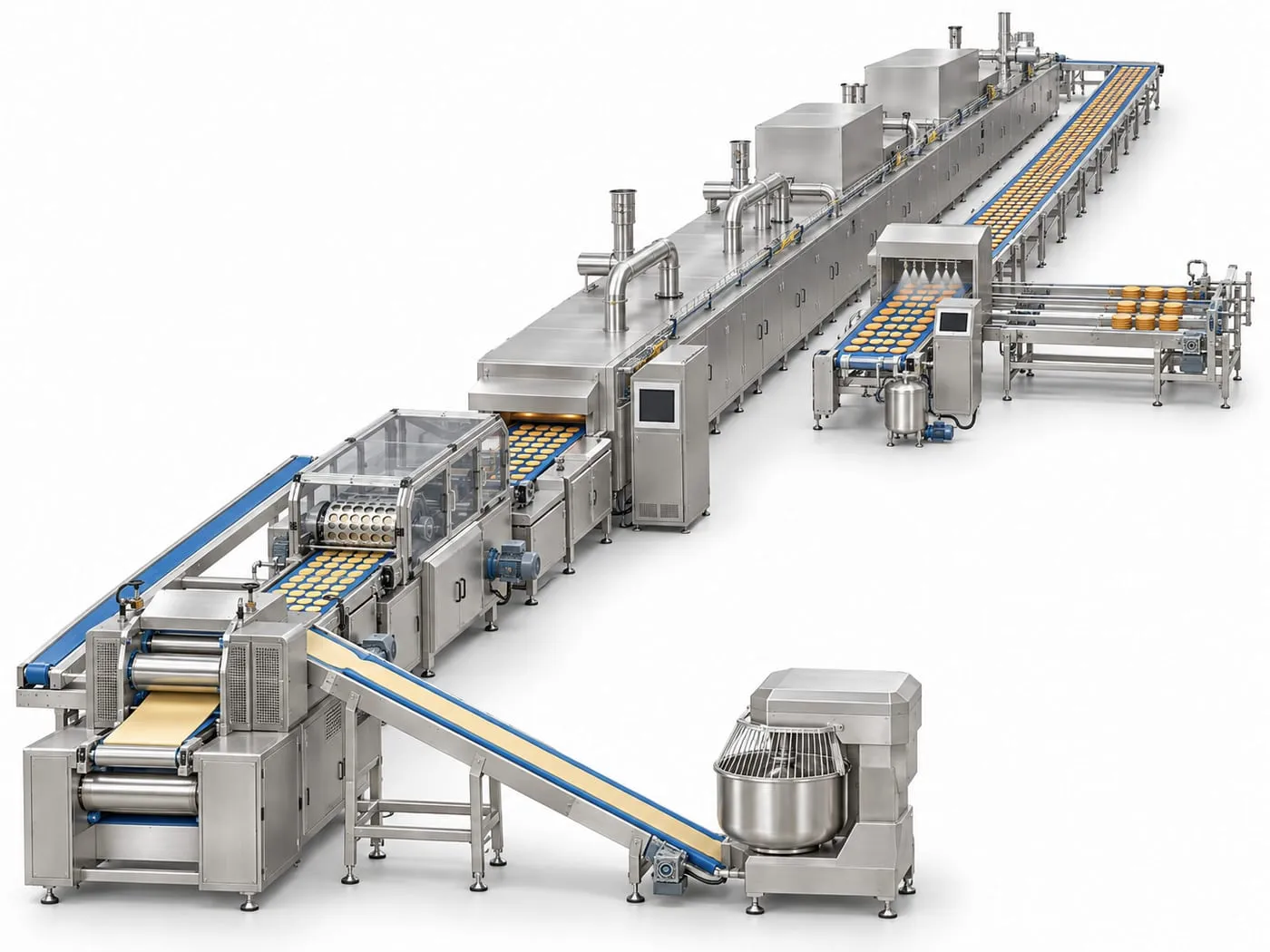
Set up a biscuit factory: equipment list from mixer to packing, layout flow, hard vs soft dough, what drives cost, and a checklist for a quotation.
Bakery & Snack Food
Biscuit factories, private-label bakeries and investors entering packaged biscuits.
Sized to baked biscuits per hour (kg/h of finished product) for a given size and weight
Bakery & Snack Food
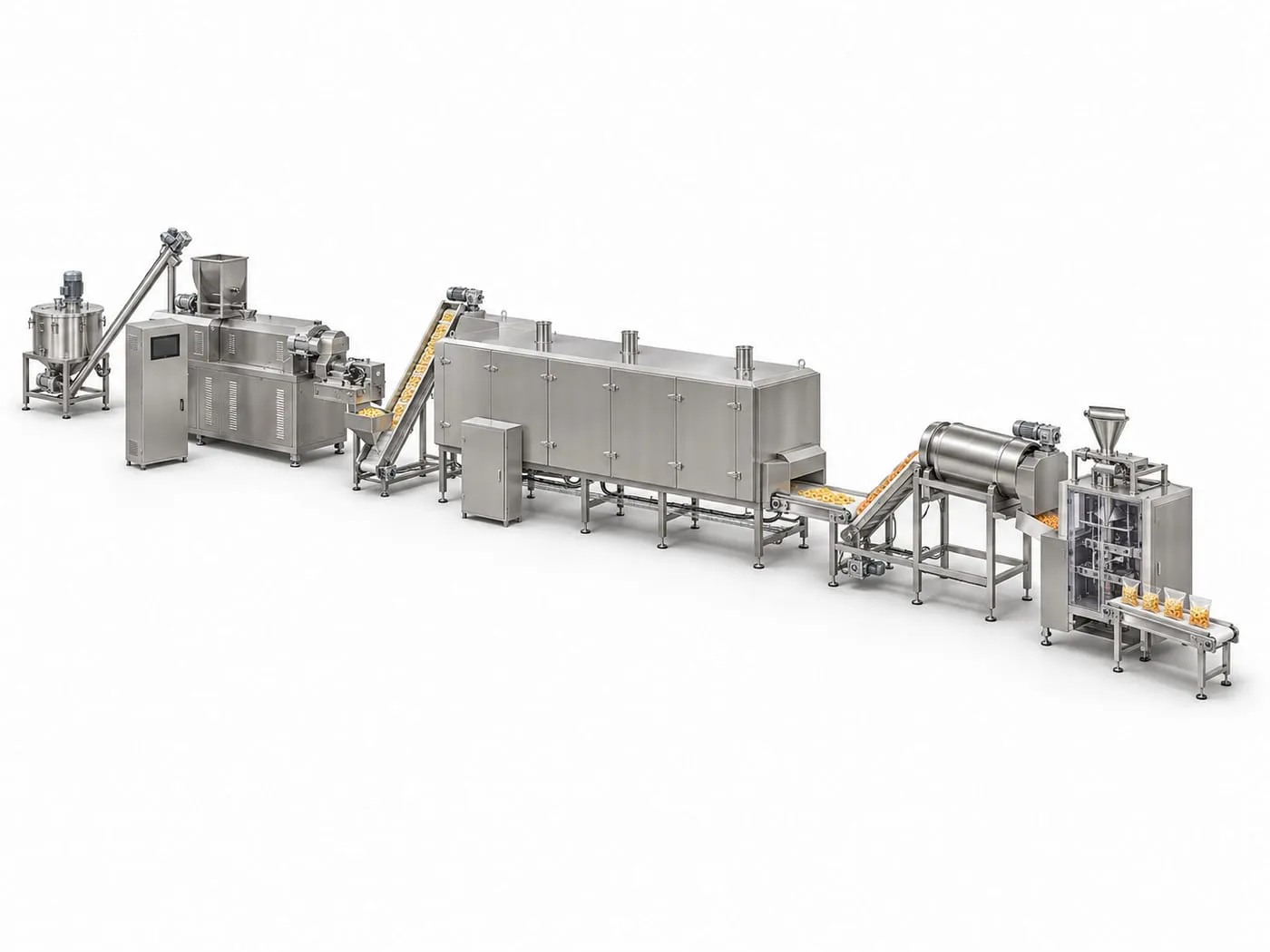
Snack brands and contract manufacturers making corn puffs, cereal shapes and snack pellets.
Sized to extruder throughput (kg/h of dry mix) with finished output stated separately
Bakery & Snack Food
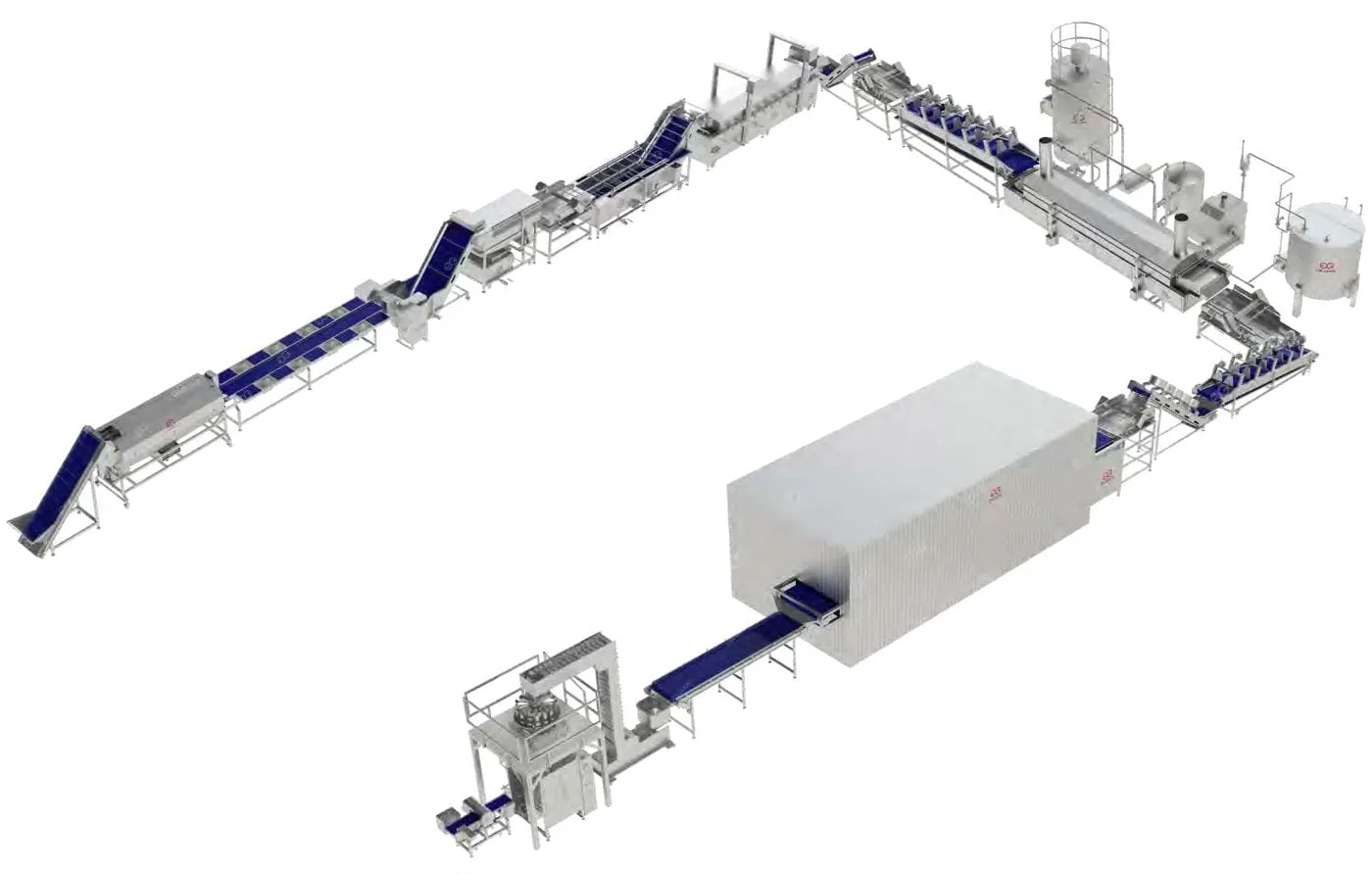
Potato snack brands, frozen fries producers and agricultural investors near potato growing areas.
Sized to fresh potato input (kg/h) with finished output stated separately
Bakery & Snack Food
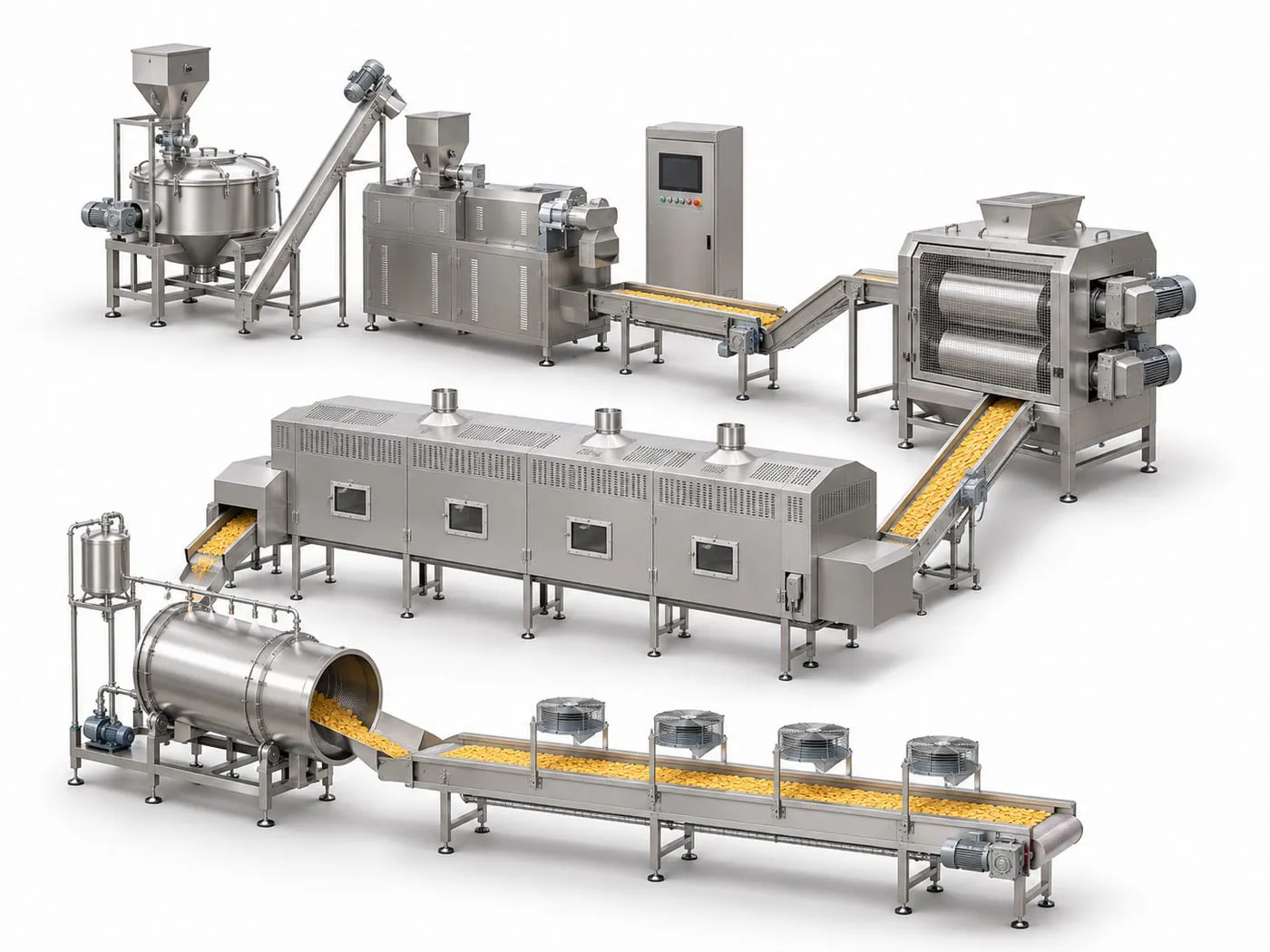
Breakfast cereal brands, private-label packers and snack plants adding corn flakes or coated cereals.
Sized to finished cereal output (kg/h) for a set flake thickness