Freezing, CIP & Conveying
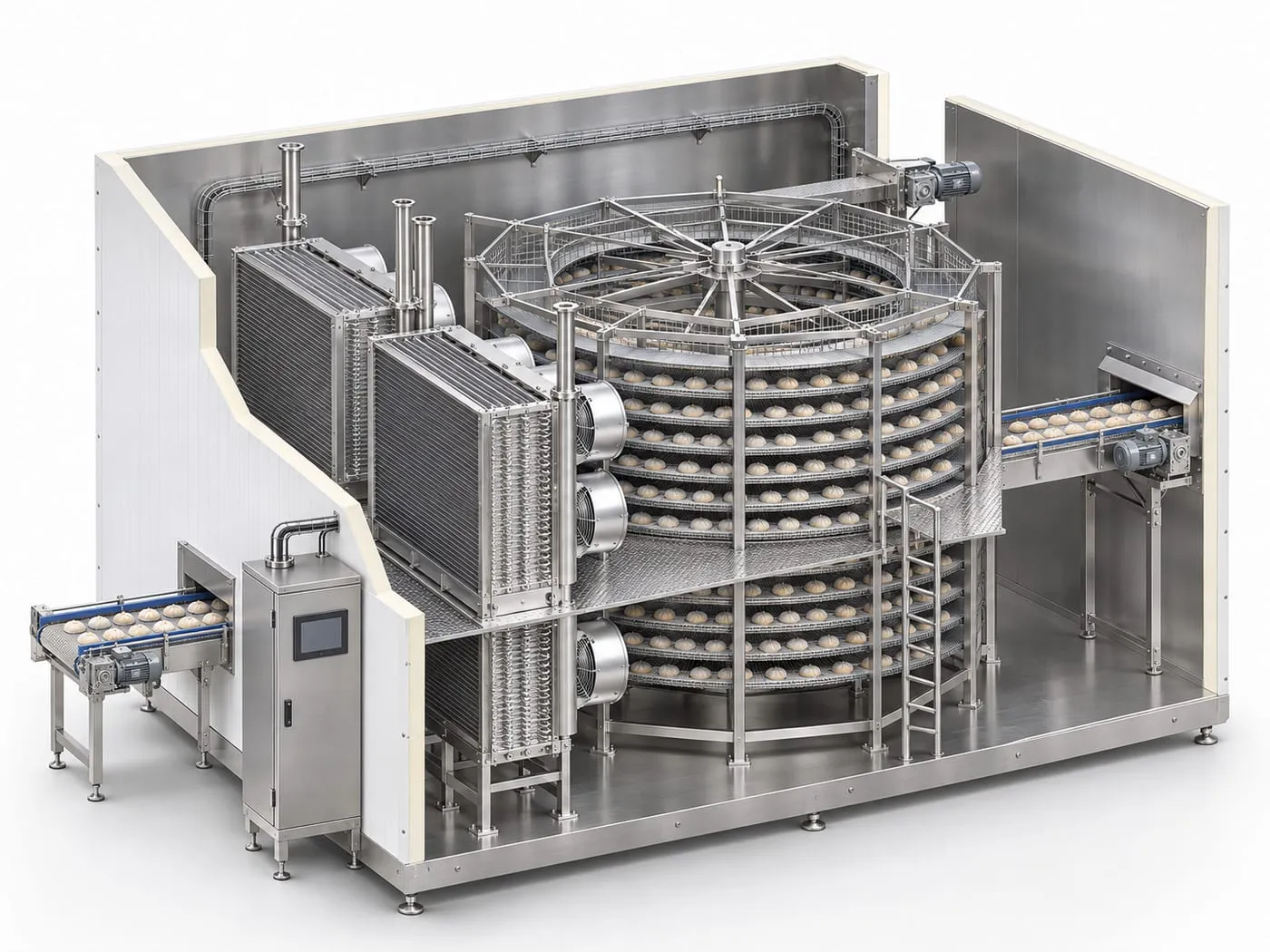
Industrial Food Freezer
Frozen food, meat, seafood and fruit processors adding or expanding quick-freezing capacity.
Sized on product input (kg/h) at stated inlet and outlet temperatures

10 · Freezing, CIP & Conveying — Equipment
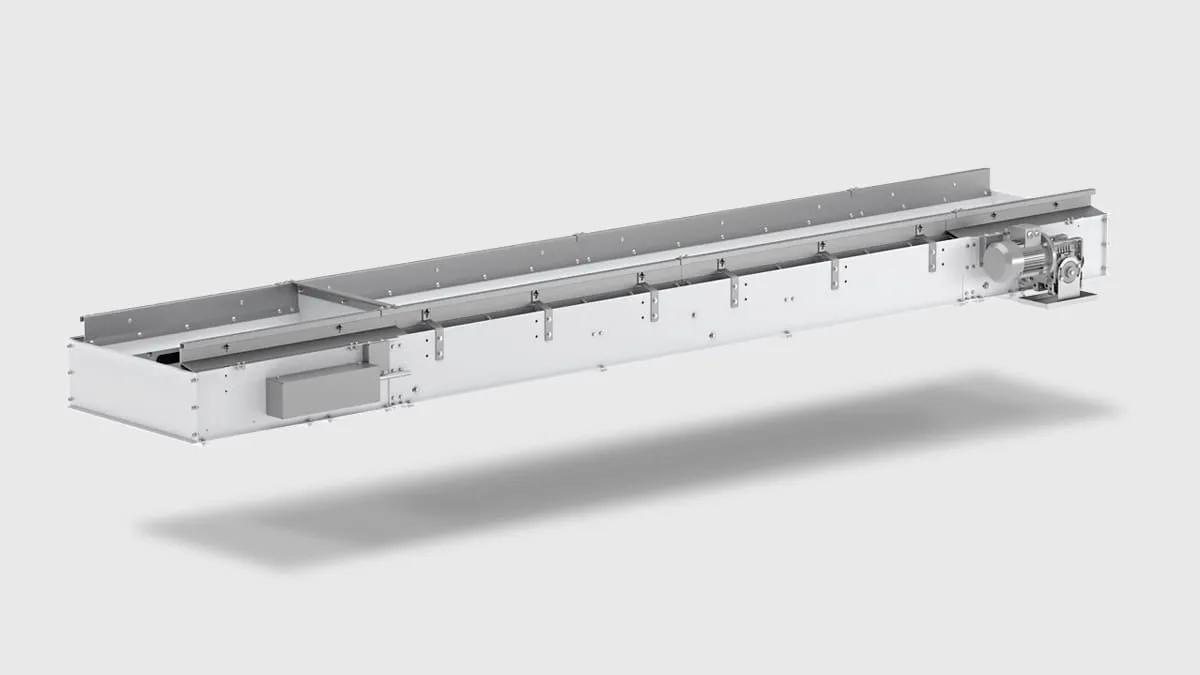
Food-grade conveyors that move product between machines, lift it where needed and keep each section of the line running at a matched pace.
Short answer: A hygienic conveyor moves food between processing steps, lifts it where machines sit at different heights and evens out the flow so each machine gets product at the right pace. The configuration depends on the product (fragile, sticky, wet, dusty), the height difference to overcome, and how the line will be cleaned.
A conveyor consists of a frame, a carrying element (belt, modules, buckets or a screw), a drive with speed control and the transfer points at each end. Product is loaded from a hopper, chute or the previous machine, carried along or up, and discharged into the next step. Side guides, flights and cleats keep product in place on inclines. Speed control lets operators match the rate to upstream and downstream machines, and sensors can stop or slow the conveyor when a buffer is full.
Hygienic design is mainly about access: frames that leave space to clean underneath, belts that can be lifted or removed without tools, and surfaces that let water and debris run off rather than collect. For wet areas, motors and bearings are placed or protected so that washdown water does not reach them.
| Form | Suits | Watch out for |
|---|---|---|
| Flat belt | Packs, dough, sorting tables | Sticky products may need special belt surfaces |
| Modular plastic belt | Wet, oily, frozen products, inclines | Hinges need attention during cleaning |
| Bucket elevator | Snacks, nuts, grains to weighers | Fragile products: gentle filling and discharge |
| Screw conveyor | Powders, grains, pastes | Enclosed; plan access for cleaning |
Conveyors connect most equipment on this site, such as raising product to a multihead weigher, linking a continuous fryer to seasoning, or feeding a food freezer. In packing areas they carry packs through an in-line checkweigher and food metal detector.
Flat belt
a continuous PU or PVC belt for packs, dough pieces and inspection or sorting tables.
Modular plastic belt
interlocking plastic modules for wet, oily or frozen products and inclines with flights.
Bucket elevator
buckets on a chain or belt lift snacks, nuts or grains vertically to weighers or silos.
Screw conveyor
an enclosed screw moves powders, grains or pastes horizontally or at an angle.
Our engineers check these points with you, so the quotation fits your site rather than a catalogue default.
Flat belts suit dry, packed or delicate products and are smooth to clean. Modular plastic belts handle wet, oily and frozen products and steep inclines. Bucket elevators and screws suit bulk solids and powders. Product behaviour and cleaning method decide the choice.
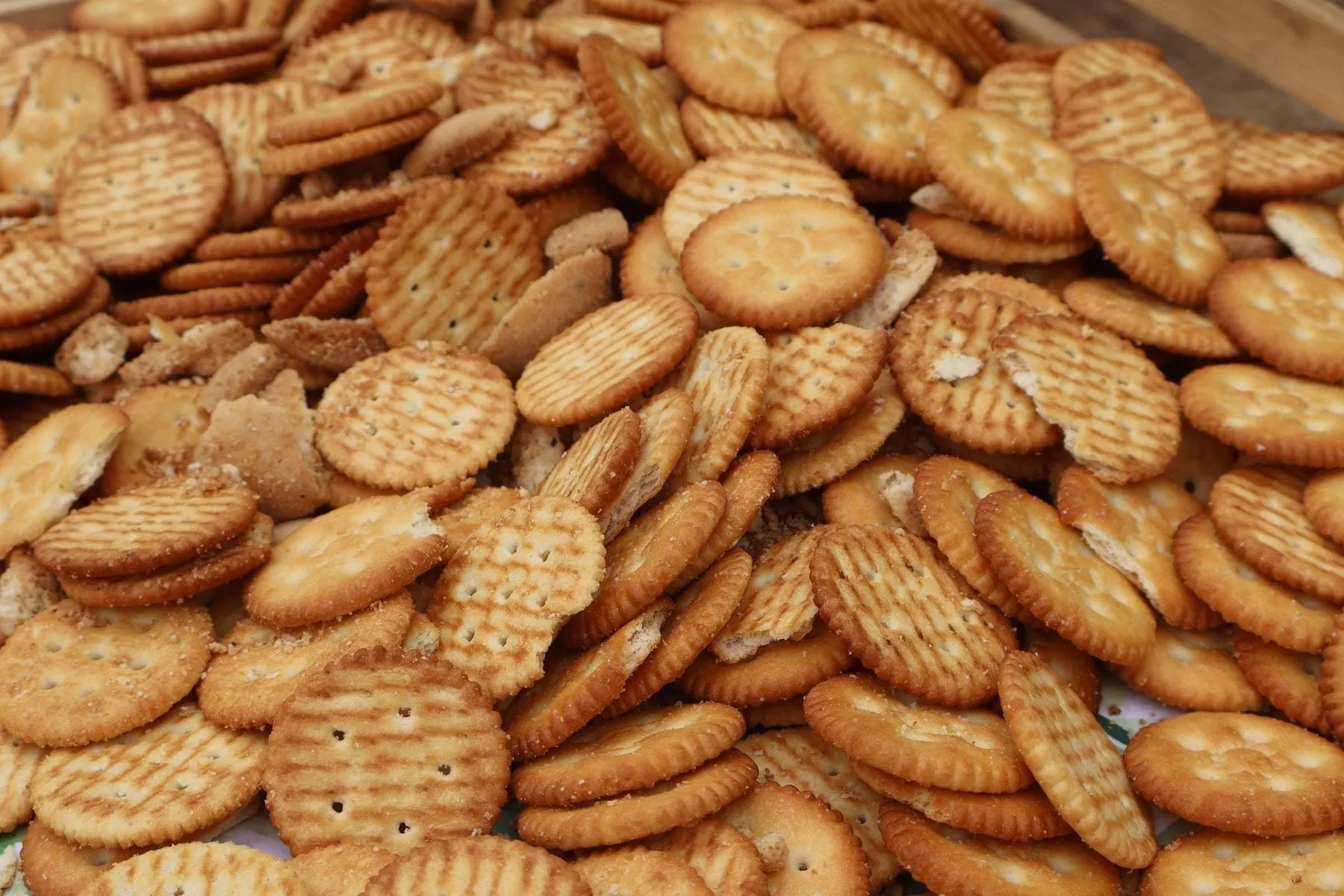
Drops between belts, sharp direction changes and speeds that do not match the next machine cause most damage. Short transfer points, gentle inclines and buffer sections reduce breakage, especially for chips, crackers and fried snacks.
Hygienic designs use open frames, few horizontal ledges, tension release for lifting the belt and sloped surfaces that let water run off. Some include belt-washing stations. Tell us your cleaning routine so the design supports it.
Tell us your raw material, finished product and target output. Our engineers reply with a matched configuration and quotation.
What to send with your inquiry
Email sales@hnfoda.com
Freezing, CIP & Conveying
Frozen food, meat, seafood and fruit processors adding or expanding quick-freezing capacity.
Sized on product input (kg/h) at stated inlet and outlet temperatures
Freezing, CIP & Conveying
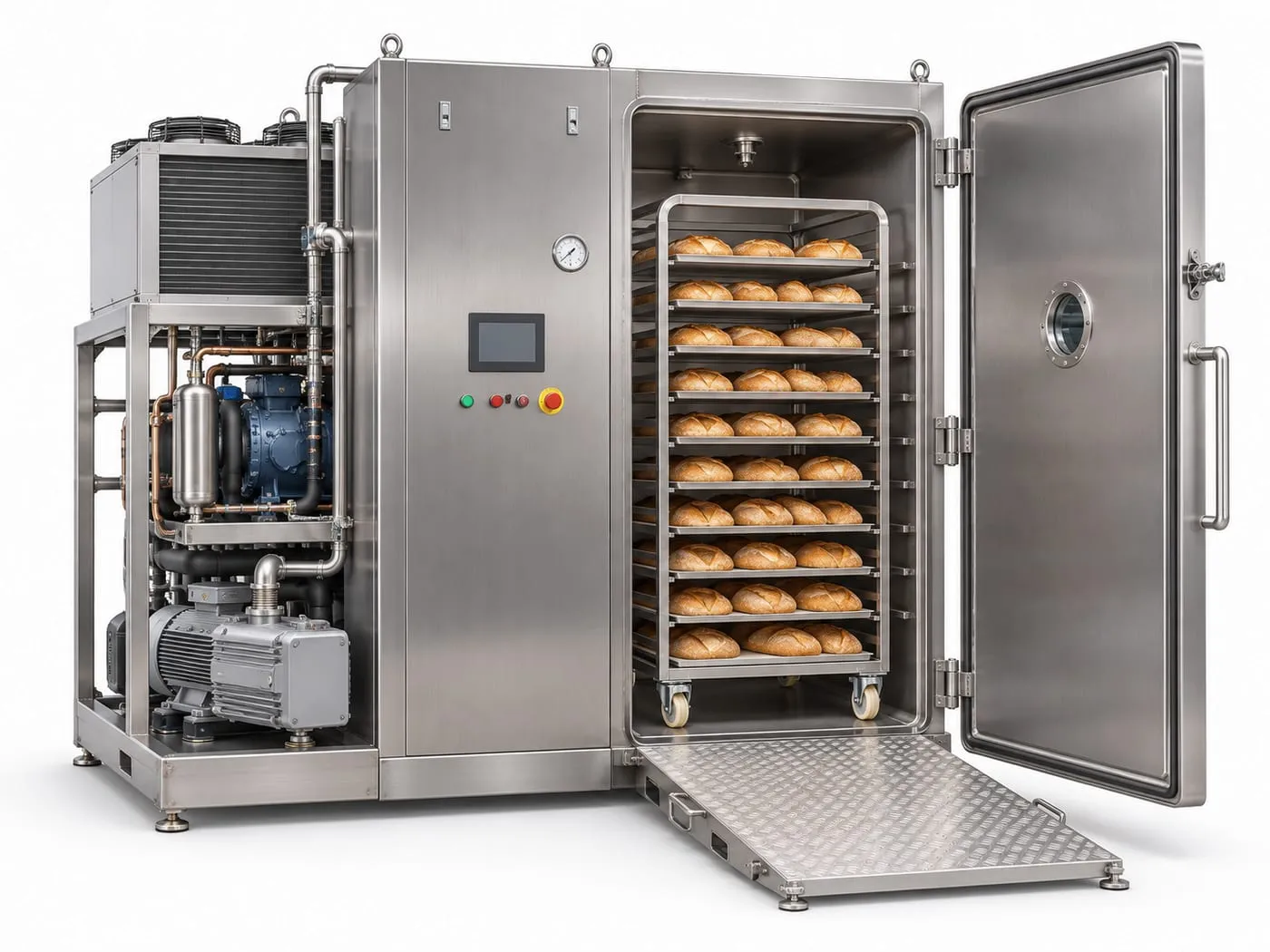
Central kitchens, bakeries, ready meal makers and produce packers who need fast cooling before chilling or packing.
Sized on product per batch (kg/batch) and cycle time
Freezing, CIP & Conveying
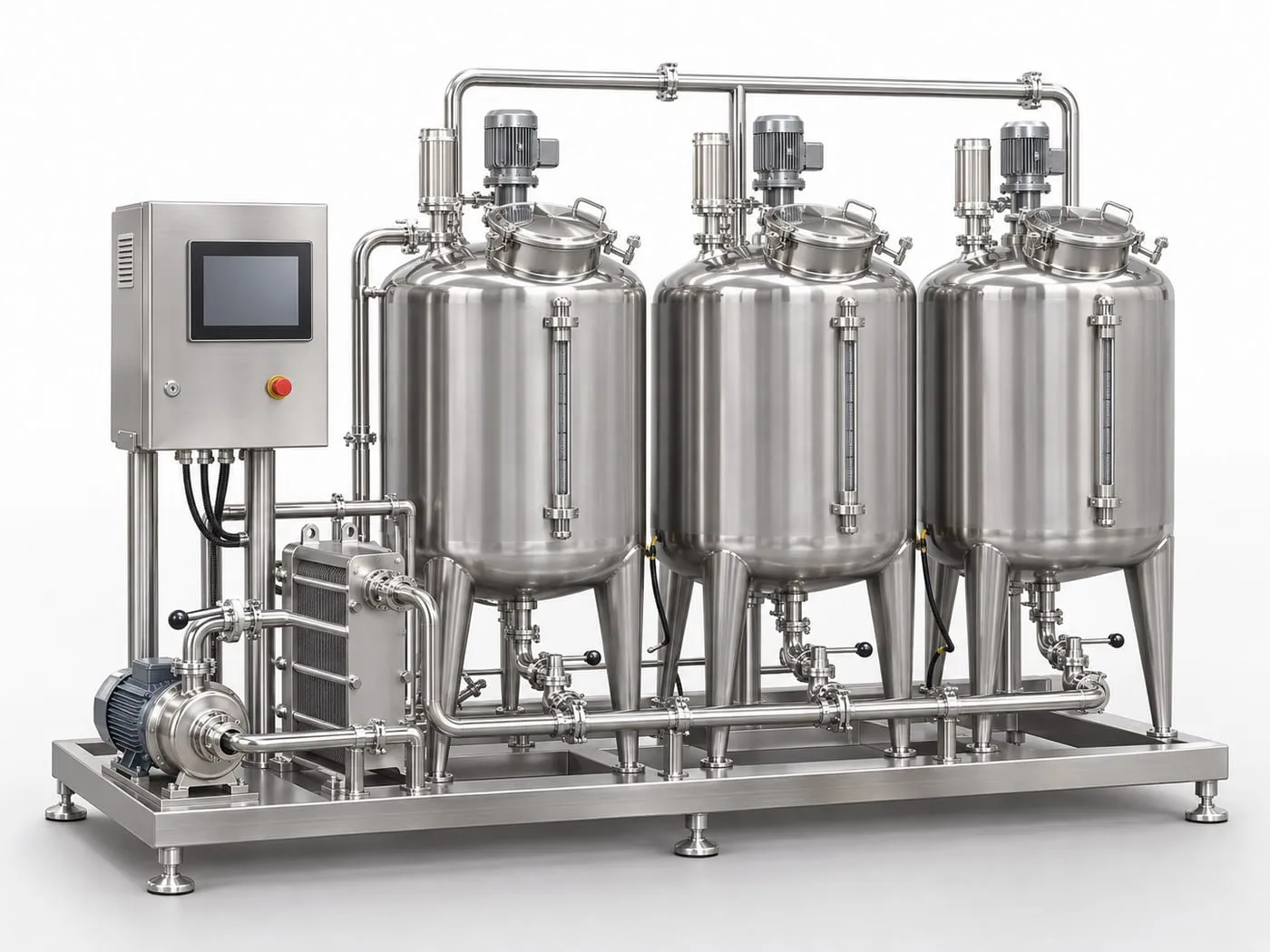
Beverage, dairy, sauce and liquid food plants with closed tanks and pipework.
Sized on circuit flow rate and circuit volume, set by pipe size and tank spray devices
Freezing, CIP & Conveying
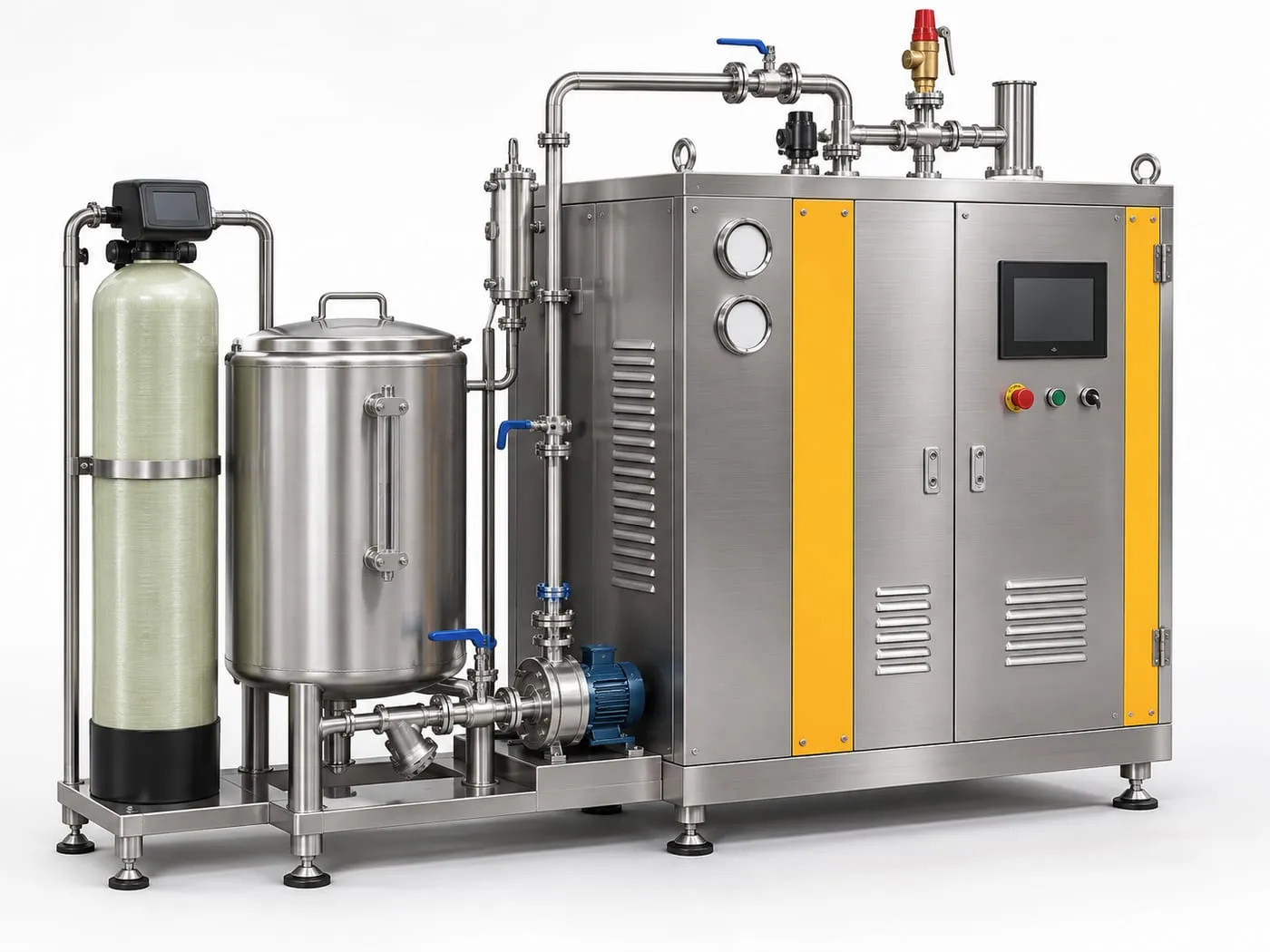
Food plants and kitchens adding steam-heated equipment without a large central boiler house.
Sized on steam output (kg/h) at the working pressure your equipment needs