Freezing, CIP & Conveying
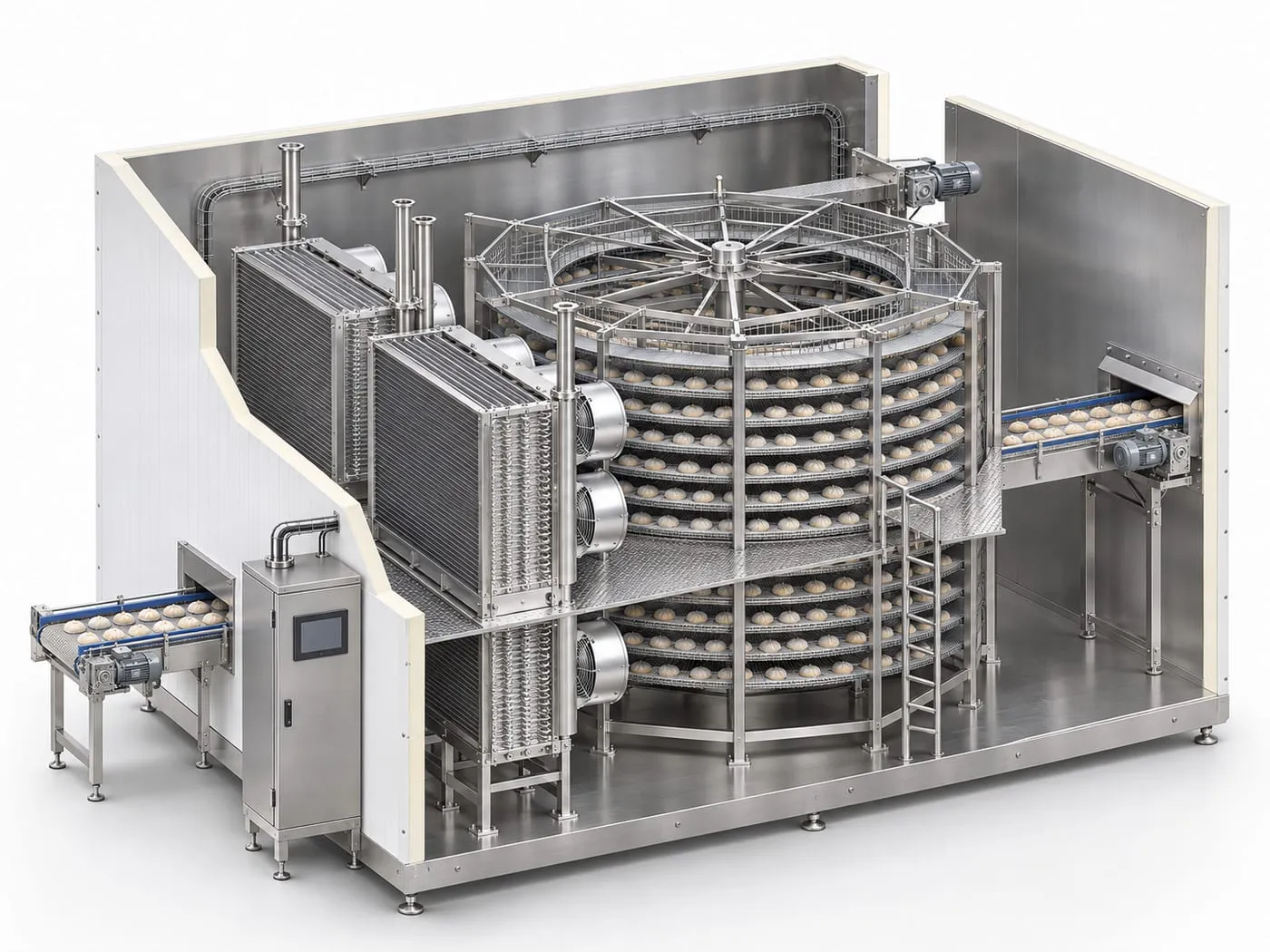
Industrial Food Freezer
Frozen food, meat, seafood and fruit processors adding or expanding quick-freezing capacity.
Sized on product input (kg/h) at stated inlet and outlet temperatures


10 · Freezing, CIP & Conveying — Equipment
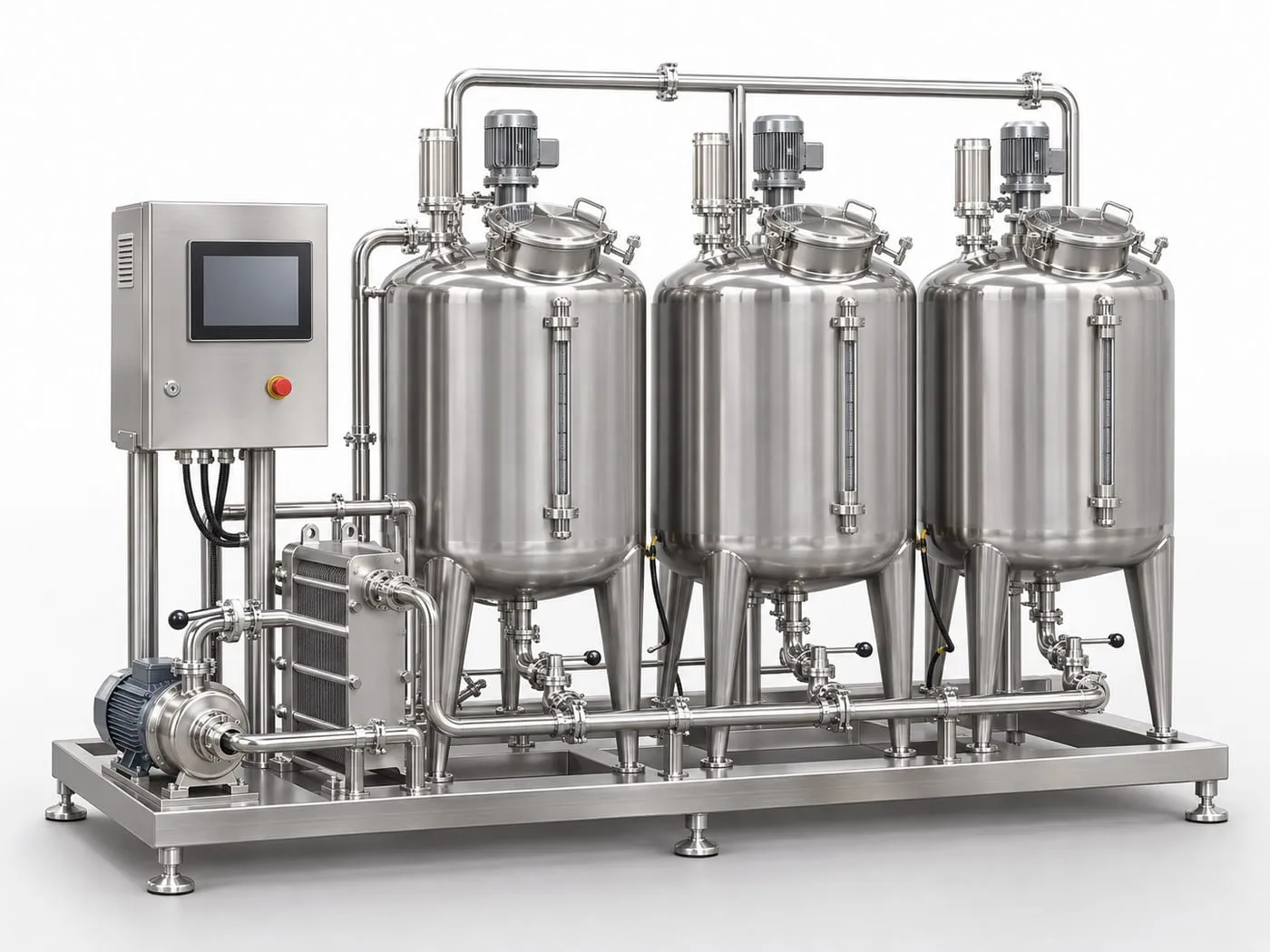
A clean-in-place unit that cleans closed tanks, pipes and process equipment by circulating water and cleaning solutions in a set sequence.
Short answer: A clean-in-place (CIP) system circulates water, detergent and sanitiser through tanks, pipes and closed process equipment in a fixed sequence, so they are cleaned without being taken apart. The configuration depends on how many circuits you have and how long they are, whether solution can return reliably, and the cleaning recipe and checks your product requires.
A CIP station holds tanks for water, alkaline detergent and, if needed, acid, plus a supply pump, heat exchanger and valves. A typical cycle runs:
Solutions flow to the target equipment, through spray devices in tanks, and back through return pumps to the station, where they may be recovered for reuse. Sensors record temperature, flow, conductivity and time, and the controller prevents the wrong circuit from opening during production.
The design work is mostly in the circuits rather than the station: pipes must slope to drain, dead legs must be avoided, and spray devices must reach every surface inside a tank.
| Form | Suits | Watch out for |
|---|---|---|
| Single circuit | Small plants, one area at a time | Production waits while cleaning runs |
| Multi-circuit | Plants needing to clean and produce in parallel | More valves and control logic |
| Central system | One location controls all cleaning | Long pipe runs use more water and chemicals |
| Zoned system | Large or spread-out plants | Several stations to maintain |
CIP serves closed equipment such as the pasteurizer, food homogenizer, dairy processing line, juice processing line and liquid filling machine. Heating is often supplied by a food steam generator.
Single circuit
one supply and return route; suits a small plant or one machine group cleaned at a time.
Multi-circuit
several circuits share tanks and run in parallel, so one area can clean while another produces.
Central system
one CIP station serves the whole plant through a pipe network; consistent control in one place.
Zoned (decentralised) system
smaller units close to each area; shorter pipe runs and less solution volume.
Our engineers check these points with you, so the quotation fits your site rather than a catalogue default.
CIP works for closed systems designed for it: tanks with spray balls, pipework, heat exchangers and some fillers. Open equipment, conveyors and many machines with complex parts still need manual or foam cleaning. We review your equipment list to define what goes on CIP.
If solution cannot return quickly from a tank or pipe, it pools, the circuit runs out of liquid and cleaning becomes uneven. Return pumps, pipe slopes and drain points are designed together with the supply side.
Plants usually combine recorded cycle data (temperature, flow, conductivity, time) with checks such as visual inspection, swabs and final rinse tests. The exact validation is your responsibility and depends on product and standard; the system provides the data to support it.
Tell us your raw material, finished product and target output. Our engineers reply with a matched configuration and quotation.
What to send with your inquiry
Email sales@hnfoda.com
Plan a small milk plant: cooling, pasteurising, homogenising and filling equipment, sizing litres per day, cost drivers and a quote checklist.
Freezing, CIP & Conveying
Frozen food, meat, seafood and fruit processors adding or expanding quick-freezing capacity.
Sized on product input (kg/h) at stated inlet and outlet temperatures
Freezing, CIP & Conveying
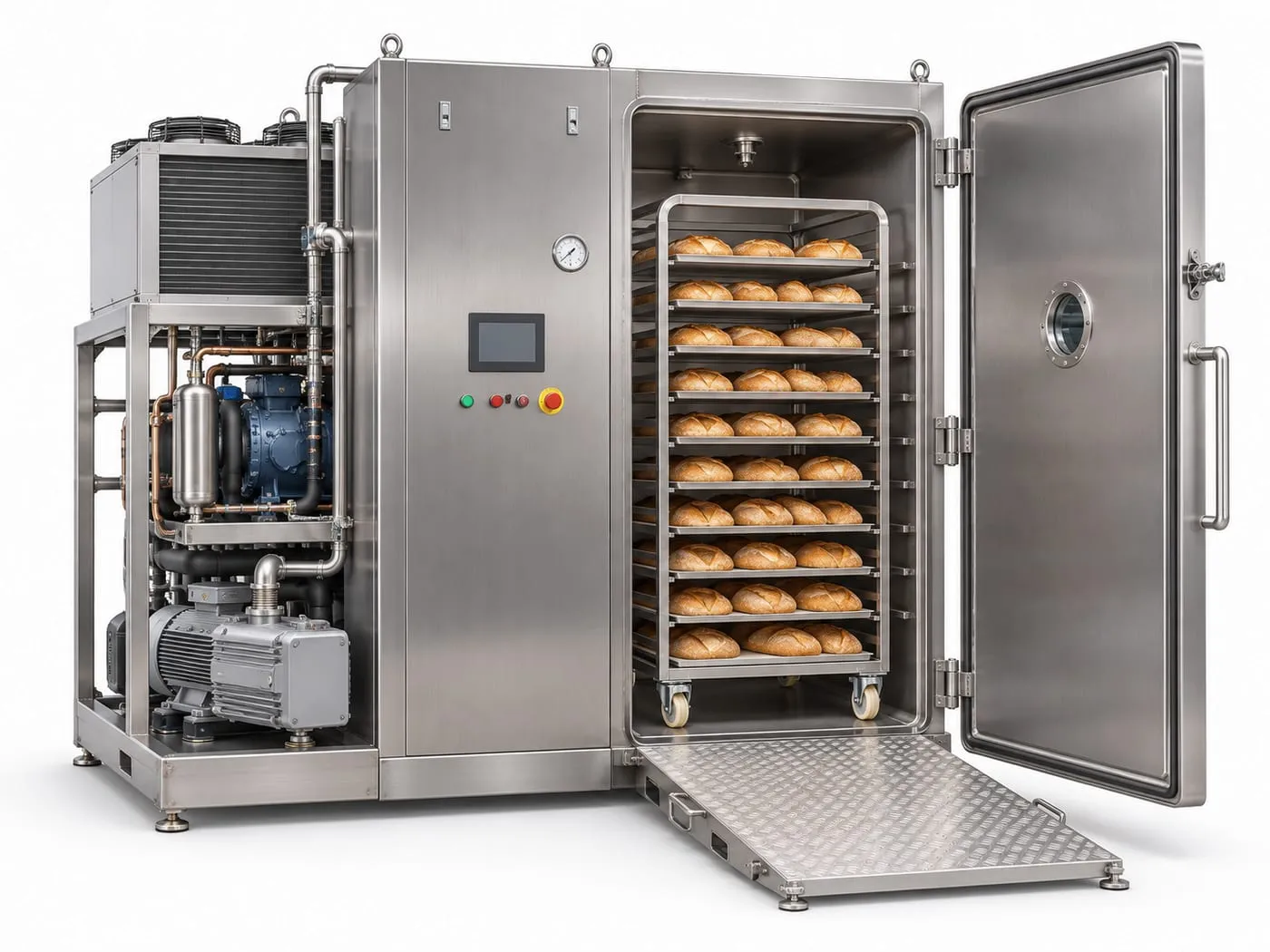
Central kitchens, bakeries, ready meal makers and produce packers who need fast cooling before chilling or packing.
Sized on product per batch (kg/batch) and cycle time
Freezing, CIP & Conveying
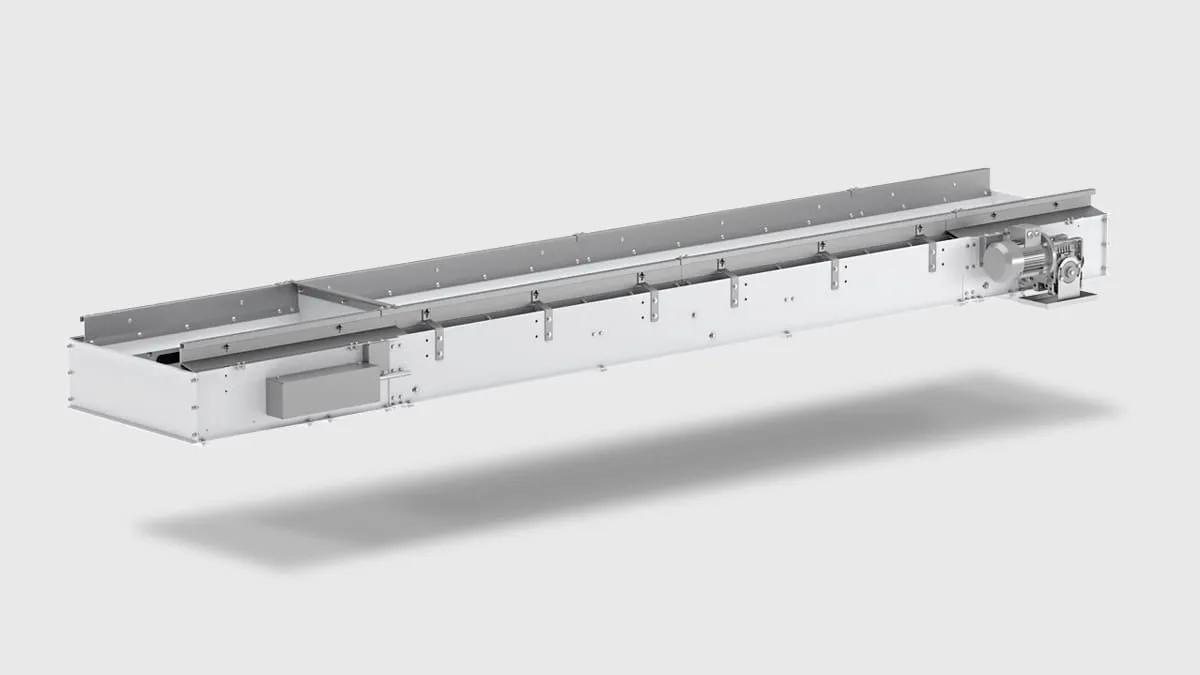
Plants connecting individual machines into a line, or replacing manual transfer between steps.
Sized to the throughput of the machines it links (kg/h or pieces/min)
Freezing, CIP & Conveying
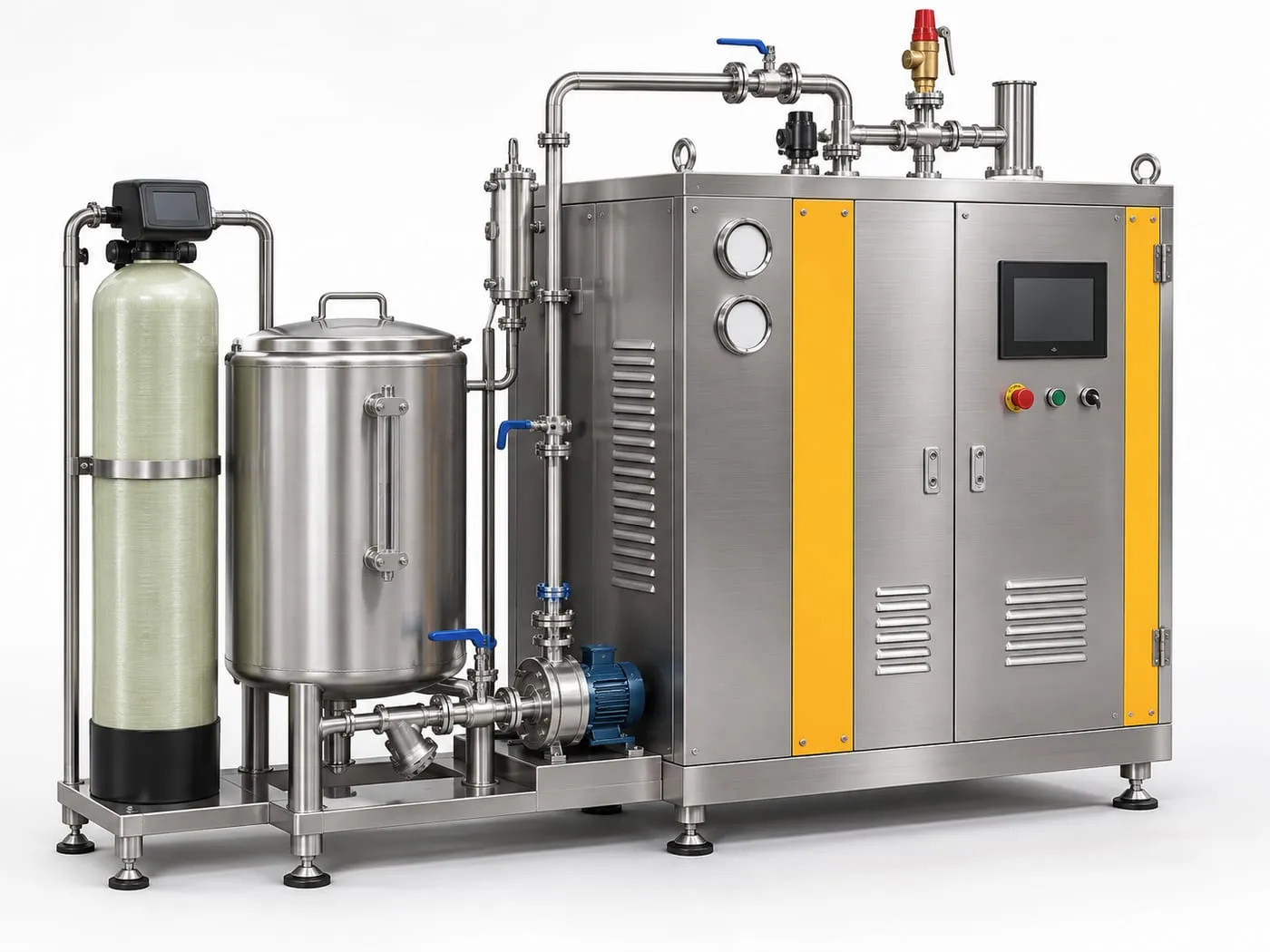
Food plants and kitchens adding steam-heated equipment without a large central boiler house.
Sized on steam output (kg/h) at the working pressure your equipment needs