Freezing, CIP & Conveying
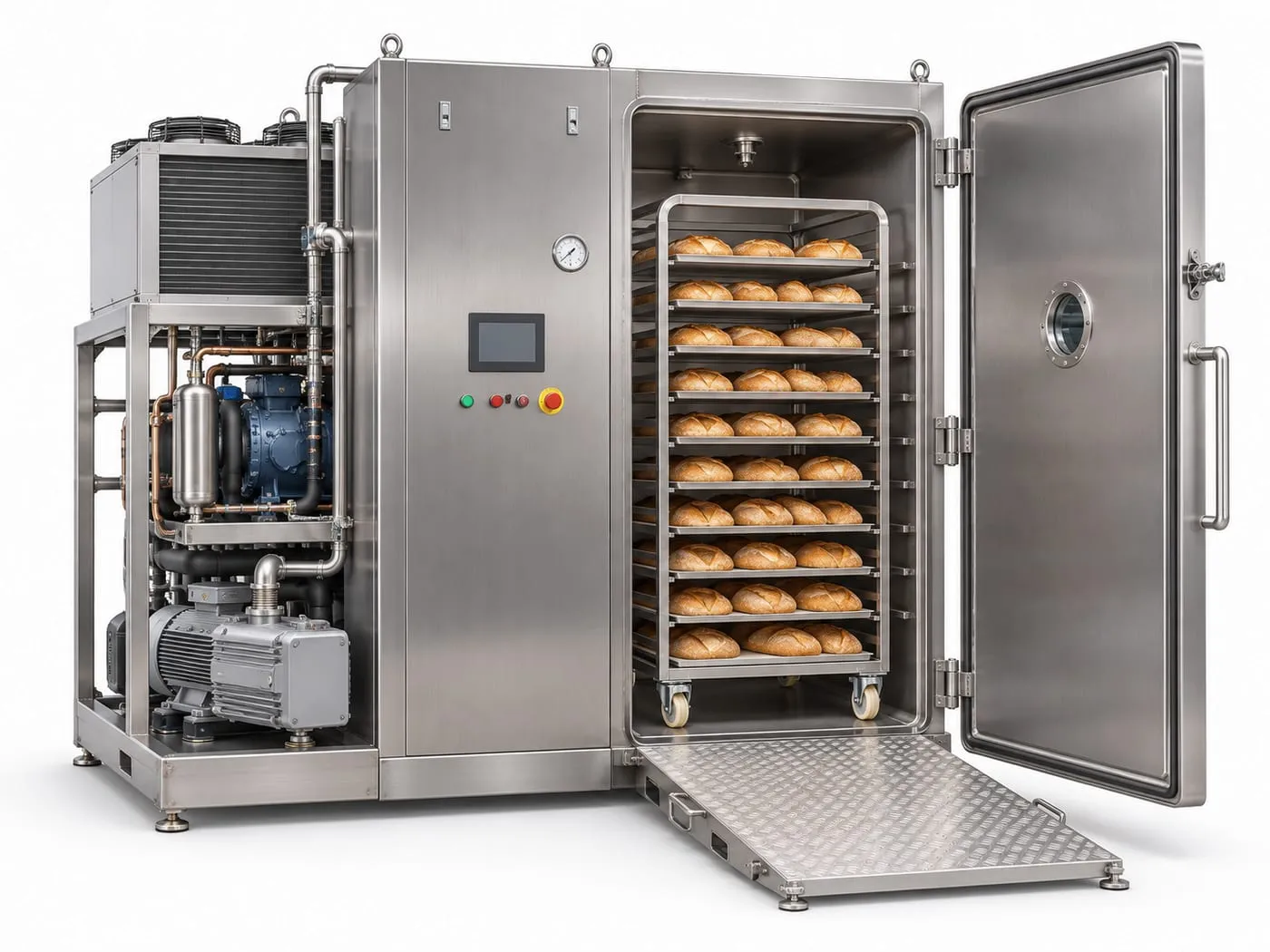
Food Vacuum Cooler
Central kitchens, bakeries, ready meal makers and produce packers who need fast cooling before chilling or packing.
Sized on product per batch (kg/batch) and cycle time

10 · Freezing, CIP & Conveying — Equipment
A continuous quick freezer that brings processed food to frozen storage temperature fast, ready for packing or the cold chain.
Short answer: An industrial food freezer moves processed food through very cold, fast-moving air so it reaches frozen storage temperature quickly, which limits ice crystal growth and keeps texture. The right configuration is set by product shape and thickness, inlet and outlet temperatures and the hourly freezing load, together with the refrigeration plant behind it.
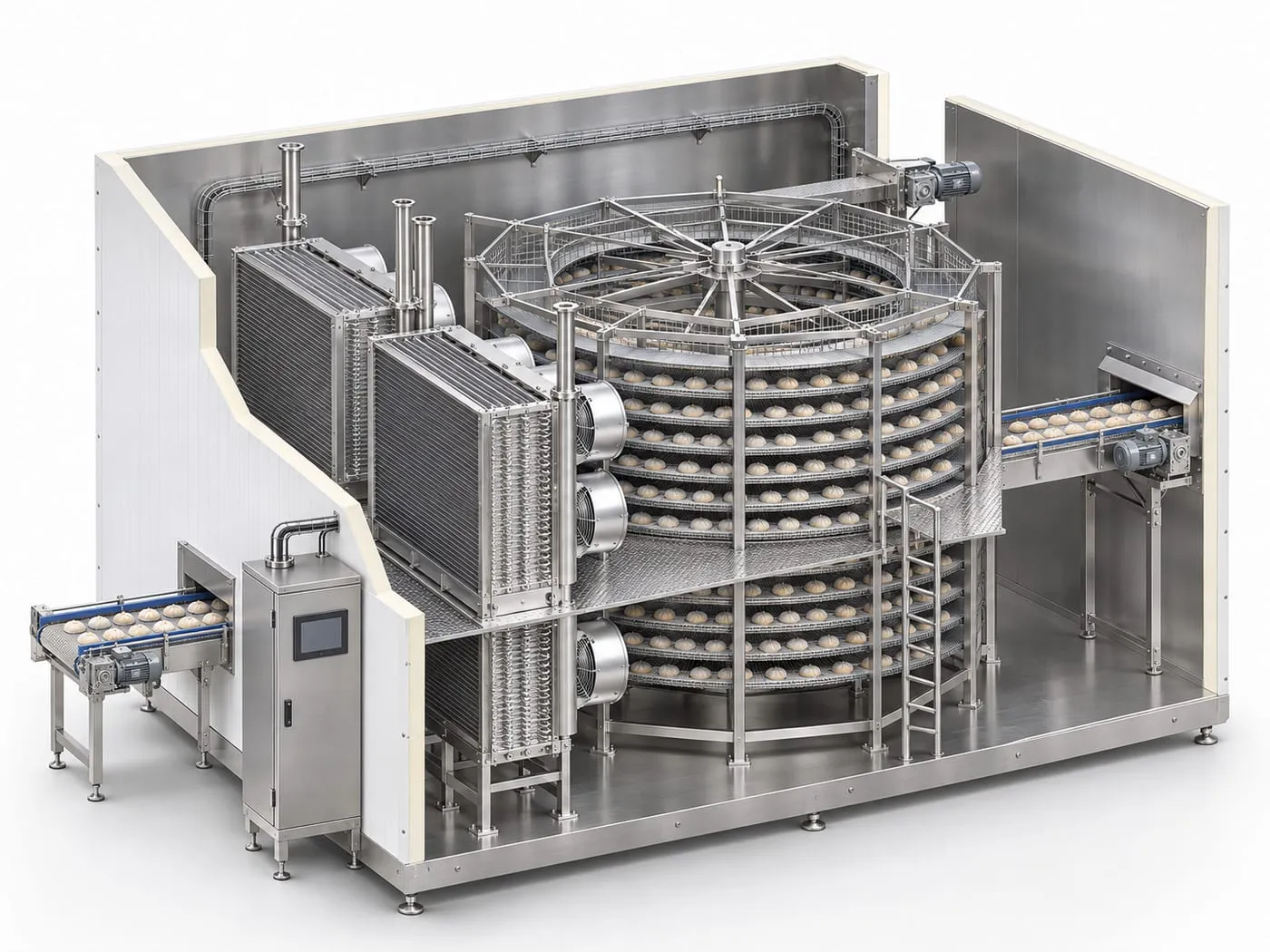
Product enters on a stainless steel mesh or modular belt inside an insulated enclosure. Evaporator coils cool the air and fans drive it across or through the product. Heat flows from the product core to the surface and into the air, and the refrigeration system removes it at the coils. Dwell time — how long product stays inside — is set by belt speed and length. At the outlet, product is checked for core temperature and moves on to packing or cold storage. Coils collect frost over time and are defrosted by water, hot gas or air between production runs.
| Form | Suits | Watch out for |
|---|---|---|
| Spiral | Dumplings, buns, patties, ready meals, trays | Building height and room for the enclosure |
| Tunnel | Flat products, trays, products that must stay level | Long floor footprint for long dwell times |
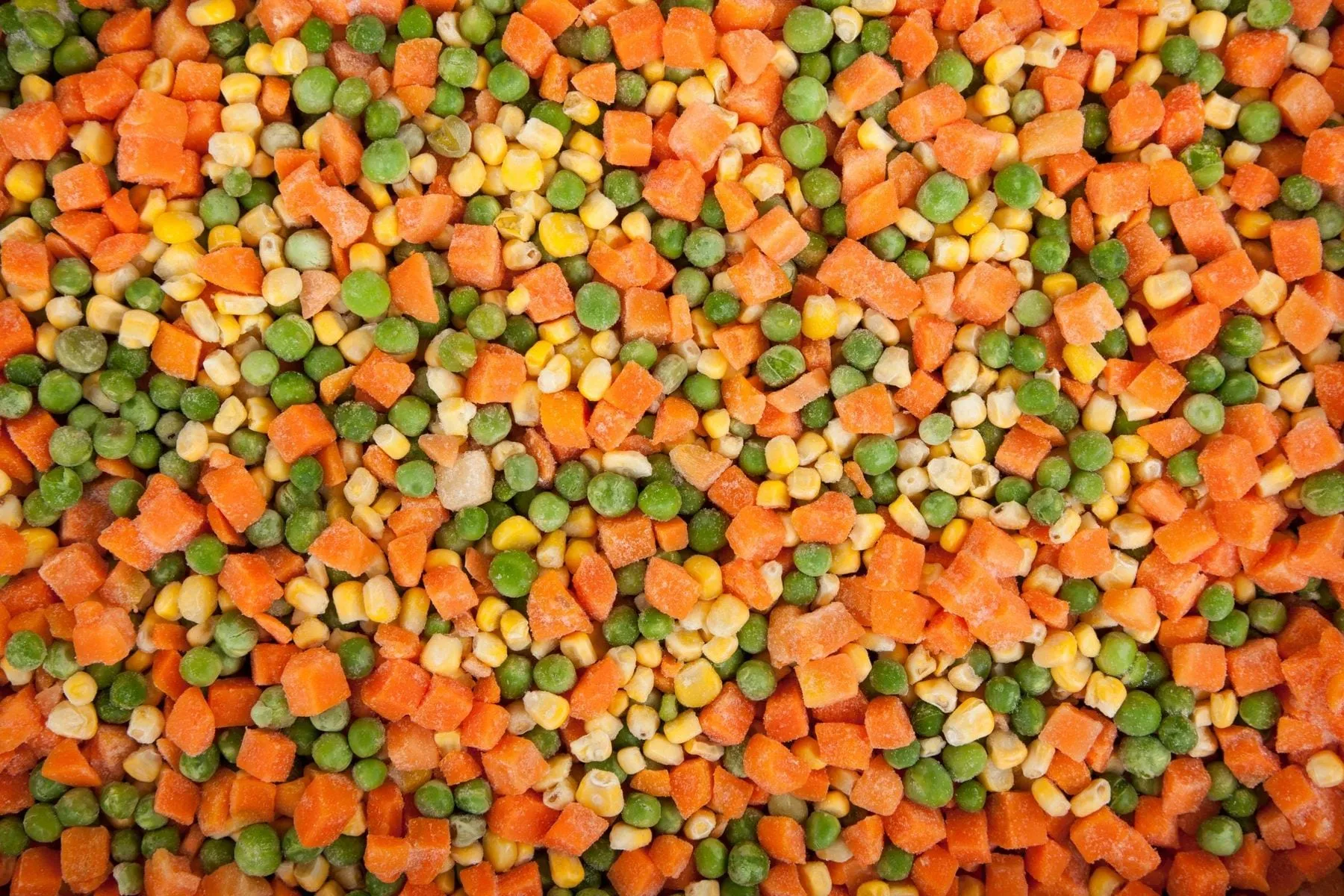
| Fluidised-bed IQF | Diced vegetables, berries, shrimp, fries | Only suits small, free-flowing pieces |
Capacity is always stated together with temperatures: the same freezer handles more kilograms of a thin, cool product than of a thick, warm one.
Typical feeds come from a frozen dumpling production line, steamed bun production line, food forming machine or blanching and cooling line. After freezing, product is packed on a VFFS packaging machine with a multihead weigher. Hygienic conveyors connect infeed and outfeed.
Spiral
belt winds up a drum inside an insulated room; large belt length in a small footprint, for dumplings, buns, patties and ready meals.
Tunnel
straight belt through a cold tunnel; simple layout for flat products, trays and products that must stay level.
Fluidised-bed IQF
cold air lifts small pieces so each freezes separately; for diced vegetables, berries, shrimp and fries.
Our engineers check these points with you, so the quotation fits your site rather than a catalogue default.
Mainly piece thickness, starting temperature, target core temperature, the product composition and air temperature and speed inside the freezer. Thicker and warmer products need longer dwell time, which means longer belts or larger rooms. We size from your product data and tests where needed.
Spirals suit varied products with limited floor space. Tunnels suit flat products and simple layouts. Fluidised-bed IQF suits small, free-flowing pieces that must not stick together. Some plants combine them, for example IQF crust freezing followed by a spiral.
The freezer needs a refrigeration source sized to its load. It can connect to an existing plant if capacity allows, or we can quote a matched unit. Tell us the refrigerant, evaporating temperature and spare capacity of your current system.
Tell us your raw material, finished product and target output. Our engineers reply with a matched configuration and quotation.
What to send with your inquiry
Email sales@hnfoda.com
How an automatic samosa and spring roll line works: wrapper sheets, filling and forming, frying or freezing, how to size it, and what to send for a quote.
Freezing, CIP & Conveying
Central kitchens, bakeries, ready meal makers and produce packers who need fast cooling before chilling or packing.
Sized on product per batch (kg/batch) and cycle time
Freezing, CIP & Conveying
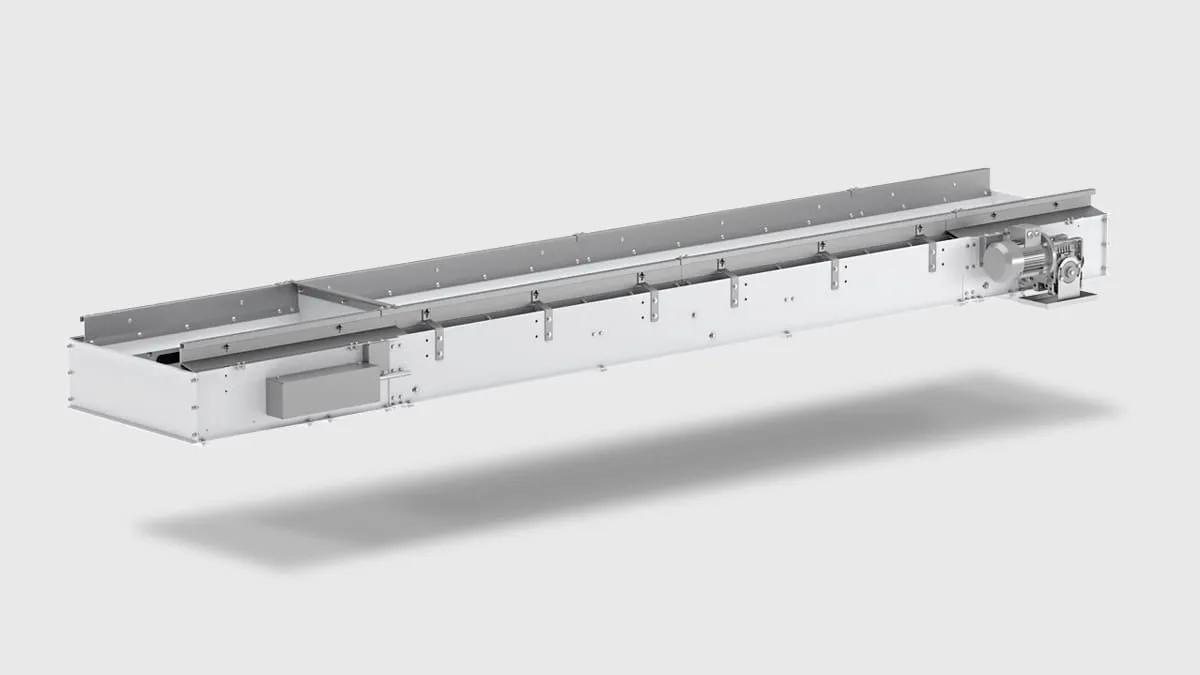
Plants connecting individual machines into a line, or replacing manual transfer between steps.
Sized to the throughput of the machines it links (kg/h or pieces/min)
Freezing, CIP & Conveying
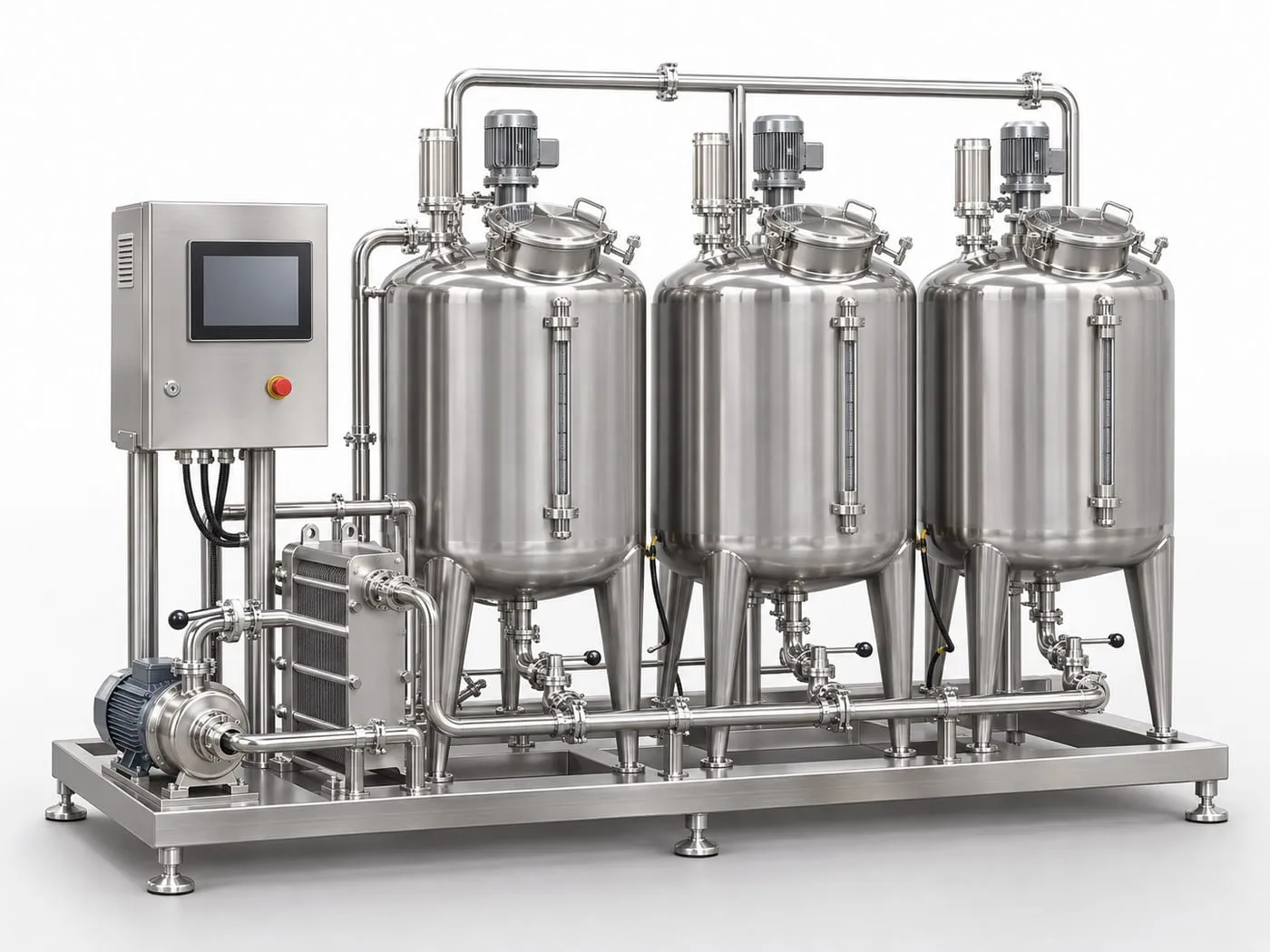
Beverage, dairy, sauce and liquid food plants with closed tanks and pipework.
Sized on circuit flow rate and circuit volume, set by pipe size and tank spray devices
Freezing, CIP & Conveying
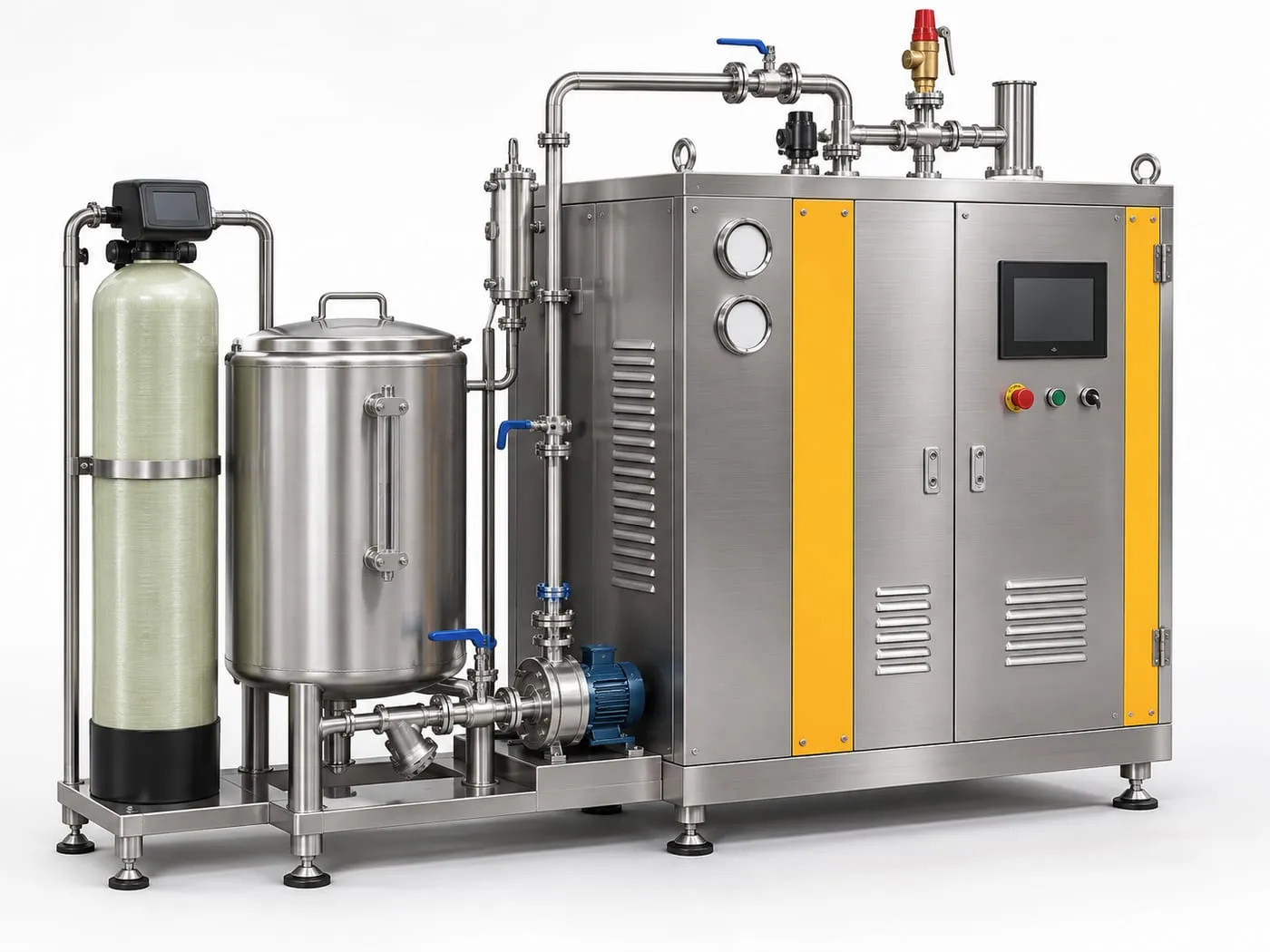
Food plants and kitchens adding steam-heated equipment without a large central boiler house.
Sized on steam output (kg/h) at the working pressure your equipment needs