Packaging & Inspection
Vertical Form Fill Seal Machine
Snack, nut, frozen food, grain and powder producers moving from manual bagging to automatic packing.
Rated in finished bags per minute, set by bag length, fill weight and film

09 · Packaging & Inspection — Equipment
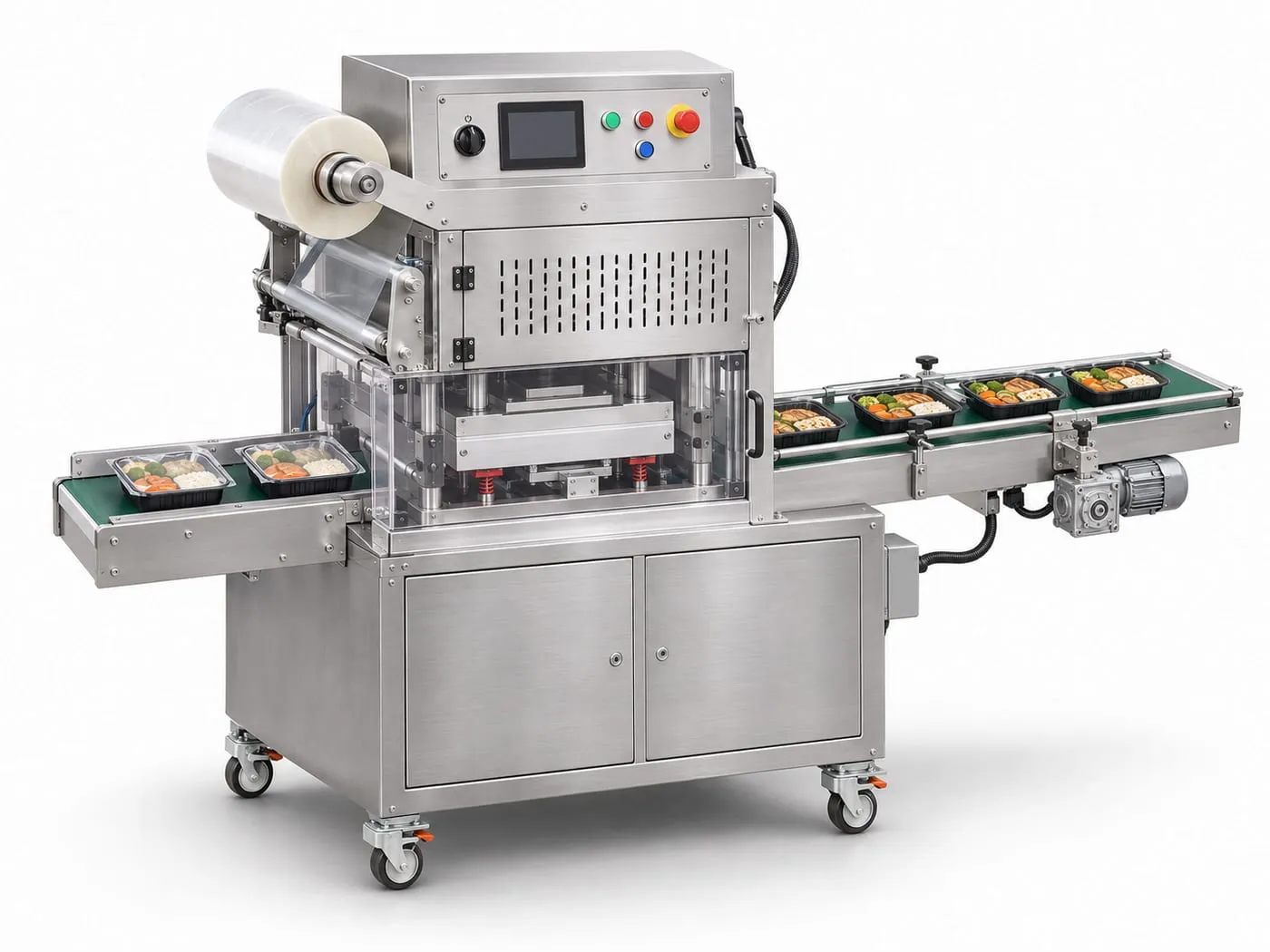
A tray sealing machine that seals lidding film onto pre-formed trays, with optional gas flushing or vacuum skin packing for longer shelf life.
Short answer: A tray sealer heat-seals a lidding film onto pre-formed plastic, aluminium or paper trays, and can flush the tray with gas or vacuum-pack the product under a skin film. The configuration depends on the tray and film you use, the gas or vacuum requirement, and how much product or sauce is likely to reach the sealing flange.
Filled trays arrive on an infeed conveyor or are placed into the tool by hand. The trays move into the sealing station, where a lower tool supports them and an upper heated plate presses the film onto the tray flange. For MAP, the chamber is first evacuated and filled with a gas mix — typically carbon dioxide and nitrogen, sometimes oxygen for red meat — before sealing. For skin packs, the heated top film is drawn down onto the product by vacuum. A cutting knife trims the film to the tray shape, and sealed trays exit for labelling and inspection.
Sealing temperature, pressure and time are set per tray and film combination. Gas mixers and residual oxygen checks are part of a MAP system, since the gas mix only protects the product if the seal and the mix are both right.
| Form | Suits | Watch out for |
|---|---|---|
| Semi-automatic | Small batches, testing new products | Output depends on operator |
| Continuous inline | Steady production with automated filling | Needs consistent tray supply and spacing |
| MAP | Ready meals, salads, fresh meat | Gas supply, mixer and residual oxygen checks |
| Vacuum skin | Meat and fish cuts, premium packs | Special films; slower cycles |
Trays are typically filled by hand, by depositor or by a multihead weigher. Upstream, ready meals may come from a prepared meal production line and a food vacuum cooler. After sealing, trays pass an in-line checkweigher and a food metal detector before chilled storage.
Semi-automatic
operator loads trays into the die and starts each cycle; suits small batches and frequent product changes.
Continuous inline
trays are conveyed, indexed and sealed automatically; for steady production linked to filling.
Modified atmosphere (MAP)
air is drawn out and replaced with a gas mix before sealing, for fresh meat, salads or ready meals.
Vacuum skin
top film is drawn down tight over the product, for meat and fish cuts with strong shelf presentation.
Our engineers check these points with you, so the quotation fits your site rather than a catalogue default.
MAP keeps a protective gas around the product and suits ready meals, salads and red meat. Vacuum skin holds the product tightly under film, prevents movement and often gives a premium look for meat and fish. The choice depends on product, shelf-life plan and how you want the pack to look.
Most leaks come from product, sauce or fat on the tray flange, mismatched tray and film, or worn sealing tools. Good filling practice, flange cleaning and correct film choice are as important as the sealer itself.
Each tray size and cavity layout needs its own tool. Costs depend on tray dimensions, number of cavities per cycle and whether the tool is for flat lidding, MAP or skin pack. Settle your tray formats early so tooling is quoted together with the machine.
Tell us your raw material, finished product and target output. Our engineers reply with a matched configuration and quotation.
What to send with your inquiry
Email sales@hnfoda.com
Set up a biscuit factory: equipment list from mixer to packing, layout flow, hard vs soft dough, what drives cost, and a checklist for a quotation.
Packaging & Inspection
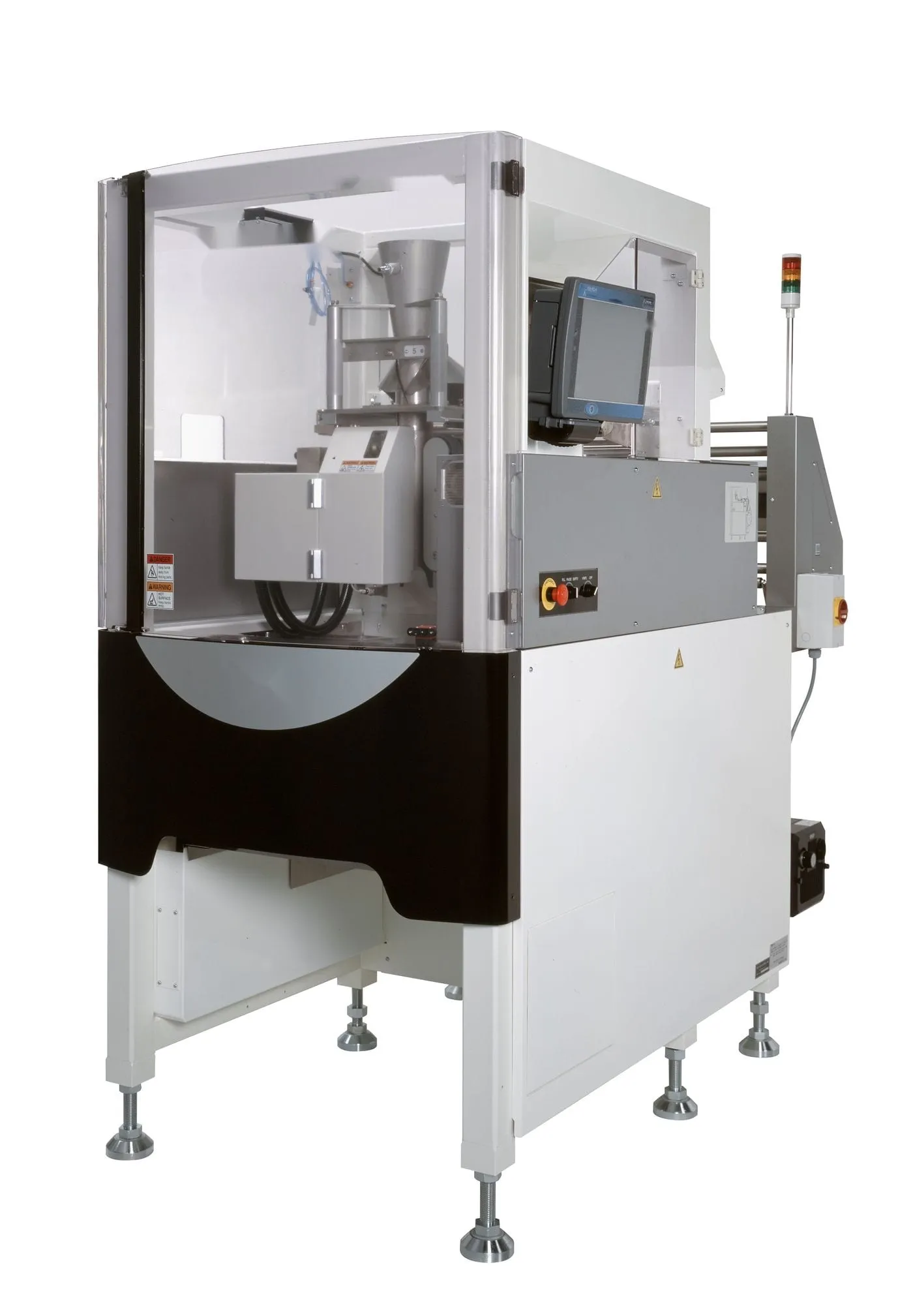
Snack, nut, frozen food, grain and powder producers moving from manual bagging to automatic packing.
Rated in finished bags per minute, set by bag length, fill weight and film
Packaging & Inspection
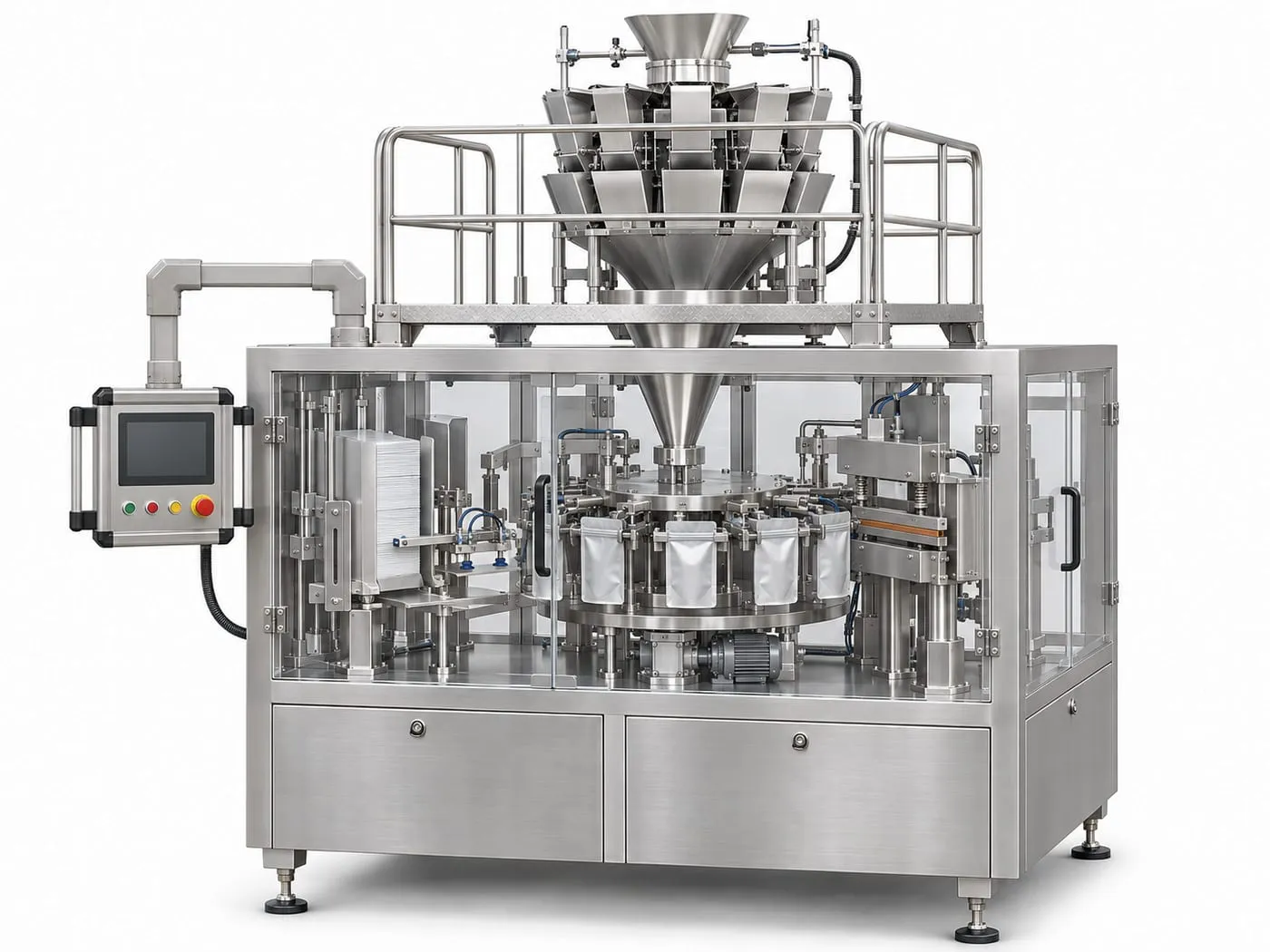
Brands and co-packers selling snacks, nuts, spices, sauces or pet food in stand-up and zipper pouches.
Rated in filled pouches per minute, set by pouch size, product and dosing
Packaging & Inspection
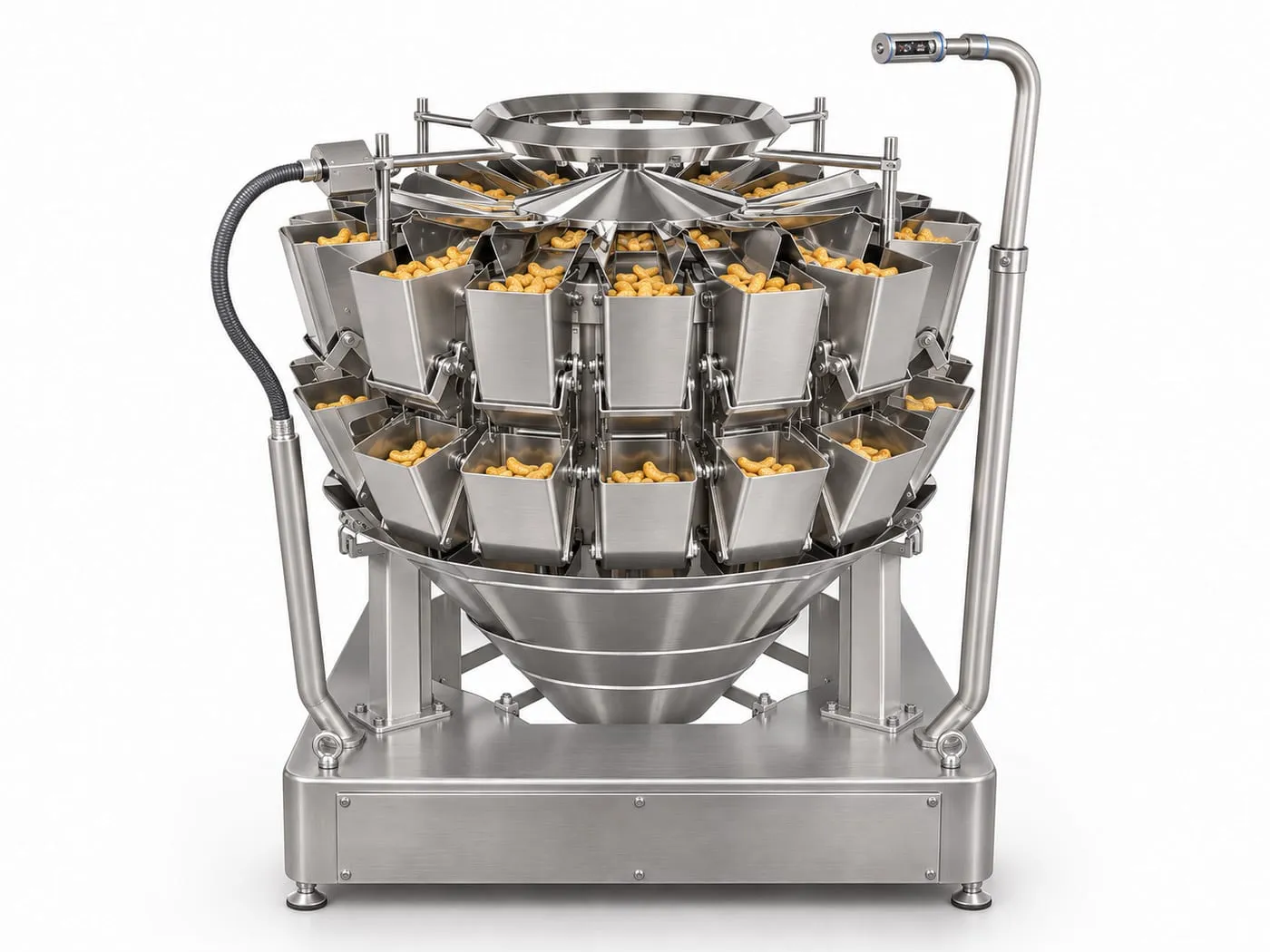
Snack, nut, confectionery, frozen and fresh food packers who need fast, accurate portions.
Rated in weighments per minute, matched to the packing machine
Packaging & Inspection
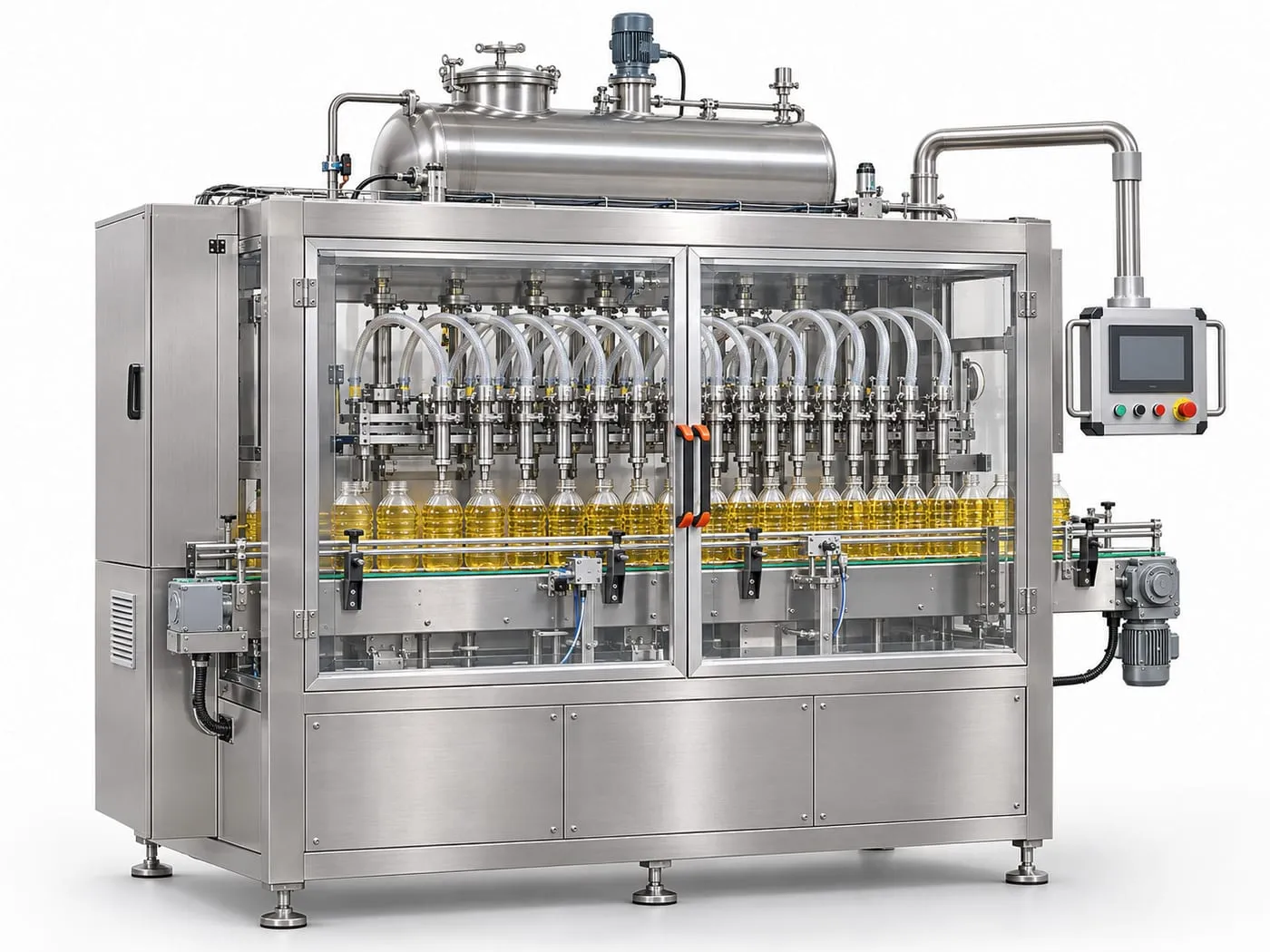
Beverage, edible oil, sauce and condiment producers filling bottles, jars or cans.
Rated in filled containers per hour, set by fill volume and container