Meat & Seafood Processing
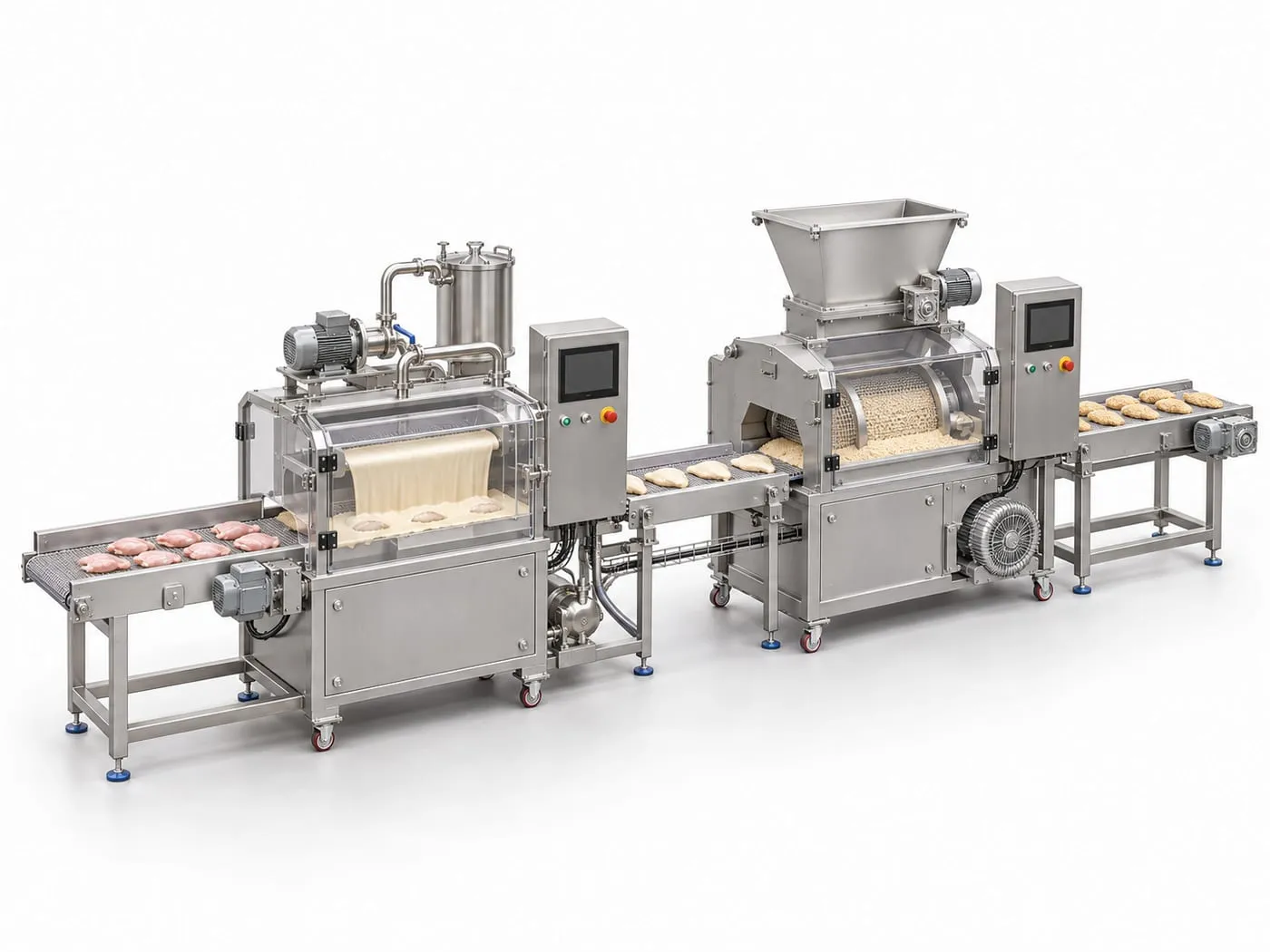
Coating and Breading Line
Factories making breaded chicken, fish fingers, coated vegetables or nuggets for frozen and food-service markets.
Sized to belt width and coated product output (kg/h of finished product)

06 · Meat & Seafood Processing — Equipment
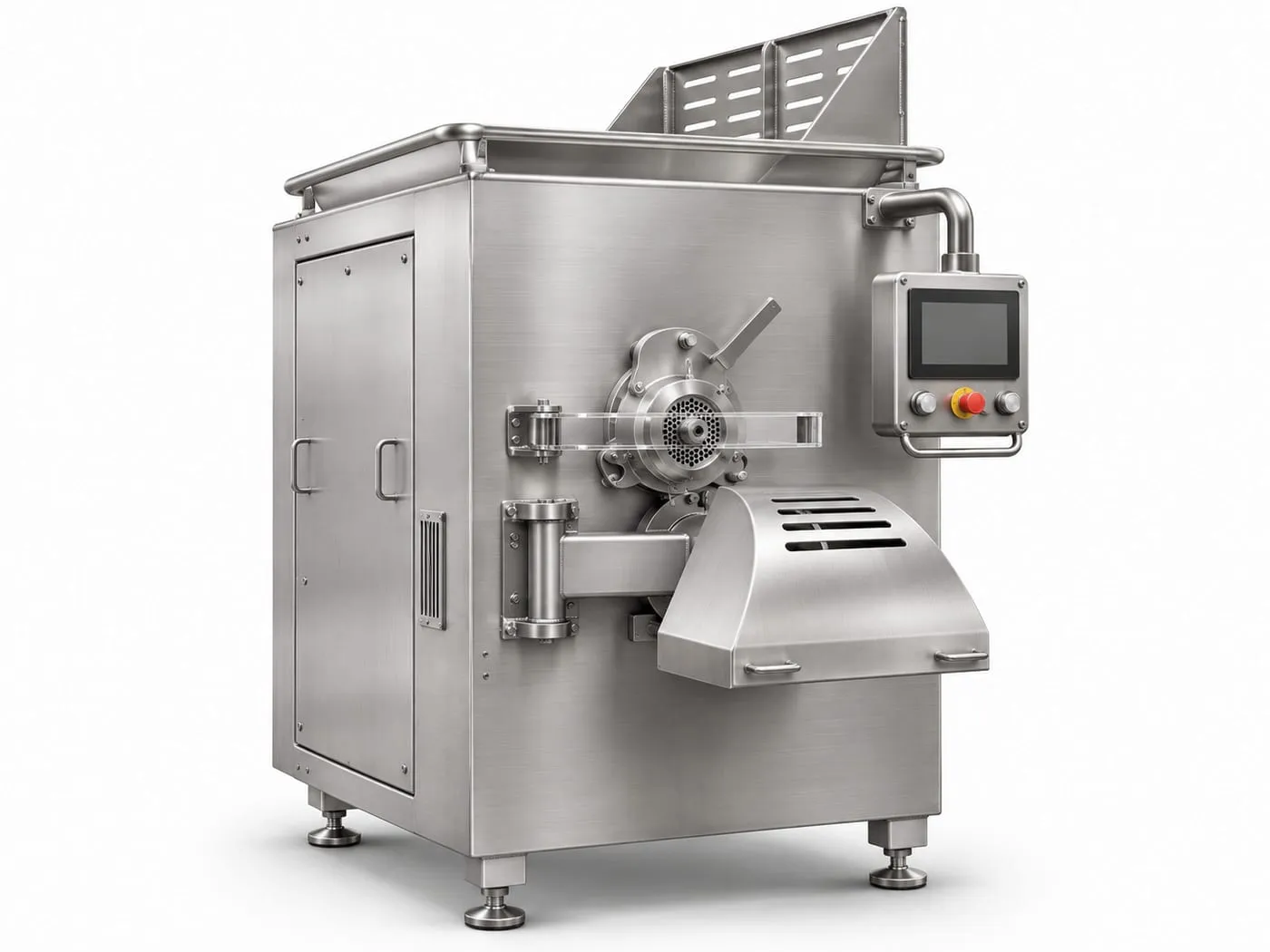
Grinds fresh, tempered or frozen meat to a set particle size through interchangeable hole plates and knives, ready for mixing, forming or stuffing.
Short answer: An industrial meat grinder pushes meat through a rotating knife and a perforated plate to cut it to a set particle size. The two things that decide its configuration are the temperature of the meat you feed (chilled, tempered or frozen block) and the final grind you need for your product.
Meat is loaded into the hopper, by hand, from a bin tipper or from a conveyor. A feed screw (auger) carries it forward and compresses it against the cutting set at the outlet. A cross knife turns against the face of the hole plate and shears the meat each time it passes a hole, so the hole diameter sets the particle size.
For a finer or more even result, a grinder can run a multi-stage set: a coarse kidney plate first, then one or two finer plates in the same pass. Frozen-block grinders add a stronger drive and a pre-breaking stage so hard blocks are drawn in rather than bouncing in the hopper. Temperature control matters throughout: the warmer the meat gets, the more fat smears and the less defined the grind looks.
| Form | Suits | Watch out for |
|---|---|---|
| Fresh meat | Chilled trimmings, small to mid batches | Not built for hard frozen blocks |
| Frozen block | Plants grinding straight from cold storage | Higher drive load; plan blade maintenance |
| Large-bore continuous | Long shifts, bin or tipper loading | Needs space for loading equipment and a steady supply |
If your plant runs mixed raw materials, the usual answer is to size for the hardest material you will feed and keep plate sets for each product.
Grinding is usually the first size-reduction step. Ground meat then goes to a bowl cutter for fine emulsions, a vacuum dough mixer or straight to a sausage stuffer or food forming machine. Plants making fillings often place the grinder at the start of a frozen dumpling production line.
Fresh meat grinder
for chilled trimmings and boneless pieces where you want a clean cut and low temperature rise.
Frozen block grinder
a heavier feed screw and drive for meat taken straight from frozen storage, saving thawing time and floor space.
Large-bore continuous grinder
a wide inlet and feed hopper for plants that load from bins or tippers and run long shifts.
Our engineers check these points with you, so the quotation fits your site rather than a catalogue default.
Some can, within limits. A grinder built for frozen blocks has a stronger drive and feed screw; using a fresh-meat grinder on hard frozen meat overloads it and smears the product. Tell us the coldest temperature you will feed and we size the machine for that.
Mainly the throughput, whether it must take frozen blocks, the inlet size, the number of cutting stages, the loading method (manual, hopper or tipper) and the materials of the food-contact parts. A quote is based on your meat, temperature and output.
Knives and plates wear together and should be sharpened or replaced as a matched pair. How often depends on hours run, bone fragments and frozen content. Keeping a spare set lets you swap and send the worn set for regrinding without stopping production.
Tell us your raw material, finished product and target output. Our engineers reply with a matched configuration and quotation.
What to send with your inquiry
Email sales@hnfoda.com
Meat & Seafood Processing
Factories making breaded chicken, fish fingers, coated vegetables or nuggets for frozen and food-service markets.
Sized to belt width and coated product output (kg/h of finished product)
Meat & Seafood Processing
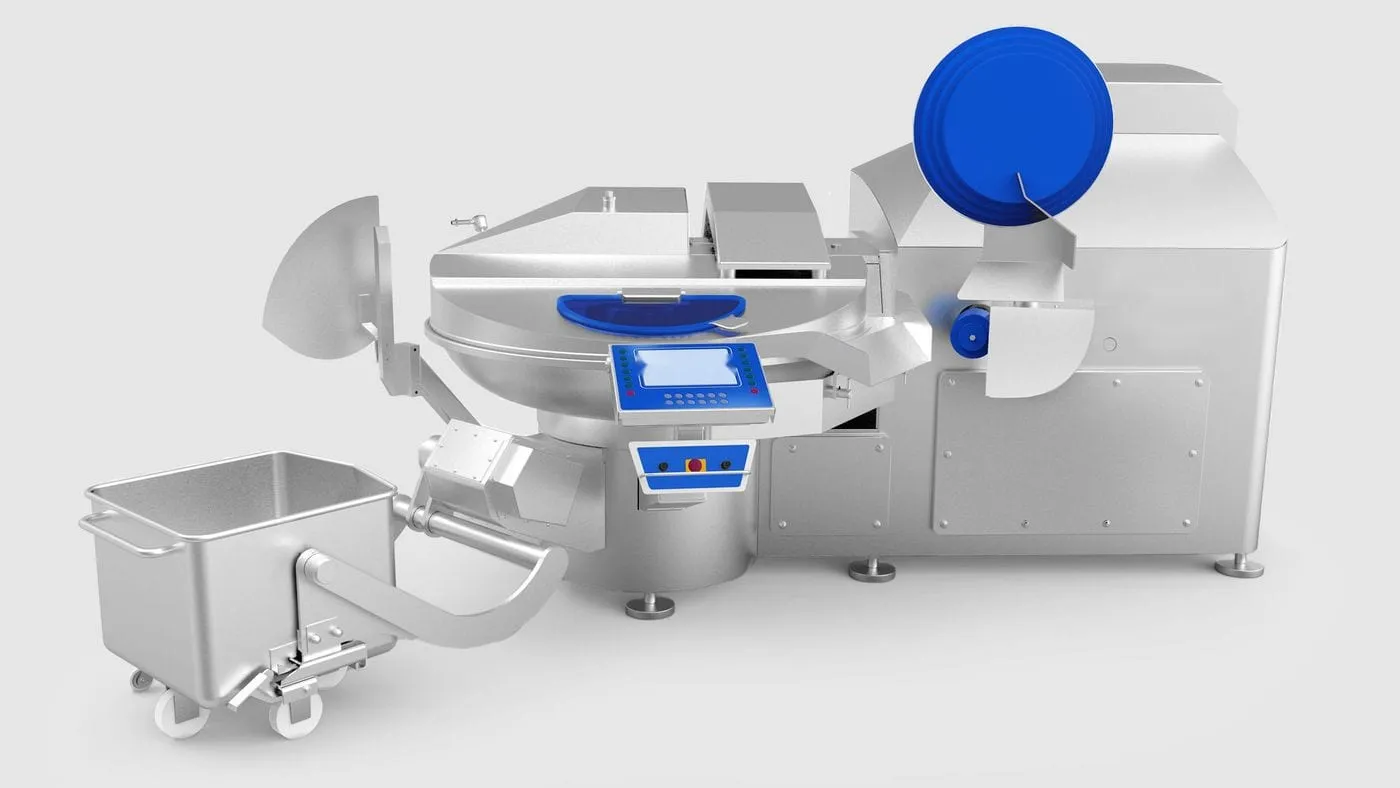
Sausage, meatball, fish ball and dumpling-filling producers who need fine or emulsified textures.
Sized to bowl volume and batch weight (kg per batch)
Meat & Seafood Processing
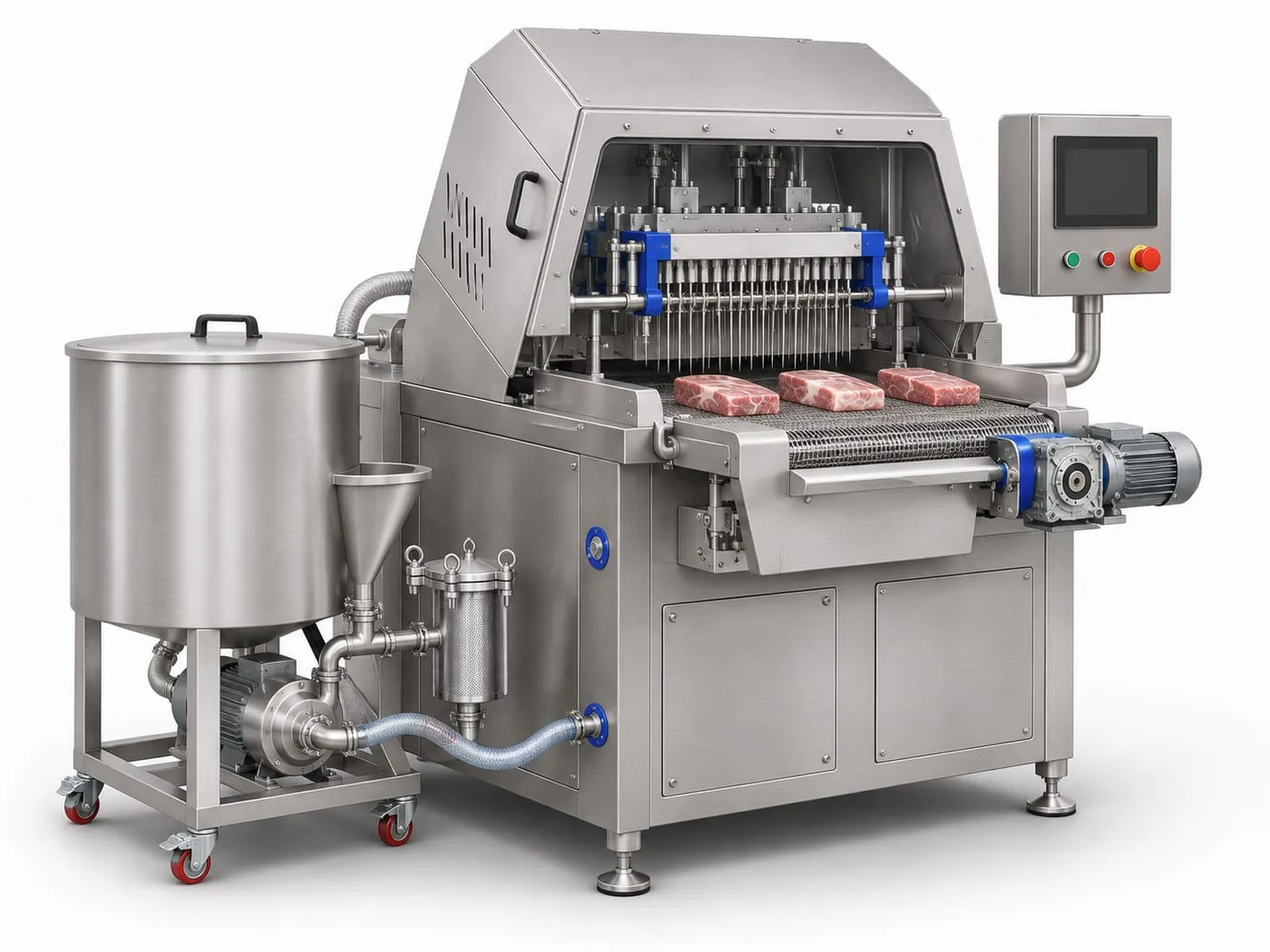
Processors making ham, bacon, cured cuts or marinated whole poultry and large cuts.
Sized to belt width and raw meat throughput (kg/h) at the target injection rate
Meat & Seafood Processing
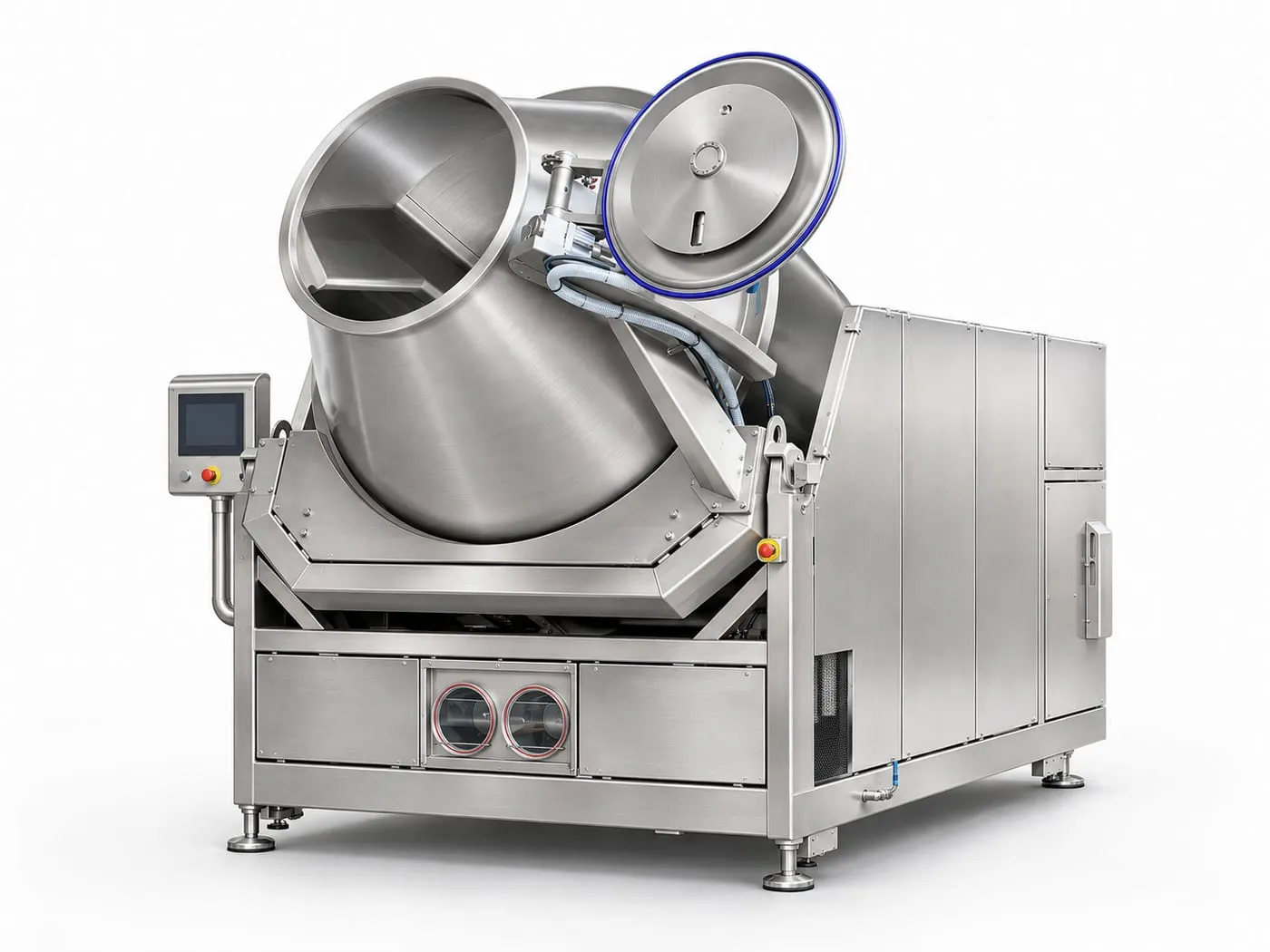
Processors marinating chicken, pork, beef or seafood for cooked, smoked or frozen products.
Sized to drum volume and effective load per batch (kg of raw meat)